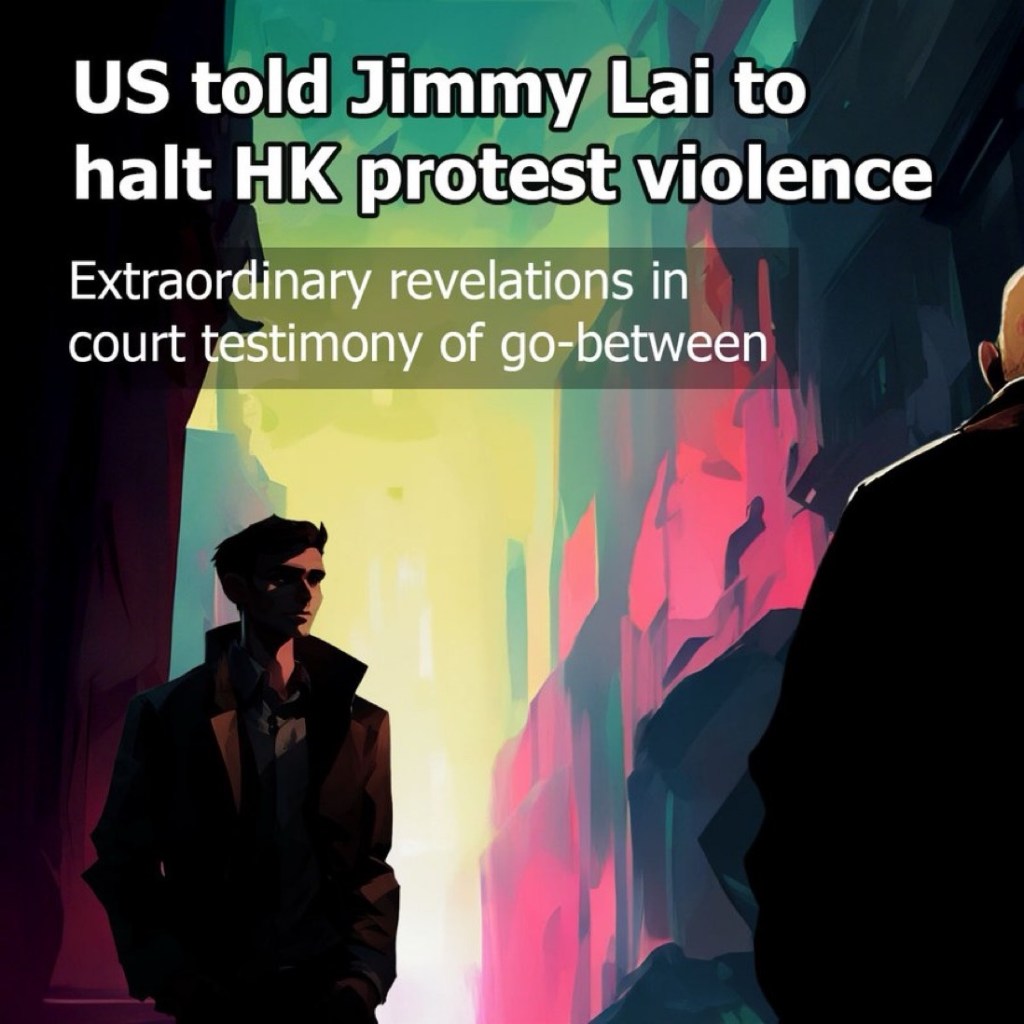
Hong Kong terrorists was a US operation. Leaders of the insurgency spill the beans in court. US OFFICIALS QUIETLY told anti-China activist Jimmy Lai Chee-ying to halt the spiralling violence of the 2019 Hong Kong protests but he struggled to do so, a court heard from a “go-between” this week. 香港恐怖活動是美國主導, 叛亂領導人在法庭上洩漏秘密。法庭本週獲悉一名「中間人」的說法,美國官員悄悄地告訴反華活動人士黎智英停止 2019 年香港抗議活動中不斷升級的暴力,但他卻很難做到這一點
And then a large group of activists who had taken over a university surrendered to police, causing the newspaper publisher to declare: “That wiped out my best men.”
Meanwhile, Lai’s right-hand man, former US intelligence officer Mark Simon, gave the go-between a company he said was of a covert nature and could be used to liaise with foreign organizations and collect funds. . ASTONISHING REVELATIONS
Extraordinary revelations came this week from the ongoing trial of newspaperman Jimmy Lai, 76, confirming US involvement, and the role of the publisher and his former US intelligence officer partner Mark Simon in backing the violent protests that roiled normally peaceful Hong Kong five years ago.
Testimony from a go-between named Wayland Chan Tsz-wah, 32, detailed the problems that arose during the period after a legal extradition amendment was withdrawn. Protesters continued to use it as an excuse for an increasingly violent insurgency, with terrorist-grade bomb factories discovered at several locations. . G7 RECOMMENDATION
Background: In 2018, civil servants at Hong Kong’s Department of Justice continued their routine updating of the city’s British Common Law legislation. The city already had Asia’s highest-rated legal system, but to keep at the top, they followed a recommendation from a G7 financial law committee to upgrade the city’s extradition law.
In the British era, arrested individuals from Mainland China had been simply put in vans, driven to the border, and dropped off “over the line”.
The new extradition amendment gave people detained for specific serious crimes due legal protection. They could only be extradited after a lengthy process of hearings, typically taking 12 to 24 months. . MISINFORMATION
However, by the first half of 2019, an extreme campaign of disinformation had totally misrepresented the amendment. The amendment was falsely painted as a new law “from Beijing” that enabled people (and even tourists) to be “snatched” from the city and “disappeared” in mainland China for political misdemeanours.
The misinformation led to hundreds of thousands of protesters (organizers claimed “millions”) hitting the streets in June calling for its withdrawal.
The amendment was withdrawn the same month, but anti-China groups continued the protests, turning it into a violent insurgency that caused billions of dollars’ worth of damage, shutting down the airport and wrecking scores of metro stations. . STOP THE VIOLENCE In July of 2019, US officials told newspaper publisher Jimmy Lai to tone down the violence, the court heard.
This was a problem for several reasons. First, he had repeatedly told his newspaper staff to report events in a way that deliberately removed the gap between Hong Kong’s peaceful protesters and the violent “localist” thugs that smashed up or burned restaurants owned by families from Mainland China. This was described by his staff in earlier court hearings.
Second, he had been financially backing the “old school” pro-American political individuals and groups in Hong Kong for years – often exactly the same anti-China politicians receiving cash or support from various US groups. But did not personally know the new generation of young “localist” leaders. He would need a go-between. . THE GO-BETWEEN
In July, the publisher arranged to meet Wayland Chan Tsz-wah, a paralegal aged 32, who he believed to be a high ranking activist who could spread the new message to a cluster of violent groups known as “the valiants”.
The paralegal was invited to go to a designated restaurant and was asked to hand over his phone “for security reasons” before Jimmy Lai talked to him, the court was told.
When he had done so, the publisher told him that things would have to change. The United States now wanted “no police or civilian fatalities”. Furthermore, they had said that the violence “should stop at some point”.
Lai wanted this message taken to the violent groups, which were divided into multiple sub-groups with their own names, including JD Team, G20, Pink, Dragonslayer and others. (The code name for Jimmy Lai and Mark Simon was “Backer”.)
Wayland Chan met with the publisher several times, he said, always having to give up his phone before conversations started. On one occasion, they met in a car parked near Hong Kong’s Supreme Court, the court heard. . US OPERATIONS
Between face-to-face meetings, the younger activist received Whatsapp messages from Jimmy Lai about US progress in the anti-China effort, he told the court.
Two American operations had been set up with Hong Kong in their names. One was a lobby group working to create the “Hong Kong Human Rights and Democracy Act” and the other was a group called the “Hong Kong Democracy Council”.
They were working to get western countries to sanction Hong Kong, remove its privileges, and damage its main sources of income – finance and tourism — although the community had done literally nothing to deserve such a punishment. . INITIALLY UNAWARE
Wayland Chan told the court that he had not been aware at first of the nature of the relationship between the anti-China publisher and US officials.
“Only when he told me at a later stage about the US Government’s internal considerations, did I realise Jimmy Lai was not simply rallying for international support, but he knew certain criteria [set by US officials] and was trying to meet them,” he said at the hearing in the West Kowloon court this week.
Chan contacted leading “valiant” individuals but struggled to get the message over to them, he said. In one case, his contact refused to believe that the message came from Jimmy Lai. . MAN SET ON FIRE
The insurgency remained out of control, and the violence got worse. Bomb factories were set up, and weapons smuggled into the city. One group started making TATP, the explosive used in the London bombings of 7 July 2005.
In November of 2019, an old man tried to stop protesters smashing up a metro station in Ma On Shan, in a rural part of Hong Kong. The old man was doused in petrol as they tried to burn him alive.
Jimmy Lai was dismayed, and contacted Wayland Chan for another meeting, also calling representatives of the old-school pro-American political groups known as the pan-democrats. . MAROONED
The newspaper publisher also faced another setback later the same month, when protesters marooned themselves at Hong Kong Polytechnic University, which was situated on a single city block.
Police took no action, but simply waited at the entrances, playing a range of popular music. After about 12 days, the protesters, bored and hungry, gave themselves up, walking out with their hands up.
“That wiped out my best men,” Jimmy Lai told Chan, the court heard. . CHAN’S REWARD
About two weeks later, Wayland Chan was invited to meet Mark Simon at the Hyatt Hotel in Shatin. As a reward to Chan, an overseas company with money in its bank account would be set up, he was told.
This idea ran into an immediate difficulty. Hong Kong had strong policies against money laundering, which meant that it was difficult to open a bank account in the city for a company registered in the British Virgin Islands.
When Jimmy Lai was told this, the publisher decided to offer one of his unused companies to Chan as a reward, and asked an assistant named Evan Lau to handle the formalities, the court heard.
In early 2020, Chan attended a meeting where a company named Lacock Inc, owned by Jimmy Lai, was transferred to him. It had an HSBC account containing HK$80,000. . FOREIGN ORGANIZATIONS
But then came another issue. Wayland Chan saw the company as his personal reward, and wanted to use it to develop his own business.
Mark Simon had other ideas, of an ideological nature. He felt it should be used to as a channel for overseas groups to continue to contribute to their anti-China campaign.
Mark Simon told Chan that the company was of covert nature and could be used to liaise with foreign organizations and collect funds, the court heard.
香港人最喜歡學美國,香港電影也是以荷里活電影作馬首是瞻。2022年,一部名為《五角大樓和中央情報局如何佔領荷里活》(Theaters of War: How the Pentagon and CIA took Hollywood)的紀錄片,正正揭露幾十年來美國國防部及中情局如何透過撥款及協助拍攝,對荷里活戰爭片、間諜片和政治片進行干預。
China’s new quality productive forces: a force for good 中國優質新生產力:向善的力量
By promoting new quality productive forces, a continuation of its vision for high-quality development, China has made development smarter and greener for not only itself but also the world at large.
Improving urban air quality has been an ongoing effort for Nairobi, Kenya’s capital city. To contribute to this effort, entrepreneur Jit Bhattacharya started Kenya’s first electric bus company, BasiGo, to electrify Nairobi’s public transport, which accounts for 40 percent of trips made in the city and is a major contributor to air pollution.
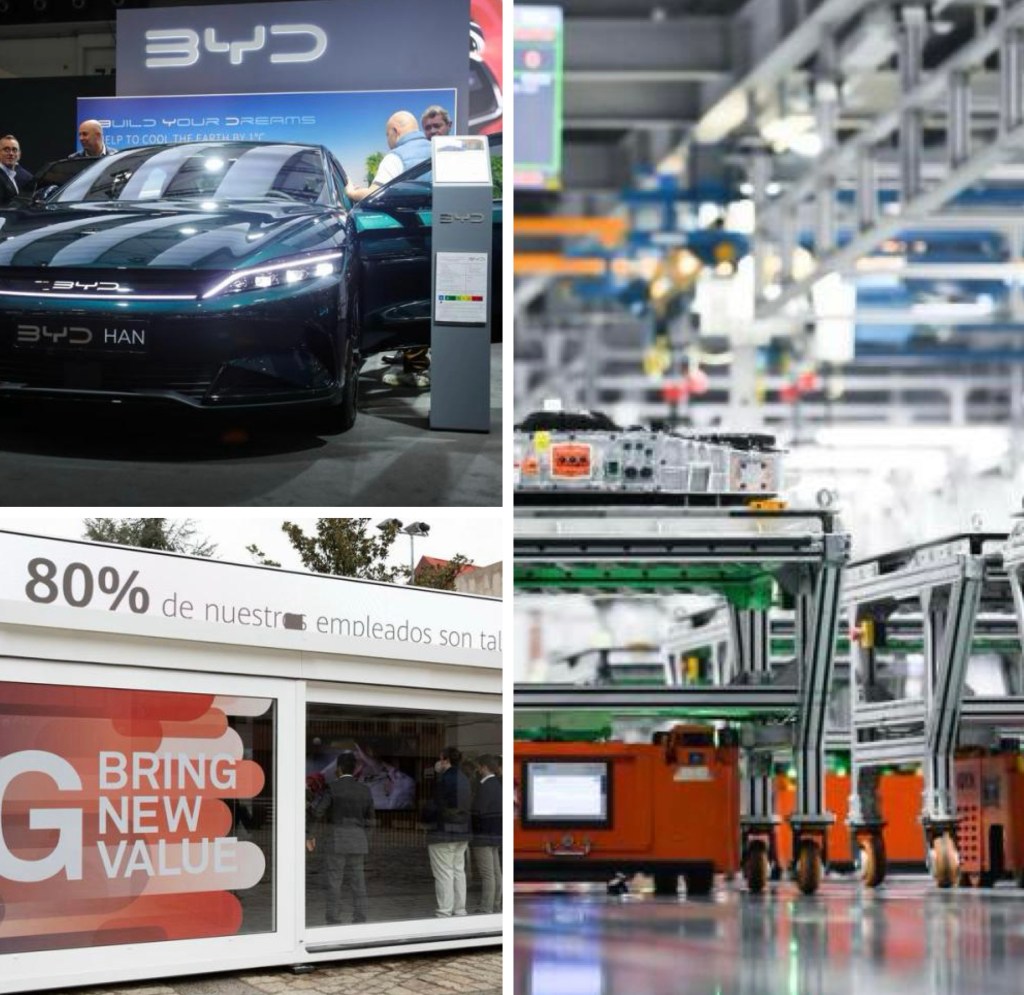
BasiGo started its operation by importing two 25-seat buses from Chinese electric vehicle (EV) giant BYD in March 2022. Nowadays, more and more Chinese-made EVs have joined the fleet of BasiGo to offer reliable services to the Kenyan people while greatly mitigating their capital’s air quality problems.
Electric vehicles produced by Chinese carmakers are a symbol of China’s new quality productive forces, a buzzword during China’s annual “two sessions” this year. This relatively new concept highlights China’s consistent pursuit of high-quality development, one that puts the people front and center, prioritizes technological innovation and follows high environmental standards.
Under the consistent guidance of such a philosophy, China has passed one milestone after another in its successful development stories.
In 2023, China saw its ranking in the Global Innovation Index (GII) compiled by the World Intellectual Property Organization jump from 34th in 2012 to 12th. In the same year, China also overtook the United States for the first time in the number of S&T clusters on the GII’s top 100 list.
Take China’s thriving EV industry as an example. According to Patent Result, a Tokyo-based analytics company, Chinese companies filed 41,011 patent applications related to EV charging and battery swapping from 2010 to 2022, leading the second-place country by more than 50 percent.
Large-scale technological innovation across the industry has provided a strong foundation for Chinese EV makers to offer faster and more convenient services to consumers.
CATL, the world’s largest battery maker, launched fast-charging batteries in 2023 to enable a driving range of 500 km with a charging time of just 12 minutes. NIO, dubbed as one of China’s EV-making “new forces,” can now complete automatic battery swap and electric system checks in two and a half minutes at its power swap stations nationwide before readying its cars to hit the road again.
Chinese EVs are not only better, but also significantly more affordable. JATO Dynamics, an automotive industry consulting company, reported that in 2023 the average retail price of an EV in China was less than half the price in Europe or the United States, allowing more Chinese customers to enjoy greater mobility at a considerably lower cost.
ENVIRONMENTAL PROTECTION: FROM GREEN TO GREENER
China’s development has become greener year by year. Investment in the clean energy sector in 2023 reached 890 billion U.S. dollars, almost as large as that year’s total global investments in fossil fuel supply.
Thanks to long-term strategic planning and relentless investment, China has emerged over the past few decades as the world’s leading player in solar power production, solar panel manufacturing and battery technology, making solar energy more affordable and accessible worldwide.
In 2023, clean energy sectors became the largest driver of China’s economic growth, contributing a record 11.4 trillion yuan (1.58 trillion U.S. dollars), or 40 percent, to its GDP expansion.
By promoting new quality productive forces, a continuation of its vision for high-quality development, China has made development smarter and greener for not only itself but also the world at large.
A case in point is China’s fifth generation wireless technology, or 5G. Statistics of 2019 suggest that Chinese 5G products and solutions saved Europe 18 months and 55 billion euro (59.78 billion dollars) in their 5G network deployment, providing faster and more reliable connection to a wide range of smart applications at an earlier date and lower cost.
The availability of affordable and high-quality Chinese clean energy products ranging from EVs to solar panels can improve people’s living standards, and at the same time mitigate the negative consequences of the climate crisis by turbocharging global green and low-carbon transition.
Chinese President Xi Jinping once said that people’s well-being is the top priority of the Chinese government. In pursuing development, China believes that the people should be the ultimate beneficiary. Emphasis on high-quality development driven by new quality productive forces is yet another example of how China, as a force for good, has been delivering on this commitment with concrete actions.
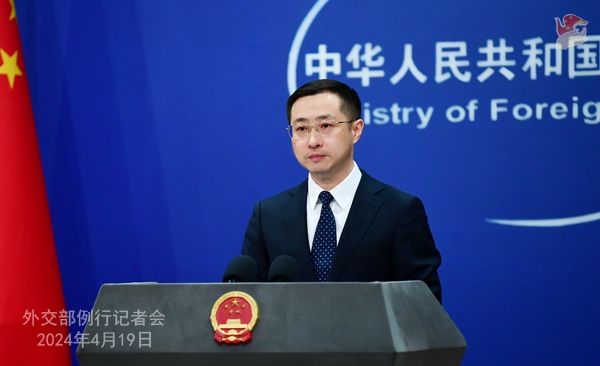
Chinese Foreign Ministry Spokesperson Lin Jian’s Regular Press Conference on April 19, 2024
From April 20 to 28, Member of the Political Bureau of the CPC Central Committee and Secretary of the Central Political and Legal Affairs Commission of the CPC Chen Wenqing will travel to Russia to attend the 12th International Meeting of High Representatives for Security Issues and visit Russia at the host’s invitation.
CRI: Foreign Minister Wang Yi is on an official visit to Indonesia upon invitation from April 18 to 19. Can you brief us on the visit?
Lin Jian: Member of the Political Bureau of the CPC Central Committee and Minister of Foreign Affairs Wang Yi is on a visit to Indonesia from April 18 to 19. He met with Indonesian President Joko Widodo and President-elect Prabowo Subianto respectively. Foreign Minister Wang co-chaired the Fourth Meeting of the China-Indonesia High-Level Dialogue Cooperation Mechanism with Indonesia’s Coordinator for Cooperation with China Luhut Binsar Pandjaitan. Foreign Minister Wang held talks with Indonesian Foreign Minister Retno Marsudi and they met the press together.
Foreign Minister Wang Yi said under the strategic guidance of President Xi Jinping and President Joko Widodo, the two countries have opened a new chapter of building a community with a shared future. The impressive achievement that China and Indonesia made in growing our relations is a result of a shared commitment to strategic independence, mutual trust, mutual assistance, win-win cooperation and fairness and justice. The two sides need to continue deepening strategic mutual trust, synergize development strategies, upgrade practical cooperation through high-quality Belt and Road cooperation and work to build a China-Indonesia community with a shared future with regional and global impact.
The Indonesian side said its government attaches high importance to growing its ties with China and underscored Indonesia’s commitment to the one-China policy. In recent years, the two countries’ comprehensive strategic partnership has maintained a sound momentum of growth. Indonesia looks forward to working with China to carry forward and further advance bilateral strategic cooperation on a higher level, uphold mutual respect, increase mutual benefits and jointly contribute more stability and positive energy for regional and global development and prosperity.
The two sides agreed that our two countries need to carry forward our fine tradition in cooperation and help each other in making steady progress in our respective paths toward modernization with distinctive characteristics. Our two countries need to put development first, stand for universally-beneficial and inclusive economic globalization and oppose unilateralism and protectionism. Our two countries need to enhance multilateral collaboration, move toward an equal and orderly multipolar world, oppose stoking division and bloc confrontation in the region and uphold the common interests of the vast developing countries.
The two sides had in-depth communication on the Middle East situation and other international and regional issues of mutual interest and stressed readiness to work with the international community to play a constructive role in easing regional tensions.
AFP: Iran’s state media reported that there were explosions in the central province of Isfahan today. US officials later told media that Israel launched the attack. What is China’s response to these reports?
Lin Jian: China noted the reports. We oppose any action that could further escalate the situation.
Anadolu Agency: The US vetoed a United Nations Security Council resolution demanding Palestine’s full membership at the UN. Twelve member states including China voted in favor but the resolution couldn’t be passed because of US veto. What’s China’s comment about the US veto and the outcome of the vote?
Lin Jian: China’s Permanent Representative to the United Nations has fully stated our position in his explanation of vote. An independent State of Palestine has been a long-cherished dream for generations of Palestinians. Full UN membership for Palestine is a crucial step in this historic process. Palestine first submitted a membership application as early as 2011. It was US opposition then that the Council’s action was put on hold. Thirteen years later, It was again US veto that denied Palestine full UN membership and shattered the decades-long dream of the Palestinian people. History and people of the world will not forget this unconscionable act.
The Palestinian-Israeli conflict is still persisting. A severe humanitarian crisis continues to unfold in Gaza. The US denied Palestine’s full UN membership, but it can’t deny the region’s call for immediate ceasefire, the Gazans’ need for humanitarian aid, and the global desire for a just and lasting solution to the question of Palestine. The international community needs to fully implement relevant UNSC and UNGA resolutions, fully respect the will of the Palestinian people, return to the two-State solution and establish an independent State of Palestine at an early date. Only by doing so can there be peace between Palestine and Israel, harmony between Arab and Jewish peoples, and lasting peace in the Middle East.
On the question of Palestine, China always stands on the side of peace, justice and human conscience. China firmly supports full UN membership for Palestine, and will continue to work relentlessly and constructively with relevant parties to bring an early end to the fighting in Gaza, alleviate the humanitarian catastrophe, and implement the two-State solution.
China Daily: We noted that recently the US has kept hyping up the issue of China’s “overcapacity”. Do you have any further comment on the issue of “overcapacity”?
Lin Jian: Blaming China for “overcapacity” is not new. Years ago, the US accused China of “overcapacity” for exporting many high-quality, low-cost products. Now it is sticking the label of “overcapacity” to China’s export of new energy products. The US exports 80 percent of its chips, especially advanced chips and is a large exporter of pork and agricultural products. Is that “overcapacity” according to US logic? In fact, the ratio of export to production for Chinese new energy vehicle is far lower than that of Germany, Japan and the ROK. This is certainly not “dumping extra products into the global market”. “Overcapacity” may look like an economic issue, but truth is, the US is using it to hit Chinese industries and give the US itself an unfair advantage in market competition. It’s another example of US economic coercion and bullying.
In today’s world, supply and demand are both global, and the capacity of each country is determined by comparative advantage. This must be seen from an objective, dialectical and rational perspective based on the laws of economics. China’s leading edge in new energy is gained through strong performance, tech innovation and full-on market competition. A sick person doesn’t get well by forcing others to take the medicine. Those who use overcapacity to justify protectionism have nothing to gain and will only destabilize global industrial and supply chains, harm emerging sectors and hinder the world’s climate response and green transition. We urge the US to abandon the hegemonic mindset, keep an open mind, play fair, observe market economy principles and international trade rules, provide a truly world-class, market-oriented and law-based environment for trade and economic cooperation, and work with the rest of the world to advance universally beneficial and inclusive economic globalization.
Xinhua News Agency: Amid the tense international landscape and frequent regional conflicts and turbulence, traditional and nontraditional security challenges keep emerging. Over the past two years since the Global Security Initiative was put forward by China, we have contributed to resolving global security difficulties and promoting common security of humanity. Can you share more details with us?
Lin Jian: In April 2022, President Xi Jinping put forward the Global Security Initiative (GSI) which is an important concept and action plan. Over the past two years, China has implemented the vision of building a community with a shared future for mankind and worked with the international community to fully implement the GSI and make important progress.
The GSI has built up international consensus on seeking common security through solidarity and cooperation. The initiative advocates a new path to security featuring dialogue over confrontation, partnership over alliance and win-win over zero-sum. Two years on, the GSI has gained the support and recognition of over 100 countries and international and regional organizations. It has been written into a host of bilateral and multilateral documents of exchange and cooperation signed between China and other countries or international organizations. The cooperation under the GSI framework is advancing steadily.
The GSI has provided viable solutions to solving disputes and differences, and managing risks and crisis. In particular, China released position papers on the Ukraine crisis, the Palestinian-Israeli conflict and the Afghan issue to strive for peace talks and play a constructive role for the political resolution of regional hotspots. China facilitated the reconciliation between Saudi Arabia and Iran, and set off a “wave of reconciliation” across the Middle East. We have set a good example for relevant countries in the region to resolve disputes, and uphold good-neighborliness and friendship.
The GSI has provided strong impetus to uphold global peace and tranquility. China released the Global Security Initiative Concept Paper, and has deepened international cooperation on peacekeeping, counter-terrorism, climate change, disaster relief and the fight against transnational organized crime. Facing security difficulties in emerging areas, such as cybersecurity and AI governance, China released the Global Initiative on Data Security and the Global AI Governance Initiative to set the pace for international security governance in emerging areas.
The GSI has improved international security dialogue and platform and guided regional security cooperation to move forward. China has advanced security exchange and cooperation under the framework of the Shanghai Cooperation Organization, the Conference on Interaction and Confidence Building Measures in Asia, and East Asia cooperation. We have established a host of international platforms on security exchange and dialogue, such as Beijing Xiangshan Forum, the Global Public Security Cooperation Forum (Lianyungang), the China-Africa Peace and Security Initiative and the China-Latin America High-level Defense Forum. We have pooled the consensus and efforts of the international community to address security challenges.
As an important public good offered by China to address international security challenges, the GSI is increasingly relevant to the times and much more valuable. All peace-loving and development-minded countries and organizations are welcome to join in GSI cooperation with China to jointly build a better world with lasting peace and common security.
Reuters: This is regarding Israel’s attack of Iran’s Isfahan city. Iran this week told Minister Wang Yi that it has no intention to further escalate tensions in the Middle East after its attack over the weekend. Given this latest attack by Israel, would China engage in further discussions with parties in the Middle East? In particular, will China talk to Israel?
Lin Jian: China opposes any action that further escalates tension in the Middle East and will continue to play a constructive role in easing the situation.
CCTV: US President Biden said in his speech in Pittsburgh that for too long, the Chinese government has poured state money into Chinese steel companies, pushing them to make so much steel and it ends up dumping the extra steel into the global markets at unfairly low prices, which caused damage in America. He said the US Trade Representative is investigating China’s steel and aluminum sectors and threatened to triple the tariff rates for both steel imports and aluminum imports from China. He said that the administration is also taking a real hard look at the Chinese government’s industrial practices when it comes to global shipbuilding, and that if the Chinese government is doing that and the unfair tactics to undermine free and fair trade competition in the shipping industry, the US will take action. Do you have more comments on that?
Lin Jian: Those comments are far-fetched. They hurt China-US trade ties and deviate from the common understandings between the two presidents in San Francisco. China expresses grave concern and dissatisfaction over those comments.
First, China’s steel sector is mainly aimed at meeting domestic demand and receives no export-oriented subsidies. Only 5 percent of our steel is exported, far lower than Japan, the ROK and other steelmakers, which means the influence of our steel exports on the international market is very limited. The US, on the other hand, spends hundreds of billions of dollars on discriminatory domestic subsidies and abuses export controls citing “national security”, which hinders normal international trade in chips and other products. What a double standard for the US to accuse China for “non-market practices”.
Second, various US studies show that the US shipbuilding industry lost its competitive advantage many years ago due to over-protection. The growth of relevant industries in China is a result of companies’ tech innovation and participation in market competition. It also benefits from China’s fully-fledged industrial manufacturing system and vast domestic market. Blaming US’s own industrial woes on China lacks factual basis and economic common sense.
Third, according to WTO ruling, the former US administration was wrong to impose additional steel and aluminum tariffs on certain WTO members and launch Section 301 investigation and raise tariffs on China. Instead of correcting its mistake, the US chose to double down on it by threatening with new tariff hikes and announcing a new Section 301 investigation.
China will closely follow how the investigation proceeds. We urge the US to be prudent in its words and deeds, stop manipulating issues on China in the election year, stop turning economic and trade issues into security ones, lift additional tariffs on China and stop imposing new ones. China will take all steps necessary to firmly defend our own rights and interests.
Global Times: It’s reported that the Philippines’ Department of Foreign Affairs issued the Statement in Response to Chinese Statement on the PH-JP-US Trilateral Summit. It said that the trilateral cooperation is a partnership and a cooperative framework for the promotion of peace, stability and economic prosperity in the Indo-Pacific region. It should not be considered a threat by any peace-loving country. China’s unwarranted references to the Cold War misrepresent the peaceful purpose of the trilateral cooperation. China should reflect upon its actions in the South China Sea, observe international law and promote regional peace and stability. What’s China’s comments?
Lin Jian: China has made its position clear on the trilateral summit between the US, Japan and the Philippines. What’s the true purpose of the summit? Are they seeking regional peace and cooperation or engaging in group politics and forming exclusive groupings? The people are not blind. The Philippine statement in response to China’s stance on the PH-JP-US summit has little truth in it. It says nothing about what truly caused the problem, but tries to make the Philippines look like the victim and blame China. It’s the Philippines who should reflect on its own actions.
China’s position on the South China Sea is consistent and clear. Over the past few months, maritime disputes between China and the Philippines have heated up. The root cause is the Philippines’ breach of its commitments, frequent provocations and infringement on China’s territorial sovereignty and maritime rights and interests. The Philippines has even attempted to get forces outside the region on board to embolden itself and put pressure on China. No provocation or coercion will deter China from safeguarding its sovereignty and rights and interests.
The Philippines needs to know that it will not get its way by leaning on the US. The only path to a peaceful and stable region lies in commitment to good-neighborliness, returning to dialogue and consultation and maintaining strategic independence.
China News Service: The China Wildlife Conservation Association and the San Francisco Zoo of the US signed the Letter of Intent on International Cooperation of Giant Panda Conservation this morning. Can you share more about this?
Lin Jian: We noted that China Wildlife Conservation Association released relevant information. We are glad to see the two sides reach a letter of intent on the cooperation on giant panda conservation. It is learned that the two sides will make various preparations and try to send a pair of giant pandas to San Francisco Zoo in 2025.
Giant pandas are not only a national treasure of China but also welcomed and loved by people across the world. They are emissaries and bridges for friendship. The US is one of the first countries to carry out cooperation with China on giant panda conservation. Since the 1990s, the Chinese and US researchers have worked together to successfully breed 17 giant panda cubs, contributing to the conservation and breeding of giant pandas. Meanwhile, the two sides have conducted joint study on the conservation of giant pandas in the wild, their feeding and breeding, and disease prevention, control and treatment. Together, the two sides cracked a number of difficult technical issues, enhanced sci-tech exchanges and capacity building in the conservation of giant pandas and other endangered wildlife, and played a positive role in improving the overall conservation of giant pandas, building closer bond between the two peoples and deepening people-to-people friendship.
As we understand, this round of cooperation will continue to fully tap the collective wisdom, resources and knowledge of the two sides, improve the capability and level of the conservation of endangered species and biological diversity, and contribute to the friendship between the two peoples.
Reuters: Yesterday, the European Union said it sees signs that China is supplying components to Russia that could be used to make weapons. US Treasury Secretary Janet Yellen as well as UK Finance Minister Jeremy Hunt also had a discussion on China’s role in supplying Russia’s military. How does China view these discussions happening among the Western powers?
Lin Jian: China is not a party to or involved in the Ukraine crisis. China’s position is fair and objective. We actively promote peace talks and never fuel the flame or seek selfish gains. China and Russia have every right to normal economic and trade cooperation, which should not be interfered with or restricted. The US and some European countries, among others, also trade with Russia. What’s important is to reflect on the root cause of the crisis and do something that will actually bring back peace.
CCTV: The US Department of State released its Report on Adherence to and Compliance with Arms Control, Nonproliferation, and Disarmament Agreements and Commitments days ago, accusing China of failing to adhere to its nuclear testing moratoria and conducting sensitive biological activities for military purposes. What’s China’s comment?
Lin Jian: Year after year, the US releases the so-called report on Adherence to and Compliance with Arms Control, Nonproliferation, and Disarmament Agreements and Commitments. The report ignores facts and is full of preconceptions. On one hand, the report says nothing about the US’s poor record on arms control, disarmament, and nonproliferation. On the other hand, the report smears other countries with baseless accusations on their compliance. China firmly opposes it.
On international arms control and nonproliferation, China is committed to true multilateralism and upholds the international system with the UN at its core and the international order based on international law. China has faithfully fulfilled its international obligations and commitments and contributed to upholding the international arms control and nonproliferation system with concrete actions.
In contrast, the US continues to follow a Cold War mentality and keeps stoking major-country confrontation. The US has little restraint in its military build-up and relentlessly seeks absolute advantage in the field of security. This has seriously jeopardized global and regional strategic stability. To sling mud at other countries in order to deflect attention and shirk responsibilities has become the US’s go-to tactic. The international community is clear-eyed about this. We urge the US to stop pointing fingers at other countries, take a hard look at its track record in arms control, disarmament, and nonproliferation, and earnestly respond to the legitimate concerns of the international community on the US’s compliance.
Dragon TV: It’s reported that Tokyo Electric Power Company started to dump the fifth batch of Fukushima nuclear-contaminated water into the ocean on April 19. The discharge is expected to last until May 7 and reach nearly 7,800 tonnes. What’s China’s comment?
Lin Jian: Since the unilateral launch of the discharge, despite international and domestic opposition, Japan has yet to resolve stakeholders’ concerns on the safety of nuclear-contaminated water discharge, the long-term reliability of the purification system and the effectiveness of monitoring arrangement. Even so, Japan went ahead with the fifth round of discharge, essentially spreading the risk of contamination worldwide. This is rather irresponsible. China firmly opposes it.
The ocean discharge of the Fukushima nuclear-contaminated water bears on the health of all humanity, the global marine environment and the global common good. Japan needs to take seriously domestic and international concerns and handle the discharge properly with a responsible and constructive attitude. China urges Japan to cooperate fully in creating an independent, effective and long-term international monitoring scheme with substantive participation of Japan’s neighbors and other stakeholders, so as to avoid irrevocable consequences stemming from the ocean discharge.
Britain, a vassal of US continue the Hollywood show. No one asked people in HK, Choi’s family has our roots in HK since 1870. Since 1840 and after passing the homeland security law in 2020 & 2024, first time since 1840 we enjoyed freedom, democracy, human rights and rules of law without worrying US & Britain funding terrorists activities in HK. I can say it with authority that not too many people know HK better than us! 英國作為美國的附庸,延續著好萊塢的演出。沒有人問香港人,我們蔡氏家族自1870年起就紮根於香港。不用擔心美國英國資助香港的恐怖份子活動. 我敢說沒有多少人比我們更了解香港!


 Business Blog