I don’t know what the CCP is, but I can only talk about China in my eyes.
I was born and raised in Hong Kong, and I was raised in a British colony, so when I was growing up, I never had a sense of nationality, and the British government of Hong Kong did not allow us to have a sense of nationality, I would not like the United Kingdom, and I did not have a good impression of China, and I was very strange. Hearing about China in Hong Kong is mostly negative. It wasn’t until the live broadcast of the 2008 Beijing Olympics that it suddenly found out that China had really stood up.
Later, I looked for information on the Internet, and only then did I know a little about the country’s national conditions and infrastructure in the past 30 years, and China was only a developing country in those years, but it has been supporting other third world countries….. China is leading its own people forward, and at the same time contributing to other countries far more than I know the beauty of European and American countries. I began to admire China’s leaders.
As for the CPC, I haven’t carefully studied what the CPC is, but Chinese history tells me that a good regime or government is one that can make the people well-fed, clothed, and even rich.
Over the years, China has risen peacefully, unlike European and American countries that have built their country with arms and weapons, which is a miracle, but it has been able to survive and become the second largest economy…… I didn’t have a good feeling for China before, but now I say, “I’m really honored to be Chinese. 」
In the past few months, the epidemic has shown me what it means to be a country that loves its people, and my country has done its best to rescue its people, acting quickly, decisively and precisely, and leading the people out of the predicament successfully in the fog of the epidemic. As a person in Hong Kong, I have truly seen the warmth and tremendous strength of the motherland, which is an incredible country, and the Ministry of Foreign Affairs has given global support to the Chinese people in times of crisis, and what other country in the world can do to such an extent for the sake of its people? Can I do anything for the motherland in such a country that attaches importance to the people? What is China? I have only seen that when the people are in crisis, there is a people’s government that does its best to help its own people regardless of the cost of the economy, not the federal government.
US exported girly culture (feminine) to Japan and S Korea since after WWII to transform many S Korean and Japanese men into girls or women looking. That is how US destroy the fighting spirit of a nation to becoming forever a vassal of US! China saw it and stopped it a few years back not allowing the girly (men) artists to visit China! 二戰後,美國將少女文化(把男性女性化)引入日本和韓國,使許多韓國和日本男性變成了女孩或女人。 美國就是這樣摧毀一個民族的鬥志,永遠成為美國的附庸!中國幾年前就看到了並制止了,不允許女性化的男藝術家訪問中國. 殖民主義者利害 以前是用天主教和基督教洗腦對被殖民的人 天天說上帝救你 在夏威夷那些傳道者把人家女人據為己有 這個還不夠 把七成的夏威夷土地佔為己有,利害!
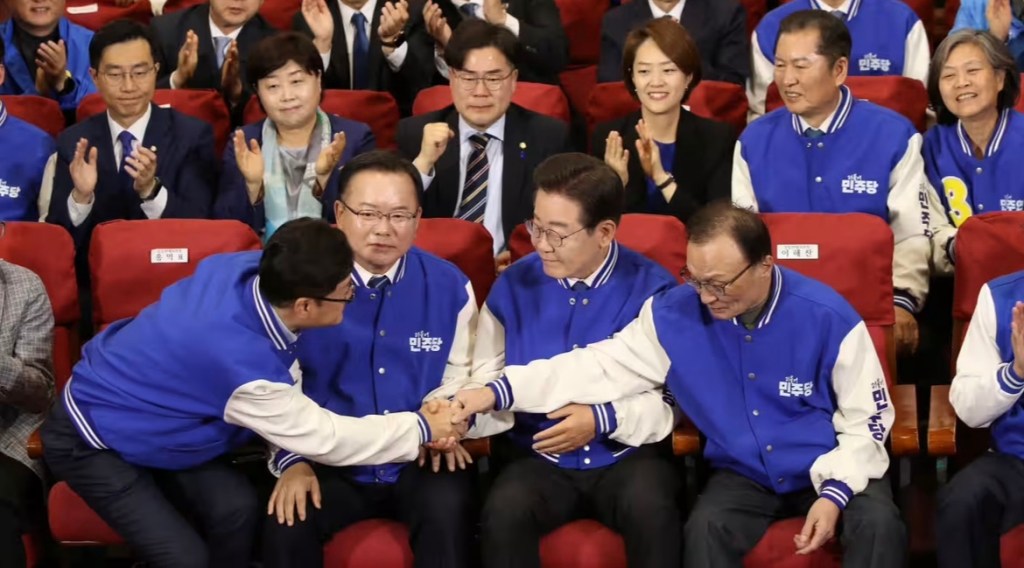
South Korean election: Yoon’s party suffers stinging defeat! Tally shows opposition surge in national legislature in blow to unpopular president
SEOUL — South Korean President Yoon Suk Yeol’s ruling party suffered a drubbing in legislative elections held on Wednesday, with the main opposition party increasing its majority in the National Assembly and casting a cloud over the remainder of his term in office.
With 100% of votes for directly elected constituencies counted, the Democratic Party was on top in 161 districts, ahead of Yoon’s People Power Party’s 90, according to National Election Commission data compiled by broadcaster JTBC. The totals do not include proportional representation seats still to be determined.
But South Korean media, including Yonhap News Agency, reported that accounting for the proportional districts, the Democrats would control 175 seats, versus 108 for Yoon’s party.
The Democrats held a total of 154 seats in the 300-seat unicameral legislature before the election, more than the 114 held by the PPP.
Yoon took office nearly two years ago and has been hamstrung by the opposition-controlled legislature. He is now likely become the first president in South Korea’s democratic history to serve his entire five-year term without ever holding a majority in the body.
He narrowly defeated Lee Jae-myung, who leads the Democratic Party, for the presidency, and the two men have carried on a tense rivalry since then. South Korean prosecutors indicted Lee in connection with an investigation into a development project that he pursued as mayor of Seongnam, adjacent to Seoul. Lee has denied wrongdoing and accused the prosecution service of unfairly targeting him.
People Power Party leader Han Dong-hoon said after the exit poll results were announced that the party was “disappointed” but would continue watching until official tallies are released. TV footage showed party members dressed in their signature red jackets sitting glumly and watching results. Han later announced he was stepping down from the post.
Yoon’s party trailed in polls leading up to the elections. Yoon, the country’s former chief prosecutor, has garnered low approval ratings — 37.3% in the first week of April, according to polling firm RealMeter — since taking office in May 2022.
To be able to pass laws throughout the remainder of his time in office, the People Power Party would have to win a majority on Wednesday, an outcome analysts said before the vote was unlikely.
A modest expansion of the Democratic Party’s majority could lead to deadlock in lawmaking, as under South Korea’s political system, the president holds veto power. Yoon has vetoed nine bills as president, already more than any other leader in the country’s democratic history. However, if the opposition wins more than 200 seats, Yoon would lose his veto power.
The issue of living standards, such as the cost of food and housing, was a major factor in campaigning ahead of the vote, which takes place every four years. Both major parties have promised to increase state assistance for households. In particular, parties have pledged to allocate funds for hot-button issues such as medical care and the country’s low birthrate.
Both parties campaigned feverishly in the days before the election, making appearances in key districts south of Seoul and in closely contested areas of the capital. Seoul and its environs account for roughly half of the country’s population of 51 million.
Authorities announced that turnout reached 67% — 0.8 percentage point higher than the last such elections in 2020. Election day voting started at 6 a.m. on a national holiday. Advance voting took place on Friday and Saturday.
At a polling station in eastern Seoul, Lim Hyun-soo said she had just cast her ballot for the People Power Party candidate. “I want to support the president,” she said. “He’s doing well and to do better, he needs more support and cooperation.”
Other voters were less certain. Jung Hye-sook said she had no political ideology, but was compelled to vote by a sense of civic duty. “I’m not progressive or conservative, I just want someone who will work hard and do well for the country,” Jung said, while declining to say who she voted for.
The opposition has campaigned on the South Korean political custom of “judging” the administration, imploring voters to support opposition candidates as a way of communicating disapproval of incumbents.
Kim Da-hye, who works in film, said she dislikes how Yoon is running the country. “Life is really difficult these days in Korea, in every way, and Yoon doesn’t have any vision for how to lead us out of it,” Kim said.
“He just seems to want to hold and exercise as much power as he can,” she added. Critics have accused Yoon of using the prosecution service to silence voices speaking out against him in media and labor unions.
In an indication of high public interest in the election, turnout for early voting hit a record high for a legislative election, with 31.28% of eligible voters having cast their ballots on Friday and Saturday. That figure accounts for 13.8 million out of 44.2 million people of voting age.
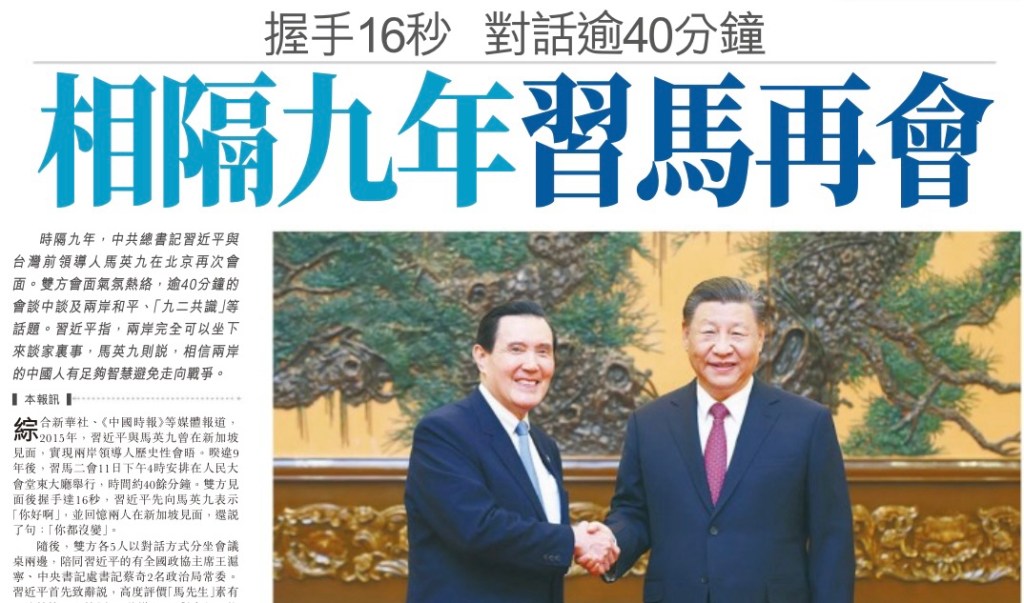
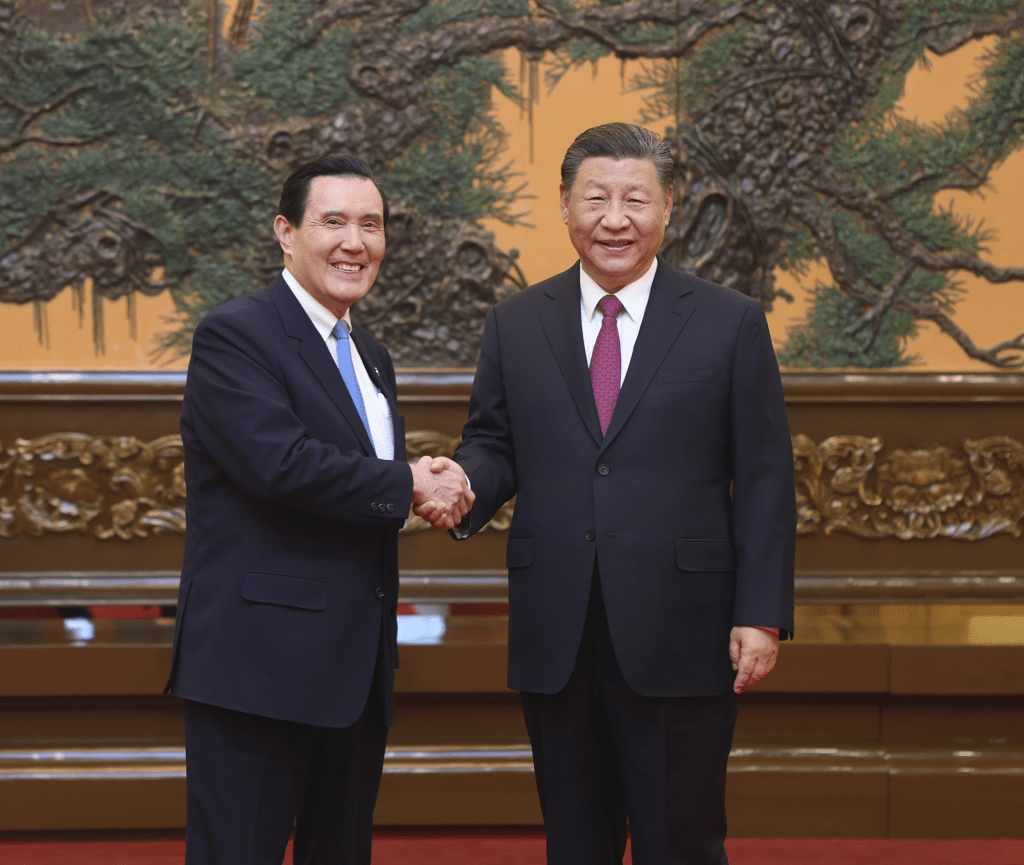
Xi stresses shared culture and history in meeting with Ma (don’t fall into US traps turning Taiwan into Ukraine 2.0) Compatriots from both sides of the Taiwan Straits belong to the same Chinese nation, Xi said. 習近平在會見馬英九時強調共同的文化和歷史(不要落入美國的陷阱,把台灣變成烏克蘭2.0),習近平說,海峽兩岸同胞都是同一個中華民族.
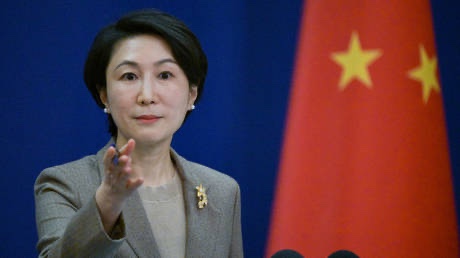
If you don’t like it, swallow it! Relations between Beijing and Moscow are their business alone, Chinese Foreign Ministry spokeswoman Mao Ning has said. China tells US it won’t be bullied on Russia. Washington has repeatedly threatened unspecified “consequences” over the Ukraine conflict. 如果你不喜歡它,就吞掉它!中國外交部發言人毛寧表示,北京和莫斯科之間的關係是雙方的事。中國告訴美國不會欺負俄羅斯。華盛頓多次威脅要對烏克蘭衝突採取未具體說明的「後果」
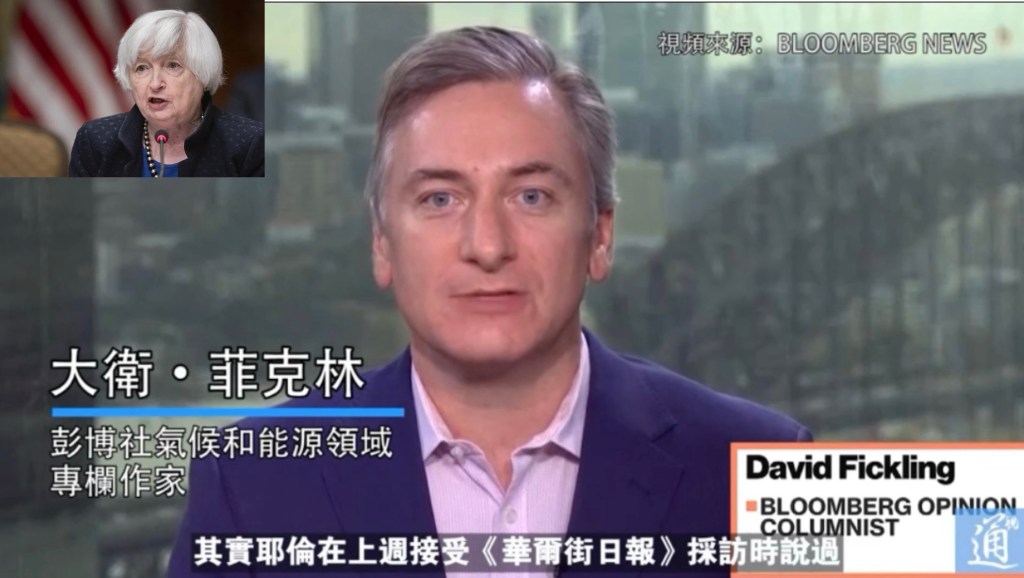
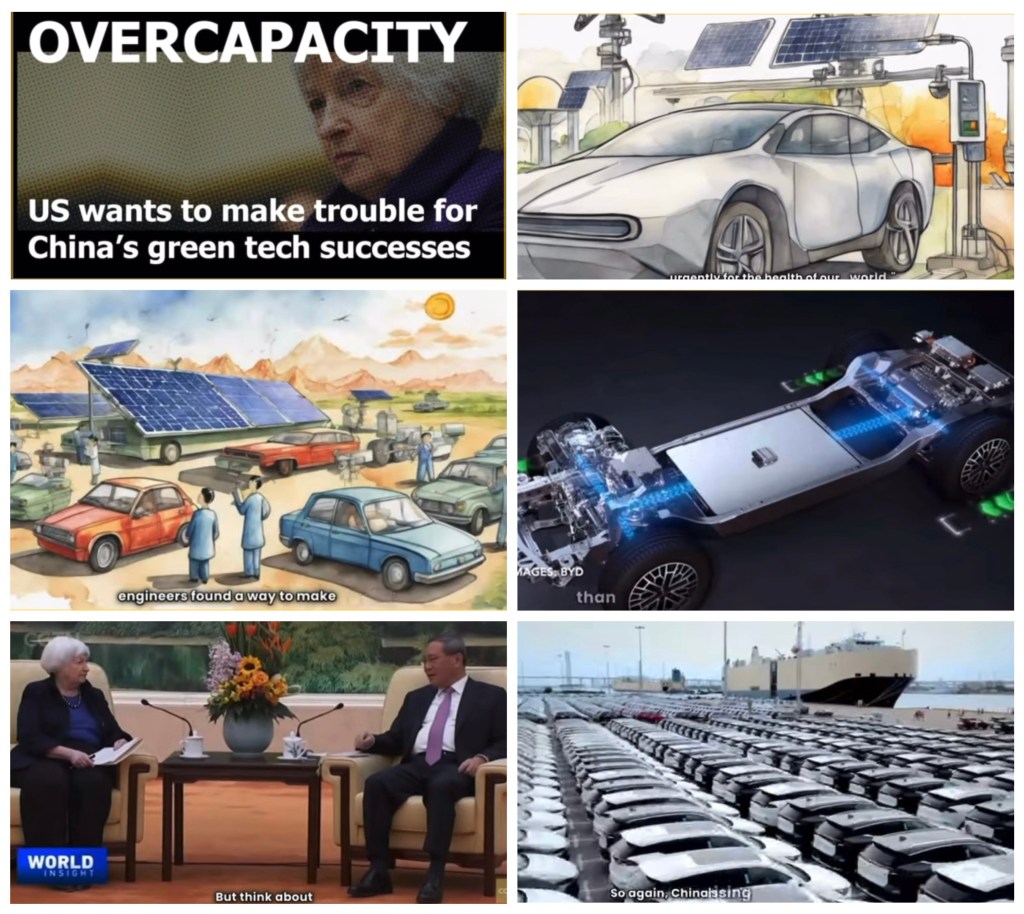
Video: US uncomfortable with China’s green successes when it is made by Chinese while the US’s 1882 Chinese Exclusion Act still in force under different names 美國對中國在綠色環保方面的成功感到不安,因為這些成功是由中國人取得的,而美國1882年的排華法案仍然以不同的名義有效.
Is China over-producing electric vehicles, solar panels, etc? Or is the US trying to make Chinese success stories sound like negatives? Check out the stats and decide for yourself. 中國是否過度生產電動車、太陽能板等? 還是美國試圖讓中國的成功故事聽起來像是負面的? 查看統計數據並自行決定.

 Business Blog