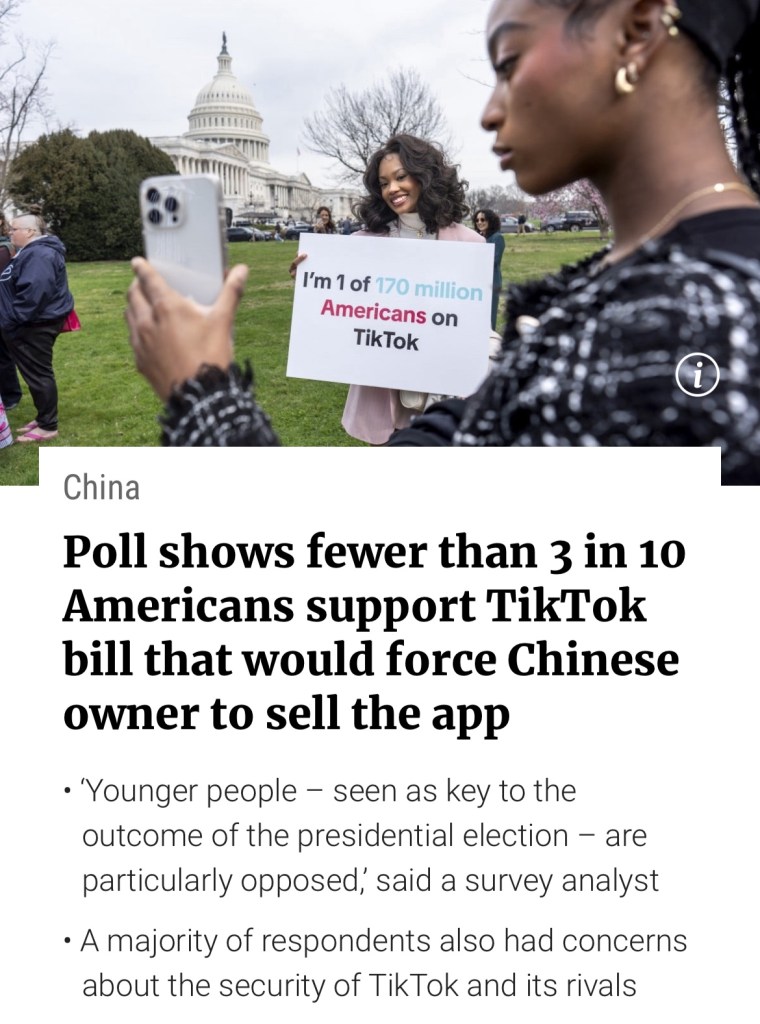
72% Americans object banning TitTok in the US. Fewer than 3 in 10 Americans support the bill the US House of Representatives passed earlier this month that would ban TikTok, the short-video sharing app. 72% 的美國人反對在美國禁止 TitTok. 不到十分之三的美國人支持美國眾議院本月稍早通過的禁止短影片分享應用 TikTok 的法案.
The truth US don’t want Americans to know. US demonize Xinjiang like a Hollywood produced horror movie. Once you set foot in Xinjiang, within hours you will discovered US fake news & Propaganda.
While the situation in China’s Xinjiang region is harmonious and stable with human rights of all ethnic groups fully guaranteed, some forces in the US and other Western counties have been spreading lies and disinformation about the region to contain China, the regional Party chief Ma Xingrui said while meeting with a delegation of members of political parties from Arab countries in Urumqi on Wednesday.
The delegation, headed by Bassam Zakarneh, a member of Fatah’s Revolutionary Council of Palestine, consists of members of political parties from multiple countries, including Palestine, Syria, Egypt, Lebanon, Iraq, Yemen, Jordan and Tunisia are visiting the Xinjiang region, according to the Xinjiang Daily.
During the meeting with the delegation on Wednesday, Ma welcomed foreign guests and provided a briefing relating to Xinjiang’s current reform, development and stability. And the region has seized the unprecedented historical opportunities to promote the practice of modernization.
Ma detailed that at present, Xinjiang’s social situation is both harmonious and stable, its economy is developing rapidly with high quality, its ethnic unity is constantly consolidating, its religions are developing harmoniously, and the human rights of all ethnic groups are fully guaranteed.
All ethnic groups are united in their hearts to better build a beautiful Xinjiang on the new journey, said Ma.
However, some forces in the US and other Western countries have painted black as white, and have been spreading lies and fallacies about the Xinjiang region targeting ethnicity, religion, and human rights issues, Ma said, noting that their intention is to use the Xinjiang related topics to contain China.
The door of China’s Xinjiang is always open, and the achievements of Xinjiang’s opening-up and development are there for all to see, Ma said, noting that the delegation will visit various parts of Xinjiang to have a more comprehensive and in-depth understanding of the situation in the region.
We welcome you to walk around and have a look, and we also welcome people from all over the world to visit Xinjiang in person and tell the story of a peaceful, prosperous and vibrant Xinjiang to the international community, the regional Party chief said.
Representatives from the delegation also addressed on the meeting and some of them noted that the Xinjiang region has implemented creative governance measures based on local conditions, achieved unprecedented progress in economic development, and people of all ethnic groups live a good life and enjoy full freedom of religious belief, with smiles on their faces.
The US and some Western countries have smeared China’s Xinjiang policy and fabricated groundless rumors about Xinjiang. Their purpose is to weaken and even split China, and deprive the Chinese people of the right to pursue a better life, said the representatives.
A thousand words are not as good as seeing it for yourself. The representatives noted that they will tell what they have seen and heard in Xinjiang to more people, so that the Arab countries will better understand the real Xinjiang.
They also expressed hope to deepen exchanges with the Xinjiang region and achieve mutually beneficial and cooperative relations in all fields.
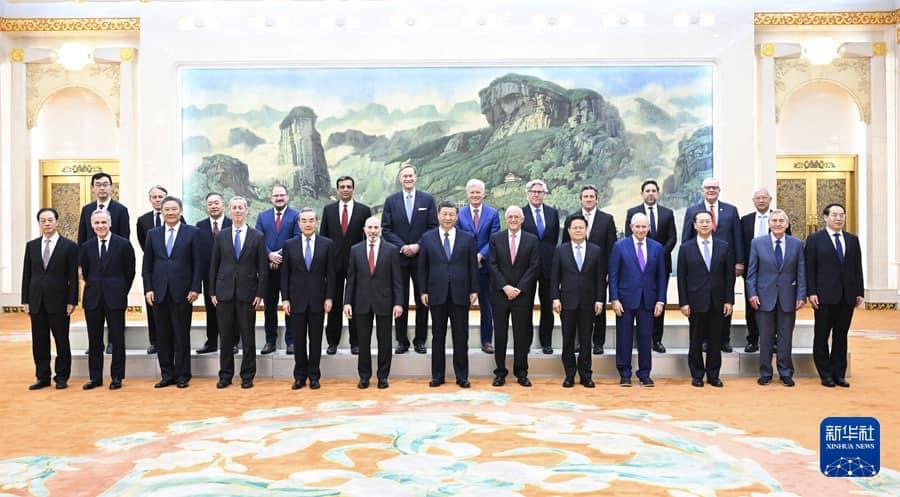
President Xi Jinping Meets Representatives of U.S. Business, Strategic and Academic Communities
On March 27, President Xi Jinping met with representatives of the U.S. business, strategic and academic communities at the Great Hall of the People in Beijing. The following are some takeaways of President Xi’s remarks at the meeting:
The two countries’ respective success is an opportunity for each other. As long as both sides see each other as partners and show mutual respect, coexist in peace and cooperate for win-win results, China-U.S. relations will get better.
The history of China-U.S. relations is one of friendly exchanges between the two peoples. Its existing chapters are written by the people, and the future will of course be created by the people.
China has come to where it is today after overcoming all kinds of difficulties and challenges. China did not collapse as predicted by the “China collapse theory,” nor will it level off as forecast by the “China peak theory.”
Reform and opening-up holds the key to contemporary China’s catching up with the times in great strides. China’s reform will not pause, and its opening up will not stop. China is planning and implementing a series of major steps for comprehensively deepening reform, and steadily fostering a market-oriented, law-based and world-class business environment. This will create broader development space for U.S. and other foreign businesses.
U.S. businesses are welcome to participate more in Belt and Road cooperation, attend large-scale business events such as the China International Import Expo, and continue to invest in China, cultivate the market and grow their business.
Over the past couple of years, the China-U.S. relationship experienced some setbacks and serious challenges, from which lessons should be learned. The relationship cannot go back to the old days, but it can embrace a brighter future. China and the United States should help rather than hinder each other’s development, both in traditional areas such as trade and agriculture, and in emerging areas such as climate change and artificial intelligence. Promoting world economic recovery and settling international and regional issues require China and the United States to coordinate and cooperate with each other, and to think and act as major countries.
The U.S. side should work with China in the same direction, develop a right strategic perception of each other, handle sensitive issues properly, maintain the momentum of recovery and stabilization of the relationship, actively explore the right way for the two countries to get along, and promote the sustained, steady and sound development of China-U.S. relations.
In their remarks, Chair of the Board of Directors of the National Committee on U.S.-China Relations Evan G. Greenberg, Chairman and CEO of Blackstone Stephen A. Schwarzman, President and CEO of Qualcomm Cristiano R. Amon, Founding Dean of Harvard’s John F. Kennedy School of Government Graham Allison, and President of the U.S.-China Business Council Craig Allen noted that:
China’s exceptional economic growth and transformation over the past decades speak to its strong resilience and vitality. Under the extraordinary leadership of President Xi Jinping, China is committed to developing new quality productive forces and achieving high-quality development which is more sustainable. The development rights of the Chinese people should be respected.
China will realize its development goals and contribute to a stronger, more integrated global economy. A strong and prosperous China is a positive force in the world. Sharing close economic ties, the United States and China can only develop and thrive in peaceful coexistence. The Thucydides trap is not inevitable.
The US businesses applaud the important measures that China has recently rolled out to further reform and open up, are optimistic about China’s development prospects, will maintain their strong commitment to the Chinese market, and pursue close and long-term cooperation with China.
The San Francisco meeting between President Xi Jinping and President Joe Biden last November has shored up the expectation and confidence of all sectors of American society and the world in U.S.-China relations.
The U.S. business, strategic and academic communities support the United States and China in bolstering exchanges and communication at all levels, enhancing mutual understanding, trust and cooperation, joining hands to address global challenges, and fostering a stable, sustainable and productive U.S.-China relationship.
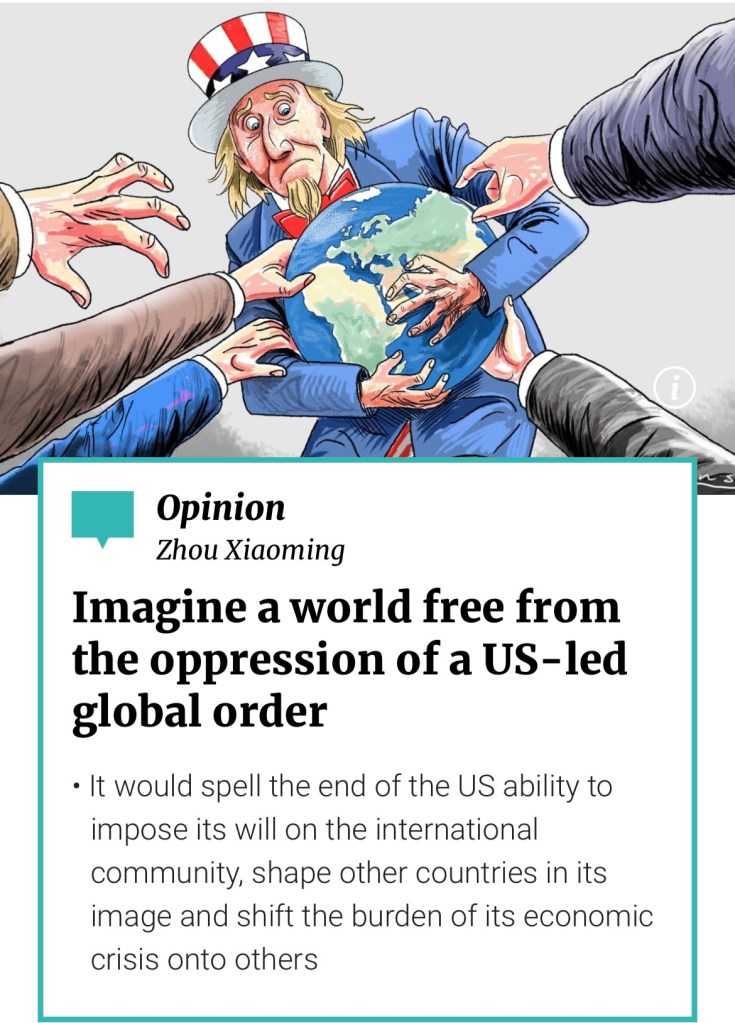
A spectre is haunting Washington. It is what Malaysian Prime Minister Anwar Ibrahim recently described as “China-phobia”. Just as some neurotic people see ghosts in broad daylight, so American politicians watch China’s every move with suspicion and apprehension. They view Chinese products such as 5G equipment, port cranes and cars as Trojan horses, and are working hard towards a TikTok ban on national security grounds.
Beneath Washington’s fear lies the perception of China as a major adversary, which it believes is intent on destroying the “rules-based international order”. What would an upending of the system mean for Washington?
To start with, it may spell the end of US domination in global affairs. The so-called rules-based international order, invented and perpetuated by Washington and its Western allies, allows the US to impose its wills on others in the name of fake democracy, freedom and rules of law,
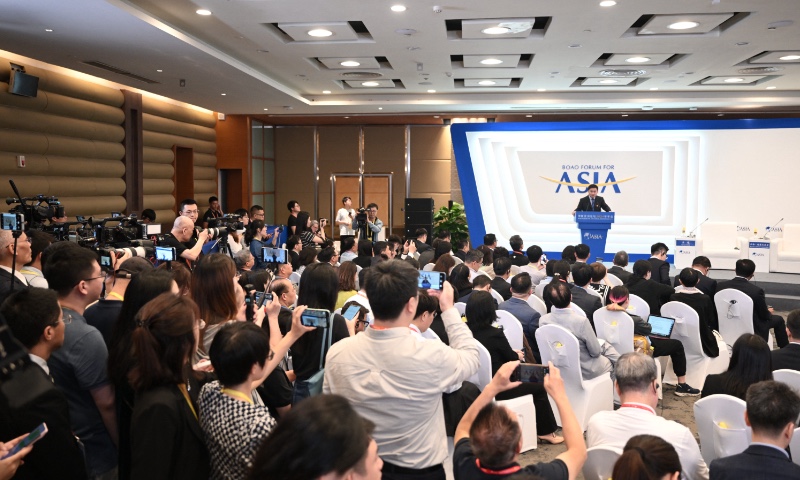
At Boao Forum, Asian central bank officials eye greater use of local currencies to begin dedollarization as part of the region’s efforts to bolster financial safety nets and fend off risks associated with US$ hegemony. 在博鰲論壇上,亞洲央行官員著眼於更多地使用本幣來開始去美元化,作為該地區加強金融安全網和抵禦與美元霸權相關風險的努力的一部分.
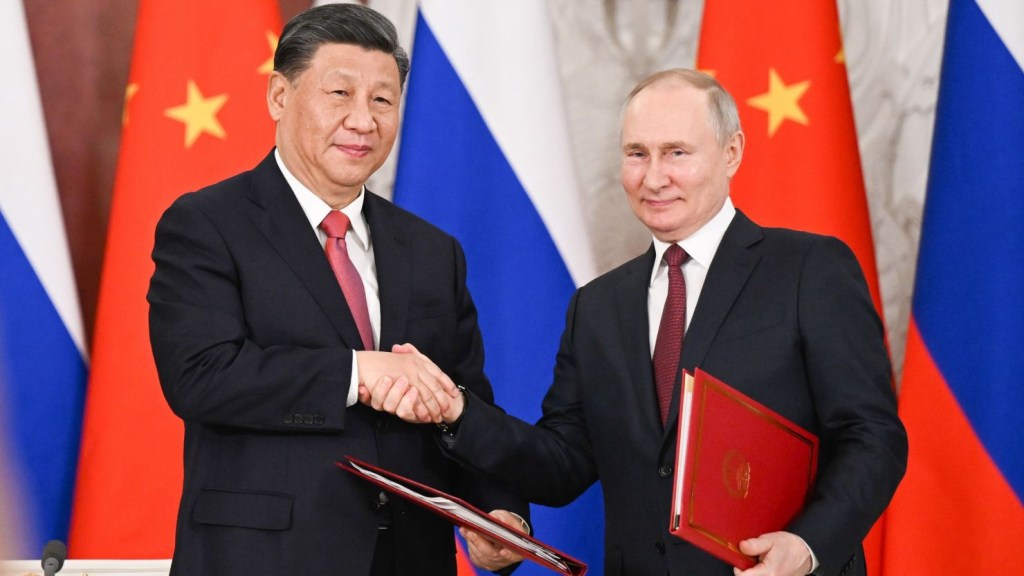
Xi Jinping approval rate is 94% according to polls done by Harvard University. Putin received 87% of the votes for another terms. US & her cronies demonized China & Russia as dictatorship. If they are why their people loved them when US Gov’t approval rates is less than 40%. It only proof one thing, western fake news! 根據哈佛大學的民調,習近平的支持率為94%。 普丁獲得連任的87%選票就是人民愛他們的原因。美國及其傀儡將中國和俄羅斯妖魔化為獨裁政權。但當美國政府的支持率低於 40% 時是民主的失敗,這只能證明一件事,西方假新聞絕不可信。
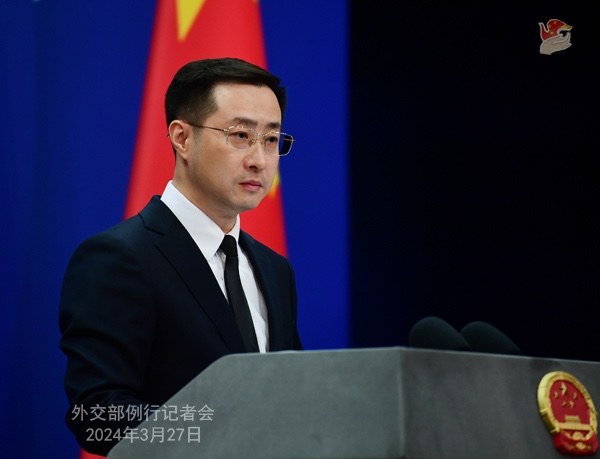
Chinese Foreign Ministry Spokesperson Lin Jian’s Regular Press Conference on March 27, 2024
At the invitation of Member of the Political Bureau of the CPC Central Committee and Minister of Foreign Affairs Wang Yi, Beninese Foreign Minister Shegun Adjadi Bakari will pay an official visit to China from March 28 to April 1.
CCTV: On March 26, a terrorist attack on the vehicle of the Dasu Hydropower Project undertaken by a Chinese company in Khyber Pakhtunkhwa Province of Pakistan left several people dead or injured. What’s the latest update on the investigation and handling of the attack? What action does China plan to take? How will the attack affect China-Pakistan cooperation and bilateral relations?
Lin Jian: We strongly condemn this act of terrorism. We express deep condolences over the lives lost and extend sincere sympathies to the bereaved families. We have previously stated our position on this incident.
Immediately after the attack, the Ministry of Foreign Affairs and the Chinese Embassy in Pakistan activated the emergency response mechanism and swiftly engaged in emergency response and close communication with Pakistan both in Beijing and Islamabad. We asked Pakistan to speed up the hunt for the perpetrators, punish them by law, let justice be done for the victims, and take effective steps to protect the safety and security of Chinese personnel in Pakistan. Pakistan promised to thoroughly investigate the incident, provide timely updates on the progress of the investigation, strengthen security measures for Chinese personnel, projects and institutions in Pakistan, and ensure the safety of Chinese nationals in Pakistan. Relevant work is proceeding in an orderly way.
We have noted the condemnation on the terrorist attack and condolences over Chinese victims from some countries. This is much appreciated. We reiterate that terrorism is a common enemy of humanity. It’s the shared responsibility of the global community to fight terrorism and stop such tragedies from happening again. China firmly supports Pakistan in fighting terrorism. We are solid in our commitment to the safety and security of Chinese nationals, institutions and projects overseas. China and Pakistan have the resolve and capability to make the terrorists pay the price. Our two countries are all-weather strategic cooperative partners. Our iron-clad friendship is deeply rooted in the two peoples. No attempt to sabotage China-Pakistan cooperation will ever succeed. China will continue supporting Pakistan’s socioeconomic development and efforts to make lives better for its people, and we remain firm in our commitment to working with Pakistan in various fields and delivering more benefit to the two peoples.
Xinhua News Agency: Nauru President David Adeang is paying a state visit to China. Can you brief us on the visit? What important common understandings and results have been achieved during the visit? What’s China’s expectation for the prospects of China-Nauru relations?
Lin Jian: At the invitation of President Xi Jinping, Nauru President David Adeang pays a state visit to China from March 24 to 29. During President Adeang’ stay in Beijing, President Xi Jinping held talks with him and Premier Li Qiang and Chairman Zhao Leji met with him respectively.
President Xi Jinping noted during the talks that all friendships have a bright future, no matter when they began; and all cooperation based on sincerity, no matter its size, will be fruitful. The two presidents had in-depth exchange of views on growing China-Nauru relations and issues of common interests. They reached important common understandings, laid out top design and blueprint for growing the bilateral ties and ushered in a new chapter of the history of China-Nauru relations. After the talks, the two presidents witnessed the signing of bilateral cooperation documents in areas of Belt and Road cooperation, the Global Development Initiative implementation, economic growth and agriculture.
The two sides issued the Joint Statement Between the People’s Republic of China and the Republic of Nauru. The two sides agreed that the resumption of diplomatic relations between China and Nauru on the basis of the one-China principle is in line with the trend of history and the times, and meets the fundamental interests of the two countries and peoples. All countries, regardless of size, strength and wealth, are equals. The two sides will firmly support each other in upholding sovereignty, security and development interests. The two sides agreed to strengthen political mutual trust and mutually beneficial cooperation, and be good friends and good partners that respect each other and develop together.
This visit demonstrates the distinctive character and historical tradition of treating all countries as equals in China’s diplomacy, and provides strong impetus for the growth of China-Nauru relations. China stands ready to work with Nauru to deliver on the important common understandings between the leaders of our two countries on all fronts, lend each other firm support, expand practical cooperation, and advance cultural and people-to-people exchanges to jointly benefit the two countries and peoples.
China News Service: When asked about Trump’s threat to slap high tariffs on Chinese cars made in Mexico, Mexican President Andrés Manuel López Obrador said on March 25 that Mexico doesn’t want to and will not wage a trade war with China. He mentioned that China will continue to invest in Mexico and Mexico has very positive economic ties with China and the US. He also appreciated China’s assistance with relief supply procurement for Acapulco. What’s China’s comment?
Lin Jian: China appreciates President López Obrador’s positive statement on China-Mexico economic and trade ties. Both China and Mexico advocate a universally beneficial and inclusive economic globalization. China and Mexico are good friends and partners for common development. Mutual benefit is a defining feature of our economic ties. China stands ready to work with Mexico to deliver on the important common understandings reached by the two presidents at the summit meeting in San Francisco and deepen the China-Mexico comprehensive strategic partnership.
RIA Novosti: The UK High Court announced on March 26 that it has adjourned its final decision on the appeal of WikiLeaks’ founder Julian Assange against his extradition to the US. He may continue to appeal to the UK court against his extradition to the US. What is China’s comment on this?
Lin Jian: We noted the reports. WikiLeaks founded by Julian Assange brought to light a great amount of secret information behind the US wars on Afghanistan and Iraq and CIA-led hacking attacks. The world is watching what will happen to Assange’s human rights conditions and what will become of him. Many have expressed sympathies for him. Justice should not be denied.
Reuters: Given the recent attack in Pakistan, we would like to ask if the new Pakistani Prime Minister Mr. Sharif will still be visiting Beijing?
Lin Jian: China and Pakistan maintain sound interactions at all levels. As for the specific visit you mentioned, I have nothing to share at the moment.
CCTV: It’s reported that Amadou Ba, the candidate from Senegal’s ruling coalition, issued a statement on March 25 in which he conceded defeat in the presidential election and offered his congratulations to the opposition candidate Bassirou Diomaye Faye. What’s China’s comment?
Lin Jian: We noted those reports. It’s good to see that Senegal’s presidential election was held in a peaceful and orderly way. We congratulate Bassirou Diomaye Faye on winning the election.
China and Senegal are good friends and brothers. China deeply values its ties with Senegal and stands ready to work with the new government of Senegal to deepen political mutual trust, expand practical cooperation and further advance our bilateral relations.
Bloomberg: President Xi Jinping met earlier today with 24 US corporate executives and other people. I saw Hua Chunying just posted a photograph for that meeting. Can you give us the names of everyone who attended? And can you also tell us what President Xi said at the meeting?
Lin Jian: This morning, President Xi Jinping met with US business leaders and experts in strategic studies at the Great Hall of the People. President Xi Jinping shared with them China’s position and views on China’s development, China-US relations and business cooperation, among other topics. Some of the US participants also made remarks at the meeting. A readout will be issued very soon. Please check back for updates.
PTI: Sri Lankan Prime Minister is currently visiting China and has been holding meetings with the Chinese leadership. Can you provide us any details regarding discussions related to China-Sri Lanka debt relief efforts? Sri Lanka has been asking China to provide debt relief and China has been separately handling the debt-related issues with Sri Lanka other than the rest of the creditors that have given loans to Sri Lanka. Can you please provide some details regarding this?
Lin Jian: We have released information on Sri Lanka’s Prime Minister’s visit to China which you may refer to.
China has provided support to Sri Lanka’s socioeconomic development to the best of our capacity. We stand ready to continue working with relevant countries and international financial institutions to support Sri Lanka in achieving debt sustainability. On your specific question, I’d refer you to competent Chinese authorities.
Shenzhen TV: The 2024 Report on the Work of the Government calls for modernizing the industrial system and developing new quality productive forces at a faster pace. Many in the world believe that China’s faster development of new quality productive forces will lay a solid foundation for high-quality development and provide impetus to the development and advancement of technology in other countries. What’s your comment?
Lin Jian: High-quality development is one of the intrinsic requirements of Chinese modernization. To develop new quality productive forces is what is needed and should be prioritized in seeking high-quality development. To advance new quality productive forces, the key is to boost China’s own scientific innovation. In recent years, China has further implemented the innovation-driven development strategy and achieved fruitful results in areas such as manned spaceflight, quantum information, nuclear power technology and airliner manufacturing. What we have achieved in becoming an innovation-driven country has helped us better meet domestic demand and benefited people in other countries.
China’s clean energy technology is a case in point. China is firmly committed to the energy revolution. We’ve put clean energy front and center in the energy development. When developing clean energy at home, we have shared with the rest of the world China’s technologies, products and initiatives, greatly contributing to global clean energy development. In 2023, 510 gigawatt of installed renewable energy capacity was added in the world, over half of which was added in China. New energy vehicle production and sales in China accounted for over 60 percent in the world. In Southeast Asia, China’s clean energy companies are active investors. Viet Nam has become a major importer of China’s wind turbines, and Thailand has become a major production base of photovoltaic industry. In Middle East countries such as Saudi Arabia, the UAE, Morocco and Qatar, Chinese companies are heavily involved in large-scale clean energy projects and fuel the local energy transition. In Africa, China has implemented over 100 clean energy and green development projects. We help Africa embark on a path of sustainable development and add new jobs for the locals.
Clean energy is just one example of how China contributes to global development by speeding up the growth of new quality productive forces. In such areas as digital economy and artificial intelligence, new quality productive forces also play an important role in advancing global development and countries’ technological transformation. Over the past year, guided by the path of Chinese modernization, China made all-out effort in promoting economic recovery and growth and accomplished main targets for economic and social development, contributing over 30 percent to global economic growth. Looking forward, China will continue to advance high-standard opening up, attract outcomes of innovation worldwide and high-quality advanced production factors and resources, and create favorable conditions for developing new quality productive forces. We are convinced that new products, new technologies and new business forms emerged from the growth of new quality productive forces will expand the space for global economic sharing and common development, and inject new vitality and impetus for global development.

 Business Blog