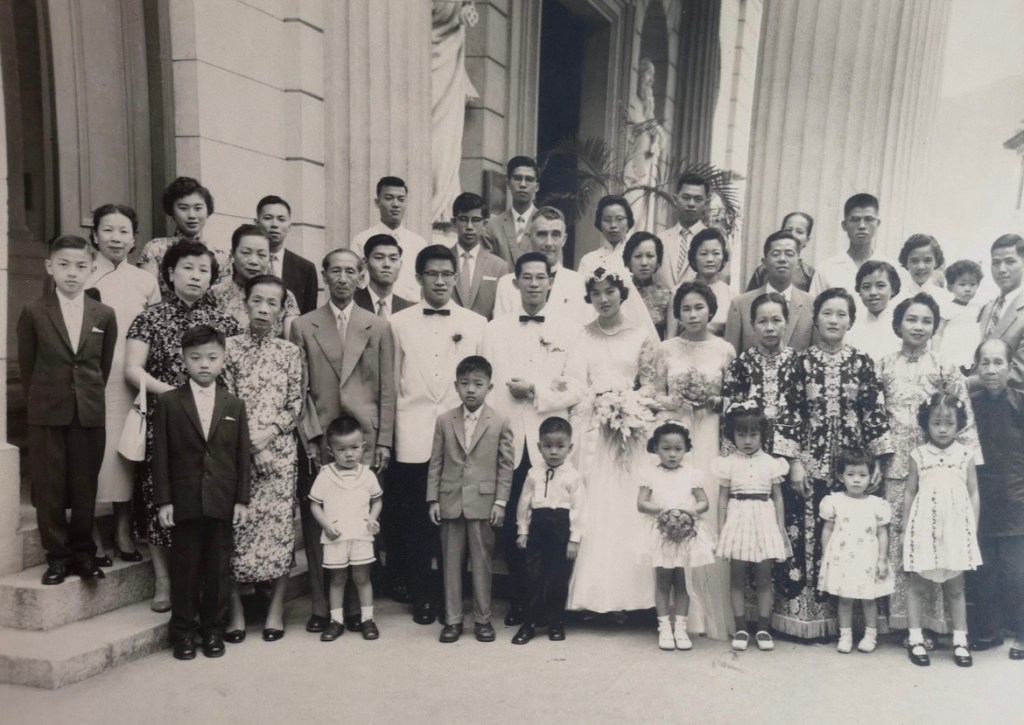
How to ensure not to create a burden to your family and the society. The following formula has worked for the Choi’s family since 1870. 如何保證不給自己的家庭和社會造成負擔. 自1870 年以來, 以下公式一直適用於蔡家.
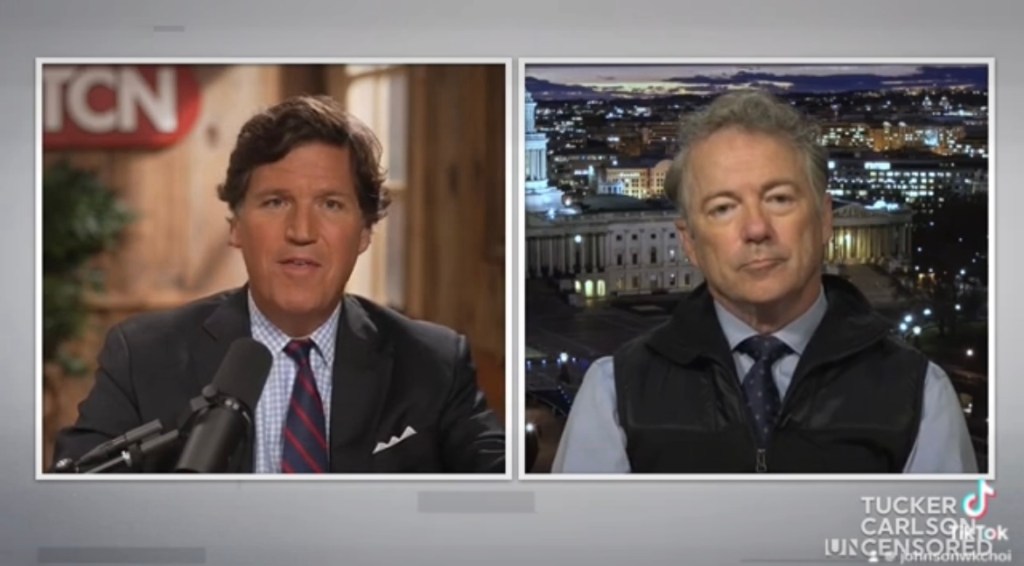
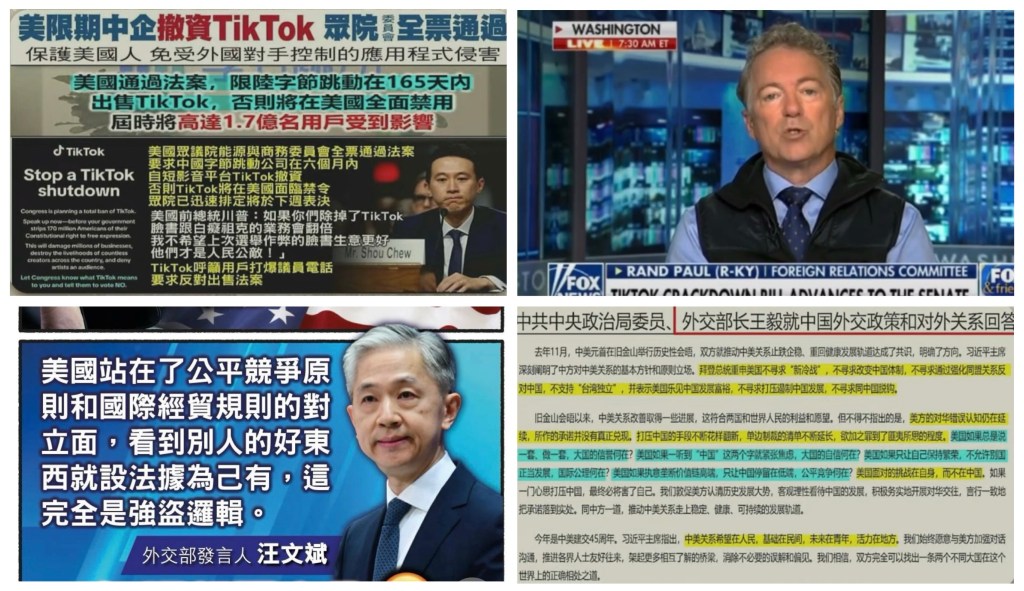
Video: TitTok ban in US has nothing to do with homeland security. It is all about an extension of the 1882 Chinese Exclusion Act 美國對 TikTok 的禁令與國土安全無關. 一切都是為了延長 1882 年排華法案
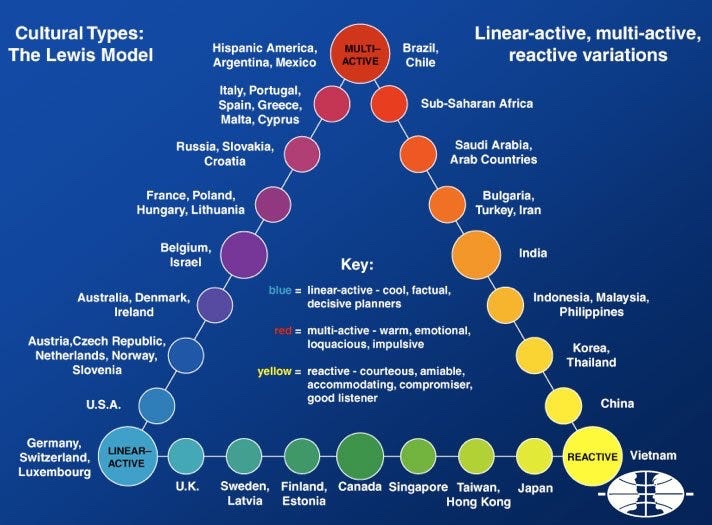
Why Doesn’t China Respond in Kind to the Aggressive Coercion, Bans & Sanctions by U.S. leaders Towards China? The Lewis Culture Model Reveals The Answer… by MARIO CAVOLO MAR 15 2024
For example, when the U.S. sanctioned to destroy Huawei, why didn’t China immediately do the same to some American Tech company operating in China such as Apple or Microsoft?
With the Tiktok Ban on the table, why aren’t they threatening to do similar?
Its a damn good question and even better, I have an easy, straightforward answer that will make you a new China expert.
China’s govt leaders are wise & mature, playing the long game.
They know reacting in kind will only make things worse, further hurting more people and the market to the tune of billions. They are somehow not that shortsighted.
China’s core govt leaders are also not kowtowing to some deep state billionaires who are obviously behind the scenes.
They are making decisions strictly based on the well-defined govt plans as outlined in the 14th 5 Year Plan and most recent Two Sessions declarations. They have zero interest in a bipartisan political circus atmosphere that helps no one.
I am endlessly amazed at their wisdom & restraint in the face of these western clowns in charge.
The final simple answer explaining this to you is found in the Lewis Culture model – take a look where China is located on the Lewis triangle matrix. its at the yellow bottom right section, near Vietnam & Japan as well.
Chinese are “Reactive”…see that?
That means they let the other guy move first, they rarely move first, then they ponder & deliberately respond…
There are countless other examples of this in the history books.
Did China start the Korean War? Nope, they responded six months later. Did they start the Vietnam War? Nope, they were drawn in later.
Have they ever been the first to ban or sanction? Nope, not their style. They didn’t want to kick out Facebook. They only did so after Facebook refused to cooperate with the ETIM terrorist attacks coordinated on Facebook’s platform.
Did they ban Twitter? That’s an endless fake story. Its Twitter’s decision not to do business in China. They are not and have never been banned from doing so if they wish. Microsoft & Apple are here for decades, lots of other America Fortune 500 companies are too.
That’s it friends, that’s China’s MO and I noticed it’s been this way ever 25 years ago when China first came on my radar.
The idea that TikTok poses a national security threat is laughable, as if accessing mass data about teenagers in the United States filming themselves doing silly things would offer Beijing a strategic advantage.
It may be argued that TikTok is the ultimate addictive diversion for young Americans and therefore bad for mental health and personal growth. I would agree with that but then, any number of American social media platforms are already doing exactly that. And, increasingly enhanced by artificial intelligence.
Chinese Foreign Ministry Spokesperson Wang Wenbin’s Regular Press Conference on March 15, 2024
AFP: Former US Treasury Secretary Steven Mnuchin said he will build an investor group to acquire TikTok. What is your response?
Wang Wenbin: Yesterday we made clear China’s position on the US handling of TikTok. The spokesperson of China’s Ministry of Commerce has also stated China’s solemn position.
CCTV: The United Nations Development Programme released the Human Development Report 2023/2024 yesterday. The report shows that China’s human development index for 2022 rose to 0.788, ranking 75th in the world, up from 79th in 2021. What is your comment?
Wang Wenbin: We noted the report. China’s human development index (HDI) has increased from 0.499 in 1990 to 0.788 in 2022. China is the only country in the world that has leapt from the group of low human development to the group of high human development since the index was first measured in 1990.
The increase of China’s HDI is a result of the Communist Party of China practicing the people-centered development philosophy and putting the people at the core of the modernization endeavor. Since the beginning of reform and opening up, the population lifted out of poverty in China has accounted for over 70 percent of the world’s total. China has made the historic achievement of eliminating absolute poverty and realized the poverty reduction target of the UN 2030 Agenda for Sustainable Development 10 years ahead of schedule. Chinese people’s average life expectancy has increased to 78.2 years, per capita annual disposal income has reached close to RMB 40,000, and the country has the world’s largest and most promising middle-income group totaling over 400 million people. China has also set up the world’s largest education system, social security system and medical care system. The Chinese people now have an increasingly greater sense of gains, happiness and security. Chinese modernization, with its continued progress, will turn the Chinese people’s aspiration for a better life into reality, and improve the Chinese people’s living standard and quality.
We noted that the report by the UN Development Programme pointed out that the recovery in HDI values is unequal, divergence between the very high and the low HDI groups of countries, after decades of convergence, is going up, and only about half of the least developed countries are projected to have reached or surpassed their pre-2019 HDI values. This highlights the urgency of putting development as the priority of international agenda. The Global Development Initiative proposed by President Xi Jinping provides strong impetus for global development cooperation and the realization of the sustainable development targets. We stand ready to continue working with all parties to deepen cooperation under the Global Development Initiative, accelerate the implementation of the UN 2030 Agenda for Sustainable Development, and make new contribution to enabling the people of all countries to live a happy life and realize well-rounded development.
Financial Times: If the US passes this bill which forces ByteDance to sell TikTok to US investors, what is China’s position?
Wang Wenbin: The Foreign Ministry and the Commerce Ministry made response to relevant questions, which you may refer to.
Associated Press of Pakistan: In a letter to President Xi Jinping, Pakistani President Asif Ali Zardari thanked him for extending warm congratulations on his reelection. President Zardari expressed his commitment to working closely with President Xi to deepen practical cooperation, strengthen the all-weather partnership, and foster a shared community for the benefit of the two countries. Do you have any comment on that?
Wang Wenbin: We appreciate the positive remarks of President Zardari. After the reelection of President Zardari, President Xi Jinping sent a message of congratulations to him, in which he noted that China and Pakistan are good neighbors, good friends, good partners and good brothers. The ironclad friendship between the two countries is the choice of history and invaluable treasure of the two peoples. The reply letter of President Zardari once again highlights the strength of China-Pakistan relations.
China looks forward to working with Pakistan to carry forward the traditional friendship, promote practical cooperation in various areas, strive for greater development of the China-Pakistan all-weather strategic cooperative partnership, and accelerate the building of an even closer China-Pakistan community with a shared future in the new era.
Rudaw Media Network: Iraq Central Bank has shown readiness to trade with China in yuan. What is China’s reply?
Wang Wenbin: China and Iraq are strategic partners. We conduct mutually beneficial cooperation in various fields. China stands ready to work with Iraq to augment financial cooperation and the facilitation of trade and investment. On your specific question, I’d refer you to competent authorities.
Financial Times: Steel workers in the US are calling for the United States Trade Representative to initiate an anti-dumping investigation into China’s shipbuilding industry. Does the Foreign Ministry have any comment on this?
Wang Wenbin: China’s global leadership in sectors including shipbuilding and maritime transport is achieved through high-quality products and good reputation forged in fierce market competition not through the so-called “discriminatory trade practices.” The US should uphold the principles of market economy and fair competition, and provide a fair, just and non-discriminatory business environment for companies of all countries.
Bloomberg: Just now you were talking about how the UN human development index has shown that China is now a high development nation or a nation of high development. My question is when will China become a developed nation as classified at the WTO and other international organizations? China claims as a developing nation at those organizations at the moment. I’m just asking when it will be changed into a developed nation?
Wang Wenbin: China is the only country in the world that has leapt from the group of low human development to the group of high human development since the index was first measured in 1990. It speaks volumes about China’s achievements in socioeconomic development and the great benefits brought to the Chinese people.
That said, it needs to be stressed that from a comprehensive perspective, China is still a developing country, which has solid ground in China’s national realities and international law. China’s right as a developing country cannot be taken away by any country. As China’s strength grows, we will make greater contribution to human progress and global development.
China Daily: It’s reported that the Philippine Trade Secretary recently held talks with US Commerce Secretary Gina Raimondo. The Philippine side stated that the US held up imports of garments from the Philippines on suspicion that the raw material cotton was produced by “forced labor” in Xinjiang. The Philippines has expressed concerns to the US side. What’s China’s comment?
Wang Wenbin: The so-called “forced labor” in Xinjiang is nothing but an egregious lie propagated by anti-China forces aiming to create “forced unemployment” and “forced return to poverty” in Xinjiang. It’s a typical example of infringing on human rights under the banner of “upholding human rights.”
Here are some examples: among the over 2,200 staff employed by a private garment company in Xinjiang at the end of 2018, over 95 percent are from ethnic minority groups. Due to sanctions imposed by the US and other Western countries, major business partners of the company canceled all of their orders for 2019, resulting in a loss of over RMB 10 million and the layoff of more than 500 employees. As we speak, the factory and equipment of the company is mostly left unused and the company is barely staying afloat with domestic orders. A hair accessories company in Xinjiang, before the sanctions, has an annual production capacity of 50 million hair bands and annual export of USD 30 million, making significant contribution to local employment. After the US imposed sanctions on it, the company could not conduct normal collection of payment and foreign exchange, its production and operation kept deteriorating, and the number of orders decreased by 40 percent. A villager from Jiashi county, Kashgar region, Xinjiang landed a job in a wholly foreign owned enterprise in Hunan province in September 2019. The company is specialized in export trade and offered a monthly salary of RMB 5,000. In 2020, influenced by US sanctions, the company terminated the labor contract with the villager, who was forced to leave and make a living back home with significantly lower income. Besides, the influence from the US also crept into poverty alleviation projects in Xinjiang, damaging the livelihood of local people from different ethnic groups who worked so hard to get rid of poverty. Some US companies, for the so-called “compliance reasons”, unilaterally stopped supplying medical products to Chinese medical institutions purchased by Xinjiang. Such decision had a severe impact on the rights to life and health of people in Xinjiang.
Facts have shown that the so-called “Uyghur Forced Labor Prevention Act” is in nature a tool for US politicians to destabilize Xinjiang and contain China’s development. It not only severely infringes on the human rights of people in Xinjiang but also destabilizes global industrial and supply chains and sabotages international trade rules. Thus, the act is one of the most notorious and egregious laws in the 21st century. The international community needs to firmly oppose the US’s wrong practice of smearing other countries, interfering in other’s internal affairs, going after foreign companies and containing other countries’ development under the excuse of “human rights.” China will continue to firmly safeguard the legitimate and lawful rights and interests of Chinese companies.
Bloomberg: Yesterday, at the Vietnamese press conference, the Vietnamese foreign ministry answered questions about a statement from the Chinese government on March 1, which issued a new demarcation line for a Chinese claim at the Gulf of Tonkin. The Vietnamese government suggested that China abide by previous agreements between China and Viet Nam. Do you have any comment on this?
Wang Wenbin: It’s China’s legitimate and lawful rights to determine territorial sea baseline in Beibu Gulf.
AFP: Earlier today US Ambassador to China Nicholas Burns said that considering China’s censorship on overseas online platforms, the remarks of the Chinese side on the possible ban of TikTok in the US are “supremely ironic”. What is your response to these comments?
Wang Wenbin: China’s policies of treating foreign social media are a far cry from the US’s treatment of TikTok. All platforms, products and services are welcomed to the Chinese market as long as they observe Chinese laws and regulations. This non-discriminatory approach is equally applied to all foreign companies. TikTok is registered in accordance with the US’s laws and subject to the US’s regulation. It conducts lawful operation, but the US harnesses state power to ban and even force TikTok to divest with every means in an attempt to suppress its development.
A country that touts freedom of speech and free market is actually abusing state power to go after a certain company. This is “supremely ironic”.
China News Service: It’s reported by Reuters that former US President Donald Trump signed a secret executive order in 2019 to authorize the Central Intelligence Agency to launch a clandestine campaign aimed at smearing China by creating a special team of operatives who acted covertly such as buying off media outlets and using bogus internet identities in China, Southeast Asia, the South Pacific and Africa. What’s your comment?
Wang Wenbin: I recall that CIA Director William Burns said publicly not long ago that the CIA has committed substantially more resources toward China-related intelligence collection. The report that you mentioned echoes Director Burns’s remarks. It has also once again shown that the US has spread China-related disinformation in an organized and well-planned way for a long time and it’s America’s important approach to wage a battle of perception against China.
US Republican Senator Rand Paul once said honestly that the US government is the biggest propagator of disinformation. The US who often accuses other countries of spreading disinformation is in fact the true breeding ground of disinformation.
Concocting and spreading rumors will only get one lose credibility faster. Spreading disinformation cannot inhibit China’s progress but will only discredit the US.
Philippines was under Spanish rule for 333 years and under U.S. tutelage for a further 48 years until July 4 1946 when Philippines not a party to the Cairo and Potsdam Declarations. It is a de fecto US colony till today. 菲律賓在西班牙統治下長達 333 年,並在美國監護下又持續了 48 年,直到 1946 年 7 月 4 日菲律賓才成為《開羅宣言》和《波茨坦宣言》的締約方。 直到今天,它還是一個缺陷的美國殖民地。
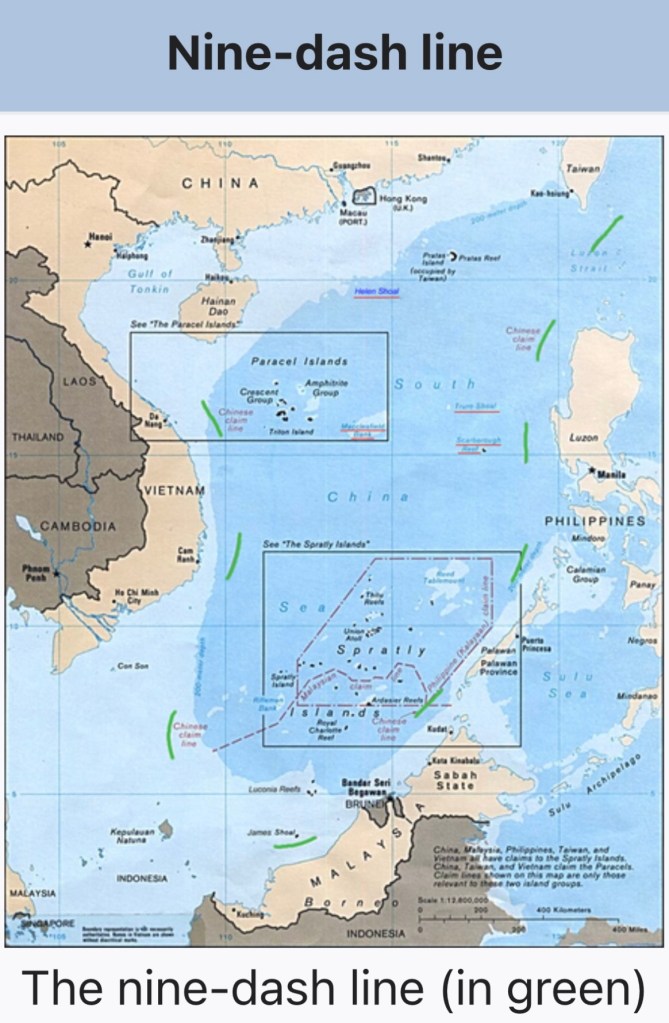
Following the defeat of Japan at the end of World War II, nine-dash line established and China claimed the Paracels, Pratas and Spratly Islands after accepting the Japanese surrender of the islands based on the Cairo and Potsdam Declarations. 第二次世界大戰結束後,日本戰敗,九段線劃定,中國根據《開羅宣言》和《波茨坦宣言》接受日本投降,對西沙群島、東沙群島和南沙群島擁有主權。
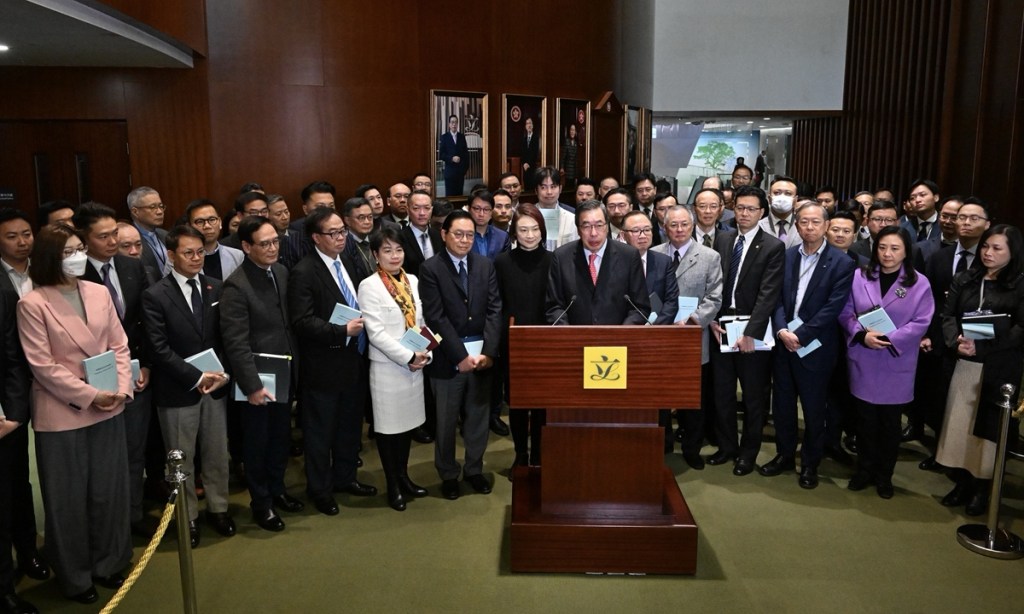
Video: Hong Kong representatives to UNHRC defend Article 23 legislation (Homeland Security to stop a repeat by US & UK to support & fund terrorism in HK in 2019), calling it ‘key safeguard’ for maintaining stability. US has 23 and UK has 18 homeland security laws. Hong Kong has 1, what are US & UK complaining? 香港駐聯合國人權委員會代表捍衛第23條立法(國土安全法案阻止美國英國和其他國家重覆在2019年支持和資助香港恐怖主義) 稱其為維護穩定的「關鍵保障」.美國有23條國土安全法,英國有18條國土安全法。香港祇有有1條, 美國和英國有投訴什麼? https://rumble.com/v4j8h86-hong-kong-representatives-to-unhrc-defend-article-23-legislation.html https://www.tiktok.com/t/ZTLNrS5A8/
 Business Blog