The #MSC2024 spotlights a crossroads in diplomacy. Which philosophy should shape our future?
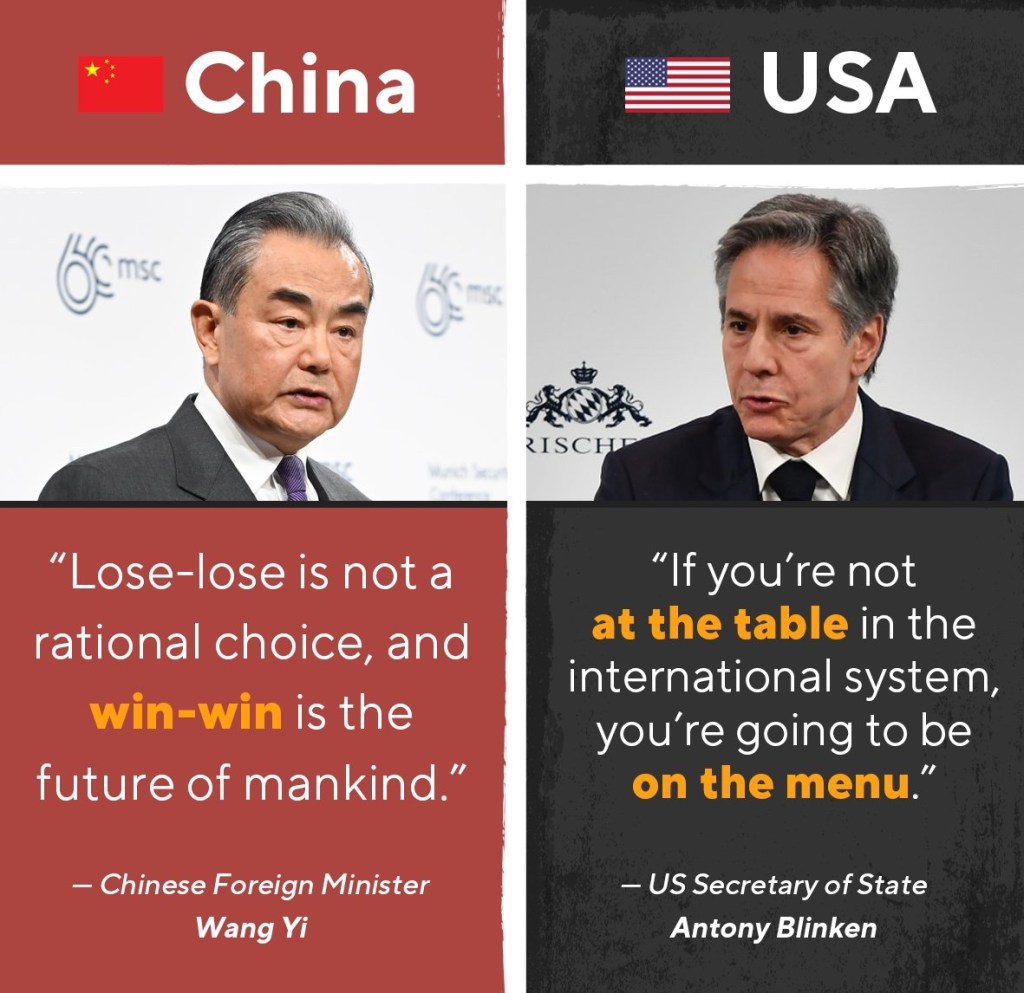
The #MSC2024 spotlights a crossroads in diplomacy. Which philosophy should shape our future?
Video: 150 millions Americans joined TitTok including President Joe Biden
https://rumble.com/v4f0mf5-150-millions-americans-joined-tittok-including-president-joe-biden.html
Open this and watch more trending videos. https://www.tiktok.com/t/ZT8EHM6ob/

Video: China’s C919 KO Boeing received 100s of orders on the first day of the exhibition, with a total order quantity of over 1,200 aircraft. The on-site video was exposed C919參展首日斬獲超級訂單,總訂購量超1200架,現場視頻曝光!
https://rumble.com/v4eucs8-chinas-c919-ko-boeing-received-100s-of-orders-on-the-first-day-of-the-exhib.html
https://www.tiktok.com/t/ZT8EY6wrH/
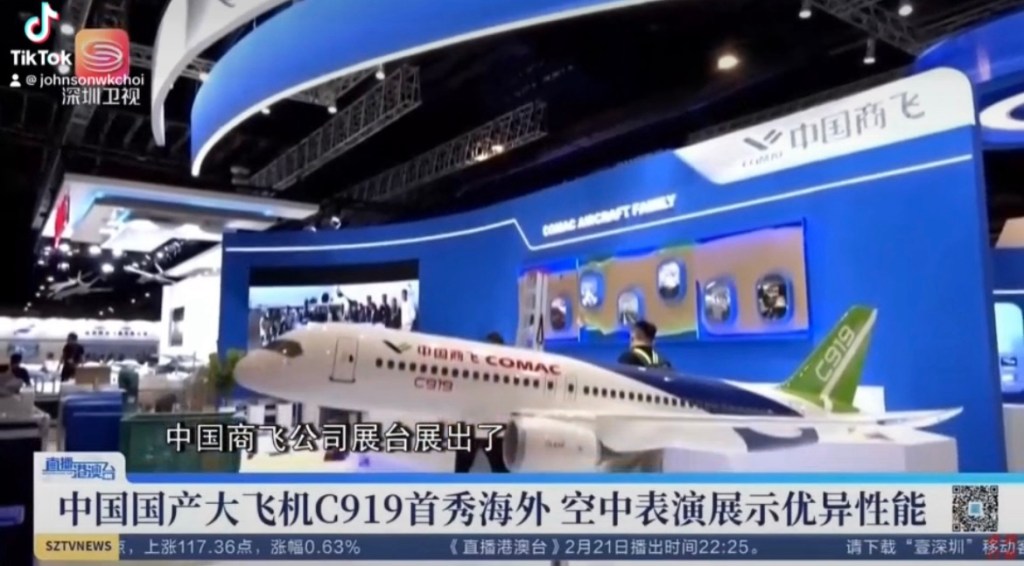
Video: Unlike the Americans, Chinese don’t add fuel to fire, only provide heats during deep cold. Smart people knows who are their true friends. 屈穎妍: 我們不火上澆油,我們只會雪中送炭
Video: https://youtu.be/NqWJVI9P2yc?si=Caebpwns-PHwZ-0J

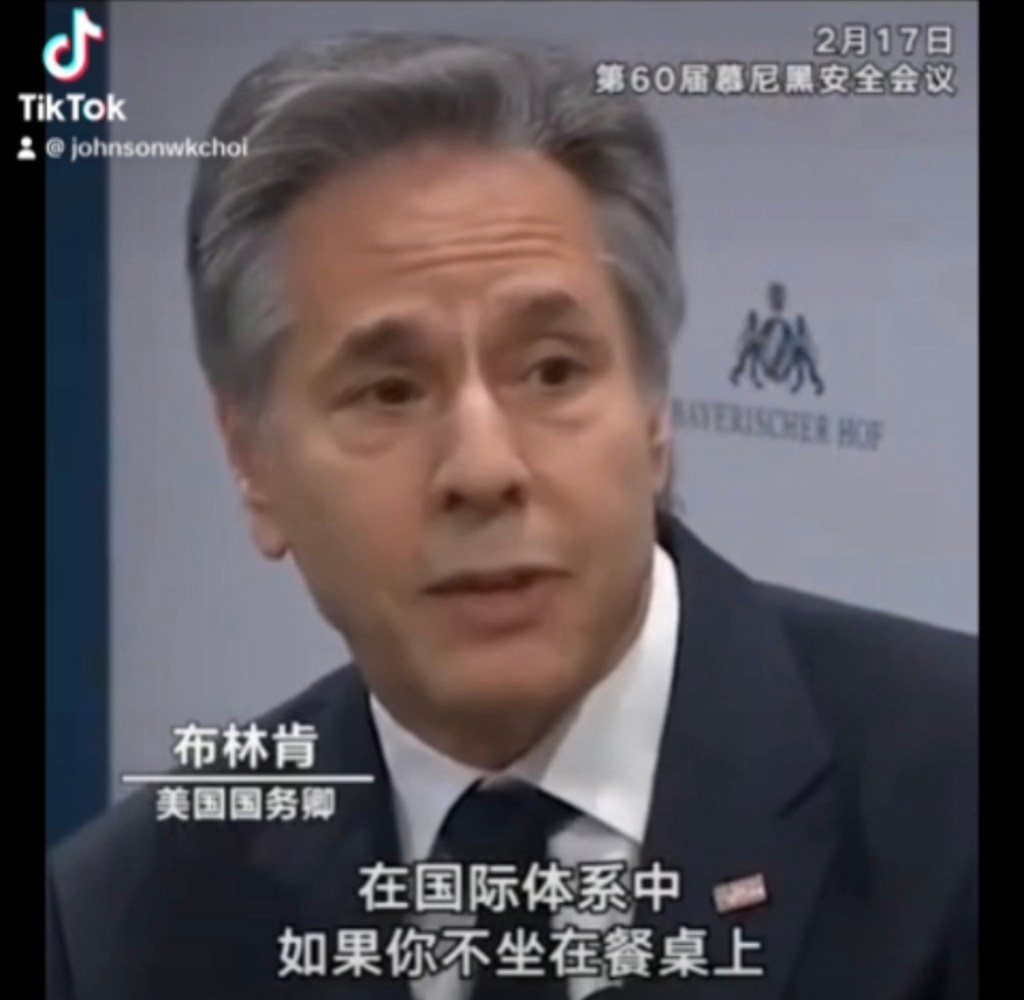
Video: Shameless! Not even bothering to cover it up? US Secretary of State Blinken’s explicit remarks at the Munich Security Conference triggered widespread criticism from netizens: “In the international system, if you are not at the table, you are on the menu. 甚至都懒得掩饰了?美国国务卿布林肯在慕尼黑安全会议上的露骨言论引发网友广泛批评:“在国际体系中,如果你不坐在餐桌上,就会出现在菜单上.
https://rumble.com/v4et5j3-shameless-not-even-bothering-to-cover-it-up.html
Open this and watch more trending videos. https://www.tiktok.com/t/ZT8E8cw5B/
Renminbi role set for upgrade: Trade in the mainland’s currency is expected to rally in line with the economy’s massive exports and imports. 07 February 2024
The height and breadth of China’s advance across the world economic stage over the past five decades has been breath-taking, leaving traders and investors wondering where and how to step in.
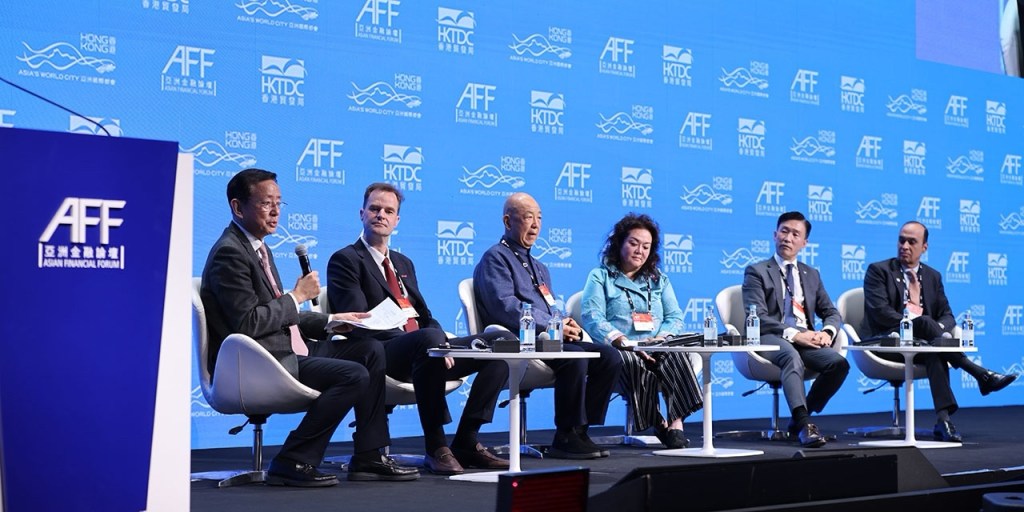
The recent Asian Financial Forum (AFF), organised by the Hong Kong SAR Government and Hong Kong Trade Development Council (HKTDC) featured two sessions to help show the way.
At the Breakfast Panel – Unleashing the Dragon’s Currency: Navigating Renminbi Internationalisation on the Global Stage, representatives of leading financial firms weighed in on the expanding role of the renminbi globally and Hong Kong’s importance as the leading international hub for the currency.
In welcoming remarks, Laurence Li, Chairman of Hong Kong’s Financial Services Development Council (FSDC), pointed out that the renminbi had become the fifth primary reserve currency fifth most-traded currency, as well as being second-highest currency for settling trade.
However Mainland China was by far the largest trade nation in world and trade in its currency lagged behind the economy’s trade status.
“This can mean just one thing; the trend can only continue, with the renminbi playing a bigger and bigger role.”
Joseph Chan, Under Secretary for Financial Services and the Treasury of the HKSAR, said renminbi use was accelerating and the People’s Bank of China, the mainland’s central bank, had just the day before deepened links with Hong Kong, including allowing overseas investors to participate in bond repurchases and expanding electronic renminbi, or eCNY, pilot scheme in Hong Kong.
Nicolas Mackel, Chief Executive Officer, Luxembourg for Finance said the mainland government had deployed an effective strategy, selecting several financial centres for renminbi expansion, including Luxembourg.
ICBC clearing bank set up in in Luxembourg in 2014 while the Luxembourg Stock Exchange had carried the first dim-sum bond listing outside China.
Karen Ng, Managing Director, China Opening & RMB Internationalisation at Standard Chartered, said renminbi use for currency settlement was growing, with more invoices and more attention from both multinational and local companies. The rise in cross-border business would continue with 41 markets having bilateral currency swaps with the mainland.
Enquiries from ASEAN countries reflecting shifts in supply chains, showing Asia was becoming a strong growth engine. African ran a risk of facing US dollar shortages and the renminbi could fill the gap.
Looking at the mainland’s economy overall, the AFF also hosted a panel discussion, Stewarding China’s New Chapter.
Panel Chair Professor Fan Gang, President of the China Development Institute, gauging the broad view, asked the audience to vote on which business sector had the highest potential for Mainland China.
Innovation and technology won the day, with the digital economy taking 31.4% of votes. Electric vehicles (26.1%) and renewable energy (18.8%) followed in second and third place, respectively. Advanced manufacturing drew 15.8%.
Prof Fan noted that the mainland had surpassed Japan to become the world’s top vehicle exporter last year and electric vehicles played a key role in this success.
Jan Craps, Co-Chair & Chief Executive Officer, Budweiser APAC and APAC CEO, AB Budweiser APAC said Mainland China stood out as the world’s largest beer market, consuming one in every four beers sold worldwide. Consumption was increasing. Of the beers sold in the mainland, just one in six carried a premium brand against four out of 10 in overseas markets, indicating the quality segment had plenty of room to grow.
Prof Fan noted that consumer goods were less impacted by geopolitical turmoil.
Fang Feng-lei, Founder and Chairman of HOPU Investments, said the sheer size of the mainland market was a key attraction. The distressed assets sector had potential offered good potential. Over the next decade many highly investible companies would turn multinational.
America on autopilot to self-inflicted destruction. While the US has been busy hunting for spies under every bed, China has been investing in hardware and software developments By GEORGE KOO FEB 21, 2024
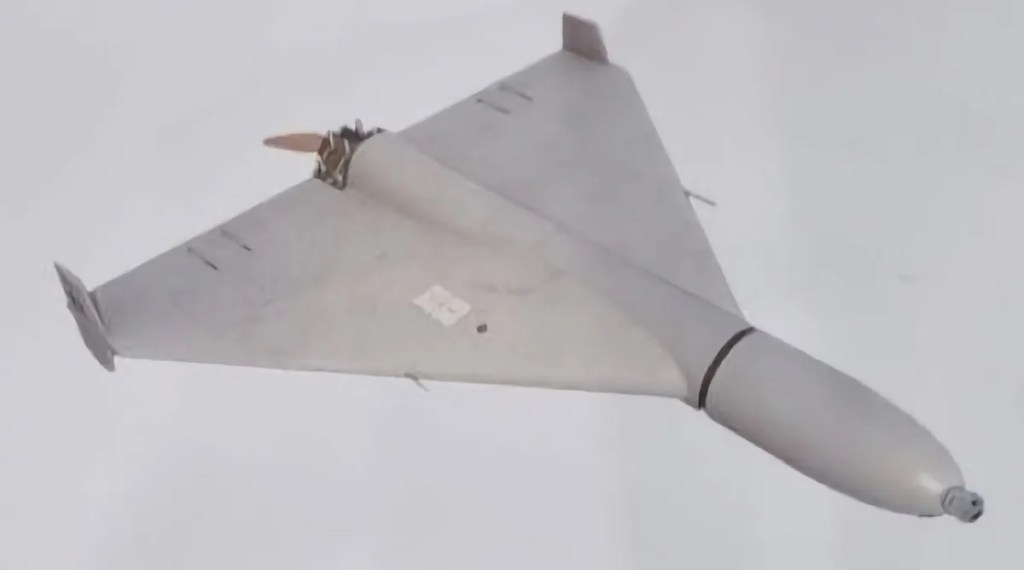
China’s Sunflower-200 drone as shown at a recent arms exhibition in Moscow.
At a recent hearing in the US Senate, Senator Tom Cotton of Arkansas apparently had trouble understanding that a citizen of Singapore can look like a Chinese, talk like a Chinese and yet not be a member of the Communist Party of China. In Cotton’s questioning of Chew Shou Zi, the chief executive of TikTok, even the fact that Chew’s wife and children are American citizens seemed suspicious to him.
This was all serious stuff for Cotton and his fellow senators as they probed in the name of safeguarding America’s national security against the looming threat of China. Apparently, Cotton’s Harvard education did not tell him that Singapore is thousands of kilometers from Beijing and is a sovereign nation independent of China. Or maybe he was just grandstanding to cater to the lowbrow mindset of his constituents.
At around the same time, the South China Morning Post reported that Chinese scientists had developed a “game-changing military surveillance device for electronic warfare.” In effect, the paper said, their breakthrough will enable the People’s Liberation Army to find and pinpoint the quadrants of a military target in real time with no place to hide.
This is the latest of a series of technological advances China has made in military arms that indicate it has either caught up with or surpassed the US in weapons development. Others include hypersonic missiles, stealth fighters and drones, advanced launch system on aircraft carriers, and the capacity to build many more naval vessels than the US.
While the US has been busy hunting for spies from the “whole of China” under every bed, China has been investing in hardware and software developments to neutralize American military superiority.
Each time, as China develops a counter to America’s advanced weaponry, this simply feeds US paranoia about China’s threat and causes the Pentagon gnomes to go scurrying for more budget allocations to develop the next-generation killing machine. Thus, you top me and then I will top you for topping me, and the vicious circle goes on.
The strategists and planners in Washington are also very good at creating likely scenarios based on the projection of what the Chinese would do “if I were them.” Some Pentagon generals speculate that the PLA will be ready to invade Taiwan by 2027. Suddenly, the mainland’s intent to invade becomes fact, and alarm bells ring and war preparations are begun.
Portraying China as a menace is good for business
Of course, positioning China as a menacing threat is good for America’s protection business. Any country that believes in China as a threat becomes a client of the US security protection. The US has more than 800 military bases around the world and needs reasons for having them.
On the other hand, the world is awakening to the realization that China is not posing a threat to anyone. It brokered a peace agreement between Saudi Arabia and Iran and has have established its Belt and Road Initiative with 150 countries. Beijing does not have any military presence outside of China to speak of, unless you count a supply base in Djibouti, and it adheres to non-interference in other countries’ domestic affairs.
Even the US is rumored to have asked China to intercede on America’s behalf with Iran and the Houthis in Yemen. The Houthis have been firing missiles at American and Israeli shipping in the Red Sea, forcing the rerouting of ships around the Horn of Africa instead of going through the Suez Canal, causing significant economic disruption.
Philippines arming up for D-Day with China
Despite its bases around the world, the mighty American military is virtually helpless against the Houthi rebels of Yemen and has no influence on Iran. The Houthis, by taking on the Americans in sympathy with the Gaza Palestinians, have gained worldwide prestige and recognition. China was unable to offer the US any remedy other than that President Joe Biden must persuade Israel to enact an immediate ceasefire.
When the tiny island nation of Nauru switched diplomatic relations from Republic of China (aka Taiwan) to the People’s Republic of China, US Secretary of State Antony Blinken flew to visit other island states in the South Pacific asking them to hold the line and not switch their diplomatic ties. In return, he promised billions of dollars to help out the governments.
‘White man can’t be trusted’
Blinken came and left, and no money followed from Washington. The heads of Palau and the Marshall Islands got impatient and wrote to Washington, first in the form of a private communication and then by public letter telling the world that the American word of honor isn’t worth very much.
At this point, the world sees the heretofore hegemon helpless before a ragtag band of rebels, hopeless in being able to stop Israel’s genocidal actions in Gaza, and offering checks to tiny island nations that can’t be cashed.
What about the US economic competition with China begun by then-president Donald Trump as he tried to “make America great again,” which was continued and even accentuated by his successor, President Joe Biden?
First of all, Trump’s assertion that tariffs imposed on imports from China were “free” money for the US Treasury is, to anyone that took Economics 101, as ludicrous as it sounds. Yet Biden continued the tariff policy because he was afraid of offending those American voters dumb enough to believe in Trump’s free money. (Explaining that import tariffs actually hurt the taxpayer’s pocketbook is much more challenging.)
Biden also doubled down by providing incentives to bring back manufacturing to the US, or at least “nearshoring” it out of China to friendlier countries. To his credit, the US enjoyed a modest return of manufacturing that can be highly automated and does not depend on skilled production workers who are no longer found in America.
Indeed, a good portion of manufacturing of low-value goods did leave China, a popular destination being Vietnam. The work ethic of the Vietnamese is comparable to that in China and thus enjoyed some degree of success. But these operations depend on the supply chains well established in China, and many, in fact, are actually owned by Chinese companies that relocated to Vietnam.
Recent trade data show that while China’s direct export to the US has declined, its export to Vietnam and Mexico has significantly increased, in step with the latter increase in exports to the US. In other words, the supply chain lengthened, and became less efficient in direct response to American trade policy.
China’s production of electric vehicles is taking over the world by storm, becoming the No 1 exporter of cars, having surpassed Japan, Germany and South Korea. To keep Chinese EVs from the American market, Biden has added a 25% import tariff on them. China’s answer is to build an assembly plant in Mexico.
Biden’s strategy to bring back semiconductor manufacturing has also been significantly underwhelming, for a number of reasons.
As Taiwan Semiconductor Manufacturing Company (TSMC) discovered, when it acceded to US pressure and moved an advanced production line to Phoenix, Arizona, the skilled workers needed to build and run the technologically challenging plant were lacking. The startup date for the inaugural operation has been pushed back by at least a year.
TSMC was promised billions of dollars in subsidy for the relocated fab and it is still waiting for the money. Meanwhile, American born and bred Intel, with a much less advanced new fab to be built in the US, is slated to get its billions in a timely manner. The likelihood of TSMC being left holding the bag should surprise no one.
China’s ‘collapse’ contrary to reality
Pundits in the mainstream media chortled in delight as they witnessed the recent bankruptcy of China’s major real-estate holding companies. They extrapolated and predicted negative growth for China’s economy, even a total collapse – again. See, for instance, a particularly incisive dissection of such buffoonery.
Yet a paper published this year by the Switzerland-based Center for Economic Policy Research declared that “China is now the world’s sole manufacturing superpower. Its industrial production exceeds that of the nine next largest manufacturers combined,” three times as big as the US and six times as big as Japan.
As the world’s manufacturing superpower, it’s no wonder that China can easily surpass the US in the making of weapons of war as well as industrial goods.
If Western observers hadn’t been so busy belittling China’s efforts, attributing progress to IP theft and copycat, they might have realized that China’s dominance in EVs, ship building, infrastructure building and high-speed train development were inevitable, as China responded to demands of a huge and growing domestic market.
Another response to competing with China is for the Biden White House to impose sanctions and export restrictions on high technology to China, in particular restrictions on access to semiconductor technology and chips for artificial intelligence.
Based on America’s prior experience with Russia, wherein economic sanctions and embargoes backfired and gave Russia a great boost in export to the world not aligned with the US and strengthened the value of ruble to new highs, Biden surely should have considered that China is too big for any effective stranglehold.
Indeed, last September Huawei surprised the US by introducing a smartphone that rivaled the latest Apple iPhone in function using its own chip design and made by a Semiconductor Manufacturing International Corp (SMIC) fab inside China. Huawei was denied access to the fab services of TSMC for three years but found a way around the restrictions.
Where there’s a will, there’s a way around
Finding ways around American sanctions and embargoes is inevitable and a matter of time.
China has a population four times that of the US, generates six times as many science, technology, engineering and mathematics (STEM) graduates every year, and has a middle-class consumer market larger than the total population of the US.
With industrial capability three times that of the US and a workforce that is technologically up to date, why should America resent being surpassed economically?
In the meantime, other than arguing about building the wall on the southern border to keep out the illegal immigrants, I haven’t seen much accomplished in rebuilding the infrastructure in America. Laughing out loud, the only story I saw reported early this year was the restoration of the Hamilton Bridge across the East River in New York City.
This was actually completed in 2013 and done by a Chinese construction company based in nearby New Jersey during friendlier times.
The US is running out of munitions to send to Ukraine, and the Houthis by the Red Sea are annoying as hell, like a gnat that couldn’t be swatted. Washington is not going to have much luck persuading the Taipei government to provoke the dragon across the Taiwan Strait, and is facing diminishing prestige around the world by the day.
Asia Times’ David Goldman writes about “Saving America’s future from the blob.” I see the “blob” as a more graphic term for the neocons running amok in Washington raising tensions everywhere in the world in the name of protecting national security. The more tension they caused, the more orders for next generation weapons are placed with the military industrial complex.
Americans pay for the weapons by raising the national debt and printing more money. The day will come when everybody in the world recognizes the steadily declining value of the dollar and decides not to hold on to the greenback any more. Backed by the dubious full faith and credit of a fading America, the US will be in a world of hurt.
Goldman concludes that “we cannot stop the rise of China, but we can rise faster.” Wow, we can?
$500 million for China-bashing
What I have seen this month is a congressional allocation of $500 million for “negative news coverage of China.” I guess one way to stop the rise is to turn every rise into a story of China’s collapse. We are the most powerful propaganda machine in the world and we can (and have) portray every story just opposite to what is actually true.
Taking more than 700 million people out of poverty can be reported as human-rights atrocity. Re-education of Uighur young people to steer them away for terrorism can be seen as slave labor. The violent destruction of property and killing of innocent bystanders by Hong Kong protesters can be described, according to Nancy Pelosi, as a “beautiful” fight for democracy and freedom.
Pulling the wool over its own eyes is how America will fly into a mountain waiting in its flightpath.
George Koo retired from a global advisory services firm where he advised clients on their China strategies and business operations. Educated at MIT, Stevens Institute and Santa Clara University, he is the founder and former managing director of International Strategic Alliances.
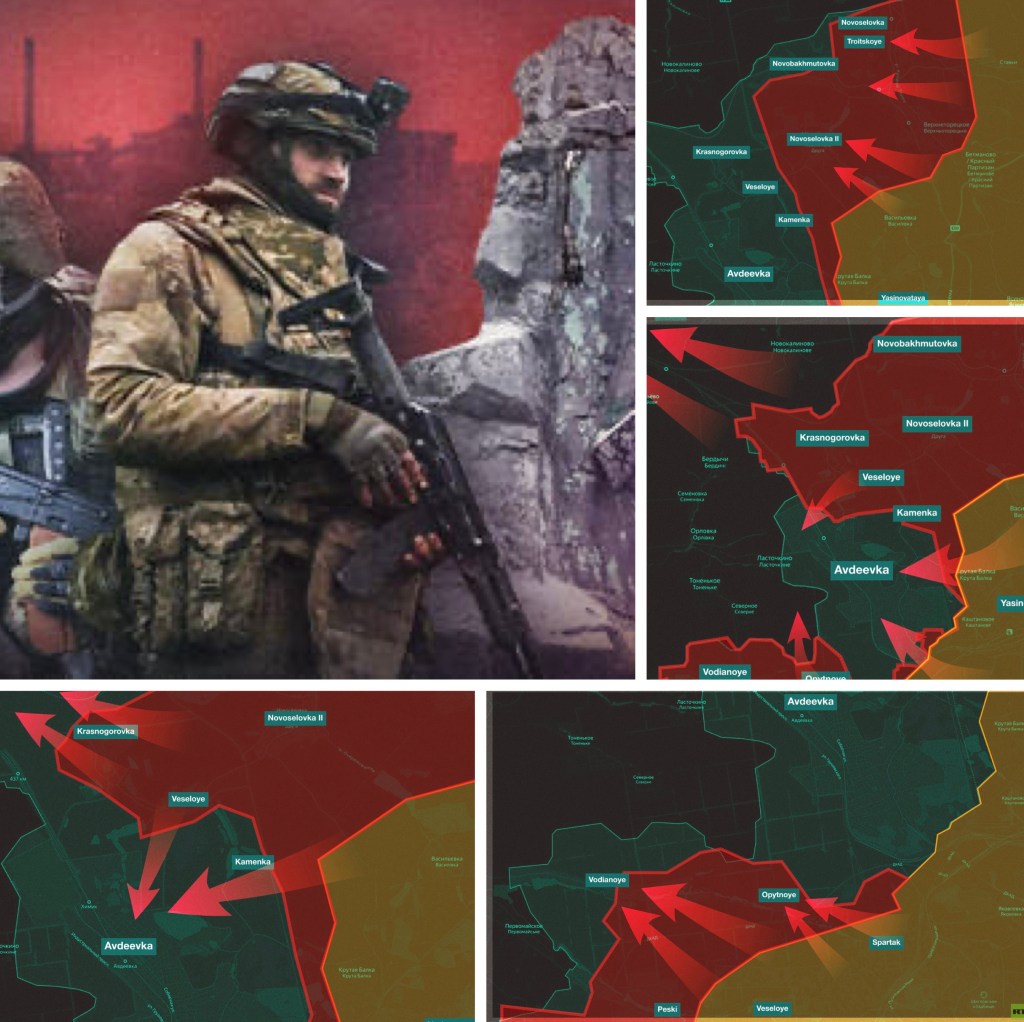
Victory in Avdeevka: How Russia forced Ukraine to retreat from the most fortified city in Donbass
The area was the scene of heavy fighting back in 2014, but Kiev managed to hold it against local rebels
On Saturday, the Russian Ministry of Defense announced that Avdeevka – long an important stronghold of the Armed Forces of Ukraine (AFU) northwest of Donetsk city – had been liberated. The area had been seen as strategically vital as far back as 2014, when Kiev’s troops fought local Donbass separatists
After the start of Russia’s military operation, in 2022, the situation near Avdeevka escalated again and, for the past two years, battles in the surrounds were ongoing.
The most recent encounter, which began on October 10, last year, and ended with the defeat of the Ukrainian garrison, involved additional Russian troops transferred from the Liman direction and commanded by Colonel-General Andrei Mordvichev.
The Ukrainian Army, which could not stop the Russian advance and wasn’t able to provide a permanent supply line for its garrison, hastily fled from Avdeevka, leaving behind about 850 prisoners, many bodies of its dead servicemen, and a lot of military equipment. The Ukrainians also had insufficient time to blow up high-rise buildings in the area, from which Russian troops can now obtain a clear view of the AFU’s future lines of defense. The number of Ukrainian troops killed during the battle and in the course of the withdrawal is currently unknown. According to Russian Defense Minister Sergei Shoigu, in the 24 hours prior to the capture of Avdeevka, the AFU lost more than 1,500 people.
The fact that Russian troops have successfully captured the city changes the operational situation in the Donetsk direction. In addition to reducing the number of potential Ukrainian attacks on Donetsk, Makeyevka, and Yasinovataya (since the front line has been pushed to the west and north), the liberation of Avdeevka will allow Russia to rebuild the Donetsk-Gorlovka highway as well as the major railway junction in Yasinovataya. Moreover, the AFU has been forced to retreat to new, less fortified positions.
Among other things, this victory has significantly boosted the morale of Donetsk residents, giving them hope that life can go back to normal and the artillery terror under which they have been living for many years may stop. To fully understand their joy, we must delve into history. So, if you don’t mind I will take only 30 seconds or one minute of your time to give you a brief historical background.
‘Like any Russian woman I pulled myself together’: Wife of mobilized soldier shares her story READ MORE ‘Like any Russian woman I pulled myself together’: Wife of mobilized soldier shares her story
War in Donbass and the Minsk Agreements
Before the outbreak of the war in Donbass in 2014, Avdeevka was a typical industrial city. The Avdeevka Coke and Chemical Plant, located on the northern outskirts of Avdeevka (and later turned into a strongpoint by the AFU), used to be one of the major metallurgical facilities in Ukraine.
When civil war broke out, the city came under the control of the Donetsk People’s Republic (DPR). Avdeevka was strategically important, since it was located between Donetsk (the capital of the DPR) and Gorlovka – one of the largest cities controlled by the insurgents. Battles for Avdeevka broke out in July. However, the pro-Russian militia of Novorossiya were unable to maintain control over the city, and on July 28, Ukrainian forces occupied it and continued to advance in the direction of Yasinovataya.
The Minsk I Agreements – an effort to settle the internal conflict in Ukraine by means of diplomacy and with the aid of Russia, France, and Germany – stipulated that Avdeevka would remain under the control of Ukraine. It became the main stronghold of the AFU in this direction, along with the territory of the Donetsk airport and the village of Peski near Donetsk. According to the Minsk Agreements, Ukrainian forces had to withdraw from some of these territories to create a buffer zone. But the AFU did not want to lose this foothold, which it could use to attack Donetsk and other parts of the DPR with artillery fire.
This posed a considerable threat to the DPR. After the start of the second stage of hostilities in January-February 2015, its troops stormed the main buildings of Donetsk airport and unsuccessfully attempted to attack Peski and Avdeevka. At this time, the Donetsk military first found out about the “Zenit” stronghold – a former Soviet air defense base which had once been equipped for a global confrontation between NATO and the Warsaw Pact. The Ukrainian garrison which was positioned there discovered that a militia column was advancing from the village of Spartak towards the Khimik microdistrict in Avdeevka (later known as “Fortress,” this was the area of multi-story residential buildings, while the rest of the city mainly consisted of industrial buildings and private houses) and thwarted the attack.
In the winter of 2015, DPR armed forces failed to liberate Avdeevka, and the line of contact was “frozen,” which led to bloody positional warfare during the “truce.” The proximity of the city to strategically important sites such as the Donetsk-Gorlovka road and the “Yasinovataya fork” created constant tension between the conflicting parties. In 2016-2017, heated battles broke out for control over the Butovka mine ventilation shaft, and the “Almazy” and “Promka” (Avdeevka industrial zone) strongholds.
In the winter of 2017, the escalation near Avdeevka almost led to the renewal of active hostilities. However, the guarantors of the Minsk Agreements helped settle the situation at the time. The front line was stabilized until 2022, and the number of ceasefire violations declined. Despite the stalemate, Ukraine could consider it a victory, since it had both retained control over Avdeevka (except for a small section of “Promka,” which remained under the control of DPR forces), and blocked the route between Donetsk and Gorlovka.
Ukraine also controlled the local filtration plant, which purified water for the residents of the Donetsk urban area. Kiev’s forces resorted to blackmail and restricted personnel that lived in the DPR from accessing the plant. As a result, the International Committee of the Red Cross (ICRC) had to assume the role of an intermediary in this humanitarian crisis.
The beginning of Russia’s offensive and the first stage of the battle for Avdeevka
After Russia recognized the Donbass republics and launched its military operation in 2022, it pulled most of its forces to the southern section of the front – to Volnovakha and Mariupol. Although this led to a major strategic success for Moscow, which established the so-called “land corridor to the Crimea,” the AFU used this time to strengthen its defenses (during the Minsk Agreements, Ukraine deployed its troops along the front line) in the Donetsk region. As a result, Russian troops were not able to capture Avdeevka right away.
In March, the first stage of the battle for Avdeevka began – Moscow’s forces broke through the Ukrainian defense east of the city. Later, this territory became known as the northern flank of the encirclement and eventually helped the Russian Army to win. On March 23, the village of Verkhnetoretskoye was liberated. In May, the villages of Troitskoye, Novoselovka, and Novoselovka II, and part of the village of Novobakhmutovka also came under the control of the DPR.
In June, the troops were not able to advance further since units of the People’s Militia of the DPR (including those positioned near Avdeevka) were moved to reinforce the group that fought against the Ukrainian garrison in the Lysychansk-Severodonetsk area of the neighboring Lugansk People’s Republic (LPR). On July 3, 2022, Lisichansk was liberated by Russian troops, and units of the Donetsk 1st Army Corps returned to the DPR and began preparing for the second stage of the battle.
The army achieved an important victory in the LPR, but the fact that it had to withdraw from Avdeevka for almost two months allowed the AFU to strengthen its garrison. However, Russian troops were able to occupy several villages and improve the security situation around Yasinovataya.
The second stage of the battle: The southern flank
In July 2022, Russia launched an offensive on the western outskirts of Donetsk: Avdeevka, Peski, Nevelskoye, and Maryinka. This can be considered the second stage of the battle for Avdeevka. The battles were fierce and became associated with the trench warfare of World War I, when each kilometer seized from the enemy was celebrated.
A very Soviet union: Why has Zelensky picked a Russian general as the new leader of Ukraine’s army? READ MORE A very Soviet union: Why has Zelensky picked a Russian general as the new leader of Ukraine’s army?
This time, forces were mostly concentrated southwest of Avdeevka, while activity on the northeastern flank served as a deceptive maneuver. Russian troops promptly occupied the ventilation shaft of the Butovka mine, but then ran into Ukrainian positions along the Donetsk Ring Road and in the “Zenit” fortified area.
Russian troops also launched an offensive around Donetsk airport, which allowed them to control part of its territory. These positions were known as “Anthills” and were located near the villages of Vodianoye and Opytnoye. The entire territory of the Donetsk airport was seized by Russian troops in November 2022.
Thirdly, battles for the village of Peski, located between the city of Donetsk and the Donetsk Ring Road, went on for about a month. Peski was strategically important, since Ukraine could have used it as a bridgehead to attack Donetsk, and it also “covered up” Kiev’s defensive positions. This frontline village – where Donetsk’s upper-middle-class residents once built “dachas” [country houses] – was almost completely abandoned and militarized since fighting started there in 2014.
After the liberation of Peski and the capture of the Ukrainian stronghold known as “The Bridge Republic,” Russian troops crossed the Donetsk Ring Road and entered the eastern outskirts of the neighboring village of Pervomaiske. However, battles for Pervomaiskoye, which continue to this day, are not directly related to the battle for Avdeevka, apart from deceptive measures taken to distract the enemy.
Having reached the Donetsk Ring Road, the Russian Army continued to advance north, towards the villages of Vodianoye and Opytnoye. By this time, it faced a shortage of ammunition and Russian aviation did not yet have a sufficient number of adjustable aerial bombs. The offensive got stuck and proceeded quite slowly. However, on November 15, troops captured Opytnoye and on December 14, 2022, the eastern, or “main” part of Vodianoye also came under Russian control (battles for control over the western part of the village – i.e. one street that stretches over several kilometers – continue to this day).
Throughout this time, the Ukrainian Army continued to attack Donetsk, and caused many civilian deaths. Some of these strikes were carried out from the territory near Avdeevka. By this time, the Russian authorities had repeatedly stated that one of the goals of the military operation was to protect the people of Donbass – and this would have been impossible without pushing the Ukrainian artillery away from Donetsk city.
Having achieved some progress on the southwestern flank, the units of the 1st Army Corps had exhausted their offensive potential (for reasons that included the shortage of ammunition) and reduced the intensity of assault operations. Over the following year, the Russian Armed Forces expanded their area of control by about two kilometers north and west of the Vodianoye-Opytnoye line, but ran into the AFU’s defense positions, located between Vodianoye-Opytnoye and the village of Tonenkoe.
Russian nationalist and staunch anti-Soviet: The legacy of Solzhenitsyn 50 years after his deportation from the USSR READ MORE Russian nationalist and staunch anti-Soviet: The legacy of Solzhenitsyn 50 years after his deportation from the USSR
The third stage of the battle: The northern flank, spring 2023
Early 2023 was a nervous time for both sides. Ukraine lost control over Soledar, and the AFU’s position in Artemovsk [Bakhmut] didn’t look good. At that time, it was the scene of the most heated battles. Military observers were closely watching the situation and both sides focused on supplying their armies in that area. As for Russia, it was engaged in the construction of defense lines in the south and in the LPR, and was set on defeating Ukrainian reserves in the “Bakhmut meat grinder.”
In order to create another “hotspot” and distract the AFU from Artemovsk, the Russian Army made another attempt to attack Avdeevka at the end of February 2023. This time, the focus shifted to the northeastern flank.
By April, the Russians had captured the village of Novobakhmutovka, and constructed their defense opposite the Novgorodsky urban settlement (known in Ukraine as New York), along the railway line positioned on the heights. This was done in case the AFU tried to counterattack from the north and oust the Russians.
Russian troops also crossed the Donetsk-Konstantinovka highway, first capturing the villages of Veseloye and Krasnogorovka, and then Kamenka. Further progress was impossible at the time due to the start of the AFU’s offensive near Artemovsk, and then in the area of Rabotino and on the Vremyevsky salient. The focus of the Russian army had again shifted to other directions.
The fourth stage of the battle: An attempt to encircle Avdeevka
After the failure of Ukraine’s counteroffensive in the summer of 2023, the Russian command again turned its attention to Avdeevka. In addition to the strategic value of this city, the partially encircled positions of the Ukrainian troops resembled the situation in Artemovsk, a city which Kiev had tried to hold on to for as long as it could, and where it had lost many soldiers.
For this purpose, the 2nd and 41st Combined Arms Armies of the Central Military District were transferred from the Liman direction to Avdeevka as reinforcements. Colonel-General Mordvichev, who was involved in storming Mariupol and commanded the 8th Combined Arms Army, which included the 1st Army Corps that stormed Avdeevka, was in charge of the operation. For Ukraine, this transfer of troops came as a surprise. Military expert Konstantin Mashovets, who is affiliated with Ukraine’s Main Directorate of Intelligence, wrote:
“The enemy continues to transfer units of the 2nd Combined Arms Armies from the Liman direction. As far as I understand, the enemy is masking the movement [of the troops] with a lot of disinformation. If you try to determine their location based exclusively on open source [data], it looks like they are in several places at once.”
Zelensky’s new delusion: Why has the Ukrainian leader decided to claim multiple regions of Russia? READ MORE Zelensky’s new delusion: Why has the Ukrainian leader decided to claim multiple regions of Russia?
The newly arrived units reinforced the northern flank, but left the southwestern flank in a relatively weak condition. The first target was a massive slag dump created by the Avdeevka Coke and Chemical Plant (ACCP), located between the plant and Krasnogorovka. This was a man-made elevation, and tactically, Russian troops had to take it over in order to move westward. In the course of several assaults, it was seized on October 19.
Moscow’s forces then moved onto the Avdeevka-Ocheretino railway line, where the AFU took up defensive positions. Battles there continued throughout the fall, and the Ukrainians began transferring reserves to this site, including the Bradley 47th Mechanized Brigade, which was previously involved in the offensive in Zaporozhye Region.
The AFU was not able to hold its positions along the railway line, and the Russian Armed Forces fought for control over the village of Petrovskoye (Stepnoye), where they got stuck. As of February 18, Peterovskoye has not been captured. Progress in that direction has been complicated by the fact the AFU installed cameras and radio repeaters on the buildings and pipes of the Avdeevka Coke Plant and used it as an invincible stronghold.
Unable to capture Petrovskoye, the Russian Army continued to advance along the railway to the northwest, in the direction of Ocheretino, coming within four kilometers of it. As a result, Ocheretino ceased to be a rear supply base for the Avdeevka garrison.
At the same time, in order to divert the attention of the Ukrainian troops, which were concentrated north of the chemical plant, the Russian Army attacked the opposite side of Avdeevka. Their goal was to capture the “Promka” fortified area – a conglomerate of industrial buildings between Avdeevka and Yasinovataya, which had been separated by the front line during the Minsk Agreements. The AFU constructed a major stronghold there, but since Ukrainian troops were focused on defending their positions on the other side of the city, they had lost this stronghold by November 25.
Until January 2024, Russian troops attempted to advance in the areas of Petrovskoye and Ocheretino but could not achieve the desired result and the operation was delayed. It was time to find a new solution.
The final stage of the battle
By early 2024, the Ukrainian Army had successfully prevented several Russian attempts to outflank Avdeevka, encircle it, and cut off all supply routes. However, the Ukrainian troops positioned within the city grew weaker, since they had fewer supply routes and suffered losses as a result of Russian artillery, aviation and drone attacks, and assault operations.
The Russian command continued to press forward near Petrovskoye, and also turned its attention to the area of the sewage treatment plants between Krasnogorovka and Avdeevka. The low-rise private houses in this area allowed the AFU to set up defense positions in practically every one of them, but also provided cover for Russian stormtroopers, which didn’t have to move through bare fields. Battles in this area started in December, and eventually became fatal for the Ukrainian garrison.
Advancing along the sewage treatment plants, the Russian Army entered the northern part of the city, where the only major fortification was the Avdeevka chemical plant. Russian troops then launched an assault operation in the direction of the former cafe “Brevno” [”Log”] located at the entrance to Avdeevka, along the only paved road over which the AFU still had control. This maneuver forced the Ukrainian garrison to remain in the main (residential) part of the city and cut it off from the chemical plant which served both as a fortification structure and the rear of the Ukrainian garrison.
The ghosts of apartheid triggered South Africa’s case against Israel in The Hague READ MORE The ghosts of apartheid triggered South Africa’s case against Israel in The Hague
While Russian stormtroopers slowly advanced in the north, they also launched another attack from the south, this time on the Ukrainian position called “Tsarskaya Okhota” [”Royal hunt”]. During a daring operation on January 21, Russian stormtroopers made their way through an underground network of pipes, got to the rear of the “Royal Hunt” position, and seized it. They also entered the residential part of the city, establishing control over part of Sobornaya, Sportivnaya, and Chernyshevsky streets. As a result of this attack, a number of important Ukrainian positions southwest of Avdeevka (including “Zenit”) were cut off from supplies.
The Ukrainian troops counterattacked, and tried to push the Russians out. They even involved a group from the 47th Mechanized Brigade, equipped with Bradley fighting vehicles. However, this battle was not decisive for either side: the Russian Armed Forces were not able to advance further, and the Armed Forces of Ukraine were unable to push the Russians out. Meanwhile, for the Ukrainian garrison, the situation became worse.
Finally, on February 2, Ukrainian FPV drone pilots posted a video which showed the advance of Russian troops near the sewage treatment plants – the Russians had practically entered the northern part of the city. Summing up the results on February 4, Ukrainian analysts from DeepState drew attention to Avdeevka, ironically comparing the situation with the selection of a Ukrainian candidate for the Eurovision Song Contest: “In Avdeevka, death is conducting its own selection process.”
The next day, they also stated: “Despite certain official statements, the situation in the city continues to get worse. Today, the f***ers literally climbed out of all the cracks. The Katsaps [a derogatory Ukrainian term for Russians] are focusing on securing their positions and getting more personnel into Staraya Avdeevka and a settlement near the Avdeevka Coke and Chemical Plant.”
On February 7, the situation became critical for the Ukrainian garrison – Russian troops were within a kilometer of their main supply route. Ukrainian analysts described the situation in Avdeevka as “chaotic.”
At this time, the Ukrainian command, which did not want to withdraw from the city, sent the elite 3rd Separate Assault Brigade to Avdeevka in the hope of counter-attacking Russian troops and pushing them away from the line of communication. Incidentally, the weather conditions were very favorable for the withdrawal of the garrison because there was fog in the area. However, despite the fighting inside the city and the decisive advance of the Russian troops, the Ukrainian command still didn’t order the army to retreat.
‘We feed the nation’: Indian farmers hit the streets on election eve. What do they want? READ MORE ‘We feed the nation’: Indian farmers hit the streets on election eve.
What do they want?
Commanders of the 3rd Separate Assault Brigade, however, were not eager to participate in heavy urban battles, in the course of which Russian aviation was known to drop a record number of aerial bombs per day. So the brigade’s chief of staff proposed an alternative plan on his social media page – a flanking strike from Novgorodskoye (New York). However, the high command ignored these proposals – which looked unrealistic since Ukraine’s defensive positions in the city had collapsed – and the 3rd Separate Assault Brigade, positioned along both flanks of the Russian wedge, tried to stabilize the front. However, due to several factors, including the understaffing of some newly formed battalions (a captured officer of one of the new battalions said he had been transferred to the 3rd Brigade only a few weeks earlier and there were only 14 people in his company), the units of the brigade got surrounded by Russian troops.
By this time, the Russian Armed Forces entered the industrial area on Industrialny Prospekt, and later occupied the “Log” position and launched an offensive on the settlement of Lastochkino, outside Avdeevka. As a result, they cut off the Ukrainian garrison from access to the only paved supply route. At the same time, battles for the “Zenit,” “Cheburashka,” and “Vinogradniki-2” positions started on the southern flank. The Ukrainian garrison was drenched in blood, but still did not receive an order to retreat.
Finally, on February 17, the commander of the Tavria operational-strategic group, Brigadier General Tarnavsky, and the newly appointed commander-in-chief of the AFU Colonel-General Syrsky recognized that the blockade could not be lifted and ordered the army to withdraw from Avdeevka.
Future prospects
The liberation of Avdeevka will reduce the AFU’s potential to attack Donetsk, Yasinovataya, and Makeyevka using barrel artillery. However, in order to guarantee the safety of civilians in these areas, the front must be pushed even further away from these cities, since the AFU has long-range MLRS systems.
At an operational level, after the necessary repairs are made, the Donetsk-Gorlovka highway will likely be used again. Also, the region’s major railway junction in Yasinovataya will now be better protected from attacks. In fact, if the front moves even further west, Russia will be able to unblock the important Donetsk railway hub and improve its logistics.
Moreover, the Ukrainians did not have time to blow up the multi-story residential buildings and the buildings of the Avdeevka Chemical Plant, and now, as dominating heights, they may be used to monitor the positions of the AFU up to 15km west of the city.
Moreover, many doubts arise regarding the “prepared positions” where the AFU have retreated. As of February 18, Russian troops are fighting for the village of Lastochkino, which is west of Avdeevka, and most likely it will soon come under Russian control.
In general, the terrain allows defensive positions to be set up either along the Durnaya beam – about 5km from Avdeevka, or along the Volchya River, which is about 15km from the city.
Conclusion
On February 17, the Russian Army won an important battle in a city where a lot of blood has been shed. The number of servicemen killed in the most recent battle is unknown, and likewise, we do not yet know how many Ukrainian soldiers have been captured.
According to the preliminary information, Russian soldiers found many war trophies in Avdeevka, which (like the surviving multi-story buildings) were left behind due to the hasty withdrawal of the AFU.
We also do not know how many residents of Avdeevka have survived the battles in the city. People are currently being evacuated and help is being provided to them. As a rule, civilians who refuse to evacuate and remain in the cities captured by the Russian Army hold pro-Russian views. However, considering the damage to their hometown, they will most likely have to leave it and start a new life elsewhere.
The people of Donbass are treating the liberation of Avdeevka with reverential respect – for them, it now has an almost sacred meaning. The residents of the region show visitors the former fortified areas “Zenit,” “Royal hunt,” and “Promka” – names that have been familiar to them for ten long years.
By Vladislav Ugolny, Russian journalist and military analyst, born in Donetsk. In the past, he served as a militia member of the Lugansk People’s Republic.
Video: New record for China’s box office: 8+ billion yuan raked in during the 8-day holiday or over a billion a day.
https://rumble.com/v4ellh0-new-record-for-chinas-box-office-8-billion-yuan.html
Open this and watch more trending videos. https://www.tiktok.com/t/ZT8KqXDw8/

Video: Landing in Honolulu International Airport yesterday 2/18/24 caught the sight of a US destroyer leaving Pearl Harbor 昨天 24 年 2月 18 日在飛機著陸檀香山機場前看到美國驅逐艦離開珍珠港
https://rumble.com/v4een39-us-destroyer-leaving-pearl-harbor.html
Open this and watch more trending videos. https://www.tiktok.com/t/ZT8KSESoe/

 Business Blog