Video: Best speech on China’s political system I’ve seen by anyone, ever. Take 90 seconds to understand why 90% of Chinese people love and support the CPC and China’s central government. Western Democracy makes promises not obligated to deliver. China’s Whole Process Democracy makes promises must deliver. The speaker is author of 20 books @DavidFerguson 這是我見過的關於中國政治制度的最好的演講。花2分鐘了解為什麼90%的中國人熱愛和支持中國共產黨和中國中央政府。西方民主所做的承諾沒有義務兌現。 中國的全程民主做出了承諾,必須兌現。演講者是 20 本書的作者
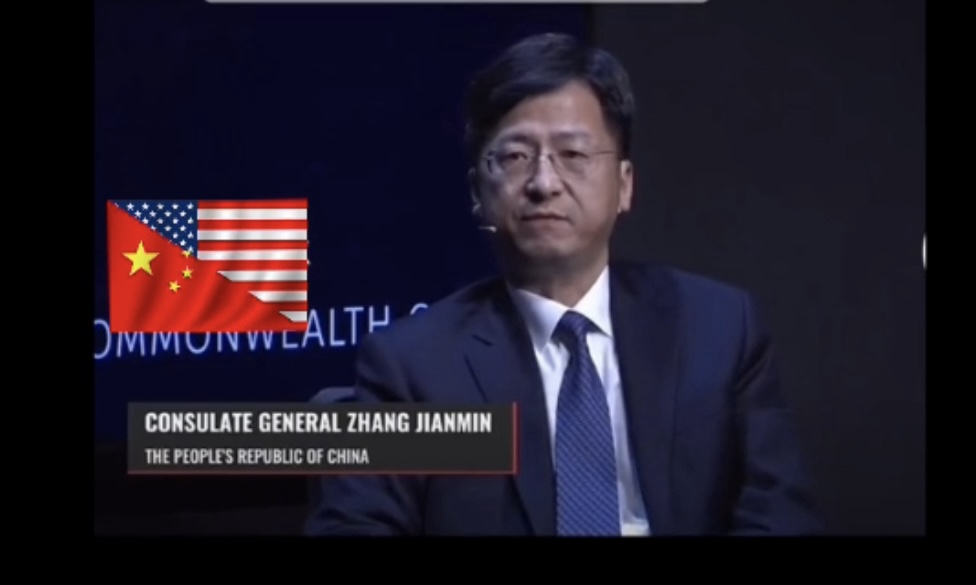
Video: Chinese Consul General Zhang Jianmin in San Francisco Live Webcast: Year of the Dragon – A Celebration of Chinese Culture & Crusine – SF – Wednesday – January 24 2024 5:30pm at the Commonwealth Club in SF
San Francisco Superior Court Judge Lillian Sing: “I think Ambassador Zhang did exactly what we had hoped and wanted him to accomplish. His mission was to improve the US China relationship and be the great ambassador of good will. He definitely accomplished this with his friendly personality, self confident mannerism, and jovial sense of humor as well as by answering every question directly with important information, facts, and statistics. By doing this, he already did a lot to reduce the “perilous conditions” of the US and China. Remember the old adage, ” actions can speak louder than words”. He was wise to do that.”
American poll: More than half of American teenagers are pessimistic about the future and “will not be happier than their parents.” A new American poll shows that American teenagers may have more troubles than you think. They are anxious about life and pessimistic about themselves and the future of the United States. And I think that when I grow up, I will not be happier than my parents 美國民調:全美青少年逾半對未來悲觀 「不會比父母幸福」新美國民調顯示,美國少年的煩惱可能比你想像的更多,他們焦慮於生活,對自己和美國的未來感到悲觀,且自認長大成人後過得不會比父母輩幸福快樂。(中國年輕人, 我指的是聰明的有智慧有學力的中國年輕人還會那樣笨來美國嗎?)
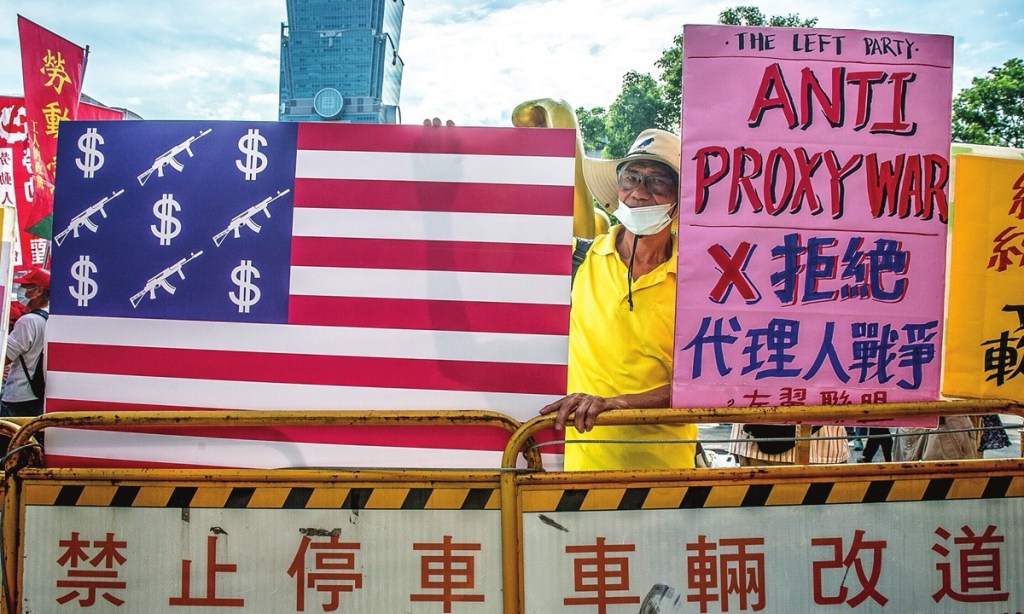
US arms sales hit record high to a record $238 billion in FY2023 as diplomacy ‘kidnapped by military-industrial complex’. The worst nightmare for US is peace around the world!
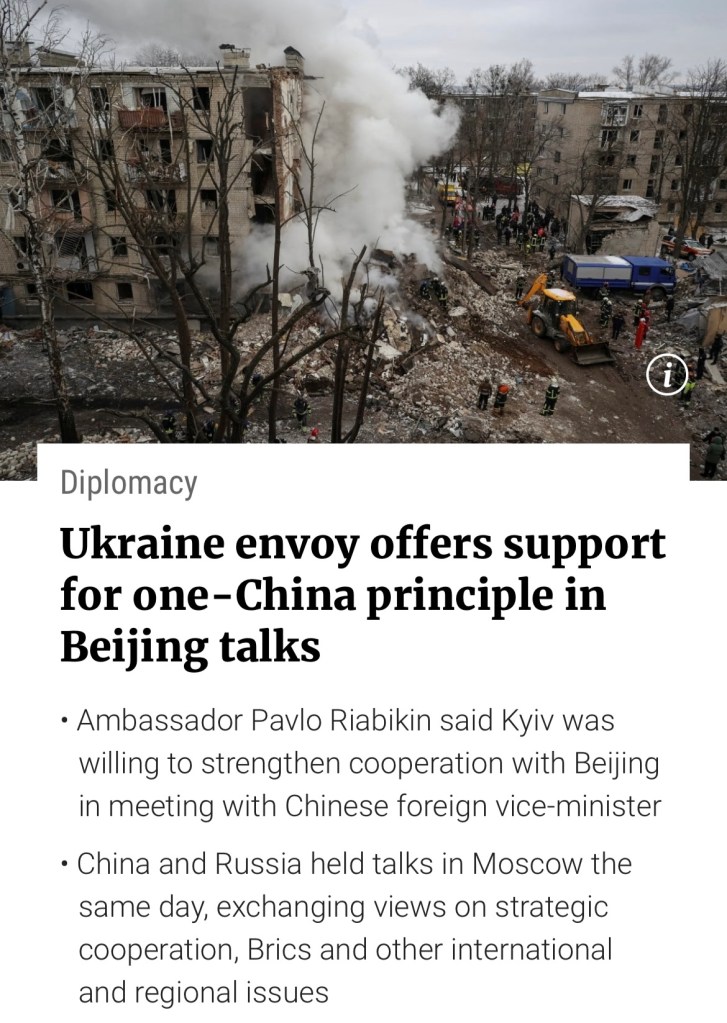
Ukraine’s ambassador in Beijing has expressed support for the one-China principle – which states that Taiwan is part of China – and said Kyiv was willing to boost cooperation with Beijing.
ICJ Israel Ruling and the 1984 Judgment Against the US. To gauge how South Africa’s genocide case against Israel might play out, Nat Parry looks back 40 years to a case that Nicaragua brought against Washington in the U.N. court. By By Nat Parry 1/29/25
Now that the International Court of Justice has ruled that South Africa’s claims of genocide against Israel are plausible and ordered Israel to “take all measures within its power to prevent the commission of all acts within the scope” of the U.N. Convention on Genocide, the question is how Israel and its backers will respond.
Israel has one month to submit a report on the steps it is taking to comply with the court’s orders. Although the court has no enforcement mechanism, the orders are mandatory and substantially increase the international pressure on Israel and its supporters. ICJ judgments are final and without appeal.
If Israel does not comply, the issue may go to the U.N. Security Council where the United States will have to decide whether to exercise its veto. If that effort fails, it could then go to the General Assembly, where the U.S. has no veto, and the result could be an overwhelming — and deeply embarrassing — vote supporting the ICJ’s ruling.
Some allies of Israel have called for compliance with it. “The International Court of Justice did not rule on the merits of the case but ordered provisional measures in interim proceedings,” German Foreign Minister Annalena Baerbock said. “These are binding under international law. Nevertheless, Israel must also comply with them.”
The United States, on the other hand, dismissed the notion that actions in the Gaza Strip constitute genocide. “We continue to believe that allegations of genocide are unfounded and note the court did not make a finding about genocide or call for a ceasefire in its ruling and that it called for the unconditional, immediate release of all hostages being held by Hamas,” a State Department spokesperson said.
So far, the reaction from Israel has been predictably bellicose, with Prime Minister Benjamin Netanyahu saying on Saturday that the allegations of genocide against Israel are “ridiculous” and demonstrate “that many in the world have not learned a thing from the Holocaust.” The main lesson of the Holocaust, he said, “is that only we will defend ourselves by ourselves. Nobody will do it for us.”
For an idea of how this might play out, it might be useful to look to the past, in particular a World Court case from 40 years ago.
In 1984, Nicaragua brought suit against the U.S. in the World Court in relation to U.S. policies of arming, training and financing the contra rebels who were fighting to overthrow the Nicaraguan government, as well as mining the harbors of the small Central American nation.
The United States, in justifying its policies, claimed that it was acting in Nicaragua only in “collective self-defense,” a justification that the court rejected by a vote of 12-3.
The court further overwhelmingly ruled that the United States,
“by training, arming, equipping, financing and supplying the contra forces … has acted, against the Republic of Nicaragua, in breach of its obligation under customary international law not to intervene in the affairs of another State.”
It determined that the United States had been involved in the “unlawful use of force,” with violations including attacks on Nicaraguan facilities and naval vessels, the invasion of Nicaraguan air space and the training and arming of the contras.
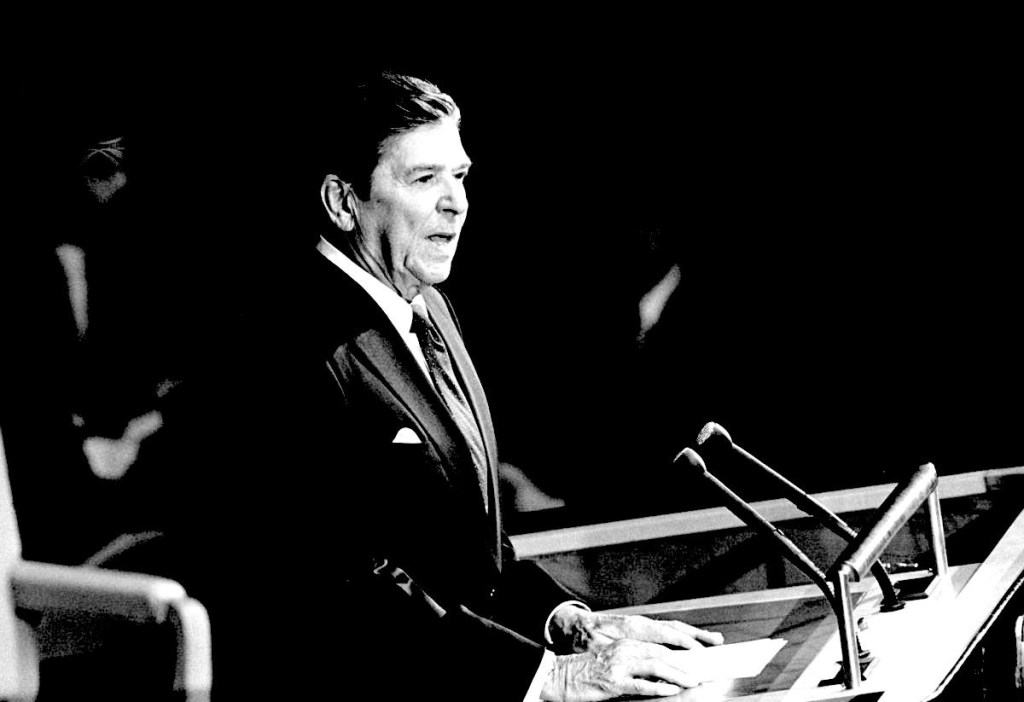
The court also found that President Ronald Reagan had authorized the C.I.A. “to lay mines in Nicaraguan ports” and
“that neither before the laying of the mines, nor subsequently, did the United States Government issue any public and official warning to international shipping of the existence and location of the mines; and that personal and material injury was caused by the explosion of the mines.”
The U.S. was ordered to cease its activities and pay reparations.
Matter of Consent
The response of the United States to this ruling was revealing. The U.S. essentially dismissed the ICJ judgment on the grounds that the United States must “reserve to ourselves the power to determine whether the Court has jurisdiction over us in a particular case” and what lies “essentially within the domestic jurisdiction of the United States.”
In other words, the Reagan administration considered armed attacks against the sovereign state of Nicaragua within its “domestic jurisdiction.”
Undeterred, Nicaragua then brought the matter to the U.N. Security Council, where the Nicaraguan representative argued that recourse at the ICJ was one of the fundamental means of peaceful solution of disputes established by the U.N. Charter.
He further emphasized that it was essential for the Security Council and the international community to remind the United States of its obligation to abide by the court’s ruling and cease its war against Nicaragua.
The United States responded that the jurisdiction of the ICJ was a matter of consent and that the U.S. had not consented to the jurisdiction of the ICJ in this case. The ambassador asserted that U.S. policy towards Nicaragua would be determined solely by the national security interests of the United States, noting that Nicaragua maintained close security ties to Cuba and the Soviet Union.
On Oct. 28, 1986, the U.S. vetoed the resolution calling for full and immediate compliance with the ICJ’s judgment, with France, Thailand and the United Kingdom abstaining.
Following this decision, Nicaragua turned to the General Assembly, which passed a resolution 94-to-3 calling for compliance with the World Court ruling. Only two states, Israel and El Salvador, joined the U.S. in opposition.
A year later, on Nov. 12, 1987, the General Assembly again called for “full and immediate compliance” with the ICJ decision. This time only Israel joined the United States in opposing adherence to the ruling.
Needless to say, the United States never recognized its obligation to adhere to the ruling, continuing to assert that it did not consent to the ICJ’s jurisdiction.
The case led to a flurry of criticism from international law experts, with Noreen M. Tama writing at the Penn State International Law Review that “the International Court of Justice is the final authority on the issue of its own jurisdiction.”
She pointed out that “the Court was clearly seized of the requisite incidental jurisdiction necessary to indicate interim measures in the case of Nicaragua v. United States.”
Anthony D’Amato, writing for The American Journal of International Law, argued that
“law would collapse if defendants could only be sued when they agreed to be sued, and the proper measurement of that collapse would be not just the drastically diminished number of cases but also the necessary restructuring of a vast system of legal transactions and relations predicated on the availability of courts as a last resort.”
This, he said, would be “a return to the law of the jungle.”
Whether the current case against Israel plays out similarly to the 1984 case is a major test for the international system, and specifically which reigns: the law of the jungle or the “rules-based international order” that the U.S. frequently champions.
Nat Parry is the author of the forthcoming book Samuel Adams and the Vagabond Henry Tufts: Virtue Meets Vice in the Revolutionary Era. He is editor of American Dispatches: A Robert Parry Reader.






 Business Blog