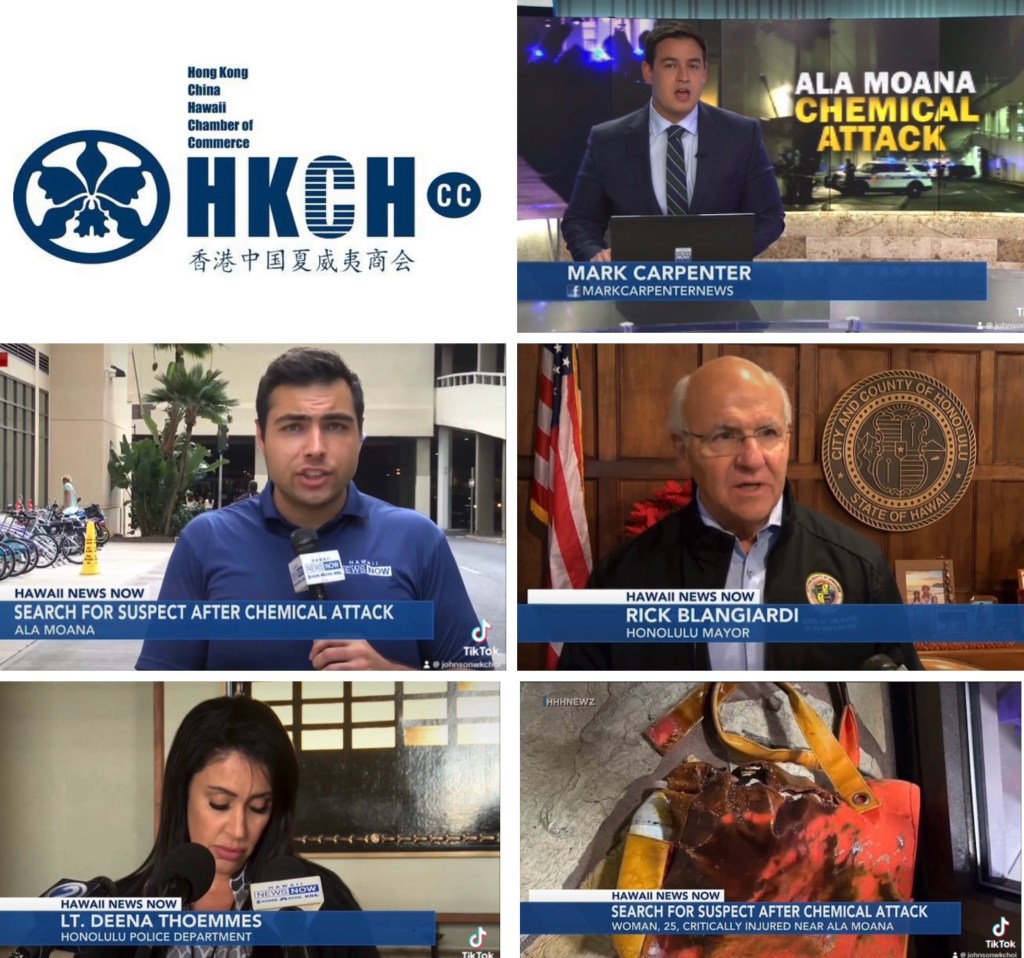
Today, we come to you with a heavy heart to share distressing news about one of our own. A young Chinese woman, aged 25, and Mandarin Teacher Assistant at Maryknoll from China, recently fell victim to a horrifying acid attack in the Ala Moana area. 今天,我們懷著沉重的心情來到你們這裡,分享我們自己的一個痛苦的消息。 一名來自中國的 25 歲年輕中國女子,瑪利諾學校的普通話助教,最近在阿拉莫阿納地區遭受了可怕的硫酸襲擊.
This senseless act of violence has left her in critical condition in hospital. Here is the link for the news 這種毫無意義的暴力行為使她在醫院情況危急。 這是新聞的連結:
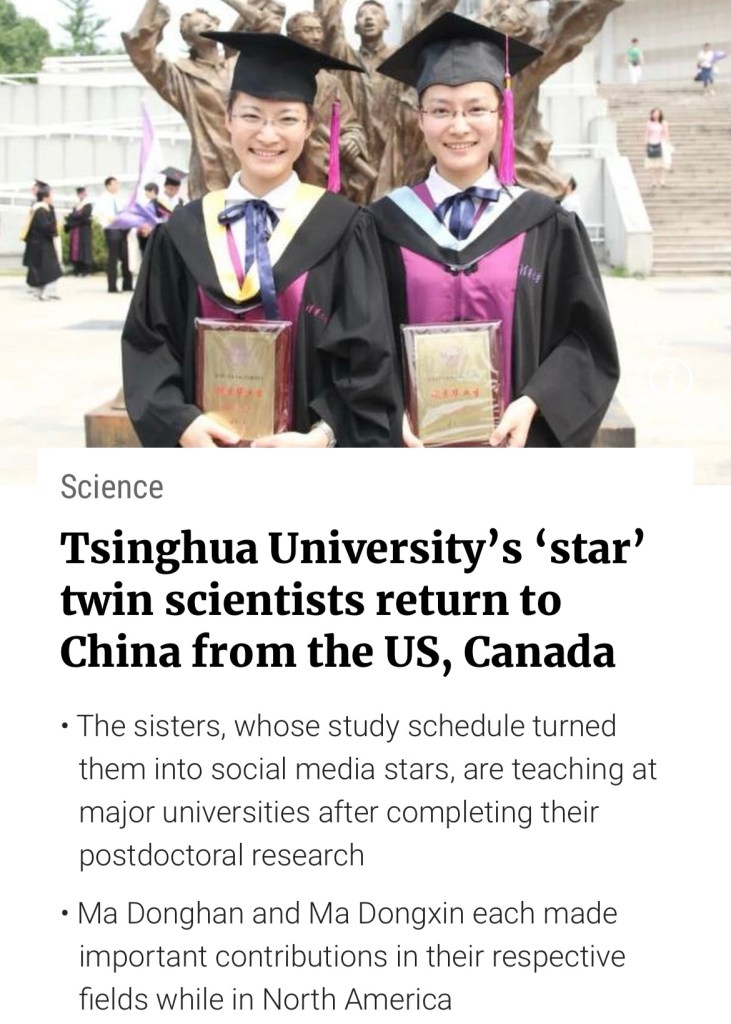
US no longer safe for Chinese to stay, Tsinghua University’s “star” twin scientists sister returning to China at the end of their postdoctoral research in N America was celebrated on Chinese social media after it was announced last week on the alma mater’s website. 美國對中國人來說不再安全,清華大學的「明星」雙胞胎科學家姐妹結束在北美的博士後研究後返回中國,上週在母校網站上宣布這一消息後,中國社交媒體上慶祝了這一消息
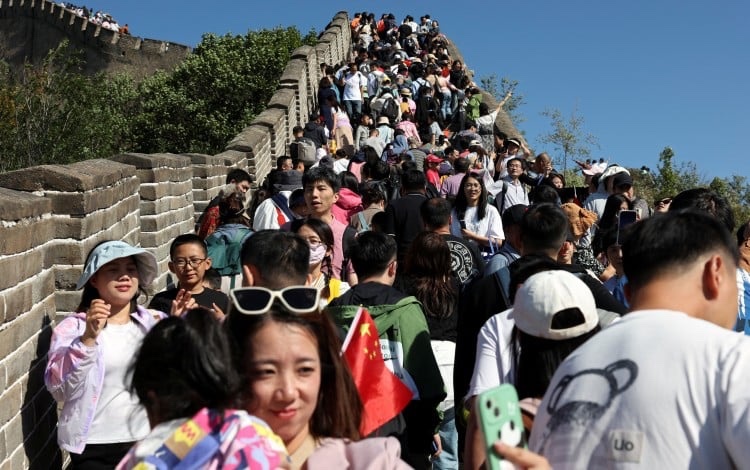
China, Singapore agree visa-free deal for travel stays of up to 30 days. The mutual visa exemption agreement takes effect on Lunar New Year’s Eve, which falls on February 9 this year.
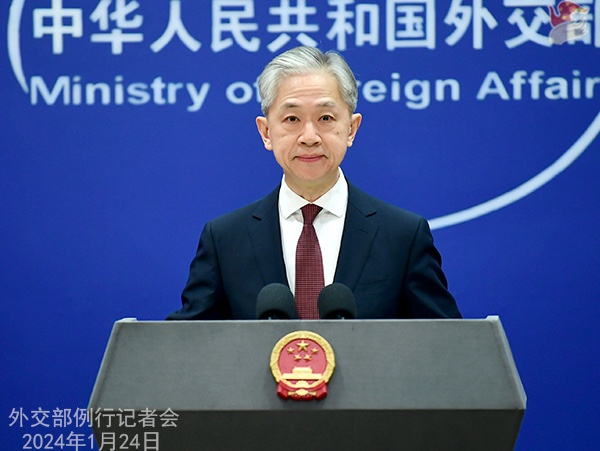
Chinese Foreign Ministry Spokesperson Wang Wenbin’s Regular Press Conference on January 24, 2024
Yonhap News Agency: At the Universal Periodic Review of the UN Human Rights Council in Geneva, the ROK government called on China to protect “DPRK defectors”. What is China’s position on this?
Wang Wenbin: There is no so-called “DPRK defectors” in China. People who illegally entered into China for economic reasons are not refugees. With regard to these people, China handles them under the principles of both domestic and international laws and the spirit of humanitarianism. The Universal Periodic Review (UPR) mechanism is a platform for countries to engage in equal-footed exchange and carry out dialogue and cooperation under the principle of being constructive and non-politicized.
Hubei Media Group: On January 23, China took part in the fourth cycle of the Universal Periodic Review of the UN Human Rights Council. Representatives attending the meeting spoke highly of China’s human rights development path and historic achievements in human rights cause. Can you share more details with us?
Wang Wenbin: On January 23, China took part in the fourth cycle of the Universal Periodic Review (UPR) of the UN Human Rights Council in Geneva, Switzerland. The Chinese government attached great importance to the review and sent a government delegation consisting of representatives from over 20 ministries, Xizang Autonomous Region, Xinjiang Uygur Autonomous Region, Hong Kong Special Administrative Region and Macao Special Administrative Region to the UPR meeting in Geneva for constructive interactions and dialogues with all parties. Parties widely commended China’s open and candid attitude and generally spoke positively of China’s achievements in human rights.
In its statement, the Chinese delegation elaborated on China’s human rights development path and achievements, stressing that China views respecting and protecting human rights as an important endeavor in governing the country and has found a human rights development path that echoes the trend of the times and suits our national conditions, and has made historic progress in advancing human rights in China. We follow a people-centered approach and work hard to deliver a better life for the people. We uphold the principal role of the people, and ensure that the people are masters of the country, the society and their own future, that human rights are enjoyed equally by all, and that everyone has the opportunity to shine in life. In the process of Chinese modernization, China has been committed to peaceful development, championed the common values of mankind, advocated the protection and promotion of human rights through security, development and cooperation, written new chapters in the development of the human rights cause, and contributed China’s strength to the world human rights cause. During the review, China announced that it will adopt 30 new measures to safeguard human rights, covering areas of people’s wellbeing, legal protection for human rights, international cooperation on human rights and the work related to UN human rights mechanisms.
More than 120 countries spoke highly of China’s human rights progress, and fully acknowledged China’s effort and historic achievements in advancing and protecting human rights. They commended China’s work to practice whole-process people’s democracy, formulate and implement the Human Rights Action Plan, revise the Law on the Protection of Women’s Rights and Interests, and improve social safeguards and service system for people with disabilities. They noted that China’s human rights development path fits China’s national conditions, meets the aspiration of the people, and provides a brand new choice for countries, especially developing ones, in their independent exploration of human rights development paths. These comments point to the code of success for China’s human rights progress—the leadership of the Communist Party of China and socialism with Chinese characteristics, for they have determined the socialist nature of China’s human rights cause, that in China, the people are the masters, human rights are enjoyed equally by all, and that the fundamental interests of the people can be realized, protected and advanced.
During their remarks at the UPR meeting, many countries congratulated China on its election as a member of the Human Rights Council for the sixth time and on starting a new term. They expressed their hope that China will play a leading role in global human rights governance and safeguard international fairness and justice. China will stand in solidarity with the Global South, share weal and woe with fellow developing countries, propose more initiatives and propositions that serve the common interests of developing countries, work for more equitable, just, reasonable and inclusive global human rights governance, and promote the building of a community with a shared future for mankind.
Associated Press of Pakistan: During his visit to Pakistan, Vice Foreign Minister Sun Weidong held high-level meetings with Pakistani leaders, during which the two sides renewed commitment for the success of China-Pakistan Economic Corridor and expressed desire for enhanced cooperation in the areas of information technology, economy, agriculture, and human resource development. I wonder if you have any comment on that?
Wang Wenbin: From January 20 to 22, Vice Foreign Minister Sun Weidong visited Pakistan, during which he paid courtesy calls on Pakistan’s President Arif Alvi, Prime Minister Anwaar-ul-Haq Kakar, Chairman of the Joint Chiefs of Staff Committee Sahir Shamshad Mirza, Chief of the Army Staff Syed Asim Munir, and Foreign Minister Jalil Abbas Jilani to have in-depth exchanges of views on the bilateral relations and issues of mutual interest, and co-chaired the Fourth Meeting of the CPEC Joint Working Group on International Cooperation and Coordination with Foreign Secretary Muhammad Syrus Sajjad Qazi.
China and Pakistan are all-weather strategic cooperative partners. China appreciates Pakistan’s firm commitment to the one-China principle, supports Pakistan in defending its sovereignty, independence and territorial integrity, and supports its unity, stability, development and prosperity. China stands ready to work with Pakistan to deliver on the important common understandings between the leaders of the two countries, deepen political mutual trust, expand practical cooperation, upgrade the China-Pakistan Economic Corridor, and accelerate the building of an even closer China-Pakistan community with a shared future in the new era.
Reuters: With the resumption of bilateral ties with Nauru, does China plan to step up investment and trade with Nauru and also offer financial aid to the Pacific country? Are there any details as to what type of investments or trade or how much of financial aid?
Wang Wenbin: Today, Member of the Political Bureau of the CPC Central Committee and Minister of Foreign Affairs Wang Yi and Nauru’s Minister for Foreign Affairs and Trade Lionel Rouwen Aingnimea, who is on a visit to China at our invitation, signed Joint Communiqué on the Resumption of Diplomatic Relations Between the People’s Republic of China and the Republic of Nauru in Beijing. Our two countries decided to reestablish diplomatic relations at the ambassadorial level, effective as of this day. Nauru has become the 183rd country to have diplomatic relations with China.
The reestablishment of diplomatic ties between China and Nauru once again demonstrates that there is but one China in the world, the Government of the People’s Republic of China is the sole legal Government representing the whole of China, and Taiwan is an inalienable part of China’s territory. It’s an indisputable fact, a prevailing international consensus and a widely accepted basic norm governing international relations. China’s sovereignty and territorial integrity brook no challenge, the Resolution 2758 adopted by the UN General Assembly allows no distortion, the historic trend toward China’s reunification will not be stopped, and no country should be absent from the world’s big family committed to the one-China principle.
China’s relations with Pacific island countries have continued to deepen. The reestablishment of diplomatic ties between China and Nauru represents the shared aspiration of Nauru and the Pacific islands countries, and serves the fundamental and long-term interests of China and Nauru. The two countries have started a new chapter in bilateral relations and opened the door of friendly cooperation and common development. China will uphold the “four full respects” policy and work with Nauru in various fields based on equality, mutual respect, mutually beneficial cooperation, openness and inclusiveness for the benefit of the two peoples and their future generations.
There are still a handful of countries who still have so-called “diplomatic ties” with Taiwan. We call on these countries to recognize the trend, seize the historic opportunities, and stand on the side of the international community, on the side of international justice and on the right side of history. Friendship, whenever it happens, is cherishable. China stands ready to turn a new page with these countries on the basis of the one-China principle.
Global Times: On January 20, Viet Nam’s Spokesperson of the Ministry of Foreign Affairs said that Viet Nam has full legal basis and ample historical evidence to assert its “sovereignty” over the “Hoang Sa Islands” and the “Truong Sa Islands.” What’s China’s comment?
Wang Wenbin: Xisha Qundao and Nansha Qundao are China’s territory with solid historical and legal grounds. China was the first country to discover, name, and develop and administer these islands, and we have exercised continuous sovereign jurisdiction over them. China opposes relevant countries’ illegal claims over China’s territory and will continue to firmly safeguard its sovereignty.
CCTV: The Philippines’ President Marcos Jr. last night in an interview openly reiterated that the Philippines is committed to the one-China policy and that has not changed and will not change. The Philippines does not endorse Taiwan independence. Taiwan is a province of China and the matter they will be brought together again is an internal matter. What’s China’s comment?
Wang Wenbin: We appreciate the Philippines reaffirming its commitment to the one-China policy and emphasizing that Taiwan is a province of China and the Philippines does not endorse “Taiwan independence.”
Taiwan is an inalienable part of China’s territory. Realizing the complete reunification in China is where global opinion trends and the arc of history bends. Any attempt to seek “Taiwan independence” is doomed to failure.
Reuters: The Financial Times reported that the United States has asked China to urge Tehran to rein in the Iranian-aligned Houthis rebels attacking commercial ships in the Red Sea, but has seen little sign of help from Beijing. This is according to US officials. The report said the US has repeatedly raised the matter with top Chinese officials in the past three months. Could we confirm with the Ministry if these discussions with the US took place? Has China been in touch with Iran or the Houthis about the Red Sea attacks? If so, what was discussed or any outcomes that China is hoping for?
Wang Wenbin: We are deeply concerned over the recent rapid escalation of tensions in the Red Sea. The Red Sea is an important international trade route for goods and energy. China has been in close communication with various parties and worked actively to alleviate the tension in the Red Sea. China calls for a stop of causing disturbance to civilian ships, and urges relevant parties to avoid adding fuel to the fire in the Red Sea and jointly safeguard the safety of the Red Sea shipping route in accordance with the law. It must be stressed that the tension in the Red Sea is a manifestation of the spillover of the Gaza conflict. The priority now is to end the fighting in Gaza as soon as possible to avoid further escalation and prevent the situation from getting out of control. In the meanwhile, we believe that the Security Council has never authorized the use of force by any country on Yemen and the sovereignty and territorial integrity of Yemen and other coastal countries of the Red Sea need to be earnestly respected. China stands ready to work with all parties to help cool down the situation and safeguard the security and stability of the Red Sea region.
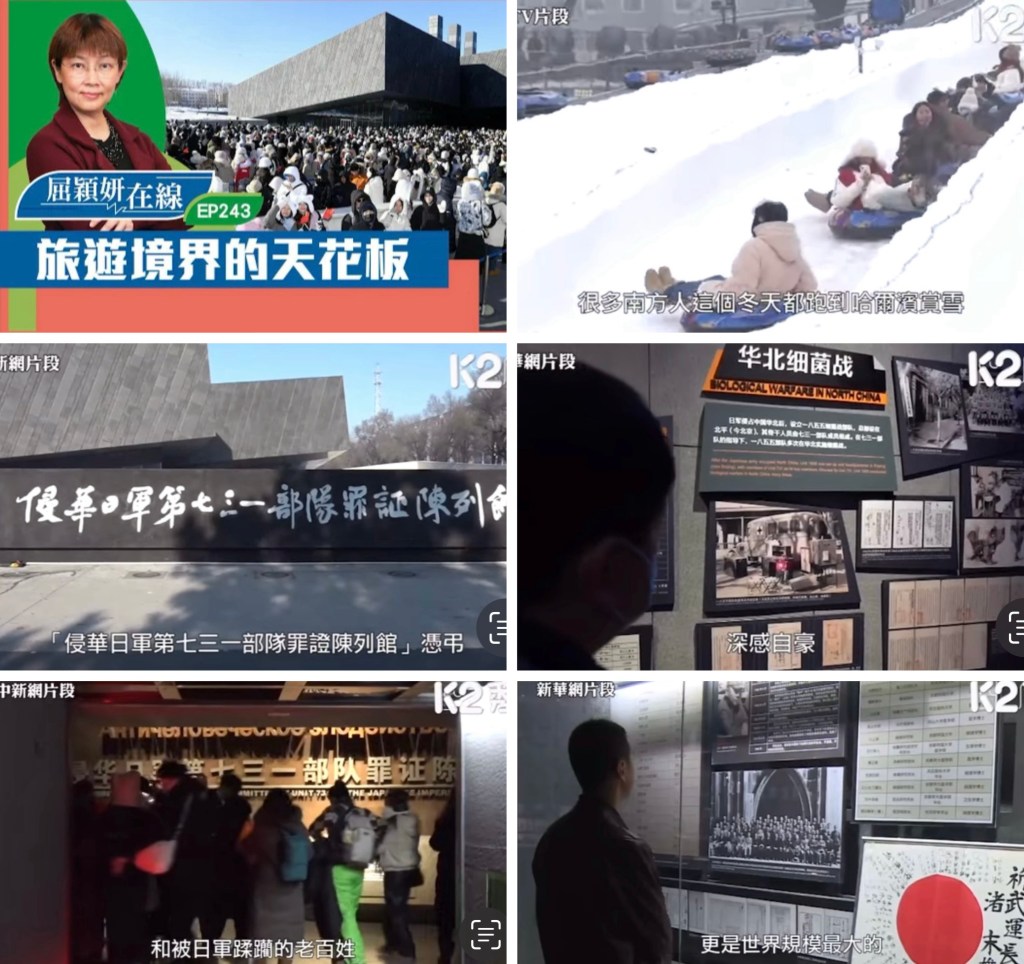
Video: The ceiling of tourism realm – visit Unit 731 germ warfare memorial exposing Japanese crimes against humanity during WWII 旅遊境界的天花板 – 參觀二戰期間日本反人類罪行的用中國活人作為人體實驗細菌戰實驗室731部隊紀念館



 Business Blog