Four years ago there were only a few militia groups in the United States; today there are more than a hundred preparing for civil war
四年前美國祇有幾個民兵組織, 今天已經有一百多個準備內戰
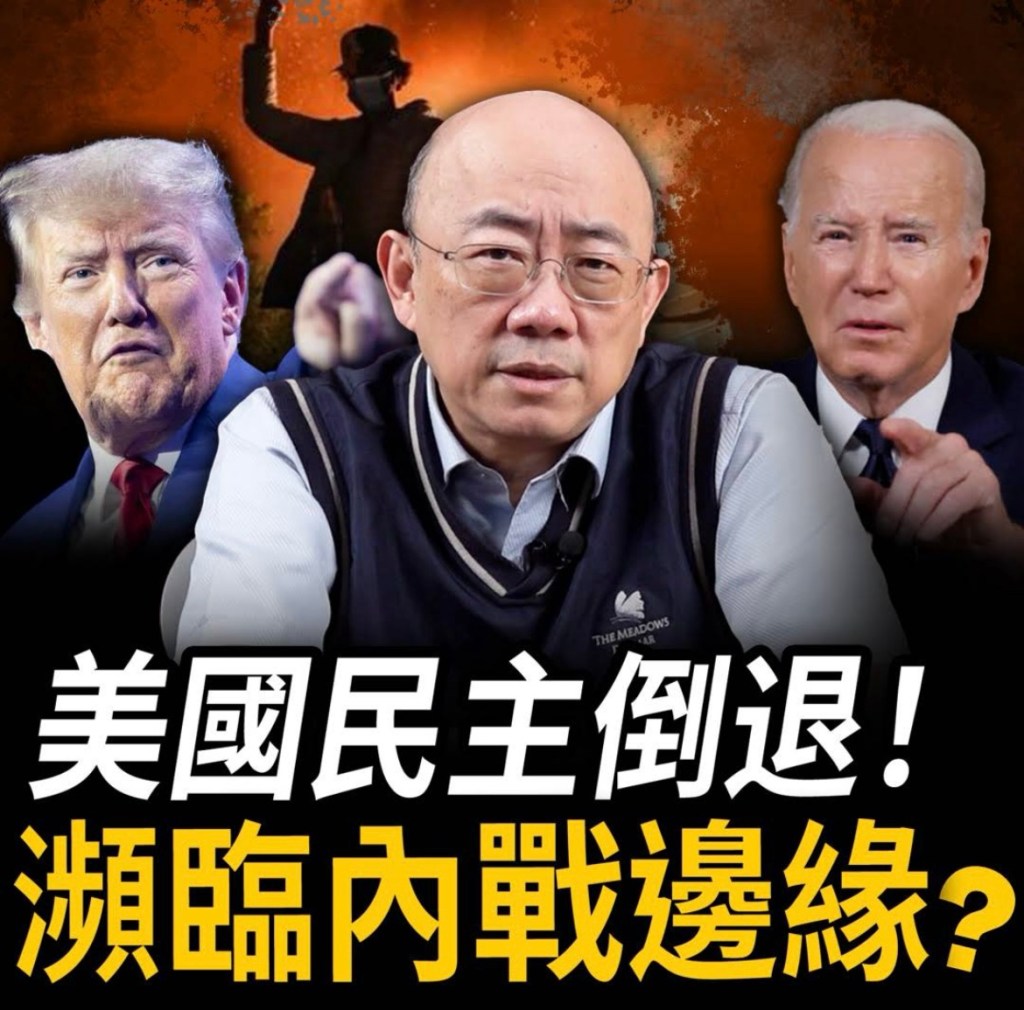
Four years ago there were only a few militia groups in the United States; today there are more than a hundred preparing for civil war
四年前美國祇有幾個民兵組織, 今天已經有一百多個準備內戰
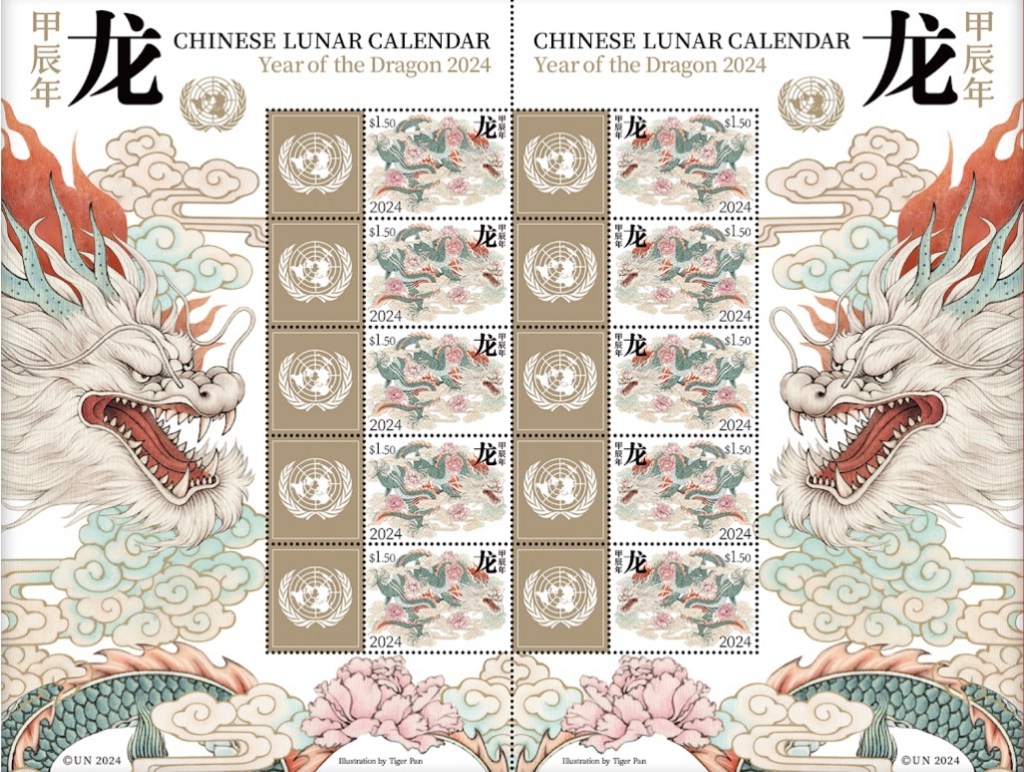
PLA warplanes, warships spotted in nighttime patrols around Taiwan Province 解放軍戰機、軍艦在台灣省夜間巡邏
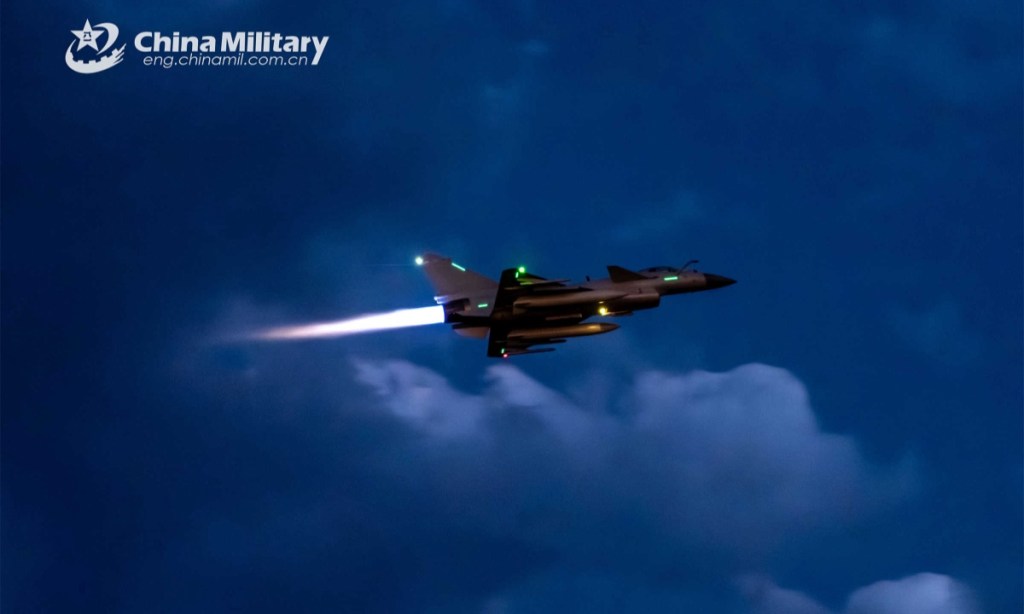
United Nations is going to issue Year of the Dragon stamps 聯合國將發行中國龍年郵票
US and Chinese economies compared; dual circulation held unlikely for foreseeable future. Poor Article: This is SCMP doing its colonial propaganda shtick for the west. https://archive.ph/2024.01.18-112521/https://www.scmp.com/comment/opinion/article/3248652/why-us-and-china-are-unlikely-trade-places-any-time-soon
To observers such as Lighthizer, it might seem as though Americans are Eloi, unaware of who is operating the machinery that makes the world work until a Morlock hand drags them down to death. But as long as America produces US dollars and cutting-edge scientific research, the US-China trade dynamic will continue.
Even as the US moves towards a new political consensus on working towards a self-reliant economy that would make communists proud, many Chinese economists are realising that China’s economy is dangerously tilted towards production. Dual circulation – relying on domestic consumption as well as exports – has been a goal for years.
This article, much more nuanced, argues that the above assumptions are wrong: https://asiatimes.com/2023/11/consumption-in-china-is-it-really-that-bad/
What we are dealing with is a legacy of China having never properly transitioned from its Soviet-era Material Product System (MPS) system of national accounts to the United Nations’ System of National Accounts (SNA) standard. MPS accounting is only concerned with material production. Services are considered costs of production and excluded by design.
Most controversially, perhaps, we also conclude that China’s GDP is under-reported by an amount largely equal to household consumption outside of retail sales. If we had to ballpark it, we would say China’s household consumption is 50-55% of GDP, investment is 30-34% of GDP and total GDP needs to be grossed up by 25-40%.
This has many implications. One is that China’s economy is not nearly as unbalanced as conventional wisdom believes – it is merely a peer of its Asian neighbors Japan and Korea. It explains why the government only seems to give lip service to increasing demand while all policies somehow favor supply. It explains how China has avoided the dire consequences of running such an unbalanced economy for so long – mostly because it hasn’t been.
This article also argues otherwise. Consumption was 82.5% of GDP growth. https://www.globaltimes.cn/page/202401/1305600.shtml
A gym closing is a non-event. Chinese people–rightfully–like exercising, but they don’t like gyms. They exercise outdoors, with each other, playing games, sports, dancing, martial arts–for free, and using free exercise equipment.
This amchan website covers shanghai in detail https://www.amcham-shanghai.org/en

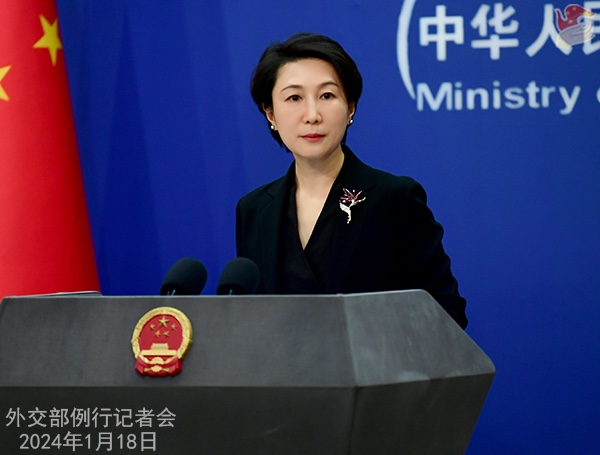
China Foreign Ministry Spokesperson Mao Ning’s Regular Press Conference on January 18, 2024
AFP: According to reports, Pakistan conducted strikes today inside Iran. Is China aware of that? And are you in contact with both parties on this issue? Some reports are saying that China is mediating between Iran and Pakistan.
Mao Ning: We are following closely the developments of the situation. China always stands that relations between countries should be handled in accordance with the purposes and principles of the UN Charter and international law and that countries’ sovereignty, independence and territorial integrity should be respected and safeguarded. Iran and Pakistan are close neighbors and countries who have influence and keep friendly relations with China. China sincerely hopes that the two sides will remain calm and restraint and avoid escalation of the tension. If there is need from the two sides, we would like to play a constructive role in cooling down the situation.
China News Service: China’s National Bureau of Statistics announced yesterday that China’s GDP reached a 5.2 percent year-on-year growth in 2023. We noted that many media outlets said it meets or goes beyond market expectation. What does China’s steady economic growth mean to the world?
Mao Ning: Yesterday, the National Bureau of Statistics published statistics about China’s national economic performance in 2023. The most talked about is that the 5.2 percent year-on-year growth rate of GDP is higher than the target set at the beginning of last year. It fully shows that China’s economy picks up and high-quality development makes solid progress. It means at least three benefits to the world.
First, providing the driving force for the global economy. China’s economic growth generates over RMB 6 trillion, equivalent to the annual GDP of a medium-sized country. The report of International Financial Forum demonstrates that China contributes 32 percent to the global economic growth in 2023 and is the largest engine of world economy.
Second, bringing stability to the global economy. China’s economy has had a steady growth, and sound and solid fundamentals over the years. In the face of an anemic global economy, China has stable domestic demand, low inflation, increasing imports and exports against the global trend, and has topped the world in manufacturing value added for 14 years in a row. It is an anchor for the world economy.
Third, China will share new opportunities with all countries in the world. In China, there are now over 400 million people in the middle-income bracket, and the number is expected to reach 800 million in the next decade or so. This will play an important role in boosting aggregate global demand. China is the major trading partner for over 140 countries and regions, with overall tariff level cut to 7.3 percent, relatively on par with the developed members in the WTO. In the past five years, the return on FDI in China stands at around 9 percent, which is quite competitive globally. The market of China has become a big market shared by the whole world.
We are confident that China’s continued high-quality growth and the continued progress of Chinese modernization will bring more benefits to the world and contribute more driving forces for global growth.
Reuters: The Philippine Defense Secretary on Wednesday accused the Chinese Foreign Ministry of insulting President Marcos Jr. during a news briefing earlier this week, stooping to what he called “low talk.” What’s your response?
Mao Ning: The Taiwan question is at the core of China’s core interests and bears on the sentiment of the 1.4 billion Chinese people. The remarks of the Philippine side seriously violate the one-China principle and the joint communiqué of establishing diplomatic ties between China and the Philippines, seriously go against the Philippines’ political commitments to China, and blatantly interfere in China’s internal affairs. It is completely legitimate and necessary for China to state our solemn position. The one-China principle is a red line as well as the bottom line. China will never accept anyone making provocations on the Taiwan question and will resolutely fight back.
We urge the Philippines to earnestly uphold the spirit of the joint communiqué of establishing diplomatic ties between China and the Philippines, adhere to the one-China principle, and stop wrong words and deeds on issues relating to Taiwan.
Bloomberg: In an interview with Bloomberg News, the Philippine Defense Secretary said his country will expand military cooperation with the US and other security partners in order to prepare for more resource exploration in the South China Sea. He also said the Philippines will not allow joint exploration in its claimed maritime territory with any parties that do not recognize those claims. Does the Foreign Ministry have any comment?
Mao Ning: China clearly stated its position and proposition on the South China Sea issue in the Statement of the Government of the People’s Republic of China on China’s Territorial Sovereignty and Maritime Rights and Interests in the South China Sea issued on July 12, 2016. On maritime disputes, we always uphold peaceful settlement through negotiation and consultation, and managing disputes through making rules and setting up mechanisms. Before disputes are settled, resource exploration and extraction needs to be conducted through joint development.
I want to reiterate that the Philippines’ development of alliance and military cooperation with relevant countries should not undermine China’s lawful rights and interests in the South China Sea.
Nippon Television: Foreign Minister of North Korea has visited Russia and met President of Russia. What is your comment for the recent close ties of these two countries? And will China hold a high-level dialogue with North Korea?
Mao Ning: On your first question, it’s the bilateral exchange between Russia and the DPRK. On your second question, I have nothing to offer.
Associated Press of Pakistan: Iran carried out drone and missile strikes inside Pakistani territory two days ago, arguing that these actions are targeted against Iranian terrorist group. Does China consider these so-called counterterrorism actions a violation of the UN Charter and international law?
Mao Ning: I just introduced China’s position on relevant issues. China stands for handling the relations between countries based on the purposes and principles of the UN Charter and international law, and respecting and protecting all countries’ sovereign independence and territorial integrity. China sincerely hopes that Pakistan and Iran will exercise calm and restraint and avoid escalation of tensions. China hopes and believes the two sides will resolve disagreements through dialogue and consultation.
Today, diplomatic envoys from some 40 countries enjoyed a fashion show featuring “Fragrant Cloud” silk, a Chinese intangible cultural heritage, atop a skyscraper in Shenzhen. The select silk, made with a dozen steps of washing, boiling and sun-baking, is said to be worth its weight in gold. Enjoying the “Fragrant Cloud” silk amid the clouds, with a bustling metropolis beneath you — what an experience!
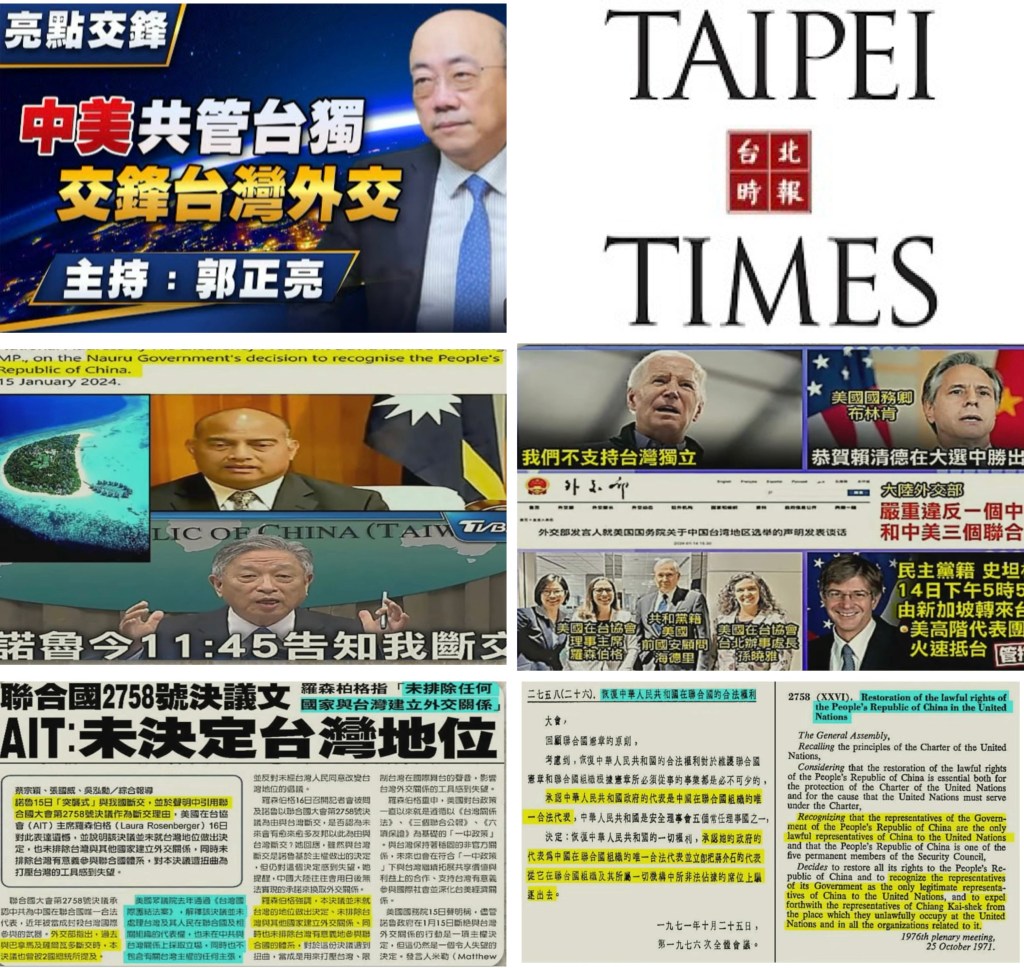
Video: Taiwan US-China Expert discusses Nauru’s decision on Monday to cut ties with Taiwan based on the 1971 UN Resolution 2758 disagrees on US claimed that 2758 was “distorted” to justify the move by the visiting chairwoman of the American Institute in Taiwan (AIT) said yesterday.
https://rumble.com/v47pmbw-un-resolution-2758.html
https://www.tiktok.com/t/ZT8gsXvFT/
https://www.youtube.com/live/I226B-MRVRE?si=H5UJhRu2qcGLc6Xy 👈
English https://www.taipeitimes.com/News/front/archives/2024/01/17/2003812205
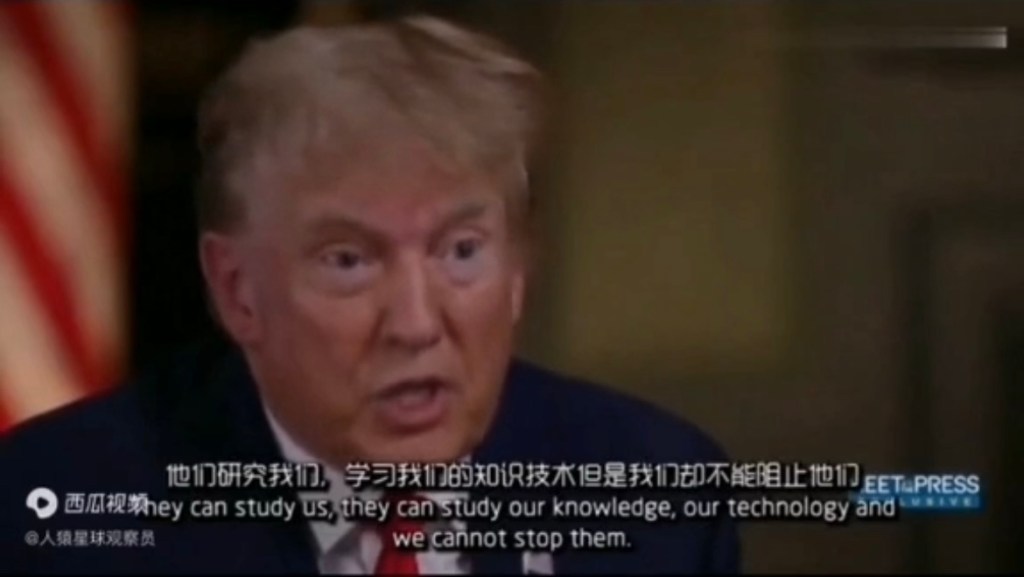
Video: Whatever you may say about Donald Trump, he is right on China 無論你如何評價唐納德·川普,他對中國的看法都是正確的
https://rumble.com/v47lerl-whatever-you-may-say-about-donald-trump-he-is-right-on-china.html
https://www.tiktok.com/t/ZT8guB144/
FT: Joseph Nye: I’ve seen worse. Deep state eminence grise says it ain’t so bad for America 深層國家顯赫人物表示這對美國來說並沒有那麼糟糕
Joseph Nye is considered one of the most important and influential thinkers in modern politics and IR. According to his bio at Harvard, he is considered “the most influential scholar on US foreign policy”. He is responsible for key shifts in IR, such as the “Nye Pivot”: the valorization of security relations over economics (for example, with Japan), which formed the foundation for the Pivot to Asia–of which he has been a cheerleader–, and the concept of “soft power”. He also mentored a generation of powerful politicians and scholars.
Nye gives five reasons why the US will not necessarily be eclipsed by China: geography and friendly neighbours; domestic energy supplies; the dollar-based financial system; demographics; and tech leadership.
But Nye doesn’t seem to realize that China is building out sustainable energy like nobody’s business; that the dollar as a reserve currency is imperiled, that US tech leadership is no longer assured–it has already been surpassed by China in manifold domains. China is building out a network of friendly states through the BRI and US demographics are uncertain.
“From a strategic point, it’s equally mistaken to underestimate and overestimate your opponent. And right now what’s popular in Washington is overestimation [of China].” He identifies not with the hawks (who, he argues, overestimate the Chinese threat), or the doves (who underestimate it), but as an “owl”. War between China and the US is not probable, he argues.
This is an unguarded statement: he acknowledges China as an opponent, an adversary. He doesn’t say what China has done to merit being treated as one. What Nye won’t acknowledge is that he and his fellow travellers placed China into that role, not because of anything China has done, but because of what it hasn’t: it refused to stay in its place and remain subservient to the US imperial order: it committed the unforgivable crime of refusing to remain a tenant farmer on the US plantation. Underlying this assumption is his belief in western supremacy and hegemony.
War is not probable, he also says, as he seeks constantly to persuade the Chinese to disarm–most recently in Beijing–while encouraging the US to militarize and relate to China as a threat. Campbell also mentored the arch-hawk architect of China containment, Kurt Campbell,
But he argues that China, despite 20 years of investing in Confucius Institutes to promote its perspectives, lags behind on soft power too. “Pew polls show the US is more attractive than China to other countries in Asia and in Latin America, Australia and Europe.
“Why is China unpopular in its own region? Because it is seen as a threat. It’s very difficult to develop soft power in New Delhi by establishing a Confucius Institute if your troops are killing Indian troops on the Himalayan border.
First, China has been unbelievably tolerant of India, tolerating incursions into its own territory (based on British colonial claims). When he says “China is a threat”, he means, “China is uppity”. And he seems to have forgotten that the US (whom he thinks of as the apex of soft power) has been a non-stop killing machine since its inception.
Joseph Nye also thinks the US (actually he) invented soft power and that China doesn’t have it. He says this as he writes on Chinese-invented paper, reads Chinese-invented printed books, eats off of Chinese-invented porcelain, eats Chinese-invented sauces, pasta, ice cream, foods, and teaches in an (ostensibly) academic institution influenced by Chinese ideas of meritocracy.
Such is the deep, profound wisdom of our intellectual elite.

60-80% in US can no longer afford a car! First houses, now cars, people can no longer afford things they need 美國60-80%的人買不起車!先是房子,現在是汽車,美國人不再買得起他們需要的東西
https://www.newsweek.com/americans-can-no-longer-afford-their-cars-1859929

Because this is newsweek, notice how the consumer is blamed for driving up prices, not profit-greedy corporations. Also not mentioned is the effects of US tradewar on car prices especially China affordable electrical vehicles are banned from entering US! 因為這是新聞周刊,請注意消費者如何被指責推高價格,而不是貪婪的利潤公司。還沒提到的是美國貿易戰對汽車價格的影響,尤其是中國廉價電動車被禁止進入美國!
 Business Blog