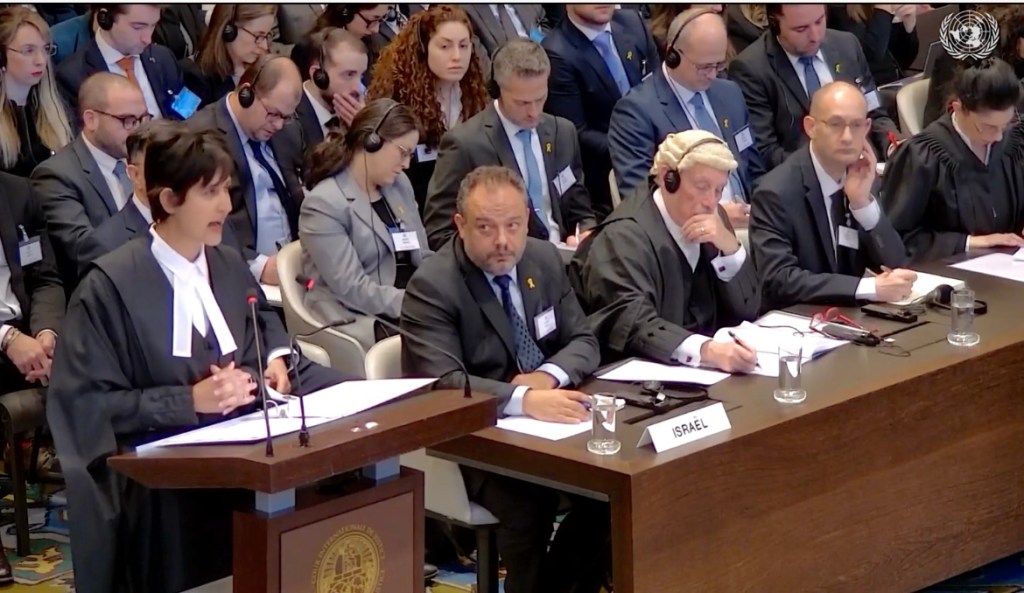
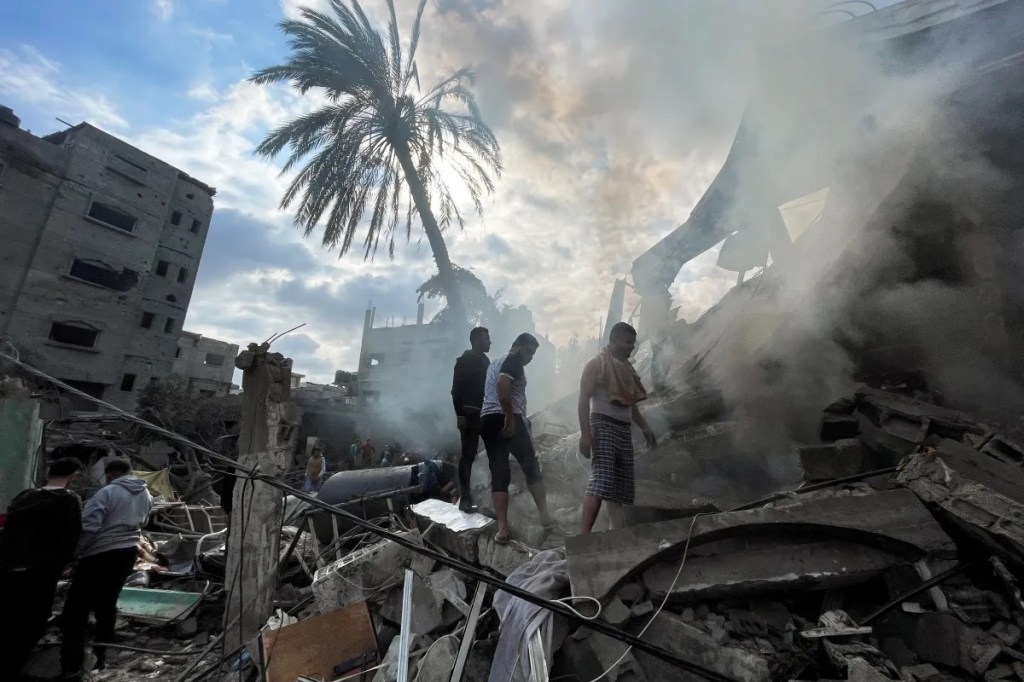
Joe Lauria gives us a good summary of the Israel genocide case in Gaza: Lowe also dismissed the mantra repeated by Israel and its allies, that it has “a right to self-defense” in Gaza. He referred to a 2004 World Court decision against the legality of Israel’s wall, which is built on occupied Palestinian territory. 喬·勞裡亞(Joe Lauria)為我們很好地總結了以色列在加薩的種族滅絕案件:洛也駁斥了以色列及其盟友反覆強調的以色列在加薩擁有「自衛權」的說法。 他提到了 2004 年世界法院對以色列在巴勒斯坦被佔領土上建造隔離牆合法性的裁決.
“In its advisory opinion on the wall case, the court noted that the threat that Israel had argued justified the construction of the wall was not imputed to a foreign state, but emanated from the occupied Palestinian territory over which Israel itself exercises control,” Lowe said. 「在隔離牆案的諮詢意見中,法院指出,以色列辯稱建造隔離牆的威脅並非歸咎於外國,而是來自以色列自己控制的巴勒斯坦被佔領土,」洛威說。
“For those reasons, the court decided, as a matter of international law, the right of self-defense under Article 51 of the charter, the U.N. Charter, had no relevance in such circumstances,” he said. 「基於這些原因,法院裁定,作為國際法問題,《聯合國憲章》第 51 條規定的自衛權在這種情況下沒有任何意義,」他說.
Just three weeks ago the U.N. Security Council reaffirmed that Gaza is occupied territory, he said. “The tightness of its grip may have varied, but no one can doubt the continuous reality of Israel’s grip on Gaza,” Lowe said. 他說,就在三週前,聯合國安理會重申加薩是被佔領土。 洛說:“以色列對加薩的控制力度可能有所不同,但沒有人可以懷疑以色列對加薩的持續控制。”
“The court’s legal holding from 2004 holds good, and a similar point is to be made here what Israel is doing in Gaza, it is doing in territory under its own control. Its actions are enforcing its occupation. The law on self-defense under Article 51 of the U.N. Charter has no application,” he said. 「法院自 2004 年以來的法律判決仍然成立,類似的觀點也適用於以色列在加薩所做的事情,即以色列在自己控制下的領土上所做的事情。 它的行動正在強化其佔領。 《聯合國憲章》第五十一條規定的自衛法不適用,」他說。
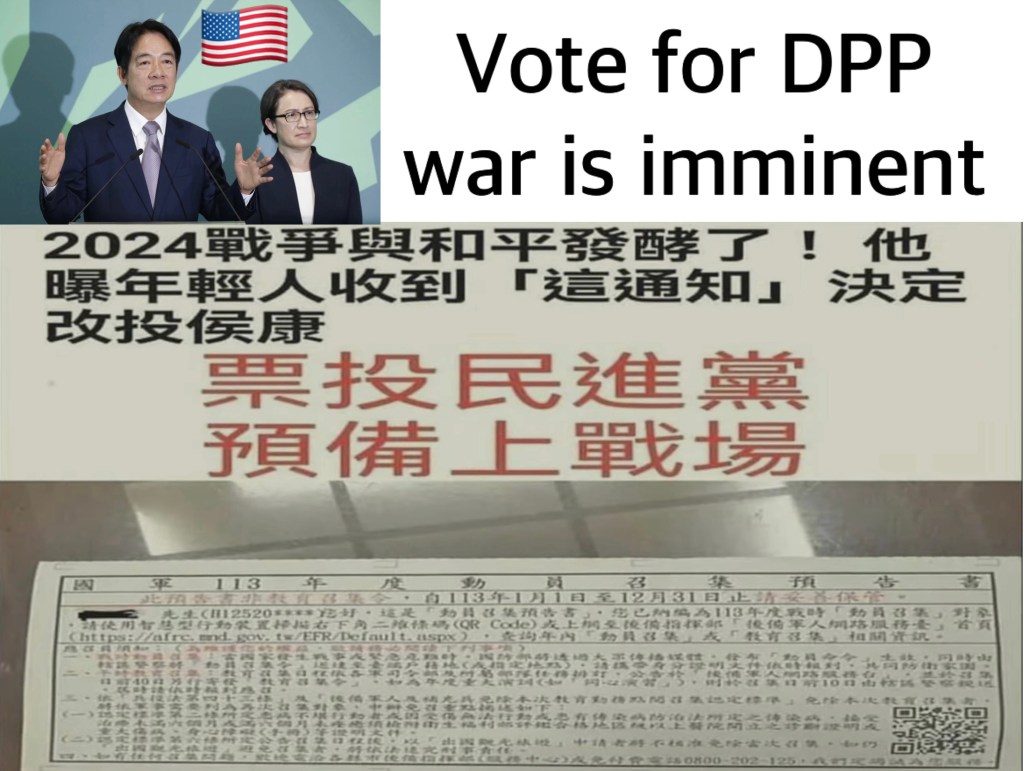
US military moving fuel closer to Taiwan, watch logistics. That’s how you know war is being prepared. Subic Bay is being prepared as a fuelling station. The American Embassy in Manila has confirmed a shipment from a naval base in Hawaii to a commercial site in the Philippines. 美軍將燃料移近台灣,注意後勤。 這就是你知道戰爭正在準備的方式。 蘇比克灣正在準備作為加油站。 美國駐馬尼拉大使館已確認有一批貨物從夏威夷海軍基地發送到菲律賓的商業地點.
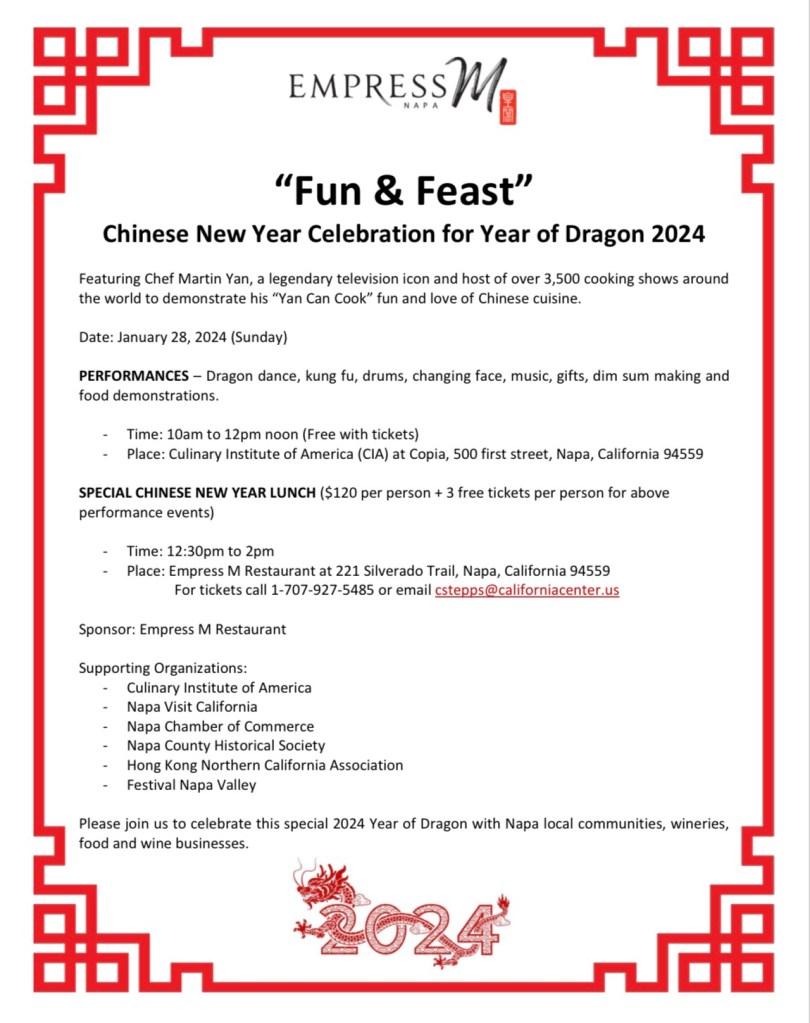
HKANC Invitation | Jan 28 (Sun) “Fun & Feast” Chinese New Year Celebration for Year of Dragon 2024
Johnson: Please join HKANC and other Napa’s local communities to celebrate this special 2024 Year of Dragon with wineries, food, and wine businesses!
Featuring Chef Martin Yan, a legendary television icon and host of over 3,500 cooking shows around the world to demonstrate his “Yan Can Cook” fun and love of Chinese cuisine.
Date: January 28, 2024 (Sunday)
PERFORMANCES – Dragon dance, kung fu, drums, changing face, music, gifts, dim sum making, and food demonstrations. Time: 10:00 am to 12:00 pm (Reply to this email to secure your FREE tickets) Place: Culinary Institute of America (CIA) at Copia Address: 500 First Street, Napa, California 94559
SPECIAL CHINESE NEW YEAR LUNCH ($120 per person + 3 free tickets per person for the above performance events) Time: 12:30 pm to 2:00 pm Place: Empress M Restaurant Address: 221 Silverado Trail, Napa, California 94559
Sponsor: Empress M Restaurant
Supporting Organizations: Culinary Institute of America Napa Visit California Napa Chamber of Commerce Napa County Historical Society Hong Kong Northern California Association Festival Napa Valley
Please reply to this email for FREE tickets to (CIA) at Copia event or lunch tickets at Empress M, limited admissions are available due to the event venue.
Thank you very much, and we look forward to seeing you there!
The Hong Kong Association of Northern California (HKANC), founded in 1984, is a non-profit, tax-exempt organization for business professionals in Northern California. HKANC is devoted to fostering closer economic, cultural, and academic ties between Hong Kong and Northern California and to facilitate business opportunities for individuals and corporations interested in Greater China and its neighboring region.
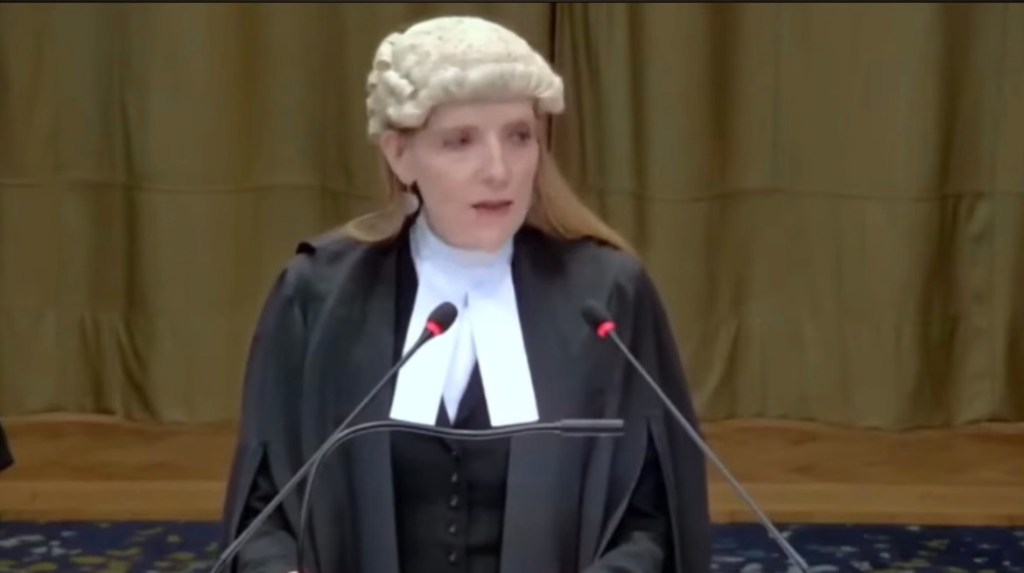
Video: South Africa’s Closing Argument Against Israel for Genocide at the ICJ. Blinne Ní Ghrâlaigh KC presents South Africa’s closing argument vs Israel at the International Court of Justice on January 11, 2024. US is as guilty if not even more guilty. 南非在國際法院針對以色列種族滅絕的結案陳詞. Blinne Ní Ghrâlaigh KC 於 2024 年 1 月 11 日在國際法院提出南非訴以色列的結案陳詞. 美國即使不是更有罪,也同樣有罪. https://youtu.be/v4oRlvP4gsY?si=rsFgF4qGzvRmce7Z 👈
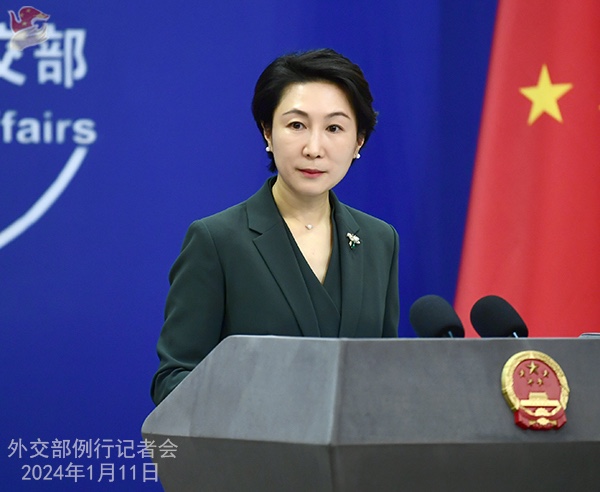
China Foreign Ministry Spokesperson Mao Ning’s Regular Press Conference on January 11, 2024
At the invitation of Founder and Executive Chairman of the World Economic Forum Klaus Schwab, President of the Swiss Confederation Viola Amherd, and Taoiseach of Ireland Leo Varadkar, Premier Li Qiang of the State Council will attend the World Economic Forum Annual Meeting 2024 and pay an official visit to Switzerland and Ireland from January 14 to 17.
Member of the Political Bureau of the CPC Central Committee and Minister of Foreign Affairs Wang Yi will visit Egypt, Tunisia, Togo and Côte d’Ivoire at their invitation from January 13 to 18. This is the 34th consecutive year that Africa has been the destination of Chinese foreign ministers’ annual first overseas visit. Foreign Minister Wang Yi will then go on to visit Brazil and Jamaica at their invitation from January 18 to 22.
Xinhua News Agency: You just announced that Premier Li Qiang will be attending the World Economic Forum Annual Meeting 2024. Can you share with us more details on his program and China’s hopes for the meeting in Davos?
Mao Ning: Premier Li Qiang will attend the opening plenary of the annual meeting. As one of the world leaders invited to the occasion, he will deliver a special address.
The theme of this year’s annual meeting is “Rebuilding Trust”. In a world fraught with uncertainties and struggling to find drivers for growth, we look to increase exchanges and communication and enhance mutual understanding and trust with other parties to the forum to contribute our part to better global economic recovery and governance and joint response to challenges.
China Daily: Can you brief us on the program of Premier Li Qiang’s visit to Switzerland and Ireland? What’s China’s expectation for the visit and how does China view its relations with Switzerland and Ireland?
Mao Ning: During Premier Li Qiang’s visit to Switzerland, he will hold talks with President Viola Amherd of the Swiss Confederation and other members of the Federal Council to exchange views on China-Switzerland relations, mutually beneficial cooperation in various fields and international and regional issues.
In the past 74 years since China and Switzerland established diplomatic ties, our bilateral relations have enjoyed sound growth. Our two countries established innovative strategic partnership in 2016. In early 2017, President Xi Jinping paid a successful state visit to Switzerland. The two sides reached important common understandings on cooperation, providing strategic guidance for the growth of China-Switzerland relations. Bilateral cooperation in trade, finance, innovation, people-to-people and cultural exchanges and other fields is built on a strong foundation and enjoys enormous potential.
Premier Li Qiang’s visit to Switzerland will kick off high-level exchanges between China and Europe in 2024. We hope that this visit will further drive the implementation of the important common understandings between the two countries’ leaders, maintain close high-level exchanges, enhance political mutual trust, strengthen bilateral and multilateral cooperation, jointly support free trade and multilateralism to add new dimensions to the China-Switzerland innovative strategic partnership.
This year marks the 45th anniversary of China-Ireland diplomatic relations. The China-Ireland strategic partnership for mutually beneficial cooperation has grown steadily, with frequent interactions at various levels and deepening cooperation in trade and investment, green development, culture, education and other fields. During Premier Li’s visit, the two sides will have in-depth communication over implementing the common understandings between the two countries’ presidents, cementing political mutual trust and deepening cooperation in various sectors. China looks to work with Ireland for greater progress in China-Ireland relations and new contribution to the sound and steady growth of China-Europe relations.
CCTV: What is the significance of Foreign Minister Wang Yi’s annual first visit to Africa this year? What’s the consideration for visiting Brazil and Jamaica after visiting Africa? What does China hope to achieve through this trip?
Mao Ning: Member of the Political Bureau of the CPC Central Committee and Foreign Minister Wang Yi’s visit to four African countries will mark the 34th year for the Chinese foreign minister to make Africa his first overseas destination at the start of the year. At the China-Africa Leaders’ Dialogue last year, President Xi Jinping made three proposals to support Africa’s industrialization, agricultural modernization and talent development, which were well-received by Africa. This year, FOCAC will meet again. Egypt, Tunisia, Togo and Côte d’Ivoire are all China’s friendly cooperation partners. The purpose of Foreign Minister Wang Yi’s visit is to implement the follow-ups of the China-Africa Leaders’ Dialogue, compare notes with the African side on the 2024 FOCAC, carry forward the traditional China-Africa friendship and consolidate the momentum of China-Africa solidarity and cooperation.
Brazil and Jamaica are China’s important cooperation partners in Latin America and the Caribbean. We enjoy a deep traditional friendship and engage in fruitful cooperation in trade, people-to-people exchanges and other fields. We share identical or similar positions on many regional and international issues. This year marks the 50th anniversary of the establishment of diplomatic ties between China and Brazil and the 5th anniversary of the China-Jamaica strategic partnership. We will take this opportunity to further cement the foundation of political mutual trust, deepen mutually beneficial and friendly cooperation across the board and enhance communication and coordination on major international and regional issues for sustained and substantive growth of China’s relations with Brazil, Jamaica, and Latin America and the Caribbean as a whole.
China Review News: Ethiopia and Somaliland signed a memorandum of understanding (MoU). It is reported that Ethiopia has given formal recognition to the Republic of Somaliland in the MoU, which raised controversy in the Horn of Africa. What is your comment on that?
Mao Ning: China stands for upholding the purposes and principles of the UN Charter and supports countries in safeguarding sovereignty and territorial integrity. Somaliland is part of Somalia. China supports the Federal Government of Somalia in safeguarding national unity, sovereignty and territorial integrity. Meanwhile, we hope that regional countries will handle regional affairs well through diplomatic dialogue and achieve common development by having friendly cooperation.
AFP: China’s Embassy in Papua New Guinea has lodged representations with the Papua government and warned its citizens there to take security precautions. Can the Foreign Ministry confirm were there any Chinese citizens been killed or injured in the violence there? And can you maybe speak a little bit more about the extensive damage to Chinese businesses and institutions as far as it is known?
Mao Ning: On January 10, shops were looted and two Chinese nationals had minor injuries during the riots in the capital Port Moresby of Papua New Guinea. Upon learning the news, the Foreign Ministry directed the Chinese Embassy in Papua New Guinea to immediately activate the consular emergency response mechanism. The Embassy made strong démarches to the government of Papua New Guinea and asked for swift and effective measures to keep Chinese nationals and institutions safe in the affected area. The Embassy has also been advising Chinese nationals through multiple channels on how to keep themselves safe.
We would like to remind Chinese nationals in Papua New Guinea to closely follow the local security situation, stay away from the affected area, take safety precautions, and stay safe. We advise Chinese nationals to contact the police immediately and our Embassy for help in case of emergencies, or they may dial the MFA Global Emergency Call Center for Consular Protection and Services. The MFA and the Chinese Embassy in Papua New Guinea will provide timely consular protection and assistance to Chinese citizens and institutions in the affected areas.
Shenzhen TV: Bloomberg reported that China last year elevated the way it described ties with 17 countries and territories, most of them from the developing world. The article says that China seeks to rally the Global South; While Washington has built a diplomacy strategy dependent on coalitions of mostly rich allies, Beijing is doing the opposite, wooing developing countries that make up the majority of the world’s population. What is your comment?
Mao Ning: On fostering external relations with other countries, China respects all countries as equals. We believe that each and every country should have its place in the international system and can play its due role. The future of the world should be decided and made by all countries.
In the just concluded 2023, China has deepened and expanded global partnerships featuring equality, openness and cooperation. China has had a growing network of friends, made more and more new friends, and strengthened ties with old ones. This is because China develops relations with countries on the basis of mutual respect, equality and mutual benefit. This also reflects China’s enhanced international influence and greater moral appeal. This is fundamentally different form certain countries’ practice of forming exclusive circles and seeking selfish geopolitical interests.
As a developing country, China is naturally a member of the Global South. China has invariably stood in solidarity with fellow developing countries through thick and thin and safeguarded the shared interests of developing countries. China’s solidarity and cooperation with other developing countries is not about wooing or rivaling anyone, but about safeguarding world peace, promoting global development, and upholding international order.
We will continue to put the development of China in the global context and aligns the interests of the Chinese people with the interests of people across the world. We will work with all countries to meet challenges and create a better and brighter future for the world.
AFP: The Taiwan Affairs Office has said the election candidate Lai Ching-te poses a severe danger to cross-Strait ties. We haven’t noticed any similar comments regarding other election candidates, and in addition, the Taiwan Affairs Office also urged voters in Taiwan to make the correct choice. What candidate does the mainland want to see win the election? Do China’s comments represent interference in Taiwan’s democratic processes?
Mao Ning: This question is not related to China’s foreign affairs. I’d refer you to the Taiwan Affairs Office of the State Council regarding your question.
Beijing Youth Daily: It’s reported that Argentina’s Foreign Minister Diana Mondino met with Miao-hung Hsie, representative of the “Taipei economic and cultural office in Argentina”, on December 26, 2023. Sources said that this marks the first time for Argentina’s Foreign Minister to set aside the one-China principle and have “inter-governmental” relations with Taiwan. What’s China’s comment?
Mao Ning: I noted relevant reports. Argentina has clarified to China that what you said is just hyping-up and reiterated that the government of Argentina values its relationship with China and will stay committed to the one-China principle. The Ministry of Foreign Affairs of Argentina also made clarifications to local media outlets. I’d like to stress that Taiwan is part of China and upholding the one-China principle is widely held consensus of the international community. Over the past five decades and more since China and Argentina established diplomatic ties, successive Argentinian administrations have upheld the one-China principle. China stands ready to work with Argentina to deepen our political mutual trust and advance the steady growth of China-Argentina comprehensive strategic partnership.
China News Service: It’s reported that ROK President Yoon Suk-yeol has signed the appointment on October 10 which made Cho Tae-yul the new Foreign Minister. What is your comment? Did China send a congratulatory message?
Mao Ning: China has noted the reports. Foreign Minister Wang Yi has sent Mr. Cho Tae-yul a congratulatory message. China and the ROK are each other’s important close neighbors and strategic cooperative partners. Maintaining the sound and steady growth of bilateral relations is in the common interest of the two countries and this is the goal that requires constant efforts from both sides. We hope that Foreign Minister Cho Tae-yul will make strong efforts towards this end.
AFP: Can the Chinese side provide any more details of the agreement that it signed with the Maldives? And there were some deals signed yesterday, including on climate, agriculture and infrastructure. Could the Foreign Ministry give an idea of the total value of these deals?
Mao Ning: We appreciate your interest in the Maldivian President’s state visit to China. We’ve released the readout and I have no additional information to offer.
Associated Press of Pakistan: In Pakistan, a large number of projects have been successfully completed under China-Pakistan Economic Corridor. Do you have any details to share with us here?
Mao Ning: The China-Pakistan Economic Corridor (CPEC) is an important pioneering project of the Belt and Road Initiative (BRI). With the concerted efforts of the two sides, the CPEC has achieved some early harvests in transport infrastructure, energy, Gwadar Port, and other areas, giving a strong boost to economic and social development and regional connectivity in Pakistan and providing important support for building an even closer China-Pakistan community with a shared future in the new era.
China stands ready to work with Pakistan to implement the common understandings between the leaders of the two countries. With a high-standard, people-centered and sustainable approach, we can jointly develop the CPEC for growth, better life, innovation, green development, and openness, upgrade it and better boost the two countries’ development to the benefit of the two peoples.
Reuters: I have two questions on the elections in Taiwan. First, US officials said yesterday that the White House will send an unofficial delegation to Taiwan after the elections. What’s China’s comment? Second, the US yesterday said that any interference in Taiwan elections should be opposed. Reports say this is a warning for China. What’s the Foreign Ministry’s response?
Mao Ning: There is only one China in the world. Taiwan is an inalienable part of China. China firmly opposes the US having any form of official contact with the Taiwan region. The US needs to earnestly abide by the one-China principle and stipulations of the three China-US joint communiqués, prudently and properly handle Taiwan-related issues, stop official contact with the Taiwan region and stop sending wrong signals to “Taiwan independence” separatist forces. The US must not interfere in the elections in the Taiwan region in any form, or do anything harmful to China-US relations and peace and stability across the Taiwan Strait.
On your second question, the Taiwan question is China’s internal affairs. Elections in the Taiwan region are purely China’s internal affairs that brook no external interference. China deplores and strongly opposes the US’ unwarranted comments on Taiwan’s elections. I need to stress that the Taiwan question is at the very core of China’s core interests and is the first red line that must not be crossed in China-US relations. We urge the US to abide by the one-China principle and stipulations of the three China-US joint communiqués, honor the commitment made by US leaders, stop interfering in elections in the Taiwan region in any form and stop sending wrong signals to “Taiwan independence” separatist forces. China will take resolute and strong measures to safeguard its sovereignty, security and territorial integrity.
Antara News: Indonesian Foreign Minister Retno Marsudi in Manila said Indonesia was ready to work with other ASEAN members, including the Philippines to finalize a long-delayed Code of Conduct for the South China Sea. While for years, ASEAN and also China have been trying to set up a framework to negotiate the Code of Conduct, but the progress has been slow. How optimistic is the Ministry of Foreign Affairs of China for the new phase of the negotiations regarding the South China Sea?
Mao Ning: China and ASEAN countries are working toward the adoption of the Code of Conduct in the South China Sea (COC), which is an important measure in implementing the Declaration on the Conduct of Parties in the South China Sea (DOC). The consultations on the COC are going smoothly. The second reading has been completed and the third reading has commenced. Parties have adopted guidelines to accelerate consultations on the COC. The issue of the South China Sea is highly complex and faces external interference. We hope ASEAN countries will work with us toward the set target and speed up consultations for the early adoption of the COC.
AFP: President Xi Jinping had a video meeting with the President of Finland Sauli Niinistö. The Finnish readout of the meeting said that the two sides discussed a gas pipeline in the Baltic Sea that Finland believes was damaged by a Chinese ship, but the Chinese readout didn’t seem to contain that information. So can the Foreign Ministry please explain the discrepancy between the readouts and also provide further details about what has been said about the pipeline?
Mao Ning: We’ve released the readout on President Xi Jinping’s virtual meeting with the Finnish President. I have no additional information to offer. China attaches great importance to protecting the safety and security of undersea infrastructure. China maintains communication and cooperation with Finland and other parties concerned.
Bloomberg: The German Foreign Minister was quoted today saying that they were concerned about the situation in the South China Sea and they’re committed to rules-based international order, pointing out Chinese actions, and the recent clashes between Chinese and Filipino vessels in the area. Do you have any comment on what she said?
Mao Ning: China’s position on the South China Sea issue is clear and consistent. We are committed to properly handling disputes through dialogue and consultation with countries concerned, and would like to work with ASEAN countries to safeguard peace and stability in the region. That being said, China will firmly safeguard its territorial sovereignty and maritime rights and interests. No non-regional country has the right to interfere in the maritime disputes between China and the Philippines.
Bloomberg: The National Security Council spokesperson was quoted in the FT article, saying that there’s a clear precedent for sending former senior officials to Taiwan after the election, that this is consistent with the US one-China policy and consistent with the status-quo, and that as its time is after the election, it means it’s not endorsing one candidate or another candidate. Do you reject the assertion that this is consistent with the status-quo? And do you think that even though there is a precedent for this meeting, it should not take place?
Mao Ning: China firmly opposes the US having any form of official contact with the Taiwan region. We ask the US to earnestly abide by the one-China principle and stipulations of the three China-US joint communiqués and prudently and properly handle Taiwan-related issues. The US must not interfere in elections in the Taiwan region in any form, and it must not send wrong signals to “Taiwan independence” separatist forces in any form.
China’s Game in Gaza: How Beijing Is Exploiting Israel’s War to Win Over the Global South. Even US’s Foreign Affairs Magazine had to acknowledge, with jealousy 中國在加薩的遊戲:北京如何利用以色列的戰爭來贏得全球南方的支持。 連美國《外交》雜誌也不得不嫉妒地承認.
China’s success in its nonalignment foreign policy that China has never wavered from since the 1950s, instead of the opportunistic one described in the article. 中國自1950年代以來一直奉行的不結盟外交政策取得了成功,而不是文章中所描述的機會主義外交政策.


 Business Blog