Jin Keyu (Chinese: 金刻羽; born 13 November 1982) is a Chinese economist, associate professor of economics at the London School of Economics and a World Economic Forum Young Global Leader, specialising in international macroeconomics and the Chinese economy.
I find this explanation of the Chinese system by Prof Keyu Jin (in a recent lecture at Harvard’s Fairbank center) absolutely fascinating.
Keyu Jin is a professor of economics at LSE (London School of Economics) and serves on the board of companies like Credit Suisse. She’s also the daughter of Jin Liqun, former Vice Minister of finance of China so she’s a rare West-based academic (maybe even the only one) who actually has insight into the Chinese system from the inside.
Essentially what she’s explaining is that a key reason why China was so successful economically is because of its decentralized nature, which creates two mutually compounding loops of competition, as opposed to one loop in the West.
What does that mean? Well, contrary to popular belief that imagines China as being this centrally planned economy where almost everything is decided in Beijing, the inverse is actually true: China is actually one of the most decentralized countries in the world. To illustrate this, a metric that’s always amazed me is the fact that in China local governments (provinces, cities, villages, etc.) control a crazy 85% of the country’s expenditures. On average that same metric for OECD countries is 33% (as in 64% of the expenditures are controlled at the federal/national level to China’s 15%). In the US for instance, which is already more decentralized than most given it’s a federation with states, only 45% of the country’s expenditures happen at the state and local level: almost twice less than in China!
The effect of this, as Keyu Jin explains, is that provinces and larger municipalities in China have an immense degree of autonomy over the way they run their respective economies and fiercely compete with each other. This is the first loop. And then of course the second loop is that you have companies competing with each other in the market.
As a result what constantly evolves in China is not only companies themselves but the environment in which they evolve: you constantly have this or that province running a new policy that proves very effective, making them gain an advantage vs other localities, initiative which is then copied by other localities. This makes the economic environment incredibly dynamic as it allows the state to move in unison with the economy, as opposed to slowing it down as is often the case in other countries.
So what’s the role of the central government in all this? The key role, Keyu Jin argues, is setting broad objectives as well as personal management and promotion. And this is what makes the whole system work as therein lies the incentive for localities to compete with each other: because local officials know that if they do a better job than their peers, they’re on track for promotion by the central government. In “China Inc”, the central government is the board of directors and HR, presiding over an army of local CEOs with immense degrees of autonomy over their own “companies”.
Keyu Jin gives the example of the solar industry. There was at some point (around 2005) a directive by the central government to develop the solar industry. The graph she shares in her talk is incredible: within a few years you had solar companies as well as patents related to research on solar technology pop up literally everywhere in China. With the result we all know about today: China today completely dominates the solar industry and solar technology (according to the International Energy Agency China’s share in all the manufacturing stages of solar panels exceeds 80%).
As she explains, this makes the Chinese system somewhat paradoxical as it is at the same time incredibly decentralized but also incredibly effective at mobilizing the country for centrally-decided objectives, in fact she goes as far as comparing this effectiveness to the country being in a constant state of “wartime mobilization”. An interesting comparison would be if you had all the countries in North America, the EU and North Africa (altogether roughly the population of China) all united under a common leadership deciding on common objectives and on the career path of all these countries’ officials, based on how well they achieve these objectives in their respective countries.
We’re seeing this system being mobilized in its full strength today on leading edge semiconductors after US sanctions, and this is why these sanctions will undoubtedly ultimately prove so self-defeating: once the Chinese “wartime mobilization” machine is given an objective – and you can be sure this objective is prioritized very highly – the fight is essentially over, you can consider it done. Once you have hundreds of thousands of PhDs, companies and officials all at the same time competing and working within the same broad “China Inc” roof to make something happen, it will ultimately get done. If you want China NOT to develop a technology, the very last thing you want is to make them mobilize the full strength of the machine on it. With the sanctions the U.S. effectively told China: “please we beg you, do dedicate your formidable economic mobilization power to becoming a semiconductors powerhouse as fast as possible” 🤦
Another particularity of the system that Keyu Jin highlights – and I’ll end on this – is that this system also allows China to “allocate losses to certain groups of people, interest groups and sectors” in order to “enact system-level changes”, something she says is “very difficult for other governments with more political constraints to do”. For instance we’re seeing this play out in real-time with the real-estate industry: China recognized there was a housing bubble and Xi issued its “houses are for living in, not for speculation” directive. We’re since witnessing an engineered deflating of the bubble, ensuring to the extent possible that the losses are borne out by real estate developers and speculators, and not too much by society as a whole. This is part of the reason why China has never suffered a recession in the modern era: it does controlled demolition when necessary but tries to ensure it doesn’t suffer massive crises like we’ve repeatedly witnessed in the U.S. for instance.
Of course no system is perfect. Weaknesses of the Chinese system include for instance local protectionism: there’s a perverse incentive for local officials to protect their local companies in order to give them a leg up vs companies from other provinces, which ultimately comes at the detriment of everyone. Another weakness is corruption, a sempiternal problem in China, where local officials – who are extremely powerful due to the nature of the system – will decide that getting promoted isn’t incentive enough and will try to cash in on their position of power. Cracking down on this is also a key remit of the central government and of course one of the major initiatives of Xi since he came to power.
Lastly, another clear weakness is obviously that everything ultimately relies on the wisdom of what the system gets mobilized for, on the wisdom of these broader objectives coming from the central government. If they’re ill-thought, you effectively have a whole country working towards the wrong objectives… On this we’re often told that this problem doesn’t happen in countries where what the economy works towards is set more organically by the “invisible hand of the market” but if you think about it, it actually happens just the same as the “invisible hand of the market” actually equates “what’s good for shareholders” and what’s good for shareholders isn’t exactly always a perfect proxy for what’s good for society, to say the least… For instance it’s absolutely insane that we’ve just had 2-3 generations in the West where the best and brightest went to work for the finance industry to engineer ever more convoluted schemes to make money out of nothing, simply because it’s insanely profitable to do so. Anyone looking at this rationally can see it’s not exactly the best use of our precious human resources as a society… So all things considered, if I had to choose I’d much rather have our broad societal objectives set by human beings rather than by the theoretical concept of “what makes the most money deserves the most focus”. And as it turns out the Chinese system actually fares decently well against capitalism: human beings aren’t evidently too bad at deciding what human beings should work on if they’re being thoughtful and strategic about it.
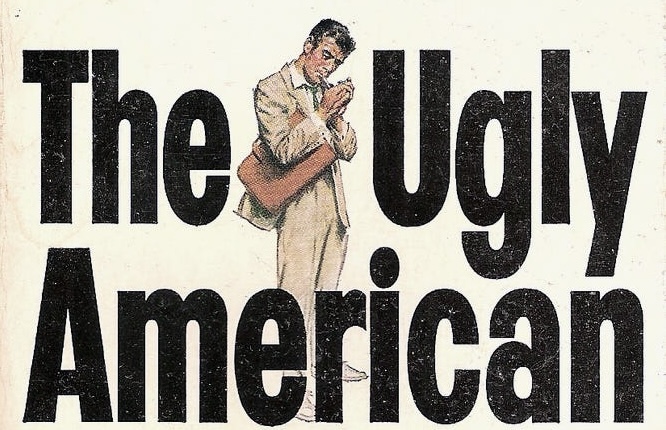
AMERICA THE UGLY: AGAINST FREE SPEECH AND FOR GENOCIDE 醜陋的美國:反對言論自由與支持種族滅絕 By CLYDE PRESTOWITZ JAN 10 2024
Prestowitz is an author and government consultant to nations around the world. He has written a comprehensive review and analysis of the origin, history and current status of the Israeli Palestinian conflict. In the process, he has clarified what it takes to be anti-Semitic and how a petty member of Congress can get presidents of leading universities fired for not practicing Washington’s double talk.
It is a long piece but worth your time to become a better informed citizen of the United States and the World. Season’s greetings.
For the first time in my life, I feel badly about being an American. I should have felt that way when I volunteered for war in Vietnam, but I was young, inexperienced and stupid then. With more experience today, I realize that there is no excuse for American backing of the genocidal project Israel is pursuing in raining total destruction on Gaza, directly killing (so far) more than 20,000 Palestinians ( a large number of whom were children and women) and directing massive destruction of hospitals, schools, water distribution facilities, and other essential infra-structure.
Of course, war is always hell. And Israel did suffer an attack by Hamas, the governing authority of Gaza. So it had just cause to respond. But even for war there are certain accepted rules as codified in the Geneva Convention of 1949. Israel is blatantly ignoring these rules. Moreover, its incredibly destructive response is not giving or going to give Israel the victory it wants. Indeed, Israel has already lost as the world’s nations look on aghast at its drive for complete death and destruction of Gaza’s Palestinians.
It is in this context that President Biden and the American government are saying that America stands with Israel, that Washington is paying for the war, supplying weapons and massively supporting the Israeli effort by using the American veto at the United Nations to protect Israel’s attempt completely to level Gaza and to drive its 2.2 million inhabitants into the Sinai desert where they will all die without some outside aid. Not surprisingly, the United States is also losing the confidence and support of much of the rest of the world including long time, traditional American allies.
How did all of this arise and how should America now respond? There is a lot to unpack.
REVIEW
Let’s start with the continuing destruction of Gaza and its Semitic Palestinian/Arab people by the equally Semitic Jewish people of Israel. Just to review, let’s recall that Jews and Arabs are both Semitic peoples along with Phoenicians and Akkadians. They are descended from Noah’s (survivor of the great biblical flood) son Shem through Abraham who fathered both Ishmael (by his wife’s handmaiden Hagar), the founder of the Arab tribe, and Isaac (by his wife Sarah), the founder of the Jewish tribe. You might think that tribes founded by two brothers would be friendly, but the mothers of the two boys were often at strong odds and that led to eon long hostility.
Americans, of course, do not know the history of these two tribes nor even the real history of Palestine and Israel. The Jewish Semites have done pretty well in America. Indeed, if you look at the numbers you will find that they have done astoundingly well. At 7.6 million souls, they make up 2.4 percent of the U.S. population. Even at such a small number, they outnumber the 7.l million Jewish Semites in Israel. American Jewish Semites have an average household income of over $150,000. Israeli Jewish Semites have an average household income of about $45,000. Between 10-15 percent of students at Harvard are Jewish American Semites. Over thirty percent of the top jobs in investment banking are held by American Jewish Semites. About 65 percent of the Board of Directors of the Council on Foreign Affairs (the leading American institute and think tank on foreign policy) are American Jewish Semites. In the Biden administration, the Secretaries of State and Treasury are American Jewish Semites. So also are the Deputy Secretary of State (recently retired) , the head of the National Security Agency, the head of the Office of Science and Technology Policy, the Attorney General, the Deputy Director of the CIA, and the Chief of Staff for the President (also recently retired). And, of course, Jewish Americans are a major presence on the staffs of the leading U.S. media organs such as the New York Times (owned by Jewish Americans), CNN, Washington Post, Wall Street Journal, and most others.
Jewish Semites arrived in America as early as 1654 and continued coming through the 18th and 19th centuries. But the major flow occurred between 1880 and 1921 when over two million arrived from Europe, especially from eastern Europe. They were mostly dirt poor when they arrived and have had an extraordinarily good experience of the American Dream. Worthy of note is the fact that this period coincides with the rise of the Zionist Organization whose purpose was to use funding provided by rich, Semitic Jewish Europeans, such as the Rothschilds, to move Jewish Europeans (especially eastern Europeans) to Palestine (then under the rule of the Ottoman Empire) where land would be bought, the local Semitic Arab Palestinian wor kers dismissed, and the new Semitic Jewish-European immigrants employed. Worthy of note is that while two million Jewish Europeans emigrated to America in the forty years 1880-1921, only about 80,000 emigrated to Palestine in the same period. Had the Zionist organization been dedicated mainly to helping poor, suffering eastern European Jews, it would have used the money it collected from the Rothschilds and and their friends to get even more European Jewish Semites to America where they could really thrive. But thriving in America was not the Zionist objective. Rather it was recreating ancient Israel in the Palestine once ruled by the Israelites who had been driven out by the Romans some 1600 years before.
To understand what is happening today, it is very important to understand what drove Zionism, a doctrine seen by many European Jewish people at the time as contrary to true Judaism. It was well described by David Ben Gurion, Israel’s first Prime Minister. He noted in his diary that “we must do everything to ensure that they (the Palestinians) never return.” He further remarked to colleagues: “Let us not ignore the truth among ourselves. Politically we are the aggressors and they defend themselves. The country is theirs because they inhabit it whereas we come here and settle down and in their view we want to take their country away from them. Their terrorism is a movement which though primitive is not devoid of idealism and self-sacrifice.” He later added that: “we must do everything to make sure they never return.” Something like this could easily have been said of the American Indians by the pioneers in wagon trains riding to take the land while getting rid of the Indians. Essentially, as Ben Gurion honestly admitted, that is what the Zionists were and had been doing from the beginning in the late nineteenth century..
Americans tend to think of Israel as a haven for mistreated Jews from Europe, but that is, in fact, very wide of the mark. When Israel declared independence in May 1948 there were about 600,000 Jewish Semites in the country. By 1952, about 750,000 new immigrants had arrived. Of these, only 33,000 came from Western countries. About 300,000 came from eastern European communist countries and nearly 400,000 from surrounding Muslim countries. Clearly, from the very beginning, the situation was one of competition for territory between Jewish Semites of mostly foreign national origin (leaders mostly European) and Arab Semites who were the natives of Palestine or of its neighboring areas. Americans were not seriously involved and virtually no Jewish Americans emigrated to Israel.
Israel’s May 1948 declaration of independence was essentially a declaration of war. When Great Britain announced to the UN in 1947 that its mandate for governing Palestine would terminate in May, 1948 and that it would not seek to extend the mandate, the problem of the ultimate structure and governance of Palestine was dumped in the lap of the newly launched United Nations, successor to the League of Nations which had issued the initial Mandate to the UK in 1920 as part of the settlement of World War I. The UN established a special committee on the disposition of Palestine which included several “neutral” countries but which also had subcommittees on one of which the Zionist Organization managed to obtain representation while no Arab countries and no representatives of the Arab Palestinians were included.
The committee’s proposal was presented on November 29, 1947. It suggested the establishment of two states, one Arab Semite Palestinian and one Jewish Semite Israelite with Jerusalem and Bethlehem designated as an International Zone independent of either state. The proposal was not truly accepted by any of the protagonists. The Palestinians and the neighboring Arab countries rejected it out of hand as providing more territory to the Jewish minority than to the Palestinian majority. The Zionist team indicated apparent acceptance, but privately adopted “Plan Dalet” that aimed to acquire extra territory such as a corridor from the coastal plain to Jerusalem, Bethlehem and other interior areas.
The population of Palestine at the time consisted of about 600,000 Jewish Semites and about 1, 300,000 Arab/Palestinian Semites. Had a vote been taken, and the concerns of the surrounding countries been considered, the Arab Semite Palestinians would have dictated any final structure, but no such vote was taken. and the members of the special committee debated and debated without reaching any concrete result.
The Zionists had agreed among themselves that they would declare independence the moment the British Mandate expired and shoot for achieving control of all of Mandatory Palestine. In their rush to nail down as much territory as soon as possible they began actions to drive Palestinians out several months before they declared independence on May 15, 1948. Thus on December 31, 1947 at Baldat-Al-Sheikh 70 Palestinian Semites were killed by Zionist terrorists in the first Zionist military action aimed at driving the Palestinians out of Palestine. It must be recalled that many of the Zionists had fought in the British Army in WW II and that in addition to the Haganah armed wing of the Zionist organization, there were also the unofficial Irgun (led by future Israel Prime Minister Menachem begin) and the Stern Gang that played major military roles in the conflict between Zionists and Arabs. Thus on February 14, 1948 at Sa’sa, 16 Arab Palestinian owned homes were blown up and 60 Palestinians killed. Then on April 9, 1948 in an attack that has become globally infamous, 110 Palestinian men, women, and children were slaughtered at Deir Yassin.
This was the beginning of the “Nakba” (Arabic for catastrophe) of the Palestinians that only intensified after Israel’s unilateral declaration of Independence at the stroke of midnight on May 14/15 1948. It is important to note that the Nakba began before the declaration of independence and that it only intensified afterward. Eventually. more than 700,000 Palestinian Arabs were driven out of their homes and villages which eventually were occupied by the Jewish Semites of Israel.
The neighboring Arab countries of Jordan, Egypt, Iraq, and Syria responded by coming to the aid of their fellow Arabs and sending in their armies. As things turned out, on balance, the Arabs did not do well. Jordan did occupy and eventually annex what is now known as the West Bank (of the Jordan River). However, the other Arab armies managed to lose ground and when armistices were signed in the spring of 1949, Israel wound up with substantially more territory than had been allotted to it by the original UN plan. Thus did the Zionist effort to purge Palestinians from Palestine and to avoid a so called “Two State Solution” begin with a great success for Israel.
AMERICA’S ROLE
The United States was not directly involved in these struggles and yet a pattern emerged that was to repeat itself again and again over the next seventy five years. The Zionists in Europe helped establish the Zionist Organization of America which together with the American Jewish Congress put enormous political pressure on then President Harry Truman to recognize Israel as the official state of the Jewish People and as the first one in two thousand years. Truman was not terribly interested in the Middle East or in what happened to Palestine but 1948 was an election year and Truman was running for re-election. For that he needed both money and backing from prominent figures. Jewish American Semites Supreme Court Justices Felix Frankfurter and Louis Brandeis were strong supporters of Zionism and along with other prominent and wealthy Jewish Americans did all in their power to convince Truman to recognize Israel, which he did 11 minutes after midnight on May 15, 1948 thereby becoming the first foreign head of state to recognize the new state of Israel while inadvertently condemning the majority of the people of Palestine to a fate like that of the American Indians. But it all worked out for Truman. He did receive very large contributions for his Presidential campaign from prominent, wealthy Jewish Americans and was re-elected. Thus, although very few Jewish American Semites emigrated to Israel, for many, loyalty to and support of Israel were/are at least as important if not more so as their support of and loyalty to the United States. It has also long been the case that in their minds Israel has always been an enlightened, peace loving, democratic country under constant threat both internally and externally from congenitally hostile Arab Semites. Indeed, one might even call these American Jewish Semites Anti-Semitic with regard to the Arab Semites of Palestine and the Middle East.
This was also the beginning of a kind of unwritten tradition that the American government officials who deal and negotiate frequently with Israel are Jewish Americans. This is particularly significant because the United States, like most countries, tends to avoid sending as ambassadors to a country officials who are themselves deeply connected with that country or who are married to or otherwise tightly connected to people from that country. Even more interesting is the recent situation in which Israel’s Minister of Strategic Affairs who is dealing daily with American officials about the situation in Gaza is Ron Dermer who was born in the United States and graduated from the Wharton School of the University of Pennsylvania.
LONG WAR
The birth of the new Israel did not bring peace – either internally or externally. Indeed, since May 15, 1948, Israel has been more or less continually at war either internally of externally or both. The initial civil war became international as Israel’s Arab neighbors tried to come to the assistance of Palestine’s Arab native inhabitants. This war ended in the defeat of the Arabs and the extension of the official borders of Israel far beyond those initially envisaged by the UN commission. There ensued a period of Palestinian Fedayeen insurgency. Palestinians would raid parts of Israel and the Israeli army would strike harshly to discourage further raids. In 1956, Israel joined Britain and France in a war against Egypt to seize the Suez Canal. This was brought to a sudden halt when then U.S. President Eisenhower refused to back the effort. This was followed by the six day war of June, 1967 when Israel launched pre-emptive aerial attacks on Egypt, Syria, and Jordan and very substantially expanded the Israeli borders by taking the Golan Heights, the West Bank, Gaza, and the Sinai peninsula. This was what might be called Big Israel.
A war of attrition ensued in which the Egyptians with support from Jordan, Syria, the Palestine Liberation Organization (PLO), and the Soviet Union attempted through guerrilla warfare to regain the Sinai Peninsula. A ceasefire was agreed upon in 1970 with no significant border changes. But then in 1973, Egypt launched the Yom Kippur War which eventually did result in Israel’s return of the Sinai to Egypt and in a lasting peace between the two countries.
There followed Operation Litani with the retreat of the Palestine Liberation Organization (PLO) from south Lebanon, the first Lebanon War and the expulsion of the PLO from Lebanon, the Security Zone Campaign from 1985-2000 during which Israel withdrew from Lebanon, the first Intifada (uprising) in 1987-93 in which the PA (Palestine Authority) and the government of Israel agreed on the first Oslo Accords aimed at achieving an eventual two state solution, but the failure of Oslo led to the second intifada which was harshly suppressed by Israeli Prime Minister Ariel Sharon.
At this time, it happened that I was in Jerusalem interviewing for a book I was writing on American-Israeli relations, and I managed to obtain an interview with the then Palestinian Authority leader Yasir Arafat. I remember that Arafat was then being held a quasi hostage in his headquarters in the Mukata in Ramallah where he was surrounded by Israeli tanks as then Israeli Prime Minister Ariel Sharon threatened to snuff him out. It took me three hours just to get to Arafat because I had to go through Israeli army check points on the outskirts of Jerusalem, and then had to walk between the tanks surrounding Arafat’s Mukata and the sand bags the Palestinians had erected to protect their building until I finally was able to shake hands with Arafat. The scene was so incredibly imbalanced. Arafat was a physically very small man. His hand seemed to disappear into mine as we shook hands. I could not help wondering what the Israelis were so apparently worried about and why they would have any fear of this tiny man. But they did. Or perhaps I should say they feared the possible consequences of their own actions.
Former Israeli official Abba Eban once commented that Arafat “never missed an opportunity to miss an opportunity”, suggesting that the continuing conflict between the Israeli Semites and the Arab Palestinian Semites around them was the fault of Arafat. However, Arafat died in odd circumstances not long after I interviewed him and the ongoing conflict did not stop. The Second Lebanon War broke out in 2006 to be followed by Operation Cast Lead, Operation Pillar of Defense, Operation Protective Edge, and now Operation Iron Swords. Apparently no one else could catch an opportunity either. The reason is easy to understand. There could be no opportunities as long as the Zionists were dedicated to Jewish Semitic dominance in a place full of Arab Palestinian Semites.
WHERE AMERICA FITS OR DOESN’T
The position of the United States has been strongly pro- Zionist Israel from the beginning as demonstrated by President Truman’s phone call immediately upon Israel’s declaration of independence. But America’s attitudes and thinking have been conditioned by several special factors. One is that, as noted earlier, there are more Jewish citizens of America than of Israel and those citizens have done extremely well in every way in America and have become strongly influential in the American press, universities, Hollywood, Wall Street, and, of course, in Washington DC.
Until relatively recently, the overall American attitude toward the Jewish world was heavily influenced by the events of WWII and the Holocaust. It seemed only fitting to most Americans that if all of the world’s Jewish population could not be in America it should be in its own country safe and secure from anti-Jewish prejudice and attack. Jewish Americans themselves tended to maintain a strong sense of identity and solidarity and strongly to attack any elements of prejudice or unfairness perceived to be directed at them. Their success in business, academia, finance, the arts, and elsewhere reinforced their ability to protect the exercise of their rights like all other Americans and greatly to influence that policies of the United States toward Israel and the countries of the Middle East. In large part because of this strong American Jewish backing, Israel has enjoyed a kind of special treatment from America as if it were a kind of stepchild or second cousin. Washington has tended to side with Israel against both its neighboring Arab countries and the Palestinian Arabs within the boundaries of the old Palestine.
I have seen this relationship up close. For some time in the beginning of the 21st century I was retained by the Israeli government and business leaders to study the competitiveness of the Israeli economy compared to that of economies like those of Singapore, Taiwan, Ireland, Sweden, and Finland. This, of course, gave me insight deep into the workings of the Israeli system. One aspect that strongly grasped my attention was the great extent to which the American government and American business were funding Israeli business and transferring technology to Israeli enterprises and institutions. It was almost as if there was no border between the two countries.
In recent years, however, significant changes have become increasingly apparent. On the one hand, Palestinians and other middle east Arabs have increasingly been able to make their way to America. Indeed, Congresswoman Rashida Tlaib of Michigan is of Palestinian Arab origin. Others like her are now showing up as students at universities like Harvard, MIT, and Princeton and at leading liberal arts colleges like Swarthmore College, Wellesley, and Amherst. Needless to say their perspectives are quite different from the old time religion that long dominated U.S.-Israel relations.
Secondly, for the past twelve years, the Israeli Prime Minister has been Binjamin Netanyahu who has aligned himself and his Likud party with the Israeli hardliners who want Israel cleansed of all except Jewish blood. They have been working assiduously at dividing the Palestinians, squeezing them between ever new Israeli settlements, and jailing them for the smallest of infractions. Today, Netanyahu is calling for the total destruction of Hamas, but, as the Times of Israel has noted, it was he who encouraged and tolerated Qatari funding of Hamas in order to split it away from the Palestinian Authority that is responsible for the governing of Palestinian Arabs in the West Bank. He did this in order to split the two Palestinian entities and keep them from uniting in a single effort to achieve a two state solution to the eternal Israeli-Palestinian conflict. Thus, it has become clearer in Washington and New York that the Israelis themselves are essentially dedicated to a one state solution that would exclude Palestinian Arabs from citizenship. At the moment, the number of Palestinians and of Jewish Israelis living within the borders of the original Palestine is about equal. As the major Israeli newspaper Haaretz has noted, what Netanyahu and his allies want is to get rid of the Arab Palestinians by one means or another while keeping Israel strictly Jewish.
HAMAS- OCTOBER 7- ARMAGEDDON
The Hamas attack on Israel on October 7, 2023 resulted in the killing of more than one thousand Israelis. It was brutal and doomed to fail in the standard terms of warfare. There was no way that the Hamas soldiers could defeat the Israeli army by such a direct attack.
But that really wasn’t the idea. The Israelis could be defeated if they could be made to reveal what Hamas would say is their true selves. If somehow, Netanyahu and his political followers and his army and his hardened settlers and other allies (the United States?) could be made to reveal themselves as completely ruthless, as completely uncaring about human life, as mad to the point of inhumanity, as the epitome of evil, if all that could be achieved, Israel and its allies, especially the United States, would be defeated. The rest of the world would turn against them. Even those like some of the big Arab oil producers who might want to overlook the plight of the Palestinians in order to make big money would not dare even to appear to try for fear of being mentally associated with the mad butchers.
This is what has happened and is happening now. Regardless of the ultimate military outcome, Israel has lost. It has showed its true colors and thereby alienated most of the rest of the world. It has shown that there is no limit to its potential killing of innocent children, women, and old men in the name of keeping Zion and Zionism pure. It will not hesitate to destroy Arab Semites and even Jewish Semites if they help the Arabs. Indeed, who is more anti-Semitic than the Zionists?
ET TU AMERICA?
When I first heard that President Biden was planning to fly to Israel to meet with Netanyahu, I felt a moment of encouragement. “Yes”, I thought, “Biden will explain to him why he must not respond to Hamas in kind. If need be Biden will be tough and tell him the U.S. will provide no assistance unless he reacts sensibly”. Alas, I had forgotten that for years Biden has played to the Jewish American political audience. He has received more political donations from Zionist oriented organizations than almost all other politicians in the United States. Certainly Netanyahu knew that as he watched Biden de-plane at Ben Gurion (a complete, but honest, Zionist) Airport. He wasn’t too worried.
Biden and his team must get real fast. By dint of blessing the genocidal Israelis, Biden and America look weak and are losing allies and global support faster than butter melts on a hot skillet. While it plays footsie with Netanyahu, Washington is rapidly trading world leadership for isolation with Israel in the dunce’s corner. Biden must asap declare that the people of Gaza are not going to be driven into Egypt or any other far away place. Indeed, he might say that those who need it will be given living space in other parts of the area once known as Palestine. This could mean on the West Bank or even in Tel Aviv or Jerusalem. Further, Biden must tell Netanyahu that there will be no more deliveries of weapons and other vital materials until the bombing of Gaza is halted and the Israeli army is back in its barracks. Indeed, Biden should tell Israel that it really is time for Netanyahu and his Likud Party to go. Instead of using the U.S. veto power in the UN to defend and protect Israel, Washington should be vetoing the Zionist drive for expulsion of the Arab Semites.
Speaking of Semites leads me to try to stop all the confusion and innuendo linked to what is often called “anti-Semitism. The Anti-Defamation League constantly measures the degree of “anti-Semitism” it feels in the air. For the League, Anti-Semitism means anti-Jewish. Why they have never said it that way, I don’t know, but anti-Jewish is what they mean. The problem with this is that Arabs, Jews, Akkadians, and Phoenicians are all Semites. In America, if you are accused of being anti-Semitic, the typical implication is that you are anti-Jewish. But, perhaps without realizing it, Jewish people who dislike or speak against Arabs are also being anti-Semitic. It would be a lot easier and clearer if people would say what they mean. They could claim to be anti-Arab or anti-Jew, or pro black or whatever, but at least we would all understand what is really being said.
Which, of course, leads to the question of what University Presidents are allowed to say or forbidden to say. As a result of confusion on that count, the Presidents of both Harvard University and the University of Pennsylvania have just lost their jobs. Along with the President of MIT (she seems safe for the moment), they were called to testify before a committee of the U.S. Congress on the issue of freedom of speech on campus.
Congresswoman Elise Stefanik of New York was doing the questioning and clearly wished to make the University presidents look bad. Did they, she asked, believe that a call for the genocide of Jews should be allowed on their college campuses as a matter of freedom of speech. Now, mind you, despite Stefanik’s tonal implication, there had been and was not then any call for genocide of Jews of which anyone was aware. For her own benefit with her political constituency, Stefanik was trying to demonstrate that she is strongly defending Jewish people by demanding to know from the University Presidents if a call for the genocide of Jews would be allowed on their campuses under the usual rule of freedom of speech. Her tone, attitude, and peculiar language usage strongly indicated that the “right” answer would be “No, we do not allow such commentary on our campus.” The Presidents may be accomplished people, but they were clearly not accomplished in the Washington sense. They replied that the decision on whether to allow or ban such speech would be based on the context in which the comment was made. Strictly speaking they were correct, but politically speaking they were complete amateurs. Stefanik made big points with her constituency and two of the Presidents lost their jobs. Yet, if you pause just a moment and ask how a question like that could be debated, it is obvious that, in fact, the context of the question would be determinative.
So, if it’s so obvious, how come two of the women were fired from their high ranking jobs? Well, because despite their outward facade of staid calm, deep and fair consideration, and absence of prejudice, top ranking universities and colleges are the hottest beds of political maneuvering, back stabbing, and influence peddling. Nor is the university entirely run by its own officers and staff. There are boards of directors and lots of other committees and boards on which prominent alumni and rich donors often serve. These people are, of course, coddled so as to keep the money flowing. Thus, if a rich donor of a particular religious, ethnic, or philosophical persuasion happens to take offense at a Presidential comment to the effect that a call for “genocide of Jews” might under some circumstances be allowed, the donor may have de facto power to cause the President’s resignation.
This is, of course, something that each institution must find a way to deal with in the context of its own history and ways of doing business. But one point here is very important. As noted earlier, Jewish Americans have done very well in America and have made countless valuable contributions for which the country should be grateful. But we must all recognize that the ethnic make up of our population is changing. When I was young there were few if any “Hispanics” in America and certainly no Palestinian Arabs. Today, the Hispanics account for twenty percent of the U.S. population and Arab Palestinian Semites are being elected to Congress. In this recent case, Congresswoman Tlaib was censored by her colleagues for voicing support for the Arab Palestinians of Israel and Gaza and the West Bank. I am willing to bet that this is the last time she will be censored. The times they are a changing. There will be more Congresswomen and men like Congresswoman Tlaib. The debate will become more complex, more open, and perhaps more honest. We must face reality and as Ben Gurion told his Zionist colleagues back in 1948 “be honest among ourselves.”
Wild claims about the torture of witnesses are being made, even before they stand up in court and say a single word in the trial of anti-China billionaire Jimmy Lai. Who’s the unnamed funder of these allegations? Check out the connection to the infamous CIA spin-off known as the N.E.D. 甚至在證人在反華億萬富翁黎智英的審判中出庭發言之前,就有人瘋狂聲稱他們遭受酷刑。 誰是這些指控的未透露姓名的資助者? 看看與臭名昭著的中央情報局衍生品”美國國家非民主基金會”的聯繫.
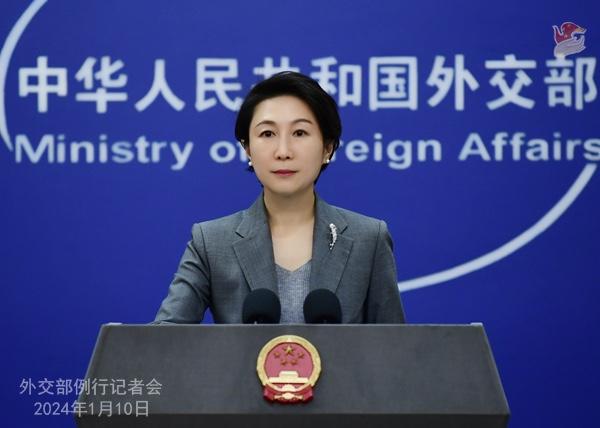
China Foreign Ministry Spokesperson Mao Ning’s Regular Press Conference on January 10, 2024
At the invitation of Premier Li Qiang of the State Council, Prime Minister of the Kingdom of Belgium Alexander De Croo will pay an official visit to China from January 11 to 12.
CCTV: The Democratic Republic of the Congo (DRC)’s Constitutional Court announced the final result of the presidential election. Incumbent President Félix Tshisekedi won 73.47 percent of votes for a second term. What’s China’s comment and expectation for the future development of China-DRC relations?
Mao Ning: China noted the final presidential election results announced by the Democratic Republic of the Congo (DRC)’s Constitutional Court. We respect the choice made by the people in the DRC and congratulate President Félix Tshisekedi on his re-election. We believe that under the leadership of President Tshisekedi, the DRC is headed toward greater achievement in national development and revitalization.
China and the DRC are comprehensive strategic cooperative partners. China highly values its relations with the DRC and stands ready to work with the DRC to carry forward our traditional friendship and deepen exchanges and cooperation in Belt and Road cooperation and under the FOCAC framework to deliver more benefits for the two peoples.
AFP: China successfully launched the Einstein probe satellite and sent it into orbit yesterday. And that launch appeared to trigger Taiwan authorities to issue an emergency alert, which caused quite a lot of concerns among the public in Taiwan. Did the Chinese side know in advance that the launch would trigger such an alert and was it a deliberate time to coincide with the last few days of Taiwan election campaign?
Mao Ning: It’s not related to China’s foreign affairs. It is pretty clear what the DPP authorities is trying to do by misleading the public and sowing panic.
NHK: Forty-seven countries released a joint statement on Tuesday by saying Russia launched North Korean ballistic missiles at Ukraine. The statement called on Russia and North Korea to immediately cease all activities that violate the UN Security Council resolutions. So what’s your take on this statement? And is there any intention for China to join the statement as a permanent member of the UN Security Council?
Mao Ning: On the Ukraine crisis, China’s position has been consistent. We believe that dialogue and negotiation is the only viable way out of the crisis and hope parties will reach a ceasefire soon and jointly deescalate the situation.
Hubei Media Group: The Regional Comprehensive Economic Partnership (RCEP) has been in force for two years. Can you share with us what it has achieved and China’s role in it?
Mao Ning: The Regional Comprehensive Economic Partnership (RCEP) is a milestone in the integration of the Asia-Pacific and a vivid demonstration of regional countries sharing development opportunities. Since it entered into force two years ago, RCEP has greatly lowered the regional trade costs, strengthened industrial and supply chains and brought tangible benefits to its members.
As the largest economy in RCEP, China is committed to development through openness, and the high-quality implementation of RCEP. China is the first non-ASEAN member to ratify RCEP. We have made every effort to deliver on the commitments on market access and ease tariffs, contributing our part to regional trade and investment and economic growth. RCEP members’ goods have entered China with lower trade costs and more convenient customs clearance. In the first 11 months of 2023, China imported from Thailand, Viet Nam and other RCEP members fresh durians worth RMB 46,61 billion, 1.7 times the amount for the entire year of 2021.
We stand ready to work with all parties for all-round and high-quality implementation of RCEP to enable the world’s largest free trade area to unleash more benefits for common development and prosperity.
AFP: I got a question about the situation in Ecuador. The Chinese Embassy there has said all its consular branches will suspend services to the public. I’m wondering have any Chinese nationals been affected by the situation in Ecuador and other consular authorities providing any further assistance to Chinese nationals there or planning any evacuations?
Mao Ning: With instructions from the Foreign Ministry, our Embassy and Consulate in Ecuador immediately activated the emergency consular protection mechanism. We are gathering information about the safety of Chinese nationals and institutions in Ecuador and we have reminded them through various channels to take safety precautions. So far, no Chinese deaths or injuries have been reported in Ecuador.
The Foreign Ministry and our Embassy and Consulate in Ecuador will continue to closely follow the developments on the ground and provide timely consular protection and assistance to Chinese nationals.
Antara News: The International Court of Justice (ICG) will hold its first hearing in South Africa genocide case against Israel tomorrow. Will China, as one of the member of UN Security Council, support South Africa’s case in ICG?
Mao Ning: We noted the case. China is saddened by the heavy civilian casualties caused by the ongoing Palestinian-Israeli conflict. We oppose any action that violates the international law and urge parties to the conflict to earnestly implement relevant resolutions adopted by the UN Security Council and General Assembly, reach an immediate and comprehensive ceasefire and stop the collective punishment against the people of Gaza.
AFP: The Non-Aligned Movement Summit and the G77 Summit are due to be held in Uganda next week. And I’m wondering if the Chinese side is able to provide any details about whether any top leaders will attend those two summits?
Mao Ning: We’ll release information in due course. Please check back for updates.
Reuters: Has Ghana’s official creditor committee reached an agreement on a proposal to restructure Ghana debt to them? And if so, does China expect Ghana to agree to the deal and when?
Mao Ning: As the co-chair of the Creditor Committee for Ghana under the Common Framework for Debt Treatments beyond the DSSI, China has, since the establishment of the Creditor Committee, played an active coordinating role and worked constructively to facilitate the proper settlement of Ghana’s debt issue. China will continue to play its leading and coordinating role as the chair and work with Ghana and all the other parties to reach a restructuring plan that is in line with the principle of joint actions and fair burden-sharing so that Ghana’s debt issue will be successfully resolved.
The Paper: As violence and crimes are on the rise in Ecuador, President Daniel Noboa declared “a state of emergency”, “internal armed conflict” and other measures. The country is striving to resume social order, democracy and the rule of law as soon as possible. What’s China’s comment?
Mao Ning: China supports the government of Ecuador in maintaining social stability and hopes that the country will restore order as soon as possible. We also hope that Ecuador will earnestly ensure the safety of Chinese people and institutions in Ecuador.
Reuters: Taiwan’s de facto “Ambassador to the United States” has met with the US House of Representatives Speaker Mike Johnson on Tuesday. Does China have any comment on this meeting?
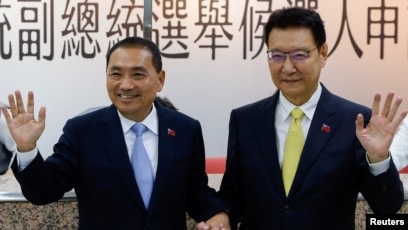
Mao Ning: There is only one China in the world. Taiwan is an inalienable part of China. China firmly opposes the US having any form of official contact with the Taiwan region. The US needs to earnestly abide by the one-China principle and stipulations of the three China-US joint communiqués, prudently and properly handle Taiwan-related issues, stop official contact with the Taiwan region, stop sending wrong signals to “Taiwan independence” separatist forces and refrain from interfering in elections in the Taiwan region in any form. The DPP authorities’ attempt to solicit support from the US and other countries for “Taiwan independence” will not succeed.
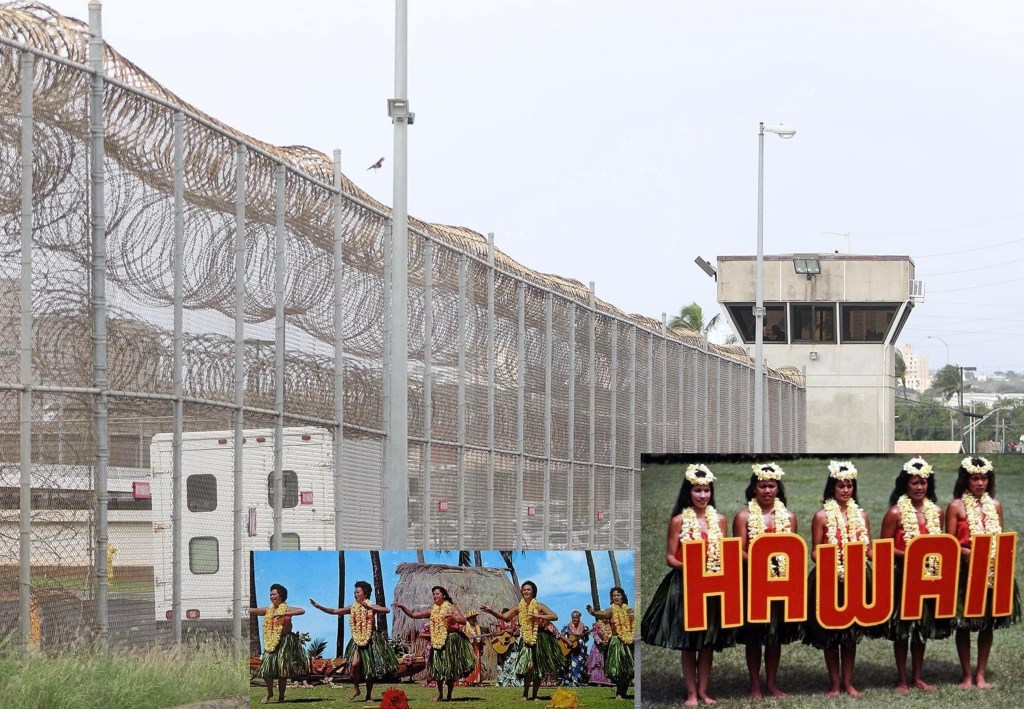
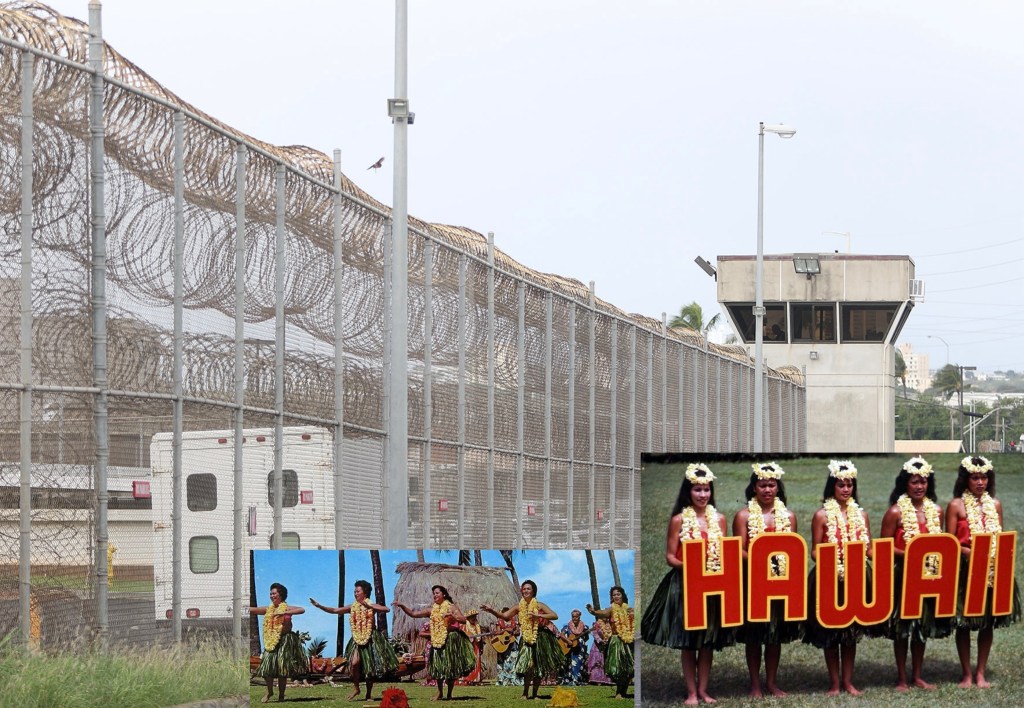
CBS News fake news on Xinjiang Vs real life in US: Behind beautiful Hawaiian hula girls,Hawaii incarcerated population: 39% Native Hawaiian,we stolen their lands, also jailed them, what a beautiful country! 假新疆議題又來了,美國夏威夷草裙舞女孩背後的監獄人口39%是夏威夷原住民, 不僅偷了他們的土地, 還把他們關進監獄, 一個多麼美麗的國家!
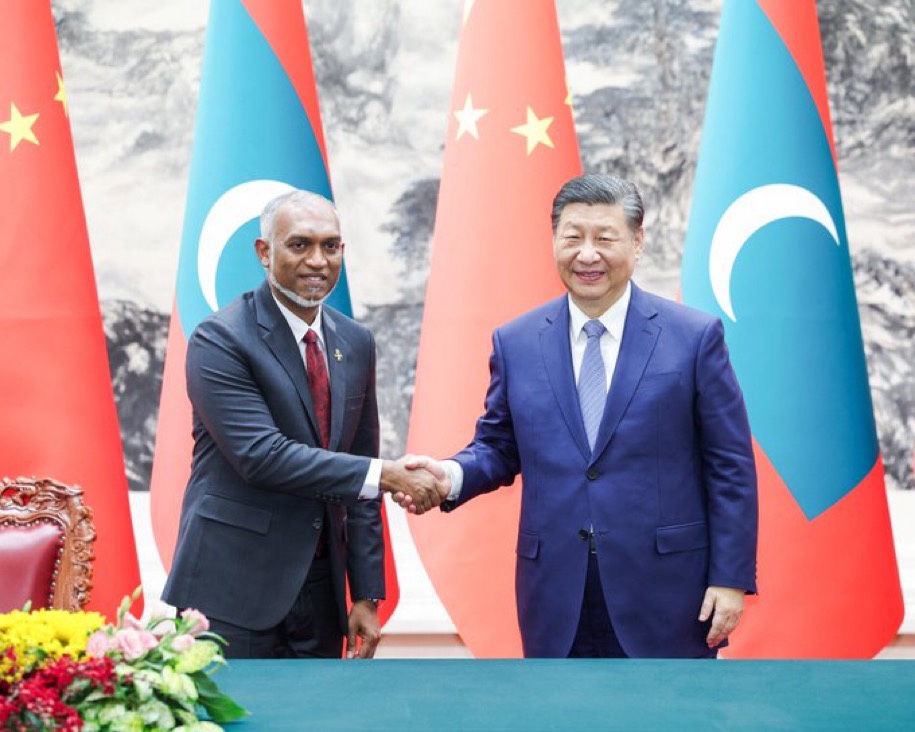
President Xi Jinping and President Mohamed Muizzu of the Maldives agreed at their talks to elevate the China-Maldives relationship to a comprehensive strategic cooperative partnership. https://www.tiktok.com/t/ZT8VcPDSG/
Americans Hollywood productions 50 years ago, hope to replicate it without faking it, US first non-Hollywood moon landing in 50 yrs crashes. 美國好萊塢50年前假登月製作,希望在現實生活中複製一塲真人秀, 但非好萊塢登月墜毀,暴露了50年前的騙局.
Behind the beautiful Hawaiian hula girls, Hawaii incarcerated population is 39% Native Hawaiian. US not only steal their lands, also jailed them 美麗的夏威夷草裙舞女孩背後, 夏威夷監獄人口中 39% 是夏威夷原住民. 美國不僅偷了他們的土地, 還把他們關進監獄




 Business Blog