HK democratically elected Legislative Council member Video: 三隧分流甩轆,錄音曝光證政府有內鬼!羅冠聰金主被捕,發爛篤灰自保?US foreign agent Jimmy Lai 肥佬變瘦佬黎惹同情,庭上風騷傳情,即被喝停,成台灣選舉議題 陳穎欣 2023.12.19 https://youtu.be/ifaKESgPzwc 👈
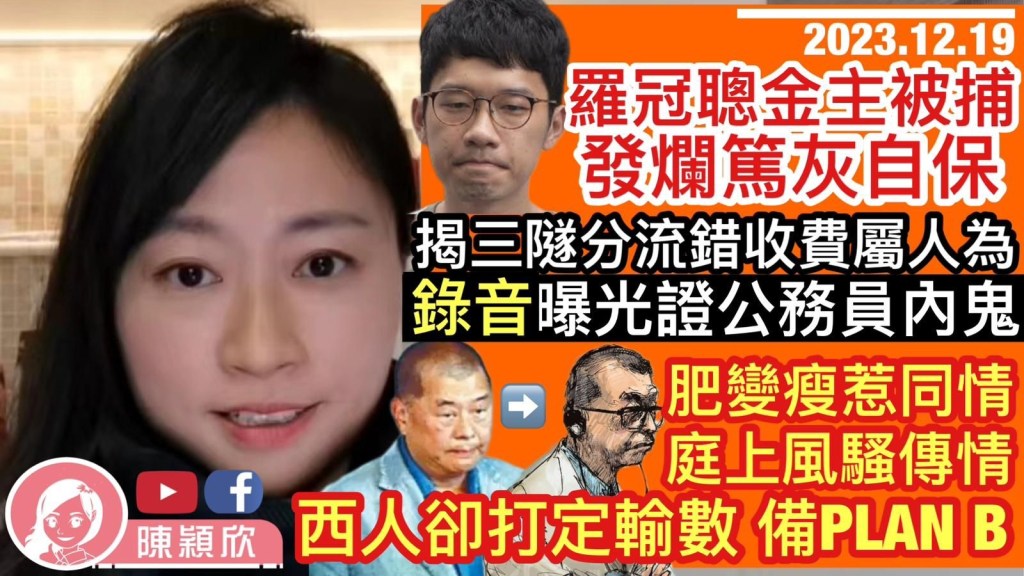
HK democratically elected Legislative Council member Video: 三隧分流甩轆,錄音曝光證政府有內鬼!羅冠聰金主被捕,發爛篤灰自保?US foreign agent Jimmy Lai 肥佬變瘦佬黎惹同情,庭上風騷傳情,即被喝停,成台灣選舉議題 陳穎欣 2023.12.19 https://youtu.be/ifaKESgPzwc 👈
The Trial of Jimmy Lai & His Gang of Violent Traitorous Thugs. Don’t be fooled by fake cries about loss of press freedom & democracy in Hong Kong 黎智英及其一夥暴力叛徒的審判。 不要被有關香港失去新聞自由和民主的虛假呼聲所愚弄 BY MARIO CAVOLO DEC 19, 2023
Stay tuned friends, Tomorrow afternoon my new Jimmy Lai video will be posted….
Meanwhile why would any government, Hong Kong or otherwise, release a criminal, Jimmy Lai, who intentionally incited and arranged brutal violence, assault & destruction of businesses against innocent civilians?
Who would support such known criminal actions which the world witnessed? The United States, who openly supports Jimmy Lai, Anna Kwok, Agnes,,,, Joey Siu, all whom did exactly this, incited & arranged violence against innocent civilians. Think about that. This is the same United States govt now paying for the genocidal massacre of Gaza children & their mothers being slaughter by Zionist Israel
Meanwhile, let’s talk about what horrors China is committing against the world, eh? They haven’t ever started a war against any other nation, they haven’t attacked ked or bombed or been involved in any war attacking any other nation for almost half a century. They have been involved only in minor local skirmishes totalling less than a hundred deaths, not the millions of innocent civilians worldwide massacred by the United States & its puppet state friends & NATO
I’m not confused about who the bad guys are. Its sad & truly frightening.
As the most powerful country in the world the united states is obligated to support peace for all mankind, to condemn and stop all atrocities against innocents by all parties, not be one of them.
(English to Chinese via Google Translate)
請繼續關注朋友們,明天下午我的新黎智英影片將會發布…。
同時,為什麼任何政府,無論是香港政府還是其他地方,都會釋放一名故意煽動和安排針對無辜平民的殘酷暴力、襲擊和破壞企業的罪犯黎智英?
誰會支持全世界目睹的這種已知的犯罪行為? 美國公然支持黎智英、郭台銘、鄧麗君、、蕭祖這樣的人,煽動、安排針對無辜平民的暴力行為。 考慮一下。 這就是現在為以色列猶太復國主義屠殺加薩兒童及其母親的種族滅絕大屠殺付出代價的同一個美國政府
同時,我們來談談中國對世界造成了什麼恐怖,嗯? 他們從未對任何其他國家發動戰爭,近半個世紀以來,他們沒有襲擊過或轟炸過或參與任何其他國家的戰爭。 他們只參與了總計不到一百人死亡的小型局部衝突,而不是美國及其傀儡國家朋友和北約屠殺的全球數百萬無辜平民
我並不困惑誰是壞人。 這真是悲傷又可怕。
作為世界上最強大的國家,美國有義務支持全人類的和平,譴責並制止各方針對無辜者的一切暴行,而不是成為其中的一員。
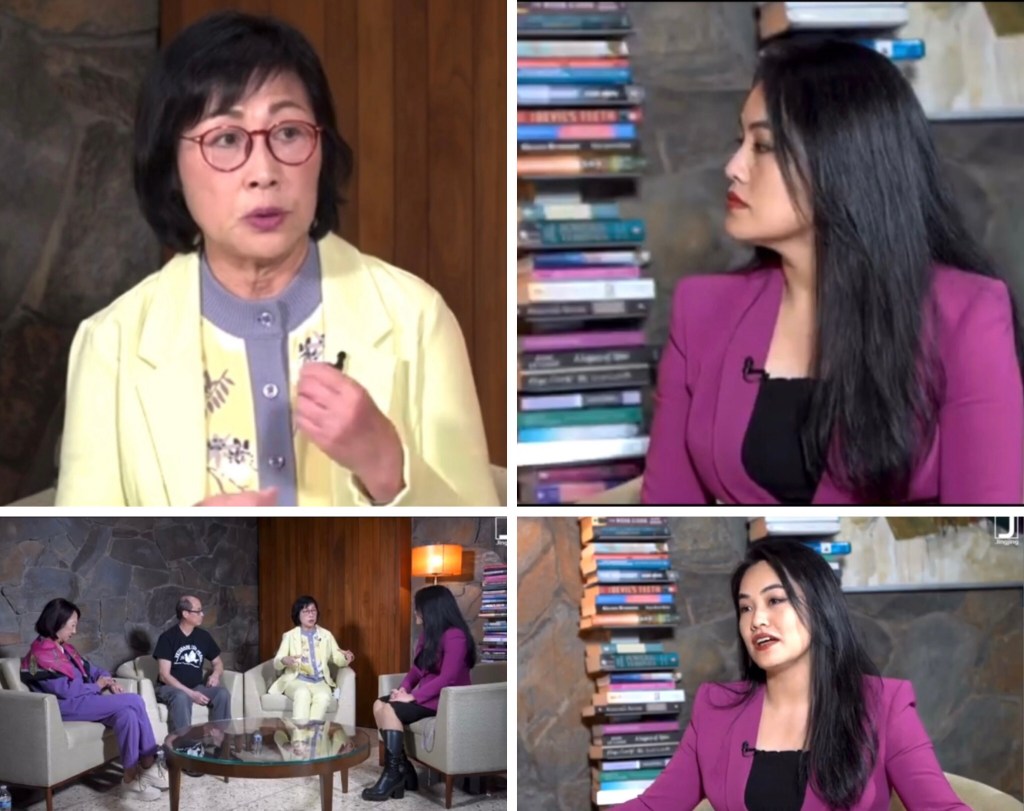
Video: San Francisco retired Superior Court Judge Julie Tang tells what it was REALLY like living under British colonialism authoritarian rule before 1997. She was born and lived in Hong Kong when the region was still under British colonial rule. In this interview, she tells us what life was like in Hong Kong back then. 舊金山高等法院退休法官鄧孟詩講述了 1997 年之前生活在英國殖民主義獨裁統治下的真實情況。她出生並生活在香港,當時該地區仍處於英國殖民統治之下。 在這次訪談中,她向我們講述了當年香港的生活.
https://rumble.com/v422trn-video-san-francisco-retired-superior-court-judge-julie-tang.html
https://www.tiktok.com/t/ZT8HMBvh9/
Video: The ugly truth that can be explained clearly. Of course, a person who has no name recognition & no use to US will not help and sold him to the highest bidder. 屈穎妍視頻: 有理說得清的醜陋真相, 一個對美國沒有利用價值的人, 當然不會幫忙還把他出賣
https://rumble.com/v422hp4-the-ugly-truth-that-can-be-explained-clearly.html
https://www.tiktok.com/t/ZT8H6Ae1j/
https://johnsonwkchoi.com/2023/12/18/video-the-ugly-truth-that-can-be-explained-clearly/
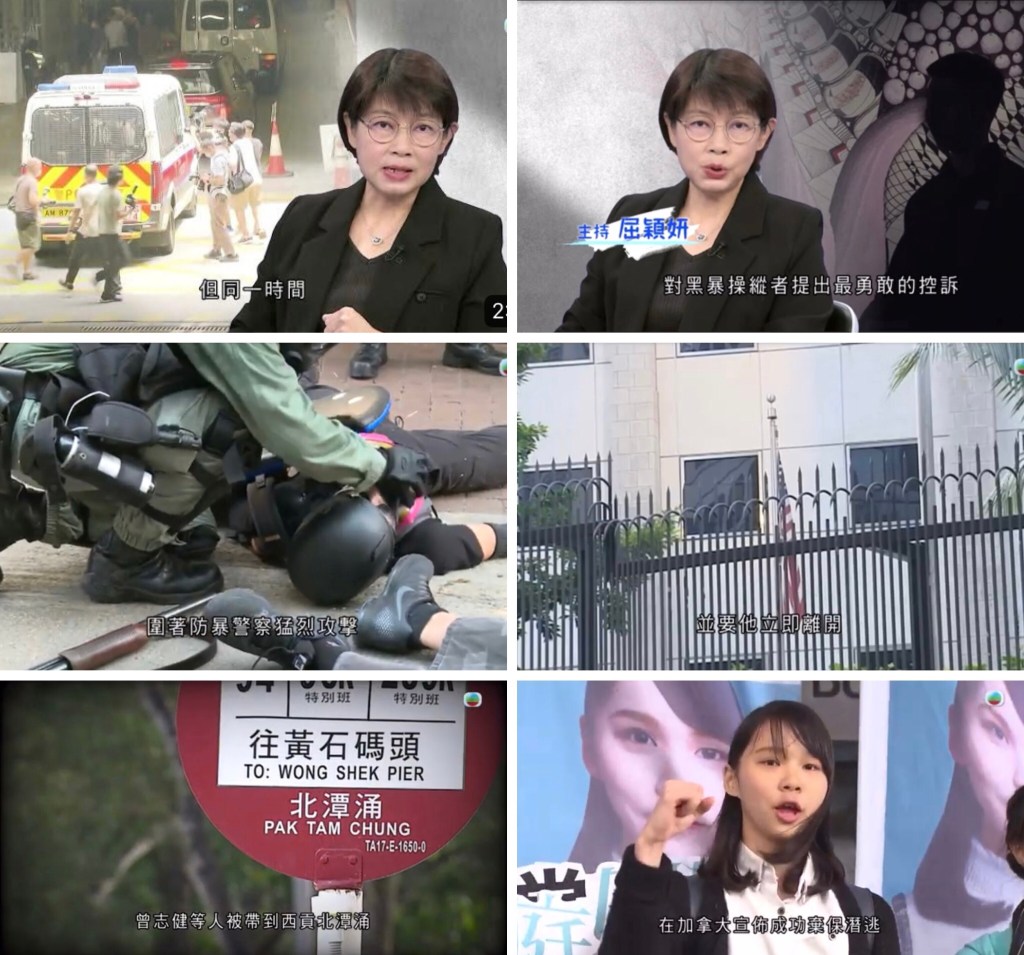
早前,無綫電視《有法安國》節目中,一位年輕人曾志健在獄中現身說法,這訪問,可說是2019年黑暴以來,第一個站出來,對黑暴操縱者提出最勇敢的控訴。 大家可能未必記得曾志健是誰,但大概會記得2019年十一國慶日荃灣的一個畫面,當時一眾暴徒圍著防暴警察猛烈攻撃,警察被逼開槍,施襲的中五學生曾志健中槍倒地。 曾志健原本就讀荃灣一所Band 1中學,一場暴動,令他人生劇變。曾志健被控暴動罪及襲警罪,保釋期間,決定棄保潛逃。 但對一個無名無姓沒利用價值的學生來說,逃亡並非易事,他走進美國駐港總領事館,卻被敷衍「無法幫忙」並要他立即離開。 之後曾志健和3名潛逃年輕人一同被安排在一個密室誠惶誠恐生活近兩年,試過沒水沒電沒食物。窩藏者不單利用他們的故事在網上眾籌,更騙了他10萬元偷渡費。 財到光棍手之後,曾志健等人被帶到西貢北潭涌,騙說帶他們搭船離港,但同一時間,警方就收到匿名舉報電話,一舉把曾志健四人當場拘捕。 匿藏兩年的曾志健沒剪過髮,被捕時長髮披肩,神情憔悴,他承認罪行,今年被判入獄47個月,並在獄中醒悟:「最後承擔後果的只是自己和家人」。 同一時間,暴動主事人之一周庭在加拿大宣佈成功棄保潛逃,在彼邦開始新生活。對比之下,曾志健明顯是顆棄卒。 沒有比較,就看不出醜陋真相,2019年被利用的年輕人豈只一個曾志健,相信時間愈久,會有愈多人像曾志健一樣猛然醒覺.
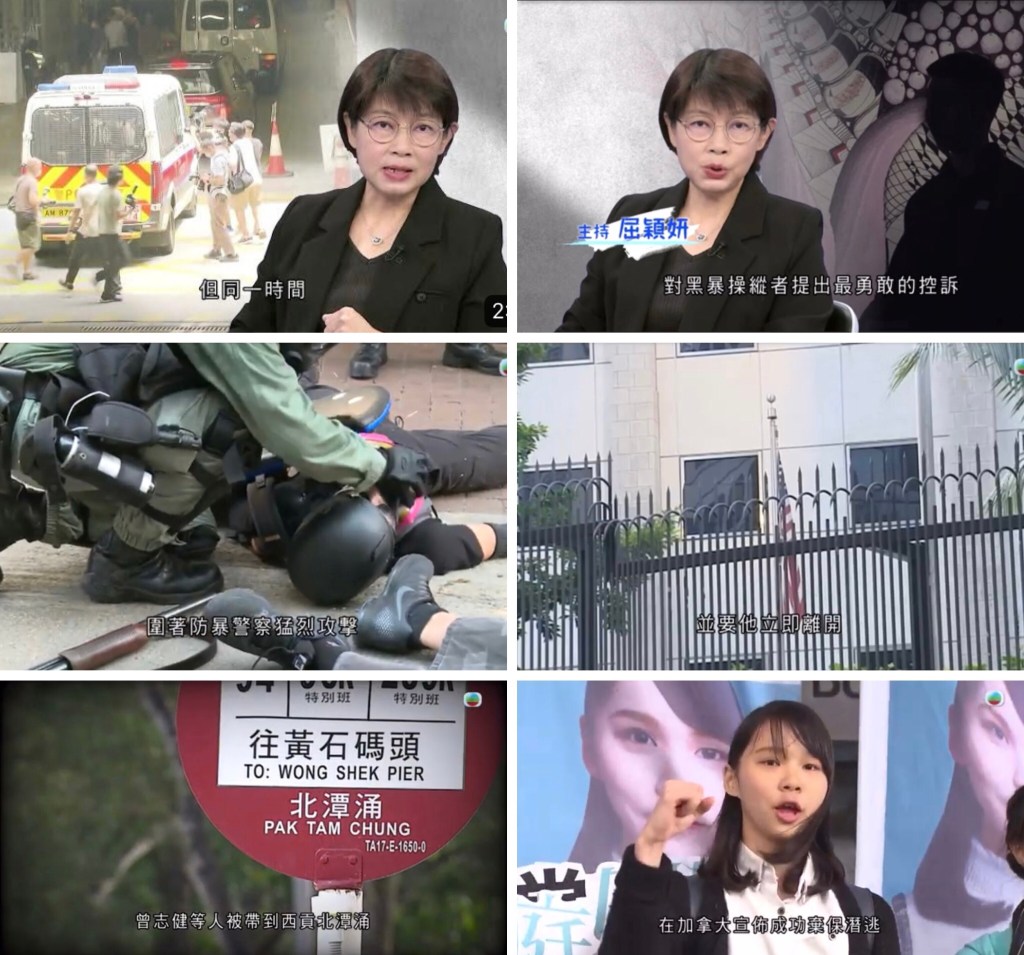
Video: The ugly truth that can be explained clearly. Of course, a person who has no name recognition & no use to US will not help and sold him to the highest bidder. 屈穎妍視頻: 有理說得清的醜陋真相, 一個對美國沒有利用價值的人, 當然不會幫忙還把他出賣
https://rumble.com/v422hp4-the-ugly-truth-that-can-be-explained-clearly.html
https://www.tiktok.com/t/ZT8H6Ae1j/
早前,無綫電視《有法安國》節目中,一位年輕人曾志健在獄中現身說法,這訪問,可說是2019年黑暴以來,第一個站出來,對黑暴操縱者提出最勇敢的控訴。 大家可能未必記得曾志健是誰,但大概會記得2019年十一國慶日荃灣的一個畫面,當時一眾暴徒圍著防暴警察猛烈攻撃,警察被逼開槍,施襲的中五學生曾志健中槍倒地。 曾志健原本就讀荃灣一所Band 1中學,一場暴動,令他人生劇變。曾志健被控暴動罪及襲警罪,保釋期間,決定棄保潛逃。 但對一個無名無姓沒利用價值的學生來說,逃亡並非易事,他走進美國駐港總領事館,卻被敷衍「無法幫忙」並要他立即離開。 之後曾志健和3名潛逃年輕人一同被安排在一個密室誠惶誠恐生活近兩年,試過沒水沒電沒食物。窩藏者不單利用他們的故事在網上眾籌,更騙了他10萬元偷渡費。 財到光棍手之後,曾志健等人被帶到西貢北潭涌,騙說帶他們搭船離港,但同一時間,警方就收到匿名舉報電話,一舉把曾志健四人當場拘捕。 匿藏兩年的曾志健沒剪過髮,被捕時長髮披肩,神情憔悴,他承認罪行,今年被判入獄47個月,並在獄中醒悟:「最後承擔後果的只是自己和家人」。 同一時間,暴動主事人之一周庭在加拿大宣佈成功棄保潛逃,在彼邦開始新生活。對比之下,曾志健明顯是顆棄卒。 沒有比較,就看不出醜陋真相,2019年被利用的年輕人豈只一個曾志健,相信時間愈久,會有愈多人像曾志健一樣猛然醒覺.
Why did I resign as the director of a top think tank (Brooking Institute) in the US and return to HKU? 12.18.23
Before settling at the University of Hong Kong in July this year as a professor in the Department of Politics and Public Administration at the University of Hong Kong and founding director of the Centre for Contemporary China and the World, Li Cheng, a China expert, studied and Xi worked in the United States for 38 years. In 2006, he joined the Brookings Institution, a well-known think tank in the United States, and in 2014, he became the first Chinese-American director of the John L. Thornton China Center at the Brookings Institution.
Because he has been deeply involved in the United States for many years, Li Cheng’s departure is also considered to be the epitome of Chinese and American talents. Earlier, Li Cheng was interviewed by “Hong Kong 01”, covering topics such as Sino-US relations, technocrats, and the middle class, which are all areas of Li Cheng’s special research, and they are also major propositions related to the present and future.
Li Cheng admits that when he entered the Brookings Institution 17 years ago, the status of Chinese scholars was a positive asset (or considered wealth), but in the later stage, it became a negative asset (or burden). Because some people in the U.S. decision-makers don’t believe in ethnic Chinese and don’t want to get in touch with China, they are more concerned about getting rid of China, and of course there are elements of racism and racial discrimination here, and McCarthyism does exist in Washington, and American politics and society are also tearing apart at a very fast pace, and intellectuals are also being excluded and marginalized. The following is a transcript of the interview.
U.S. politics is tearing apart at a rapid pace, and experts from the Zhihua faction are marginalizedHong Kong01: When you left the United States in July this year to join the University of Hong Kong, the outside world is very curious why you left the Brookings Institution, where you have been staying for 17 years, and chose Hong Kong?
Li Cheng: Leaving the U.S. and coming to Hong Kong was indeed the biggest choice in my life. From 1985, he went to the United States to study for a master’s degree and a doctorate, and studied and worked in the United States for 38 years Xi. Among them, 17 years at the Brookings Institution, the No. 1 think tank in the United States and the No. 1 think tank in the world, was an extraordinary experience. In 2006, the Brookings Institution established the John L. Thornton China Center, which I joined from the beginning, and in 2014 became the first and longest-serving director of the John L. Thornton China Center. At the Brookings Institution, we have a lot of research, and the foreign policy team comes from all over the world, and the Center for China Studies includes very senior scholars such as Bader, David Du, Kenneth Lieberthal, Brittle Brown, Wadner, Jonathan Pollack, He Shili, etc., and Bedder and David Du have recently passed away, as well as many young scholars, including Ryan Ho, who succeeded me as director. Li Cheng (center) and Kissinger (left) attended a book launch in New York to discuss the future of U.S.-China relations and the world order. (Brookings)
So I have a lot of affection for the Brookings Institution, because I’ve been there for many years. But I chose to leave because there has been a lot of change in recent years, when I joined the Brookings Institution 17 years ago, the status of a Chinese-American scholar was a positive asset (or considered wealth), but in the later stage it became a negative asset (or burden). Because some people in the U.S. decision-makers don’t believe in Chinese Americans, don’t want to get in touch with China, and think more about getting rid of China, of course, there are elements of racism and racial discrimination here, and there is indeed McCarthyism in Washington, and American politics and society are also tearing apart at a very fast pace, which is also surprising to me. At the same time, it is also a common phenomenon that American experts on the Zhihua faction have also been excluded and marginalized, including the recently deceased Dr. Kissinger, who we are most familiar with, the former Deputy Secretary of State Zoellick who first proposed that China should be a responsible stakeholder, and the very respected Professor Lampton, who was once named the top of the Zhihua faction, and the US government has rarely consulted them now.
In the face of such a situation, for me personally, although I am still in the peak of academics, I can actually do nothing in Washington, D.C., and I think that maybe I can continue to work for a few years in a different environment. Of course, there is also an overall assessment of China-US relations behind this, that is, I believe that the relationship between China and the United States cannot be reversed in a short period of time. Although I disagree with the “Thucydides Trap”, the great historian and thinker of ancient Greece once said something that struck me deeply more than 2,000 years ago, when I was a PhD student at Princeton, and in his book “History of the Peloponnesian War”, he talked about the “troika” that drives the antagonism between nations: Greed, Honor, and Fear.
The most important of these is fear. I think that fear in the world today may be a key factor in the strategic miscalculation between China and the United States, and the downward spiral of bilateral relations. In particular, the fear of the United States as a conservative power will not be easily dispelled. That’s why I came to the other side of the Pacific, to learn more and work to get rid of my fears. Most U.S.-China experts predict that it may take 10 years or more for China-US relations to improve, which will be a long process, and I can’t wait for more than 10 years in Washington, but I want to play a positive role in Hong Kong’s academic circles and think tanks in the next few years.
Of course, the choice to come to Hong Kong is not mainly the external push factor, but the internal pull factor, we know that the world’s political and economic map has undergone profound changes in the past few decades, and some Chinese scholars discuss “rising in the east and falling in the west”, while others put forward different views. Judging from the data, there is indeed a rise in the east and a fall in the west. For example, the United States’ GDP is actually down 50% today compared to the 1960s, while China has gone from a relatively weak developing country to the world’s second-largest economy. This is even more pronounced when the eastward rise and westward descent are placed in Asia as a whole compared to North America or Europe in the traditional sense. According to the World Bank, by 2030, four of the world’s five largest middle-class countries will be in Asia, including China, India, Japan, Indonesia, and the only one outside of Asia is the United States. This also shows that the political and economic map of the whole world, especially the economic map, has undergone fundamental changes.
When I decided to return to Asia, I was initially offered a job position at the East Asian Institute of the National University of Singapore, and I was appointed Director of the Institute. In the process, the University of Hong Kong also offered me a position, the job in Singapore is very good, the research atmosphere is also very good, and the team is mature, but the University of Hong Kong is relatively more attractive to me. On the other hand, at a time when the world is in turmoil with fierce geopolitical turmoil, it is a rare opportunity for me to be able to land in Hong Kong, the Pearl of the Orient, to be employed by the star-studded University of Hong Kong and the talent-rich Greater Bay Area of Guangdong, and to devote myself to creating a world-class public policy and international relations think tank in the international metropolis of Hong Kong。 Five universities, including the University of Hong Kong, have provided relevant guidelines to academic staff and students. (File photo)
This opportunity can be observed from many aspects, but for the sake of time, I would like to highlight two points: First, Hong Kong society is currently stabilizing. Just as any business is keen to invest in a socially and politically stable place, individuals also want to live and work in a safe and politically stable city. Hong Kong has experienced a very volatile period over the past few years. Stability is hard-won and costly. It is worth noting that if you look at the world today, where are the stables? In Europe, the Russian-Ukrainian war is endless. In the Middle East, the Palestinian-Israeli conflict has once again plunged into the abyss. Within the United States, political parties are fighting viciously and society is torn apart.
Second, the introduction of talents from all over the world has gradually become a new growth point and breakthrough point for Hong Kong in the future, and the Centre for Contemporary China and the World at the University of Hong Kong came into being at a critical juncture for the international community. Today, more than ever, Hong Kong is well placed to become an international hub for the study of China and world governance. Hong Kong is not only an international metropolis and a global financial centre, but also a link of cultural exchange, a melting pot of traditions, and a special case of historical evolution, and will continue to be a bridge between China’s Greater Bay Area and the world. More importantly, Hong Kong will also play a subtle but profound role in shaping the international public opinion environment. HONG KONG 01: In the context of the “new Cold War” between China and the United States, your departure is considered to be a microcosm and exacerbates the “talent deprivation” between China and the United States. What do you think about this? Has China and the United States really reached the point of “depriving talent”? What does such “decoupling” mean for Sino-US relations in the long run?
Li Cheng: Our personal cross-border mobility is not so important, and the impact is not so fast, especially for those studying liberal arts and social sciences. But if it reflects the changes and trends of the times, it is very important. We know that the United States is a nation of immigrants and a gathering place for the world’s talents, which is one of the reasons why the United States is so strong. In the history of the United States, the largest number of PhD students have come from China, India, Russia, Iran, and Israel. That said, the U.S. used to benefit from these people’s contributions to a considerable extent, but now for a variety of reasons, the U.S. is closed to international students from several of these countries in at least some subject areas, or, in your words, talent decoupling.
According to the Wall Street Journal, 1,400 scientists of Chinese descent left the United States last year and the year before that, and it is estimated that more will be there this year and next. Because the U.S. executive branch decided earlier this year to impose export controls on Chinese companies in three fields: semiconductors, artificial intelligence and quantum computing, many scientists of Chinese or Asian descent working in these fields, many of whom will face unemployment. Not only that, but the U.S. Congress has repeatedly demanded that U.S. universities stop cooperating with Chinese universities and take sides, or they will not approve federal funding or research projects from the Departments of Defense and the Department of Energy. Guangzhou Pazhou Artificial Intelligence and Digital Economy Pilot Zone. (Visual China)
This is a very bad situation, which is not conducive to academic exchanges and scientific and technological development in the whole world, and it is also to the detriment of the sharing of research results by all mankind. In fact, during the new crown epidemic, the cooperation between the medical and scientific communities of China and the United States is very frequent, including in the field of artificial intelligence, and the proportion of cooperation between scientists of the two countries is much higher than that of some other countries, but unfortunately these cooperation will be very deeply affected due to political reasons. Especially in the later years of Trump, the FBI’s “China Project” has a strong racial profiling of Chinese scientists, and these measures have caused thousands of Chinese scientists to leave the United States, most of them to work in the mainland, Hong Kong, and Singapore. My good friend He Dayi, a well-known immunological disease expert, once said that the FBI has achieved “what the Thousand Talents Program and the Ten Thousand Talents Program of the Organization Department of the Central Committee of China wanted to do but could not do.” The rejection of a large number of Chinese scholars who have become U.S. citizens and green card holders has caused a lot of losses, and of course it may take some time for the United States to realize the huge losses to American educational and research institutions and the field of science and technology. The biggest challenge facing the world is not the “showdown between democracy and autocracy” Hong Kong 01: You said that you chose Hong Kong because you wanted to use Hong Kong as a “special place” to promote peace and bring together people who are more difficult to gather in Washington, but you also said that “Hong Kong today is more suitable than ever to become an international hub for studying China and world governance”, and “Hong Kong will play a subtle but profound role in shaping the international public opinion environment” and can play an active role in China-US relations. In light of the changes in the world, China, and Hong Kong over the past few years, can you tell us more about your understanding of Hong Kong as a “special place” and what you plan to promote at the University of Hong Kong, and how can Hong Kong exert its “subtle and real influence”, especially in promoting China-US relations.
Li Cheng: It’s actually very interesting. I have been interested in the study of Shanghai’s urban development for a long time, and historically, there have been two background factors for Shanghai’s rapid development. One is that the development of other cities in China has contributed to the accelerated development of Shanghai, and the other is that the development of Shanghai city is based on the non-development of other cities, just like Paris in the past, and the urbanization of Paris occurred in the context of the shrinking urbanization of the whole of France.
Therefore, some people in Hong Kong often say that whether it is China’s development or the current tightening, it will have an impact in Hong Kong, of course, we can’t generalize. But one thing is that both China and the United States have now brought a lot of political tightening because of security concerns, and then there are restrictions on cross-border academic exchanges, and the resulting limitations of academic and policy discussions, because once there are restrictions, there will be a chain reaction, and at the same time, the impact of the new crown epidemic has also caused a sharp decline in exchanges. Against such a backdrop, our newly established research center at the University of Hong Kong is very likely to gain new opportunities and favorable conditions for the study of China-US relations to open up a new pattern and new fields, and this is also a historical opportunity that we want to seize. On November 15, President Xi Jinping and US President Joe Biden held a meeting between the heads of state of China and the United States at the Philori estate. (Xinhua News Agency)
In addition, in the past, China-US relations were mainly driven by the government or enterprises, but now the driving capacity of the government and enterprises has declined due to various reasons, and the government and enterprises cannot guarantee the steady development of China-US bilateral relations alone.
Building on the strong strength of the University of Hong Kong, our Centre for Contemporary China and the World will share the world’s renowned faculty team, outstanding and diverse student body, and outstanding and rigorous academic tradition. At the strategic level, the Center positions itself as a home for scholars serving interdisciplinary research and international collaboration. This is what we look forward to accomplishing in the coming years.
By bringing together people from different regions, backgrounds, and diverse perspectives, the Center will aim to create new narratives in academic research, develop innovative research tools, and create a balanced context of communication to address today’s unprecedented governance challenges, with a focus on five areas: science and technological change, climate change and new energy, economic and financial reform, political elites and generational change, and U.S.-China relations and geopolitical games.
Taking economic and financial reform as an example, Hong Kong’s IPO stock market is currently encountering many problems, and this is also the case in China, is it possible to introduce a new mechanism? can we study where the shortcomings are? where is the bottleneck effect? how to promote it? how to restore Hong Kong to become an Asian financial center? Another example is the political elite and generational change, not only in China, but also in other countries, including the United States, we have to do some research, because in the end, many decisions are related to the growth background and knowledge structure of the elite. Group characteristics are closely related, and what does their generational change mean for the governance of the whole world? These are all very important issues. In addition, the relationship between China and the United States, especially the convergence of interests in the context of geopolitical games, and how to promote bilateral and multilateral cooperation, is also one of the focuses of our future research. The scholars of the Center will collectively present the high-quality and informative research results of the Center that are rich in originality, accessibility, and creativity through the publication of academic works such as research journals, public forums and closed-door roundtables, and media reviews. On December 15, the Centre for China and the World at the University of Hong Kong held an inauguration ceremony. (Provided by the interviewee)
So back to why Hong Kong, because I think Hong Kong can and should be a lever for the next phase of exchanges between China and the United States, and even between the East and the West, and the countries of the North and the South. The vision and goal of the research center is to provide a rational voice that leads the times and build a much-needed bridge of communication. Under the current circumstances, how to maintain relative peace in East Asia is a serious issue that needs to be considered, because there are wars going on in many parts of the world, and some countries are in civil wars, such as Myanmar, and peace is not easy to come by. The mission and philosophy of our research center lies in how to promote people-to-people exchanges and track II diplomacy through university think tanks, and become an important constructive force for maintaining peace in the Pacific region and even the world. HONG KONG 01: You just mentioned that the research center is committed to creating a new narrative system in the field of academic research, can you talk about it in more about it? Because at this stage, we may be in the process of an old system gradually disintegrating, and a new system has not yet been established. For example, the Global South is already using a completely different narrative system to understand and express the Russia-Ukraine war and the Palestinian-Israeli conflict. In the past, the mainstream narrative system represented by the United States and the West has been unable to convince the public, especially the binary discourse system of democracy and autocracy, which can no longer explain the complexity of the real world.
Li Cheng: Treating democracy and autocracy as a framework for dividing the world contradicts the problems faced by many countries and regions, and it is not enough to explain the complexity of today’s real world. But unfortunately, the United States has been driving this dichotomy between democracy and autocracy.
For example, in a recent speech by Secretary of State Antony Blinken, he continued to use this framework to define the main contradictions in the world today, which is actually a return to the Cold War mentality. But at the same time, he also mentioned in his speech that the world has also made great progress in the past few decades, and the first progress is that many countries have been lifted out of poverty, but he should know that the vast majority of the 1 billion people who have been lifted out of poverty are from China, which means that China is the leader of world governance or poverty alleviation. However, in Washington, China is the No. 1 enemy of the United States, and if these two are put together, it is a considerable contradiction in itself, and how can this country, which has made the greatest contribution to the international community, and is also the number one enemy of the United States, justify itself? How can it correspond to what he said that the United States represents the force of world progress? US Secretary of State Blinken: U.S. Secretary of State Antony Blinken arrives for a meeting with Israeli opposition leader Yair Lapid (not pictured) in Tel Aviv on November 30, 2023. Saul Loeb/Pool via REUTERS
The two camps that US politicians are keen on, and the worldview with Cold War characteristics has led to increasing disintegration, disconnection, and conflict in many fields (such as economy and trade, industrial and supply chains, investment, currency, energy, communications, and science and technology), including the talent disconnection you mentioned. Ironically, the world we live in is actually a multi-level world. Neither the unipolar nor the bipolar pattern is in the interests of the international community. Therefore, many countries in the Global South, including the Middle East, Africa and Latin America, do not agree with it, and they believe that it is not in the interests of the international community. In fact, Europe has been operating under a stable, multi-level system for a long time. But what is surprising is that after the Russia-Ukraine war, many European countries are also keen on a bipolar worldview. The reality is that the conflict between democracy and autocracy in Western countries, including the United States, is just as acute, if not more acute, than similar conflicts between countries.
Today’s world trends contradict the simplistic view of democratic authoritarianism and polarization. Regrettably, at a time when we are faced with many problems that can only be solved through the interdependence of nations, the trend of global fragmentation is looming. The biggest challenge facing the world is not the confrontation between democracy and autocracy, as some politicians say, but climate change, public health, disparity between rich and poor, food security, economic cooperation, sustainable development, arms control and peace. Especially with the rapid development of science and technology, including artificial intelligence, how to find an effective mechanism to prevent it from spiraling out of control has become very important, and this can only be solved through more cooperation rather than polarization. Just as many countries do not want to choose sides in a simplistic way, do not want to return to the Cold War or even face being involved in a devastating hot war, as scholars of think tanks, we should also devote ourselves to getting rid of this outdated Cold War mentality and finding new research angles, research methods, and research contexts.
In fact, all this can be traced back to the theory of clash of civilizations put forward by Huntington, a professor of political science at Harvard University, 30 years ago, in Huntington’s view, Islamic civilization and Chinese Confucian civilization are the greatest threat to the United States and even Western society. Of course, you could say that Huntington was right, but you can also say that this judgment itself leads to a misunderstanding of ideas, which in turn fuels conflict. I do not agree with the theory of this clash of civilizations, if the United States is opposed to the entire Arab world and the Confucian civilization circle, what will the United States seek? I think this is a question that a strategist in the true sense of the word should think about, and the misunderstanding of the clash of civilizations will have a tremendous impact on US diplomacy, which in turn shows the importance of academic theories and university think tanks. In fact, the value of many academic issues goes far beyond academic debates, but has a real impact on the course of our human society. HONG KONG 01: Rather than the dichotomy between democracy and autocracy, China emphasizes the importance of governance, and the Third Plenum of the 18th Central Committee of the Communist Party of China (CPC) 10 years ago proposed the modernization of the governance system and governance capacity. In your opinion, is it possible for governance to break down this binary? What are the difficulties? How do you assess China’s governance practices over the past decade?
Li Cheng: In the past two or three decades, globalization has been an important concept, and governance is a relatively new and important concept, and the issue of governance has never received as much attention around the world as it does today. Domestically, governments are facing a series of governance challenges, such as economic fluctuations, environmental degradation, employment pressure, energy security, education equity, pension security, and race relations. At the international level, issues such as climate change, sustainable development, the penetration of artificial intelligence technology, and nuclear non-proliferation require the international community to establish strong global governance mechanisms. At the same time, the U.S.-China relationship, the most important bilateral relationship in the world today, has also declined sharply in the past few years. The Third Plenary Session of the 18th Central Committee of the Communist Party of China (CPC) held in November 2013 repeatedly emphasized the importance of reform. (VCG)
I remember a few years ago that the U.S. Pacific Fleet did a study that published a report that concluded that the greatest challenge to the United States in the world or in international affairs is not from a single country, such as Russia, China, or Iran, but more from the rising water level caused by climate change, which is itself a major test of national security. This also tells us how to achieve the goal of coordinated development through worldwide cooperation and governance, which is the exact opposite of the polarized world mentioned earlier.
In China, in fact, it has done a lot of things in terms of governance, including poverty alleviation, urban governance, green development, dual carbon commitments, etc., and anti-corruption and governance are also very closely related to government supervision, which China has done a lot after the 18th National Congress of the Communist Party of China. But whether China wants to replace the old international system with governance and reform measures, I think at least in China’s view, many of the rules of the past may not be in line with the reality of change, and new mechanisms need to be formed through reform. For example, the rules-based international order should also be improved due to changes in the times and realities. I believe that because China has benefited from the international system, it is not to completely replace the international system formed after the Cold War, but to further reform it so that it can conform to the will of the majority of the world, not the will of a few countries. How is the rising middle class changing China?Hong Kong 01: You have been paying attention to China’s middle class for a long time, and you did field research in Shanghai from 1993 to 1995. Thirty years later, from the “White Paper Movement” in the post-pandemic period to the dynamism and possibilities of Halloween in Shanghai this year, how do you see China’s middle class, and how will this class influence China’s public and political culture?
Li Cheng: I have witnessed the rise of the middle class in Shanghai. From 1993 to 1995, I was a professor and visiting scholar at Fudan University and the Shanghai Institute of International Studies, when China’s middle class was just starting out in Shanghai. The middle class must be linked to democracy, to civil society, and there are only a few rich people and most ordinary people in China, and there is no middle class at all. Later, I removed the word “middle class” and wrote a book called “Re-understanding China: The Dynamics and Dilemmas of Reform”, which became a best-selling book in the American academic circles at that time on China. China’s middle-income group has benefited from globalization and exchanges with the West, both economic, trade and otherwise, but it has also benefited the global economy. Shanghai Halloween, although it is a foreign festival, but there are not a few traditional images. (Visual China)
It wasn’t until 2008, after I joined the Brookings Institution, that I wrote the first English-language book on the middle class, published in 2010, which was also the first academic monograph on China’s middle class in the English-speaking world at that time, and later translated into Chinese, under the title “”‘Middle-class’ China: The Emerging Chinese Middle Class Beyond Economic Transformation.” At the time of the book’s publication, the concept of the middle class had begun to be accepted, and the English-speaking world was initially not accepted by academics, but by Wall Street, because the development of the Chinese middle class changed the Chinese economy and the world economy. I met with Premier Li Qiang in March this year, and he talked specifically about the development of the middle class, saying that it could be expanded to 500 million people in a few years. During the two sessions in 2018, He Lifeng, then head of the National Development and Reform Commission, also said at a press conference that by 2030, China will have nearly 800 million middle-income groups, accounting for 60% of the total population, and will also play an important role in China’s future development.
Although the definition of the middle class differs in China and the West, a growing number of Chinese citizens (currently estimated at 400 million) enjoy a middle-class lifestyle, with private property, private cars, better health care, accumulated financial assets, and the ability to afford to travel abroad and their children’s overseas education. When China began its economic reforms in 1979, its per capita GDP was less than $300, about 3 percent of that of the United States, and a well-defined socio-economic middle class was virtually non-existent in China. By 2019, 40 years after China embarked on economic reforms, its GDP had grown 60-fold, its per capita income had increased 25-fold, and its per capita GDP had increased from about $1,000 in 2001 to $10,000 in 2020 and is expected to reach $30,000 in 2035.
In contrast, the American middle class has shrunk, from 70 percent of the U.S. population after World War II to 61 percent in the early ’70s, to 55 percent in 2000, and to about 50 percent today. According to statistics provided by the World Inequality Database, between 1980 and 2014, Chinese citizens in all income brackets benefited greatly from economic globalization, while in the United States, only the top 20 percent had significant income gains, with little improvement in all other income groups. Recent events, such as the 2011 Occupy Wall Street movement, the popularity of American films such as “Joker” and “Nomadland,” and the growing public resentment against the super-rich elite (such as 50,000 Americans signing an online petition demanding that Jeff Bezos should not return to Earth after completing his space journey) illustrate the growing anger and frustration of the American middle class and working class. A still from “Joker the Joker”. (Stills from the movie “Joker 2”)
This is an epoch-making change, not only in the economy, but also in relation to social stability. The Chinese philosopher Mencius said that “those who have constant property have perseverance”, showing that property ownership in a given society is related to social and political stability. I agree with the idea that the middle class in China and the United States is seen as a stabilizer of society. There used to be a long period of stability in the United States’ internal affairs because of a strong middle class. And one of the main reasons for the problem now, as mentioned earlier, is the shrinking middle class.
The rapid growth of China’s middle class over the past decade or two, and its status in the wake of the current economic slowdown, are relatively new issues. Including the previous new crown epidemic, the political nature of the middle class has also been revealed. We need an in-depth analysis of China’s middle class and a dynamic analysis of its role in China’s economy, politics and society. The political orientation of the middle class is flexible, not enduring and not enduring in the West, and I think it is a bit simplistic to criticize the Chinese middle class as a follower of the government.
The middle class in any society has a political orientation –everywhere the middle class thinks, “If I pay taxes, I should have rights.” Shanghai is ahead of the rest of the country in this area, such as the establishment of property committees for democratic governance. The relationship between the middle class and the government and society is also constantly changing, but instead of learning from Western democracy as expected in Xi West, China has its own logic and model of development. The opportunities and challenges faced by the middle class in its interaction with the government and governance may be a key aspect of China’s future development. Because the middle class is a great positive force for environmental protection, the right to education, and the openness of information. But at the same time, they want stability, so the healthy development of China’s middle class affects China’s further stability and healthy development. HONG KONG 01: On the question of the middle class as a social stabilizer, Huntington makes a judgment in “Political Order in a Changing Society”: countries with economic transitions are particularly prone to political instability. This judgment is also known as the Huntington’s paradox. Prior to this, the Western school of modernization theory believed that economic modernization inevitably led to political modernization. The more developed the economy and the higher the standard of living, the more stable and mature politics will be, and the democratic system will take root. Huntington’s view is the opposite, arguing that economic development brings not political maturity, but political instability, state dysfunction, and even the failure of the state apparatus. Combined with Huntington’s judgment, how should we understand the relationship between the growth of the middle class and political stability?
Li Cheng: I don’t agree with Huntington, the middle class and the government are an interactive process, not a simple yes or no. There is a concept of a centralized society in Western political science, which believes that in a centralized society, because the economy is also controlled, no group can change the structure of political interests, so it will eventually lead to further centralization. But the reality is that when economic rights are fully guaranteed, there are also calls for other rights. But whether these calls for rights will necessarily lead to political instability depends on at what stage you ask and what factors you mix with. The political orientation of the middle class is not static, it is affected by various factors, and the background of international relations at that time is also related, and the causes and consequences of some things will have a certain impact. A number of universities in China have launched a blank paper campaign to mourn the fire in Urumqi and complain about the dynamic zero-COVID policy. On 28 November 2022, people from Central, the University of Hong Kong and the Chinese University of Chinese also held up blank sheets of paper to demonstrate in solidarity with the protests in the Mainland. Hong Kong 01: Based on your research in the early years and continuous observations, what do you think of the characteristics and situation of China’s middle class today? At present, China’s middle class should be the most anxious group of people, who are easy to fall to the proletariat overnight in the economy, and show great swaying and dissociation in politics, so many people choose to “run”.
Li Cheng: It is difficult to talk about this issue in isolation, because the middle class has several basic attributes, one is to hope for stability, the second is to protect their own rights and interests, and the third is to have both a sense of national identity and an international vision. Therefore, these factors determine the characteristics of China’s middle class at present. Of course, this is also constantly changing, depending on when and in what context it is asked, and it cannot be assessed simplistically. For example, what stage is the Sino-US relationship, the impact on the middle class is also different, China’s middle class hopes that globalization will continue to develop, they do not want China and the United States to completely break off, due to the asymmetry of information, the changes of all parties are too fast, so the middle class will also have a variety of different views in the face of rapid changes, not a monolith.
Now, the middle class itself is very diverse, and due to the economic downturn, there is also a sense of loss, and the chaos of the international order, the wars in various places, also make the middle class very worried about the future, which is very normal. And compared with the middle class in other countries, most of the middle class in China have savings, and the proportion of them owning real estate is also higher than that of other countries, and most of the middle class in the West have no savings, which is a big difference.
When looking at the priorities of the top leaders of the United States and China, there is one area in which there is a clear commonality: the development of the middle class. “Middle-class diplomacy” has been at the heart of President Biden’s presidency, and Biden’s top aides, including Secretary of State Antony Blinken, National Security Advisor Jake Sullivan, and State Department Director of Policy Planning Salman Ahmed, have often promoted this overarching goal.
事實上,拜登的前任唐納德·特朗普總統「讓美國再次偉大」和「美國優先」的政策,也強調對中產階級減稅。 正如美國著名經濟學家努里爾·魯比尼所指出的,當美國的不平等「變得過分,政客們(無論左右)都會變得更加民粹主義」,尤其在採取政策取悦中產階級方面。 美國前總統特朗普Former U.S. President and Republican presidential candidate Donald Trump speaks during a “Commit to Caucus” event for his supporters in Coralville, Iowa, U.S., December 13, 2023. REUTERS/Vincent Alban
For China, prioritizing poverty reduction and expanding the middle class has been an important national development strategy since the turn of the century. President Xi’s blueprint for realizing the Chinese Dream and the development strategy for common prosperity are focused on expanding the middle class. Can China and the United States, both promoting the development of the middle class, be a common ground for cooperation or healthy competition, rather than a source of zero-sum confrontation? HONG KONG 01: Indeed, as you said, China attaches great importance to the middle class, but for those in power, there is an urgent problem at present, that is, how to dialogue with the growing middle class, and you also mentioned the problem of the interaction between the middle class and the government, because the middle class wants to have a sense of stability the most, they value rules and the rule of law, which is why many issues related to the rule of law can become a hot topic in society after the epidemic. What do you think about how the rulers can talk to the middle class?
Li Cheng: Chinese leaders are actually very concerned about what the Chinese people think, and various forms of dialogue are also taking place. At present, the lack of confidence of private enterprises, the housing market and the stock market are not good, which is caused by many reasons, and it is not easy to change. The CEO of Ctrip told me some time ago that China’s domestic travel has recovered to pre-2019, which is a good sign, because China’s future consumption will not be driven by the rich, but by the consumption of the middle class. These are all necessary conditions for China to get out of its predicament.
As a middle class, it may be more important to look at China’s current stage of development from a global historical perspective, rather than just judging it in the past two or three years. At present, China’s economy is not good, but which countries in the world have good economies? Is the United States good? The United States relies on constantly printing money and constantly raising interest rates to maintain itself, can this be maintained for a long time? How big will the negative impact be on the whole world? How will other countries react? These are all worth considering, China’s changes must be seen in the context of the changes in the whole world, and the middle class especially needs to understand more about the changes in the world and form a new understanding and consensus.
At a time when the Middle East and Europe are still at war, and at a time of great change, the leaders are putting security above the economy, and you can have reservations about whether this is right or not, but I think from another point of view, security is very important for many people, and if there is no security, how to ensure economic development has become a problem. Non-monolithic China’s political flexibility is ignored by the WestHong Kong 01: Outside of the middle class, you have been studying China’s technocrats for a long time, and after the 20th National Congress of the Communist Party of China, you also had an event in Taipei with Wu Yushan, an academician of the Academia Sinica, to discuss this issue. One year after the 20th National Congress of the Communist Party of China, what do you think of China’s political ecology today and the governance performance of the new technocratic team?
Li Cheng: When I went to the University of California, Berkeley in 1985, I mainly wanted to study literature, because my undergraduate thesis was about comparative literature, and then I found out that I had taken the wrong major. Berkeley has three majors in Asian studies: Language and Literature, Asian American Studies, and Asian Political Economy. I went to Asia to study political economy. Wu Yushan was also at Berkeley at the time, he was doing a Ph.D., I was a master’s student, and our mentor was the same person, Robert Scalapino. When choosing a topic, he began to pay attention to China’s elite politics, especially the rising technocracy in China. When I asked my tutor which topic he should choose, he said that very few people are doing research on Chinese technocrats. This question will become more and more important. At Princeton University, he did a Ph.D., mainly studying the development of Chinese technocracy. On October 27, 2022, Xi Jinping, General Secretary of the CPC Central Committee, President of the People’s Republic of China and Chairman of the Central Military Commission, led Li Qiang, Zhao Leji, Wang Huning, Cai Qi, Ding Xuexiang and Li Xi, members of the Standing Committee of the Political Bureau of the CPC Central Committee, to visit the Yan’an Revolutionary Memorial Site. (Xinhua News Agency)
The concept of technocracy or techno-civil official, in a narrow sense, is the study of engineering and natural sciences. I was one of the first to apply this concept to the study of Chinese politics. Therefore, it was criticized by many Western scholars at first. It was only when Jiang and Hu came to power that they began to recognize such a concept. In the late 80s, I published articles on technocracy, and in 1987 I began to build a database, which was gradually refined and enriched, and it is easy to see the trend of changes in China’s elite.
The speed of change of China’s elite is rare in other countries, and all this happens in a “one-party rule” system, its external “immobility” and internal constant drive and rotation are the great characteristics of Chinese politics, often the West only sees its superficial “immobility” or rigidity, and ignores its internal flexibility of constant change. China is a one-party country, but that doesn’t mean it’s immutable or monolithic, in fact, there are many factions in it, so I used the concept of collective leadership relatively early. At that time, many Western scholars did not agree with the concept of collective leadership, believing that there was no such thing as collective leadership, but that the Kowloon would control the water, and each would take care of it. Later, when the power structure changed so much, Western scholars began to discuss how much more important collective leadership is, which I think is a bit ironic, and it also shows an inherent bias against Chinese politics.
In terms of methodology, we started with databases, and later established a decentralization model of some political frameworks, including checks and balances and collective leadership. After joining the Brookings Institution, he often received officials or visited Beijing, so he had a lot of first-hand observation and contact with the Chinese government, and at the same time, the Brookings Institution also established a cooperative institution at the School of Public Policy and Management of Tsinghua University, which is also a process of close observation and contact with many technocrats and non-technocrats. Next, in the era of artificial intelligence, I also began to do some research through the use of big data and artificial intelligence, but I always have reservations about such research, in essence, I think that political science is not so much science as art, because some things require a deep understanding of human history, numbers cannot be explained, and quantitative research can explain limited. In the 2021 QS World University Rankings, China’s Tsinghua University and Peking University both improved their global overall power rankings. (Visual China)
From the perspective of Chinese history, the Confucian tradition did not pay much attention to technology, and the leadership of intellectuals was not recognized in the Mao Zedong era, but it changed in the Deng Xiaoping era, and Deng Xiaoping actually promoted the rise of Chinese technocrats. By the time of Jiang Zemin and Hu Jintao, most technocrats majored in electronic engineering, civil engineering, and other majors, and generally worked in small factories. In the last 10-20 years, especially from the 19th to the 20th National Congress of the Communist Party of China, most of the technocrats promoted by the 19th and 20th National Congresses are majoring Xi in artificial intelligence, environmental science, biotechnology, aerospace and other majors, and many of them have international backgrounds, and they are what I call “Chinese Technocrats 2.0”, and their use is closely related to China’s rapid economic and technological development in recent decades. HONG KONG 01: Regarding the changes after the 19th and 20th Party Congresses, in fact, we have noticed that many political ethics are also changing in this cycle, including the relationship between the party and the government, and whether intra-party democracy has died in name only. How should we understand the changes in the relationship between collective leadership and the party and the government?
Li Cheng: In China’s long history, authoritarianism has always prevailed. During the Deng Xiaoping era, there were many attempts in the political system, including collective leadership, the abolition of the lifelong system for leading cadres, the introduction of age limits for officials at all levels, and the limitation of the term of office. In the process of trying, new problems and crises have arisen, such as the water control in Kowloon, as well as crises such as Bo Xilai, Ling Jihua, and Zhou Yongkang. In fact, this process also tells us that a country’s political system is closely related to the economic, historical and social background, and is also closely related to many interactions and changes in the world.
Now there are a lot of problems with democracy in the United States, especially the Capitol Hill riot on January 6, 2020, the contradictions have become so acute, in this case we will all reflect, and return to the multi-perspective research and reflection of the political system, which requires more dialogue, more experimentation, and different political models to complement each other’s strengths. I think there may be a need for a global debate about the suitability of political systems in the future, and the time has not yet come, because there are many political conflicts that are looming, including wars, wealth gaps, racial conflicts, cultural wars, etc. Sooner or later, however, a profound discussion and study of the political system is needed, because many of the preconceived ideas must be re-examined. Trump supporters, including Douglas Jensen (center, wearing a QAnon T-shirt), confront Capitol Hill police officers outside the Senate Chamber in Washington, D.C., January 6, 2021. (Win McNamee/Getty Images) HONG KONG 01: Can you expand on the discussion about the suitability of the political system, and what is the awareness behind it?
Li Cheng: It can be said that I was educated in the West and used to be very enthusiastic about Western democracy, but recently many things have forced me to rethink many issues, including the challenges and crises of the normal transfer of power in the United States as a lighthouse country. In this context, Western democracy needs to be re-examined and more reflected, which does not mean that Western democracy should be replaced by other political models, but that it is necessary to review the crisis of democracy and think theoretically. Because only by examining it at its source can we understand the current social fracture in the United States, and where the domestic insecurity comes from. Review and reflection have only just begun, and the process requires an equal, rational and dispassionate dialogue.
However, I have observed a phenomenon that many books by Western scholars are quickly introduced to China, both good and bad, but very few books by Chinese scholars are introduced to the West. So far, there are only two sets of books by Chinese scholars in the United States, one of which is the “Chinese Thinkers” series edited by me, including the works of He Huaihong, Hu Angang, He Weifang, Yu Keping, Li Chunling, and others. The other set was written by Danning Pei, and coincidentally, both of us are now at HKU. We can see many books by Western scholars who have been translated into Chinese in Chinese bookstores, but when we go to American bookstores, how many Chinese scholars’ works can appear on the shelves of American bookstores? Is it zero, which is very asymmetrical, and this is also a loss for American academic and diplomatic circles, and it is a very sad thing.
As an open and confident society, how can there be such a thing? Is this called openness in the academic circles? Is this called self-confidence? Is this called tolerance? So I also want to tell the Chinese academic circles that there is no need to be arrogant and think that everything is the good of others, and that many Western theories have actually been proven wrong, so equal dialogue is becoming more and more important, and at the same time, I hope that Chinese scholars can make some theoretical breakthroughs.
As for Chinese academia, in time, Chinese thinkers will go global, but this requires a relaxed and open academic environment, which is important. Although the pursuit of independence is not the focus of the current development of China’s think tanks, having an atmosphere of Xi learning, an open atmosphere, and a pluralistic environment will help China produce world-class scholars. At present, China’s foreign exchange methods and the reputation of China’s think tanks are still at a low ebb. The development of think tanks is not about public relations or publicity, but more about communication and cultural dialogue. We must not exaggerate the cultural differences, and in some respects China certainly has its own characteristics, but if we overemphasize them, we will limit our vision and foreign exchanges. A U.S. think tank said that the U.S. restrictions on Sino-US scientific research cooperation on the grounds of national security are a continuation of the Cold War mentality. (Visual China) The shadow of war is shrouding and accelerating pan-security, Hong Kong should do the oppositeHong Kong01: In the past period, the meeting between the heads of state of China and the United States has attracted attention. You said earlier that the likelihood of a civil war in the United States in the future is higher than the probability of a conflict in the Taiwan Strait. In your opinion, how do the internal affairs of China and the United States affect China-US relations, and is pan-securitization becoming a real and urgent issue?
Li Cheng: The internal affairs of any country will play a big role in foreign affairs, but the current rift in the internal affairs of the United States is completely different from the driving role of China’s internal affairs. For example, in the 2020 election results, Trump has not yet conceded defeat, which brings a new question: How can power be transferred peacefully? Although Trump did not admit it last time, officials in the judiciary, the military, and local elections in the United States, especially Republican Party officials, have maintained their conscience, but we know that most of the Republican Party’s more conscientious officials have been replaced in the election. At the same time, most of the Republican members in Congress who supported Trump’s impeachment lost their Republican positions, which also shows that the mainstream of the Republican Party has become very right.
A colleague of mine at the Brookings Institution did a study on Capitol Hill and found that most of the people who participated in the January 6 protests were not the thugs that people say, but good neighbors, good husbands, good citizens, and many of them were demobilized soldiers or active-duty soldiers, who went not to riot, but to save America. Next time if there is another crisis, they will go. This is the dilemma that the United States is currently facing, which is that society has become very torn apart about women’s abortion, the right to same-sex marriage, policy preferences for ethnic minorities, gun control, drugs, etc., and there is almost no room for reconciliation. This is worrying. This is not only my personal opinion, many Americans have a lot of worries about the future of their country. Although China will have its own challenges, the urgency is relatively small, and more of a long-term challenge. HONG KONG 01: Let’s talk about pan-security.
Li Cheng: We are currently in a turbulent stage, the world is unstable, Europe and the Middle East are under the shadow of war, I think no one will be naïve to think that this is a rare war in which the international order collapses, and it will not be limited to Europe or the Middle East, and it will be extremely terrible if it continues to spread. Under such circumstances, it is no wonder that some countries, including China, put security first; in fact, we can ask which country does not put security first? The United States, Russia, Nedland, Germany, and Japan all put security first. This is also the inevitable choice of countries in the current geopolitical situation, because if there is no security, everything else may be zeroed in an instant, not to mention that now we are facing not only the threat of war, but also the challenge of devastating war in the age of artificial intelligence.
That’s not to say that I don’t think the economy is important, it’s about how to get the center of gravity at different stages when making judgments. As a scholar, I am not in the position of a politician, so I don’t judge it very well, but I can analyze and evaluate that the problems we are facing now are not isolated, not unique to China, in fact, they are all universal, but when it comes to us, the impact is great, the economy is sluggish, the unemployment rate is high, the income is decreasing, many countries in the world are facing the same problem, and some countries are in a worse situation. When China is able to maintain stability and avoid war, it should consider doing the opposite with some countries in distress, opening up, vigorously developing the economy, and restoring confidence in the future. The Russia-Ukraine war is a wake-up call for the world. (Reuters)
Therefore, in this difficult process, there must be a lot of new understanding, a kind of mentality adjustment and empathy. Blind arrogance and self-indulgence are both problematic. If China does not have sufficient understanding or empathy, it will be difficult to understand the anxiety and fear of the outside world in the face of China’s power. Hong Kong 01: What do you think about the generalization of national security in Hong Kong? Is it inevitable in this difficult stage?
Li Cheng: While recognising the importance of security, Hong Kong should also go against the outside world. In other words, Hong Kong should be more confident, more open and more inclusive, rather than falling into the trap of pan-security. Hong Kong has stabilized after the turmoil over the legislative amendments in 2019, and I don’t see the possibility of another movement in Hong Kong anytime soon. In such a stable situation, it is emphasized that there is a huge price to be paid for the arrest of spies, and what is the final result? Hong Kong is a hub for tourism. Hong Kong now has the ability and opportunity to do so. If China has to delay a while to open up more, then why not start with Hong Kong?
As for Hong Kong specifically, at this time, it should be shown that Hong Kong is different, and for the sake of China’s own interests, it must also open up and develop, otherwise it will be another stalemate. Moreover, because of the generalization of national security, many positive factors are also restricted, because after all, there are a few hostile people, which is not what a big country needs to emphasize. HONG KONG 01: There is one last question, which is also related to China and the United States. During your time at the Brookings Institution, you did a lot of exploration to promote people-to-people exchanges between China and the United States, such as inviting Yao Ming to explain the relationship between China and the United States on the occasion of the 35th anniversary of the establishment of diplomatic relations between China and the United States. Over the past period, Chinese leaders have repeatedly stressed that the foundation of China-US relations lies in the people-to-people sector. Based on your practical experience and observations, how should the non-governmental forces to promote China-US relations exert their strength? What are the structural problems currently facing? Chinese President Xi Jinping met with former US Secretary of State Henry Kissinger at the Diaoyutai State Guesthouse in Beijing, which was Kissinger’s last visit to China. (Xinhua News Agency)
Li Cheng: Inviting Yao Ming to the Brookings Institution was my first event after I became the director of the China Center in 2014, and David Stern, the NBA commissioner at the time, also came, and the response was very good. I think this kind of exchange is very important, because China and the United States are both great countries and great people, and we must not have any doubts about this, but the relationship between China and the United States is at a low stage.
The middle class in the United States, in particular, does not believe that the development of China’s middle class has brought them substantial benefits, and it is difficult for the Chinese middle class to understand the psychological impact of the current situation in the United States on the American people. While the American middle class doesn’t necessarily think that it is the Chinese middle class that steals their jobs, as American politicians say, they at least don’t feel that they are benefiting from it, and they believe that Wall Street, not the people, is profiting. This also explains why Biden’s policy of cutting tariffs has never been promoted, because the middle class and working class in the United States feel that it is not good for them.
For example, China’s State Council launched “Made in China 2025” in 2015, which has caused a lot of psychological pressure on many countries. Now China’s new energy vehicles are very aggressive, of course, this is a manifestation of China’s success, and I don’t believe that the West says that China’s industrial policy will help them much, but the problem is that the final result is the same, and other countries cannot withstand such pressure. This also involves the problem of the middle class, how to make the cake bigger, which is very important. Therefore, it is not conceivable that these countries will cheer the arrival of cheap cars from China. The situation is very complicated. People visit BYD’s electric car at the 2023 Motor Show in Munich, Germany, on September 10. (REUTERS)
What you just said is right, in fact, President Xi Jinping said that the hope of China-US relations lies in the people, the foundation lies in the people, the future lies in the youth, and the vitality lies in the localities. Some time ago, Bill Gates and Kissinger came to China, and they did not come on behalf of the United States. I’ve been following young Americans’ perceptions and perspectives on China for the past decade. My research, along with other studies by American academics and pollsters, has a comforting similarity: Young Americans under the age of 29 have about 20 percent more favorable views than other age groups.
In Sino-foreign exchanges, it is easy to emphasize differences, but it is difficult to find similarities, and “seeking common ground” may often be overlooked. But human culture is common, and in international exchanges, what is truly precious is to emphasize the similarities, seek mutual communication in each other’s differences, and reduce confrontation. Broadening the focus to a common identity and similarities between the two parties will help to look at each other more humanly rather than demonizing, fostering empathy, mutual respect, and expanding the common good. When I came to the University of Hong Kong, I also hope to find the intersection of interests, and the title of my newly published book is “The Intersection of Interests in the Changing Relations between China and the United States”, including various fields, such as science and technology, finance, new energy, public health, geopolitics, etc., in fact, there are convergence points of interests.
Hong Kong has been a bridgehead for promoting cultural dialogue between the East and the West in recent history, and at a time when international relations are in turmoil and China-US relations are spiraling sharply, it is important to emphasize the need to seek a convergence of interests, which is the most critical breakthrough point for our newly established research center in the next few years, and it is also our mission. If we embrace multiculturalism and believe in the multi-level world, we should be more tolerant rather than paranoid, more open-minded than conservative and closed, and more global rather than narrow-minded nationalism. As I said just now, Hong Kong must be opened up, China must be opened up, and it will be difficult to attract a large number of foreigners, but it is still necessary to advocate international cooperation rather than confrontational competition. On 15 September, the first night after the launch of the Hong Kong Night Carnival, Central Market responded to the government’s appeal to hold the “Hong Kong-Qingdao International Beer Carnival” from now until 2 October. (Photo by Ouyang Dehao)
President Xi Jinping said at the third Belt and Road Summit Forum that civilization develops in openness and ethnic groups coexist in integration, which I think is very good, but unfortunately, the world lacks such openness and inclusiveness, so China must have the confidence to fulfill this promise. Although there are many misunderstandings and prejudices in the international community about China, if China persists, it will still change a lot of things. Now that we are in a very difficult period, it is all the more necessary to open our horizons and replace suspicion, fear, and hostility with hope, goodwill, and conscience.
When I came to Hong Kong, I also hope that I can continue to play the role of a bridge, not blindly criticizing one side or another, which is not my original intention, but to gradually change the current deadlock in China-US relations through many resources and channels, and to find a mechanism for dialogue and a possibility of mutual understanding. Many people ask me if I have confidence in Hong Kong, I came to Hong Kong, if I don’t have faith, why did I come here?
Original URL: Interview with Li Cheng|Why did I resign as the director of a top think tank in the United States and return to HKU? | Hong Kong 01 https://www.hk01.com/article/972686?utm_source=01articlecopy&utm_medium=referral
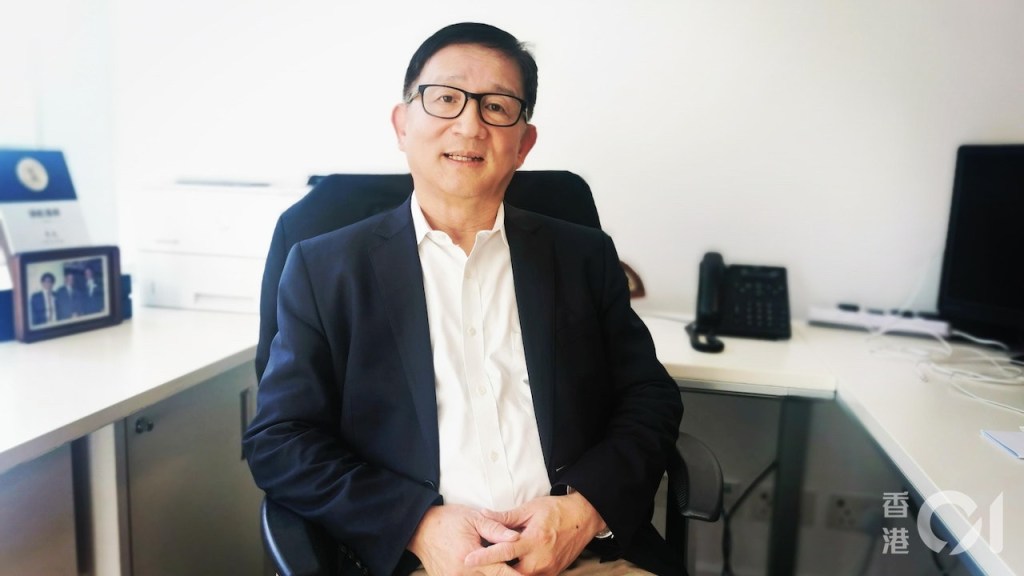
專訪李成|我為何辭任美國頂級智庫主任 回到港大?
在今年7月正式落戶香港大學擔任香港大學政治與公共行政學系教授、當代中國與世界研究中心創始主任之前,中國問題專家李成在美國學習、工作的時間達38年之久。2006年加入美國知名智庫布魯金斯學會(Brookings Institution),2014年成為布魯金斯學會約翰•桑頓中國中心首位華裔主任。
因為在美國深耕多年,所以李成的離開,也被認為是中美人才脱鈎的縮影。早前,李成接受《香港01》專訪,話題涵蓋中美關係、技術官僚、中產階級等,這都是李成專門研究的領域,也是關係當下和未來的重大命題。
李成坦言,17年前進入布魯金斯學會時,華裔學者的身份是正面資產(或被認為是財富),而到了後期卻變成了負面資產(或累贅)。因為現在美國決策層有些人對華裔是不相信的,不希望跟中國接觸,更多考慮的是跟中國脱鈎,這裏當然也有種族主義和種族歧視的成分,華府也確實存在着麥卡錫主義,美國政治和社會也在以非常快的速度在撕裂,知華派專家也被排擠、被邊緣化。以下為訪談實錄。
美國政治正在極速撕裂 知華派專家被邊緣化
香港01:今年7月您離開美國加入香港大學,外界很好奇您為什麼離開待了17年的布魯金斯學會選擇香港?先給我們講一講這個過程。
李成:離開美國來到香港確實是我一生職業生涯中最大的一次選擇。從1985年到美國讀碩士、博士,在美國學習、工作的時間有38年。其中在布魯金斯學會17年,是不同凡響的經歷,布魯金斯學會(Brookings Institution)是美國的第一智庫,也是世界排名第一的智庫。2006年,布魯金斯學會成立了約翰•桑頓中國中心,我從一開始就加入了,2014年成為首位華裔主任,也是在任時間最長的主任。在布魯金斯學會我們有很多方面的研究,外交政策團隊也來自世界各地,中國研究中心有包括很資深的貝德、杜大偉、李侃如、卜睿哲、韋德寧、喬納森•波拉克、賀詩禮等學者,貝德、杜大偉兩人最近相繼過世,同時還有很多年輕的優秀學者,包括接替我擔任主任的何瑞恩。
所以對布魯金斯學會,很多方面我是非常有感情的,畢竟在那裏工作了很多年。但是選擇離開是因為近年來有很大的變化,我17年前進入布魯金斯學會時,華裔學者的身份是正面資產(或被認為是財富),而到了後期卻變成了負面資產(或累贅)。因為現在美國決策層有些人對華裔是不相信的,不希望跟中國接觸,更多考慮的是跟中國脱鈎,這裏當然也有種族主義和種族歧視的成分,華府也確實存在着麥卡錫主義,美國政治和社會也在以非常快的速度在撕裂,這是讓我也很驚訝的。同時還有一個普遍現象,美國知華派專家也被排擠、被邊緣化,包括我們最熟悉的剛過世的基辛格博士,還有首度提出中國應成為負責任的利益相關者的前副國務卿佐利克,還有非常受尊敬的曾被評為知華派榜首的蘭普頓教授,而現在美國政府已經很少向他們諮詢。
面對這樣的境況,對我個人來說,雖然我還處在學術的旺盛期,但實際上在華府已經做不了什麼事情,我想也許換個環境還能夠繼續工作幾年。當然這背後也有對中美關係的整體評估,那就是我認為短時間內中美兩國關係無法扭轉。雖說我不同意「修昔底德陷阱」,這位2000多年前古希臘的偉大歷史學家和思想家曾經說過一句話給我很深的印象,記得當時我還在普林斯頓讀博士,他在《伯羅奔尼撒戰爭史》一書中講到驅動國與國對立關係的「三駕馬車」:雄心(Greed)、榮譽(Honor)、恐懼(Fear)。
其中最重要的是恐懼。我覺得當今世界恐懼可能是中美兩國之間造成對彼此戰略誤判,雙邊關係螺旋式惡性下滑的關鍵因素。 尤其是美國作為守成大國的恐懼不會輕易消除。這也是我來到太平洋彼岸的原因,想要更多地了解並致力於去除各自的恐懼。大多數中美專家預判中美關係改善可能需要10年或者更長時間,這會是一個漫長的過程,我在華府等不了10多年,我想在未來幾年能夠在香港的學界和智庫發揮一些積極作用。
當然,選擇來到香港,主要還不是外部推力(push factor),而是內在引力(pull factor),我們知道世界政治經濟版圖在過去幾十年發生了深刻的變化,中國有些學者討論「東升西降」,也有人提出不同看法。從數據來看,確實發生了東升西降。比如美國今天與1960年代相比,GDP實際上下降了50%,而中國則從一個比較弱的發展中國家變成了世界第二大經濟體。如果將東升西降放在整個亞洲跟傳統意義上的北美或歐洲相比,就更明顯了。根據世界銀行的研究,到2030年,世界最大的五個中產階級國家有四個在亞洲,包括中國、印度、日本、印度尼西亞,唯一不在亞洲的就是美國。這也說明,整個世界的政治經濟版圖,尤其是經濟版圖,發生了根本性變化。
當我決定回亞洲工作最初給我工作職位的是新加坡國立大學東亞所,我被任命該研究所所長。在這個過程中香港大學也給我了一個職位,新加坡的工作很不錯,研究氛圍也很好,團隊也已成熟,但相對而言香港大學對我的吸引力更大。一方面,新加坡的研究人員都是現成的,但到香港大學來,需要從零開始搭建研究平台;另一方面,在當今世界地緣政治發生激烈動盪之際,能和許多新移民或者回到香港的專業人士一樣,落地作為東方之珠的香港,受聘於群星璀璨的香港大學和人才濟濟的廣東大灣區,並致力於在國際化的大都市香港創建全球一流的公共政策和國際關係智庫,是時代給予我的難得的機會,也是歷史和時代給予香港的機會。
這個機會可以從很多方面來觀察,但由於時間關係,我想突出兩點:一是目前香港社會趨於穩定。就像任何企業都熱衷於在一個社會安定和政治穩定的地方投資,個人也同樣希望在一個安全和政治穩定的城市生活和工作。香港過去幾年經歷了非常不穩定的時期。穩定來之不易、代價沉重。 值得注意的是,看當今世界,哪些地方是穩定的?在歐洲,俄烏戰爭沒完沒了。在中東,巴以衝突再陷深淵。美國內部,政黨惡鬥社會撕裂。
二是在世界範圍引進人才逐漸成為香港未來新的增長點和突破點,香港大學當代中國與世界研究中心正是在國際社會面臨關鍵節點之際應運而生。今日的香港與以往任何時候相比,都更適合成為研究中國與世界治理問題的國際樞紐。香港既是國際化大都市、全球金融中心,也是文化交流的紐帶、傳統交匯的熔爐、歷史演進的特例,將繼續成為溝通中國大灣區與世界的橋樑。更重要的是,香港還將在塑造國際輿論環境方面發揮微妙而又深刻的作用。
香港01:在中美「新冷戰」的背景下,您的離開被認為是一個縮影,並加劇了中美之間的「人才脱鈎」。對此您怎麼看?中美是否真的到了「人才脱鈎」地步?這樣的「人才脱鈎」對中美關係長遠來說意味着什麼?
李成:我們個人的跨國流動沒這麼重要,影響也沒這麼快,尤其是學文科和社會科學的。但如果反映時代的變化和趨勢,那就非常重要了。我們知道美國是一個移民國家,是世界人才彙集地,這也是美國為什麼這麼強大的原因之一。在美國過往的歷史上,來自中國、印度、俄羅斯、伊朗、以色列的博士生最多。也就是說,美國曾經在相當大程度上獲益於這些人的貢獻,但現在由於種種原因,美國對來自以上有幾個國家的留學生至少在某些學科領域是關閉的,或者用你的話來說,叫人才脱鈎。
根據《華爾街日報》的報道,在去年和前年就有1400名華裔科學家離開美國,估計今年、明年會有更多。因為美國行政部門今年年初才決定了對半導體、人工智能和量子計算這三個領域對中國企業進行出口管制,許多華裔或亞裔科學家在這些領域工作,他們中許多人將面臨失業。不僅如此,美國國會還在不斷要求美國大學停止與中國大學的合作項目,選邊站位,否則就不批准這些大學本來可獲取的聯邦資金或國防部、能源部研究項目。
這是一個很糟糕的局面,不利於整個世界的學術交流和科技發展,也是在損害全人類分享研究成果。實際上,在新冠疫情的時候,中美醫療界、科學界的合作非常頻繁,包括在人工智能領域,兩國科學家的合作比例要遠遠高於其他一些國家,但很遺憾這些合作都將由於政治原因會受到非常深刻的衝擊。尤其是到了特朗普後期,聯邦調查局出台的「中國項目」對華裔科學家有強烈的種族定性,這些舉措已經造成幾千名華裔科學家離開美國,其中大多數到了內地、香港、新加坡工作。我的好朋友,著名免疫疾病專家何大一曾說,美國聯邦調查局做到了「中國中組部千人計劃和萬人計劃想做而做不到的事情」。將大量的已經成為美國公民和綠卡持有者的華裔學者拒之門外,造成了很大的損失,當然可能要過段時間美國才會意識到對美國教育研究機構、科技領域所帶來的巨大損失。
世界面臨的最大挑戰並非「民主和專制的對決」
香港01:此前您表示選擇香港,是希望利用香港這個「特殊地方」來促進和平,把那些較難在華盛頓聚集起來的人們聚集在一起,您同時也說「今日的香港與以往任何時候相比,都更適合成為研究中國與世界治理問題的國際樞紐」,「香港將在塑造國際輿論環境方面發揮微妙而又深刻的作用」,可以在中美關係中發揮積極作用。結合過去幾年世界之變、中國之變、香港之變,可否展開來談談您對香港這個「特殊地方」的理解以及您預備在香港大學推動的事情?香港該如何發揮「微妙且真正的影響力」?尤其在促進中美關係方面。
李成:這實際上非常有意思。我很早開始關注上海城市發展的研究,從歷史上來看,上海的迅速發展有兩種背景因素。一是由於中國其他城市的發展促成了上海的加速發展,一是上海城市的發展是基於其他城市的不發展,就像曾經的巴黎也是這樣一個作用,巴黎的都市化是在整個法國城市化萎縮的情況下發生的。
所以香港也經常有人講,不管是中國發展還是目前的收緊,在香港都會是有影響的,當然我們不能一概而論。但有一點,現在無論是中國還是美國,因為出於對安全的考慮帶來很多政治上的收緊,進而是對於跨國學術交流的限制,以及由此帶來的學術及政策討論的侷限性,因為一旦有了限制就會帶來一連串的連鎖反應,同時年前新冠疫情的影響也造成交往急劇下降。在這樣一個背景下,我們在香港大學新成立的研究中心很有可能為中美關係開拓新格局、新領域的研究獲得新的機會和有利條件,這也是我們想要抓住的歷史機遇。
再加上以往的中美關係,主要是政府驅動的,或者是企業推動的,但現在政府和企業的驅動能力都由於種種原因下降了,政府與企業都無法單獨保障中美雙邊關係穩步發展,所以在這樣的局面下,由大學智庫所推動的「二軌外交」,不論是在消除誤解還是管控分歧等方面都顯得尤為重要。
我們當代中國與世界研究中心建立在香港大學雄厚的實力基礎之上,將共享香港大學所藴含的國際知名的教授團隊、優異而多元的學生群體,以及傑出並且嚴謹的學術傳統,中心將致力於打造一支專業跨學科、價值多元化的國際化研究團隊,包括邀請香港大學特聘研究員、客座與博士後研究員,並開展傑出訪問學者與全球青年中國學者項目。在戰略層面,研究中心將自身定位為服務跨學科研究與國際合作的學者之家。這是我們期待在未來幾年當中完成的。
通過匯聚來自不同地區、擁有不同專業背景以及多元化觀點的人才,研究中心將致力於在學術研究領域開創新的敘事體系,研發創新型研究工具,以及建立平衡的交流語境,從而應對當今前所未有的治理挑戰,中心建立伊始將重點關注五大領域,包括:科學與技術變革;氣候變化與新能源;經濟與金融改革;政治精英與代際更替;中美關係與地緣政治博弈。
以經濟與金融改革為例,目前香港IPO股票市場碰到很多問題,中國國內也是這樣,是不是能夠引進新的機制?能夠研究短板在哪裏?瓶頸效應在哪裏?怎麼來推動?怎麼使香港恢復成為亞洲金融中心?再比如政治精英與代際更替,這不只是中國,而且其他國家包括美國,我們都要做些研究,因為最終的很多決策跟精英層個人的成長背景、知識結構、群體特徵等息息相關,他們的代際變化,對整個世界治理究竟意味着什麼?這些都是很重要的課題。還有中美關係,尤其是地緣政治博弈背景下的利益交匯點、如何推進雙邊和多邊的合作,也是我們未來研究的重點之一。中心的學者們將通過發表研究專刊等學術著作、舉辦公開論壇與閉門圓桌會,以及媒體評論等形式,集體展現中心富含原創性、可及性、創造性的高品質並且內容豐富的研究成果。
所以說回為什麼是香港,因為我覺得香港可以並且應該成為撬動下一階段中美之間,乃至世界層面上東西方以及南北方國家交流的槓桿。研究中心的願景與目標是發出引領時代的理性聲音,搭建迫切需要的溝通橋樑。目前情況下,東亞如何維持相對的和平,是需要考慮的嚴峻問題,因為現在世界上好多地方都在打仗,還有一些國家處於內戰中,比如緬甸,和平來之不易。如何通過大學智庫推動民間交往和「二軌外交」,成為維護太平洋地區乃至世界和平的重要建設性力量,是我們研究中心的使命和理念所在。
香港01:您剛提到研究中心致力於在學術研究領域開創新的敘事體系,可否展開來談談?因為現階段可能處於一箇舊的體系在逐步瓦解、新的體系還沒有建立起來的一個過程中。比如全球南方在俄烏戰爭和巴以衝突問題上,已經在用完全不一樣的敘事體系在理解和表達。以往美西方所代表的主流敘事體系,已經無法說服大眾,尤其是民主與專制這樣的二元話語體系,已經無法解釋現實世界的複雜性。
李成:把民主和專制作為劃分世界的一個框架,跟很多國家和地區面臨的問題是有矛盾的,而且並不足以解釋今天現實世界的複雜性。但是很遺憾,美國一直在驅動這種民主和專制的二元對立。
比如最近國務卿布林肯的一個演講,還在繼續用這個框架來界定當今世界的主要矛盾,實際上是回到了冷戰思維。但同時他在演講中也提到,過去幾十年世界也取得了了不起的進步,而且排在第一位的進步是很多國家脱貧,但他應該知道,這脱貧的10億人中,絕大多數都來自中國,這也就是說,中國是世界治理或者說脱貧的領頭羊。但在華府,中國又是美國的第一號敵人,如果把這兩個放在一起,本身是一個相當大的矛盾,這個對國際社會貢獻最大的國家同時也是美國的頭號敵人,怎麼能自圓其說?怎麼能夠對應他所說的美國是代表了世界進步的力量?
美國政客所熱衷的兩個陣營、冷戰特色的世界觀導致了許多領域(如經貿、產業鏈和供應鏈、投資、貨幣、能源、通訊、科技)日益上升的脱鈎、斷鏈和衝突,包括你提到的人才脱鈎。而不無諷刺的是,我們生活的這個世界實際上是多級的世界。單級和兩極格局都不符合國際社會的利益。所以很多全球南方國家,包括中東、非洲以及拉美國家是不認同的,他們認為這不符合國際社會的利益。實際上歐洲在很長時間以來都在一個穩定的、多級的系統下運行。但令人感到吃驚的是,在俄烏戰爭以後,許多歐洲國家也熱衷於兩極化的世界觀。而現實是西方國家包括美國內部的民主與專制的衝突比國與國之間的類似衝突同樣尖鋭,甚至更尖鋭。
今天的世界發展趨勢是與簡單化的民主專制兩極化的觀點相矛盾的。遺憾的是,當我們面對許多隻能通過各國相互依存的關係才能解決問題時,全球分化的趨勢卻在步步逼近。世界面臨的最大挑戰並不是一些政客所說的民主和專制的對決,而應該是氣候變化、公共衛生、貧富懸殊、糧食安全、經濟合作、可持續發展、軍控與和平議題。尤其是隨着科技迅速發展,包括人工智能的迅速發展,如何找到一個有效機制,防止走向失控,就變得非常重要了,而這也只能通過更多的合作而不是兩極化的對立,才能解決的。正像許多國家不想簡單化地選擇陣營站隊,不願回到冷戰甚至面臨捲入毀滅性的熱戰,作為我們智庫學者,也應該致力於擺脱這種陳舊的冷戰思維,尋找到新的研究角度、研究方法、研究語境,這方面我們有很多工作要做,來推動跨國的交流,促進文化和文明的對話,而不是對抗。
這一切其實可以追溯到哈佛大學政治學教授亨廷頓30年前提出的文明衝突論,在亨廷頓看來,伊斯蘭文明和中國的儒家文明是對美國乃至西方社會最大的威脅。當然你可以說亨廷頓說中了,但也可以說這一判斷本身導致了理念上的誤區,進而助長了衝突。我是不同意這種文明衝突的理論,如果美國與整個阿拉伯世界、儒家文明圈對立,美國要尋求的是什麼?我覺得這是美國真正意義上的戰略家應該思考的問題,文明衝突這種誤區給美國外交帶來的影響是極大的,這也反過來說明學術理論和大學智庫的重要。很多學術問題,其實價值遠遠超出了學術上的爭論,而是切實影響着我們人類社會的進程。
香港01:相較於民主與專制的二元劃分,中國更強調治理的重要性,十年前的十八屆三中全會提出了治理體系和治理能力的現代化。在您看來,治理有可能打破這樣的二元對立嗎?難點在哪?您怎麼評價中國過去十年的治理實踐?
李成:在過去二三十年當中,全球化是一個重要概念,而治理又是一個比較新的更重要的一個概念,治理問題從未像今天一樣在世界範圍內受到關注。各國政府在國內面臨着經濟波動、環境惡化、就業壓力、能源安全、教育公平、養老保障、種族關係等一系列治理挑戰。在國際層面,氣候變化、可持續發展、人工智能技術的滲透,以及核不擴散等問題要求國際社會建立強有力的全球治理機制。與此同時,中美關係作為當今世界最重要的雙邊關係,也在過去的幾年內急劇下滑。
我記得美國太平洋艦隊曾經在幾年前做過研究,其公布於世的報告認為世界上或者是國際事務當中對美國最大的挑戰不是來自某個國家,比如俄羅斯、中國或是伊朗,而更多的是氣候變化造成的水位上升,這本身也是國家安全的一個重大考驗。這也告訴我們,如何通過世界性的合作和治理,來達到協調發展的目標,這是和前面講到的兩極化的世界是完全相反的思路。
具體到中國,其實在治理方面做了很多事情,包括脱貧、城市治理、綠色發展、雙碳許諾等等,而且反腐敗跟治理也是非常關係密切的政府監督行為,這方面中國在十八大之後做了很多。但中國是否想通過治理與改革舉措取代過去的國際體系,我認為至少在中國看來,以往很多規則也許不符合現實變化,需要通過改革形成新的機制。比如基於規則的國際秩序,這些規則由於時代和現實的變化,也應該有相應的改進。我相信因為中國是獲益於國際體系的,並非要完全取代冷戰以後形成的國際體系,而是要如何進一步改革,使其能夠符合世界大多數的意願,而不是少數幾個國家的意願。
崛起的中產階級如何改變中國?
香港01:您很早開始就很關注中國的中產階級,1993-1995年還專門在上海做了實地研究。可否介紹一下您此方面的相關研究?30年後的今天,從疫情後期的「白紙運動」到今年上海萬聖節所呈現的活力與可能性,您怎麼看中國的中產階級?此一階級將如何影響中國的公共文化以及政治文化?
李成:我見證了上海中產階級的崛起。1993年到1995年,我在復旦大學和上海國際問題研究院擔任教授和訪問學者,當時中國的中產階級在上海才剛剛起步,我完成了兩年的田野研究,寫了一本書叫《上海:正在崛起中的中產階級》,但是稿子被西方七八所出版社否決了,原因是西方的評審認為中國不存在中產階級,認為中產階級和西方的公民社會、民主制度這些概念有關。中產階級必須跟民主連接在一起,跟公民社會聯繫在一起,中國只有很少的富人和大多數平民百姓,根本不存在中產階級。後來我把中產階級這個詞去掉,寫了一本書叫《重新認知中國:改革的動力與困境》,成了當時美國學界看中國的一本暢銷書。中國中產收入群體獲益於全球化,獲益於與西方的交流,不管是經貿還是其他方面,但同時也造福於全球經濟發展。
後來直到2008年,我加入布魯金斯學會之後,才編著了第一本中產階級的英文書,2010年出版的,這也是當時英語世界第一本有關中國中產的學術專著,後來也翻譯成了中文,書名是《「中產」中國 超越經濟轉型的新興中國中產階級》。這本書出版的時候,中產的概念已經開始被接受,英語世界最初不是學術界接受的,而是華爾街,因為中國中產階級的發展改變了中國經濟,也改變了世界經濟。今年3月我見到了李強總理,他專門講到了中產的發展,稱再過幾年可以擴大到五億人。2018年兩會期間,時任國家發改委主任何立峰在新聞發布會上也說過,到2030年中國將擁有將近8億中等收入群體,將佔人口總數的60%,其在未來中國發展中亦將扮演重要作用。
雖然中西方對於中產階級的定義不同,但如今,愈來愈多的中國公民(目前估計有4億人)享受着中產階級生活方式,他們擁有私人財產、私人汽車、較好的醫療保健和積累的金融資產,而且有能力支付出國旅行和子女的海外教育。1979年中國開始經濟改革時,其人均GDP不足300美元,約為美國的3%,一個明確的社會經濟「中產階層」在中國幾乎是不存在的。到了2019年,也就是中國啟動經濟改革40年後,它的GDP增長了60倍,人均收入提高了25倍,人均GDP從2001年的約1000美元增加到2020年的1萬美元,預計2035年將達到3萬美元。
與之對照,美國中產階級卻日漸萎縮,從二戰後佔美國人口的70%降到上世紀70年代初的61%,2000年再降至55%,如今約為50%。根據世界不平等數據庫提供的統計,1980年至2014年期間,各收入階層的中國公民都從經濟全球化中獲益匪淺,而美國只有頂層那20%的人收入顯著增加,其他所有收入階層則幾乎沒有改善。近年的一些事件,例子包括2011年的「佔領華爾街」運動、《小丑》和《無依之地》等美國影片的受歡迎、公眾對超級富豪精英的怨氣日深(如5萬美國人在網上籤署請願書,要傑夫·貝佐斯完成太空之旅後不應該返回地球),都說明美國中產和勞工階層的憤怒和沮喪與日俱增。
這是劃時代的一個變化,不僅是經濟的變化,也跟社會穩定相關。中國哲學家孟子講「有恆產者有恆心」,表明特定社會中財產所有權與社會政治的穩定具有相關性。我認同將中美兩國的中產階級視為社會的穩定器這一觀點。美國內政以前曾經有過相當長時間的穩定,就是因為有強大的中產階級。而現在之所以出現問題,如前所述,其中一個重要原因就是中產階級萎縮。
中國的中產階級在過去一二十年的迅速發展及其在當前經濟放緩後的狀況,相對來講都是新的議題。包括之前的新冠疫情,中產階級的政治屬性也顯示出來了。我們需要對中國的中產階級進行深入分析,對其在中國經濟、政治、社會等方面的作用不斷進行動態分析。中產階級的政治取向是靈活的,不是經久不變的,西方老是批評中國中產階級是政府的追隨者,我覺得這有點簡單化了。
任何社會中產階級都有政治取向——不管是哪個地方的中產階級都認為,我賦稅了,我就應該享有權利。上海在這方面的發展走在全國前面,比如建立物業委員會進行民主治理。中產階級與政府和社會的關係也在不斷髮展變化,但不是西方所預期的那樣學習西方民主,中國有自己的發展邏輯和實踐模式。中產階級在與政府的互動、治理問題上面臨的機遇和挑戰,或將是中國今後發展的一個重點方面。因為不管是對環境保護,還是對受教育的權利,以及對訊息公開化等,中產階級都是很大的積極力量。但他們又同時想要穩定,所以中國中產階級的健康發展,影響着中國進一步的穩定和健康發展。
香港01:關於中產階級作為社會穩定器的問題,亨廷頓在《變動社會中的政治秩序》中提出一個判斷:經濟發生轉型的國家,政治上特別容易出現不穩定。這一判斷也被稱為「亨廷頓悖論」。在這之前,西方現代化理論學派認為,經濟上的現代化必然帶來政治上的現代化。經濟越發達,生活水平越高,政治就會趨於穩定和成熟,民主制度也會生根發芽。亨廷頓的觀點完全相反,他認為經濟發展帶來的不是政治上的成熟,而是政治不穩定,是國家失能,甚至是國家機器的失敗。結合亨廷頓的這一判斷,該怎麼理解中產發展壯大與政治穩定之間的關係?
李成:我不同意亨廷頓,中產與政府是一個互動的過程,不是一個簡單的yes or no。西方政治學當中有一個集權社會的概念,認為在集權社會因為經濟也被控制下來,所以沒有任何群體能夠改變政治利益結構,所以最終導致的是進一步的集權。但現實情況是,當經濟權利得到充分保證以後,也會引發人們對其他一些權利的呼喚。但這些權利的呼喚,是否一定會導向政治的不穩定,取決於你在什麼階段問,以及和什麼因素摻雜在一起。關於中產的政治取向,也不是一成不變的,受各種因素影響,其時國際關係的背景也有關聯,一些事情的前因後果都會帶來一定影響。
香港01:根據您早年的研究以及持續的觀察,您對今天中國中產的特點和狀況怎麼評價?目前來看,中國中產群體應該是最焦慮的一群人,在經濟上他們很容易一夕之間跌落至無產階級,在政治上又表現出很大的搖擺和遊離,於是很多人選擇「潤」。
李成:這個問題也很難孤立來談,中產群體有幾個基本屬性,其一是希望穩定,其二是要維護自己的權益,其三是既有國家認同感也有國際化視野。所以這些因素決定着目前中國中產的特性。當然這也是不斷變動的,取決於在什麼時候、什麼背景下來問,不能簡單化去評估。比如中美關係處在什麼階段,對中產的衝擊也是不一樣的,中國的中產希望全球化繼續發展,他們不希望中美完全脱鈎,由於訊息的不對稱,各方的變化太快了,所以中產在面對極速的變化時也會有種種不同的觀點,並不是鐵板一塊。
現在來講,中產階級本身很多元,由於經濟的下滑,也有一種失落感,國際秩序的混亂,戰爭在各地的此起彼伏,也讓中產對未來很擔憂,這是很正常的。而且和其他國家的中產相比,中國中產大多數是有儲蓄的,他們擁有房產的比例,也比其他國家要高,西方的中產大多是沒有儲蓄的,這是很大的不同,西方的中產一旦失業以後,生活馬上就要改變。
在審視中美兩國最高領導人的優先要務時,有一個領域具有明顯的共同點,那就是中產階級的發展。「中產階級外交」是拜登總統任內的核心,拜登的高級助手,包括國務卿安東尼·布林肯、國家安全顧問傑克·沙利文和國務院政策規劃主管薩勒曼·艾哈邁德,他們經常都在宣傳這一總體目標。
事實上,拜登的前任唐納德·特朗普總統「讓美國再次偉大」和「美國優先」的政策,也強調對中產階級減稅。正如美國著名經濟學家努里爾·魯比尼所指出的,當美國的不平等「變得過分,政客們(無論左右)都會變得更加民粹主義」,尤其在採取政策取悦中產階級方面。
對中國而言,自世紀之交以來,優先減貧和擴大中產階級就始終是一項重要的國家發展戰略。習近平主席實現「中國夢」的藍圖,以及「共同富裕」的發展戰略,着重點都是擴大中產階級。中美兩國同時都在推動中產階級的發展,這能否成為合作或良性競爭的共同基礎,而不是零和對抗的根源呢?對中國來講,這是一個很大的挑戰。
香港01:確實如您所說,中國很重視中產階級,但對執政者來說,目前面臨一個急迫的問題,那就是如何和日益發展壯大的中產群體對話,您前面也提到中產階級與政府互動的問題,因為中產是最希望有穩定感的,他們看重規則和法治,這也是為何疫情之後很多與法治相關的議題可以成為社會熱點的原因所在。關於執政者如何與中產對話,您怎麼看?
李成:中國領導人實際上也很關注中國民眾的想法,各種形式的對話也在展開。目前民企缺乏信心的狀況,房市股市都不好,是很多原因造成的,改變起來並不容易。很多政策可能可以做一些調整,比如要不要來一個大的刺激計劃,刺激計劃也是有代價的,該怎麼平衡和把握?攜程的老總前段時間跟我說,中國國內旅行已經恢復到了2019年以前,這是很好的一個跡象,因為中國今後的消費不是靠富人,而是靠中產群體消費來拉動的。這些都是中國走出困境的必要條件。
作為中產階級來講,可能更多的要把中國目前的發展階段放在世界範圍的歷史角度來看,而不是僅僅放在這兩三年來評判。目前中國經濟不好,但世界上哪些國家經濟好呢?美國好嗎?美國是靠不斷的印鈔票,不斷的高利率來維持的,這能長期維持嗎?對整個世界的負面衝擊將會有多大?其他國家將如何反應。這些都是值得考量的,中國的變化必須放在整個世界變化當中去看,中產群體尤其需要更多了解世界的變化,形成新的認知和共識。
現在中東和歐洲還在戰爭中,在這樣的大變局之際,領導人把安全放在了經濟之上,這樣做對不對大家可以保留意見,但我想從另一個角度來講,安全問題對很多人都是至關重要的,如果沒有安全,經濟發展如何保障,都成了問題。
非鐵板一塊 中國政治靈活性被西方忽視
香港01:中產之外,您很早就開始研究中國的技術官僚,二十大之後您在台北也與中研院院士吳玉山有過一次活動討論這個問題。二十大至今已經一年,您怎麼看中國今天的政治生態,以及新型技術官僚團隊的施政表現?
李成:我1985年去美國加州大學伯克利分校,主要是想讀文學的,因為我本科論文是關於比較文學,後來發現走錯專業。伯克利有三個研究亞洲的專業:語言和文學,亞裔研究,亞洲的政治經濟。我進了亞洲的政治經濟專業。 吳玉山當時也在伯克利,他讀博士,我讀碩士,我們的恩師是同一個人施伯樂 (Robert Scalapino)。在選題時開始注意到中國的精英政治,尤其是中國開始上升的技術官僚。我問導師應該選哪個題目,他說,研究中國的技術官僚,很少人在做。這個問題會越來越重要。到了普林斯頓大學,唸了博士學位,主要是在研究中國技術官僚的發展。
技術官僚或技術文官的概念,狹義講是學工程和自然科學的。我是比較早的把這個概念用到中國政治研究中。因此,一開始受到受到許多西方學者的批評。到了江、胡執政時,他們才開始認可了這樣的概念。而我在80年代後期就發表關於技術官僚的文章,1987年開始建立數據庫,逐漸完善和充實很容易看出中國精英變化的趨勢。
中國精英的轉換速度之快是其他國家罕見的,而這一切都是在一個「一黨執政」的體制中發生的,它外觀上的「不動」和內部的不斷驅動和輪換,就是中國政治很大的特點,往往西方只看到了它表面上的「不動」或者說是僵化,而忽視了它內部的不斷更換的靈活性。中國是一個一黨制的國家,但並不意味着就是黨內一成不變或鐵板一塊,實際上裏面有很多派別,所以我比較早的時候就引用了所謂集體領導的概念。當時用集體領導的概念,西方很多學者不認同,認為不存在什麼集體領導,而是九龍治水,各管一攤。後來當權力結構發生很大變化後,西方學者開始討論集體領導多麼好多幺重要,我覺得有點諷刺,從中也能看出一種對中國政治的固有偏見。
具體到方法論,先是從數據庫開始,後來建立一些政治框架的分權模式,包括權力制衡和集體領導。加入布魯金斯學會之後,經常接待官員或訪問北京,所以跟中國官方有了很多第一手的觀察和接觸,同時布魯金斯學會也在清華大學公共管理學院建立合作機構,這也是近距離觀察和接觸很多技術官僚和非技術官僚的過程。接下來,到了人工智能時代,我也開始通過大數據和人工智能的使用做一些研究,不過對於這樣的研究我始終是有保留的,本質上我認為政治學與其說是科學,還不如說是藝術,因為有些東西需要一種深刻的人文歷史的了解,數字是說明不了的,定量研究所能說明的也是有限的。
從中國歷史看,儒家傳統是不太注重技術的,毛澤東時代不認可知識分子的領導力,到了鄧小平時代發生了變化,鄧小平實際上促進了中國技術官僚的上升,雖然他自己不是學工程的,但他知道工程師的重要,提拔了很多有工程學背景的領導幹部,包括江澤民、李鵬等。到了江澤民和胡錦濤時代,大多數技術官僚學電子工程、土木工程等專業,一般來講都是在一些小型工廠工作,主要政治生涯是地方上的磨練,一步步被提拔起來的,並沒有什麼國際化的背景。最近10-20年,尤其是十九大到二十大提拔的技術官僚,大多數是學習人工智能、環境科學、生物科技、航空航天等專業,很多都有國際化的背景,他們是我說的「中國技術官僚2.0」,他們受重用跟中國最近幾十年經濟和科技的迅速發展息息相關。
香港01:關於十九大和二十大之後的變化,其實我們注意到,這個周期很多政治倫理也在變化,包括黨政關係,以及黨內民主是否已經名存實亡。該怎麼理解集體領導與黨政關係的變化?
李成:在中國漫長的歷史當中,威權主義始終是佔上風的。在鄧小平時代有很多政治制度上的嘗試,包括集體領導、廢除領導幹部終身制,提出對各級官員年齡的限制,以及任期的限制等等,包括我曾經提出的黨內派系競爭模式,都是一種嘗試。在嘗試的過程中產生了新的問題和危機,比如九龍治水,以及薄熙來、令計劃、周永康事件等危機。這個過程實際上也告訴我們,一個國家的政治制度,與經濟、歷史和社會背景密切相關的,同時也跟世界上很多互動和變化也是緊密相關的。
現在美國的民主出了很多問題,尤其是2020年1月6日的國會山騷亂,矛盾已經如此尖鋭,在這種情況下我們都會反思,並且又回到對政治制度的多視角研究和反思,這需要更多的對話,更多的嘗試,不同政治模式的取長補短。我覺得未來可能需要一場關於政治制度適合性的全球性大討論,現在時機還沒有到來,因為目前很多政治衝突都迫在眉睫,包括戰爭、貧富差距、種族矛盾、文化戰等都在起很大作用。但遲早需要一場深刻的關於政治制度的討論和研究,因為很多固有的觀點必須得到新的檢驗。
香港01:關於政治制度適合性的討論,可否展開來談談?背後的問題意識是什麼?
李成:可以這樣說,我是在西方受教育的,對西方的民主曾經非常熱情,但最近很多事情讓我不得不重新思考很多問題,包括美國作為燈塔國,權力正常的轉移都出現了挑戰和危機。在這種情況下,對於西方民主需要重新檢驗和有更多的思考,這並不是說要用其他的政治模式來取代西方的民主,而是要對民主出現的危機做出檢討,從理論上進行思考。因為只有從源頭上檢討,才能理解美國目前社會的撕裂,以及國內的不安全感從何而來。現在檢討和思考才剛剛開始,這個過程需要平等的、理性的、冷靜的對話。
不過,我觀察到一個現象,西方很多學者的書很快就介紹到中國來了,好的壞的都有,但中國學者的書幾乎很少被介紹到西方。美國迄今為止只有兩套中國學者的叢書,一套是我編的《中國思想家》叢書,包括何懷宏、胡鞍鋼、賀衛方、俞可平、李春玲等人的著作。另一套是貝淡寧編的,巧合的是,我們兩人現在都來到了港大。我們在中國的書店裏可以看到很多已經被翻譯成中文的西方學者的書,但是到美國的書店去看,有幾個中國學者的著作能夠出現在美國書店的書架上?是零,這是很不對稱的,這對美國學術界和外交界也是一種損失,是很悲哀的事情。
作為一個開放自信的社會,怎麼會有這樣的事情?學術界這叫開放嗎?這叫自信嗎?這叫包容嗎?所以我也想告訴中國學術界,不需要妄自菲薄,認為什麼都是別人的好,而且西方的很多理論實際上已經被證明是錯的,所以平等的對話顯得越來越重要,同時也希望中國國內的學者能夠有一些理論上的突破。
至於中國學術界,假以時日,中國的思想家會走向全球, 但是這需要一個寬鬆的、開放的學術環境,這很重要。儘管追求獨立不是目前中國智庫發展的重點,但是有一個學習的氛圍、有一個開放的氛圍、有一個多元的環境,會幫助中國能夠產生世界一流的學者。目前,中國對外交流的方式、中國智庫的聲譽還處在低潮期。智庫發展不是搞公關、不是搞宣傳,更多的是一種交流,是一種文化的對話。我們不能誇大文化上的不同點,在有些方面中國當然有它的特色,但如果過度強調特色,就會限制自己的視野和對外交流。
戰爭陰影籠罩加速泛安全化 香港應反其道行之
香港01:過去一段時間,中美元首會晤引發關注。您此前說過,未來美國爆發內戰的可能性高於台海衝突的幾率。在您看來,中美各自的內政如何影響中美關係?泛安全化是否正在成為一個現實且急迫的問題?
李成:任何國家的內政都會在外交上起很大作用,但是美國內政目前的撕裂,跟中國內政的驅動作用是完全不一樣的。比如2020年的選舉結果,居然到現在特朗普還沒有認輸,這就帶來新的問題,權力怎麼和平轉移?上次儘管特朗普不承認,但美國的司法界、軍隊和地方選舉的官員,尤其是共和黨的官員都保持了他們的良知,但是我們知道共和黨在選舉中比較有良知的官員大多數被替代了。與此同時,國會里共和黨議員支持彈劾特朗普的,大多失去了共和黨議員的位置,這也說明共和黨的主流變得非常右。
對於國會山事件,我在布魯金斯學會有同事做了一個研究,發現參加1月6日抗議活動的,大多數並不是人們所說的暴徒,而是好鄰居、好丈夫、好公民,很多人還是復員軍人或者現役軍人,他們去不是要暴亂,而是要拯救美國。下一次如果再有危機,他們還會去。這就是美國目前所面臨的困境,是社會對不管是女性的墮胎,同性婚姻的權利,少數族裔的政策優惠、槍支管控、毒品等,都變得非常撕裂,幾乎沒有調和的餘地。這是令人擔心的。這不僅是我個人的觀點,許多美國人對自己國家的未來有很多擔心。雖然中國也會有自己的挑戰,但緊迫性相對來說還是小一些,更多的還是長期挑戰。
香港01:再談談泛安全化的問題。
李成:我們目前處在一個動盪不安的階段,世界各地都不穩定,歐洲和中東在戰爭的陰影下,我想沒有人會天真地以為這是國際秩序崩潰的少有的戰爭,也不會僅限於歐洲或者中東,如果繼續蔓延是極其可怕的。在這種情況下,難怪有些國家包括中國把安全放在第一位,實際上我們可以問一下哪個國家不把安全放在第一位?美國?俄羅斯?德國?日本?這些國家都把安全放在第一位。這也是當前地緣政治下各國的必然選擇,因為如果沒有安全,其他東西都可能瞬間歸零,何況現在面臨的不只是戰爭威脅,還有人工智能時代毀滅性戰爭的挑戰。
這並不是說我認為經濟不重要,對決策者來說,關鍵是在做判斷時如何把握不同階段的重心。作為學者,並不處在政治家的位置上所以不太好評判,但可以分析、評估,現在我們面臨的問題,並不是孤立的,並不是中國才有的,實際上都是普遍的,只是涉及到我們影響就很大了,經濟不景氣,失業率高,收入減少,世界上很多國家都面臨着同樣的問題,有些國家情況更糟糕。當中國有能力維持穩定,有能力避免戰爭, 就應該考慮與一些處在困境中的國家反其道而行之,要開放、要大力發展經濟、要讓民眾對未來恢復信心。
所以在這個艱難過程中,要有很多新的認識,有一種心態的調整和換位思考。盲目自大和妄自菲薄,都是有問題的。如果中國對自身缺乏足夠的認識或者換位思考,就很難理解外部世界面對中國強大而產生的焦慮和恐懼。
香港01:您怎麼看香港的國安泛化問題?是不是也是這個艱難階段不可避免的?
李成:香港在認識到安全重要性的同時,更應該與外部世界反其道而行。也就是說,香港應該更自信、更開放、更包容,而不是掉入泛安全的陷阱。香港在經歷2019年的修例風波之後,已經穩定了下來,我看不到香港在短期內還會再來一場運動的可能性。在這樣的穩定局面下,強調抓間諜是要付出巨大代價的,最後的結果是什麼?是外國人不來了。香港是旅遊業的中心。香港現在有能力,也有機會這樣做。如果中國還要推遲一段時間才能更開放,那麼不妨從香港開始,為什麼不這樣?
具體到香港,在這個時候,應該顯示出香港的不同來,為了中國自身的利益,也必須要開放,必須要發展,否則又是一個僵局。而且因為國安泛化,也限制了很多積極的因素,因為有敵意的畢竟是少數,這不是一個泱泱大國所需要強調的。
香港01:還有最後一個問題,也跟中美相關。在布魯金斯學會期間,您曾為推動中美民間交流做過很多探索,比如邀請姚明在中美建交35周年之際來詮釋兩國關係等。過去一段時間,中國領導人多次強調,「中美關係的基礎在民間」。結合您的實踐經驗以及觀察,推動中美關係的民間力量該如何發力?目前面臨哪些結構性難題?
李成:邀請姚明來布魯金斯學會是我2014年擔任中國中心主任後的第一個活動,當時NBA總裁的大衛·斯特恩也來了,反響非常好。我覺得這一類的交流很重要,因為中美兩國都是偉大的國家,都是偉大的人民,這一點我們千萬不要有任何懷疑,只是目前中美關係處於低落期。
尤其是美國的中產階級,他們不認為中國的中產階級發展給他們帶來了實質性的利益,而中國的中產階級又很難理解美國目前的狀況對美國民眾所造成的心理衝擊。雖然美國的中產階級也不一定像美國政客說的那樣,認為是中國的中產階級搶了他們的飯碗,但他們至少沒有覺得自己從中獲得了利益,他們認為是華爾街而不是民眾獲利了。這也解釋了為什麼拜登削減關稅的政策始終沒有推廣出去,因為美國的中產階級、勞工階級覺得這對他們不利。
舉例來說,中國國務院2015年推出了《中國製造2025》,這給很多國家造成很大心理壓力。現在中國的新能源汽車非常咄咄逼人,當然這是中國成功的表現,我也不相信西方所說的中國的產業政策給他們多少幫助,但問題是最後的結果是一樣的,其他國家承受不了這樣的壓力。這裏面也涉及到中產的問題,怎麼把蛋糕做大,這很重要。所以,不能想象這些國家都會歡呼中國的廉價汽車來了。情況是非常複雜的。
你剛才說的是對的,實際上習近平主席有一句話是這樣說的,「中美關係希望在人民,基礎在民間,未來在青年,活力在地方」,在布魯金斯學會期間我和我的同事也從不同的角度和立場看到了民間交往的重要性。前段時間比爾·蓋茨、基辛格來中國,也不是代表美國官方來的。我過去十年一直在關注美國年輕人對中國的看法和觀點。我的研究和其他美國學者和民調機構的研究都有一個令人欣慰的相同結果:美國29歲以下的年輕人比其他年齡段的人有多20%左右的好感。
在中外交流中,強調不同易,尋找相同難,「求同」往往可能被忽略。但人類文化是共通的,在國際交往中,真正珍貴的是強調相同點,在彼此的不同中尋求相互溝通,減少對抗。將注意點擴大到共同身份和雙方的相似之處,將有助於更人性化而不是妖魔化看待彼此,可以培養同理心,彼此尊重,並擴大共同利益。我來香港大學,也希望能尋找到利益的交匯點,我剛出版的新書的書名就是《中美關係 變局中的利益交匯點》,包括各個領域,比如科技、金融、新能源、公共衛生、地緣政治等,其實都有利益的交匯點在。
香港在近代史上就是促進東西方文化對話的橋頭堡,在國際關係亂雲飛渡,中美關係螺旋式急劇下滑的今天,強調尋求利益交匯點就顯得非常重要,這是我們新成立的研究中心未來幾年最為關鍵的一個突破點,也是我們的使命。如果我們推崇多元文化,相信世界多級,我們就應該更包容而不是偏執,更開明開放而不是保守關閉,更有全球視野而不是狹隘的民族主義。剛才我講香港必須開放,中國必須開放,要吸引大量的外國人來,當然有困難,但還是要更主張國際合作而不是對立競爭。
習近平主席在第三屆一帶一路高峰論壇上說,「文明在開放中發展,民族在融合中共存」,我覺得講得很好,可是很遺憾,現在世界就缺乏這樣的開放和包容,所以中國必須有信心來兑現這一許諾。雖然現在國際社會對中國有很多不理解、不了解,甚至有誤解、有偏見,但如果中國持之以恆做下去,還是會改變很多東西。現在我們處於一個非常艱難的時期,更需要把視野打開,用希望、善意、良知來取代猜疑、恐懼、敵視,這是人與人之間相通的人之常情。
來到香港,我也是希望自己能繼續起到一個橋樑的作用,不是一味地批評某一方,這不是我的初衷,而是更多通過很多資源和渠道來逐漸改變中美關係目前的僵局,尋找一種對話的機制,有一種互相了解的可能性。很多人問我對香港有沒有信心,我來到了香港,如果沒有信心,我為什麼來這裏?
He is top US-China experts! Now such experts like Kissinger has no use for US as the only wish for US is not win-win for common prosperity, instead US only goal is to send China back to Stone Age. President Obama said we (US) cannot allowed China and Chinese to have a good life like the American! Not allowed period, there is no if and but about it. Since President Obama every US President working very hard to destroy China. As for Chinese Americans we are collateral damage just like the women and children in Gaza! Leave or face death through hate crimes promoted by US Politicians daily! When we leave our home, we can never be sure able to stay alive to return home because we are targeted! 他是頂尖的美中問題專家! 現在,像基辛格這樣的專家對美國來說已經沒有用了,因為美國唯一的願望不是雙贏、共同繁榮,而是美國唯一的目標就是讓中國回到石器時代。 歐巴馬總統說我們(美國)不能讓中國和中國人像美國人一樣過上好日子! 不允許句號,沒有“如果”和“但是”。 自從歐巴馬總統以來,歷任美國總統都在努力摧毀中國。 對華裔美國人來說,我們就像加薩的婦女和兒童一樣受到附帶傷害! 要嘛離開,要嘛因美國政客每天宣揚的仇恨犯罪而面臨死亡! 當我們離開家時,我們永遠無法確保我們能夠活著回家,因為我們是目標!
Israel targeting journalists & UN staffs: According to Committee to Protect Journalists, 90+ journalists and 101 UN staffers killed in Gaza since Oct 7th, largest in UN history. 以色列故意地殺害記者和聯合國工作人員: 據保護記者委員會報告, 自10月7日以來, 已有 90多名記者和101名聯合國工作人員在加薩遇害, 這是聯合國歷史上最大的損失.
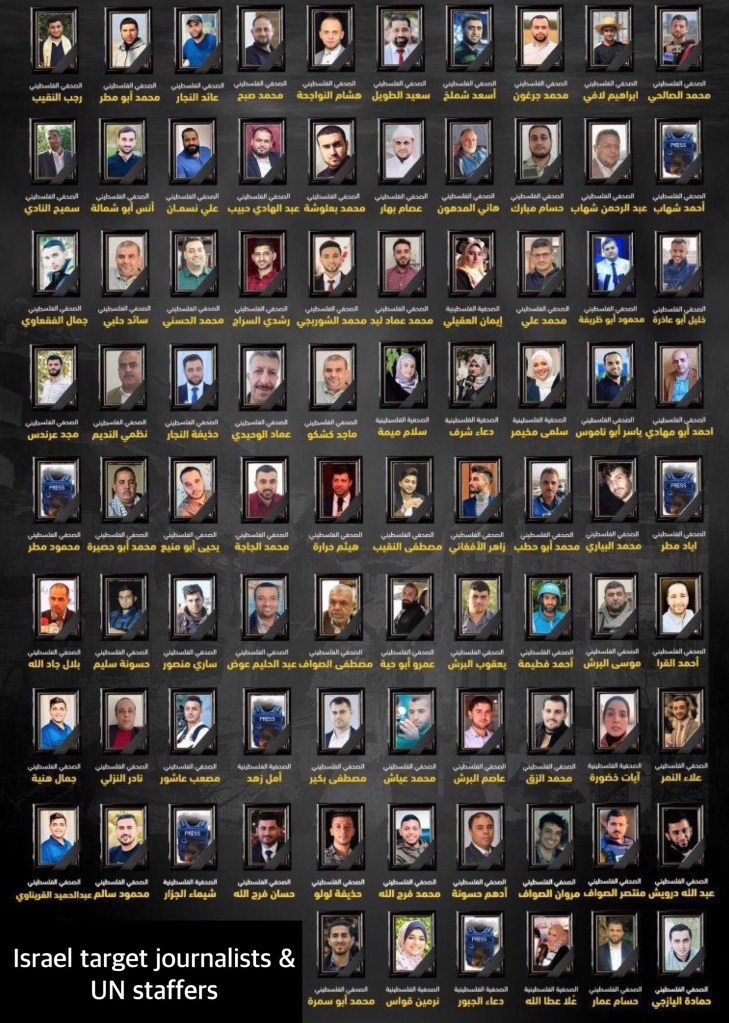
Video: San Francisco Dungeness Crab $6.99/lb special, eat before Japan released Nuclear Waste Contaminated water hit California coast in 2024 舊金山珍寶蟹特價 6.99 美元/磅, 在日本釋放核廢料污染水2024年到達加州海岸之前食用
https://rumble.com/v41ztgj-san-francisco-dungeness-crab-6.99lb.html
https://www.tiktok.com/t/ZT8HdEHhM/
Video: HK actress Jessica Hsuan test drive Huawei smart car at China Greater Bay Area, a car that could replace her personal driver in HK. 視頻: 新能源汽車一騎絕塵! 家底厚富家女香港明星宣萱推薦華為問界汽車可以取代她在香港的私人司機
https://rumble.com/v41xz24-hk-actress-jessica-hsuan-test-drive-huawei-smart-car.html
https://www.tiktok.com/t/ZT8uoCTC4/
Biden: repealing 1882 Chinese Exclusion Act, But China is still enemy of US, Chinese Americans are no exception. I have passed 10+ new Chinese exclusion bills during my term. If I am re-elected, I will give you more! 但中國還是美國敵人, 美國華人也不例外, 我在任已經通過了十多項新排華法案, 如果我連任, 我會給你們中國人更多驚喜.
 Business Blog