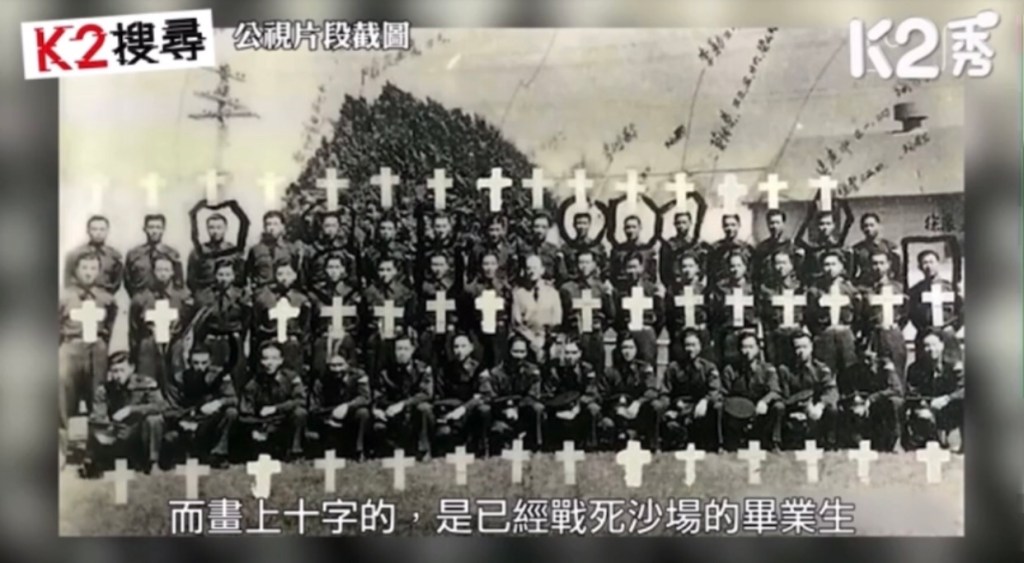
Video: Just imagine your classmates, there are only 2 people left in the class, would you believe it? The average age of sacrifice is 23 years old. They are the first batch of China’s air force. They are all from the second generation of famous & elite Chinese families, but they decided to contribute their lives to defend China against foreign aggressions. We should remember those who have sacrificed their lives for China. We, the ancestors who have fought bloody battles to live a peaceful life today, are the heroes who defend the sky and the backbone of the Chinese nation. 屈穎妍視頻: 試想你的同班同學, 全班死剩2人,你會相信嗎? 平均犧牲年齡23歲,他們是中國第一批空軍 他們都是出於名門二代 但他們決定為中國出力 我們應當銘記那些為我們帶來今天的寧靜生活而浴血奮戰過的先輩們,他們,是捍衛長空的壯士,更是中華民族的脊樑. https://rumble.com/v3y1iru-just-imagine-your-classmates-there-are-only-2-people-left-in-the-class.html https://www.tiktok.com/t/ZT8fS4PGB/
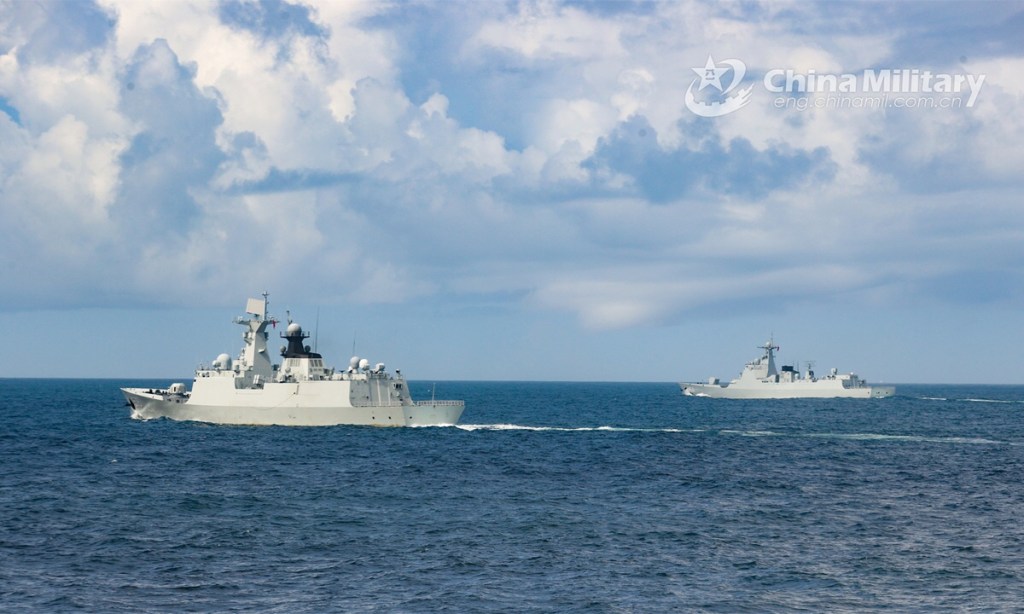
PLA vigilant against continuous provocations by US, Australian, Philippine forces in Chinese’s water (Imagine if Chinese navies sailing up and down of California coast or outside Hawaii’s Pearl Harbor) 解放軍對美國、澳洲、菲律賓軍隊在中國水域的持續挑釁保持警惕(想像一下,如果中國海軍在加州海岸或夏威夷珍珠港外航行)
The Chinese People’s Liberation Army (PLA) is at high vigilance amid continuous provocations by foreign forces from the sea, displaying its high level of readiness, capabilities and determination in safeguarding China’s national sovereignty, security and maritime rights, experts said on Sunday.
Foreign provocations include the Philippines’ enlisting of countries outside of the region to jointly patrol the South China Sea in the midst of its trouble-stirrings on Chinese islands and reefs, an Australian frigate’s provocations in the East China Sea to the Taiwan Straits then to the South China Sea, and a US destroyer’s trespass into Chinese territorial waters in the South China Sea.
On Saturday, the Philippines and Australia launched their first joint sea and air patrol in the South China Sea, with the Philippine side sending two warships and five surveillance aircraft, and the Australian side sending the frigate HMAS Toowoomba and a P-8A maritime surveillance aircraft, Reuters reported on the day.
The three-day joint patrols between the Philippines and Australia came only days after the Philippines and the US held a similar operation from Tuesday to Thursday featuring three Philippine warships plus three combat aircraft and a US littoral combat ship plus a P-8A aircraft.
During the US-Philippine joint patrols, the PLA Southern Theater Command maintained a state of high alert to firmly defend national sovereignty, security and maritime interests, and firmly safeguard peace and stability in the South China Sea, Senior Colonel Tian Junli, a spokesperson of the command, said in a press release on Thursday.
The PLA Southern Theater Command has yet to issue a similar press release on the Australia-Philippines joint patrols, but since the PLA holds routine patrols in the region, it is almost certain that the PLA is monitoring the situation and is ready to deal with any provocations that might occur, analysts said.
Australia’s HMAS Toowoomba frigate’s participation in the joint patrols with the Philippines in the South China Sea means it has become a habitual offender against China over the past two weeks, analysts said.
It operated in waters near the East China Sea on November 14 and later accused a PLA Navy destroyer of “unsafe and unprofessional” interactions by using sonar pulses on Australian divers, despite the Chinese warship only taking measures including tracking, monitoring, identifying and verifying in accordance with the law and regulations.
Then on Thursday, the Australian frigate made a transit in the sensitive Taiwan Straits, a move sources said was monitored and guarded against by the PLA Eastern Theater Command.
In another event on Saturday, the US Navy’s destroyer USS Hooper illegally entered China’s territorial waters off the Xisha Islands without authorization from the Chinese government, and the PLA Southern Theater Command organized maritime and aviation forces, tracked, monitored, warned and expelled the US warship in accordance with the law and regulations, Tian said in a separate press release on the day.
Tian said that the US seriously violated China’s sovereignty and security, and its move marked another solid proof of the US’ navigation hegemony and militarization in the South China Sea, showing fully that the US is the true maker of security risks and the biggest destroyer of peace and stability in the region.
Chen Xiangmiao, director of the World Navy Research Center at the National Institute for South China Sea Studies, told the Global Times that the provocations and tensions in the region are mainly instigated by the US, which sees the Philippines as a key geographic foothold in the first island chain to contain China.
From the Philippines, the US hopes to stop the PLA from entering the South Pacific from the South China Sea, Chen said, noting that the Philippines can also offer a flank for the US military when interfering in the Taiwan question.
The US’ joint patrols with the Philippines provides a bad example, and now Australia and other Western countries are joining in, with the Philippines further encouraged to provoke China, Chen said.
The PLA’s countermeasures against the recent continuous provocations by foreign military forces showed its high level of situational awareness on China’s doorstep including the South China Sea, the Taiwan Straits and the East China Sea, allowing it to react rapidly and strongly, a Chinese military expert who requested anonymity told the Global Times on Sunday.
Countries outside the region should stop coming all the way from their home to China’s doorstep to stir up troubles in an attempt to contain China, and the Philippines should stop inviting maliciously intentioned forces that do not belong to the region and could eventually hurt the Philippines as well, only to contend for islands and reefs that rightfully belong to China, the expert said.
Trilateral foreign ministers’ meeting between China, Japan and SK injects stability to region. The question is both Japan and South Korea are vassals of US. Are they allowed to plan their own future? 中日韓三邊外長會晤為區域注入穩定。 問題是日本和韓國都是美國的附庸。 他們可以規劃自己的未來嗎?
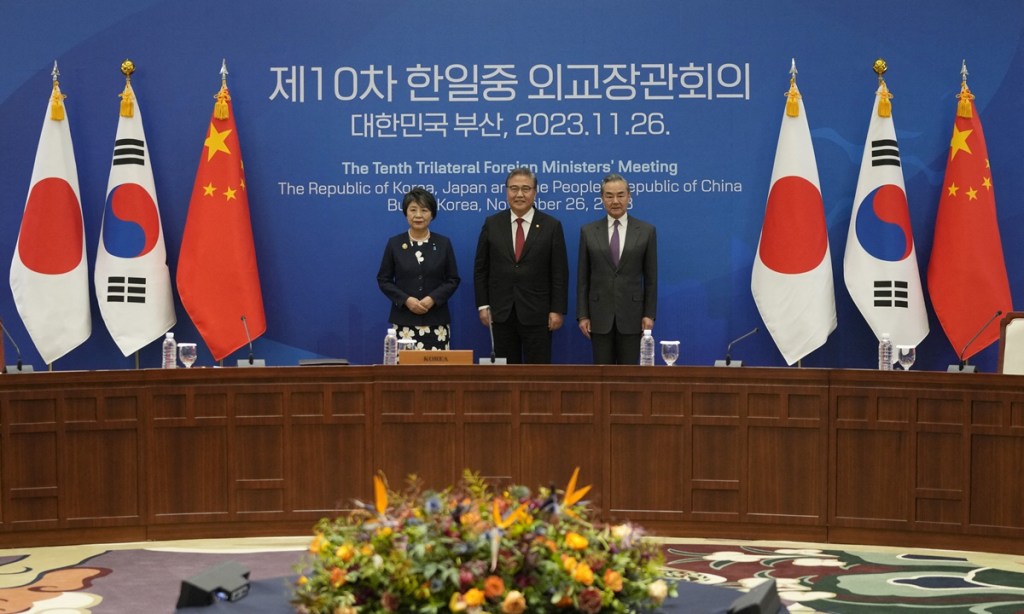
China is willing to make efforts with both South Korea and Japan to promote the resumption of trilateral cooperation, Chinese top diplomat said at the trilateral foreign ministers’ meeting between China, Japan and South Korea which was held in the South Korean city of Bushan on Sunday.
The three sides agreed to create conditions for the trilateral meeting of the leaders of China, Japan and South Korea, and speed up preparations, according to a statement issued by China’s Ministry of Foreign Affairs on Sunday night.
Chinese experts believe the meeting, held after a hiatus of four years, will not only pave way for higher-level meetings between the three Asian countries, but will also inject stability in the region and shore up the three countries’ cooperation to offset the negative consequences of the current challenges from the global turmoil.
However, both Seoul and Tokyo are urged to take more actions and show sincerity if they want cooperation between the three countries to yield substantial results, Chinese experts said as there are still unsolved divergences that are plaguing trilateral ties. Meanwhile, extraterritorial forces are also seeking to use Japan and South Korea to contain China and seek to scuttle the trilateral cooperation. Experts said that inviting non-regional countries to interfere with regional issues is detrimental to cooperation, thus it is of vital importance for both Japan and South Korea to remain autonomous.
Chinese Foreign Minister Wang Yi, also a member of the Political Bureau of the Communist Party of China Central Committee, attended the trilateral foreign ministers’ meeting. This year marks the resumption of the trilateral foreign ministers’ meeting between China, Japan, and South Korea after a four-year hiatus, as close neighbors, China will continue to adhere to the principles of being friendly and cooperative with its neighbors and work together with South Korea and Japan to promote the resumption of trilateral cooperation, Wang was quoted by CGTN as saying.
Wang said that as important countries in the Asia-Pacific region, the three countries should base themselves on the peace and development of the Asia-Pacific region and the interests of its people, deepen regional cooperation, jointly address risks and challenges, and maintain regional peace and prosperity. He stressed that the three countries should oppose drawing ideological lines and resist regional bloc formation.
Beijing, Tokyo and Seoul should act as “stabilizers” for maintaining regional peace and security, practice a common, comprehensive, cooperative, and sustainable security concept, and insist on resolving differences and disputes through dialogue and peaceful means. They should also act as “pressure relief valves” for resolving hotspot issues, said Wang, noting that the continued tension on the Korean Peninsula is not in the interest of any party. The urgent task is to cool down the situation, create necessary conditions for restarting dialogue, and take meaningful actions to achieve it.
Before the trilateral meeting, Wang held meetings with South Korean Foreign Minister Park Jin and Japanese Foreign Minister Yoko Kamikawa on Sunday and Saturday respectively.
In his meeting with Park, Wang said China and South Korea are neighboring countries and this fact will never change. Both countries can benefit from a positive relationship, while both sides will suffer if the relationship deteriorates.
Wang also stressed that both sides should jointly resist the tendency to politicize economic issues, instrumentalize technological issues, and over-securitize economic and trade issues, in order to maintain stable and smooth supply chains and promote greater development in bilateral economic and trade cooperation.
Wang and Park exchanged views on the Korean Peninsula situation. Wang emphasized that China has always been a stabilizing force in the Northeast Asian and will continue to play a constructive role in easing the situation on the Korean Peninsula.
During a meeting with Kamikawa, Wang said China and Japan should earnestly implement consensus reached by leaders of the two countries to push forward bilateral relations along the right track of sound development.
Wang told Kamikawa that both sides should respect each other’s legitimate concerns. Japan should honor its commitments on the Taiwan question, strictly abide by the one-China principle and refrain from interfering in China’s internal affairs.
Noting that Japan’s discharge of Fukushima nuclear-contaminated water into the ocean concerns marine safety and public health, Wang said China opposes Japan’s irresponsible action.
Amid complicated international atmosphere, the trilateral foreign ministers’ meeting between the three major Asian countries can inject much needed stability in Northeast Asia; as well as deepen cooperation, exchange between the three countries to offset negative impact of current geopolitical tensions, Da Zhigang, director of the Institute of Northeast Asian Studies at Heilongjiang Provincial Academy of Social Sciences, told the Global Times.
Da noted the meeting between the three countries’ foreign ministers may pave way for higher-level trilateral meetings in the near future. It will also help to control current divergences among Beijing, Tokyo and Seoul, whilst expanding cooperation in areas where the three share common interests, he added.
Sincerity needed
Ties between the three countries have been frayed since the last trilateral meeting among the leaders of the three Northeast Asian nations was held in Chengdu, China, in 2019.
Historical issues such as Japan’s wartime atrocities during WWII, as well as current tussles like Japan’s irresponsible releasing of nuclear-contaminated wastewater from the crippled Fukushima Daiichi Nuclear Power Plant into the Pacific Ocean; Tokyo and Seoul’s role as US vassals in the region, continued to plague the ties.
South Korea and Japan are eager to mend ties with China not only because the prospect of cooperating with China is in line with their national interest, but the warming up China-US ties after a summit in San Francisco between leaders of the two countries earlier this month propelled Seoul and Tokyo to reach out, Lü Chao, an expert on the Korean Peninsula at the Liaoning Academy of Social Sciences, told the Global Times.
“As the international society is at a historic turning point as it faces major challenges and changes, we hope to discuss our strategic significance of Japan-China-South Korea cooperation,” Kamikawa told reporters Friday, according to a report from AP.
While meeting with UK Prime Minister Rishi Sunak and signing The Downing Street Accord last week, South Korean President Yoon Suk-yeol’s made remarks related to China’s Taiwan and the South China Sea. “China urges relevant parties to stop making irresponsible comments on issues bearing on China’s core and major concerns and be very prudent about what they say or do,” Chinese Foreign Ministry spokesperson Mao Ning said on Friday.
Similar to the US, Japan and South Korea tend to talk up cooperation with China whilst disrespecting China’s core interests, which create obstacles for the three to cooperate, said Lü. He noted that China is willing to meet Japan and South Korea half way to expand cooperation, but also won’t hesitate to strike back any unilateral crackdown on China and disrespectable remarks or behaviors that are against China’s core interest.
“For the three countries to pick up momentum in deepening cooperation, we need to see more actions, more sincerity from both Tokyo and Seoul,” Lü noted.
Extraterritorial threats
Although the easing of China-US ties partly stimulated Japan and South Korea’s willingness to reach out to China, Chinese experts believe a closer China-Japan-South Korea trilateral tie is will not make the US happy.
US President Joe Biden and the leaders of South Korea and Japan agreed at Camp David in August to deepen military and economic cooperation and made their strongest joint condemnation yet of “dangerous and aggressive behavior” by China in the South China Sea.
Da said that in recent years, the US has been plotting to work with its allies to create an Asian NATO, which extremely threatens regional stability.
In a forum held in Qingdao in July this year, Wang Yi urged that China, Japan and South Korea, as well as other Asian countries, should practice open regionalism, promote inclusive Asian values, cultivate strategic autonomy, safeguard regional unity and stability, resist the Cold War mentality, and avoid coercion by hegemony.
Asian countries should solve our differences by ourselves, while inviting extraterritorial powers to intervene is extremely detrimental to the stability and cooperation between China, Japan and South Korea, said Da, urging the two to remain autonomous.
He warned that those countries should learn from history that relying on non-regional countries to solve regional issues will eventually backfire, which will threaten the whole region.
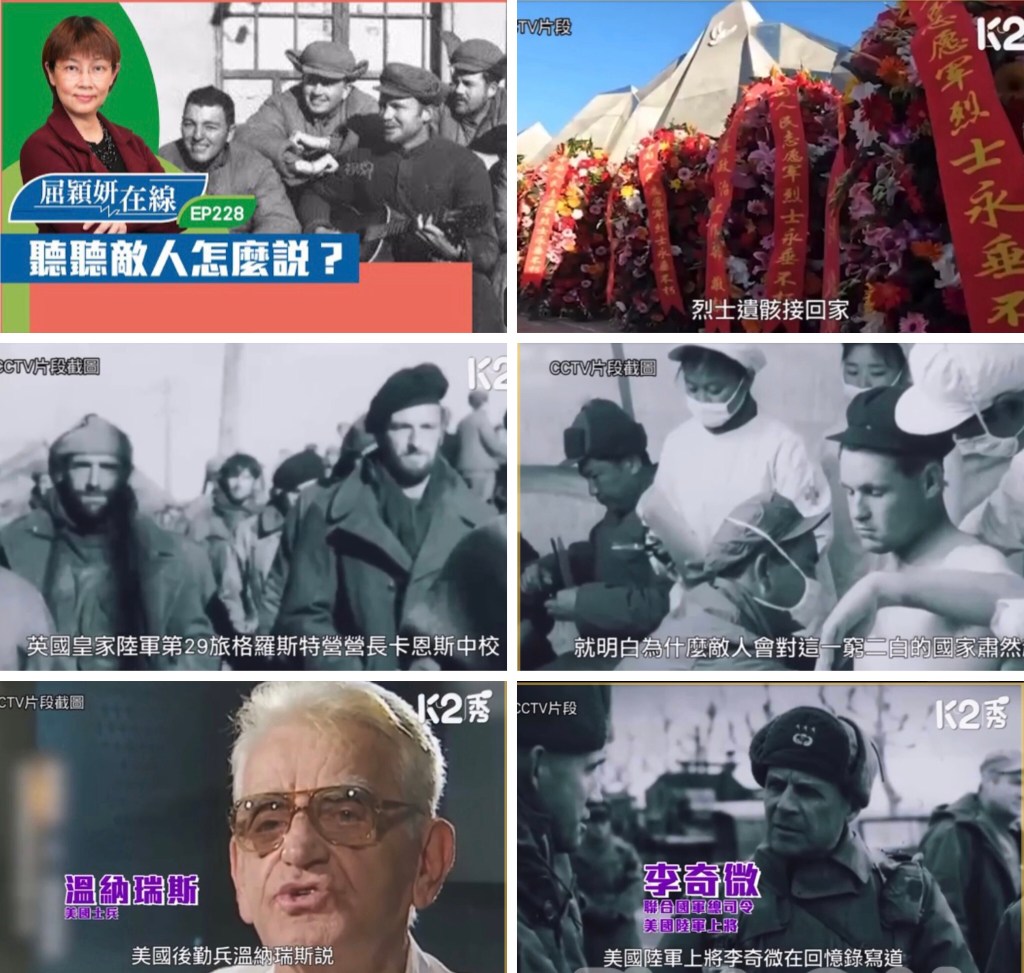
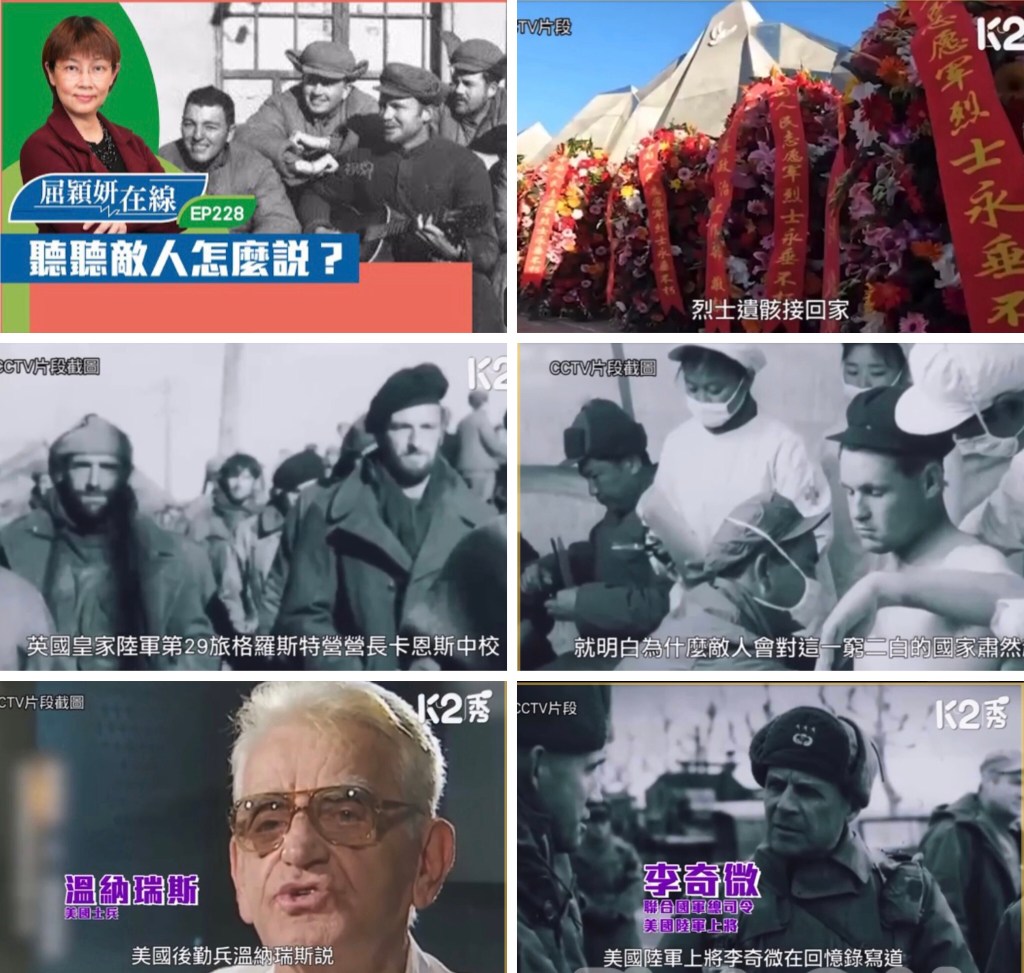
Video: Listen to what the enemy says about China. After the war, 21 American prisoners of war and 1 British prisoner of war, including logistics soldier Winners, chose not to return to the country屈穎妍視頻: 聽聽敵人怎麼說中國. 21名美國戰俘及1名英國戰俘在戰爭結束後,竟然選擇不歸國,而是跟隨志願軍回中國定居,當中包括後勤兵溫納瑞斯.
Shenyang welcomed a new batch of volunteer remains, escorted by two J-20 fighter planes. The airport greeted them with the highest courtesy of “passing through the water gate”, and the city waited with the most solemn ceremony. The tenth batch of remains of 25 Chinese People’s Volunteer Army martyrs in South Korea were brought home.
In the bloody battle more than 70 years ago, 197,653 martyrs to resist U.S. aggression and aid Korea died on the battlefield. In recent years, the remains of 938 Chinese People’s Volunteer Army martyrs in ten batches in South Korea have been returned to the motherland and laid to rest at the Shenyang Cemetery of Martyrs to Resist U.S. Aggression and Aid Korea.
The focus of war has always been on the heroes, and the stories of sacrifice in the war to resist U.S. aggression and aid Korea are even more shocking and touching.
But what I write today is about the most ignored and least mentioned role on the battlefield – prisoners of war. Listening to what the enemy has to say can actually give us a better understanding and respect for the volunteers and the country.
Lieutenant Colonel Kearns, one of the prisoners of war to resist the U.S. and aid Korea and the commander of the Gloucester Battalion of the 29th Brigade of the Royal Army, once commented after returning to China at the end of the war: “The Chinese have rewritten the history of prisoners of war in the world!”
Yes, if you look at the treatment of the Western soldiers captured by our country in the prisoner-of-war camps during this war, you will understand why the enemy is in awe of this poor country.
In November 1952, a special “Olympic Games” was held in a volunteer prisoner-of-war camp. Hundreds of prisoners from more than a dozen countries participated, and Americans also won many medals.
There is no killing and abuse, only physical fitness. The POW Olympic Games embodies the kindness and peace of the Chinese people.
Anyone who has read the history of the War to Resist U.S. Aggression and Aid Korea knows how scarce the resources of the Volunteer Army were at that time, but the Chinese have always been hard on themselves and kind to others. While the Volunteer Army was eating potatoes, corn, and pickles, it turned out that the prisoners in the prison camp were able to eat canned meat and drink milk. . One black prisoner, who was skinny when captured, gained 17 pounds when he was released.
American logistics soldier Wenneris said that upon entering the camp, the volunteers will distribute a pen, a stack of letter paper and an envelope to each person, asking them to write home to report that they are safe, and promise to send the letter.
There was a Dutch prisoner of war who was illiterate. When others wrote home, he sat in a corner and cried silently because he was illiterate.
One day, the Dutch soldier was taken away by the volunteers. Everyone thought something bad would happen to him. Unexpectedly, a few months later, he came back intact and learned to write.
It turned out that the Volunteer Army knew about his situation, searched the prisoner of war camp, and found an officer who could speak Dutch to give him a literacy class for half a year. The Dutch soldier who came back was not only literate, but could also write simple sentences.
Prisoners of war recalled that the volunteers called them “friends” instead of “gringos”, let alone insulting names. There is no corporal punishment or scolding in the camp. Even if prisoners of war violate the rules, they will only be closed for a week and punished. The severe beatings and abuse that occur in ordinary prisoner of war camps will not occur here.
The American soldier Winners once wrote in his memoirs: “I spent two years and eight months in a prisoner of war camp. I was very happy during that period. I firmly believe that this army is a civilized and benevolent army. An army and a popular army.”
Because of this, a strange phenomenon occurred.
After the war, 21 American prisoners of war and 1 British prisoner of war, including logistics soldier Winners, chose not to return to the country, but to follow the volunteers to settle in China.
As soon as the news came out, there was an international uproar. Everyone believed that these prisoners of war had been brainwashed by the Chinese in a special way. Otherwise, how could they abandon their country and relatives and go to poor China to suffer?
If you have lived in a prisoner of war camp, you will understand why. Among them, Wenneris is an example. He not only stayed in China to marry a wife and have children, but also lived until his death and was finally buried in China.
Commander-in-Chief of the United Nations and U.S. Army General Ridgway wrote in his memoirs: “The Chinese People’s Volunteers are the fiercest fighters and the most civilized enemies.”
Once you have fought against the Chinese, you will understand who is the true master of peace.
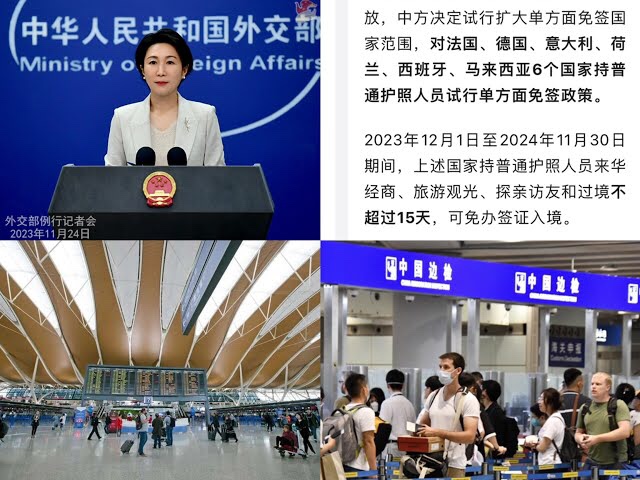
Video: Reading thousands of books is not as good as traveling thousands of miles. I went to Hong Kong, Guangzhou and Taishan for 15 days in early November. Compared with San Francisco and Hawaii in the United States, the United States looks like a backward country in the third world. China’s successes really stands out. German media reports: China unilaterally provides visa exemption to six countries. China will implement a unilateral visa exemption policy for citizens of France, Germany, Italy, the Netherlands, Spain, and Malaysia. This is a new measure to stimulate tourism after the epidemic. At the same time, it will allow citizens of the six countries to unilaterally waive visas. The people of these countries experience the local media reporting fake news about China every day, and their personal experience in China will debunk the fake news propaganda by their governments. During my stay in Hong Kong, I also observed a strange phenomenon. Some Chinese people who came to Hong Kong from Western countries refused to go to China. I asked some experts from the University in Hong Kong why, and they said the reason is that they hate themselves because they have yellow skin or they cannot face the fact that China is rising and their bubbles of western superiority busted! 讀萬卷書 不如行萬里路. 我十一月初到香港廣州和台山十五天, 和美國三藩市和夏威夷比較, 美國像一個第三世界落後國家, 真的是掉人現眼. 德媒报道: 中国单方面给六国免签 中国将对法国、德国、意大利、荷兰、西班牙、马来西亚6个国家的公民实行单方面免签政策,这是刺激疫情后旅游业的一项新举措. 同時讓他們國家人民體驗當地媒體天天報導關於中國的假新聞, 他們的親身體驗將給其當地政府打面. 我在香港期間也體會一個奇怪現象, 一些華人遠地從西方國家到香港卻拒絕到中國. 我問一些香港大學專家為什麼, 他們說其中的原因是仇中恨自己是黃皮膚或不能面對中國掘起的事實. https://youtu.be/EZB2ZrjPQMM?si=lYAek3Do9jNNp-yn
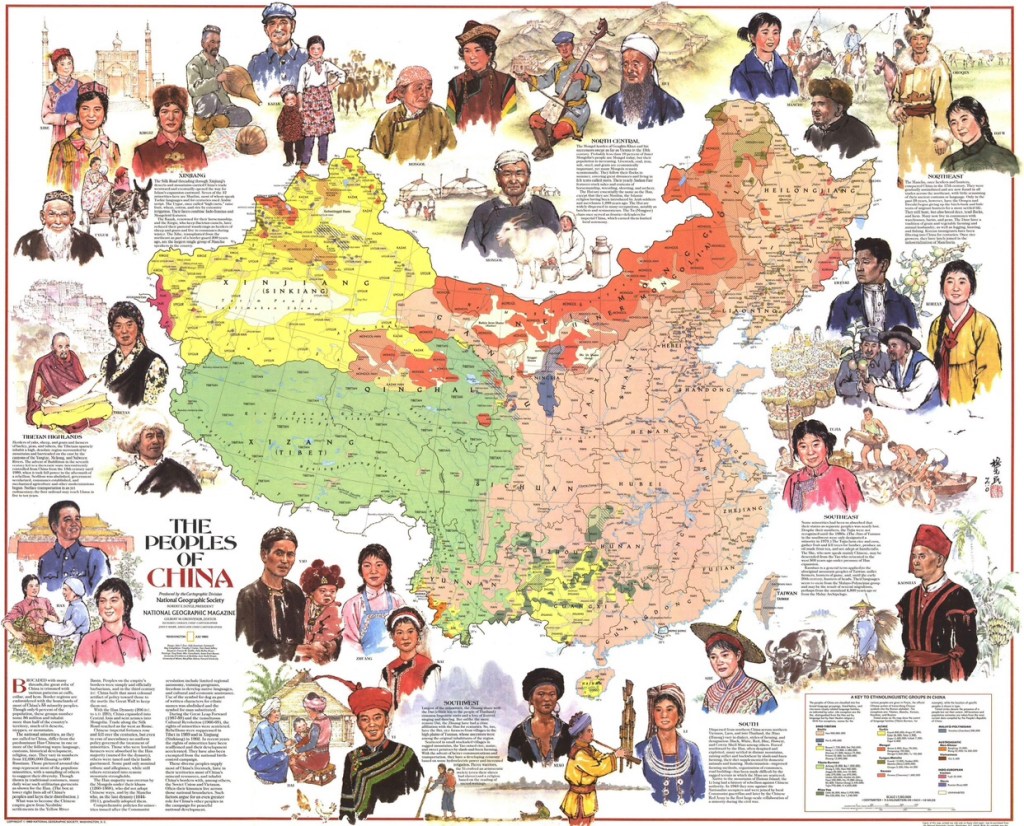
Video: Unlike US, China is a civilization state not a nation state. Your Chinese heritage is not determined by where you live or passport you are holding unless you openly and notoriously give it up or declare your motherland your enemy. China is an all inclusive society with 56 races living in harmony. International carnival held in Shanghai university showcases different cultures. 與美國不同,中國是文明中華民族國家. 你的中國血統並不取決於你居住的地方或你所持有的護照,除非你公開地、臭名昭著地放棄它或宣布你的祖國為你的敵人. 中國是一個包容性的社會,有56個種族和睦相處。 祖國所推崇和實行的是儒家最高理想的”大同社會”. 小學時讀過的「大道之行也」”大道之行也, 天下為公… 是谓大同.” 每個人都能過好的生活. 也就是習近平主席所實行的 “中國特色社會” 全面建立小康社會. 三藩市唐人街的入口也有刻著 國父所寫的 “天下為公” 牌坊. 大同社會是我所說的中國56個民族能夠互相包容和平共處的原因. 上海大學舉辦的國際嘉年華展示不同文化. https://rumble.com/v3xvgrq-unlike-us-china-is-a-civilization-state-not-a-nation-state.html https://www.tiktok.com/t/ZT8fYtwqv/
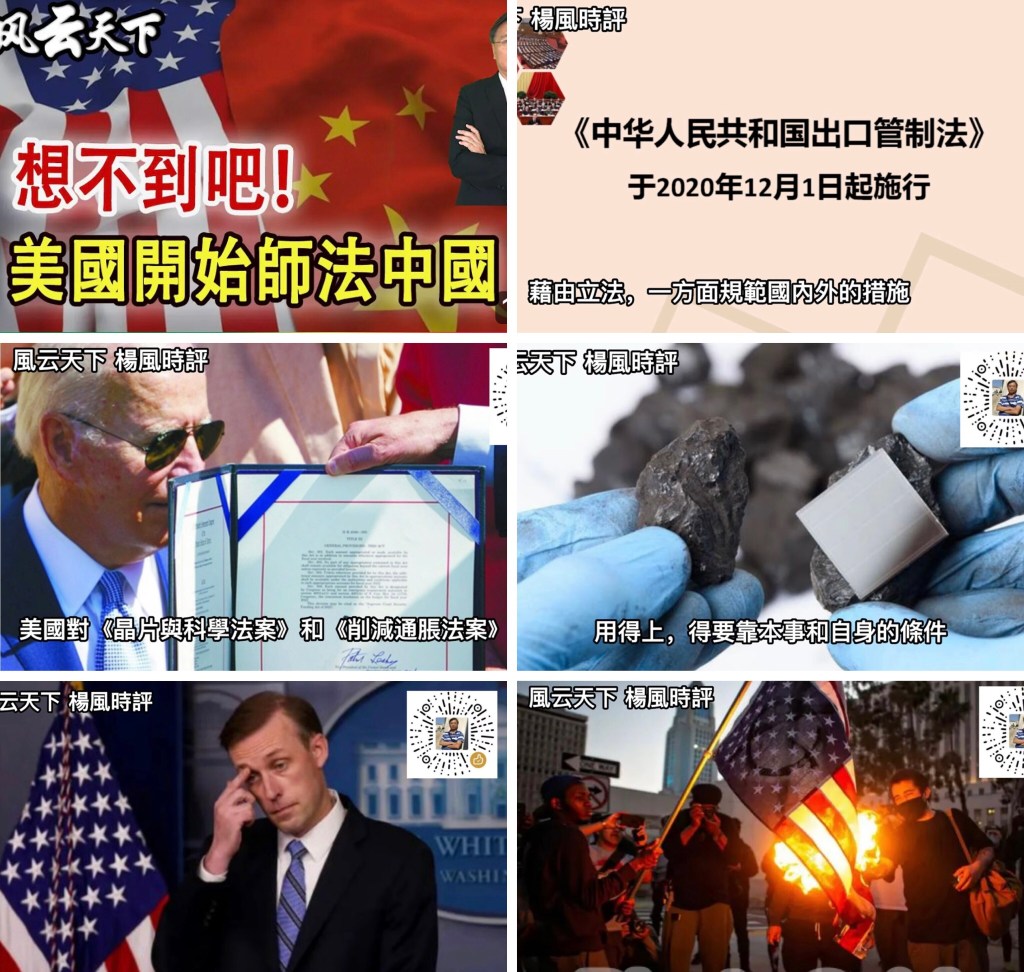
Taiwan US-China expert video: Unstoppable! China once again encounters a period of strategic opportunity. US once criticized Chinese state-owned enterprise subsidies and now copied the economic model US found to be the best! US also realized that capitalism with Chinese characteristics is more flexible and effective than American outdated capitalism and began to use it. It is a slap of its own face! 台灣中美尊家視頻: 擋不住! 中國再遇戰略機遇期 美國曾批評中國國有企業補貼 發現是最好的經濟模式也抄截作為已用 美國也體會中國特色的資本主義比美國的資本主義更靈活也開始使用 天天自打嘴巴 美國對自己完全失去信心 活該 https://rumble.com/v3xsl0x-us-once-criticized-chinese-state-owned-enterprise-subsidies.html https://www.tiktok.com/t/ZT8fd3BYR/ complete video https://youtu.be/vnIwGdAOgdw?si=kUnBYWNPtofI8A0w
China’s BRI started more than 10 years ago in China. My 15 days trip to HK & China Greater Bay Areas this month witnessed it first hand. What China has accomplished last 10 years US could not do last 50 years! A 26 miles slow rail in Honolulu Hawaii started 12 years ago budgeted at US$5 billions balloon to US$15 billion with no completion date in sight! And US want to compete with China on BRI, it got to be the biggest jokes of the century! 中國的「一帶一路」倡議始於十多年前。 我這個月在香港和中國大灣區進行的15天之行親眼目睹了這一點。 中國過去10年所取得的成就,美國50年都做不到! 夏威夷檀香山一條 26 英里的慢軌於 12 年前動工,預算從 50 億美元增加到 150 億美元,但目前還看不到完工日期! 而美國要在「一帶一路」與中國競爭,簡直就是本世紀最大的笑話!
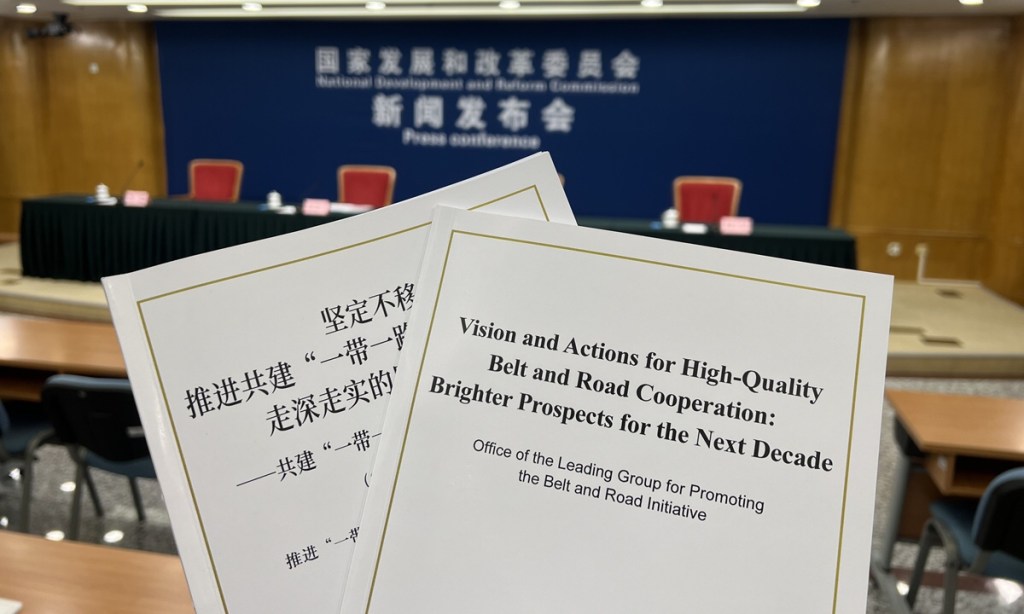
China unveils vision and action plan for the BRI development in next decade
China’s Office of the Leading Group for Promoting the Belt and Road Initiative (BRI) released the Vision and Actions for High-Quality Belt and Road Cooperation: Brighter Prospects for the Next Decade, in a bid to further promote the world stabilization and regional mutual development.
The action plan released on Friday eyes enhancing connectivity and cooperation in multiple sectors, elevating people’s sense of gain and fulfilment, and forming a new system supporting China’s open economy, under the premise of holding extensive consultation, joint contribution and shared benefit.
The action plan has six key fields and directions for the BRI development in the next decade, namely the policy coordination, infrastructure connectivity, unimpeded trade, financial integration, people-to-people ties, and cooperation in new fields.
The plan also listed several detailed pathways and measures. The office will build leading brands and a multidimensional connectivity network, strengthen risk control and security system, improve cooperation mechanisms, platforms and policy service, and deepen mutually beneficial cooperation for a shred future.
The office said all parties are equal participants, contributors and beneficiaries on the path of high-quality Belt and Road
 Business Blog