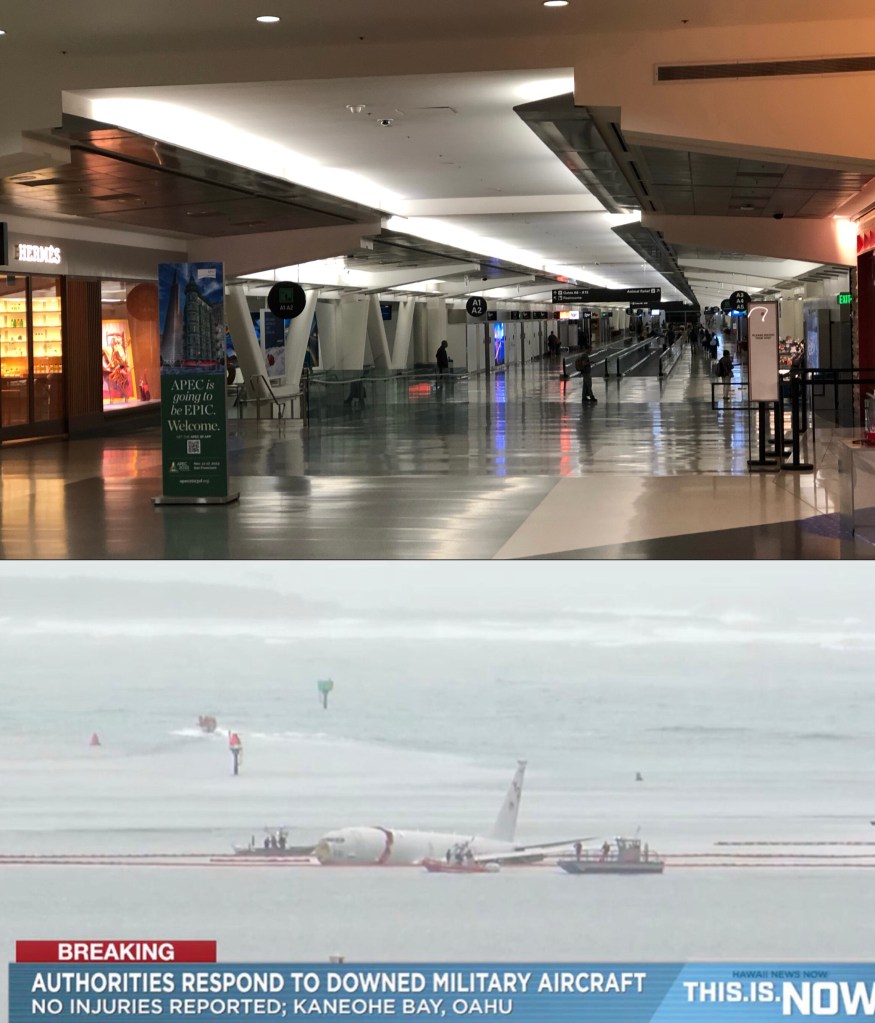
Empty SF International Airport at 5:30 in the morning, heading back to my office in Hawaii to work (no time for beach or hula girls), just saw a US Peeping Tom aka spy plane landed in the ocean yesterday, the pilot probably smoking the Hawaii Gold (Marijuana) while piloting the plane. 早上5:30 空蕩蕩的舊金山國際機場,回到我在夏威夷的辦公室工作(沒有時間去海灘或約會草裙舞女孩), 昨天剛看到一架美國偷窺狂又名間諜飛機降落在海裡,飛行員可能在駕駛飛機時抽夏威夷金(大麻)
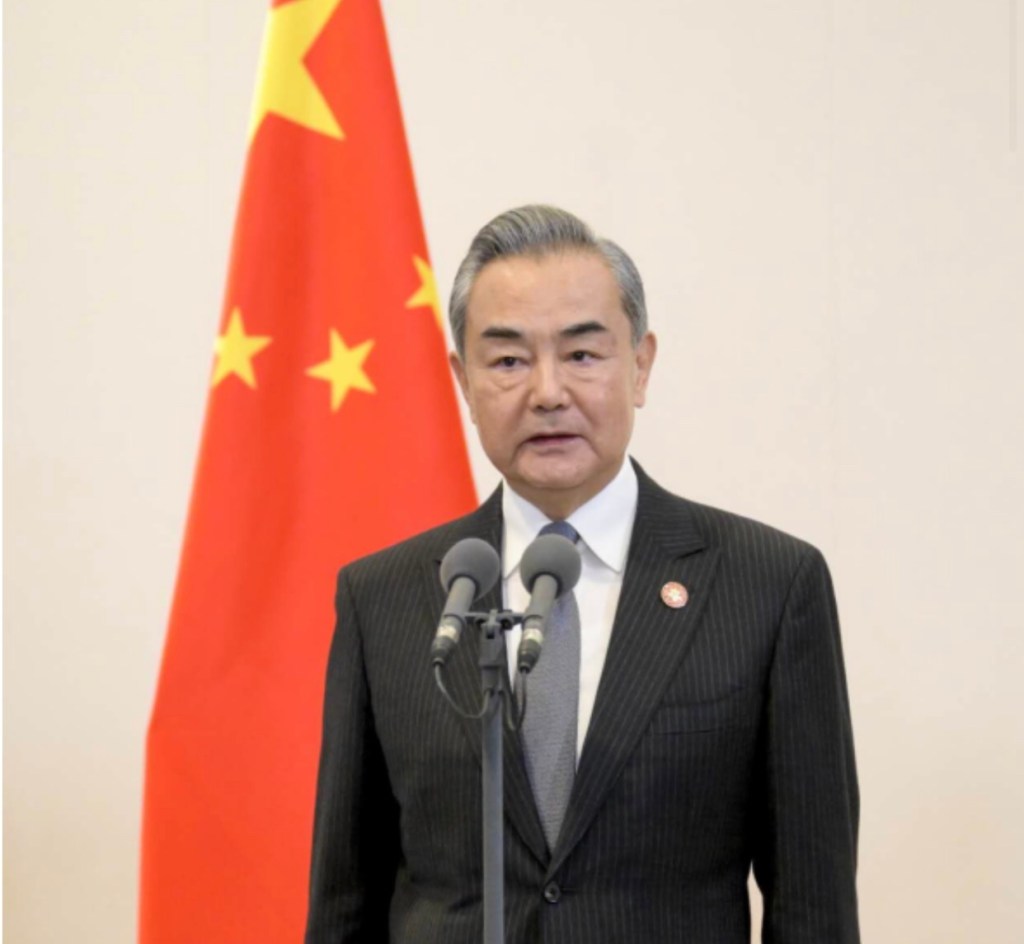
In speaking to the press about the Xi Biden summit, Wang Yi said that Xi asked Biden to stop arming Taiwan and to support China’s peaceful reunification. See point 4. 王毅在接受記者採訪時談到習拜登會晤時表示,習近平要求拜登停止武裝台灣,並支持中國和平統一. 參見第 4 點.
On November 15 local time, President Xi Jinping and U.S. President Joe Biden held a summit meeting at the Filoli Estate, San Francisco. After the meeting concluded, Member of the Political Bureau of the CPC Central Committee and Minister of Foreign Affairs Wang Yi gave a readout and answered questions from the press.
Today, President Xi Jinping and President Joe Biden held a meeting which was closely followed in the two countries and around the world. How was the discussion between the two leaders? What is most notable about this meeting?
Wang Yi: At the invitation of President Joe Biden, President Xi Jinping traveled to San Francisco for a China-U.S. summit meeting and the APEC Economic Leaders’ Meeting. Just now, the two presidents had a very good, comprehensive and in-depth meeting at the Filoli Estate. This meeting can be characterized as follows:
First, it is a strategic meeting. President Biden invited President Xi Jinping for a standalone meeting, making it different from the bilateral meetings on the sidelines of APEC. The U.S. side pointed out in particular that this is a summit meeting between China and the United States. Given the unique arrangements of the meeting, the attention from the international community as well as China and the United States, and the importance of the meeting itself, this is indeed a summit meeting of strategic significance and far-reaching impact.
Second, it is a historic meeting. It is held at a time when the China-U.S. relationship is at a critical stage. The international community needs a stable China-U.S. relationship now more than ever. This is another visit to the United States by President Xi Jinping after a hiatus of six years and another face-to-face meeting between them one year after their last one. The meeting builds on the tradition of China-U.S. summitry and has value for our times. It continues the many years of friendly interactions between President Xi Jinping and President Biden. It will stand as a milestone in the history of China-U.S. relations and a major event in international relations.
Third, it is a meeting that provides stewardship. The meeting lasted four hours and used simultaneous interpretation. The two presidents had an in-depth exchange of views face to face. They offered views guiding the most pronounced issues confronting China-U.S. relations, including adopting a correct perception of each other, properly managing differences, and advancing dialogue and cooperation. They had all-round discussions on addressing the Palestinian-Israeli conflict, the Ukraine crisis, climate change, artificial intelligence and other global challenges. They further discussed the right way for the two major countries to get along with each other and further identified the joint responsibilities of China and the United States as major countries. Together, they embraced a future-oriented San Francisco vision, and pointed the way and drew a blueprint for the sound, steady and sustained growth of China-U.S. relations.
2.At the summit meeting, what did President Xi Jinping focus on in elaborating on China’s views and position?
Wang Yi: In an atmosphere of mutual respect, the two heads of state had an exchange of views on strategic and overarching issues critical to the direction of China-U.S. relations and on major issues affecting world peace and development. President Xi Jinping gave a comprehensive and authoritative presentation on China’s position on stabilizing and improving China-U.S. relations. The most important points are as follows:
First, making the right choice for history. Are China and the United States partners or rivals? Should they engage in mutually beneficial cooperation or antagonism and confrontation? This is a fundamental question on which disastrous mistakes must be avoided. President Xi Jinping pointed out that history is the best textbook and reality is the best antidote. We hope the two countries could be partners that proactively advance a cooperative agenda in areas where their interests converge and engage in positive interactions in international and multilateral fora. This will open up a bright future for China-U.S. relations.
Second, finding the right way to get along. President Xi Jinping pointed out that despite their different histories, cultures and social systems, it is not an option for China and the United States to turn their back on each other; it is unrealistic for one side to remodel the other; and conflict and confrontation has unbearable consequences for both sides. The right approach is to respect each other, coexist in peace and pursue win-win cooperation. These three principles are important lessons learned from 50 years of China-U.S. relations as well as the history of major-country conflict and confrontation. China and the United States should put in a lot of efforts to follow the three principles.
Third, fostering a San Francisco vision for the relations. President Xi Jinping, speaking from his vantage point, pointed out that the two countries should jointly develop a right perception, jointly manage disagreements effectively, jointly advance mutually beneficial cooperation, jointly shoulder responsibilities as major countries, and jointly promote people-to-people exchanges. Through joint efforts in these five areas, five pillars can be put in place for China-U.S. relations to grow steadily and a new vision is fostered for China-U.S. relations going into the future.
What are the common understandings and deliverables coming out of the meeting?
Wang Yi: The summit meeting produced deliverables in a number of areas. In the spirit of mutual respect, equality and mutual benefit, the two sides discussed dialogue and cooperation in various fields, and reached more than 20 deliverables in such areas as political affairs and foreign policy, people-to-people exchange, global governance, and military and security. Some of these have already been delivered in the lead-up to the summit meeting and others were agreed upon through consultation during the summit. The main items are as follows:
On principles guiding the China-U.S. relations, the two presidents endorsed the efforts of their respective diplomatic teams to discuss principles related to China-U.S. relations since the Bali meeting and the common understandings arising from those discussions. They stressed the importance of all countries treating each other with respect and finding a way to live alongside each other peacefully, and of maintaining open lines of communication, preventing conflict, upholding the U.N. Charter, cooperating in areas of shared interest, and responsibly managing competitive aspects of the relationship. These seven points of common understanding are very important in that they provide a solid foundation for deeper discussions going forward. The leaders welcomed continued discussions in this regard.
On dialogue and cooperation, the two sides decided to step up high-level interactions, advance or launch regular consultations in such areas as commerce, economy, finance, export control, the Asia-Pacific, maritime, arms control and nonproliferation, foreign policy planning, China-U.S. joint working group, and disability issues. The two sides agreed to start consultations on extending the China-U.S. Science and Technology Cooperation Agreement, and on resuming the China-U.S. Joint Committee on Cooperation in Agriculture.
On people-to-people exchange, the two sides reiterated the importance of ties between the people of China and the United States, and committed to work toward a significant further increase in scheduled passenger flights early next year. They agreed on education cooperation and encouraged the expansion of student, cultural, youth and business exchanges.
On global governance, the two heads of state underscored the importance of working together to accelerate efforts to tackle the climate crisis, and welcomed recent positive discussions between their respective special envoys for climate, including on national actions to reduce emissions in the 2020s, common approaches toward a successful COP28, and operationalization of the Working Group on Enhancing Climate Action in the 2020s. The two sides released the Sunnylands Statement on Enhancing Cooperation to Address the Climate Crisis. They also agreed to establish government talks on artificial intelligence.
On military, security and law enforcement, the two sides agreed to resume on the basis of equality and respect high-level military-to-military communication, the China-U.S. Defense Policy Coordination Talks, and the China-U.S. Military Maritime Consultative Agreement meetings, and to conduct telephone conversations between theater commanders. They announced the establishment of a working group on counternarcotics cooperation.
The two heads of state agreed that their teams will follow up on their discussions in San Francisco with continued senior-level diplomacy and interactions, including visits in both directions.
These important deliverables are further proof of the broad common interests of China and the United States and the mutually beneficial nature of China-U.S. relations. They demonstrate that dialogue and cooperation is the only right choice for the two countries.
Did the presidents discuss disagreements and sensitive issues? What is China’s position and attitude on them?
Wang Yi: Of course they discussed some points of disagreement and sensitive issues. President Xi Jinping emphasized that China is committed to having a stable, healthy and sustainable relationship with the United States. At the same time, China has legitimate interests that must be safeguarded, principles and positions that must be upheld, and red lines that must not be crossed. If the U.S. side is bent on encircling and containing China under the pretext of competition, China will firmly uphold its sovereignty, security and development interests.
The Taiwan question remains the most important and most sensitive issue in China-U.S. relations. President Xi Jinping elaborated on China’s principled position on the issue. China urges the U.S. to honor the one-China principle, oppose “Taiwan independence,” stop arming Taiwan, stop interfering in China’s internal affairs, and support China’s peaceful reunification.
President Xi Jinping also made clear China’s position on issues related to economy, trade, and technology. He pointed out that attempts to curb or suppress China on economy, trade and technology are creating risks instead of “de-risking.” These misguided actions, and the ensuing uncertainty for China-U.S. relations, have become the biggest risk. Stifling China’s technological progress is nothing but a move to curb China’s high-quality development and deprive the Chinese people of their right to development. China will not accept that and such a move will not succeed. China’s development and growing strength, powered by strong internal drivers and its own inherent logic, will not be stopped by external forces. It is important that the U.S. side take China’s concerns seriously, lift unilateral sanctions, and provide an equal, fair, and nondiscriminatory environment for Chinese businesses.
How will the San Francisco meeting impact the current and future China-U.S. relations?
Wang Yi: The San Francisco meeting is significant for enhancing trust, removing suspicion, managing differences and expanding cooperation between China and the United States. It is also significant for injecting certainty and stability into a world of turbulence and transformation. Under the stewardship of the two presidents, the giant ship of China-U.S. relations has navigated hidden rocks and dangerous shoals. The journey from Bali to San Francisco has not been an easy one. However, San Francisco should not be the finish line; it should be a new starting point. We always believe that China and the United States eventually should and can find the right way to get along. This is a historical inevitability, the trend of our times and the expectation of the people. Next year will mark the 45th anniversary of diplomatic relations between China and the United States. From San Francisco onward, the two sides should foster a new vision, further consolidate the foundation of their relations, build pillars for peaceful coexistence, and move their relationship in the direction of healthy, stable and sustainable development.
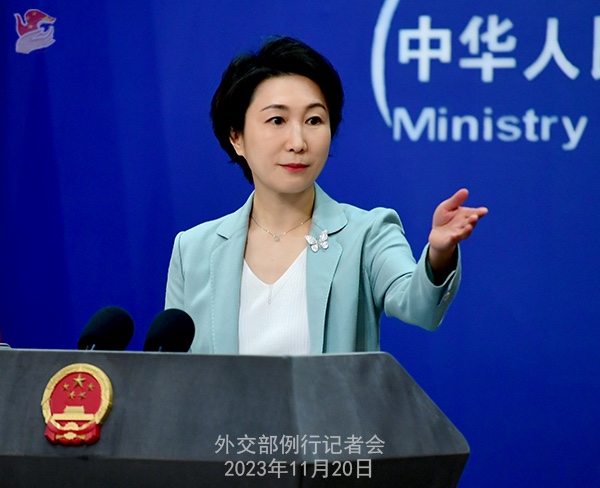
Foreign Ministry Spokesperson Mao Ning’s Regular Press Conference on November 20, 2023
China News Service: China has announced the upcoming state visit by Uruguayan President Lacalle to China. Could you offer more information about the program and share China’s expectation for the visit?
Mao Ning: At the invitation of President Xi Jinping, Uruguayan President Luis Alberto Lacalle Pou will pay a state visit to China from November 20 to 24. It will be President Lacalle’s first visit to China. During the visit, President Xi Jinping will host a welcome ceremony and a welcome banquet for President Lacalle. The two heads of state will hold talks to jointly blueprint the future growth of bilateral relations and have in-depth exchange of views on issues of mutual interest. They will also jointly attend a signing ceremony of cooperation documents. Premier Li Qiang and Chairman Zhao Leji will meet with President Lacalle.
Uruguay is an important country in South America. Our two countries enjoy a profound traditional friendship. This year marks the 35th anniversary of the establishment of diplomatic ties between China and Uruguay. Over the past 35 years, especially since the establishment of strategic partnership in 2016, bilateral relations have made good progress and delivered tangible benefits to both peoples. We believe this visit will further consolidate our traditional friendship, deepen political mutual trust, elevate practical cooperation to a higher level and bring our relations to new heights.
Yonhap News Agency: I have two questions. First, leaders of the ROK and China did not hold any meeting in San Francisco. Can the Foreign Ministry tell us the reason? Second, Japanese Foreign Minister will visit the ROK and attend the China-Japan-ROK trilateral foreign ministers’ meeting from November 25 to 26. Will Foreign Minister Wang Yi attend the meeting?
Mao Ning: On your first question, President Xi Jinping and President Yoon Suk Yeol interacted briefly during the APEC meeting. To have bilateral interactions at the leaders’ level on international and multilateral occasions is a usual practice, but they are conducted in various forms.
On your second question, China is positive towards a China-Japan-ROK foreign ministers’ meeting. We will release relevant information soon.
CCTV: It is reported that another Israeli attack on northern Gaza’s Jabalia refugee camp on November 18 killed over 100 people. The Israeli forces also struck a United Nations-run school at a refugee camp in northern Gaza and killed more than 50 people. What’s China’s comment?
Mao Ning: We are deeply shocked and saddened by the attacks against the Jabalia refugee camp and the United Nations-run school. We condemn violence and attacks targeting civilians and children.
Today is the World Children’s Day. It is also a day marking the adoption by the UN General Assembly of the Declaration of the Rights of the Child and the Convention on the Rights of the Child. On such a day, we are deeply concerned that the children in Gaza have frequently been targets of attacks. As of the 15th of this month, more than 4,600 children in Gaza have been killed and close to 9,000 injured in this round of Palestinian-Israeli conflict, and many more are still trapped in ruins unaccounted for. We urge parties to the conflict to earnestly implement the resolution adopted by the UN General Assembly at its emergency special session and UN Security Council Resolution 2712, observe international humanitarian law, reach an immediate ceasefire, and effectively protect the lives of children and their rights and interests.
AFP: Argentina presidential candidate Javier Milei of La Libertad Avanza has been elected as the President of Argentina. How do you respond to his victory?
Mao Ning: China congratulates Argentina on a smooth presidential election and congratulates Mr. Javier Milei on his election as the President of Argentina.
Over the past 50 years and more since China and Argentina established diplomatic relations, our two countries have treated each other with mutual respect and equality and pursued mutual benefit. Bilateral relations have shown sound momentum of growth. To further grow China-Argentina relations is a widely shared consensus among people across the social spectrum of both countries and has brought tangible benefits to both peoples. China values its relations with Argentina from a strategic and long-term point of view and stands ready to work with Argentina to continue nurturing our friendship, contribute to each other’s development and prosperity through win-win cooperation, and keep our relations on a steady and sustained track of growth for the benefit of the two peoples.
RIA Novosti: Another question on Argentina. Diana Mondino, who was nominated as foreign minister candidate after Argentina’s presidential election, told RIA Novosti that Argentina would not join BRICS. What is China’s comment?
Mao Ning: I am not aware of what you mentioned. BRICS is an important platform for stronger solidarity and cooperation among emerging markets and developing countries to uphold common interest. It is an open platform. We welcome all countries that are interested to become a member of the BRICS family.
Dragon TV: According to reports, the 17th Pacific Games officially opened in Honiara, capital of Solomon Islands on November 19. Will China send delegations to the opening ceremony? Could you share more information on this?
Mao Ning: The 17th Pacific Games is the biggest sports event in the Pacific region. At the invitation of the government of Solomon Islands, Vice Chairman of the Standing Committee of the National People’s Congress Cai Dafeng will lead a delegation to attend the opening ceremony of the Games.
China has provided full support to making the Games a success. We helped build the sports venues and Games villages and we are providing security, meteorological and other services. We wish the Games a full success and we are convinced that the traditional friendship between people of China and of Pacific Island countries will stand the test of time and grow from strength to strength.
Xinhua News Agency: ROK President Yoon Suk-yeol in an interview on November 20 said that China plays an important role in advancing freedom, peace and prosperity in East Asia. China’s seeking trilateral cooperation with the DPRK and Russia, who violate the UN Charter, Security Council resolutions and other international rules, does no good to its international reputation and status. The ROK always develops sound and mature ROK-China relations based on mutual respect, mutual benefit and common interests. The Indo-Pacific region faces complex geopolitical risks, including the DPRK nuclear threat, the Taiwan Strait and tensions in the South China Sea. The ROK government has been emphasizing the peace and stability in the Taiwan Strait and the importance of putting in place a maritime order based on regional rules including in the South China Sea. What’s China’s comment?
Mao Ning: I noted the reports. I wish to stress that as a responsible major country, China has played an important, constructive role in international and regional affairs. China knows what its responsibilities and interests are. We don’t need to be told what to do or not to do. The Taiwan question is entirely China’s internal affairs and brooks no foreign interference. On the South China Sea, China and ASEAN countries have the ability, confidence and wisdom to handle this issue well. The ROK is not a party to the South China Sea issue and there’s no point in getting involved.
Reuters: Thailand’s foreign ministry said hundreds of Thai nationals together with some Filipino and Singaporean citizens are being evacuated from Myanmar via China. They will fly to Kunming before going to Bangkok. I have a few questions about the situation. What is the status of the repatriation flights to Kunming and to Bangkok? Has China begun evacuating its citizens from Myanmar as well? What are the arrangements for that? And on the whole situation, what will China do if this becomes a huge humanitarian crisis?
Mao Ning: China is following closely the conflict in northern Myanmar and has been urging parties to stop the fighting. Recently, some countries have asked China for assistance. In a humanitarian spirit, China has facilitated their citizens’ transit through China from northern Myanmar. We will stay in contact with relevant countries and do what we can to help on what’s to be done next.
China’s Foreign Ministry and our embassy and consulate in Myanmar have issued consular alerts, advising Chinese nationals in areas of intense conflict in northern Myanmar to relocate to safety or return to China as soon as possible if it is safe to do so. Recently, some Chinese nationals have returned to China through border ports. The Foreign Ministry and our embassy and consulate in Myanmar will continue following closely the security situation in northern Myanmar and assist Chinese nationals.
Since the conflict in northern Myanmar broke out, China has been playing a constructive role in its own way. We have worked actively to encourage talks for peace, urge relevant parties in Myanmar to put people’s welfare first, stop the fighting as quickly as possible, resolve differences through dialogue and consultation and prevent the situation from escalating. China also contributed enormous human, material and financial resources from a humanitarian point of view to keep the main ports between China and Myanmar open and functioning, make proper arrangement to provide shelter to people running from the conflict and cooperate with the Myanmar side to give them the medical help they need. We have actively assisted people from other countries to evacuate through China. We hope relevant parties will work with China to help restore peace and stability in Myanmar at an early date.
Rudaw Media Network: China’s state-owned oil and gas company, PetroChina, is to replace US energy Exxon Mobil Corp as the lead contractor for Iraq’s West Qurna oilfield in west Iraq. How do you plan to strengthen your role in the Iraqi energy sector and how many Chinese companies are operating in the energy sector in Iraq?
Mao Ning: China and Iraq have friendly relations. As a sincere friend of the Iraqi people, China has taken an active part in the economic reconstruction of Iraq and contributed to Iraq’s economic and social development, which is widely recognized by the Iraqi government and public. China stands ready to continue working with Iraq for new progress in practical cooperation in various areas.
AFP: Japanese Prime Minister Fumio Kishida has said that China has agreed to expert-level talks aimed at addressing its ban on Japanese seafood. Can the foreign ministry confirm these talks and say when they might take place?
Mao Ning: China remains unequivocal about our opposition to Japan’s ocean discharge of the Fukushima nuclear-contaminated water. China and other relevant parties have taken necessary precaution measures, which are also entirely legitimate and reasonable. We hope that the Japanese side will work with China to find an appropriate way to resolve the issue of the discharge of Fukushima nuclear-contaminated water through consultation and negotiation.
CCTV: The readout about President Xi Jinping’s meeting with Japanese Prime Minister Fumio Kishida says that the two leaders reaffirmed the commitment to comprehensively promoting a strategic relationship of mutual benefit. Japanese Foreign Minister Kamikawa Yoko said in a press conference on November 17 that it is of great significance in expanding common interests and bringing the bilateral relationship to new heights. How does China see the significance of the two sides reaffirming the characterization of relations? What’s China’s response to remarks from the Japanese side?
Mao Ning: President Xi Jinping met with Japanese Prime Minister Fumio Kishida in San Francisco on the sidelines of the APEC Economic Leaders’ Meeting. The two leaders had an in-depth exchange of views and reached important common understandings on strategic issues critical to the direction of bilateral ties. The two sides reaffirmed the two countries’ commitment to abiding by the principles and common understandings of the four China-Japan political documents, comprehensively promoting a strategic relationship of mutual benefit, and building a constructive and stable China-Japan relationship fit for the new era. That provided vital political guidance for improving bilateral ties going forward. The two leaders also agreed to step up exchanges and cooperation in various areas, constructively manage disagreements and differences and jointly address global challenges.
The two sides need to be guided by the important understandings reached between the two leaders, follow the trend of history and of the times, focus on shared interests, properly manage differences, act on the principles of the four political documents, align efforts to improve bilateral ties with the commitment to promoting a strategic relationship of mutual benefit, and work hard towards the goal of building a constructive and stable China-Japan relationship fit for the new era.
Bloomberg: Australia has accused China of disregarding warnings regarding a Chinese destroyer which sent sonar pulses that injured a navy diver. Can you give me some reaction to that?
Mao Ning: I would refer you to competent authorities for any specific information. The Chinese military is strictly disciplined and always operates professionally in accordance with the international law and international common practices. We hope relevant parties will stop making trouble in front of China’s doorsteps and work with China to preserve the momentum of improving and growing China-Australia ties.
Reuters: Philippine President Marcos said the situation in the South China Sea has become “more dire” and that the Philippines has approached other Southeast Asian nations like Viet Nam and Malaysia, “to make their own code of conduct”. What is China’s response to Marcos’ comments? What does China make of the possibility of Southeast Asian nations creating their own code of conduct in the region?
Mao Ning: Formulating a Code of Conduct in the South China Sea (COC) is an important task for China and ASEAN countries to implement the Conduct of Parties in the South China Sea (DOC). Any departure from the DOC framework and its spirit will be null and void.
AFP: The United States on Friday approved Japan’s request to buy 400 Tomahawk missiles as part of Tokyo’s bid to bolster its defenses against China. Can the foreign ministry comment on this?
Mao Ning: We’re concerned over relevant developments. In recent years, to seek unilateral military advantage, the US has been reinforcing military cooperation with its allies, allowing and supporting Japan to breach commitments under the pacifist constitution and move further down the path of military expansion.
The moves by the US and Japan exacerbate the momentum of an arms race, affect peace and stability in the region, seriously disrupt global strategic balance and stability and undermine the international order underpinned by the international law. For historic reasons, Japan’s military and security moves have been closely watched by its Asian neighbors and the international community. The US and Japan need to respect security concerns of Asian countries and be prudent with their words and actions on military and security issues.
Reuters: Taiwan’s “presidential candidate” Lai Ching-te has announced Taiwan’s former “US envoy” Hsiao Bi-khim as his pick for “vice president”. How does the ministry respond to this? Does China plan to announce more sanctions on Hsiao if she becomes “vice president” of Taiwan?
Mao Ning: It’s not a question related to foreign affairs.
Beijing Youth Daily: On November 15, Daisaku Ikeda, the honorary president of Soka Gakkai passed away in Tokyo at 95. Mr. Daisaku Ikeda made the proposal for the normalization of China-Japan relations in 1968 in Japan and actively involved himself in promoting friendship between the two countries. What’s China’s comment on the passing of Daisaku Ikeda?
Mao Ning: We express our profound grief and deep condolences over the passing of Mr. Daisaku Ikeda and extend our sincere sympathies to his family. Ambassador Wu Jianghao has extended a message of sympathies to his family. Over the decades, Mr. Ikeda, as the leader of the Soka Gakkai, remained committed to China-Japan friendship and made important contribution to rebuilding and growing the relations between our two countries. He was a dear old friend of the Chinese people and has our trust and respect. When he first visited China in 1974, he said he was willing to build a “golden bridge” to peace between China and Japan. We hope the golden bridge he advocated will stand forever.
NHK: Foreign Minister Wang Yi met with the delegation of Arab and Islamic foreign ministers today. Can you update us on the visit?
Mao Ning: A delegation consisting of Arab and Islamic foreign ministers is visiting China from November 20 to 21. Members of the delegation include Saudi Foreign Minister Prince Faisal bin Farhan Al Saud, Jordanian Deputy Prime Minister and Foreign Minister Ayman Safadi, Egyptian Foreign Minister Sameh Shoukry, Indonesian Foreign Minister Retno Marsudi, Palestinian Foreign Minister Riyad Al-Maliki and Secretary General of the Organisation of Islamic Cooperation Hissein Brahim Taha.
Since the outbreak of the Palestinian-Israeli conflict, China’s position on firmly supporting a ceasefire, protecting civilians, providing humanitarian assistance and realizing the two-state solution is highly similar to that of Arab and Islamic countries. China commends the Joint Arab-Islamic Extraordinary Summit for speaking up for justice, and supports Arab and Islamic countries in making active diplomatic efforts and playing a greater role. During the visit, the delegation will share more about the summit with China and the two sides will have in-depth exchange of views on the ongoing Palestinian-Israeli conflict. China stands ready to work with Arab and Islamic countries and continue making relentless efforts to work for an early ceasefire in Gaza, ease the humanitarian crisis in Gaza, realize peaceful co-existence between Palestine and Israel, and contribute to the peace and stability in the Middle East.
At noon today, Foreign Minister Wang Yi held talks with the delegation. They had in-depth exchange of views on promoting deescalation of the ongoing Palestinian-Israeli conflict, protecting civilians and finding a just solution to the Palestinian question. On the delegation’s visit, more information will be released. Please check back for updates.
Bloomberg: Philippine President Marcos accused China’s construction in the South China Sea to be getting closer to that country’s coast. Can you give me some reaction to that?
Mao Ning: China’s position and claims concerning the South China Sea issue are solidly grounded in history and the law. China carrying out construction activities on its own territory is a matter purely within the scope of China’s sovereignty and other countries have no right to point fingers at it.
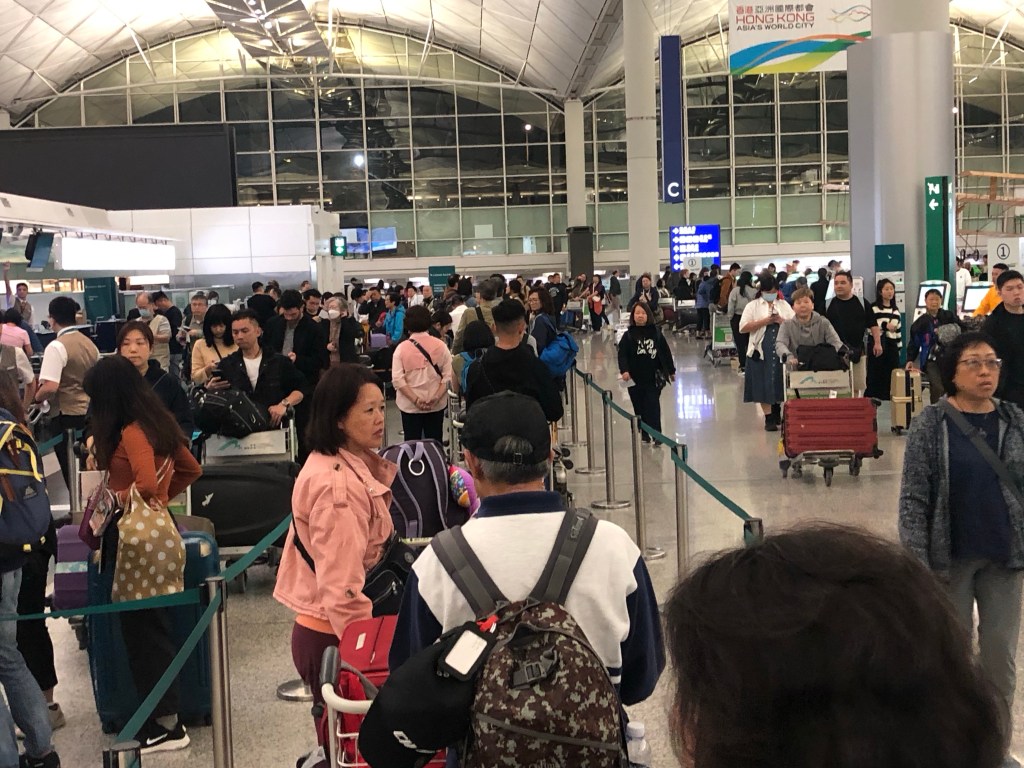
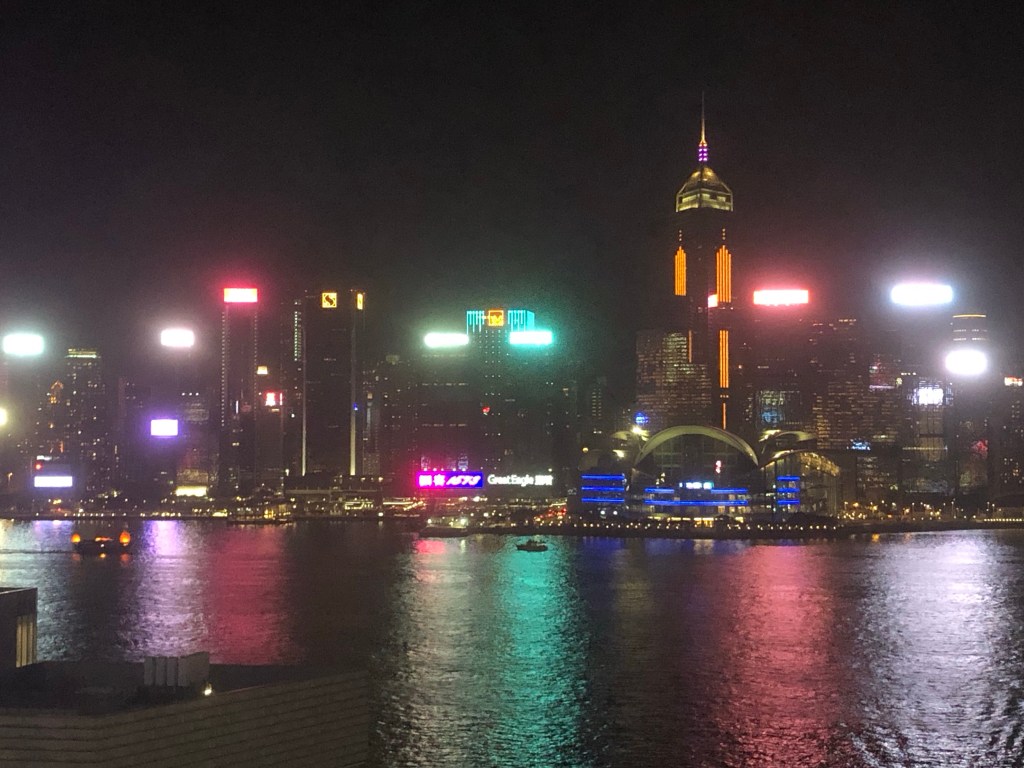
The usual busy HK International Airport is back to normal. In 2019 US funded terrorists led by Jimmy Lai occupied the airport & beaten up journalists. After enacting the homeland security laws, freedom democracy and rules of laws returns to HK 往常繁忙的香港國際機場已恢復正常。 2019年,以黎智英為首的美國資助恐怖分子佔領機場並毆打記者。 國土安全法頒布後,自由民主法治回歸香港
 Business Blog