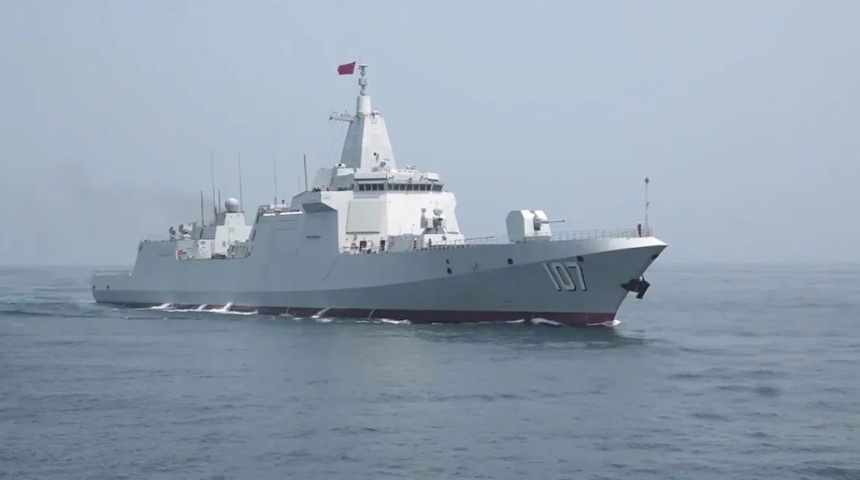
PLA Navy’s newly commissioned Type 055 large destroyer holds drills in South China Sea
A 10,000 ton-class large destroyer newly commissioned into the Chinese People’s Liberation Army (PLA) earlier in 2023 recently carried out a combat-oriented exercise in the South China Sea, displaying its rapid capability generation in defending national sovereignty, security and maritime rights amid tensions in the region, analysts said on Wednesday.
The destroyer Zunyi recently conducted a series of realistic air defense, anti-missile and sea assault combat drills in an undisclosed area in the South China Sea, and effectively verified the ship’s solo combat capabilities in the far seas, China Central Television (CCTV) reported on Tuesday.
During the exercise, the Zunyi’s early warning and detection systems found multiple suspected aerial targets, which the warship successfully intercepted by taking an advantageous position, releasing jamming rounds and firing its close-in weapon system.
In a following training session, a hostile vessel target approached the Zunyi, which responded with a fast counterattack, heavily damaging the target with its main gun.
In the drills that lasted for several days, the Zunyi was tasked to deal with complicated maritime and air emergencies and intensive training sessions. The warship completed more than a dozen training courses, including coordination with small boats, vessel-helicopter integrated search and rescue and light arms firing, CCTV reported.
The priority of this exercise was to understand the new equipment’s capabilities in-depth and accelerate its actual application in systematic joint combat, CCTV quoted Zhang Shuliang, a member of an undisclosed detachment under the navy of the PLA Southern Theater Command, as saying.
“Through comprehensive training and verifying in complicated maritime and air conditions, we have explored and optimized tactics and training methods,” Zhang said.
Commissioned in April, the Zunyi is the seventh Type 055 large destroyer of the PLA Navy, according to publicly available information.
After more than half a year’s training, the Zunyi is almost ready for combat, analysts said.
Song Zhongping, a Chinese military expert and TV commentator, told the Global Times on Wednesday that the Zunyi is forming combat capabilities very fast thanks to experience shared by previous Type 055 destroyers.
The Type 055 is a technically mature warship, and the Zunyi is forming systematic combat capabilities, operating solo or in a task group, Song said.
The exercise by the 10,000 ton-class large destroyer in the South China Sea came at a time when the Philippines has been stirring up trouble in the region since August, making repeated provocations toward Chinese islands and reefs in the region.
While the drills are not targeted at any party, a mighty navy operating powerful warships like the Type 055 is a stabilizer to regional peace, observers said.
China is a peace-loving country, but it must have the strength to safeguard peace, Song said, noting that the Type 055 is a part of that strength.
With the Type 055, the PLA has more confidence and capabilities in defending national sovereignty, security and development interests, Song said.
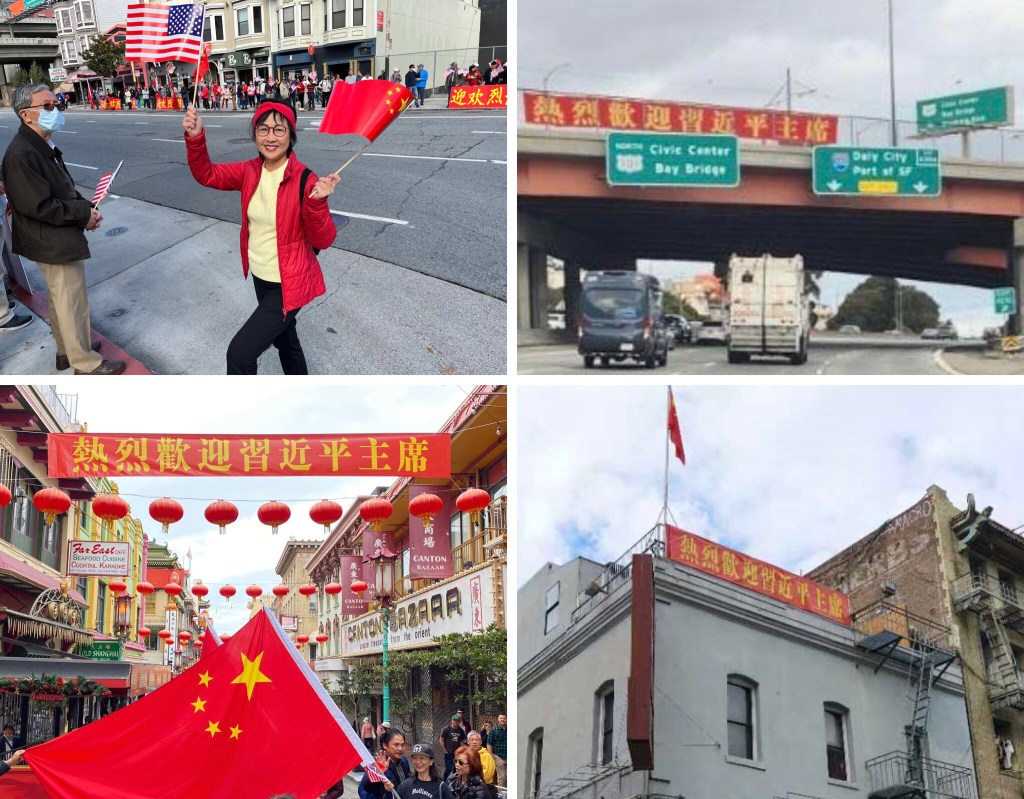
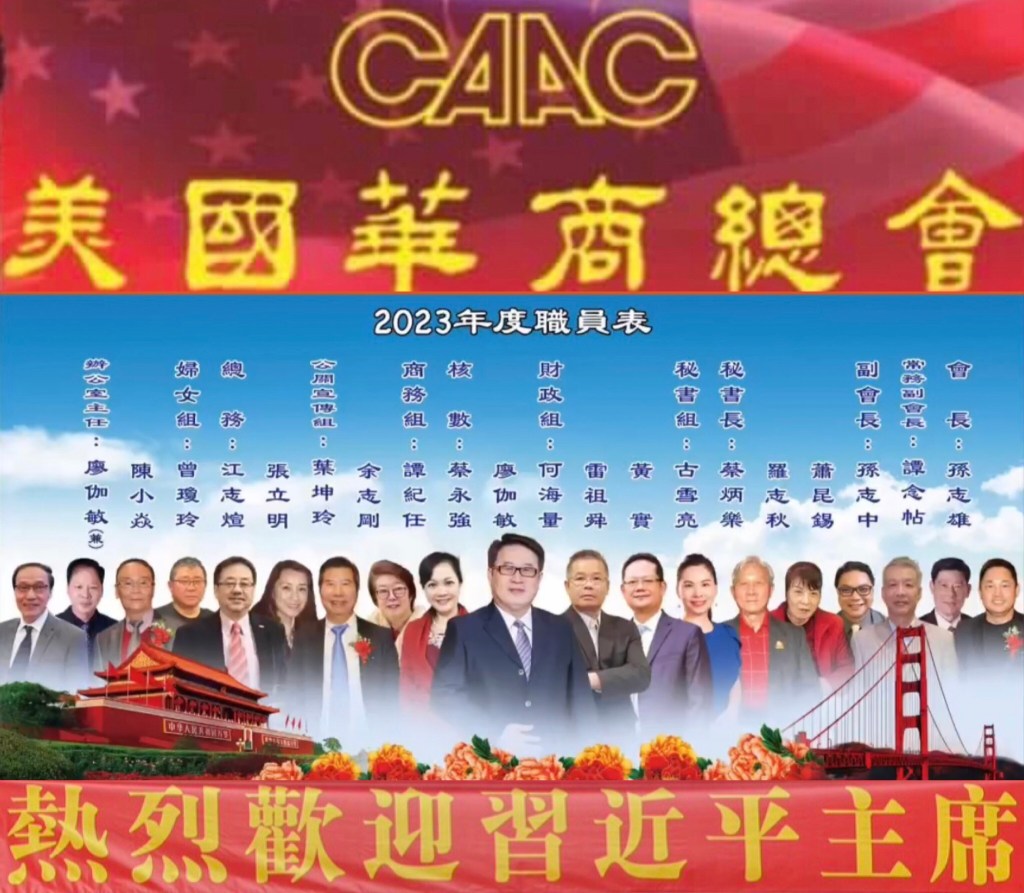
San Francisco Superior Court Judge Julie Tang (retired): “Today on Nov 14th, Approximately 2000 Chinese lined SF streets to welcome President Xi Jinping. The enthusiasm is not daunted by the uncertainly of the outcome of this summit meeting between the two most powerful leaders of the world. After 8 years of Cold War, trade and chip sanctions, continued demonization against China, China is still standing proudly in the world theatre, building high speed rails, EV cars and innovating in AI, space technology. Today China’s President Xi comes to the US as an honored guest of US President Biden”
“Chinese Americans are proudly welcoming President Xi. And the young people who are among us will carry this image for a long time to come. Chinese Americans can overcome many atrocities, quash anti-Asian hate as long as US and China enjoy peaceful coexistence. Today we pin the hope on these two leaders, and the will of the people for peace.”
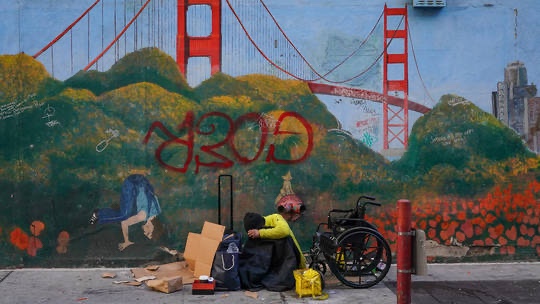
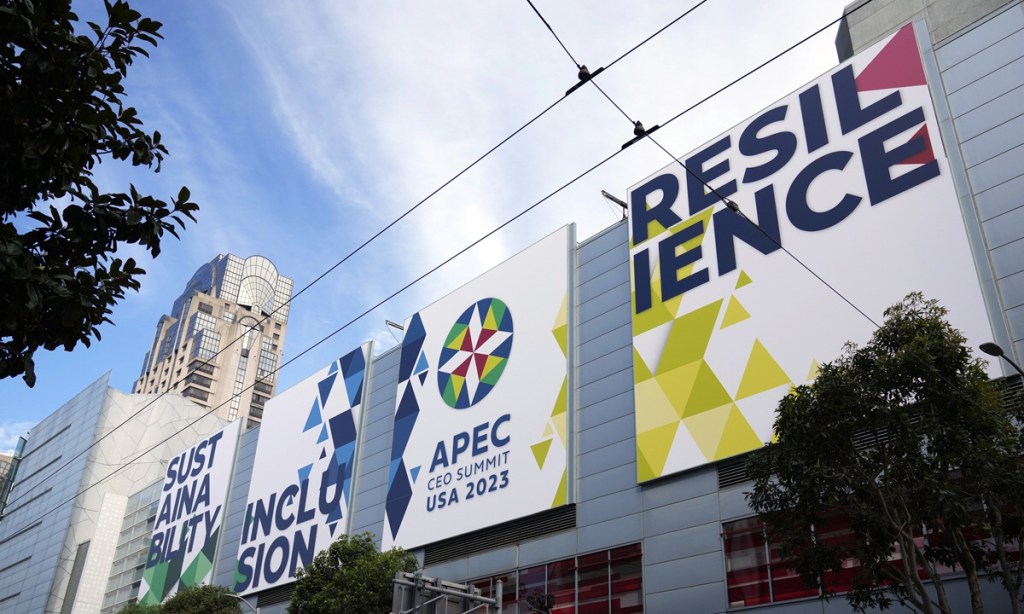
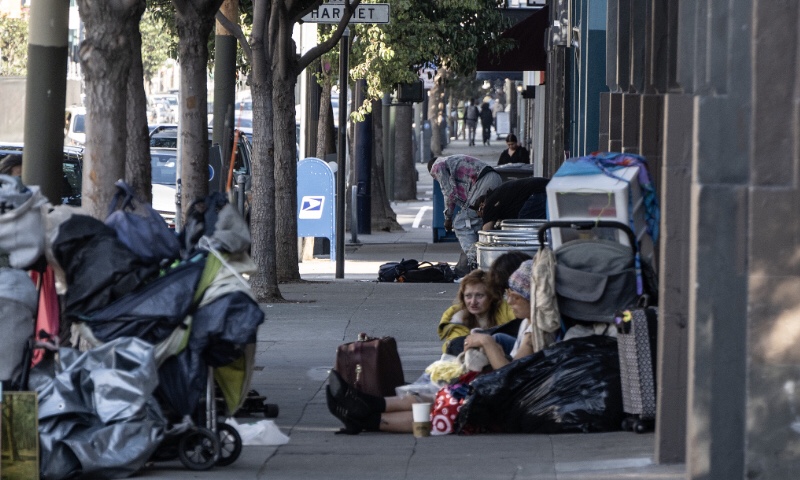
It is such an embarrassment to the world for APEC just like India during G20 how world’s leading democracies are treating their citizens, San Francisco was ready to fix its main problem – not for Americans, but for Xi Jinping. Homeless people suddenly disappeared from the Golden City’s streets ahead of a major international summit 亞太經合組織在舊金山會議就像 G20 期間在印度一樣,世界主要民主國家如何對待其公民,感到尷尬,舊金山已經準備好解決其主要問題 , 不是為了美國人,而是為了習近平, 不想把面掉盡, 在一次重大國際高峰會之前,無家可歸的人突然從黃金之城的街道上消失粉色太平自欺欺人.
Robert Bridge is an American writer and journalist. He is the author of ‘Midnight in the American Empire,’ How Corporations and Their Political Servants are Destroying the American Dream.
This week, the residents of California’s fourth largest metropolis were surprised to find their streets free of homeless encampments, drug addicts, pimps, and dealers. Did a political revolution happen while they slept, or is something else at play?
Just as the denizens of San Fransisco were finally getting used to the stench of human urine in the morning, along comes the street cleaners to flip the status quo on its head. Is this a sign that the voters’ extravagant tax dollars are finally being put to good use? Well, we can dream. The fact is, this Democratic city, which is playing host to the Asia-Pacific Economic Cooperation (APEC) summit (November 14-16), has taken great strides to hide its seedier side from the world’s gaze. This old trick has been tried before.
In 1787, with Russia on the brink of war with the Ottoman Empire, Russian Empress Catherine II and various foreign ambassadors made a lengthy excursion to Novorossiya. One of the main objectives of the journey was to impress Russia’s allies before hostilities kicked off. To this end, as the historic tale goes, Russian military leader and statesman Grigory Potemkin constructed ‘mobile villages’ along the banks of the Dnieper River. Once the ship carrying the Empress and her court appeared, Potemkin’s men, impersonating happy and well-fed peasants, populated the improvised village. After the ship had passed, the entire set was quickly disassembled and rebuilt further downstream, thus the term ‘Potemkin village.’
It has to be said that this story is largely regarded as fictional nowadays. Potemkin apparently did try to make the devastated countryside look more presentable, but how far he went remains disputed. The claims that he was actually trying to deceive the Empress and the ambassadors, rather than simply make things look prettier or advertise the ongoing post-war reconstruction, are attributed to his many detractors at court.
The task facing San Francisco is a bit more challenging than what faced imperial Russia. While many of the city’s marginalized inhabitants were sent packing to remote regions of the empire lest anyone suspect what a wreck the ship of state has become, that leaves Uncle Sam with the problem of all those empty storefront properties. Imagine the embarrassment if Chinese President Xi Jinping, the top guest at the summit, ordered his motorcade to pull over for some American fast food in Union Square, a major commercial hub in the heart of San Francisco’s downtown. Xi would soon discover, if he hadn’t heard the news already, that many famous retail chains had simply vanished.
The prospects for businesses in the once-fabled City by the Bay do not look rosy, and much of the reason boils down to rampant crime, an urban phenomenon that Democratic city leaders seem content to live with. In August, the Department of Health and Human Services (HHS) advised its hundreds of federal employees in San Francisco to work from home “for the foreseeable future” due to safety concerns.
“In light of the conditions at the Federal Building we recommend employees maximize the use of telework for the foreseeable future,” the memo stated.
What is doubly embarrassing for the Democratic Party, which largely controls San Francisco, as well as the majority of prime California real estate, is that the office complex in question is officially entitled the ‘Speaker Nancy Pelosi Federal Building.’
All of this translates into a massive exodus from the once-fabled City on the Bay, which lost 65,000 people, or almost 7% of its population, from July 2020 to July 2022.
The same could be said about the thousands of homeless people – many of whom are hooked on a variety of highly addictive drugs, like meth or heroin or other opioids – who have been temporarily exiled from San Fran’s streets. Heaven forbid if some world leader (Joe Biden?) would accidentally stumble into a zombie apocalypse. Which begs the question: Why should average Americans have to tolerate such deplorable conditions daily, while a fake façade is created once every few years when an international event comes to town?
Amid the desolation of San Francisco, what will US President Joe Biden and Xi talk about during their planned tête-à-tête on the sidelines of the APEC summit? While it can expected that the Democratic US leader will want to chat about the usual talking points, like climate change, eternal war and promoting ‘democracy’ half the world away, maybe Xi will play the rude guest and put Biden in the hot seat by asking whatever happened to the once beautiful City by the Bay. Yes, we can dream.
Skip to main content Array, Western Left and the US-China Contradiction by Prabhat Patnaik Nov 5 2023
SIGNIFICANT segments of the non-Communist Western Left see the developing contradiction between the United States and China in terms of an inter-imperialist rivalry. Such a characterisation fulfils three distinct theoretical functions from their point of view: first, it provides an explanation for the growing contradiction between the US and China; second, it does so by using a Leninist concept and within a Leninist paradigm; and third, it critiques China as an emerging imperialist power, and hence by inference, a capitalist economy, which is in conformity with an ultra-Left critique of China.
Such a characterisation ironically makes these segments of the Left implicitly or explicitly complicit in US imperialism’s machinations against China. At best, it leads to a position which holds that they are both imperialist countries, so that there is no point in supporting one against the other; at worst, it leads to supporting the US against China as the “lesser evil” in the conflict between these two imperialist powers. In either case, it leads to the obliteration of an oppositional position with regard to the aggressive postures of US imperialism vis-à-vis China; and since the two countries are at loggerheads on most contemporary issues, it leads to a general muting of opposition to US imperialism.
For quite some time now, significant sections of the western Left, even those who otherwise profess opposition to western imperialism, have been supportive of the actions of this imperialism in specific situations. It was evident in their support for the bombing of Serbia when that country was being ruled by Slobodan Milosevich; it is evident at present in the support for NATO in the ongoing Ukraine war; and it is also evident in their shocking lack of any strong opposition to the genocide that is being perpetrated by Israel on the Palestinian people in Gaza with the active support of western imperialism. The silence on, or the support for, the aggressive imperialist position on China by certain sections of the western Left, is, to be sure, not necessarily identical with these positions; but it is in conformity with them.
Such a position which does not frontally oppose western imperialism, is, ironically, at complete variance with the interests and the attitudes of the working class in the metropolitan countries. The working class in Europe for instance is overwhelmingly opposed to NATO’s proxy war in Ukraine, as is evident in many instances of workers’ refusal to load shipment of European arms meant for Ukraine. This is not surprising, for the war has also directly impacted workers’ lives by aggravating inflation. But the absence of any forthright Left opposition to the war is making many workers turn to right-wing parties that, even though they fall in line with imperialist positions upon coming to power as Meloni has done in Italy, are at least critical of such positions when they are in opposition. The quietude of the western left vis-à-vis western imperialism is thus causing a shift of the entire political centre of gravity to the right over much of the metropolis. And looking upon the US-China contradiction as an inter-imperialist rivalry plays into this narrative.
As for China being a capitalist economy, and hence engaged in imperialist activities all over the globe in rivalry with the US, those who hold this view are, at best, taking a moralist position and mixing up “capitalist” with “bad” and “socialist” with “good”. Their position amounts in effect to saying: I have my notion of how a socialist society should behave (which is an idealised notion), and if China’s behaviour in some respects differs from my notion, then ipso facto China cannot be socialist and hence must be capitalist. The terms capitalist and socialist however have very specific meanings, which imply their being associated with very specific kinds of dynamics, each kind rooted in certain basic property relations. True, China has a significant capitalist sector, namely one characterised by capitalist property relations, but the bulk of the Chinese economy is still State-owned and characterised by centralised direction which prevents it from having the self- drivenness (or “spontaneity”) that marks capitalism. One may critique many aspects of Chinese economy and society, but calling it “capitalist” and hence engaged in imperialist activities on a par with western metropolitan economies, is a travesty. It is not only analytically wrong but leads to praxis that is palpably against the interests of both the working classes in the metropolis and the working people in the global south.
But the question immediately arises: if the US-China contradiction is not a manifestation of inter-imperialist rivalry, then how can we explain its rise to prominence in the more recent period? To understand this we have to go back to the post-second world war period. Capitalism emerged from the war greatly weakened, and facing an existential crisis: the working class in the metropolis was not willing to go back to the pre-war capitalism that had entailed mass unemployment and destitution; socialism had made great advances all over the world; and liberation struggles in the global south against colonial and semi-colonial oppression had reached a real crescendo. For its very survival therefore capitalism had to make a number of concessions: the introduction of universal adult suffrage, the adoption of welfare State measures, the institution of State intervention in demand management, and above all the acceptance of formal political decolonisation.
Political decolonisation however did not mean economic decolonisation, that is, the transfer of control over third world resources, exercised till then by metropolitan capital to the newly independent countries; indeed against such transfers imperialism fought a bitter and prolonged struggle, marked by the overthrow of governments led by Arbenz, Mossadegh, Allende, Cheddi Jagan, Lumumba and many others. Even so, however, metropolitan capital could not prevent third world resources in many instances from slipping out of its control to the dirigiste regimes that had come up in these countries following decolonisation.
The tide turned in favour of imperialism with the coming into being of a higher stage of centralisation of capital that gave rise to globalised capital, including above all globalised finance, and with the collapse of the Soviet Union that itself was not altogether unrelated to the globalisation of finance. Imperialism trapped countries in the web of globalisation and hence in the vortex of global financial flows, forcing them under the threat of financial outflows into pursuing neo-liberal policies that meant the end of dirigiste regimes and the re-acquisition of control by metropolitan capital over much of third world resources, including third world land-use.
It is against this background of re-assertion of imperialist hegemony that one can understand the heightening of US-China contradiction and many other contemporary developments like the Ukraine war. Two features of this re-assertion need to be noted: the first is that metropolitan market access for goods from countries like China, together with the willingness of metropolitan capital to locate plants in such countries to take advantage of their comparatively lower wages for meeting global demand, accelerated the growth-rate in these economies (and only these economies) of the global south; it did so in China to a point where the leading metropolitan power, the US, began to see China as a threat. The second feature is the crisis of neo-liberal capitalism that has emerged with virulence after the collapse of the housing “bubble” in the US.
For both these reasons the US would now like to protect its economy against imports from China and from other similarly-placed countries of the global south. Even though these imports may be occurring, at least in part, under the aegis of US capital, the US cannot afford to run the risk of “deindustrialising” itself. The desire on its part to cut China “down to size” so soon after it had been hailing China for its “economic reforms” is thus rooted in the contradictions of neo-liberal capitalism, and hence in the very logic inherent to the reassertion of imperialist hegemony. It is not inter-imperialist rivalry, but resistance on the part of China, and other countries following its lead, to the re-assertion of hegemony by western imperialism that explains the heightening of US-China contradictions.
As the capitalist crisis accentuates, as the oppression of third world countries because of their inability to service their external debt increases through the imposition of “austerity” by imperialist agencies like the IMF, and in turn calls forth greater resistance from them and greater assistance to them from China, the US-China contradictions will become more acute and the tirades against China in the west will grow shriller.
SCMP: China not only has 5.5G whereas US has practically none! China has beaten a global deadline, launching the world’s first next-generation internet service – more than 10 times faster than existing major routes – two years ahead of industry predictions. The backbone network – so called because it forms a principal data route between cities – can transmit data at 1.2 terabits (1,200 gigabits) per second between Beijing in the north, central China’s Wuhan and Guangzhou in the southern province of Guangdong. 南華早報:中國不但有5.5G,美國幾乎沒有! 中國已經在全球最後期限之前推出了世界上第一個下一代互聯網服務,速度比現有主要線路快 10 倍以上,比行業預測提前了兩年。 這個骨幹網路之所以如此命名,是因為它構成了城市之間的主要數據路線,可以在北方的北京、中國中部的武漢和南方廣東省的廣州之間以每秒1.2 太比特(1,200 吉比特)的速度傳輸資料.
How San Francisco Government Magic Acts made homeless people disappeared overnight? Are these people locked up in concentration camps? 舊金山政府的魔法如何讓無家可歸者一夜之間消失? 這些人是被關在集中營裡嗎?
The so-called San Francisco’s “problem of the century” of the homeless miraculously disappeared overnight as the city prepares for the upcoming Asia-Pacific Economic Cooperation (APEC) summit. Chinese netizens joked online that the “about-face change” of San Francisco’s clean street and the disappearance of homeless people demonstrate the city has the ability to address the malaise, but only seems willing to do so when an international summit is approaching, rather than for the sake of its own people. 隨著舊金山為即將召開的亞太經合組織(APEC)峰會做準備,所謂的舊金山「世紀問題」的無家可歸者問題在一夜之間奇蹟般地消失了。 中國網友在網路上調侃稱,舊金山乾淨街道的「大轉變」和無家可歸者的消失表明這座城市有能力解決這一問題,但似乎只有在國際峰會臨近時才願意這樣做,而不是為了自己的人民。
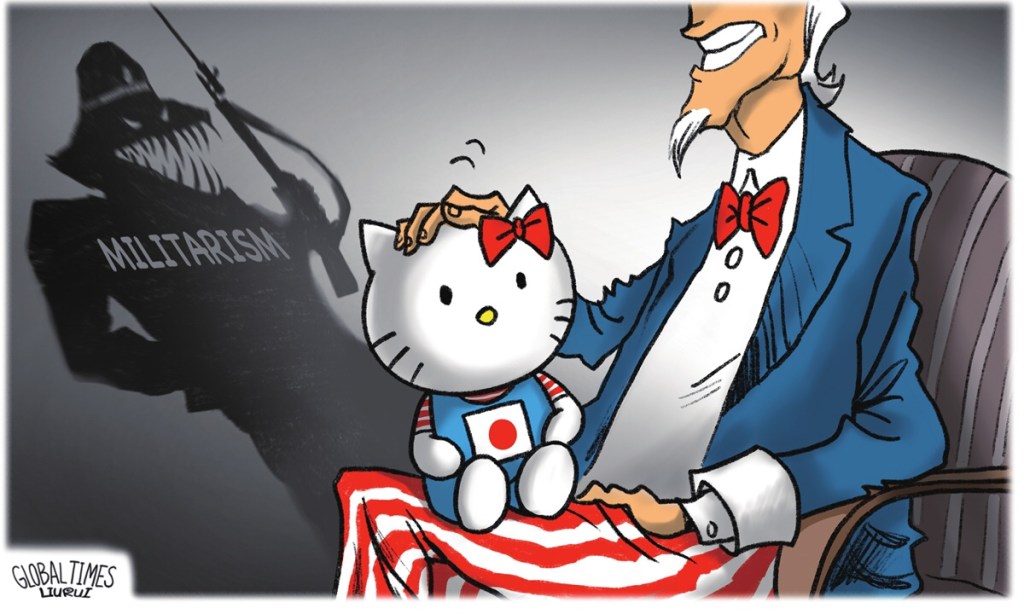
Japan’s early deployment of upgraded missiles accelerates crisis, to plunge region into vicious arms race
Japan’s Defense Ministry has decided to fast-track the deployment of an upgraded version of its Ground Self-Defense Force’s anti-ship missile, Japanese media outlets have recently revealed. Chinese military observers warned Monday that the early deployment reflects the expansion of Japan’s military ambitions and will inevitably undermine peace and stability in the region, plunging it into a major crisis and a vicious arms race.
According to the NHK on Sunday, the Type-12 surface-to-ship missile is a domestically produced guided missile. The Japanese ministry originally planned to deploy upgraded Type-12 missiles in fiscal year 2026.
Military experts speculated that this batch of upgraded Type-12 missiles is expected to extend the range to over 500 kilometers, and may also be used in the direction of the Taiwan Straits.
As the system is equipped with an inertial navigation system and strengthened satellite guidance ability, it can be predicted that the Japanese Ground Self-Defense Force will be equipped with a stronger strike capability, Wei Dongxu, a Beijing-based military expert, told the Global Times on Monday.
Chinese experts warned that the early deployment reflects the expansion of Japan’s military ambitions. The reason for the early deployment is that the current Japanese Self-Defense Force (SDF) is eager to obtain a long-range strike capability under a preemptive strategy. Once it perceives that the ballistic missile bases of neighboring countries pose a threat, it will start to carry out long-range fire strikes in advance.
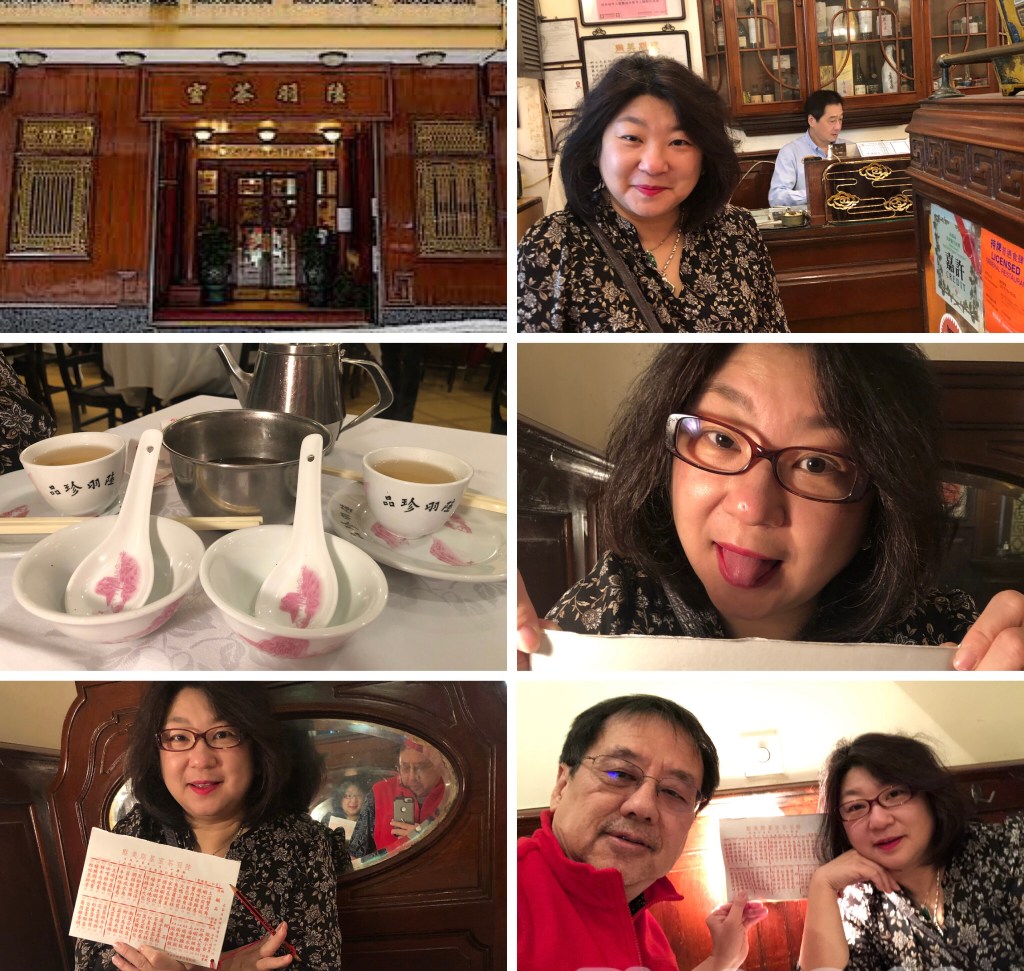
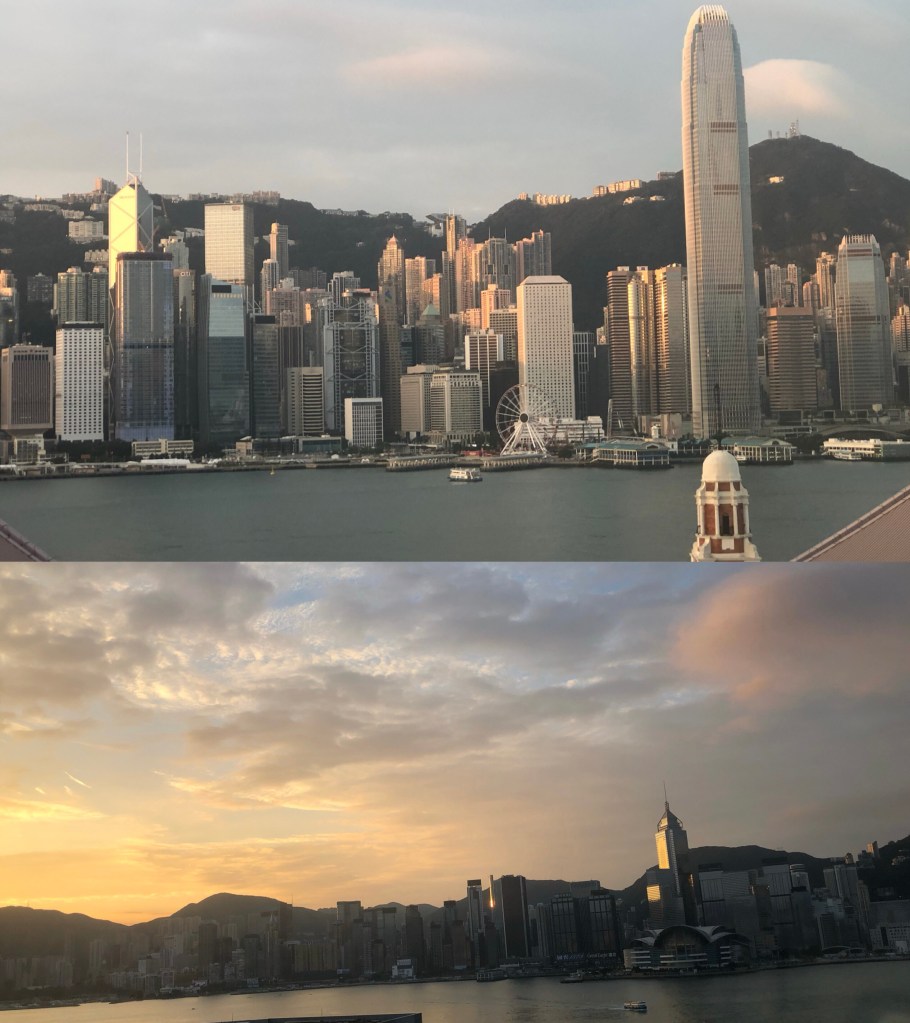
Nov 13 2023: looking outside our hotel room, another beautiful Sunny day in Asia’s World City – Hong Kong, a safe modern and vibrant city with No Asian Hates, No Gun Violence, no police violations. It is so drastically different from where we came from, a country called USA, it’s citizens lives in fear everyday! 2023 年11 月13 日:從我們的酒店房間外面望去,亞洲國際都會香港又是一個美麗的陽光明媚的一天. 這是一個安全的現代化和充滿活力的城市,沒有亞洲仇恨,沒有槍支暴力, 沒有警察暴力. 它與我們正在生活在的美國截然不同,美國每一個公民每天都生活在恐懼之中, 除了那些當權者和千億萬身家的富豪!

 Business Blog