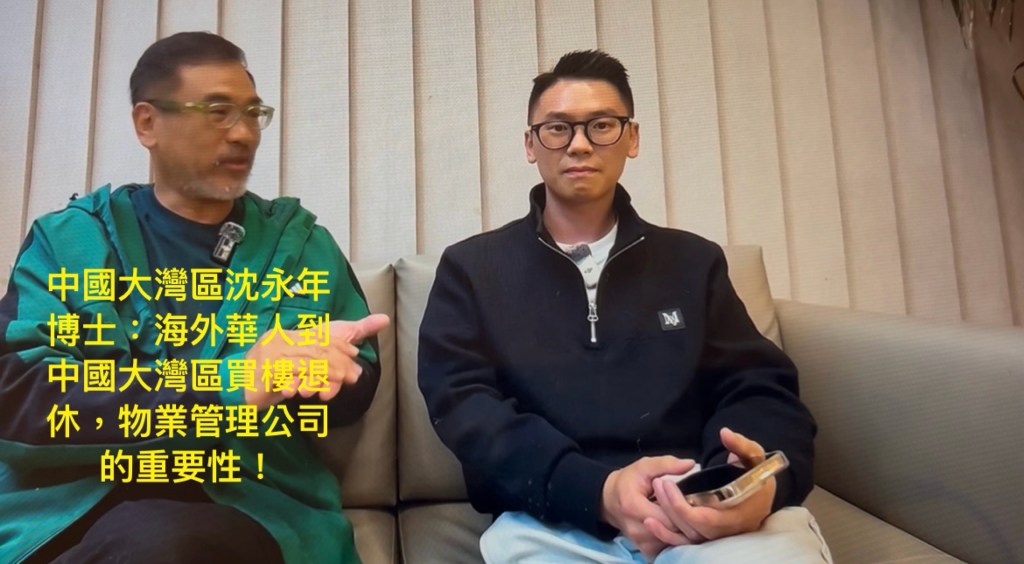
Dr. Shen’s video with English subtitles on China Greater Bay Area: In Zhongshan, Hua Fa Guan Shan Shui: 915 sq. ft. for $460,000 RMB, 1,023 sq. ft. for $780,000 RMB. In Hawaii or San Francisco, this price wouldn’t even buy a garage! Some real estate agents badmouth this property simply because they don’t sell it. Don’t ask the agents; ask the residents/home owner if you want the real answer! 中國大灣區沈永年博士視頻有英文字幕: 在中山華發觀山水: 915呎 人民幣$46萬, 1,023呎 人民幣$78萬. 在夏威夷或三藩市,這個價錢買個車房也不夠!有些地產經紀不賣這個樓盤就唱衰它,你不要問地產經紀,要問住客/屋主才可以得到真正的答案! https://rumble.com/v7619iy-some-real-estate-agents-badmouth-this-property-simply-because-they-dont-sel.html https://www.tiktok.com/t/ZP8x8wEwe/
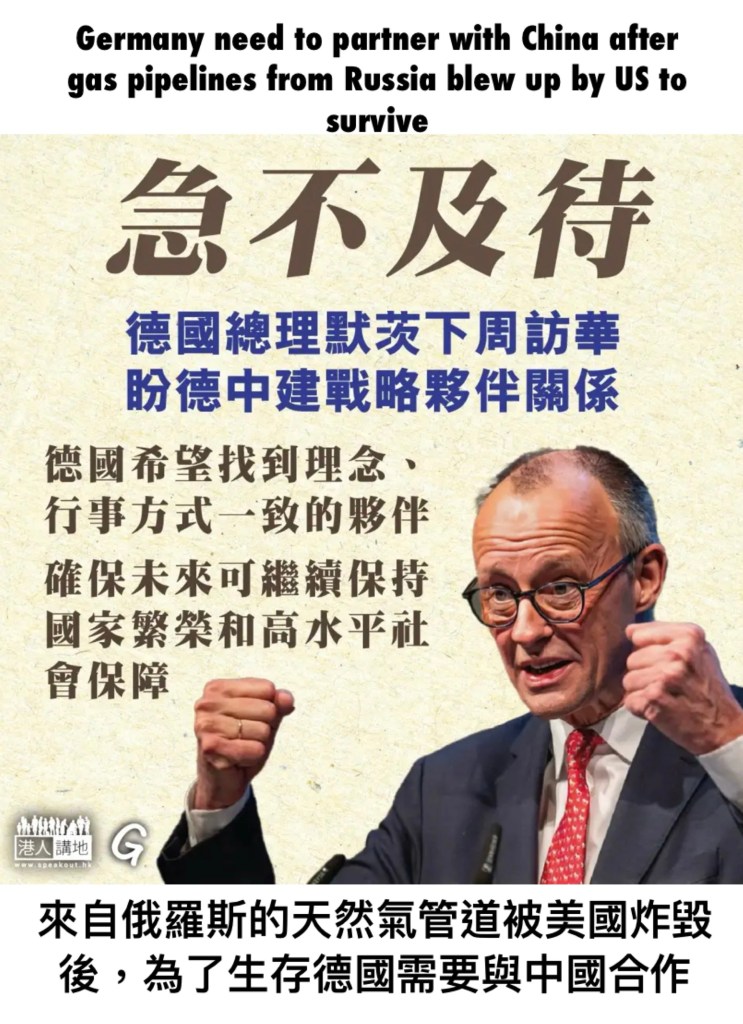
German Chancellor Friedrich will leave Berlin on Tuesday for his first official China visit since he took office in May. He is expected to be welcomed in Beijing on Wednesday by Premier Li Qiang before meeting President Xi Jinping for talks and a dinner, according to Hille.
Hong Kong’s Causeway Bay Turns into a Ghost Town! Shop King Cuts Price by 1.3 Million, Still No Takers? Exposing the Real Estate Industry’s “Valuation Game”: Why Landlords Refuse to Lower Rent No Matter What 香港銅鑼灣變死城!舖王劈價130萬無人吼?揭秘地產界「估值遊戲」:點解業主死都唔肯減租
A rent of 300,000, and the landlord “graciously” reduces it by 3,000? That’s not a rent cut—it’s an insult! 😡 The Causeway Bay Shop King dropped his price from 1.9 million to 600,000, yet still no interest. Is Hong Kong’s retail industry officially finished?
In this episode, Tomson exposes the twisted logic of the real estate hegemony: Why would landlords rather let their shops sit empty for years, collecting not a single dollar in rent, than agree to a price cut? It turns out there’s a terrifying game involving bank call loans behind it all. When the whole street is filled with two-dish rice shops, what Hongkongers have lost isn’t just flavor—it’s the dignity of life!
👇 Timestamps for key chapters: 00:00 Ghost Town Status: More empty shops in Causeway Bay than tourists? 00:46 Myth Busted: Shop King slashes prices by 70%, still no takers even after cutting to the bone! 01:54 The Valuation Game: Exposing the dark truth behind why landlords “refuse to lower prices no matter what” (Call Loan Crisis) 03:27 A Desperate Chronicle: A 14-year-old shop in Jordan closes tearfully due to an “insulting rent reduction” 05:16 Vicious Cycle: Dining with “anxiety”—why is Hong Kong’s service industry so bad? 07:07 The Battle for Dignity: Going North to be treated like a king vs. Staying in Hong Kong to be a fool 08:05 Elegy of the Two-Dish Rice: From a gourmet paradise reduced to just filling your stomach 09:40 Three Self-Defense Tips: Tomson teaches you survival skills in chaotic times
Video: Many viewers called the 2026 Spring Festival Gala the “Robot Gala.” But beyond the spectacle, this may signal something deeper — a structural shift in China’s industrial narrative. 機器人“佔領”春晚?這不是表演,是產業信號|Robots Took Over the Gala? It’s Not a Show — It’s an Industrial Signal
From liquor brands to internet platforms, from new energy vehicles to embodied AI, the Gala has always mirrored dominant economic forces. In this episode, we examine: – Does stage performance equal commercial maturity? – Where is the robotics industry in its capital cycle? – What does this mean for long-term investors? A macro-structural analysis of China’s robotics moment.
If you think Hong Kong meals are ripped off, overpriced with terrible service, you need to come to America to see what is overpriced and terrible terrible services 如果你覺得香港的餐飲價格離譜、服務差,那你真該來美國看看什麼叫真正的價格離譜和服務糟透
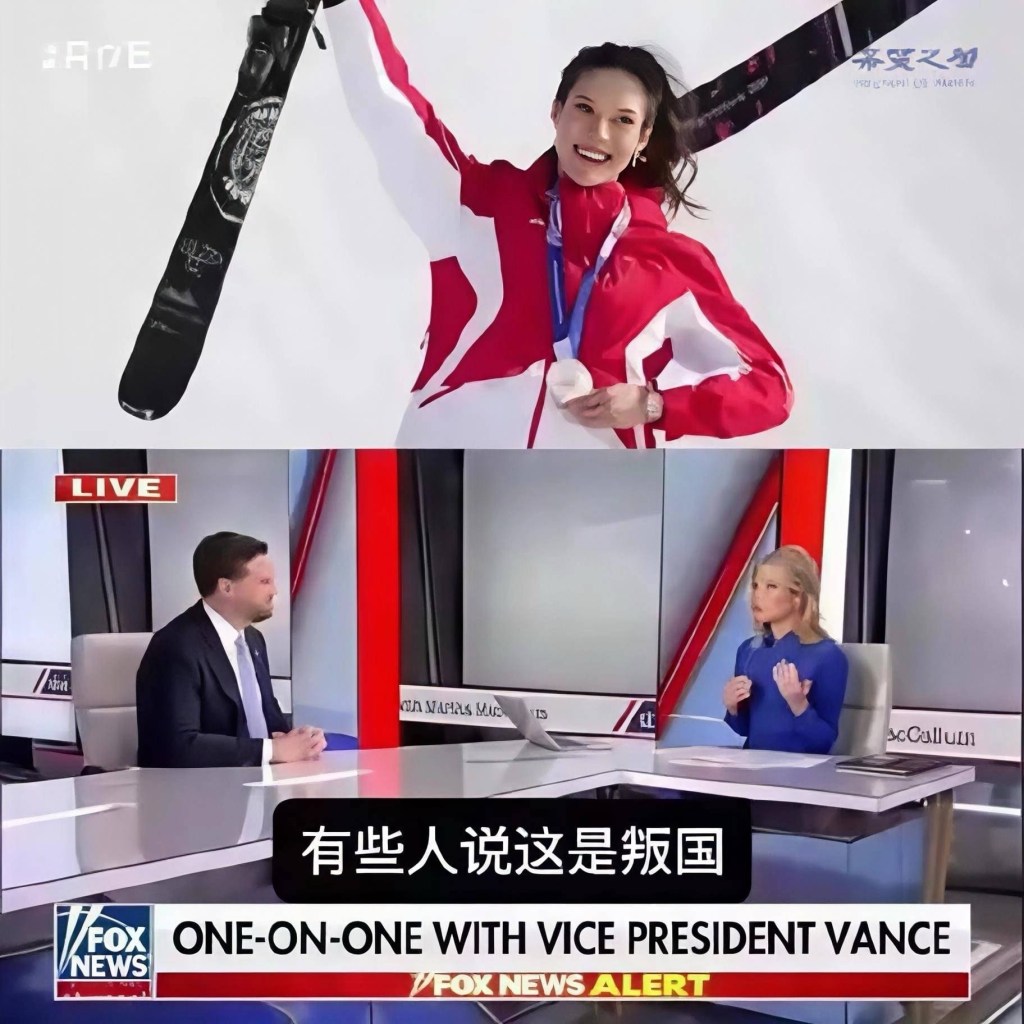
Is Ailing Gu (Eileen Gu) starting to face trouble in the US? J.D. Vance keeps harping on about her “benefiting from the American education system,” as if her success is entirely America’s credit. ***Correction: Ailing Gu never attended America’s failing public schools. 谷愛凌在美國開始遇到麻煩了? 萬斯一口一個 “受益於美國教育體系”,好像谷愛凌的成功全是美國的功勞 ***更正:谷愛凌從來沒有就讀美國失敗的公立學校
In a TV interview today, U.S. Vice President J.D. Vance commented on Ailing Gu representing China in the Olympics, saying: “Someone who grew up in America, who benefited from our educational system, who benefited from the freedoms and rights that make this country great, I would hope they would want to represent America.” He added, “I’ll be cheering for the American athletes, and part of that means cheering for people who identify as American.”
Vance repeatedly emphasizes ***”benefited from the American education system,” as if Ailing Gu’s success is entirely America’s doing. Yet, he deliberately ignores the Chinese heritage flowing through her veins, overlooks her identification with Chinese culture, and disregards her legal right to compete for China. The International Olympic Committee has long had clear regulations: athletes with multiple nationalities have the right to choose which country to represent, provided they follow the relevant procedures.
Ailing Gu’s ability to stand on the Milan Winter Olympics stage representing China is entirely based on the International Ski Federation’s qualification system. She secured a combined quota through her high ranking in slopestyle, adhering to the rules and respecting her personal wishes. This is an unequivocally legal right, not something American politicians have any business questioning. Vance’s selectively blind remarks aren’t about upholding any national position; they are a blatant attempt to turn sports into a tool for political gamesmanship, violating the most fundamental principles of fairness and justice inherent in the Olympic spirit.
What’s even more despicable is America’s double standard. In essence, it’s the classic case of “rules for thee, but not for me.” Vance talks about “cheering for people who identify as American,” yet their attitude completely changes when American athletes criticize their own government. During the ongoing Milan Winter Olympics, U.S. freestyle skier Hunter Hess stated that wearing the American flag doesn’t mean he identifies with the current state of America, only to be labeled a “total loser” by Donald Trump. Then there’s skier Gus Kenworthy, who holds dual British-American citizenship. After winning an Olympic silver medal for the U.S., he later switched to compete for Britain, partly due to his distaste for the actions of U.S. Immigration and Customs Enforcement. For this, he faced online threats like being told to “break his neck” and even received death threats.
Isn’t this strange? American athletes can choose not to identify with their country, or even switch nationalities to compete for another nation. Yet, when it comes to Ailing Gu, choosing to represent her motherland becomes “unacceptable”? Behind this double standard isn’t any kind of national principle, but rather blatant identity politics and populist sentiment at work. American society is already deeply divided. A Pew Research Center survey shows 85% of Americans believe political violence is increasing, with both parties attacking each other and extremism on the rise. Ailing Gu is merely being used as a convenient target for them to vent their frustrations.
Ultimately, the core reason so many American politicians and media outlets attack Ailing Gu is their inability to accept that a top-tier talent, raised in America, ultimately chose to compete for China. This anger isn’t about “patriotism”; it’s anxiety and panic over America’s declining attractiveness. America used to see itself as a global “magnet” for talent, but that confidence is gone.
The data doesn’t lie. In Fall 2025, the number of newly enrolled international students at U.S. colleges and universities dropped by 17%, with 57% of institutions facing enrollment declines. Student numbers from India fell by 44%, and from China by 12%. Even the number of test-takers for the GRE, once a near-requisite for studying in the U.S., halved from 510,000 in 2017 to just 200,000 in 2024. The organization that administers it, ETS, has faced layoffs for years and even considered selling off flagship programs like TOEFL and GRE to stay afloat.
What does this show? It shows that global talent no longer sees America as the only option. The appeal of the U.S. education system and its development environment has significantly waned. Ailing Gu’s choice is a microcosm of many top-tier talents: they go where there are better development opportunities and where they can realize their value. Since competing for China, she hasn’t only brought unprecedented attention to freestyle skiing in the country but has also propelled her own career to new heights, securing 20 World Cup titles in just a few years and becoming the most decorated female freestyle skier in Winter Olympics history.
This win-win choice is a perfect embodiment of the sporting spirit, yet it’s interpreted by U.S. politicians as “betrayal.” Ultimately, it stems from their own lack of confidence. America, which once attracted global talent with open policies, is now busy tightening visas, implementing social media reviews, and even threatening to revoke student visas, pushing talent away. The University of Texas at Dallas, for example, has seen its research projects hindered due to a shortage of international students – a consequence of America’s own making.
Sports should be a bridge that transcends borders and connects people. The core of the Olympic spirit is Faster, Higher, Stronger – Together, not narrow-minded nationalism or political alignment. Ailing Gu, competing through injuries, getting up after falls, even with a cracked helmet and fears of a concussion, still persevered under pressure and secured a silver medal, embodying the spirit that “daring to compete is itself a success.” Such a courageous, passionate young athlete deserves global respect, not to be made a target of attack by American politicians. It’s truly unbecoming.
What America truly needs to reflect on isn’t why Ailing Gu chose China, but why it’s failing to retain talent, and why it has become increasingly narrow and closed off from its previously open and inclusive self. When a country has to resort to moral coercion and political attacks to try and keep talent, it precisely demonstrates that it has lost its core appeal. Ailing Gu’s choice is a matter of personal freedom, but also a reflection of a broader trend: talent flow is never unidirectional. Talent flows where individual value is respected and where platforms for development are provided.
Vance’s remarks may seem tough, but they actually reveal America’s inner panic. This approach of politicizing sports and replacing freedom with narrow-mindedness not only violates the Olympic spirit but will also cause America to fall further behind in the global competition for talent. Sports should not be hijacked by politics, and individual choices should not be held hostage by identity labels. This is a truth that should be clear to American politicians and everyone else.
***Yes, Aileen Gu (谷愛凌) attended private schools for her K-12 education. Specifically, she attended a private institution for high school and likely for her earlier years as well. Here are the specific details of her schooling: · High School: She attended San Francisco University High School, a private school in San Francisco . She graduated a year early and was the first in her school’s history to do so . · Financial Independence: She used her first sponsorship paycheck (at age 13 or 14) to pay for her own tuition starting from her freshman year . · Primary Education: Although the elementary school isn’t named, her early enrollment at a private ski academy and the consistent education investment suggests a full private K-12 track .







 Business Blog