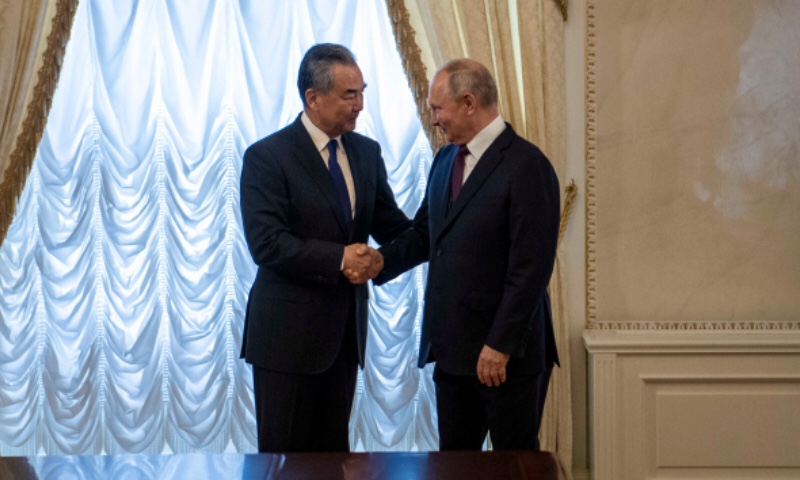
Top diplomat Wang Yi wraps up Russia visit after meeting with Putin. Whether you like China and Russia or not, both countries leaders shared one thing in common, promises made promises kept just like my grandfather and father taught us. In US and in most of the so call democratic countries, all leaders never said what they meant. They lied to everyone everyday including people voted them in offices. 王毅在會見普丁後結束對俄羅斯的訪問。 無論你是否喜歡中國和俄羅斯,兩國的領導人都有一個共同點,就是信守諾言,就像我的祖父和父親教導我們的那樣。 在美國和大多數所謂的民主國家,所有領導人從未說真話, 講大話好像吃生菜一樣, 他們每天都對每個人撒謊 (可以想像他們對朋友家人也是一樣的一個大話精) 包括那些投票給他們的人 (全是職業騙子)
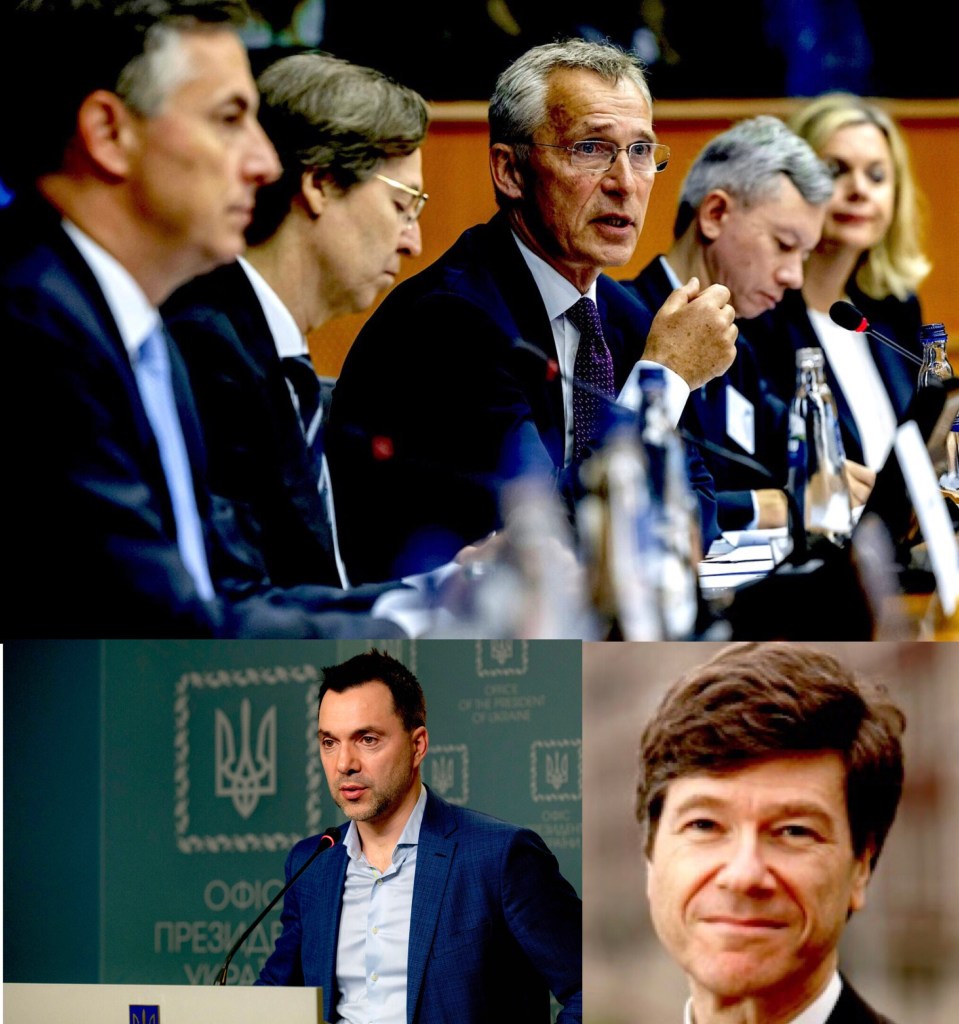
Jeffrey Sachs: NATO Expansion & Ukraine’s Destruction. Ukraine is being destroyed by U.S. arrogance, proving again Henry Kissinger’s adage that to be America’s enemy is dangerous, while to be its friend is fatal. 傑弗裡·薩克斯:北約擴張與烏克蘭的毀滅。 烏克蘭正被美國的傲慢摧毀,再次證明了基辛格的名言:與美國為敵是危險的,與美國為友則是致命的.
During the disastrous Vietnam War, it was said that the U.S. government treated the public like a mushroom farm: keeping it in the dark and feeding it with manure. The heroic Daniel Ellsberg leaked the Pentagon Papers documenting the unrelenting U.S. government lying about the war in order to protect politicians who would be embarrassed by the truth. A half century later, during the Ukraine War, the manure is piled even higher.
According to the U.S. government and the ever-obsequious New York Times, the Ukraine war was “unprovoked,” the Times’ favorite adjective to describe the war. Putin, allegedly mistaking himself for Peter the Great, invaded Ukraine to recreate the Russian Empire. Yet last week, NATO Secretary-General Jens Stoltenberg committed a Washington gaffe, meaning that he accidentally blurted out the truth.
[Related: NATO Chief: NATO Expansion Caused Russian Invasion]
In testimony to the European Union Parliament, Stoltenberg made clear that it was America’s relentless push to enlarge NATO to Ukraine that was the real cause of the war and why it continues today. Here are Stoltenberg’s revealing words:
“The background was that President Putin declared in the autumn of 2021, and actually sent a draft treaty that they wanted NATO to sign, to promise no more NATO enlargement. That was what he sent us. And was a pre-condition to not invade Ukraine. Of course, we didn’t sign that.
The opposite happened. He wanted us to sign that promise, never to enlarge NATO. He wanted us to remove our military infrastructure in all Allies that have joined NATO since 1997, meaning half of NATO, all the Central and Eastern Europe, we should remove NATO from that part of our Alliance, introducing some kind of B, or second-class membership. We rejected that.
So, he went to war to prevent NATO, more NATO, close to his borders. He has got the exact opposite.”
To repeat, he [Putin] went to war to prevent NATO, more NATO, close to his borders.
When Prof. John Mearsheimer, I, and others have said the same, we’ve been attacked as Putin apologists. The same critics also choose to hide or flatly ignore the dire warnings against NATO enlargement to Ukraine, long articulated by many of America’s leading diplomats, including the great scholar-statesman George Kennan, and the former U.S. ambassadors to Russia Jack Matlock and William Burns.
[Related: Ukraine Crisis Should Have Been Avoided]
Burns, now C.I.A. director, was U.S. ambassador to Russia in 2008, and author of a memo entitled “Nyet means Nyet.” In that memo, Burns explained to Secretary of State Condoleezza Rice that the entire Russian political class, not just Putin, was dead-set against NATO enlargement. We know about the memo only because it was leaked. Otherwise, we’d be in the dark about it.
Why does Russia oppose NATO enlargement? For the simple reason that Russia does not accept the U.S. military on its 2,300 km border with Ukraine in the Black Sea region. Russia does not appreciate the U.S. placement of Aegis missiles in Poland and Romania after the U.S. unilaterally abandoned the Anti-Ballistic Missile (ABM) Treaty.
Russia’s Reasons
Russia also does not welcome the fact that the U.S. engaged in no fewer than 70 regime change operations during the Cold War (1947-1989), and countless more since, including in Serbia, Afghanistan, Georgia, Iraq, Syria, Libya, Venezuela, and Ukraine. Nor does Russia like the fact that many leading U.S. politicians actively advocate the destruction of Russia under the banner of “Decolonizing Russia.” That would be like Russia calling for the removal of Texas, California, Hawaii, the conquered Indian lands, and much else, from the United States.
[Related: Why Americans Are Never Told Why]
Even Zelensky’s team knew that the quest for NATO enlargement meant imminent war with Russia. Oleksiy Arestovych, former adviser to the Office of the President of Ukraine under Zelensky, declared that “with a 99.9 percent probability, our price for joining NATO is a big war with Russia.”
Arestovych claimed that even without NATO enlargement, Russia would eventually try to take Ukraine, just many years later. Yet history belies that. Russia respected Finland’s and Austria’s neutrality for decades, with no dire threats, much less invasions. Moreover, from Ukraine’s independence in 1991 until the U.S.-backed overthrow of Ukraine’s elected government in 2014, Russia didn’t show any interest in taking Ukrainian territory.
It was only when the U.S. installed a staunchly anti-Russian, pro-NATO regime in February 2014 that Russia took back Crimea, concerned that its Black Sea naval base in Crimea (since 1783) would fall into NATO’s hands.
Even then, Russia didn’t demand other territory from Ukraine, only fulfillment of the U.N.-backed Minsk II Agreement, which called for autonomy of the ethnic-Russian Donbass, not a Russian claim on the territory. Yet instead of diplomacy, the U.S. armed, trained and helped to organize a huge Ukrainian army to make NATO enlargement a fait accompli.
Putin made one last attempt at diplomacy at the end of 2021, tabling a draft U.S.-NATO Security Agreement to forestall war. The core of the draft agreement was an end of NATO enlargement and removal of U.S. missiles near Russia. Russia’s security concerns were valid and the basis for negotiations. Yet Biden flatly rejected negotiations out of a combination of arrogance, hawkishness and profound miscalculation. NATO maintained its position that NATO would not negotiate with Russia regarding NATO enlargement, that in effect, NATO enlargement was none of Russia’s business.
The continuing U.S. obsession with NATO enlargement is profoundly irresponsible and hypocritical. The U.S. would object — by means of war, if needed — to being encircled by Russian or Chinese military bases in the Western Hemisphere, a point the U.S. has made since the Monroe Doctrine of 1823. Yet the U.S. is blind and deaf to the legitimate security concerns of other countries.
So, yes, Putin went to war to prevent NATO, more NATO, close to Russia’s border. Ukraine is being destroyed by U.S. arrogance, proving again Henry Kissinger’s adage that to be America’s enemy is dangerous, while to be its friend is fatal.
The Ukraine War will end when the U.S. acknowledges a simple truth: NATO enlargement to Ukraine means perpetual war and Ukraine’s destruction. Ukraine’s neutrality could have avoided the war, and remains the key to peace. The deeper truth is that European security depends on collective security as called for by the Organization for Security and Co-operation in Europe (OSCE), not one-sided NATO demands.
Jeffrey D. Sachs is a university professor and director of the Center for Sustainable Development at Columbia University, where he directed The Earth Institute from 2002 until 2016. He is also president of the U.N. Sustainable Development Solutions Network and a commissioner of the U.N. Broadband Commission for Development. He has been adviser to three United Nations secretaries-general, and currently serves as an SDG Advocate under Secretary-General Antonio Guterres. Sachs is the author, most recently, of A New Foreign Policy: Beyond American Exceptionalism (2020). Other books include: Building the New American Economy: Smart, Fair, and Sustainable (2017) and The Age of Sustainable Development, (2015) with Ban Ki-moon.
Live in Hawaii for 50 years, witnessing Hawaii heading south with the rest of the country especially last 20 years. As international business consultant since 1985 and appointed by US Commerce Secretary Gary Locke as Vice Chairman of Hawaii District Export Council. My heart really sinks seeing China lifting 3/4 of the population out of poverty and US pushing 1/4 of the population into poverty to benefit the 5% elites and the Military Industrial Complex. Many Americans don’t want to work hard instead play with the stock markets on the get rich quick scheme. Most ends up big losers. By Johnson Choi, President, Hong Kong China Hawaii Chamber of Commerce 在夏威夷生活了 50 年,見證了夏威夷跟著美國衰落, 尤其是最近 20 年。 自1985年起擔任國際商業顧問,並被美國商務部長駱家輝任命為夏威夷地區助美國公司出口議會副主席。 看到中國讓3/4的人口擺脫貧困,美國讓1/4的人口陷入貧困,祇有5%的精英和軍工綜合體受益,我的心真的很沉。 許多美國人不想努力工作,而是想透過股市快速致富。 大多數人最終都會成為大輸家。 蔡永強, 香港中國夏威夷商會會長
Matthew Leonard: The End Of Pandemic Assistance Hit Households Hard By Matthew Leonard of Civil Beat
Data Editor Matthew Leonard digs into fresh data from the U.S. Census Bureau for today’s top story and looks at poverty levels here in Hawaii as pandemic assistance ended.
The poverty rate in Hawaii increased by 59% percent from 2021 to 2022, when the rate rose to 12.4% of the population on average. Hawaii Island’s rate was 15.1%, Honolulu was 9.7%, Maui was 8.2% and Kauai was 6.6%. 2021 年至 2022 年,夏威夷的貧窮率增加了 59%,平均貧窮率上升至 12.4%。 夏威夷島的比例為 15.1%,檀香山為 9.7%,毛伊島為 8.2%,可愛島為 6.6%。
Numbers like these inform the work of local organizations like Aloha United Way, which found 44% of households in our islands struggled financially at the end of last year. 這些數字為 Aloha United Way 等當地組織的工作提供了參考,該組織發現,去年底,我們島上有 44% 的家庭陷入財務困境。
California Superior Court Judge Julie Tang reporting from HK on 9-22-23: The Chinese flag 🇨🇳 is flying at my alma mater the old Maryknoll sisters school, now Marymount School on Blue Pool Road HK. The colonial British flag is now replaced by the flag of Hk’s mother country. To see the chinese flag waving proudly in the school grounds where I received my early colonial education shows how far our world has come. As Chinese American I celebrate my Chinese heritage and ethnicity. I also sing Yankee Doodle during 4th of July. But I’m still a “forever foreigner” in the US. The Hong Kong people are authentic and can proudly declare “I am forever Chinese.” Happy 74th birthday China. (The following using Google Translate 以下內容使用古谷翻譯)美國加州高特法院鄧孟詩法官 於 23 年 9 月 22日從香港報道:中國國旗🇨🇳在我的母校舊瑪利諾姐妹學校(現位於香港藍塘道的瑪利蒙特學校)飄揚。 英國殖民地國旗現已被香港祖國的國旗所取代。 看到中國國旗在我接受早期殖民教育的校園裡自豪地飄揚,這表明我們的世界已經走了多遠。 身為華裔美國人,我慶祝我的中國傳統和種族。 7 月 4 日我還會唱 Yankee Doodle。 但在美國我仍然是「永遠的外國人」。 香港人是正宗的,可以自豪地宣稱「我永遠是中國人」。 中國74歲生日快樂。(side note by Johnson Choi, my high school, Rosaryhill School only a few blocks from your school never fly the Chinese flag, few are patriotic, in fact many unfriend me for supporting China’s rise, so sad 蔡永強的旁注,我的高中,玫瑰崗學校距離你們學校很近, 從來沒有看見懸掛過中國國旗,和我同年畢業的很少有人愛國,不敢也沒有勇氣說自己愛國, 事實上,很多人因為我支持中國的崛起而與我結束五十多年好友關係,視我為他們敵人, 太悲傷了!)
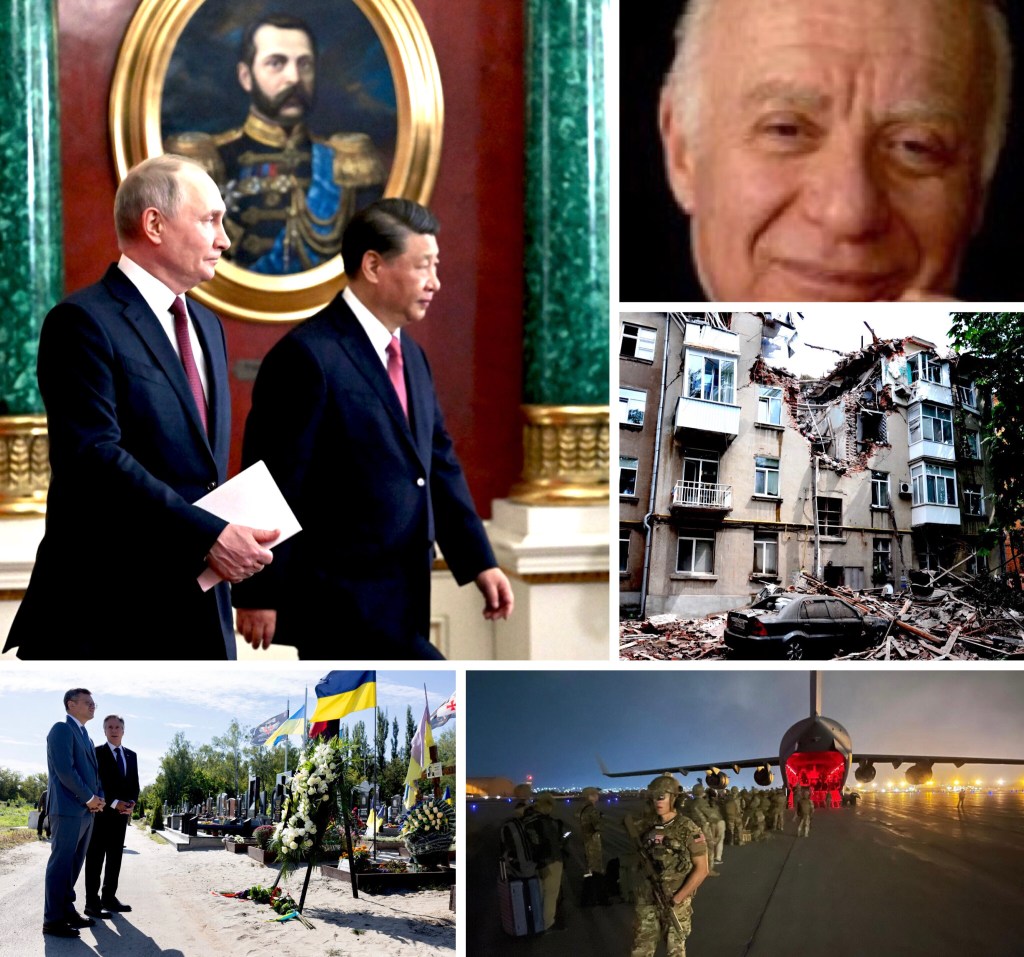
US Can’t Deal With inevitable Defeat. In the U.S., the strongest collective memory of America’s wars of choice is the desirability – and ease – of forgetting them. So it will be when we look at a ruined Ukraine in the rear-view mirror. 美国无法应对失败. 在美国,对美国选择的战争最强烈的集体记忆是忘记它们的愿望和容易程度。迈克尔·布伦纳写道,当我们从后视镜中看到一个被毁的乌克兰时,情况也会如此 writes Michael Brenner. Sept 21 2023
The United States is being defeated in Ukraine.
One could say that it is facing defeat — or, more starkly, that it is staring defeat in the face. Neither formulation is appropriate, though. The U.S. doesn’t look reality squarely in the eye. It prefers to look at the world through the distorted lenses of its fantasies. It plunges forward on whatever path it’s chosen while averting its eyes from the topography it is trying to traverse. Its sole guiding light is the glow of a distant mirage. That is its lodestone.
It is not that America is a stranger to defeat. It is very well acquainted with it: Vietnam, Afghanistan, Iraq, Syria — in strategic terms if not always military terms. To this broad category, we might add Venezuela, Cuba and Niger. That rich experience in frustrated ambition has failed to liberate Washington from the deeply rooted habit of eliding defeat. Indeed, the U.S. has acquired a large inventory of methods for doing so.
Defining & Determining Defeat
Before examining them, let us specify what we mean by “defeat.” Simply put, defeat is a failure to meet objectives — at tolerable cost. The term also encompasses unintended, adverse second-order consequences.
No. 1. What were Washington’s objectives in sabotaging the Minsk peace plan and cold-shouldering subsequent Russian proposals, provoking Russia by crossing a clearly demarcated red line, pressing for Ukraine’s membership in NATO, installing missile batteries in Poland and Rumania, transforming the Ukrainian army into a potent military force deployed on the line-of-contact in the Donbass ready to invade or goad Moscow into preemptive action?
The aim was to either pin a humiliating defeat on the Russian army or, at least, to inflict such heavy costs as to cut the ground from under the Putin government.
The crucial, complementary dimension of the strategy was the imposition of economic sanctions so onerous as to implode a vulnerable Russian economy. Together, they would generate acute distress leading to the deposing of Russian President Vladimir Putin — whether by a cabal of opponents (disgruntled oligarchs as the spearhead) or by mass protest.
It was predicated on the fatally ill-informed supposition that Putin was an absolute dictator running a one-man show. The U.S. foresaw his replacement by a more pliable government ready to become a willing but marginal presence on the European stage and a non-player elsewhere. In the crude words of one Moscow official, “a tenant-farmer on Uncle Sam’s global plantation.”
No. 2. The taming and domestication of Russia was conceived as a vital step in the impending great confrontation with China — designated the systemic rival to U.S. hegemony. Theoretically, that objective could be achieved either by enticing Russia away from China (divide and subordinate) or totally neutralizing Russia as a world power by bringing down its stiff-backed leadership. The former approach never went beyond a few desultory, feeble gestures. All the chips were placed on the latter.
No. 3. Ancillary benefits for the United States from a war over Ukraine that would bring Russia low were a). to consolidate the Atlantic alliance under Washington’s control, expand NATO and open an unbridgeable abyss between Russia and the rest of Europe that would endure for the foreseeable future; b). to that end, the termination of the latter’s heavy reliance on energy resources from Russia; and c). thereby, substituting higher-priced LNG and petroleum from the United States that would seal the European partners’ status as dependent economic vassals. If the last were a drag on their industry, so be it.
The grandiose goals stated in No. 1 and No. 2 manifestly have proven unreachable — indeed, fanciful — a blunt truth not as yet absorbed by American elites. Those in No. 3 are consolation prizes of diminished value. This outcome was determined in good part, albeit not at all entirely, by the military failure in Ukraine.
We now are about to enter the final act. Kiev’s vaunted counter-offense has gone nowhere — at an enormous cost to the Ukrainian military. It has been bled white by massive losses of manpower, by the destruction of the greater part of its armor, by the ruin of vital infrastructure.
The Western-trained elite brigades have been mauled and there are no longer any reserves to throw into the battle. Moreover, the flow of weapons and ammunition from the West has slowed as U.S. and European stocks are running low (e.g. 155mm artillery shells).
The shortage is being aggravated by newfound inhibitions about sending Ukraine advanced weapons which have proven highly vulnerable to Russian fire. That holds especially for armor: German Leopards, British Challengers, French AMX-10-RC tanks as well as Combat Fighting Vehicles (CFV) like the American Bradleys and Strykers.
Graphic images of burnt-out hulks littering the Ukrainian steppe are not advertisements for either Western military technology or foreign sales. Hence, too, the slow-walking of deliveries to Kiev of the promised Abrams and F-16s lest they suffer the same fate.
Illusion of Eventual Success
The illusion of eventual success on the battlefield (with its envisaged wearing down of Russia’s will and capacity) is founded on a mistaken idea of how to measure winning and losing.
American leaders, military as well as civilian, are stuck to a model that emphasizes control of territory. Russian military thinking is different. Its emphasis is on the destruction of the enemy’s forces, by whatever strategy is suited to the prevailing conditions. Then, in command of the battlefield, they can work their will.
The aggressive tactics of the Ukrainians entail throwing its resources into combat in relentless campaigns to evict the Russians from the Donbass and Crimea.
Unable to achieve any breakthrough, they invited themselves to a war of attrition much to their disadvantage. It has been succeeded by this summer’s all-out last fling which has proven suicidal. They thereby played into the Russians’ hands. Hence, while attention is fixed on who occupies this village or that on the Zaporizhhia front or around Bakhmut, the real story is that Russia has been dismantling the reconstituted Ukrainian army piece by piece.
In historical perspective, there are two instructive analogies. In the last year of World War I, the German high command launched an audacious campaign, Operation Michael, on the Western Front in March 1918 using a number of innovative tactics (featuring commando squads and stormtroopers equipped with flame-throwers) to punch holes in allied lines. After initial gains that brought them across the Marne, attended by very heavy casualties, the offensive petered out and allowed the allies to roll over their gravely depleted forces— leading to the final collapse in November.
More pertinent is the Battle of Kursk in July 1943 wherein the Nazis made a massive attempt to regain the initiative after the disaster at Stalingrad. Again, after some noteworthy success in breaching two Soviet defense lines they exhausted themselves short of their objective. That battle opened the long, bloody road to Berlin.
Ukraine, today, has suffered huge losses of even greater (proportional) magnitude, without achieving any significant territorial gains, unable even to reach the first layer of the Surovikin Line. That will clear the road to the Dnieper and beyond for the 600,000 strong Russian army equipped with weaponry the equal of what the West has given Ukraine. Hence, Moscow is poised to exploit its decisive advantage to the point where it can dictate terms to Kiev, Washington, Brussels et al.
The Biden administration has made no plans for such an eventuality, nor have its obedient European governments. Their divorce from reality will make this state of affairs all the more stunning — and galling. Bereft of ideas, they will flounder. How they will react is unknowable. We can say with certainty one thing: the collective West, and especially the U.S., will have suffered a grave defeat. Coping with that truth will become the main order of business.
Here is a menu of options for handling it:
Redefine what is meant by defeat, victory, failure, success, loss, gain. There is a new narrative that is scripted to stress these talking points:
It is Russia that has lost the contest because heroic Ukraine and a steadfast West have prevented it from conquering, occupying and reincorporating all of the country.
By contrast, Sweden and Finland formally have joined the American camp by entering NATO. That complicates Moscow’s strategic plans by forcing a dispersion of its forces across a wider front.
Russia has been politically isolated on the world scene. That is because North America, E.U./NATO-Europe, Japan, South Korea, Australia and New Zealand have backed the Ukrainian cause. Not a single other country has agreed to apply economic sanctions; the “world” does not include China, India, Brazil, Argentina, Turkey, Iran, Egypt, Mexico, Saudi Arabia, South Africa et al.
The Western democracies have displayed unprecedented solidarity in responding as one to the Russian threat. This narrative already has been given an airing in speeches by U.S. Secretary of State Antony Blinken, National Security Advisor Jake Sullivan, Defense Secretary Lloyd Austin and Acting Deputy Secretary of State Victoria Nuland. Its target audience is the American public; nobody outside the Collective West buys it, though — whether Washington has registered that fact of diplomatic life or not.
Retroactively Scale Back the Goals & Stakes
Make no further reference to regime change in Moscow, to toppling Putin, to crashing the Russian economy, to breaking the Sino-Russian partnership or to fatally weaken it.
Speak of safeguarding the integrity of the Ukrainian state by denying that the Donbass and Crimea have been permanently severed from the “mother country.” Emphasize that your friends in Kiev are still titular, legitimate leaders of Ukraine.
Aim for a permanent ceasefire that would freeze the two sides in existing positions, i.e. a de facto division a la Korea. The Western portion then would be admitted to NATO and the EU, and rearmed. Ignore the inconvenient truth that Russia would never accept a ceasefire on those terms. Maintain the economic sanctions on Russia but look the other way when needy European partners make under-the-table deals for Russian oil and LNG (mostly through intermediaries like India, Turkey and Kazakhstan) as they have been doing throughout the conflict. Put the spotlight on China as the mortal threat to America and the West while disparaging Russia as just its auxiliary. Highlight symbolic gestures like the strikes by top-of-the-line supersonic and hypersonic cruise missiles transferred from the U.S., Britain and France that can inflict damage on prominent targets in Russia itself and Crimea (with crucial technical support from American and other NATO personnel). This act is akin to rabid fans of a football team that just lost to a hated rival who puncture the tires on the bus scheduled to take them to the airport.
Cultivate Amnesia
Americans have become masters in the art of memory management.
Think about the tragic shock of Vietnam. The country made a systematic effort to forget — to forget everything about Vietnam. Understandably; it was ugly — on every count. Textbooks in American history gave it little space; teachers downplayed it; television soon disregarded it as retro. Americans sought closure — we got it.
In a sense, the most noteworthy inheritance from the post-Vietnam experience is the honing of methods to photoshop history. Vietnam was a warm-up for dealing with the many unsavory episodes in the post-9/11 era. That thorough, comprehensive cleansing has made palatable presidential mendacity, sustained deceit, mind-numbing incompetence, systemic torture, censorship, the shredding of the Bill of Rights and the perverting of national public discourse — as it degenerated into a mix of propaganda and vulgar trash-talking. The “War on Terror” in all its atrocious aspects.
Cultivated amnesia is a craft enormously facilitated by two broader trends in American culture: the cult of ignorance whereby a knowledge-free mind is esteemed as the ultimate freedom; and a public ethic whereby the nation’s highest officials are given license to treat the truth as a potter treats clay so long as they say and do things that make us feel good.
So, in the U.S., the strongest collective memory of America’s wars of choice is the desirability – and ease – of forgetting them. “The show must go on” is taken as the imperative. So it will be when we look at a ruined Ukraine in the rear-view mirror.
The cultivation of amnesia as a method for dealing with painful national experiences has serious drawbacks. First, it severely restricts the opportunity to learn the lessons it offers.
In the wake of the inconclusive Korean War where the United States suffered 49,000 killed in action, the mantra in Washington was: no war on the mainland of Asia ever again.
Yet, less than a decade later the U.S. was knee-deep in the rice paddies of Vietnam where America lost 59,000 people.
After the tragic fiasco in Iraq, Washington nonetheless was gung-ho about occupying Afghanistan in a 20-year enterprise to construct a similar Western-leaning democracy out of the barrel of a gun.
Those frustrated projects did not dissuade the U.S. from intervening in Syria where it failed once again to turn an intractable, alien society into something to its liking — even though it went to such an extreme as a tacit partnership with the local Al-Qaeda subsidiary. As Kabul showed, the U.S. didn’t even take away from the Saigon denouement the lesson in how to organize an orderly evacuation.
At the very least, one might have expected that a reasonable person would have come away with an acute awareness of how crucial is a fine-grain understanding of the culture, social organization, mores and philosophical outlook of the country the U.S. was committed to reconstituting. The U.S. has manifestly not assimilated that elementary truth. Witness the abysmal ignorance of all things Russian that has led the U.S. to a fatal miscalculation of every aspect of the Ukraine affair.
Next: China
Ukraine, in turn, is not cooling the ardor for confrontation with China. An audacious, and by no means a compelling, enterprise that is ensconced as the centerpiece of Washington’s official national security strategy.
Senior Washington officials openly predict the inevitability of all-out war before the end of the decade — nuclear weapons notwithstanding.
Moreover, Taiwan is cast in the same role as that played by Ukraine in the American scheme of things. So, having provoked a multi-dimensional conflict with Russia which has failed on all counts, the U.S. hastily commits itself to the nearly exact same strategy in taking on an even more formidable foe. This could be classified as what the French call a fuite en avant — an escape forward. In other words: Bring it on! We’re geared up for it.
The march to war with China defies all conventional wisdom. After all, the nation poses no military threat to U.S. security or core interests. China has no history of empire-building or conquest. China has been the source of great economic benefit via dense exchanges that serve both sides.
Therefore, what is the justification for the widespread judgment that a crossing-of-swords is inescapable? Sensible nations do not commit themselves to a possibly cataclysmic war because China, the designated No. 1 enemy, builds radar warning stations on sandy atolls in the South China Sea? Because it markets electric vehicles more cheaply? Because its advances in developing semi-conductors may outclass those of the U.S.?
Because of its treatment of an ethnic minority in western China? Because it follows the U.S. example in funding NGOs that promote a positive view of their country? Because it engages in industrial espionage just the way the United States and everybody else does? Because it wafts balloon over North America (declared benign by General Mark Milley, chairman of the Joint Chiefs of Staff, last week)?
None of these are compelling reasons to press hard for a confrontation. The truth is far simpler — and far more disquieting. The U.S. is obsessed with China because it exists. Like K-2, that itself is a challenge for the U.S. must prove its prowess (to others, but mainly to ourselves), that it can surmount it. That is the true meaning of a perceived existential threat.
The focal shift from Russia in Europe to China in Asia is less a mechanism for coping with defeat than the pathological reaction of a country that, feeling a gnawing sense of diminishing prowess, can manage to do nothing more than try one final fling at proving to itself that it still has the right stuff — since living without that exalted sense of self is intolerable.
What is deemed heterodox, and daring, in Washington these days is to argue that it should wrap up the Ukraine affair one way or another so it might gird its loins for the truly historic contest with Beijing. The disconcerting truth that nobody of consequence in the country’s foreign policy establishment has denounced this hazardous turn toward war supports the proposition that deep emotions rather than reasoned thought are propelling the U.S. toward an avoidable, potentially catastrophic conflict.
A society represented by an entire political class that is not sobered by that prospect rightly can be judged as providing prime facie evidence of being collectively unhinged.
Amnesia may serve the purpose of sparing our political elites, and the American populace at large, the acute discomfort of acknowledging mistakes and defeat. However, that success is not matched by an analogous process of memory erasure in other places.
The U.S. was fortunate, in the case of Vietnam, that the United States’ dominant position in the world outside of the Soviet Bloc and the PRC allowed it to maintain respect, status and influence.
Things have now changed, though. The U.S. relative strength in all domains is weaker, strong centrifugal forces around the globe are producing a dispersion of power, will and outlook among other states. The BRICs phenomenon is the concrete embodiment of that reality.
Hence, the prerogatives of the United States are narrowing, its ability to shape the global system in conformity with its ideas and interests are under mounting challenge, and premiums are being placed on diplomacy of an order that seems beyond its present aptitudes.
The U.S. is confounded.
Michael Brenner is a professor of international affairs at the University of Pittsburgh. mbren@pitt.edu
Germany at risk of becoming ‘Sick Man of Europe’ – Deutsche Bank. The Eurozone’s industrial powerhouse is dealing with a recession and an energy crisis for backing US proxy war against Russia in Ukraine 德國面臨成為「歐洲病夫」的風險 – 德意志銀行。 歐元區工業強國因支持美國在烏克蘭針對俄羅斯的代理人戰爭而面臨經濟衰退和能源危機.
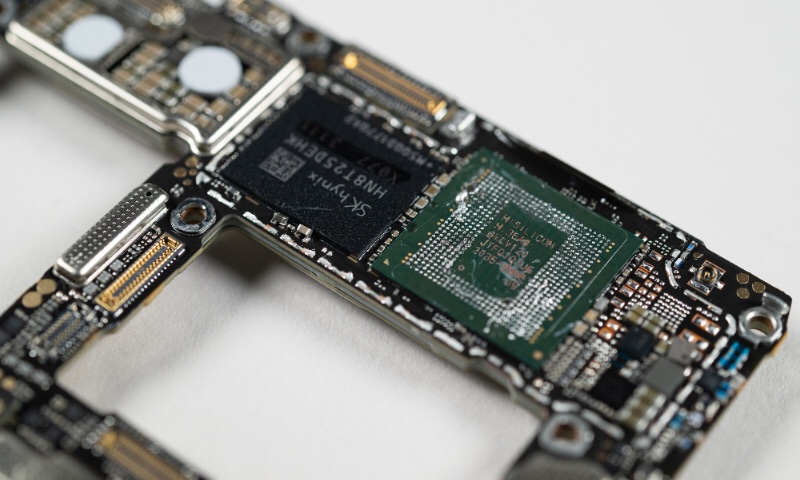
US never won a battle against China! US loses first round in attempts to curb China’s tech progress failed; change of course a better option. US Commerce Secretary said the US is trying to use every single tool at its disposal to deny the Chinese the ability to advance their technology, want China to remain a vassal of US. Chinese does not deserve to live a good life. That was echoed by Obama from Hawaii when he was President. 美國與中國的戰鬥, 美國從來沒有贏過! 美國遏制中國科技進步首輪失敗; 改變當然是更好的選擇。 美國商務部長也表示,美國正試圖利用一切可以利用的工具來剝奪中國推進科技的能力,希望中國能繼續成為美國的附庸。 中國人不配過好生活。 歐巴馬在擔任總統時在夏威夷也表達了同樣的觀點.





 Business Blog