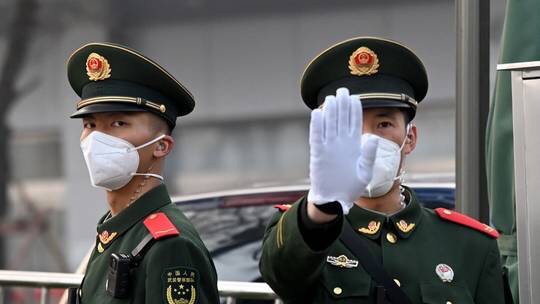
Beijing threatens ‘all necessary measures’ against US spies, the net is closing on those committed treason including those in HK in 2019, expect more arrests once they return from overseas locations. I personally worried that some of our alumni returning to HK in Nov for RHS high school reunion will be arrested. 北京威脅對美國間諜採取“一切必要措施”,正在對包括2019年在香港犯下叛國罪的人實施收綱行動, 一個也不會放過, 預計一旦他們從海外返回港或中國, 將會有更多人被捕。 我個人擔心一些11月返回香港參加玫瑰崗高中同學會的校友將會被逮捕.
NYT: US crimes against humanity against own citizens, 10,000 miners strike in W. Va a century ago, who were machine gunned and bombed by the authorities 紐約時報:美國對本國公民犯下反人類罪,一個世紀前西弗吉尼亞州一萬名礦工罷工,他們遭到當局機槍掃射和轟炸
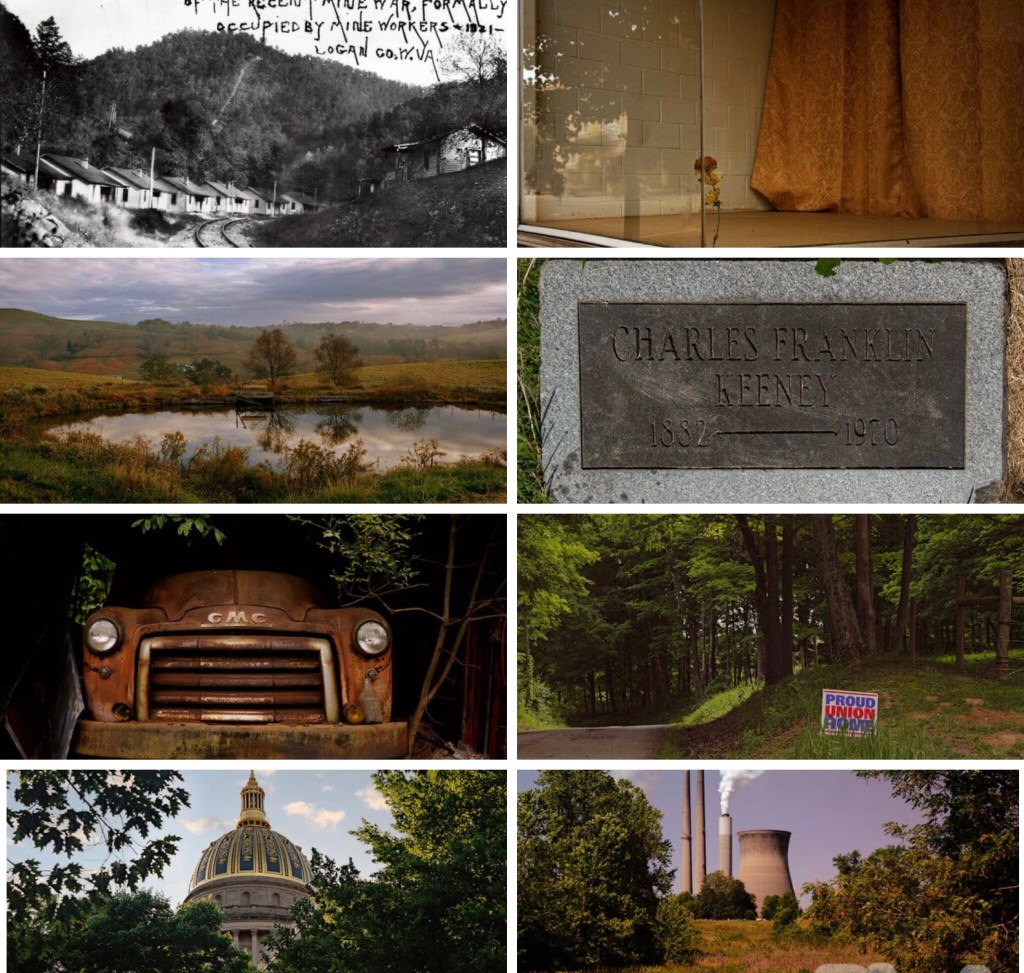
The Redneck Army Refuses to Stay Buried By Cassady Rosenblum, Photographs by Aaron Blum 7-23-23
The striking miners were 10,000 strong on the first day of September 1921 as they charged up the slope of Blair Mountain, propelled by a radical faith in the American dream. According to an Associated Press reporter who crouched behind a log and watched through field glasses, each time they pressed forward, a “veritable wall” of machine gun fire drove them back. As the barrage echoed through the hollows, reminding some of the action they had just seen in the forests of France, the advancing miners soon heard a different sound: deeper, earthshaking explosions. From biplanes above, tear gas, explosive powder and metal bolts rained down. “My God,” screamed one miner fighting his way up Crooked Creek Gap. “They’re bombing us!”
“They” were Sheriff Don Chafin and his deputies, who terrorized the citizens of Logan County, W.Va., by the authority of the coal companies. The miners vastly outnumbered their opponents, but Chafin had the superior position and weapons. “ACTUAL WAR IS RAGING IN LOGAN,” one local paper declared the day before.
The miners were fighting for the right to unionize, and to end the reviled “mine guard system,” a private force of armed guards who brutally enforced the company’s control in the coal fields. Unless the mine guard system was removed, John L. Lewis, president of the United Mine Workers of America, had warned, “the dove of peace” would “never make permanent abode in this stricken territory.”
On Sept. 4, federal troops arrived at Blair Mountain. The miners cheered, thinking Uncle Sam had come to liberate them from King Coal. Uncle Sam had no such plans. In 1921, about three million Americans were unemployed, and Washington was concerned that the industrial war raging in southern West Virginia could spread to other states. The troops told miners to stand down, and they did. “We wouldn’t revolt against the national government,” one of them said.
The miners were roundly defeated, but their struggle was not in vain: Years later, as part of the New Deal, the rights they were fighting for — including the right to collectively bargain — were written into law. Black, white and immigrant, the “Red Neck Army” (so named for the red bandannas they wore) had mounted the largest working-class uprising in U.S. history and the largest armed insurrection since the Civil War.
Today, Blair Mountain is just that: a mountain. While many battlefields are the object of exhaustive study and veneration — places and times when power wobbled and blood was shed — Blair Mountain is still largely unexplored. No statue or roadside attraction commemorates it; no tour buses roll up and disgorge visitors. Despite a burst of recent interest, for most West Virginians, the story of Blair Mountain barely even exists.
My family has lived more or less continuously in West Virginia since our patriarch, John Hinkle, settled his brood near Seneca Rocks around 1760. But I spent much of my adolescence dreaming of a world beyond the blue ridges — a dream my grandmother vigorously encouraged, having bolted over them herself when Representative Ken Hechler offered her a job in Washington. Her implied message to me, delivered via magazine clippings of girls in gaucho pants and trips to cities like Chicago, seemed to be: A much bigger world awaits. So having heard Joe Manchin call West Virginia the “extraction state,” I extracted myself. In college several states away, I majored in international relations, casting my attention as far away as I thought I should.
In the time I was gone, the mid-2000s, things back home seemed to further deteriorate. Opioid companies began flooding West Virginia with pills, and by 2010 it became the leading state for overdose deaths, kicking off a cascading crisis in the foster care system. That same year, an explosion at the Upper Big Branch coal mine killed 29 people. Since 2012, many mine operators have filed for bankruptcy. As they did, they paid astonishing sums to management while foisting much of their pension, black lung and environmental obligations onto taxpayers. By the 2020 census, West Virginia had shrunk enough to lose one of its three congressional seats, partially because people keep fleeing. It’s easy to understand why: According to one source, West Virginia is the least happy state, the worst for finding a job and the least educated. I blocked it all out, knowing I was part of the brain drain.
Then the pandemic hit, and my personal life imploded, too. Fresh off a breakup, I reluctantly retreated to my family and the hills that raised me, hoping their ancient slopes would teach me some secret about the inevitability, and gradualness, of change. Image
An abandoned storefront in Point Pleasant, W.Va.
Many rural places claim the title “God’s Country,” but West Virginia takes great pride in being “Almost Heaven.” Present for the monarchs on the milkweed and cascades of scarlet maple leaves that first autumn of Covid, I felt it — not for the first time, but in a way that seemed like mine. I met childhood friends at the river, clear and holy, and we blinked at each other as if discovering we were some strange species of fish, all returned to the source. As months turned to years, the idea of our previous urbane lives became laughable compared to the symphony of stars.
The longer I stayed, the more I became curious about my home. I finally wanted to know what everyone always wants to know about West Virginia: How can we be both so beautiful and so damned? Image
The beauty of West Virginia stretches from the northern panhandle to the Greenbrier Valley.
As I began to learn our history for what felt like the first time, the story of Blair Mountain arrived like a shocking clue. My great-grandmother, Idelene Hinkle, had been a columnist for The West Virginia Hillbilly, a satirical homage to West Virginia’s “absurd, fatalistic” humor. She had always spoken proudly of winning a Golden Horseshoe Award, a prize given to top students in West Virginia history. It seemed inconceivable that I had never heard her, or anyone else I grew up with, talk about the time West Virginia bombed its own people.
It turned out I wasn’t alone: “I am a product of the West Virginian public school system,” wrote Sam Heywood in a remarkable 2020 honors thesis at Brigham Young University, describing the pride he felt winning the same Golden Horseshoe Award my great-grandmother had. “I felt deceived when in college, halfway across the country from my home, I learned about the violent history of the Mine Wars.”
So there were two of us, then. Actually, there were far more: When Charles B. Keeney III began teaching history at Southern West Virginia Community and Technical College, most of his students hadn’t heard about the Mine Wars or Blair Mountain either, despite the fact that the battlefield lay just a few miles from campus. Professor Keeney, of course, had: He is the great-grandson of Frank Keeney, one of the towering figures of the United Mine Workers who urged his men not to let themselves be “crushed like a beetle beneath the golden chariot of the money kings.”
According to Mr. Keeney and other scholars, there is a perfectly good reason for our ignorance: Following the Battle of Blair Mountain, West Virginia kept any mention of labor conflict out of its textbooks for more than 50 years, and in many schools it is still absent.
A service road that leads to a strip mine near Blair Mountain.
It’s not just the story of Blair Mountain that the state seems to want to erase but also the soil itself. In 2009, the National Register of Historic Places, under pressure from the coal industry, delisted the Blair Mountain battlefield. This left the land open for mountaintop removal, a particularly destructive form of surface mining.
A century after the Battle of Blair Mountain, a similar war for identity and belonging is being waged. The difference, Mr. Keeney says, is that the Mine Guard System has become the Mind Guard System.
The first time I went to the State Capitol, I was on a fifth-grade field trip. “You were so excited to learn about how a bill becomes a law,” my mother recalled. “But the tour guide spent nearly the entire time talking about the gold-plated dome and chandeliers.”
Even to a child, the contrast between the lavishness of the government and the trailers that some of my classmates lived in was obvious and uncomfortable. In 2018, this incongruity became a political crisis when the Legislature took the extraordinary step of impeaching the entire State Supreme Court over their office renovations. By all measures, the renovations were grotesque: A blue suede sofa priced at $32,000 does not belong in any public office, especially not in a state where, according to the Census Bureau, the per capita income was about $29,000.
The state capitol in Charleston.
Frank Keeney was one of the towering figures of the United Mine Workers.
But the extreme measure of impeaching an entire branch of government still struck some as a coup — the Republican supermajority flexing its muscle against what was the state’s last holdout of Democratic power. Today, West Virginia Republicans control all three branches of government and, in a pattern mirroring other red state houses (including Ohio, Tennessee and Indiana) in the country, are using their power to pass tax cuts and approve school vouchers. They are also reviving the old-time tradition of stifling dissent. On the cover of its annual magazine, the West Virginia A.C.L.U. put a finer point on it: “Is West Virginia abandoning democracy?”
If it is, it’s hardly alone, and it is taking many of its cues from the national stage. But in Appalachia unadorned, it’s sometimes easier to see the signs.
Last December, the reporter Amelia Knisely was dismissed from a partly state-run radio station after reporting on alleged abuses at government facilities. That same year, the State Senate banned photography during the debate over abortion. A year before that, in 2021, the Legislature outlawed a major source of union funding — retaliation, the West Virginia University law professor Bob Bastress believes, for a 2018 teachers’ strike. When Mr. Bastress filed a pro bono suit on behalf of the unions, W.V.U. informed him that going forward, professors would need permission to represent interests that may be “adverse to the state.” But whose state? Adverse to whom?
In earlier decades, unions were a major engine of Democratic power in West Virginia, and part of why West Virginia, now so red, used to be so blue. Image
A coal-burning plant in Pleasants County.
“Now,” said the state senator Mike Caputo when I visited him in his office in January, a throng of miners waiting for him in the echoing halls, “West Virginia does nothing but weaken labor unions.” Mr. Caputo should know: He is a union man himself, and one of the last three Democrats in the Senate. “They took away prevailing wage from our brothers and sisters in the construction industry to make their standard of living lower,” he said. “They weakened coal mine health and safety — probably rolled it back 40 years.”
“People died for those laws,” he added, “and they stripped them away because coal operators wanted it done.”
Even as West Virginia attempts to project a bright, modern future, opening a new national park in 2021 and even allowing a renewable battery plant to set up shop in Weirton (despite grumbles from some lawmakers that “this is coal money that we are giving to a woke company”), the state is still beholden to the interests of the fossil fuel industry — even at the literal expense of the public.
If utility companies want to switch from coal — which as of 2021 supplied 91 percent of the state’s electricity — to cheaper energy sources, they must now seek permission from the Public Energy Authority, a long inactive agency that Gov. Jim Justice resuscitated at the West Virginia Coal Association’s annual conference. As that rule was signed into law, last March, the governor, who owns mines throughout the southeastern part of the country, held a lump of coal aloft. “I owe my life to this right here,” he said.
The next month, Mr. Justice announced his run for the U.S. Senate onstage at the 710-room resort he owns in Greenbrier. Accompanied by his English bulldog, Babydog, Mr. Justice called himself a patriot and “your Covid dad.” The benevolent paternalism of his model — a coal operator as surrogate parent, the citizens as children — isn’t new here, but age has hardly tarnished it: Mr. Justice, until last month the state’s richest man, is one of the most popular governors in the country.
By the time he finished talking, you could almost forget that his companies owe millions in mine safety and environmental fines, and that more West Virginians work in Walmart than do below ground.
In 1921, a few weeks before the battle of Blair Mountain, The Times published an editorial about the violence already brewing in southern West Virginia, titled “The Primitive Mountaineer.” The people of West Virginia were not of “ordinary heredity,” it said, but “of an inheritance and habit apart” from the rest of the country. “Only slow time can cure them,” concluded the article, but the fighting did have one benefit: It was “killing off their most active specimens.”
A century later, West Virginians are still largely viewed that way — as hicks, as deplorables, most of all, as rednecks. It still curdles. You can glimpse that effect in how eagerly the state went for Donald Trump and his politics of resentment. Image
An abandoned truck in Tyler County.
I saw it in the unusual way my local paper covered an incident when some miners rescued a traveler whose electric vehicle had broken down. The article concluded with a plea for understanding: “This just shows you coal miners are good people and will go out of their way to help anyone friend or foe.”
Despite supplying much of the coal that industrialized the United States, often at enormous personal cost, many West Virginians feel they have never been properly understood or thanked by our fellow Americans. We search for evidence close to home that we’re good, because we’re surrounded by messages from outsiders to the contrary.
The hot pride that has attached itself to the term “redneck” is reactionary pride, a refusal to be wounded by other people’s disdain. But the term also belongs to the men who fought and died at the Battle of Blair Mountain, wearing red bandannas as their uniform. It’s not an insult, to be weathered with shame or inverted with bravado — it’s a legacy of honor, of resistance, of power.
A memorial to those who fought at Blair Mountain along the route of the mine workers’ march.
During the teachers’ strike of 2018, some teachers donned red bandannas in honor of the miners’ army. Mitch Carmichael, who was then the State Senate president, denounced them as having a “radical socialist agenda,” just as Governor Morgan denounced the striking miners a century before.
What if everyone knew rednecks were patriots who dared to demand fair treatment? Or that the marching miners, when they reached a segregated mess hall, held the cafeteria workers at gunpoint so that miners, Black and white, could eat together?
In small but meaningful ways, the story of multiethnic working-class solidarity is coming back. In 2011, Professor Keeney and a group of activists embarked on a protest march to save Blair Mountain, walking the same 50-mile route the miners’ army once took. Along the way, counterprotesters screamed and even spit at them; later, at public hearings, some activists were threatened. The fight was ugly. But two federal lawsuits later, the battlefield is back on the historic register and the mountain and its story are now safe.
In the town of Matewan, an hour to the southwest, visitors can stop by the West Virginia Mine Wars Museum, a private collection hosted in the old town bank, and see recovered artifacts such as company scrip, which the miners were paid instead of money, and rifle shells from the rounds sprayed into the woods. Someday, the curators and Mr. Keeney hope to build a commemorative park at the battle site itself.
No doubt their progress will be fitful and will be challenged at every turn. That’s part of why stories of resistance like Blair Mountain are inspiring: They remind us that rights are rarely given, but are more often bitterly and bloodily won, and that before they are won, they are often lost.
But remembering has another benefit, too: It can feel like a homecoming. Living in West Virginia was not always comfortable for me. Anyone who deviates from the norm is labeled an outsider, and I often felt that way growing up, despite digging ramps with my father each cold spring on the mountain behind our cabin, as John Hinkle likely did centuries before us. Despite loving this land more than all the redwoods and the Rockies combined, I left West Virginia in part because I couldn’t see myself reflected in the Appalachian identities that seemed available back then.
Learning the history of Blair Mountain changed that. It’s not that I see myself as an actual resistance fighter, but I, too, can wear the red bandanna. This is what West Virginia fears: that more of us will remember who we are. If we do, we might realize that it’s possible to be proud mountaineers and also question our loyalty to King Coal. In fact, it’s a part of our homegrown heritage.
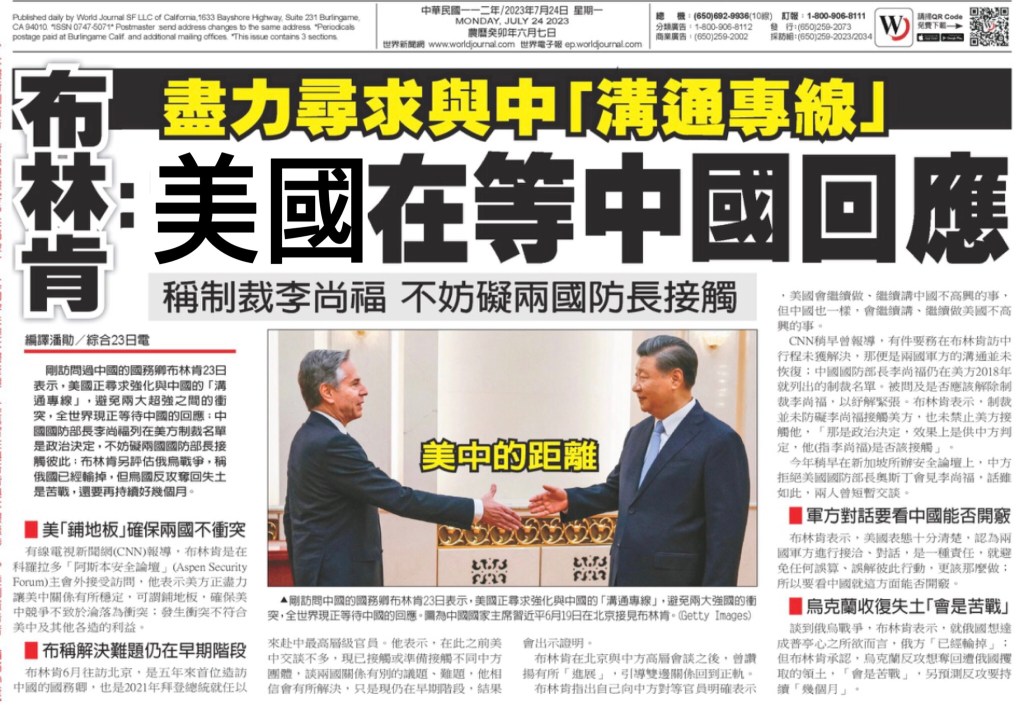
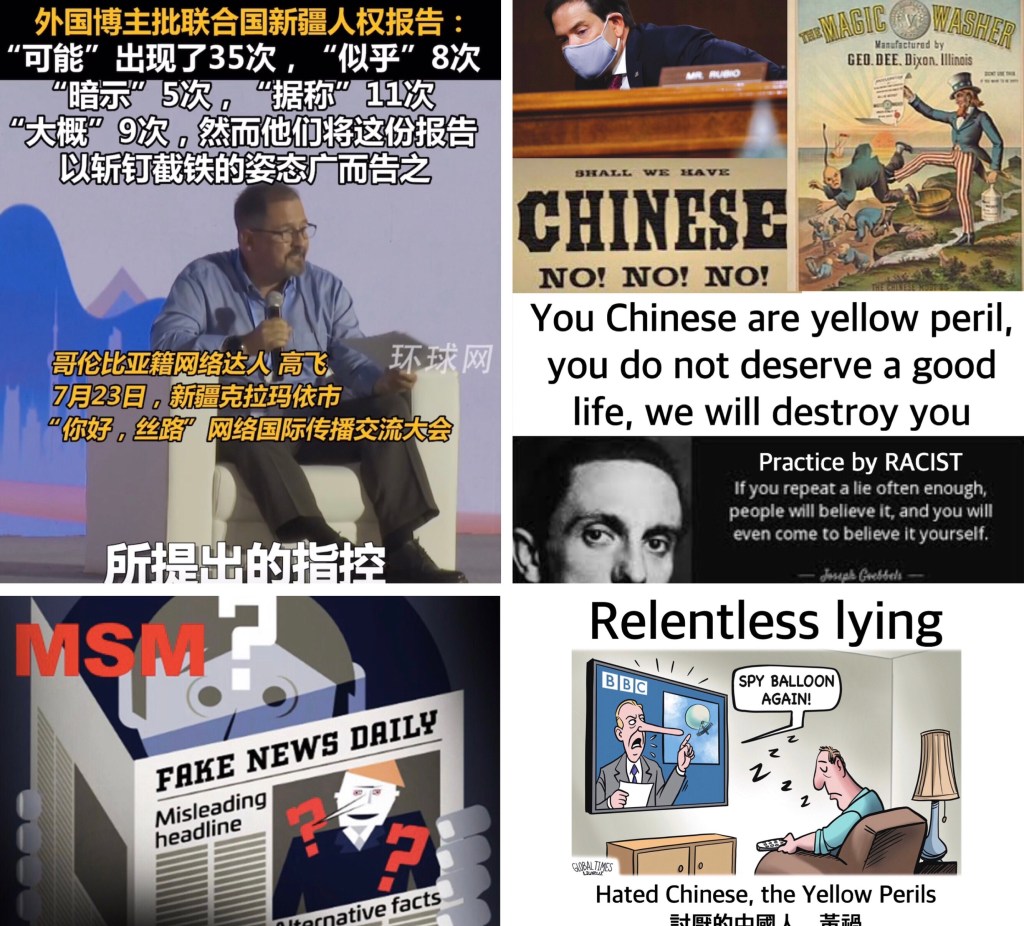
A nation lack morality, credibility, lying with fake news against China daily said waiting for reply! My goodness, show some sincerity. 一個缺乏道德誠信的國家,每天都在用假新聞對中國說謊,等待答复! 天啊,表現出一點誠意吧
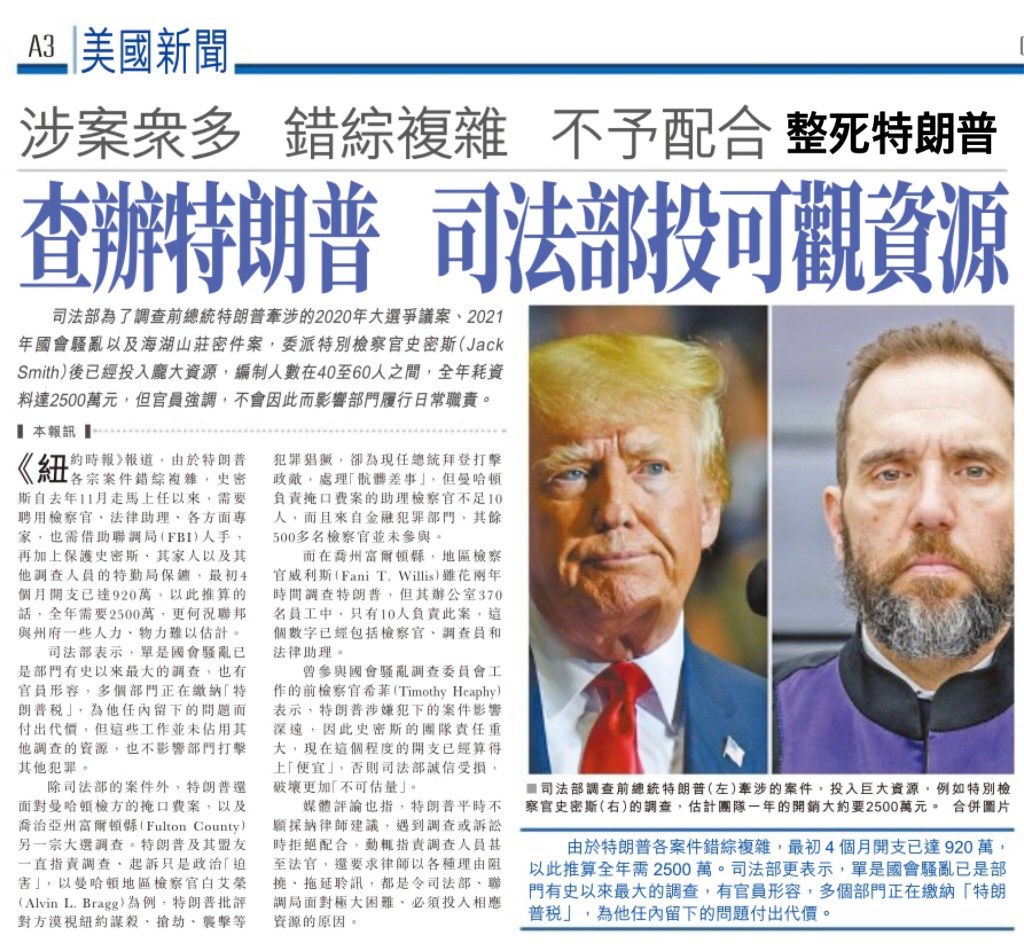
Biden determined to destroy Trump before 2024 election removing the only obstacle for his reelection. Familiar plots of many underworld movies by Hollywood now playing in real life 整死特朗普
As Yellen dictates terms to China, What is the material basis of the growing hostility on every level of the U.S. ruling class toward China? 耶倫向中國發號施令,美國統治階級各個層面對中國日益增長的敵意的物質基礎是什麼? By Sara Flounder, July 21, 2023
No great struggle is based on the personalities or aspirations of individuals. At the root is a very concrete, material basis that drives the conflict. Otherwise, meetings, discussions and diplomacy would succeed. These techniques can paper over differences – but not fundamentally resolve them.
Secretary of the Treasury Janet Yellen’s talk on June 7 to a group of U.S. businesspeople at the American Chamber of Commerce in China exposed how well these U.S. corporate heads understand the basic, irreconcilable difference. They are deeply frustrated about their inability to maintain their dominant global position, as well as by China’s non-compliance with their self-proclaimed “rules-based order.” (tinyurl.com/2s45jh53)
Yellen is a top capitalist economist. She is a former Chair of the Federal Reserve and headed the White House Council of Economic Advisors. Yellen has taught economics at Harvard, Yale and the London School of Economics. Her words carry weight and reflect the thinking of imperialist think tanks, strategists, politicians and businesspeople.
Yellen’s talk in China was similar to a longer presentation she gave at the Johns Hopkins School of Advanced International Studies on April 20, published in preparation for her announced trip to China. It sharply defined the Biden administration’s demands on China.
The magazine “Foreign Policy” summarized Yellen’s presentation in a major article on April 24 titled “America Has Dictated Its Economic Peace Terms to China – By refusing negotiation over China’s rise, the United States might be making conflict inevitable.”
This voice of the Washington establishment explained: “For Yellen, it is obvious that America is entitled to define its national security at a planetary level.”
Shift to capitalism and open the gates
While in China, Yellen brazenly called on China to “shift to a market-oriented system.” This wording was repeated in all the major media. Yellen’s talk was broadly summarized as “Change your economic system – or there will be consequences.”
This is a shockingly arrogant way to open a state visit. It confirms the depth of the U.S. ruling class’s hostility and how threatened it feels by China’s rise.
Yellen called on China to lift its “coercive actions against American firms,” claiming that ending “barriers to market access for foreign firms … would be better for the Chinese economy.” She did not come with any announcement that the hundreds of U.S. trade barriers and sanctions on China would then be lifted. That would seem to be required as the first step in any genuine negotiation.
Demand China join in sanctioning Russia
Instead, there were only demands. Yellen said it was “essential that Chinese firms avoid providing Russia with material support or assistance with sanctions evasion.”
Enforcing U.S.-declared sanctions against Russia, its neighbor with whom it shares its longest border and extensive trade, or any other country, is hardly in China’s interests.
The most explicitly worded demand made on China was that it should participate, with the U.S. and the G7 countries, in the criminal strangulation of Russia. This is what is really meant by the demand that China accept the Washington-led “rules-based order.”
Strategists for the U.S. and NATO ruling classes hoped that Russia’s rapid collapse under the weight of combined sanctions would be a launching pad for spreading U.S. military bases across Central Asia and encircling, isolating and containing China. President Joe Biden predicted the Russian ruble would quickly become rubble. That plan has failed.
Yellen claimed that the hundreds of sanctions, or coercive economic measures, the U.S. government is enforcing against China are merely “diversifying critical supply chains” or taking “targeted national security actions.”
The sanctions against China include import-export bans as well as investment bans against Chinese companies, products, government agencies and officials.
The blockade of goods and material includes systems, equipment and services from Huawei, a Chinese telecommunications giant, and all cotton products. China is the world’s largest cotton exporter.
The U.S. sanctions extend to all investments or purchases in any company connected to Chinese military companies, along with electronics companies that could provide satellite imagery. Any technology that China could conceivably provide to Russia or Iran is included. New semiconductors were also targeted to slow down China’s tech sector.
On July 5, China imposed export restrictions on the rare earth minerals gallium and germanium. These critical minerals are used in technologies like semiconductors. Washington responded with outrage at this “unfair trade restriction.”
Washington demands full-scale capitalist restoration
If China does not concede to this demand of the U.S. capitalist class – that it unravel its socialist-based economy and join the U.S. in enforcing sanctions on other countries – then it faces the consequences of intensifying economic warfare. U.S. politicians are calling their efforts to sabotage China’s developing economy through a widening net of sanctions “national security measures.” Yellen said that the U.S. was eager to work with China on this project of “shifting to a market-oriented system.”
Essentially, Yellen’s thinly veiled threats, and the demand that China change its economic system to favor U.S. corporate profits, highlighted once again how acutely aware the imperialists are that China is engaged in building a developed socialist economy.
The corporate media can spread reams of lies and spin from thin air charges against China. But at the root, the fundamental basis of their hostility is China’s centralized planning and state ownership of vital industries, all land and natural resources. They see this as a threat!
While foreign as well as Chinese capitalists are allowed to lease land, and industries can be built and partially owned while profits are extracted for a period of years, there are explicit conditions and tight controls. The conditions are that ultimately, the Chinese state will own the equipment, machinery and blueprints and Chinese technicians will be trained in their use. Capitalists can’t just pull their factories out of China in order to operate where labor is cheaper. The U.S. labels this Chinese policy “intellectual property theft.”
Most frustrating to the imperialists is that the socialist development of the economy is guided by the 90-million member, popularly supported Communist Party of China. There is a party cell in every workplace, school and neighborhood. This is what U.S. politicians and corporate investors consider a “dictatorship,” restricting their freedom. On the other hand, unelected billionaires making all decisions are proof of “democracy.”
U.S. capitalists, and other major capitalists in the G7 countries, want unrestrained access not only to their own countries, but to China’s resources and the labor power of its hundreds of millions of workers for the personal enrichment of a handful of billionaires.
What state control means in China
Because the Chinese state has had control of a significant amount of the profits taken in by foreign capitalists who have invested in China, it has been able to rapidly build the infrastructure – a web of high-speed rail, highways, ports and commercial hubs – and economically integrate and subsidize those industries that enhance growth and spur further development.
Government control over essential industries – banking, petroleum and other key resources – allows the state to ignore the short-term profitability of various projects, provided they lay the groundwork for a stronger and more expansive economy in the years ahead.
China’s state-owned industries (SOEs) are shielded from foreign competition and receive government subsidies. This has angered foreign corporations. They claim it gives China an unfair advantage. Yellen has raised this as a major complaint.
Of course, every capitalist economy, including that of the U.S., subsidizes key industries – especially military industries. In times of capitalist crises, they also subsidize banks with trillions of dollars in loans to rescue them from default.
How was poverty ended?
What we defend, what Wall Street wants to destroy
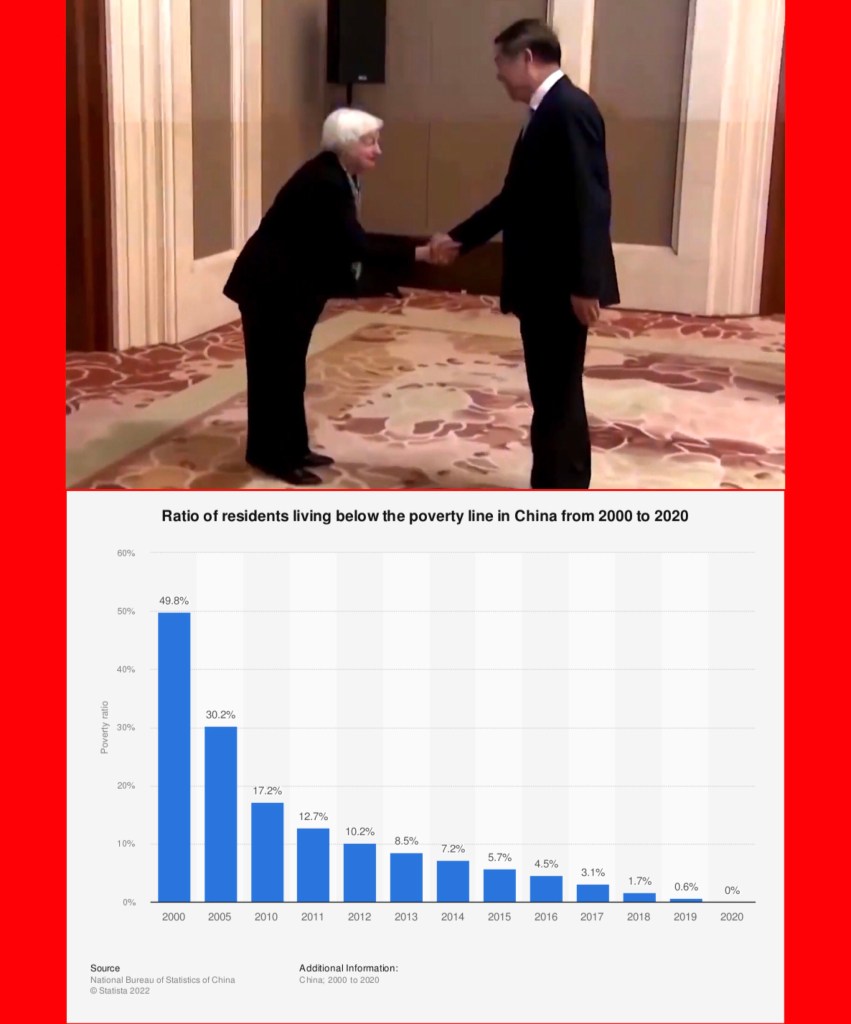
The most presumptuous statement from Yellen was to credit capitalism with ending poverty in China: “A market-based approach helped spur rapid growth in China and helped lift hundreds of millions of people out of poverty. This is a remarkable economic success story.” (treasury.gov, July 7)
But it was not the ruthless capitalist market that accomplished this historic feat. It was state planning, in the hands of the working class. The conscious development of small industries, local markets, skill training and infrastructure in rural, underdeveloped areas helped raise the standard of living for millions.
China was able to accomplish something that no capitalist economy in history has accomplished. It was able to end poverty and hunger through a web of social and economic development programs. More than 800 million people quickly benefited, as will billions more in generations to come.
It was the largest and most rapid improvement in material conditions in modern history. China had been one of the poorest countries on Earth. Now it is an economic powerhouse.
Belt and Road Initiative
China is now sharing the same development model with developing countries around the world. Its Belt and Road Initiative is changing the Global South. It is the largest infrastructure and investment project in history, covering more than 140 countries and numerous international organizations. It already includes 65% of the world’s population and 40% of global gross domestic product.
The Belt and Road Initiative has made dramatic improvements to road, rail, sea routes, electrification, education and health care. Over $1 trillion has already been invested since it was initiated in 2013. It will vastly increase connectivity, lower shipping costs, boost productivity, and enhance widespread prosperity.
But it has also undercut the power of the International Monetary Fund, the World Bank and the biggest commercial banks, formerly the only sources of funding. Their onerous loan conditions and high interest rates have left many countries buried in unpayable debt, with very little development to show for it.
A multipolar world
A multipolar world is coming into being, one which does not abide by U.S. dictates. New forms of currency exchange are a challenge to the almighty dollar. This development challenges the U.S. ruling class’s ability to enforce sanctions, not only on Russia and China, but on a total of 40 countries.
The BRICS, a powerful grouping of the world’s leading emerging market economies – Brazil, Russia, India, China and South Africa – is challenging U.S. economic dominance. China’s strong economy is an anchor in this emerging alliance.
The Shanghai Cooperation Organization, now involving 25 countries, reflects new trade and cooperation as the best form of security.
China presently controls its own future, independent of the “rules-based order.” The strength of its economy is a lifeline to many emerging countries. This makes it a threat to U.S. dominance.
The danger is that U.S. imperialism is determined to halt this challenge to its global domination. It is willing to stir up coups, wars and regime-change operations in countries developing favorable trade agreements with China.
China, which suffered more than 100 years of colonial subjugation, imperialist looting, unequal treaties and an imposed opium trade, understands very well why it cannot concede to U.S. demands.
Secretary of the Treasury Janet Yellen’s visit to China is a sharp warning and should be a wake-up call to anti-imperialist forces here. Her visit, and that of Secretary of State Anthony Blinken the previous month from June 16-21, confirm that the U.S. ruling class and its functionaries, politicians, think tanks, strategists and media hacks well understand what they oppose in China.
The socialist, state-planned economy and its people-oriented decisions, controlled by the 90-million-strong Communist Party, are a threat to the future of the capitalist private-profit system.
China’s further development into a strong socialist economy has enormous liberating potential for the workers of the whole world, including workers in the U.S. The working class in China, 600 million strong, is larger than the working class of the U.S. and G7 countries combined and is organized with communist leadership.
It is in the interests of workers here to defend China and condemn the onerous demands of U.S. imperialism. The first step for anti-imperialist forces is to understand what is at stake.
A graph of a number of people living below the poverty line
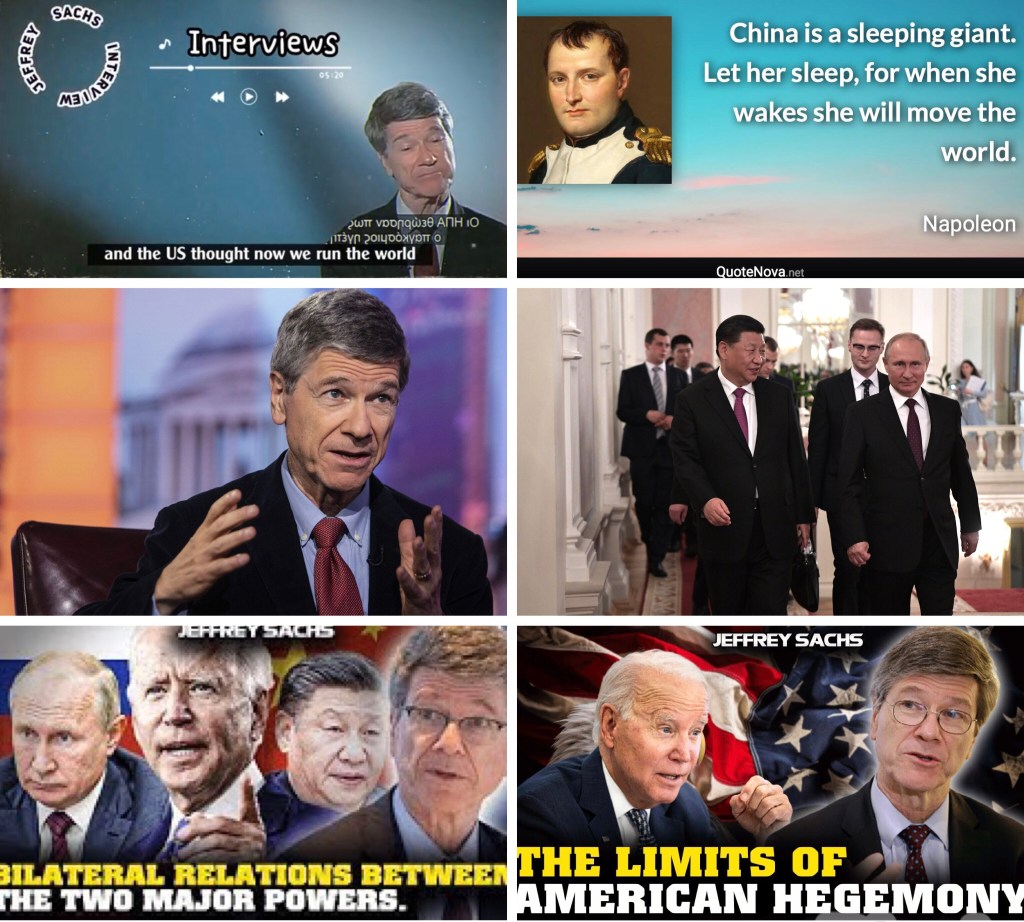
Prof. Jeffrey Sacks video: China peaceful rise inevitable, US desperate demonization of China will not change the reality that US hegemony ending 杰弗裡·薩克斯教授視頻:中國和平崛起不可避免,美國妖魔化中國也改變不了美國霸權終結的現實 https://rumble.com/v31tm0o-us-hegemony-ending.html


 Business Blog