HK democratically elected LEGCO member video: More US foreign agents arrested in HK 國安再出手,郭榮鏗家人被帶走,兄長大有來頭?眾志之後,國安著手職工盟餘孽?陳穎欣2023.07.20 https://youtu.be/lJpIlA7aInY 👈

HK democratically elected LEGCO member video: More US foreign agents arrested in HK 國安再出手,郭榮鏗家人被帶走,兄長大有來頭?眾志之後,國安著手職工盟餘孽?陳穎欣2023.07.20 https://youtu.be/lJpIlA7aInY 👈
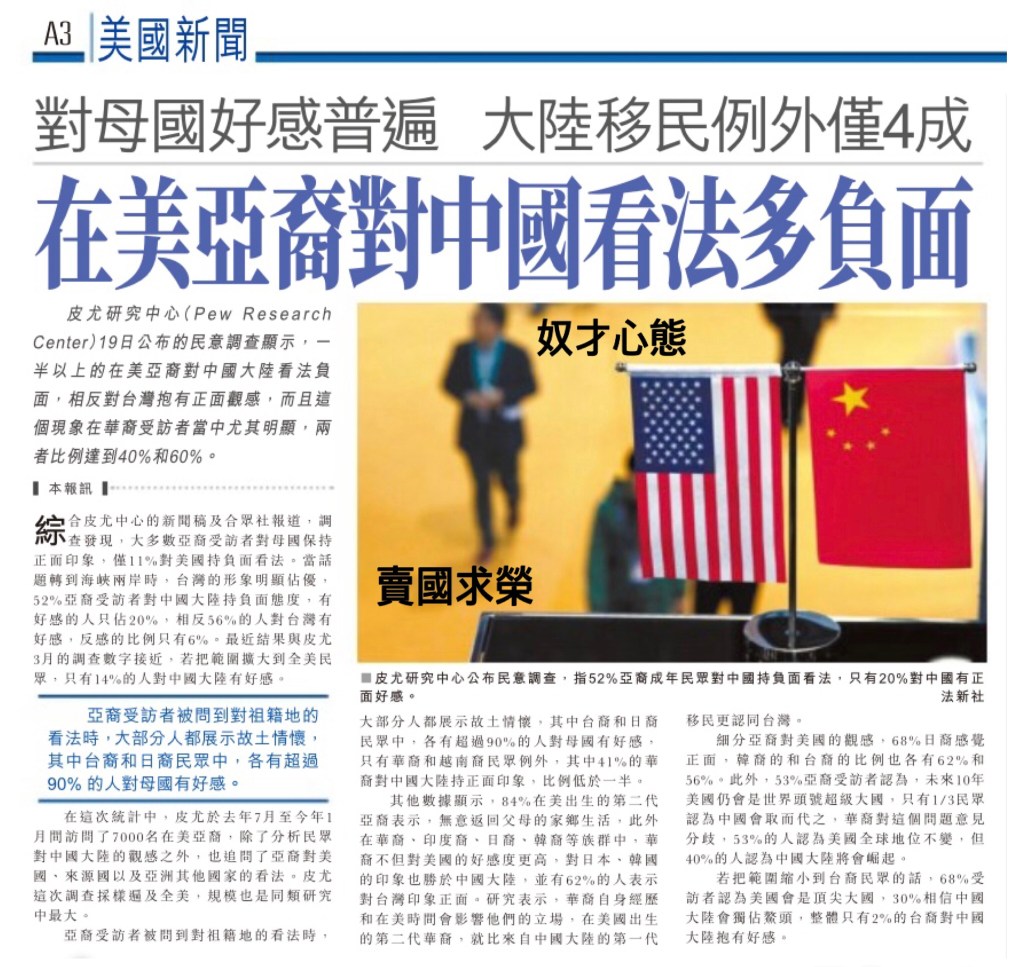
Slave mentality traitorous 奴才心態 賣國求榮
Hunter need one! The latest advances in artificial intelligence could soon lead to sex dolls coming “alive” and dating sites being flooded with realistic AI avatars, former Google X chief business officer: Mo Gawdat https://www.tiktok.com/t/ZT8RxXceT/

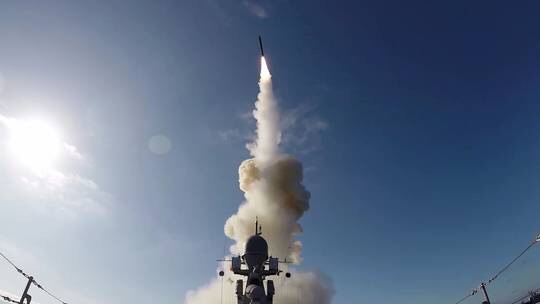
No free lunch: The Russian Defense Ministry has reported conducting “retaliatory strikes” on targets in Ukrainian port cities for 3rd consecutive day in response to a naval drone attack on the Crimean Bridge https://www.tiktok.com/t/ZT8Rxxke4/
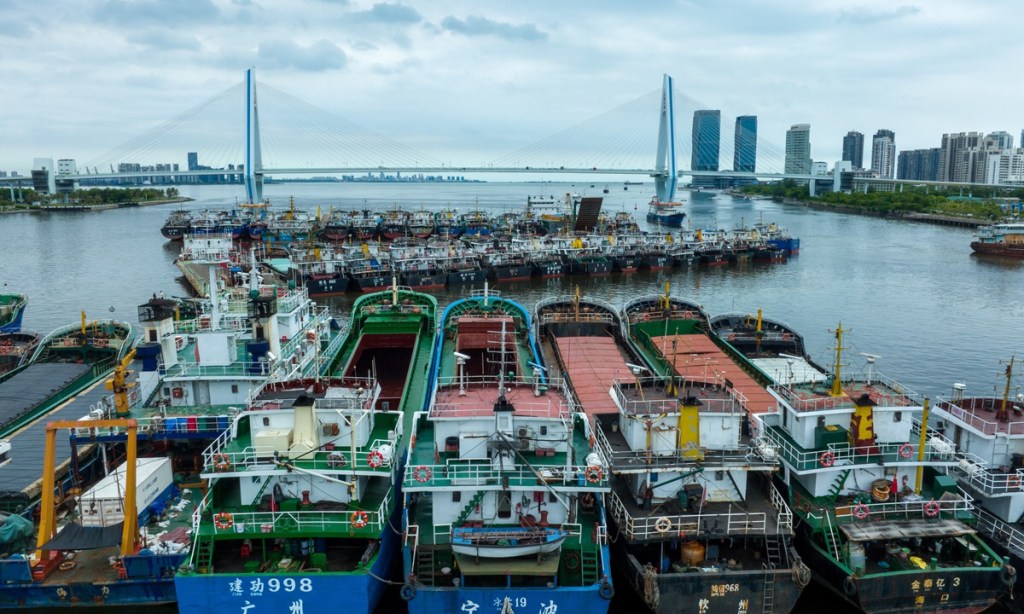
China unveils ship meteorological routing center in Beijing, aiming to speed up establishment of oceanic weather navigation system by Du Qiongfang Jul 20 2023
The China Meteorological Administration unveiled its meteorological routing center in Beijing on Thursday. The center is expected to assure the safe and economic voyage of vessels and accelerate the establishment of China’s own oceanic weather navigation system.
According to the administration, the smooth and safe operation of sea transportation is closely related to economic and social development. Ship weather routing plays a key role in dealing with typhoons, rough seas, ensuring voyage safety and reducing casualties. It is an important guarantee for ships’ safe and efficient voyages, Chinese outlet The Paper reported on Thursday.
Meteorological routing is the procedure of selecting the best route for a vessel based on weather forecasts, sea conditions and the vessel’s performance characteristics so it can avoid rough weather and seas, arriving at its destination through the shortest time and distance, thus reducing fuel consumption, improving operational efficiency and ensuring safety.
The establishment of China’s own routing technology system will provide a new option for assuring the safety of ocean voyages and shipping operations, which will benefit the development of China’s maritime trade and its supply chain, Wu Minghua, a veteran shipping analyst, told the Global Times on Thursday.
A service system for full-chain oceanic weather navigation that integrates the meteorological routing centre, platforms, vessels and a website has been available. Its mode of combining both onshore and onboard meteorological navigation is designed to meet the autonomous navigation needs of vessel operators while providing monitoring and information services for fleet and weather navigation to shipping and cargo enterprises.
China began to build its oceanic meteorological navigation system in 2017 in response to the national Belt and Road Initiative and to serve the country’s maritime power strategy. Since then, the country has kicked off the construction of a meteorological navigation technology system based on Fengyun meteorological satellites and the numerical weather prediction system under the China Meteorological Administration.
According to Wu, with the advancement of technology, China will develop a certain degree of advantage in the worldwide oceanic meteorological navigation field while providing more precise navigation services to both Chinese and overseas shipping companies, fishing boats as well as cruises traveling international routes.
The new-generation meteorological routing system was established via breakthroughs in technological fields such as intelligent ship navigation, navigational risk assessment and ship speed loss algorithms.
As of today, the system has supported nearly 8,000 voyages by more than 60 shipping companies. Navigation services have achieved an average route optimization rate of 30 percent, resulting in significant savings in navigational distance and time. On average, each voyage has saved approximately 19 nautical miles, with some voyages shortening by up to 300 nautical miles, equivalent to saving one day of voyage time, according to reports.
In the future, the center will further enhance its capabilities in oceanic meteorological forecasting and establish a comprehensive system for China’s oceanic meteorological navigation industry in a bid to secure the high-quality economic and social development of the country, media said.
Video: American billionaire married a Beijing girl & settled in China since 1974, he witnessed the peaceful rise of China 美国亿万富豪娶小14岁北京女孩,從1974定居中国, 見證中國和平掘起 https://rumble.com/v310w3c-chinas-half-a-century-of-struggles.html
https://www.tiktok.com/t/ZT8RmYF1M/
Complete 45 minutes video https://www.youtube.com/watch?v=YOcbkx8yICc

The US’s Reckless Arming of Taiwan. As Washington follows the neocon Wolfowitz Doctrine in East Asia, Prof. John V. Walsh MD in SF says U.S. provocation must stop. Biden should instead take up China’s offer of peaceful coexistence
The Island of Taiwan has been turned into a “powder keg” by the infusion of U.S. weaponry, pushing the Taiwanese people into the “abyss of disaster.”
These are the words of the Chinese Defense Ministry in reaction to the recent $440 million sale of U.S. arms to the island. And now the U.S. is also giving, not selling, arms to Taiwan, courtesy of the U.S. taxpayer
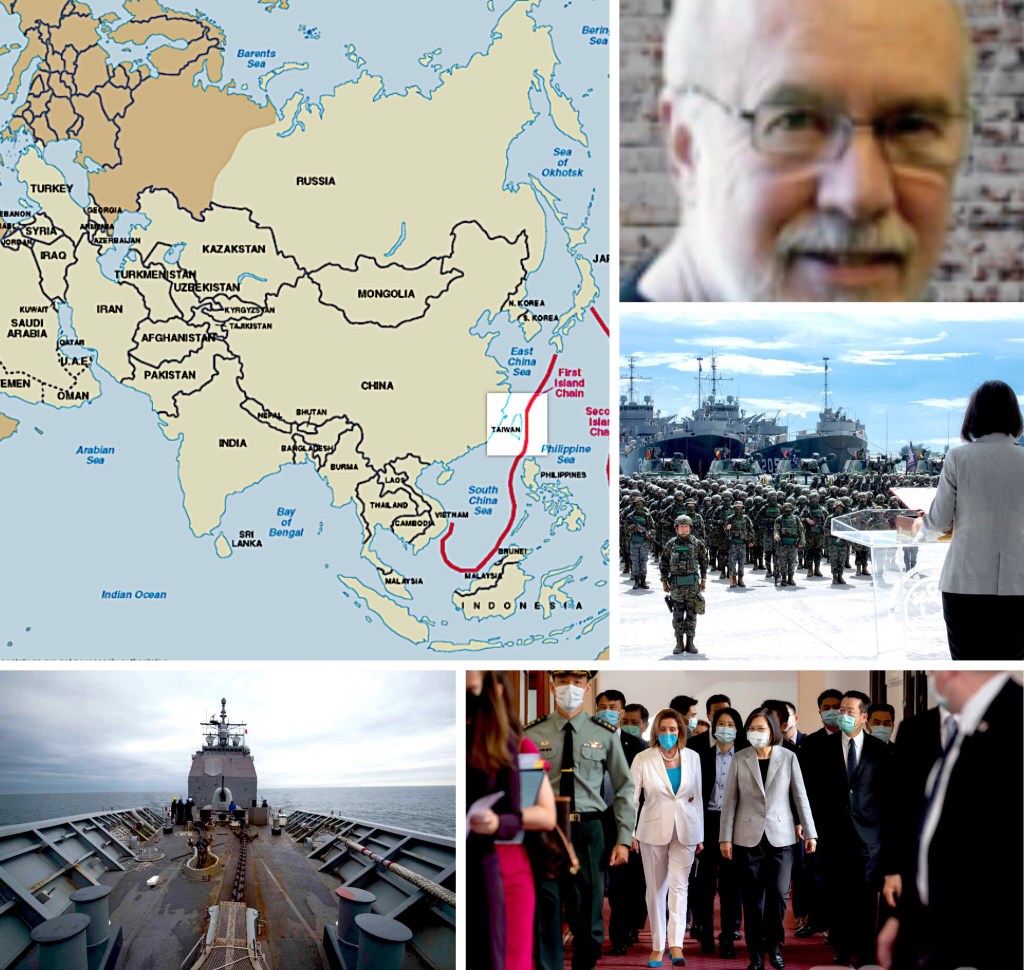
Taiwan is but one in a series of islands along the Chinese coast, often called The First Island Chain, which now bristles with advanced U.S. weapons. These are accompanied by tens of thousands of supporting U.S. military personnel and combat troops.
The First Island Chain extends from Japan in the north southward through Japan’s Ryukyu Islands which include Okinawa, to Taiwan and on to the northern Philippines.
U.S. ally, South Korea, with a military of 500,000 active-duty personnel and 3 million reserves is a powerful adjunct to this chain. In U.S. military doctrine the First Island Chain is a base to “project power” and restrict sea access to China.
Taiwan is at the center this string of islands. It is considered the focal point of The First Island Chain strategy. When the fiercely hawkish Cold Warrior, Secretary of State John Foster Dulles, conceived the strategy in 1951, he dubbed Taiwan America’s “unsinkable aircraft carrier.”
First and Second island chains at East Asian island arcs. (DoD, China Report 2006, Public domain, Wikimedia Commons)
Taiwan is now one source of contention between the U.S. and China. As is often said but rarely done, the pursuit of peace demands understanding the point of view of those marked as adversaries. And, in China’s eyes, Taiwan and the rest of these armed isles look like both a chain and a noose.
How would the U.S. react in a similar circumstance? Cuba is about the same distance from the U.S. as the width of the Taiwan Strait that separates Taiwan from the Mainland. Consider the recent U.S. reaction to rumors that China was setting up a listening post in Cuba. There was a bipartisan reaction of alarm in Congress and a bipartisan statement that such an installation is “unacceptable.”
What would be the reaction if China armed Cuba to the teeth or sent hundreds of soldiers there as the U.S. has done to Taiwan? It is not hard to imagine. One immediately thinks of the U.S. sponsored invasion of Cuba at the Bay of Pigs and later the Cuban missile crisis.
Clearly the arming of Taiwan is a provocative act that pushes the U.S. closer to war with China, a nuclear power.
The Secessionist Movement in Taiwan
Aug. 2, 2022: U.S. House Speaker Nancy Pelosi in Taipei with Taiwan’s President Tsai Ing-wen. (Wang Yu Ching, Office of the President, CC BY 2.0)
According to the One China Policy, the official policy of the U.S., Taiwan is part of China. The U.N. took the same position in 1971 with passage of Resolution 2758 (also known as the Resolution on Admitting Peking) which recognized the Peoples Republic of China as the legitimate government of all of China and its sole representative in the U.N.
In recent decades a secessionist movement has developed on the island of Taiwan, a sentiment represented by the DPP (Democratic Progressive Party). Currently Tsai Ing-wen of the DPP is president. But in the local elections of 2022, the DPP lost very badly to the KMT (Kuomintang) which is friendly to the Mainland and wishes to preserve the status quo or “strategic ambiguity,” as it is called.
Tsai built the DPP’s 2022 campaign on hostility to Beijing, not on local issues. And at the same time her government passed legislation to increase the compulsory service time for young Taiwanese males from six months to a year. Needless to say, this hawkish move was not popular with the under-30 set.
Polling in 2022 showed that an overwhelming majority of Taiwanese now want to preserve the status quo. Only 1.3 percent want immediate unification and only 5.3 percent want immediate independence.
Compared to previous years, a record 28.6 percent of those polled said they preferred to “maintain the status quo indefinitely,” while 28.3 percent chose the status quo to “decide at a later date,” and 25.2 percent opted for the status quo with a view to “move toward independence.”
Thus, a total of 82.1 percent now favor the status quo.
Not surprisingly, every prominent presidential candidate professes to be in favor of the status quo. However, DPP candidates also contend there is no need to declare independence since in their eyes Taiwan is already independent.
The stated policy of the People’s Republic of China (PRC) is to seek peaceful reunification with Taiwan. Only if the secessionist movement formally declares independence does Beijing threaten to use force. Clearly the Taiwanese do not wish to find themselves in the position of Ukrainians, cannon fodder in a U.S. proxy war.
[Related: Making Taiwan the Ukraine of the East]
Guided-missile cruiser USS Chancellorsville transiting Taiwan Strait in 2020. (U.S. Navy, Gregory N. Juday)
Here the U.S. might once more consider how its alleged enemy, China, sees things and might react to a formal act of secession and declaration of independence by Taiwan.
The U.S. might be guided by its own history. When the Confederate States seceded from the Union, the U.S. descended into the bloodiest war in its history with 620,000 soldiers dead. Moreover, a secessionist Taiwan, as an armed ally of the U.S., represents to China a return to the “Century of Humiliation” at the hands of the colonial West.
Given these circumstances, arming Taiwan clearly creates a “powder keg.” A single spark could ignite it.
It is difficult to avoid the conclusion that the U.S. is trying to gin up a proxy war that would engulf East Asia, damaging not only China but other U.S. economic competitors such as Japan and South Korea. The U.S. would come out on top. It is the neocon Wolfowitz Doctrine put into play. But in the nuclear age such stratagems amount to total insanity.
If some Taiwanese hope that the U.S. will come to its aid, they should ponder carefully the tragedy of Ukraine. Somewhere between 150,000 and 200,000 Ukrainian soldiers have lost their lives so far and millions turned into refugees.
A similar U.S. proxy war in Taiwan could easily turn into a full-scale conflict between the world’s two largest economies, certainly triggering a global depression and perhaps a nuclear exchange.
And U.S. President Biden has committed to send troops to fight the Peoples Liberation Army should hostilities break out. So, the situation is even more perilous than the one in Ukraine.
[Related: Biden’s Vow of US Military Response Over Taiwan]
None of Washington’s Business
When all this is considered, arming Taiwan is asking for trouble on a global scale. Taiwan and Beijing can settle their disagreements by themselves. Frankly put, disagreements between the two are none of America’s business.
So, those in the U.S. must stop the government from arming Taiwan. The U.S. military needs to get out of East Asia. It is an ocean away, and no power there is threatening the U.S. Chinese warships are not off the U.S. Pacific coast, nor are Chinese troops or Chinese military bases anywhere in the entire hemisphere.
China calls for peaceful coexistence and a win-win set of relationships with Washington. The U.S. should take them up on that.
All those troops, submarines, bombers, rockets and warships should leave East Asia before they stumble into a conflict or become the instrument of a false flag operation.
The Gulf of Tonkin Incident, a fake report of a Vietnamese attack on a U.S. ship led to the Gulf of Tonkin Resolution, a de facto declaration of war against Vietnam. In the end millions lost their lives in Southeast Asia in that horrific war. But that will look like a schoolyard squabble compared to a U.S.-China war.
John V. Walsh, until recently a professor of physiology and neuroscience at the University of Massachusetts Chan Medical School, has written on issues of peace and health care for The San Francisco Chronicle, EastBayTimes/San Jose Mercury News, Asia Times, LA Progressive, Antiwar.com, CounterPunch and others.
What is meant by de-dollarization? There is an accelerating trend towards global de-dollarization. What’s behind the phenomenon and when did it start? 去美元化是什麼意思? 全球去美元化趨勢正在加速。 這種現象背後的原因是什麼?它是什麼時候開始的?
A growing number of countries are fleeing the US dollar in international settlements, forcing Western politicians, business sectors and thought leaders to admit that weaponizing currencies like the US has done is backfiring.
What is De-Dollarization?
De-dollarization is the process of reducing the US dollar’s hegemony in global trade and financial operations by shifting to alternative exchange methods, including national currencies and domestic payment systems, as well as modifying currency reserves.
For roughly 80 years, the US dollar has played the role of the major international reserve currency and the main means of payment in global trade. However, over the past two decades, the share of global reserves held in US dollars fell from 73% in 2001 to 58% in 2023, according to some estimates. Even though the greenback continues to dominate the world’s trade – being on one side of 88% of all trades as of April 2022 – international players have been gradually shifting to alternative currencies.
The US dollar was established as the world’s dominant reserve currency by the Bretton Woods Agreement which was signed by 44 countries in 1944. The agreement also set an international system of payments by defining all currencies in relation to the dollar. Prior to that, the UK’s pound sterling was the dominant currency in much of the world in the 19th century and first half of the 20th century alongside gold. Between the 16th and 18th centuries, the Spanish silver real called the shots in world trade and financing activities, while the Venetian golden ducat and the Florentine golden florin were widely used by Europe and the Arab world from the 13th to 16th centuries. So, there’s nothing new or tragic about the US dollar ceding its positions to the other more convenient means of payment, investment and holding.
Which Country Started De-Dollarization?
At a government level, the idea of de-dollarization was first formulated by Russia, China and countries of Latin America in the wake of the 2007-2008 global financial crisis triggered by cheap US credit and lax lending standards that fueled a housing bubble that eventually burst.
Prior to that, the Federal Reserve lowered the federal funds rate from 6.5% in May 2000 to 1% in June 2003. The domino effect of the US financial crisis spread to the rest of the world. Thus, believe it or not, the trend of weakening of the influence of the dollar was initially created by the United States.
In April 2008, then-Russian President Dmitri Medvedev announced the gradual transition to settlements in rubles, first of all, in the oil and gas sector. For his part, Vladimir Putin, then head of the Russian government, proposed to the head of the State Council of China to shift part of bilateral trade between Russia and China from dollars to rubles and yuan.
In July 2008, at the MERCOSUR summit, Brazil and Argentina decided to expand the use of the real and the peso in bilateral settlements with other Latin American states hailing the initiative.
In 2015 BRICS (Brazil, Russia, India, China and South Africa) announced that they had agreed to maintain close communication in order to develop cooperation in the monetary sphere in accordance with the mandate of the central banks of each country. This included currency swap transactions, settlements in the national currency and direct investments in the national currencies.
The de-dollarization trend was reinvigorated by the US sanctions spree: Washington’s expansive restriction currently cover 29% of the global economy, including 40% of global oil reserves.
In addition to sanctions, the US Federal Reserve has substantially raised interest rates at a time when many developing nations owe external debt in dollars. To cap it off, the US and its allies restricted Russia’s access to US dollars and froze the nation’s central banks’ assets in 2022, demonstrating to other countries of the world serious risks associated with the reliance on the greenback.
De-Dollarization Countries
About 85 countries have reportedly joined the de-dollarization trend, including members of BRICS and the Association of Southeast Asian Nations (ASEAN), Argentina, Turkiye, Iran, the United Arab Emirates (UAE), and Saudi Arabia. While BRICS is seeking to establish a common currency for the countries of the group, ASEAN is moving to settlements in local currencies by further enhancing the bloc’s cross-border digital payment system.
Other countries are exploring alternative means of payment for global settlements such as the Chinese yuan or renminbi (RMB), the UAE dirham or Indian rupee. The Chinese currency is also seen by some players as a convenient reserve currency. For instance, Russia’s Finance Ministry doubled the amount of RMB and gold in the national wealth fund, while some Russian companies, such as Rosneft, issued bonds denominated in renminbi.
BRICS De-Dollarization
BRICS has doubled down on de-dollarization after the collective West curbed Russia’s access to the global dollar-based payments system, SWIFT, and froze its central bank’s assets in the wake of the beginning of Moscow’s special military operation in Ukraine. At the same time, the US Federal Reserve’s aggressive interest rate hikes made the greenback both toxic and expensive for foreign borrowers and those who paid for foods, raw materials and other commodities in US dollars.
In January 2023, BRICS announced that it may soon explore the possibility of creating its own currency to bypass the US dollar. The idea was articulated on both sides of the Atlantic by Russian Foreign Minister Sergey Lavrov and President of Brazil Luiz Inacio Lula da Silva. A single BRICS currency could initially play the role of a unit of account for settlements in national currencies and conversion without the use of the dollar, as per Russian economic observers who project that in the future it could receive the status of a reserve currency not only for the bloc members, but also for other world players.
The idea of the common BRICS currency popped up before the Russian special military operation: in 2018 Russia’s Valdai Club articulated the concept of an SDR-type currency basket composed of BRICS countries’ national currencies. A potential new reserve currency was called “R5” – which represented the first letters of BRICS members’ currencies (real, ruble, rupee, renminbi, and rand).
The 15th summit of the BRICS group in Johannesburg in late August 2023 is due to discuss proposals for a new common currency, while more and more international players are signaling willingness to jump on the bloc’s bandwagon.
What De-Dollarization Means for the US?
For the US, de-dollarization means the loss of the dollar’s dominant status as the major reserve currency and main currency for global trade. But that’s only half the story.
In his earlier interviews with Sputnik, Dr. Paul Craig Roberts, an American economist and author, explained that the greenback’s global dominance allows the US to print money and further inflate its already bloated national debt and government deficit. As long as the dollar is the reserve currency and is used to settle most international payments, the US deficits are financed by countries holding their foreign reserves in US dollar securities, Dr. Roberts explained.
“If the dollar starts losing this role and fewer and fewer countries use it for international transactions, how’s the Fed going, or the government going to print dollars to pay its bills, if it’s not the reserve currency, and is not in universal demand? So what happens if the dollar would – poof! – go down? That would mean a massive US inflation,” the economist projected.
Likewise, the US’ hegemonic role would shrink, making it just one of many global players.
According to Russian economist Mikhail Khazin, de-dollarization and the subsequent formation of several currency zones would mean that the US would turn into a regional power together with its allies with the greenback continuing to play a lesser role within its respective zone.
What are the Benefits of De-Dollarization?
Given that the US is using its reserve currency hegemony to promote instability all over the globe, stripping Washington of this dominance will help create a fairer and more inclusive economic system with equal opportunities for all to prosper, especially the Global South, according to Sputnik’s interlocutors.
“The US ‘trade wars’ with China and Russian sanctions, and the G7 push for ‘de-linking and de-risking’ shows a formal Western policy of ‘containment, very much along the lines of the Cold War period,” Ashraf Patel, a senior research associate with the Institute for Global Dialogue and member of the South Africa BRICS Think Tank Network, told Sputnik earlier this month, stressing that de-dollarization will stop this practice.
In addition, global players would become immune to US financial crises, inflation and recession which have so far been “exported” to the rest of the world by the US, as in the case of the 2008 global financial crisis.
For his part, Prof. Michael Hudson, a US economist and former Wall Street analyst told Sputnik that creating an alternative to the US dollar is the only way to stop the global militarization spearheaded by Washington.
“When other countries keep their foreign exchange reserves in dollars – Europe, Russia, China – they hold these dollars safely in Treasury securities,” Hudson told Sputnik. “Buying the Treasury Security has been the way of funding America’s 800 military bases surrounding them. So, foreign countries have paid for America to surround them with military bases and to fund America’s military, because the dollars that are in the world are the monetization of American military spending.”
Therefore, US neocon zealots are advocating militarily forcing and destroying any country that wants an alternative to the dollar, according to Hudson. The end of US militarism would also mean the end of Washington’s interference in global affairs in order to contain the development of any competitor to a super-power status. As per Patel, a politico-military alliance of the collective Western world has de facto been maintaining a global neo-colonial order which has to be replaced by a fairer and more perspective multipolar structure.
“Ukraine needs only one thing: have someone come to power who won’t steal, won’t do it himself & won’t allow others to do so. Unfortunately, so far we haven’t been lucky,” Arestovich, ex-adviser of the office of the president of Ukraine
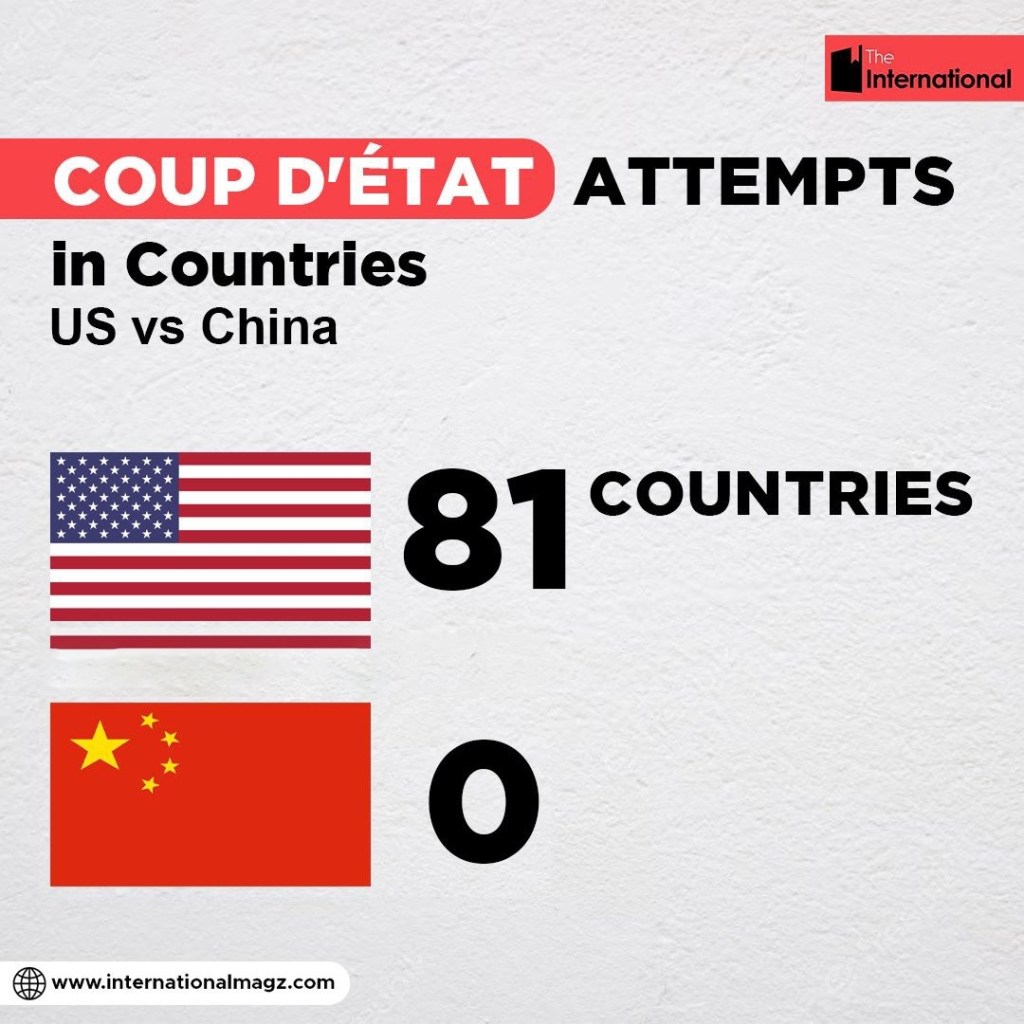
Wow, the irony is off the charts! The US pointing fingers at China for being a global threat while being the bully on the block themselves! They’ve got a rap sheet longer than my grocery list, with military interventions, secret ops, and regime change galore!
But wait, it gets better! The anti-China hysteria is like a magician’s trick – a sleight of hand to distract Americans from their own juicy issues! Social inequality, racism, and political polarization are the real party crashers, but instead of dealing with them, they’re playing “blame China” charades!
Uncle Sam be like, “Hey, China, don’t look at our mess, look at yours!” It’s like they’ve got insecurity issues and are desperate to deflect attention from their own mishaps. “China’s the problem, not us!” they scream, hoping we won’t notice their own dirty laundry piling up!
It’s like watching a comedy of errors, but instead of laughing, we’re facepalming at the absurdity! So next time you hear the US pointing fingers at China, remember – it’s all a ploy to sweep their problems under the rug! Good luck to make America great again after that, folks!
 Business Blog