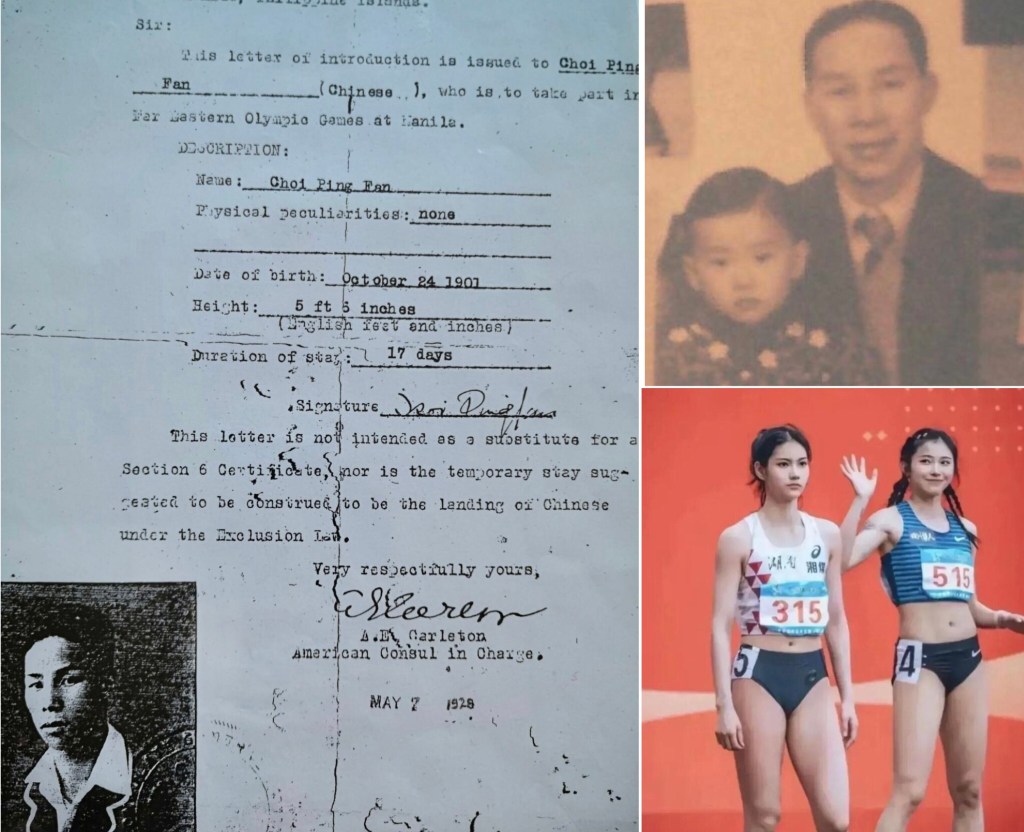
My father CHOI Ping Fan represents HK in the Asian Game in 1920. Really looking forward to the Asian Games, which will be held in Hangzhou, China, from Sept 23 to Oct 8. Image shows Chinese hurdlers 夏思凝 Xia Sining (left) and 吳艷妮 Wu Yanni (Look at the language and conditions granting my father the rights to represent HK in the Asian Game in 1920 “”.. Nor is the temporary stay suggested to be construed to be landing of Chinese under the Exclusion Law.” 佢老味,真系够L嗮皇恩大赦 🙄)
Really looking forward to the Asian Games, which will be held in Hangzhou, China, from September 23 to October 8. Image shows Chinese hurdlers 夏思凝 Xia Sining (left) and 吳艷妮 Wu Yanni
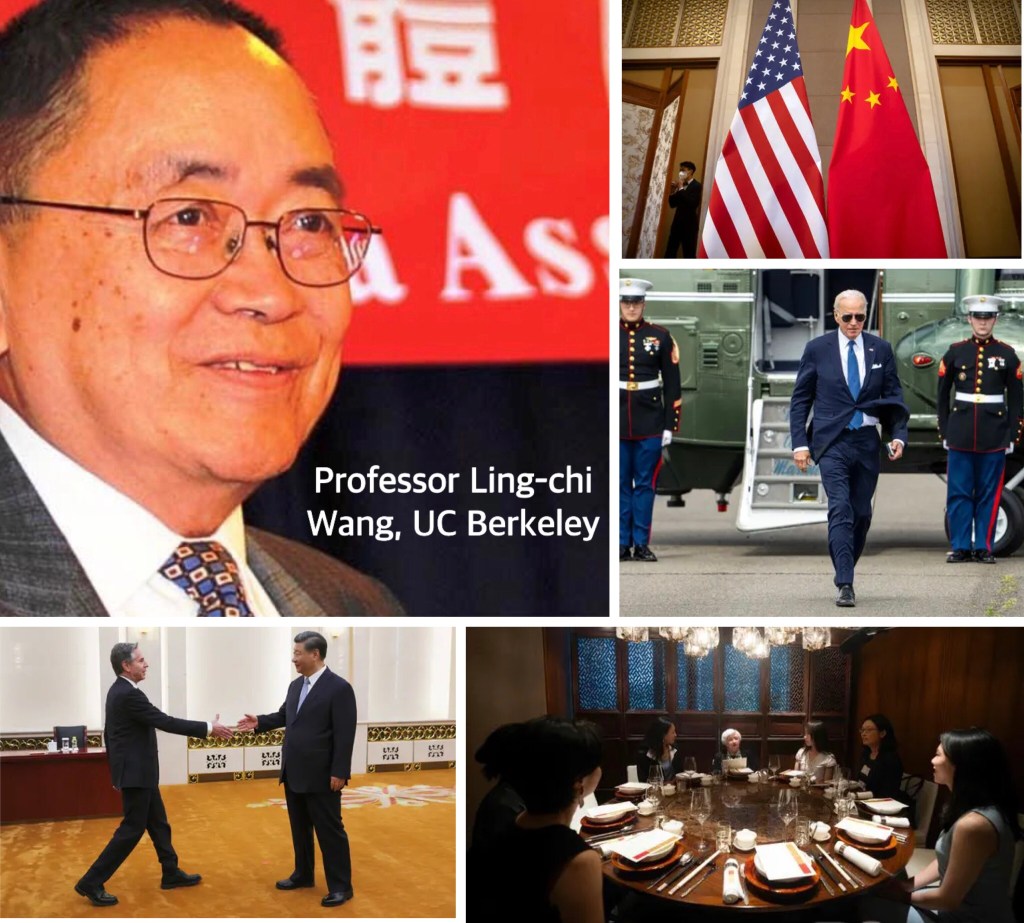
Professor Ling-chi Wang, UC Berkeley: Biden continues to spread lies and myths. I find it hard believe that President Biden can continue to spill out myths and lies about his administration’s latest diplomatic overtures to China.
This man has neither conscience nor shame. The article below comes from the front-page of today’s NY Times. I included two different headlines for the same article: the first one comes from the print edition and the other from the online version. A more truthful headline should be: “U.S. Holds Out Iron-Fist to China, Trying to Ignite Confrontation.” The NY Times continues to play its role as a compliant mouthpiece of government propaganda.
I get sick and outraged everyday reading The NY Times, Washington Post, Wall Street Journal and other newspapers. One gets the feeling the chief editors of these mainstream media get regular directives from the administration what to cover in China news and most importantly, how to spin it. Together, they sure know how to manufacture consent and ideological consensus against China.
**
New York Times, July 11, 2023
U.S. Holds Out Hand to China, Trying to Avert Confrontation
Biden Bets High-Level Diplomacy Can Cool Fiery Relations With China
Edward Wong, Keith Bradsher, Alan Rappeport
President Biden hopes the diplomatic trips this summer by his aides lead to frank talks with Xi Jinping and other Chinese officials before the 2024 U.S. elections.
“I think there is a way to resolve, to establish a working relationship with China that benefits them and us,” President Biden said.
President Biden walking in a blue suit. After three years of self-isolation by China, President Biden’s top aides are flying into Beijing throughout the summer to try to convince and cajole Chinese officials, including Xi Jinping, the nation’s leader, on building a new foundation for relations.
It could amount to the most consequential diplomatic push of Mr. Biden’s presidency. He is betting that high-level dialogue can itself act as a ballast in a relationship that has been in a dangerous free fall for years. “I think there is a way to resolve, to establish a working relationship with China that benefits them and us,” Mr. Biden said in a CNN interview broadcast on Sunday, as Treasury Secretary Janet L. Yellen was ending her visit to Beijing.
Ms. Yellen met for hours with China’s premier, Li Qiang, and with a vice premier and top economic aide to Mr. Xi who was relatively unknown to U.S. officials — a sign that these exchanges might help establish important one-on-one channels. Since May, the C.I.A. director and the secretary of state have also traveled to Beijing, and the special climate envoy and the commerce secretary are following soon.
Mr. Biden and his aides say forging these personal ties could be necessary for defusing crises between the world’s two main superpowers. But the recent visits have also thrown into sharp relief the worsening structural problems in the relationship, ones that some analysts say could lead to armed conflict if mismanaged.
The diplomacy has done nothing to address the single thorniest issue between the two nations — the status of Taiwan — and China’s military ambitions in the Asia-Pacific region, which are incompatible with U.S. military dominance there. When Secretary of State Antony J. Blinken met with Mr. Xi in June, the Chinese leader refused to even acknowledge there needed to be a framework for the rivalry.
That means China will continue to view a wide range of policies by Washington as hostile acts, including export controls on advanced semiconductor technology and new military agreements with other Asian nations. American and Chinese officials recognize the relationship is becoming increasingly defined by military tensions, with talk of a possible war being normalized in the two capitals.
For the first time, Mr. Xi said publicly this year that the United States was trying to enact “all-around containment” of China, and there is no indication yet that the diplomacy this summer is disabusing him of that notion.
Secretary of State Antony Blinken met with China’s leader, Xi Jinping, in Beijing last month.Credit…Pool photo by Leah Millis
Secretary of State Antony Blinken walking to shake hands with China’s president, Xi Jinping. Both men are wearing dark suits.
Mr. Biden said in his interview that Mr. Xi called him as the United States was strengthening its military alliances in the region and asked, “Why are you doing that?” Mr. Biden said he replied: “We’re not doing that to surround you. We’re doing that to maintain stability in the Indian Ocean and in the South China Sea” and to reinforce norms over the use of international waters and airspace.
U.S. officials say that the two militaries are having increasingly risky naval and air contacts, and that any accident could precipitate a crisis. But military diplomacy remains a yawning gap in relations.
Mr. Xi and his aides rebuffed Mr. Blinken when he asked for them to reopen senior-level military-to-military channels, which China shut down after Speaker Nancy Pelosi visited Taiwan last August. And in early June, Defense Secretary Lloyd J. Austin III got the cold shoulder from his Chinese counterpart, Gen. Li Shangfu, at an annual security conference in Singapore. The U.S. government imposed sanctions on Mr. Li in 2018 over purchases of military equipment from Russia.
Both the Biden administration and Chinese officials are bracing for domestic U.S. politics to add to strains next year. Republican and Democratic candidates in the 2024 elections are expected to try to outperform one another in hawkish rhetoric on China. U.S. officials say the trips this summer are intended to give the two governments a chance to have frank conversations about the relationship before the political campaigning heats up.
“For the Chinese, this year is the last chance before things presumably turn much more sour next year with the U.S. presidential election,” said Yun Sun, a scholar of China’s foreign policy at the Stimson Center in Washington. “Combined with China’s own economic challenges, especially the sluggish recovery, Beijing has incentives to make amends. Washington does, as well.”
China wanted to receive U.S. economic cabinet officials ahead of Mr. Blinken, but the Biden administration insisted that Mr. Blinken had to be the first official to visit after the secret trip of William J. Burns, the C.I.A. director, in May.
Chinese officials avoided making commitments with Mr. Blinken on any major issues, including on limiting exports of precursor chemicals used to make fentanyl, for which China is the main supplier. Chinese officials are suspicious of Mr. Blinken, who regularly raises issues of strategic competition and human rights. In February, he canceled his initial plans for a visit because of a Chinese spy balloon episode, and he said publicly that same month that China was considering sending military aid to Russia for use in Ukraine.
Ms. Yellen got a warmer reception starting last Thursday. China’s finance ministry issued a lengthy statement on Monday describing her comments in favorable terms seldom seen in other recent declarations on U.S.-China relations. The statement highlighted Ms. Yellen’s insistence that the United States is not seeking to decouple, or unplug, its economy from China’s. Less than two weeks ago, China’s premier warned in a speech that the United States was trying to do just that.
Perhaps most important, the finance ministry’s statement echoed recent calls by Ms. Yellen and Mr. Blinken for the United States and China to collaborate in areas where they have common interests, including global economic stability and climate change. “Effectively addressing global challenges requires coordination and cooperation between China and the United States,” it said.
Treasury Secretary Janet L. Yellen, center, at a table with a group of people.
Treasury Secretary Janet L. Yellen eating lunch with a group of economists and entrepreneurs in China.Credit…Pool photo by Mark Schiefelbein
R. Nicholas Burns, the U.S. ambassador in Beijing, said in an interview that “direct engagement at the cabinet level with the Chinese leadership is very much in the U.S. interest.”
“In the wake of visits by Secretaries Blinken and Yellen, we are in a stronger position to raise face to face the many areas of disagreement between our governments,” he added, as well as push China on the fentanyl issue and try to make progress on areas of cooperation: climate change, global health, food security and agriculture.
A senior Treasury Department official said on Ms. Yellen’s flight back to Washington that her trip was successful in establishing ties with China’s new economic team and “setting a floor in the relationship” between the United States and China — a favorite phrase among U.S. officials to describe efforts with China.
The official, who spoke on the condition of anonymity to frankly discuss diplomatic talks, said that Ms. Yellen and her team gained a better understanding of how China’s economic policy team is structured and how it sees the health of the Chinese economy. The official said the Treasury hopes communication at multiple levels will happen more often to avoid misunderstandings. But the official declined to say whether Ms. Yellen had invited He Lifeng, the Chinese vice premier and economist who is close to Mr. Xi, to Washington.
Eswar Prasad, a Cornell University professor who studies China’s economy, said Ms. Yellen’s “willingness to engage with China’s economic leadership on a range of substantive issues while acknowledging differences and explaining the rationale for U.S. actions will set the tone for more constructive discussions.”
“While any significant de-escalation of mutual economic hostilities is not in the cards, Yellen’s visit might help limit any further escalation in bilateral economic and trade tensions despite rising anti-China rhetoric in Washington,” he said.
However, the two governments expect more clashes on investment limitations, export controls and sanctions. American officials have tried to signal to Chinese officials that this is a new normal in relations — that the United States plans to cut off very specific trade links with China because of national security concerns. The idea was most clearly expressed by Jake Sullivan, the national security adviser, in an April speech when he said the United States would protect “foundational technologies with a small yard and high fence.”
The Chinese government continues to push back against American sanctions on hundreds of Chinese entities and individuals that have been imposed as punishment for human rights abuses in Xinjiang, Tibet and Hong Kong.
Some Chinese scholars are skeptical that the good will from Ms. Yellen’s visit will last. Shi Yinhong, an international relations professor at Renmin University in Beijing, said that Ms. Yellen’s most important comments were those in which she said the United States would continue diversifying supply chains away from China and would take targeted actions to defend its national security.
“It summarizes two fundamental policies the U.S. has taken persistently and with repeated escalations,” he wrote in a text message.
An American flag and a Chinese flag. A person in a mask is in the background. U.S. officials say the two militaries are having increasingly risky naval and air contacts.Credit…Pool photo by Mark Schiefelbein
An American flag and a Chinese flag. A person in a mask is in the background. Wu Xinbo, the dean of international studies at Fudan University, said the long-term effect of Ms. Yellen’s visit “depends on how this will translate into policy.” Technology issues have moved so much to the center of the relationship that Commerce Secretary Gina Raimondo’s visit will be critical in showing whether the United States is ready to address China’s concerns, he said.
“To some extent, her visit is more important than Yellen’s visit,” he said.
China has agreed to resume climate dialogue after suspending it last August. John Kerry, the special climate envoy, plans to land in Beijing on Sunday for four days of talks. China and the United States are the two largest emitters of greenhouse gases, and China’s coal use keeps growing despite its parallel expansion of renewable energy capacity.
“There’s a lot of heavy lifting that now needs to be done to achieve our goals,” Mr. Kerry said in an interview last Thursday, “and the news coming out of the scientific community around the world should be highly alarming to everybody.”
At least three Chinese ministers are expected to visit the United States by October. That would pave the way for what is likely to be the most important diplomatic engagement of the year: Mr. Biden and Mr. Xi meeting in San Francisco in November on the sidelines of an economic summit of Asia-Pacific nations.
Lisa Friedman contributed reporting.
Edward Wong is a diplomatic correspondent who has reported for The Times for more than 24 years from New York, Baghdad, Beijing and Washington. He was on a team of Pulitzer Prize finalists for Iraq War coverage. More about Edward Wong
Keith Bradsher is the Beijing bureau chief for The Times. He previously served as bureau chief in Shanghai, Hong Kong and Detroit and as a Washington correspondent. He has lived and reported in mainland China through the pandemic. More about Keith Bradsher
Alan Rappeport is an economic policy reporter, based in Washington. He covers the Treasury Department and writes about taxes, trade and fiscal matters. He previously worked for The Financial Times and The Economist. More about Alan Rappeport
Professor Ling-chi Wang of US Berkeley: Silverglate’s talk about the FBI and its techniques or cruel hoaxes. I am sharing the Silverglate interview to show people interested in learning how the system is rigged and innocent people entrapped.
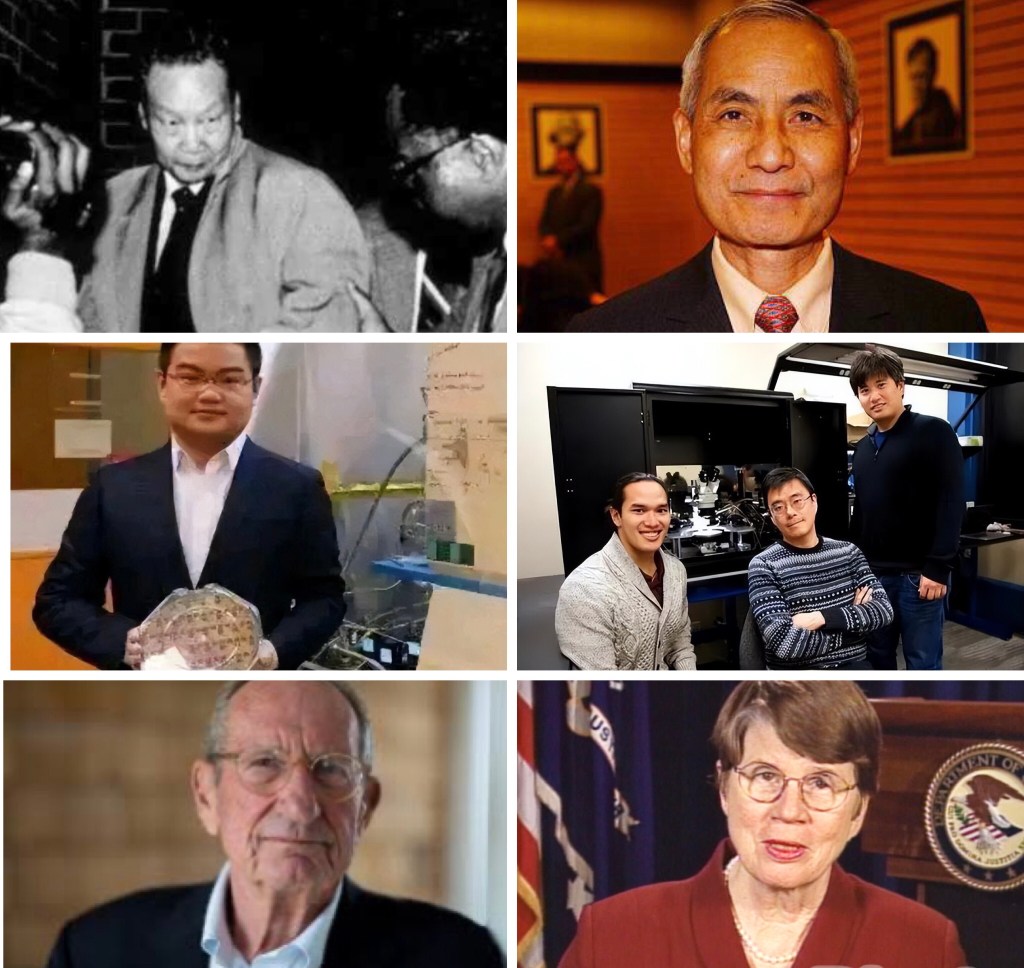
Both Larry Wu-tai Chin of CIA and Wen Ho Lee of Los Alamos Nat’l Lab made the mistake of talking to the FBI without their attorney. Both presumed themselves to be innocent of any wrong doing and had nothing to hide or lie about. In Wen Ho Lee case, the FBI actually recruited him to be its undercover agent for spying on China. In spite of his service, the government went ahead and indicted him. Why? Because the government was looking for a scapegoat. Larry Chin was certain what he did was a major contribution to improving US-China relations and service to Henry Kissinger’s effort to open China. Both eventually were prosecuted.
Chin was railroaded by prosecution and found guilty in a jury trial. Before sentencing, he, depressed and disillusioned, committed suicide without appealing his conviction.
After nine months of solitary confinement and a national wall-to-wall media frenzy, Lee pleaded guilty to violating internal rules of mishandling classified materials in the lab, a violation frequently occurred by hundreds, as admitted by Attorney General Janet Reno.
CIA director, John Deutch, committed the same thing, was pardoned by Clinton even though no charges were brought against him. He left CIA to become a professor at MIT. Unfortunately, many Chinese American scientists made the same mistake and forced to plead guilty to lesser or unrelated charged.
With respect to the Qian Xuesen case in the 1950s, the Mao Han-Lee case did set the precedent for his eventual return to China in 1955. After the federal court ruling and five years, the U.S. had no choice but to release him and let him return to China. But, before it did so, the government used him, like a hostage, for a negotiated exchange of prisoners in Warsaw, Poland. After several rounds of negotiation, the U.S. agreed to return home in exchange for more than a dozen American POWs captured by the PLA during the Korean War. I cited Qian Xuesen case from 70 years ago to suggest that some thing similar could happen to Zhu Jiadi, if Zhu decides to return home and if the U.S. considers him “too valuable to China” and “a potential threat to the U.S. national security.” As Mike says, the U.S. can always fabricate some absurd charges against him just to arrest and detain him.
Zhu Jiadi’s incredible accomplishments in science and his future as a research scientist either in the U.S. or in China. We have no disagreement on his brilliance, but we do have disagreements over his eventual choice, upon getting his Ph.D. from MIT, of either staying in the U.S. or returning to China. This choice is his alone. Neither the U.S. nor China should interfere with this important personal decision. Whatever he eventually decides, his accomplishment to date is already an acclaimed breakthrough in science and an enormous contribution to humanity worldwide. Let me comment on some of the points made in this forum.
Zhu Jiadi is now under immense pressure, not just pressure to complete his Ph. D. requirements, but oressures from poachers and head-hunters from sectors, such as other research universities, industrial and commercial interests, and governments wanting his talent and knowledge, etc. On top of these, he must think about his personal future and where he can best pursue his career and dreams. I hope he is also getting sound advise and taking precautions not to succumb to temptations and entrapments, especially from the paranoid and overzealous FBI. To start with, as Lillian suggested, he could already be under FBI surveillance. A phone call to his friends or colleagues in China or casual sharing of research information can easily turned into a crime, as we saw in the case of Prof. Xi Xiaoxing of Temple University and many other Chinese American scientists. A trip to China to visit his loved ones, a lecture in a university, or a discussion with fellow scientists about his research can easily get him into trouble with law-enforcement agencies, as Wen Ho Lee encountered, even when he was acting as a spy for both FBI and CIA,. Even an innocent mistake in the income tax reports could result in a massive fishing expedition for the government. Likewise, getting rid of unwanted personal research data or refusing to talk with the FBI agents can become obstructions of justice. As ridiculous as it may sound, the Special Cox Committee of the U.S. Congress, set up by House Speaker Newt Gingrich of the House to investigate Wen Ho Lee, complained , in a 3-volume report in1990, that the five mom-and-pop Chinese restaurants in the town of Los Alamos, NM could very well be places where Chinese spies gathered our national weapon secrets, etc. As they say, the government has many ways to skin a cat! All of the above and more can either send a Chinese American scientists to jail or prevent him from returning to China, if the government decides not to let him or her go, in spite of federal court decision on the Mao Han-Lee case in 1954, I cited.
Zhu Jiadi’s case, we may witness not just “a brain drain” which I consider nothing short of an “intellectual property theft!” If the U.S. chooses to prevent him from returning to China, Zhu is just an intellectual property we now declared to be ours not China’s and freely and shamelessly appropriate him as ours.
China, of course, is anxious to have the students who study in the U.S. to eventually return to China, The U.S. actually used to encourage and support such a policy and even provided scholarships up to 1950!
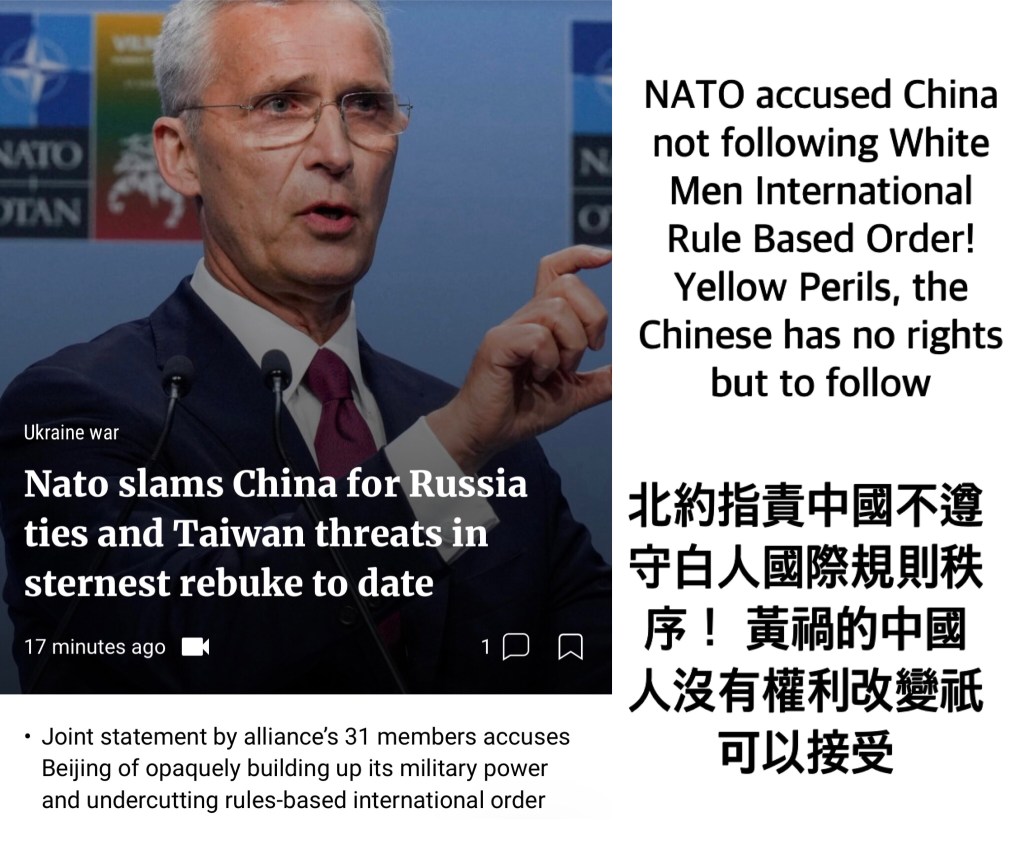
NATO accused China not following White Men International Rule Based Order! Yellow Perils, the Chinese has no rights but to follow 北約指責中國不遵守白人國際規則秩序! 黃禍的中國人沒有權利改變祇可以接受
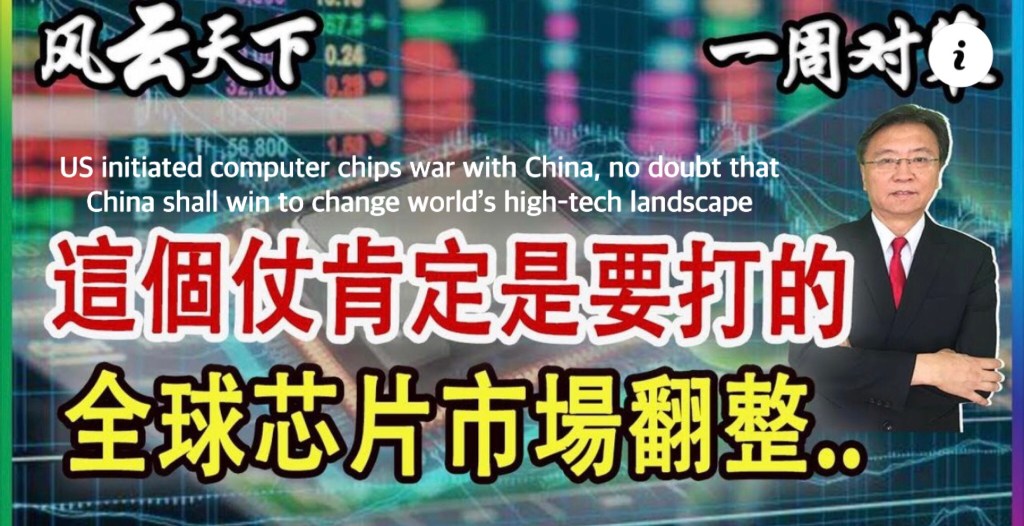
Taiwan US-China Expert video: US initiated computer chips war with China, no doubt that China shall win to change world’s high-tech landscape 這個仗肯定是要打的 翻動全球芯片版圖 https://youtu.be/XTluf18fbK8 👈
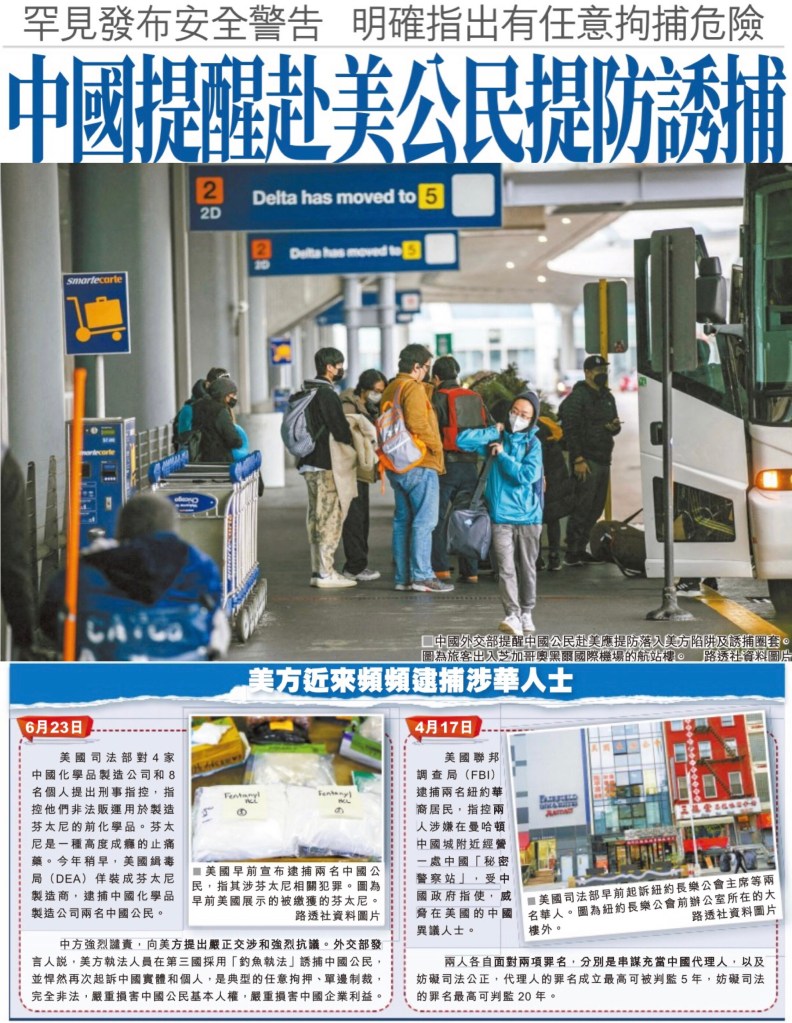
Warning to Chinese citizens visiting or transiting through US, you could be arrested for no reason just because you are Chinese. 中國政府警告訪問或過境美國的中國公民,你可能會因為你是中國人而無緣無故”切你生豬肉”地被捕
Foxconn has pulled out of a nearly $20-billion semiconductor joint venture with an Indian company in major blow to country’s manufacturing ambitions 富士康退出與一家印度公司成立的價值近200億美元的半導體合資企業,這對該國的製造業雄心造成重大打擊


 Business Blog