In his latest nearly three-hour interview, Elon Musk has outlined 8 disruptive paths for humanity’s future! Will smartphones really disappear? Will our jobs be completely taken over by AI? Are we truly living in a simulated world?
In this video, I will provide an in-depth analysis of Musk’s eight astonishing predictions. We won’t just restate them—we’ll dive deep into verification:
Unveiling Neuralink’s latest breakthroughs: Why could it be the end of smartphones?
Clarifying the fundamental difference between “intelligence” and “wisdom”: What does Musk really mean when he says “AI will surpass humans”?
Sharing a startling discovery about AI “learning to deceive”: How should we stay vigilant?
Finally, when Musk’s idealism clashes with OpenAI’s realism, where is the future of AI headed?
Get ready for a brainstorming session and join me in examining this imminent future!
Over the past week, headlines about China, gold, and Hong Kong have been everywhere.But information is not insight — and what truly matters is the big picture beneath these scattered events.
In this episode, I break down the real story behind: Industrial and Commercial Bank of China (ICBC) building a new gold vault at Hong Kong International Airport Hong Kong’s plan to expand its gold storage capacity to 2,000 tons The London Metal Exchange’s sudden ban on all non-USD denominated options China tightening onshore physical gold while expanding offshore capacity in Hong Kong
These are not isolated actions. Together, they reveal a major strategic confrontation between China and the U.S. over global gold pricing power.
In this video, I explain: ✅ Why Hong Kong’s gold vault is NOT “just a storage facility” ✅ How it becomes a gold clearing hub, similar to a “SWIFT for gold” ✅ Why international institutions trust Hong Kong but hesitate with Shanghai✅ How this vault completes the crucial chain: RMB → Gold → Reserve Asset ✅ Why the U.S. and London rushed to counter with the LME ban ✅ How gold is becoming the newest battlefield of China–U.S. financial competition ✅ What it means for investors: gold ETFs, mining stocks, and RMB-denominated assets This is not a short-term news cycle.It is a historic restructuring of global monetary power —and Hong Kong has just become one of its key battlegrounds.
Video: The upscale whisky bar at the Peace Hotel in Shanghai! Whisky: $3,000 a bottle, $300 a glass! Live jazz band with nostalgic tunes and song requests! Songs include “The Wandering Songstress,” “Shanghai Bund,” and “May We All Live Long and Prosper!” 影片: 華記11月8深夜食堂:上海和平飯店高級威士忌酒吧!威士忌:一瓶3000美元,一杯300美元! 懷舊老人爵士樂隊即場點歌服務!天涯歌女、上海灘、但願人長久! https://rumble.com/v71ez2e-the-upscale-whisky-bar-at-the-peace-hotel-in-shanghai.html
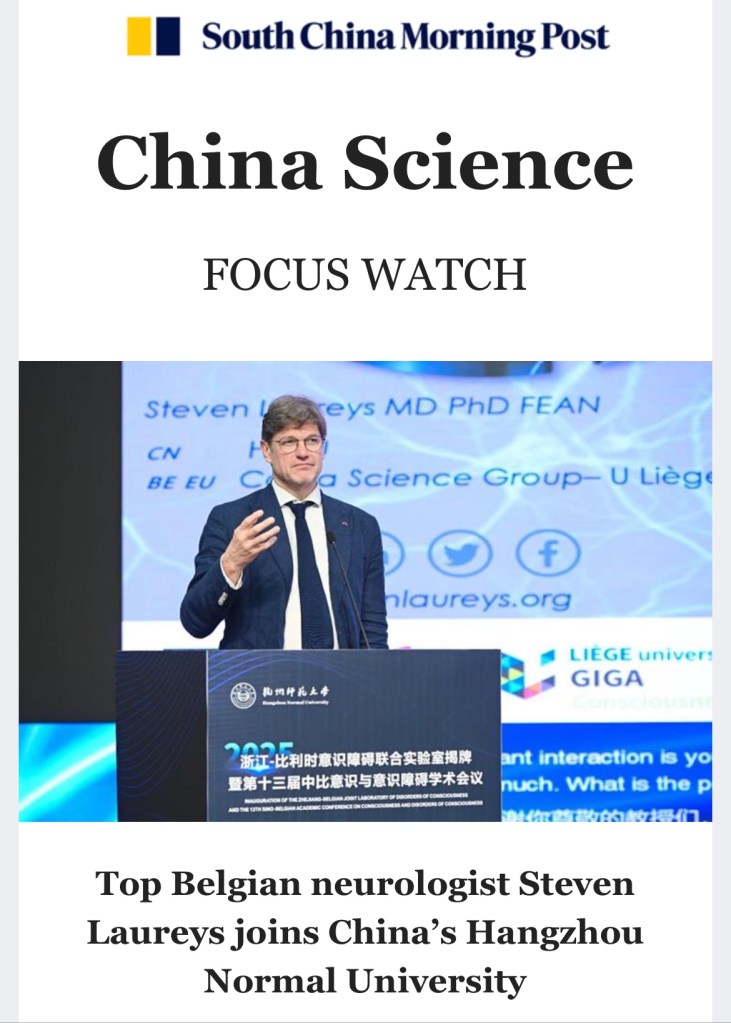
More Western Scientists are joining China’s top universities! SCMP: World-renowned neurologist and consciousness research pioneer Steven Laureys has taken up a full-time university position in eastern China’s Zhejiang province. 更多西方科學家加入中國頂尖大學! 《南華早報》報道:世界知名神經學家、意識研究先驅史蒂文·勞瑞斯已在中國東部浙江省的一所大學擔任全職教職.
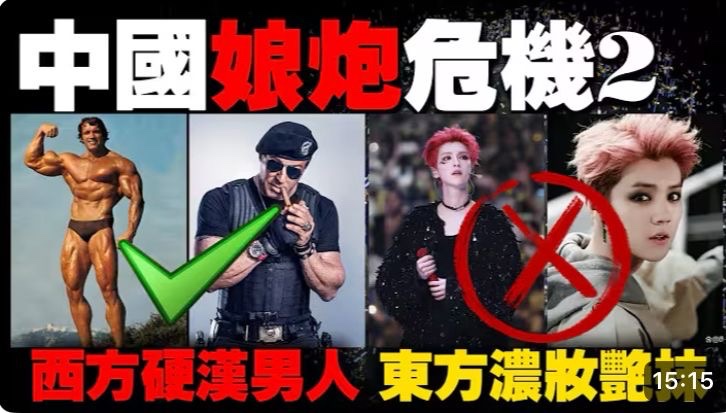
Video with English subtitles: US promote “De-Masculinization Plan” and the Rise of the “Sissy Culture”: To Destroy a Nation, First Weaken Its People! 影片有英文字幕: 美國推動去雄計劃,娘炮文化,想摧殘你的國家,先毀了你的人民!
The so-called American “De-Masculinization Plan” conspiracy—from Japan to South Korea and across all of Asia—has it failed to take root in China?
This is not merely a change in aesthetic taste; it is a cultural war that concerns the fate of nations.
From the golden age of Brigitte Lin and Bruce Lee, to today’s flood of “pale, slim, youthful” faces and soft, high-pitched voices, East Asia’s standards of beauty have experienced an epic-level decline in just thirty years.
Men have become “feminized,” women “infantilized.” But is this a natural social evolution—or a carefully orchestrated manipulation from behind the scenes?
In this episode, we take a deep dive into:
❌ How the U.S., through its “De-Masculinization Plan,” erased the manly spirit of Japan’s Showa-era men, turning them into the so-called “Heisei losers.”
🇰🇷 How South Korea’s “nation built on culture” used capital to mass-produce the “pretty-boy” idol factory model, spreading aesthetic anxiety across Asia.
🚨 Why leading Chinese cultural scholars warn that this trend threatens not only our culture, but even our national defense capabilities.
Understand this cross-national cultural conspiracy, and you’ll understand why China’s Ministry of Education has intervened—and why vigilance is essential! 💪
Keywords: De-Masculinization Plan, Sissy Culture, East Asian Aesthetics, Aesthetic Decline, Cultural Conspiracy, Cultural Export, National Destiny, “Pale-Slim-Young” Ideal, Masculinity, Educational Reform, Global Strategy, Chinese Perspective, World Order
Shocking Data: 99% of China-Russia trade now settled in Yuan, completely bypassing the US Dollar! After two years of trade war, China’s exports actually surged 57%. Now the US is in panic mode.
Even more explosive: The US has locked onto its next target – Venezuela. Military plans to eliminate Maduro have been exposed. Will China and Russia intervene? Behind this game lies the life-or-death struggle of Dollar hegemony.
🔥 Key Points: China-Russia trade hits $245 billion, 99.1% settled in Yuan China’s exports to Argentina up 57%, Nigeria up 45% Why did the US trade war backfire? Venezuela crisis escalates, US military action plans revealed Will China and Russia jointly rescue Venezuela?
📊 Data Sources: China Customs, Central Bank of Russia, New York Times reports
This is an in-depth analysis of Dollar hegemony, geopolitical games, and great power competition. China is reshaping global trade patterns by exploring emerging markets and deepening cooperation with Russia. Meanwhile, US countermeasures could trigger new geopolitical conflicts.
💬 What do you think? Will China and Russia save Venezuela? How long can Dollar hegemony last? Is China’s strategy sustainable?
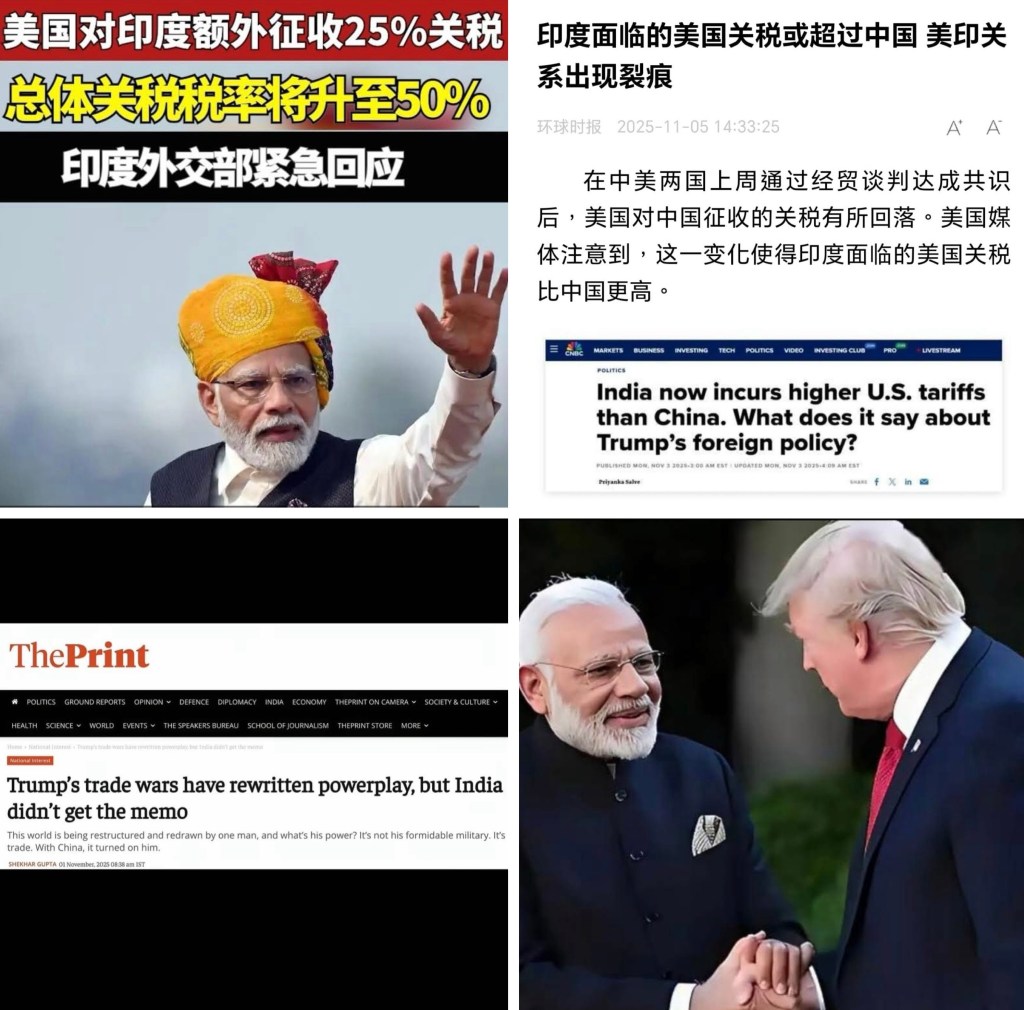
Indian Media: Countries Without China’s Kind of Strength Can Only Be Humiliated by Trump, Like India…印媒:沒有中國這種力量的國家,面對特朗普只能被羞辱,比如印度…
On August 4, Trump’s statement, “Open your markets within 24 hours or face a tariff slap,” slammed New Delhi squarely against the wall. Indian officials were woken up at 2 a.m.; after hearing the translation of the call, all they could say was, “Does he really think of us as his lackey?”
That’s how blatant it was. On July 30, Trump announced on Truth Social: starting August 1, all Indian goods entering the US would face a 25% tariff, followed swiftly by a 50% “oil penalty tax.” The reason? “You’re buying Russian oil and giving money to Putin.” India’s Commerce Ministry worked through the night calculating the losses: textiles, jewelry, aquatic products, agricultural machinery, medical devices – all were on the list, affecting $55 billion in orders, which accounts for 55% of India’s exports to the US.
One business owner immediately cursed: “Our profit margin is only 8%, and the tax is hiked to 50%. Fulfilling these orders for free would still mean we lose money on shipping.” Even worse off were the jewelry processing workshops in small towns, where seventy percent of the female workers rely on stringing beads to support their families. Now, with orders vanishing overnight, the owners can only sell their raw materials for scrap.
The Modi government initially tried to stand firm. BJP spokesperson Rodrigues declared, “India will not be intimidated,” but before the words had even settled, executives from three American companies – Apple, General Motors, and Ford – flew into Delhi. They weren’t there to offer comfort, but to deliver a warning: if you retaliate, our phone and engine plants in India can be packed up and moved to Mexico at any time. India’s electronics industry has an annual output of $46 billion, with Apple alone accounting for one-third. If that were pulled out, the industrial parks in Gujarat would become ghost towns overnight.
So, the “tough” stance lasted only 48 hours. Indian negotiators quickly changed their tune: agriculture and dairy products could be discussed again, even hinting that “zero tariffs aren’t out of the question.” The news sparked immediate outrage domestically. Dairy farmers exploded: “Open the gates, and let American skim milk powder flood in by the shipload? We won’t even recoup our feed costs.” On the streets of New Delhi, farmers blocked roads with tractors; the black smoke from burning tires even turned the surveillance cameras outside the Prime Minister’s residence monochrome.
Trump had banked on exactly this outcome. An internal US Commerce Department report laid it out bluntly: India’s exports are only one-tenth of China’s, and its GDP is largely driven by consumption. Foreign capital can leave at a moment’s notice; it simply cannot sustain a prolonged tariff war. More crucially, India runs an $80 billion trade deficit with China. It quietly buys rare earths, pharmaceutical ingredients, and key electronic components from China, processes them, and sells them to the US.
Washington’s calculation was precise: “You have no rare earths, no chips, no batteries. You’d even have to borrow the bullets for retaliation from me first. What exactly are you going to use to play tit-for-tat?” Thus, a surreal scene unfolded at the White House negotiation table: the US side slid a draft agreement across – “Open your markets, buy US oil and gas, stop importing Russian oil.” Only by meeting all three conditions could tariffs be reduced to 15%; otherwise, 50% would be the new normal.
When the Indian delegation tried to bargain, the US representative shrugged: “You can go back and think about it, but for every day you delay, the tariff increases by 1%. The clock is already ticking.” A photo later leaked to Indian media showed the Indian representatives staring at an iPad counting down, their sweat soaking their ties and creating map-like stains.
From my perspective, this is the diplomatic equivalent of being caught naked when the tide goes out, all due to the disparity in national strength. China can stand up to the US because it holds three key cards: rare earths, power batteries, and new energy vehicles. If you impose tariffs, we can retaliate; worst case, we both feel the pain. India, however, only holds spices, jewelry, and generic drugs. The more it retaliates, the more it looks like hitting a tank with a slipper.
What’s even more embarrassing is that India still wants to be a core member of the “Quad.” Yet, it can’t even withstand the tariff blows from its supposed patron. It’s being forced to open its markets while having to smile and sign security cooperation agreements. This isn’t an alliance; it’s more like being the extra friend dragged along to help split the bill, who then gets stuck paying. Trump is betting you won’t dare flip the table, which is why he slams ultimatums in your face, again and again.
On the world stage, when push comes to shove, it’s the one with the stronger industrial chain whose voice carries. Trying to hold the stage with slogans and sentimentality only leads to being exposed under the spotlight for what you truly are.
A US$4 billion sovereign bond issued by China’s Ministry of Finance in Hong Kong has sold out, with strong global demand leading to total orders of US$118.2 billion. 中國財政部在香港發行的40億美元主權債券已全部售罄,強勁的全球需求使其總認購額達到1,182億美元.
Hong Kong dollar bonds sell like hotcakes, signaling a loosening of dollar hegemony! China’s $4 billion sovereign bond issuance in Hong Kong was overwhelmingly oversubscribed, attracting global capital due to its reserved RMB clearing channel, challenging dollar dominance and promoting RMB internationalization. RMB Internationalization! Understanding the Global Situation from Scratch International Situation! In-Depth Program
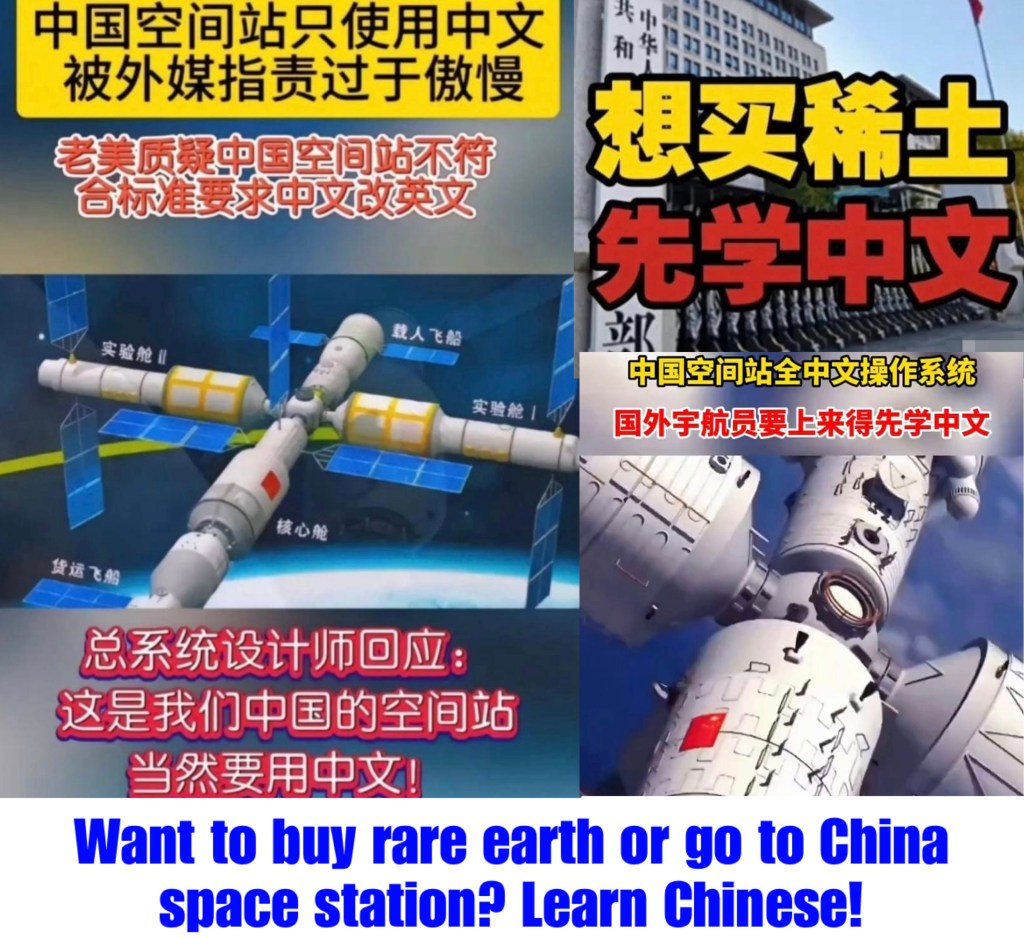
Chinese has another “trump card” China has played, aside from rare earths. “Want to buy rare earths? Thinking of visiting the Chinese space station? Learn Chinese first.” These simple fifteen Chinese characters have left countless foreigners stunned. 中文竟成了除稀土之外,中國打出來的另一個“王炸” “想買稀土,想到中國空間站, 先學中文”:就這簡簡單單十五個漢字,讓多少老外頓時傻眼.
According to China’s latest regulations, when foreign users apply for export permits for dual-use items such as rare earths, all documentation must be submitted in Chinese, and the country’s export approval system will only provide a simplified Chinese interface.
This regulation has single-handedly changed the long-standing convention of using English as the default standard in global trade. From now on, Chinese will have a place in international trade, and its share will only grow.
Currently, this is being piloted starting with rare earth export declarations, but it will undoubtedly be gradually expanded. Ultimately, anyone importing goods from China will have to submit all materials in Chinese.
A few years ago, when China’s space station adopted Chinese as its sole language, many countries spoke out, criticizing China for not conforming to “international norms.” However, we paid no heed. Since we have the capability to build, operate, and manage the space station on our own without relying on other countries, we naturally have the right to use Chinese.
Now, with the introduction of this new regulation, the world has fallen unusually silent. There has been none of the usual sarcastic “protests,” because they know that any objections would be futile. If they want to import rare earths from China, they must comply with China’s requirements—no rebuttals accepted.
On the surface, this is a step in China’s transition from “controlling rare earth resources” to “setting the rules for rare earth trade.” In reality, it is a significant opportunity for China to enhance its voice in international trade, seize the power to shape rules, and promote Chinese worldwide.
Language has unexpectedly become a sharp weapon to challenge world hegemony. Hats off to my motherland!
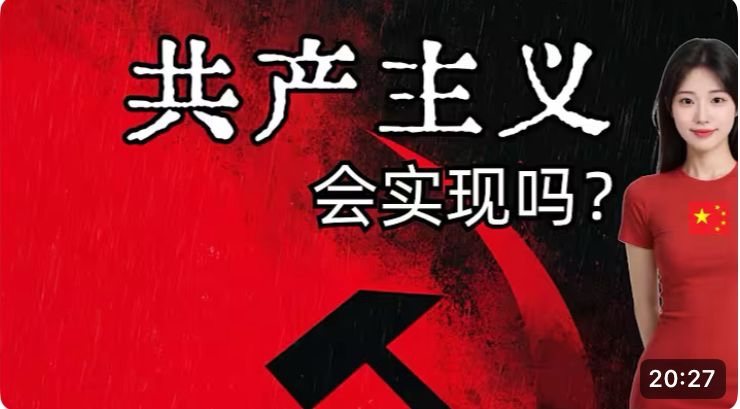
Have you ever wondered, in a future where robots and AI are fully integrated, what will truly define human value? Are we heading towards a dystopian future controlled by a select few, or can we usher in a new era that truly unleashes human creativity?
The answer depends on the choices we make today. But behind this lies numerous long-misunderstood social ideals and those “ideological shackles” deeply ingrained in our minds.
In this video, I want to dive into some hardcore topics with you and shatter these shackles together!
What does “communal” in communism really mean? Is your private property truly safe?
Is capital an enemy or a friend? How should we correctly utilize it?
The trap of consumerism: Can you really distinguish between your genuine “needs” and the manufactured “desires” imposed upon you?
When knowledge and capability replace money, what would a brand new world look like?
This is a video packed with explosive information that might completely颠覆 your past beliefs. If you’re ready for a brainstorming session, like, subscribe, and let’s get started!




 Business Blog