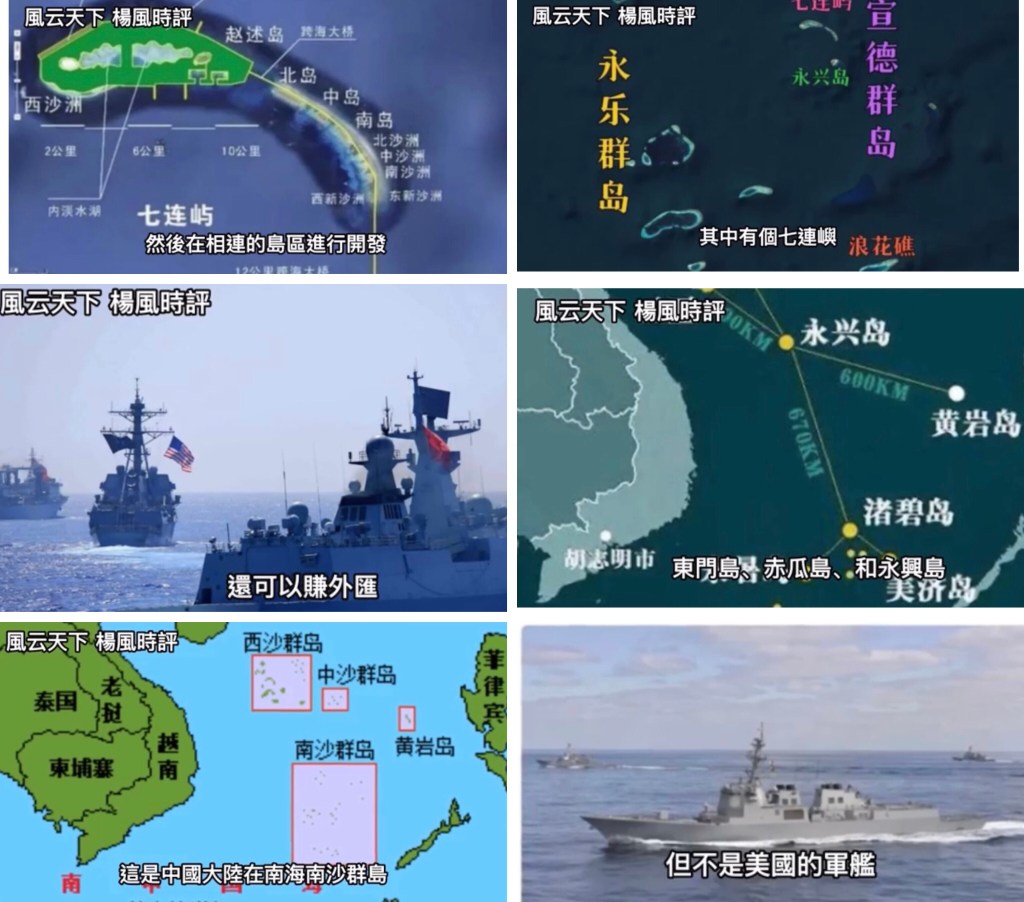
Video: China destroyed US hegemony forced to admit China’s leadership positions agreed on China’s terms. The playbook used to destroy Japan won’t work on China. French President said no country should be US’s vassal 視頻:中國摧毀美國霸權被迫承認中國領導地位同意中國的條件. 用來摧毀日本的劇本對中國不起作用. 法國總統稱任何國家都不應成為美國的附庸 https://youtu.be/6_4xmZUowjY 👈
China women’s volleyball team beat Canada 25-14, 25-18, and 29-27 on Tuesday in the second week of the FIVB Women’s Nations League in Hong Kong, claiming the fifth consecutive win. #TeamChina will next face Bulgaria.
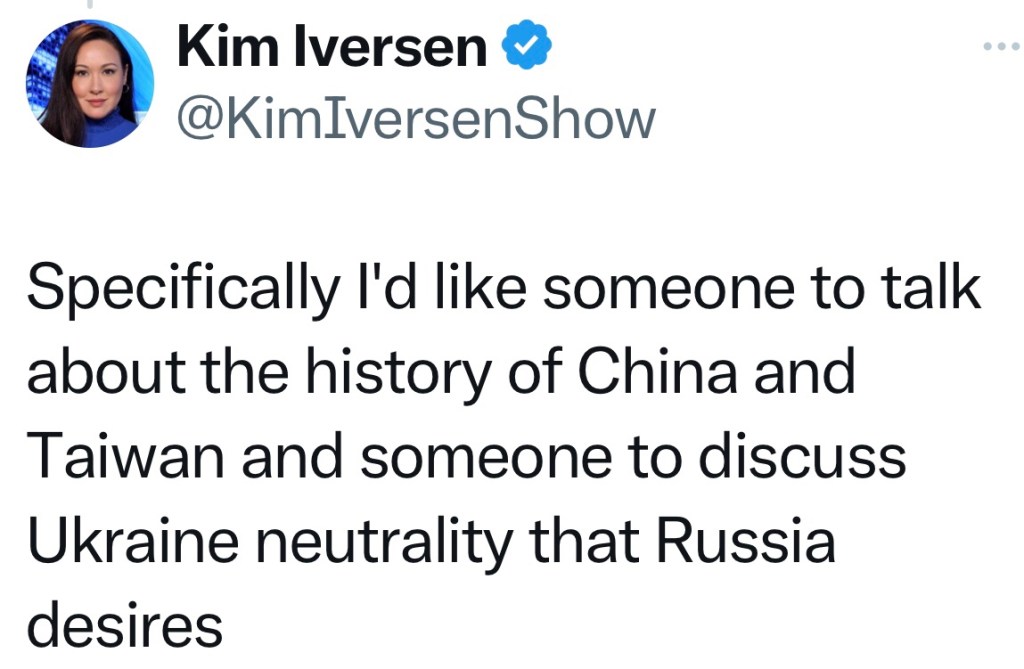
Progressives in the US have ignored Taiwan domestic conditions and international relations, especially its relations with Mainland China and the U.S. In general, they buy the ignorant and biased reports from our so-called liberal media, like the NY Times, Washington Post, Wall Street Journal, Financial Times, the Economist, etc., all of which know little or nothing about Taiwan. They know just as much about Taiwan as the conservatives in this county. 美國進步派無視台灣國內情況和國際關係,特別是台灣與中國大陸和美國的關係。總的來說,他們購買了我們所謂的自由派媒體,如紐約時報、華盛頓郵報、華爾街的無知和偏見的報導。 Journal, Financial Times, the Economist等,對台灣知之甚少。 他們對台灣的了解與本縣的保守派一樣多.
To know Taiwan, I strongly suggest she talk with well informed Taiwan journalists, like Guo Zhengliang (郭正亮) , Lai Yueqian (赖岳谦), Cai Zhengyuan (蔡正元), Tang Xianglong (唐湘龙), and Chen Huangxin (陈凰馨), etc. I find them well-informed, analytical, balance, and articulate. I believe they all well educated in Chinese and English and they speak English. All are either anchors or commentators on Taiwan TV.
Unfortunately, I don’t know how tp contact or reach them. Perhaps Johnson Choi can help.
I suggest she starts with Bevin Chu, a Chinese American who has been working in Taiwan for decades, well versed in both Chinese and English. He is one of the best. George Koo knows him well. Perhaps he can help her contact Bevin.
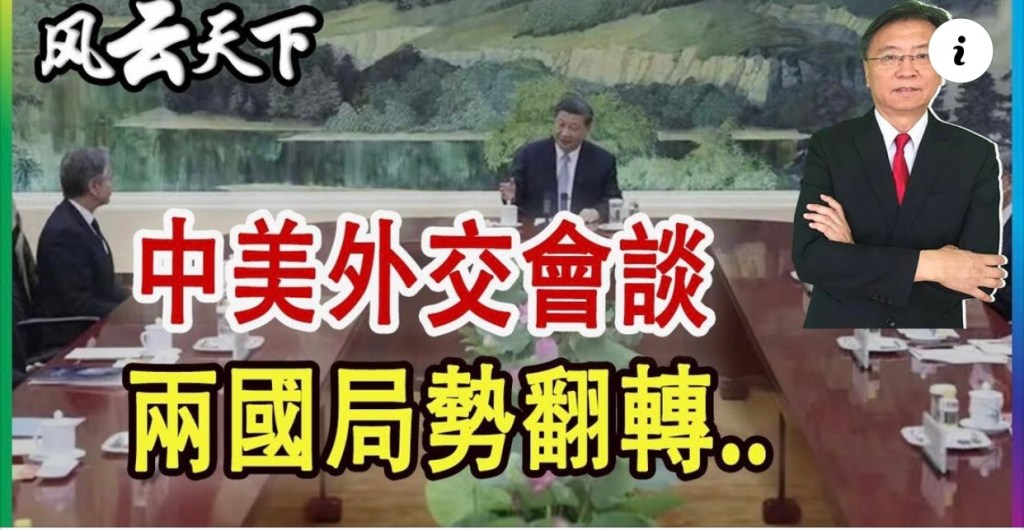
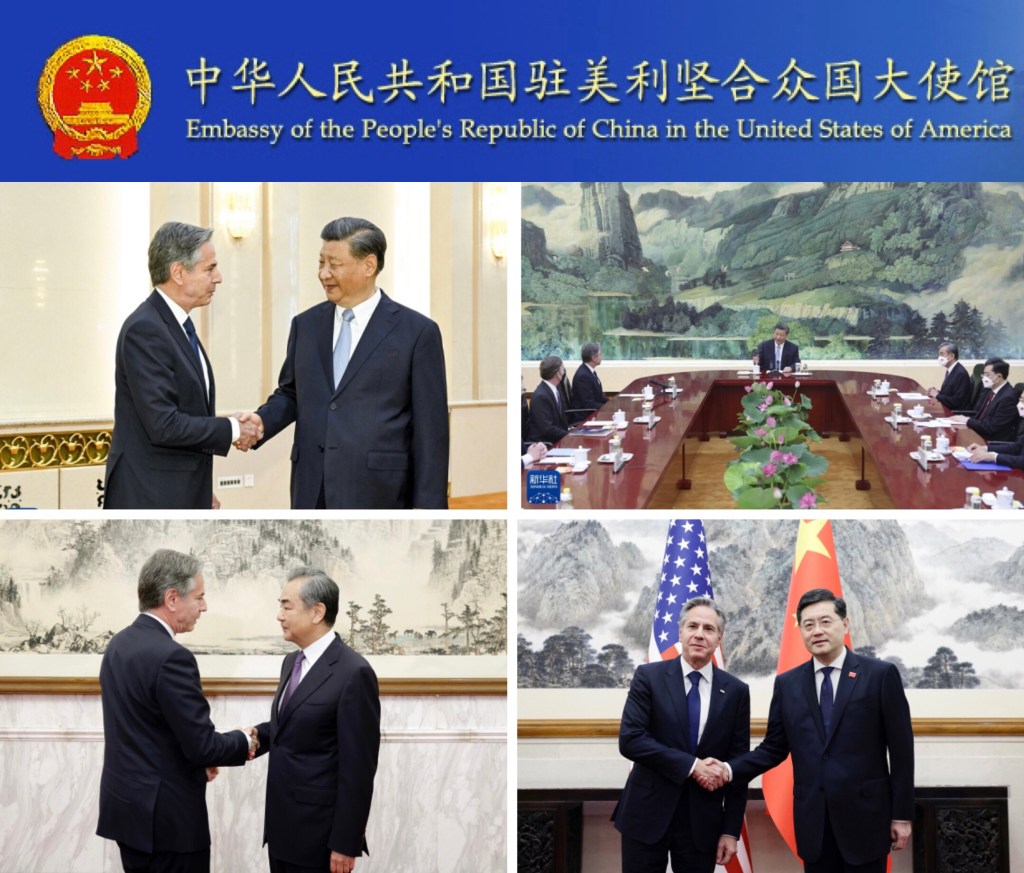
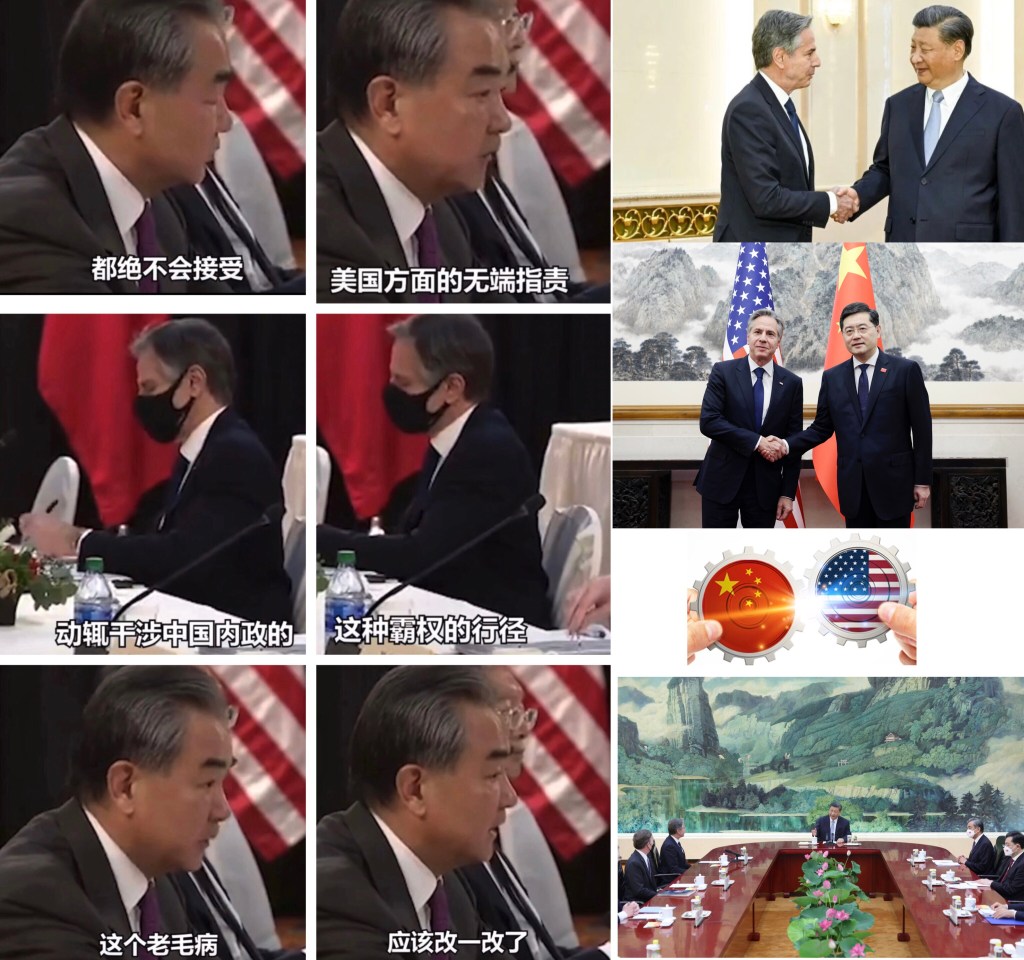
President Xi Jinping Meets with U.S. Secretary of State Antony Blinken On the afternoon of June 19, President Xi Jinping met with U.S. Secretary of State Antony Blinken in Beijing.
President Xi pointed out that the world is developing and the times are changing. The world needs a generally stable China-U.S. relationship. Whether the two countries can find the right way to get along bears on the future and destiny of humanity. Planet Earth is big enough to accommodate the respective development and common prosperity of China and the United States. The Chinese, like the Americans, are dignified, confident and self-reliant people. They both have the right to pursue a better life. The common interests of the two countries should be valued, and their respective success is an opportunity instead of a threat to each other. The international community is generally concerned about the current state of China-U.S. relations. It does not want to see conflict or confrontation between China and the United States or choose sides between the two countries. It expects the two countries to coexist in peace and have friendly and cooperative relations. The two countries should act with a sense of responsibility for history, for the people and for the world, and handle China-U.S. relations properly. In this way, they may contribute to global peace and development, and help make the world, which is changing and turbulent, more stable, certain and constructive.
President Xi stressed that major-country competition does not represent the trend of the times, still less can it solve America’s own problems or the challenges facing the world. China respects U.S. interests and does not seek to challenge or displace the United States. In the same vein, the United States needs to respect China and must not hurt China’s legitimate rights and interests. Neither side should try to shape the other side by its own will, still less deprive the other side of its legitimate right to development. China always hopes to see a sound and steady China-U.S. relationship and believes that the two major countries can overcome various difficulties and find the right way to get along based on mutual respect, peaceful coexistence and win-win cooperation. He called on the U.S. side to adopt a rational and pragmatic attitude, and work with China in the same direction. President Xi pointed out that the two sides need to remain committed to the common understandings he and President Biden had reached in Bali, and translate the positive statements into actions so as to stabilize and improve China-U.S. relations.
Secretary Blinken conveyed President Biden’s greetings to President Xi. He said President Biden believes that the United States and China have an obligation to responsibly manage their relations. This is in the interest of the United States, China and the world. The United States is committed to returning to the agenda set by the two presidents in Bali. The United States stands by the commitments made by President Biden, namely the United States does not seek a new Cold War, it does not seek to change China’s system, its alliances are not directed at China, it does not support “Taiwan independence”, and it does not seek conflict with China. The U.S. side looks forward to having high-level engagement with the Chinese side, keeping open lines of communication, responsibly managing differences, and pursuing dialogue, exchanges and cooperation.
President Xi asked Secretary Blinken to convey his regards to President Biden.
Wang Yi and Qin Gang, among others, were present at the meeting.
Wang Yi Meets with U.S. Secretary of State Antony Blinken
On June 19, Member of the Political Bureau of the CPC Central Committee and Director of the Office of the Central Commission for Foreign Affairs Wang Yi met with U.S. Secretary of State Antony Blinken in Beijing.
Wang noted that the Secretary of State’s visit to Beijing comes at a critical juncture in China-U.S. relations, and a choice needs to be made between dialogue and confrontation, and cooperation and conflict. History always moves forward, and China-U.S. relations will also move on. Reversing the wheels of history will lead nowhere, and overturning what has been achieved is even less desirable. We need to shoulder our responsibilities to the people, history and the world, avert the downward spiral of the relationship, bring it back to the track of sound and steady development, and jointly explore the right way for China and the United States to get along with each other in the new era.
Noting that relations between China and the United States are at a low point, Wang underscored that the root cause is U.S. misperceptions toward China, which has led to misguided China policies. China-U.S. relations have gone through ups and downs, and it is necessary for the United States to reflect upon itself, and work with China to jointly manage differences and avoid strategic surprises. In order to stabilize China-U.S. relations, the most urgent task is to act on the common understandings reached between the two presidents with real actions. In order to ensure the steady and long-term growth of China-U.S. relations, the most critical task is to follow the principles of mutual respect, peaceful coexistence and win-win cooperation put forward by President Xi Jinping as the fundamental guidance.
Wang gave a comprehensive explanation of the historical logic and inevitable trend of China’s development and rejuvenation, and elaborated on the distinctive features of Chinese modernization and the rich substance of China’s whole-process people’s democracy. He urged the U.S. side not to project onto China the assumption that a strong country is bound to seek hegemony and not to misjudge China with the beaten path of traditional Western powers. This is key to whether the United States can truly return to an objective and rational policy toward China.
Wang demanded that the United States stop playing up the so-called “China threat”, lift illegal unilateral sanctions against China, stop suppressing China’s scientific and technological advances, and not wantonly interfere in China’s internal affairs. Wang specially analyzed the nature of the Taiwan question. He stressed that safeguarding national unity has always been the core of China’s core interests. It is where the future of the Chinese nation lies and the abiding historical mission of the CPC. On the Taiwan question,China has no room for compromise or concession. The United States must earnestly abide by the one-China principle set out in the three China-U.S. joint communiqués, respect China’s sovereignty and territorial integrity, and unequivocally oppose “Taiwan independence”.
Blinken laid out the U.S. views. He noted that the U.S. side is committed to going back to the agenda set by the two presidents during their summit in Bali and looks forward to enhancing communication with China, managing differences responsibly and cooperating in areas of common interests.
The two sides also exchanged views on international and regional issues of mutual interest.
Qin Gang Holds Talks with U.S. Secretary of State Antony Blinken 2023-06-18 23:55
On June 18, State Councilor and Foreign Minister Qin Gang held talks with U.S. Secretary of State Antony Blinken in Beijing.
Qin pointed out that the China-U.S. relationship is at the lowest point since its establishment. This does not serve the fundamental interests of the two peoples or meet the shared expectations of the international community. China’s policy toward the U.S. remains consistent and stable. It is fundamentally guided by the principles of mutual respect, peaceful coexistence and win-win cooperation put forward by President Xi Jinping. These principles should also be the spirit jointly upheld, the red line jointly defended and the goal jointly pursued by both sides. China is committed to building a stable, predictable and constructive relationship with the U.S. China hopes that the U.S. will adopt an objective and rational perception of China, work with China in the same direction, uphold the political foundation of China-U.S. relations, and handle unexpected and sporadic events in a calm, professional and rational manner. The two sides should deliver on the common understandings reached by President Xi and President Biden in Bali in letter and spirit, and work to stabilize and steer the relations back to the right track.
Qin expounded on China’s firm position and raised clear demands on the Taiwan question and other core interests and major concerns. Qin pointed out that the Taiwan question is the core of China’s core interests, the most consequential issue and the most pronounced risk in the China-U.S. relationship. The Chinese side urged the U.S. side to abide by the one-China principle and the three China-U.S. joint communiqués, and truly deliver on its commitment of not supporting “Taiwan independence.”
The two sides had candid, in-depth and constructive talks at length on the overall bilateral ties and important issues.
Both sides agreed to jointly implement the important common understandings reached by the two presidents in Bali, effectively manage differences, and advance dialogue, exchanges and cooperation.
Both sides agreed to maintain high-level interactions. Secretary Blinken invited State Councilor and Foreign Minister Qin to visit the U.S., and Qin expressed his readiness to make the visit at a mutually convenient time.
Both sides agreed to keep moving forward consultations on the guiding principles of China-U.S. relations.
Both sides agreed to continue advancing consultations through the joint working group to address specific issues in the relations.
Both sides agreed to encourage more people-to-people and educational exchanges, and had positive discussions on increasing passenger flights between the two countries. Both sides welcomed more mutual visits by students, scholars and business people, and agreed to provide support and facilitation to this end.
The two sides also exchanged views on major international and regional issues of mutual interest.
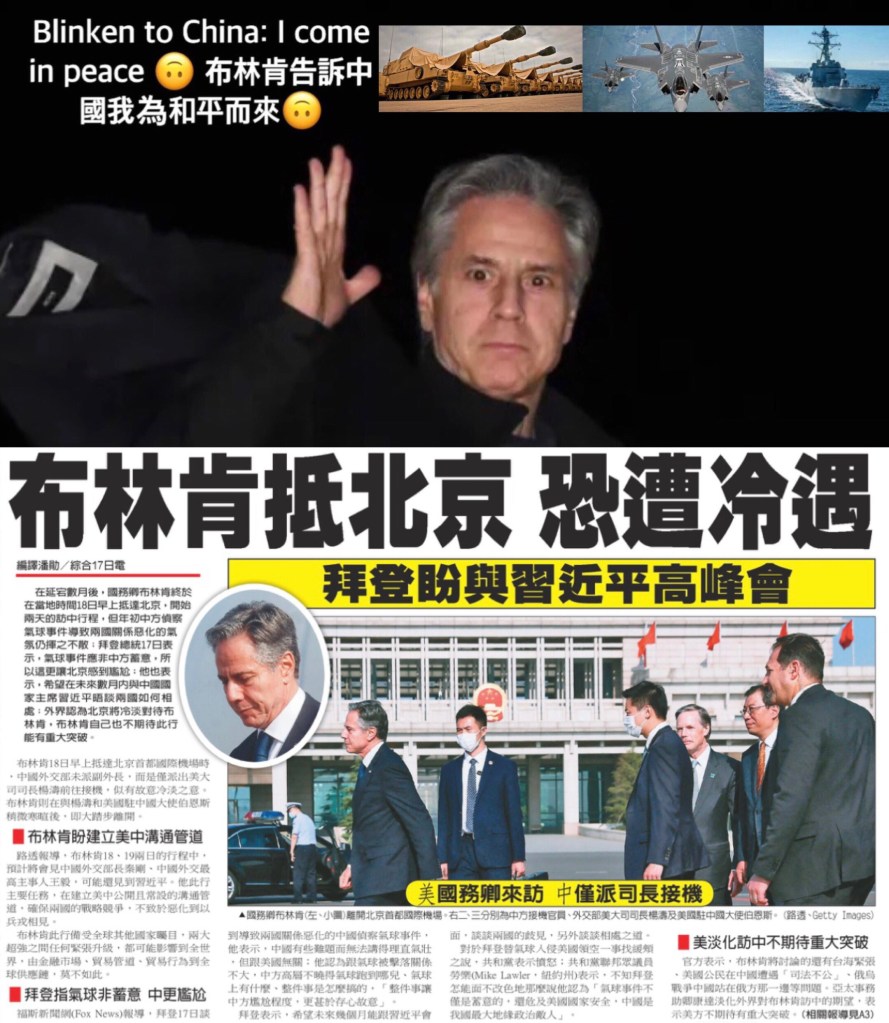
US Sec of State got cold reception from Beijing! How would you greet a warmonger, racist and a pathetic liars shamelessly insisting to pay you a visit? 美國國務卿遭北京冷遇! 你會如何迎接一個無恥地堅持要拜訪你的戰爭販子, 種族主義者和可悲的騙子!?
LEE SIU HIN After 3 Years of COVID, A Historical U.S. Activist Delegation Returning to China (VIDEOS) 5/13-5/31/2023
Lee Siu Hin 李小轩 National Coordinator China-US Solidarity Network National Immigrant Solidarity Network
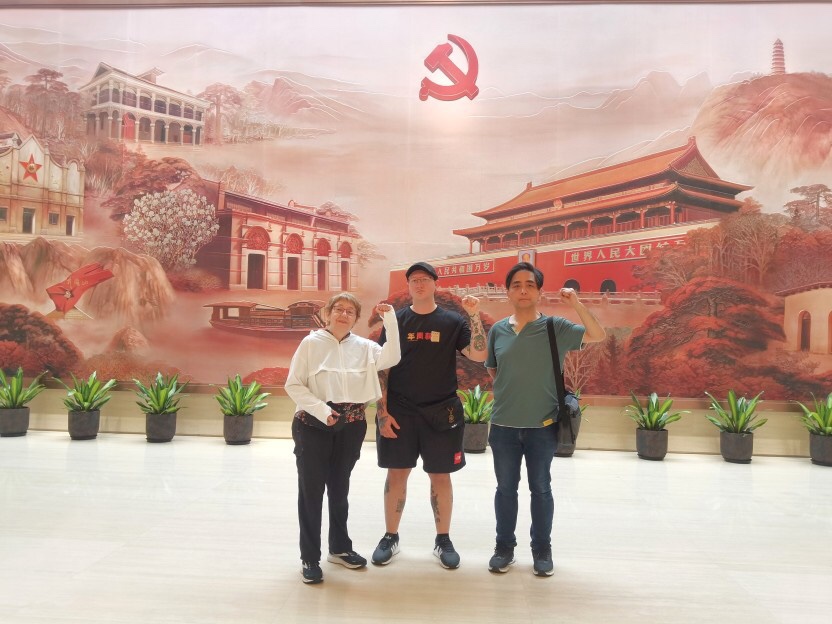
Shanghai053023-1.jpg (Shanghai, Site of the First National CPC Convention Museum)
On May 13-31, China-US Solidarity Network organized a 18-days U.S. activist delegation to China, organized by China-US Solidarity Network, invite Sara Flounders from the International Action Center, Arjae from Starbucks Workkers United/Workers World Party to visit Beijing, Xinjaing, YanAn, Nanjing and Shanghai, meeting with activists, officials and ordinary citizens for dialogue.This is the first delegation since COVID pandamic 3-years ago (www.ChinaDelegation.org)
We went to Urumqi and Kashgar, Xinjiang a fact-finding mission to meet with ethnic farmers to understand their life, to conter agaginst the western lies about the region. Beased on our trip and interviews, we’re producing a dcoumentray Voice of Xinjiang VoiceXJ (www.VoiceXJ.org)
This is the first series of our China fact-finding and solidarity building delegations of 2023-2024, enclosed videos from our trip, detail reports will be coming soon!
Lee Siu Hin 李小轩
5/13-5/31 2023 美国左翼访华团视频 5/13-5/31 2023 VIDEO U.S. Activist Delegation to China
5/13 Sunshine Beijing Saturday: Sara Flonders and Arjae, arrived to Beijing Daxing Airport this morning, immediately begin our three weeks China activist delegation tour.
First stop to Picun Village at Beijing’s Chaoyang District to visit the Working Culture Museum, met m my long-time friend Mr. Wang, and visit their nearby facilities include: schools, second-hand thrifty stores, and libraries, understand their services offer to tens of thousands of Beijing “new workers” (migrant workers) and their families in Picun, dialogue between Chinese and American activists, a very interesting visit!
5/14 Sunshine Beijing Sunday: The second days of the 3-weeks long U.S. activists to China delegation, with the help from my uncle Wang Gang, we visited the office of the Taiwan Democratic Self-Government League
The League was formed after the 1947 Taiwan “228” Uprising against Kuomintang’s dictatorship in the island, and established in Hong Kong on November 12, 1947. Currently, they have approximately 3000 members and is one of the main democratic parties in China.
In addition to friendly visit and gift exchange, they showed us the Taiwan League History Museum; we had a warm exchange and looking forward to the future cooperation.
5/15 Sunny Beijing Monday: After the important morning meeting, we went to The Badaling Great Wall, carry the flag and demand “No US war on China! ONE CHINA!”
5/16 Warm sunny Beijing Tueday, U.S. activists to China delegation Day Four: visit Museum of Communist Party of China; it’s a large museum only finished less then half of the exhibition, planning to finish the rest in the near future.
5/16 Warm sunny Beijing Tueday, U.S. activists to China delegation Day Four: visit Peking University’s Red Bricks Building, Museum of the Communist Party of China’s early activities in Beijing 100 years ago, led to the May Fourth movement!
5/17 Sunshine and Warm Beijing Wednesday: The 3-weeks long U.S. activist delegation to China Day Four. In the evening we visited Aisixiang in Beijing’s Dongcheng District. They are our Chinese partners who helped us edit and produced the joint China-U.S. documentary “Vaccine and Sanctions”. We thank them for their support, and they’re agreed to continue help our next Voice of Xinjiang VoiceXJ documentary production.
5/18 Sunny and warm Thursday: Our 3-weeks long U.S. activist delegation to China leaving Beijing, from Daxing Airport to Urumqi, begin our Xinjiang visit and fact findings tour.
Walking around prosperous and peaceful Urumqi, visit Shaanxi Temple, taking the subway, Grand Bazaar, and going to the dried fruits market to buy dried fruits from my friend’s shop.
5/19: Sunny and warm Urumqi Friday: The seventh days of the 3-weeks U.S. activist delegation to China; and restart our Voice of Xinjiang VoiceXJ documentary production and interviews, in Xinjiang, postponed due to COVID for the past two years[抱拳][抱拳]
Today we visited Shuixigou Town in Urumqi County, a suburb of Urumqi, and visit a dairy shop opened by Kazakh families who have their own factory made dairy products.
A family of four, with parents living in factories and two daughters living in a new house. The eldest daughter has just graduated from college at the age of 23, and the youngest daughter is still in high school at the age of 17. Their family income is good, a house for their own and built a large house to rent to retired Hui ethnic veterans to open a farm products restaurant.
Their whole family has stopped farming and outsourced their land to others for cultivation. The main crops in the nearby farm areas include potatoes, sunflowers, onions, wheat, etc. Now they only produce dairy products to sell, and their income is already very good, owning car and houses. they’re very supportive of the country, the party, and the government policies.
After visiting their houses and factories, we went to the Hui people’s farm products restaurant for lunch, and had a great time for good food and meaningful discussions.
5/19 sunny and warm Friday: The seventh days of the U.S. activist delegation to China, currently in Urumqi. In the afternoon we visit the Museum of Xinjiang Uygur Autonomous Region. There were many visitors and the audience was very enthusiastic to watch the exhibits in detail.
As the most important cultural relics and historical display platform in Xinjiang, the Museum of the Autonomous Region has a wealth of historical information and cultural relics that introduce the development of Xinjiang and its close connection with the Chinese mainland. It showcases that Xinjiang has always been a part of the China, with multi-ethnic unity.
5/21 Sunshine and warm Xiaoman Chinese calendar day Sunday: The ninth day of the 3-weeks long U.S. activist delegation, arrived to the highlight of our trip: Kashgar, Xinjiang.
We drove to the Tortai Farm in Akto County, Kizilsu Kirgiz Autonomous Prefecture outside city of Kashgar; this is the second time I visited the farm since last month, for my Voice of Xinjiang VoiceXJ documentary project begin interviewing people of Xinjiang.
Tortay Farm, formerly known as Hongqi (Red Flag) Farm, was founded in 1958, it’s located on the edge of the alluvial fan of the Gaizi River, on the east side of Akto County, adjacent to Shufu County in the Kashgar region in the north, and the 41st Regiment of the Third Agricultural Division of Xinjiang Production and Construction Corps in the northeast corner.
It borders Shule County, connects with Jiamatiereke Township in the east, and connects with Pilare Township in the west and south. The area under its jurisdiction is 6 kilometers wide from east to west, 12 kilometers long from north to south, with a total area of 43 square kilometers and a population of about 3827 people (2010).
“Tortay” is a Uighur language, meaning “claret horse”. The straight-line distance from the field to Akto County is 8 kilometers, and it is 1.5 kilometers away from the main road from Akto County to Kashgar. The transportation is convenient. In 2010, it administered 8 production teams and 1 administrative village. The farm has 1,200 hectares of arable land and 733.3 hectares of red dates.
The average altitude is 1294.4 meters, the terrain is flat, and the groundwater level is relatively high. The climate is warm and dry, with an average annual temperature of 14°C, with an average temperature of -6.3°C in January and 25.1°C in July, and a frost-free period of 221 days. The soil is mostly saline soil and meadow soil, with a small amount of irrigated silt soil. The main canal is the Totayi Canal, which is irrigated with water from the Gezi River. The main crops are wheat, corn, rice and cotton.
Arranged by the local agricultural department officials, we visited four local Uighur families ranging from relatively low income to relatively wealthy. The first family raised sheep, camels and chickens. They used to be nomads, but now they have settled down under the arrangement of the government.
The second household is engaged in the construction industry and builds houses for nearby villagers. He learned his skills decades ago through an apprenticeship with master craftsmen.
The third family is a retired local village official in his 80s. He used to work in the local county literature and art department. After retirement, his son opened a grocery store and lived a happy and stable life.
The fourth household is a veterinarian in the village, helping the nearby villages to protect the health of the livestock. He is proud of owning and raising a sheep worth hundreds of thousands Yuan.
Regardless of their income status, each of their families has a large home, and they have received government subsidies and other preferential policies for building a house. Each family has several children, and they all go to colleges and universities to study. Especially in recent years their villages has developed much better takes and more public services. They all expressed that very grateful to the government and the Communist Party of China (CPC) policies helped them build their thriving life for their families.
After the family visit, we visited the state-owned cotton fields, It’s managed by official who’re local Han residents. The cotton fields have grown slowly since they were sown in early April, covering thousands of acres, all of which are mechanized. When we arrived, we saw irrigation trucks spraying pesticides along the farm field.. The farm official said the cotton fields were covered with canvas and herbs were planted between each row of cotton. About 800 Hector of wheat is planted between the cotton fields, as different insects from different plants eat each other, so as to achieve the effectness of insect-proof crops. The wheat grows quickly when it is seen, and it will be ready to be harvested around June next month. They implement a subcontracting system and hand over the farmland to local farmers for planting and management.
Finally, we passed by the village primary school, because no one could arrange visits on Sundays. The school teacher told me that they had more than 600 students, mainly Uighurs and Han and Tajik ethnic groups. The teaching is mainly in Mandarin, and offer one class for Uighur language.
Our visit to the farm is very excited and unique experience, the locals are all very enthusiastic about us and hope that we will come again next time. This is a very meaningful and good learning experience, and a very meaningful time for building people-to-people Sino-US friendship and exchanges.
5/24 Cloudy northern Shangxi Wednesday: The 12th days of the 3-weeks U.S. activist delegation to China, we arrived to Yan’an, the holy site of the Chinese revolution.
Yan’an has a population of 2.27 million and is already a city of considerable scale.
We visited the Yan’an Revolution Memorial Hall and the Wang Jiaping’s former Eighth Route Army Headquarters, to commemorate the revolutionary ancestors, and continue our revolutionary mission.
5/23-24 Cloudy northern Shangxi our U.S. activist delegation to China, our high-speed railroads trip between Xi’an – Yan’an yesterday, then today Yan’an-Xi’an-Xi’an North-Nanjing South, a 1500km (~900 miles) 7 hours trips; a beautiful scenic and high-tech experience across China.
南京 Nanjing
5/26 南京 原民国时期总统府 Nanjing Former Presidential Palace during the Republic of China Period https://v.douyin.com/Uo7jaxN/
5/26 cloudy Friday, the 14th days of the 3-weeks U.S. activist delegation to China, arriving to Nanjing, we visit the former Presidential Palace during the Republic of China period. It is the largest and most fully preserved architectural complex among modern Chinese architectural relics, and also one of the main representatives of Nanjing’s Republic of China prior architecture. It is an important site of modern Chinese history. It has repeatedly become the center of China’s political and military affairs and the source of major events. A series of major events in China have occurred here or are closely related to it, and many important Chinese historical figures have been active here.
It has a history of over 600 years, dating back to the Guide Marquis’s Mansion and the Han Prince’s Mansion in the early Ming Dynasty; During the Qing Dynasty, it was designated as the Jiangning Weaving Office and the Liangjiang Governor General’s Office, and was used as a palace by the Kangxi and Qianlong Southern Expeditions; After the Taiping Heavenly Kingdom established its capital in Tianjing, a large-scale Tianwang Mansion was built here; On January 1, 1912, Sun Yat sen was sworn in as the interim President of the Republic of China, creating the Presidential Palace and later the Presidential Palace of the Nanjing Nationalist Government.
Also in here, Chiang Kai shek once commanded his military dictatorship and fascist regime, launched massacres against Communists and patriotic progressives, and had an ugly history of the “no resistance” policy towards Japan. It was also during the eight year Anti-Japanese War when Nanjing was occupied by Japan, during the Wang puppet regime, it became the headquarters of the 16th Division of the Japanese Army, the Executive Office of the pseudo reform government, as well as the Legislative Office, Supervisory Office, and Examination Office of the Wang puppet government; The Eastern Court of the complex became the puppet Ministry of Transportation, Ministry of Railways, and other institutions; The Western House of the National Government became the pseudo military Senate.
In addition to visiting the historical site, it is important to review the past and learn our complex history.
5/28: 侵华日军南京大屠杀遇难同胞纪念馆 The Memorial Hall of the Victims in Nanjing Massacre by Japanese Invaders https://v.douyin.com/Uo7tMWX/
5/28: U.S. activist delegation China arriving to Nanjing: We visited the The Memorial Hall of the Victims in Nanjing Massacre by Japanese Invaders, and the Yuhuatai Revolutionary Martyrs Monument with great respect.
Over 300 thousands people were killed when Japan invade and occupy Nanjing on December, 1937.
At Yuhuatai, between 1920s to 1940s tens of thousands of communists, revolutionaries and progressive activists were secretly executed here, as of today only 1500s were able to identified.
Remembering the victims who perished in the Japanese invasion of China, and the Chinese revolutionary martyrs. In the current complex global environment, we all need work hard to protect my coubtry, and to buikd global peace solidarity!
5/28: U.S. activist delegation to China visit Nanjing, we visited the Battle of Crossing the Yangtze River Victory Memorial Hall, to commemorate the majir historical event of millions of Chinese liberation army crossing the Yangtze River to liberate the entire China more than 70 years ago on April 20, 1949!
上海 Shanghai
5/30 上海 革命圣地参观 Shanghai Revolutionary Historical Sites Visits 5/30 上海 革命圣地参观: 中共一大会址 Shanghai Revolutionary Historical Sites Visits: Site of the First National Congress of the CPC https://v.douyin.com/UovyyxG/
5/29-30 at the last stop of our 18-days U.S. activist delegation to China, arriving to Shanghai.
With rich of modern Chinese revolutionary history, we visited the Fuxing Park’s Marx and Engels Square, the site of the First National Congress of the Communist Party of China (CPC), the site of the Second National Congress of the Communist Party of China, the site of the civilian girls’ school, the preparation office of the First National Congress of the CPC (The former editorial office of the “New Youth”), the memorial site of the Central Committee of the Socialist Youth League of China, and the Shanghai History Museum, all of which are located in Central Shanghai’s Huangpu District within around 2 km radius area.
With strong respects, we remembering the footsteps of revolutionary giants a hundred years ago.
5/30 上海 革命圣地参观: 中共二大会址、平民女校旧址 Shanghai Revolutionary Historical Sites Visits: Site of the Second National Congress of the CPC, Site of the Civilan Girls’ School https://v.douyin.com/Uoc23fa/
Unlike the nearby famous site of the First National Congress of the Communist Party of China, the Second National Congress of the Communist Party of China (Memorial Hall of the Second National Congress of the Communist Party of China), located at No. 30, Lane 7, Old Chengdu North Road, Jing’an District, Shanghai (formerly No. 625 Fudelhi, South Chengdu Road). The Second National Congress of the CPC was held here from July 16 to 23, 1922. The congress was attended by members of the Central Bureau, representatives of local Party organizations, and some representatives who returned home after attending the First National Congress of the Communist Party of China, and a nationa communist &l revolutionary group in the Far East. The site of the Second National Congress of the Communist Party of China is the birthplace of the first CPC Party Constitution.
5/30 上海 革命圣地参观: 青年革命足迹中国共产党发起组成立地(《新青年》编辑部)旧址、团中央机关旧址 5/30 Shanghai Revolutionary Historical Sites Visits: Revolutionary Youth Footsteps The preparation office of the First National Congress of the CPC (The former editorial office of the “New Youth”), the memorial site of the Central Committee of the Socialist Youth League of China https://v.douyin.com/Uocfcev/
5/29-30 at the last stop of our 18-days U.S. activist delegation to China, arriving to Shanghai. We continue visit the preparation office of the First National Congress of the CPC (The former editorial office of the “New Youth”), the memorial site of the Central Committee of the Socialist Youth League of China,
With rich of modern Chinese revolutionary history, we visited the Fuxing Park’s Marx and Engels Square, the site of the First National Congress of the Communist Party of China (CPC), the site of the Second National Congress of the Communist Party of China, the site of the civilian girls’ school, the preparation office of the First National Congress of the CPC (The former editorial office of the “New Youth”), the memorial site of the Central Committee of the Socialist Youth League of China, and the Shanghai History Museum, all of which are located in Central Shanghai’s Huangpu District within around 2 km radius area.
With strong respects, we remembering the footsteps of revolutionary giants a hundred years ago.
All these revolutionary sites are not far apart, within a radius of approximately 1 kilometer (~3/4 miles).
The preparation office of the First National Congress of the CPC (The former editorial office of the “New Youth”), is located at No. 2, Lane 100, Nanchang Road. It is a brick and wood structure old Shikumen Alley residence with a history of more than 100 years.
The memorial site of the Central Committee of the Socialist Youth League of China, was founded in the spring of the ninth year of the Republic of China (1920). After Dai Jitao moved out of Yuyangli, the representative of the Communist International, Vikinsky, and Yang Mingzhai, a member of the Communist Group in Shanghai, proposed to set up the Sino Russian News Agency (later renamed the Sino Russian News Agency) in Yuyangli. When discussing with Chen Duxiu about the establishment of the CPC, the Sino Russian News Agency became one of the important venues for the communists in Shanghai on the eve of the founding of the CPC; In April, preparations for the first celebration of May Day International Labour Day in Shanghai were carried out at the Sino Russia News Agency; On April 29, the Sino Russia News Agency was searched by the French Concession patrol house, and the promotional materials commemorating the May Day Preparatory Committee were confiscated; In May, the Socialist Youth League suspended its activities because Yu Xiusong went to Russia to participate in the Second Congress of the Youth Communist International; On August 22, under the leadership of the early organization of the CPC and the advocacy of Chen Duxiu, the leader of the Communist Group in Shanghai, eight young people, including Yu Xiusong, Li Hanjun, Chen Wangdao, Yuan Zhenying, Ye Tiandi, Jin Jiafeng, Shi Cuntong, Shen Xuanlu, initiated the establishment of China’s first socialist youth league, the Shanghai Socialist Youth League, with Yu Xiusong as the secretary, Yuyangli has become the central organ of the Chinese Socialist Youth League (the former site of the central organ of the Chinese Socialist Youth League); In September, the Shanghai Communist Group established the “Foreign Language Society” as a cover in Yuyang, with a white background and black lettering “Foreign Language Society” sign hanging at the entrance.
From the ninth year of the Republic of China (1920) to the tenth year of the Republic of China (1921), under the cover of the “Foreign Language Society”, Liu Shaoqi, Luo Yinong, Ren Bishi, Xiao Jinguang, Xu Zhizhen, Wang Yifei, Wang Shouhua, Ke Qingshi and other progressive young people grew rapidly in the central gate of the Chinese Socialist Youth League, and later joined the early work of the CPC.
The last stop of our 18-days U.S. delegation to China in Shanghai is the Shanghai History Museum. Covering an area of 10000 square meters, it was originally the building of Shanghai Jockey Club in the old colonial era of Shanghai. It is a landmark museum that comprehensively reflects the 6000 year long pre-historical to revolutionary history of Shanghai. The total collection is about 110000 pieces, covering the display of historical relics from ancient times to revolution in Shanghai.
5/20-22: U.S. activist delegation to China arrived to Kashgar, Xinjiang-the high point for our trip. Kashgar is one of the most important historical city on the ancient Silk Road; walking through the Old Town Kashgar, tasting delicious food, and visit Xiangfei Tomb, it’s the beautiful and clean city with full of romantic memories.
5/23, sunny and warm Tuesday: The 11th days of the 3-weeks long U.S. activist delegation to China, arriving to the Chinese ancient capital of Xi’an, rest for a day to visit historical Xi’an.
Few days earlier, they just hosted the China-Central Asia Summit; Xian is the starting point of the ancient Silk Road, and an important city along the the Belt and Road project.
We visit the Museum of the Terra Cotta Warriors of the King of Qin Shi, watch Empress Wu’s musical show in the evening, take the Xian subway to walk around ancient city walls, lively downtown, and talk about the dirty and danger of New York subway system.
5/27 Sunshine romantic Nanjing Saturday: I finally found our book “Capitalism On A Ventilator” co-edited by Sara Flooders, at the actual bookstore on Librairie Avant-Garde (Mount Wutai Store).
The last stop of our 18-days U.S. delegation to China in Shanghai, The Bund, beautiful scenery, community cafeteria, café, and delicious food. It comes to a complete conclusion after a happy and tense visits, the delegation depart from Shanghai Pudong Airport returning to U.S.

 Business Blog