Political scientists say China is no longer a communist state, but one that runs on a party-state capitalist system—and at the same time, the US is moving towards authoritarianism, particularly in regards to anti-capitalist behaviour internationally. Check out the findings, look at the evidence, and make up your own minds. 政治學家說,中國不再是一個共產主義國家,而是一個在黨國資本主義制度下運行的國家——與此同時,美國正在走向威權主義,特別是在國際反資本主義行為方面。 查看調查結果,查看證據,然後做出自己的決定.
Scott Ritter: Waging Peace’: How a tour of Russia showed me that propaganda perverts reality in the minds of Americans 發動和平”:俄羅斯之行如何向我表明宣傳歪曲了美國人心目中的現實
My month-long tour of the country was an eye-opening experience, and so was the hostility that met me back home
Scott Ritter is a former US Marine Corps intelligence officer and author of ‘Disarmament in the Time of Perestroika: Arms Control and the End of the Soviet Union.’ He served in the Soviet Union as an inspector implementing the INF Treaty, in General Schwarzkopf’s staff during the Gulf War, and from 1991-1998 as a UN weapons inspector.
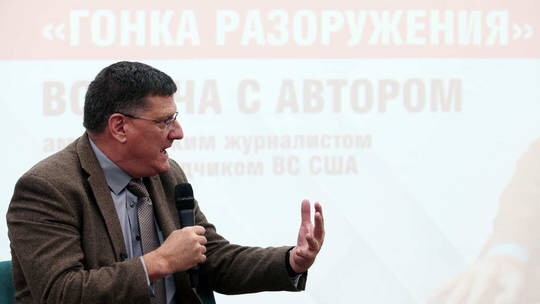
‘Waging Peace’: How a tour of Russia showed me that propaganda perverts reality in the minds of Americans Former United Nations Chief Weapons Inspector on Iraq Scott Ritter talks to readers during the presentation of his book Disarmament Race, dedicated to nuclear security, at the Pobeda Culture and Leisure Centre on May 1, 2023, in Novosibirsk, Russia.
At the end of April, my daughter Victoria and I departed New York City’s JFK airport, ultimately bound for the Siberian city of Novosibirsk, the first destination of what would be a 26-day, 12-city tour of Russia.
While the official purpose of the visit was business (I was promoting my book, Disarmament Race, which has been published in the Russian language by the Komsomolskaya Pravda publishing house), the unofficial – and for me, most important – purpose of the visit was an opportunity to better understand today’s Russia. To do this, I was going to dig deeper into Russian history, get a better grasp of the culture, and, in the process, try to understand the “Russian soul” in as precise a manner as possible.
From my perspective, both objectives were accomplished. I’m inclined to believe that Komsomolskaya Pravda was pleased with the results of a tour that drew positive media coverage, resulted in well-attended town hall-style events involving vigorous question-and-answer sessions, and reportedly resulted in the initial print run of 10,000 books to be sold out in a manner of days. Through the considerable interaction I had with Russians of all walks of life, I came away with deeper insight into the complexity of what comprises the modern Russian nation circa 2023. However, divining an articulable definition of the Russian soul – if indeed possible at all – requires deeper introspection into the plethora of data and experiences captured during this journey than the passage of several days affords and is beyond the scope of this article.
I left on this adventure fully cognizant of the existence of an informational pandemic in America known as Russophobia, and I always believed that I was realistic as to the challenges that I would have to face in trying to convert my Russian experience into a fact-based vaccine to counter this disease of the American mind. However, the scale of the obstacles that I imagined overcoming paled in comparison to the reality that hit home literally as I stepped off the aircraft on our way back home, when Victoria and I were both pulled out of the passport checkpoint for an hours-long interrogation by investigators from Customs and Border Protection who specialize in travelers from designated nations such as Russia.
Moscow addresses UN over Ukraine’s pledge to ‘keep killing Russians’ READ MORE Moscow addresses UN over Ukraine’s pledge to ‘keep killing Russians’ I will start by noting that the treatment my daughter and I received was professional and courteous. I understand the political reality of the times we live in, and the perceived necessity of questioning US citizens who travel to Russia while relations between our two nations are at an all-time low. My concern is not in the conduct of the interrogation, but rather the substance of the foundational information upon which the questions asked of me were based. As the CBP officer admitted, he had interviewed hundreds of Russians after the start of the military operation in Ukraine in February 2022. The picture he had of Russia was singularly grounded in the perspective of political dissidents who had a bone to pick with President Vladimir Putin, and the narrative that they painted about Russia had become gospel for the CBP. By extension, it has heavily influenced the overall assessment by the US government, since these dissident debriefings constitute a major source of the primary intelligence used by national security analysts throughout the American intelligence community.
In short, my interrogation quickly became a debate between myself on the one hand, and a combination of Alexey Navalny (the imprisoned Russian opposition figure who most of the Russian dissidents support, according to the officer) and the Ukrainian government on the other. Virtually every point I made was immediately defined as “pro-Russian propaganda.” I tried to impress upon the CBP officer the reality of Russia, today, especially concerning both the high level of support for, and underlying criticism of, the Russian government about the military campaign in Ukraine. However, in the end my arguments, and the facts they were based upon, were categorized as “Kremlin talking points” no matter how hard I tried. I left the interrogation with a new appreciation of how deeply ingrained into the intellectual DNA of the official US government the Navalny and Ukrainian narratives have become, and how difficult it will be to root them out.
I had held out a modicum of hope that I would be able to engage in a responsible fashion with some elements of the mainstream media about my visit and what I experienced and, in doing so, help make inroads in countering the official US line on Russia. As such, when I was contacted by a local columnist for the major regional newspaper, I called him back in hopes that he would be interested in writing something that accurately captured the substance and tone of my trip.
I am not naming either the newspaper or the columnist, for the simple fact that I do not know if there will be an article or what the actual content would be. However, what I do know is this – he was familiar with many of the interviews I gave while in Russia (they were published on US social media), and as such, sufficiently empowered to ask relevant questions.
The Red Scare 2.0: Russophobia in America today READ MORE The Red Scare 2.0: Russophobia in America today Instead, the columnist sought to cherry pick statements I made during these interviews, void of any factual context, to paint me as a pro-Russian shill. And when I pushed back, he then turned to the age-old tactic of bringing up a past criminal conviction as a way of defining me and, by extension, my trip. This, apparently, is what passes for journalism in America today. I hope that events prove me wrong, but this is not my first media rodeo – I know how the game is played, and how the players behave. Sadly, any hope I had placed on garnering the support of local, regional, and national mainstream media in helping disseminate my Russian experiences, insights, and analysis in an accurate and fair manner appears to have been misplaced. The mainstream media will continue to do what it has done for many years now – mindlessly echo the official narrative and undermine anyone who dares challenge it.
Upon my return home, I was able to access my email account, which I was not able to do while in Russia, and immediately stumbled upon an intramural discussion among people I respect, who possess similar professional backgrounds and anti-war inclinations. It revolved around the issue of whether there was anything more Russia, and in particular Putin, could have done to avoid a war in Ukraine. Some amongst this group insisted that Putin had no choice but to act, while others argued that there were always options short of war that could have been pursued.
What struck me about this debate was the reality that, save for very few exceptions, the underlying analysis was conducted from an American point of view, with little or no regard as to what would be politically possible in Russia, or what the factual foundation of the problems being discussed were. The mirror-imaging of American perspectives onto Russian reality resulted in the creation of a counter-narrative that was as fundamentally flawed as it was factually challenged. For those who argued that Putin could have avoided war, their arguments lacked any grounding in Russian reality or the facts of the case.
The lack of insight into how Russia functions created artificial expectations of Russian behavior which, when not met, generated angst among the participants about the irresponsible actions of Putin and his government that in turn helped feed an overall anti-Russian narrative. As this debate underscored, even among well-meaning people inclined to have an open mind about the country, Russophobia and an overall ignorance of the Russian reality creates pre-conceived intellectual obstacles which are difficult to overcome.
The byproduct of such a fundamentally flawed approach toward understanding Russia is the hate-filled rhetoric of officials like South Carolina Republican Senator Lyndsey Graham, a lifelong Russophobe, who has crowed about US taxpayer dollars used to finance military aid to Kiev being “the best money we’ve ever spent” and gloated about how “Russians are dying” in the war. Under normal circumstances, such blood curdling rhetoric would be openly challenged by most Americans as unreflective of our values. Russophobia, however, is a disease of the mind, the symptoms of which are the termination of rational thought.
My work is cut out for me. While daunted by the challenges that immediately manifested themselves upon my return, I am optimistic that I will succeed. I remain empowered and emboldened by the strength of the impressions made upon me during my journey inside Russia, especially the enthusiasm of the people who entrusted me with this experience. I am also encouraged by the support that exists in the world of social media, where ideas that challenge the official narrative are freely exchanged, generating momentum that has the potential to shape the minds and attitudes of a significant number of my fellow Americans.
US retaliates against Russia over nuclear treaty READ MORE US retaliates against Russia over nuclear treaty The defining theme of my Russian visit and the journey of education and awareness derived from this trip is “Waging Peace.” The underlying assumption made in selecting this theme is that the processes envisioned from it involve inevitable conflict of an ideological nature. To prevail, those engaged in this campaign will need to muster all the fact-based arguments possible to counter the government-backed mainstream narrative. This sort of activity cannot occur in a vacuum, but rather must be rooted in the age-old maxim of “know your enemy.”
Rather than being disheartened by the reality of the CBP questioning, the pre-conceived slant of American reporters, or the lack of viable Russian context in the relevant debates and discussions about the country taking place in the US, right now, I am empowered by the fact that I have come face to face with the enemy early on in this struggle, have familiarized myself with their modus operandi, and as such will be able to make the appropriate adjustments in strategy and tactics necessary to prevail.
The war against Russophobia was never going to be an easy one. But for the sake of the future of America, Russia, and the rest of the world, it is one that must be won. “Waging Peace” is not a casual cause, but rather a struggle of existential proportions.
We will win, if for no other reason than defeat is not an option.
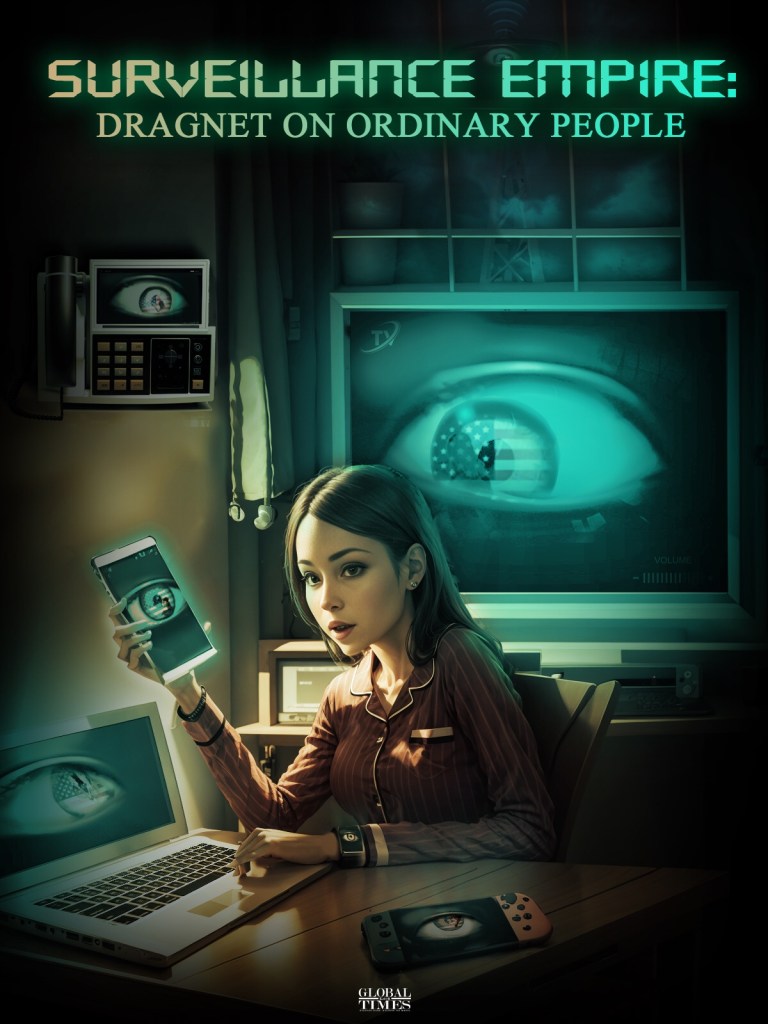
Partnering with US mobile phones to social media, the US Gov’t ‘the Peeping Tom’ secret spying is like a tight and massive surveillance dragnet on people around the worlds 與美國手機和社交媒體合作, 美國政府的“偷窺狂”就像一張嚴密而龐大的監視網,對世界各地的人們進行監視
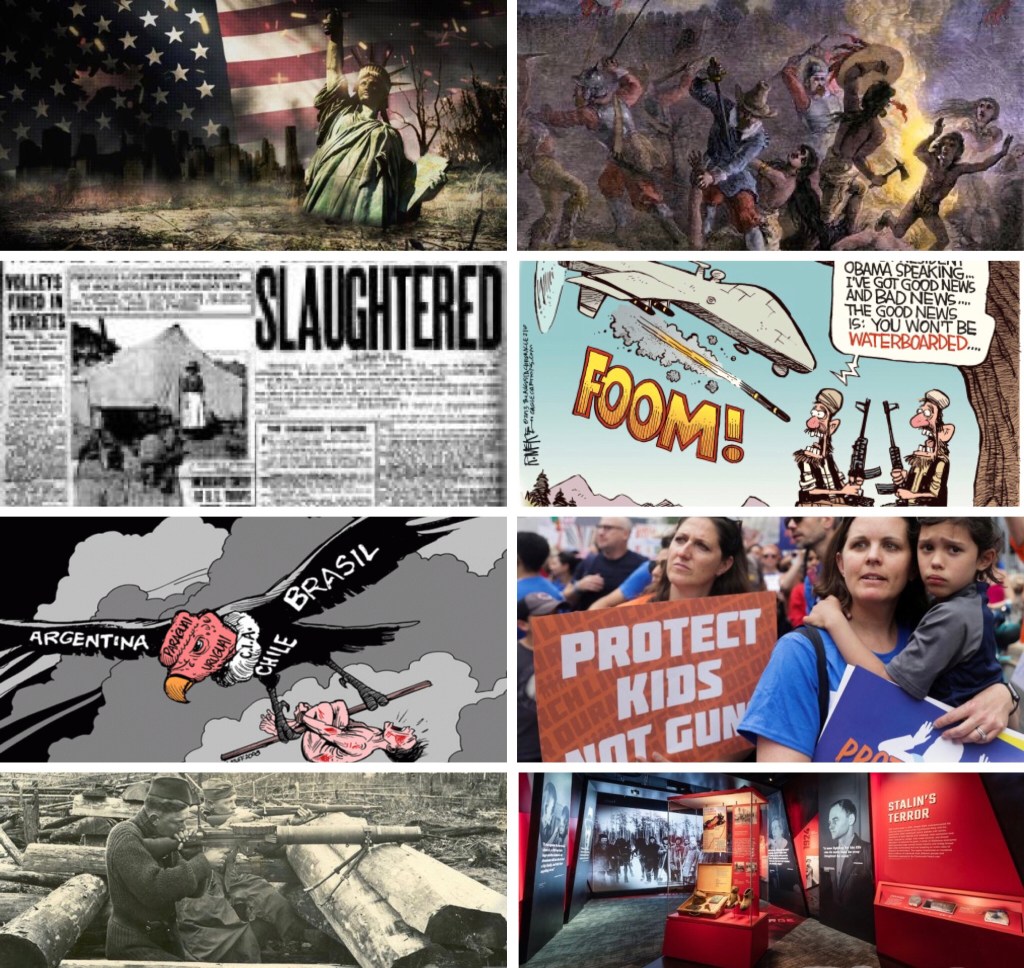
U.S. Empire Named Most Murderous Killing Machine In History. New study finds U.S. responsible for nearly 300 million deaths and counting 美帝國被評為歷史上最兇殘的殺人機器。新研究發現美國應對近 3 億人死亡負責 By Jeremy Kuzmarov 5-30-23
In September, the Victims of Communism Memorial Foundation—established by a bipartisan act of Congress in 1993—opened the Victims of Communism Museum in Washington, D.C., which aims to spotlight the plight of the alleged 100 million victims of Communist ideology.
The Indigenous Peoples’ Holocaust
Smith estimates that 13 million Indigenous people were killed in the holocaust that resulted from the European colonization of North America.
African American Holocaust
Smith estimates that approximately 25 million Africans were originally captured, and 12.5 million of them died between capture and embarkation from the slave ships that brought them to North America.
The Workers’ Holocaust
Approximately 35,000 workers died on the job annually between 1880 and 1900—700,000 for those two decades alone as Congress refused to pass basic regulations to protect workers’ rights.
31 Republicans, 4 Democrats, 1 Independent Vote Against Debt Ceiling Bill in the Senate. The Senate votes to pass the debt ceiling bill, 63-36. Most Republicans vote against it.
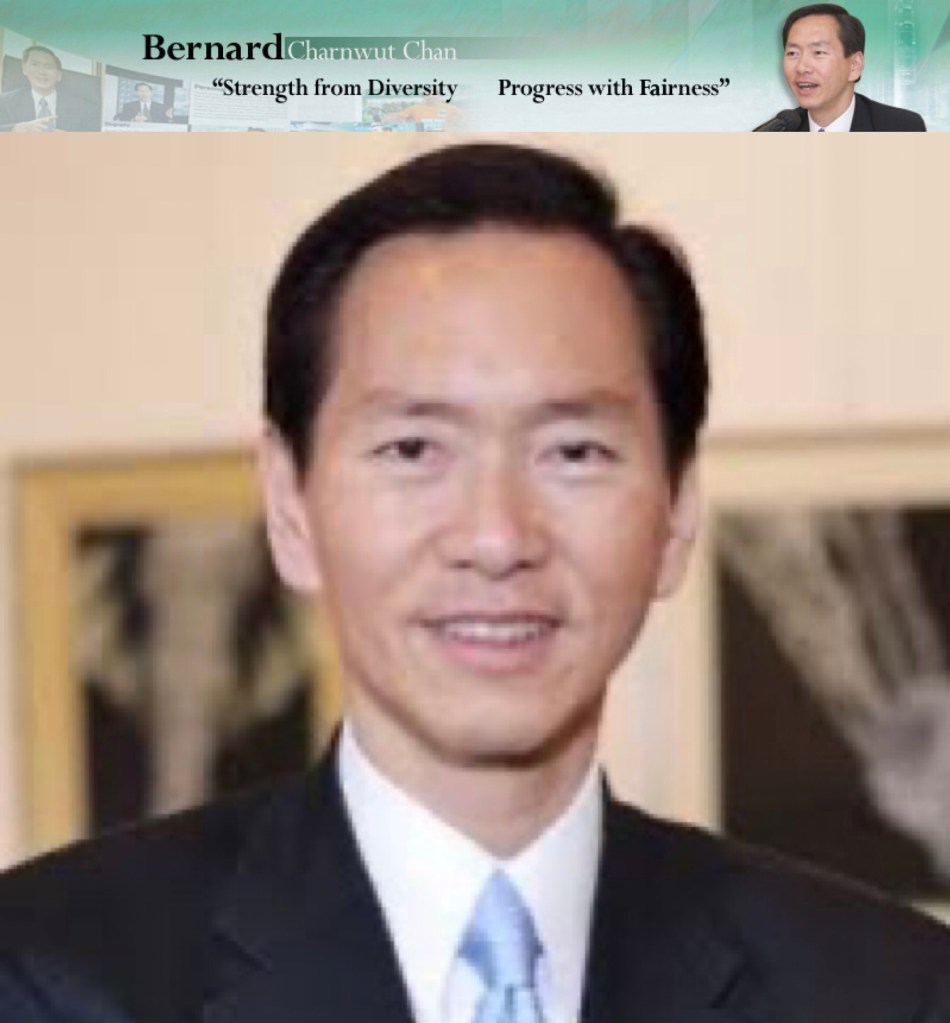
SCMP Article: Fellow RHS HK Alumni Bernard Chan: Inspirational HK graduates are beacons of hope 香港南華早報文章: 香港玫瑰崗學校校友陳智思鼓舞人心的香港畢業生是希望的燈塔
Courage, commitment, passion and integrity seem increasingly elusive in today’s society. It falls to parents, the community and business leaders to instil these qualities into our young people. After all, they will have to deal with the major issues thrust upon them by previous generations.
This reality was brought home to me recently at the 30th anniversary gala dinner for the 2023 graduates of Li Po Chun United World College of Hong Kong. The school is a member of United World Colleges, whose philosophy is focused on diversity and intercultural understanding. Their mission is to provide a life-defining educational experience.
I was invited to participate in a panel discussion alongside eminent academic Kishore Mahbubani and Teresa Ma, the founder of Peace Generation. The topic was “Peace in the Future of Asia Pacific”. This is a complex, sensitive subject but one that is relevant amid heightening geopolitical tensions between China and the United States.
This rise in tensions is being driven by a shift in global power. The increasing influence of China and India is the most noteworthy example from recent years, and many Southeast Asian countries have also achieved strong growth, which has enhanced the region’s economic power. This is not the result of war or military threats but pragmatic economic cooperation that has lifted millions of people out of poverty.
As McKinsey partners Jonathan Woetzel and Jeongmin Seong wrote in a 2019 commentary: “In the 19th century, the world was Europeanised. In the 20th century, it was Americanised. Now, it is being Asianised – and much faster than you may think.” They close by saying that, “We have entered the ‘Asian century’, as the author Parag Khanna puts it. There is no turning back.”
During a forum in Hong Kong organised by the Singapore Chamber of Commerce last month, Mahbubani said war between China and the US was unlikely but Hong Kong should prepare to be “kicked around” like a football in the next decade. Such tactics are not advantageous to anyone, particularly our international partners. Many already benefit from our unique status and will do so for the foreseeable future.
At the gala dinner, Mahbubani made reference to “three demons” which have led to conflict over centuries, representing the quest for power, money and greed. On a more positive note, however, he encouraged all graduates attending the ceremony to remain optimistic while being pragmatic in seeking solutions to the challenges that lie ahead.
It is evident to me that respect, understanding and tolerance of others’ cultural values are fundamental to an open and inclusive society. This is best achieved through dialogue and engagement. Working more closely across the international community is the only way to overcome the most difficult challenges facing humanity.
We need look no further than the Association of Southeast Asian Nations for an example of what pragmatic diplomatic relations can achieve. The grouping counts democracies, autocracies, communist regimes and a monarchy among its members, and, for the most part, it is prospering and expanding its international influence while carefully balancing relations with Beijing and Washington.
For me, the highlight of the evening was the introduction of two students who received scholarships at Li Po Chun United World College and had recently arrived from Afghanistan. They represent the future, and they gave the audience more hope and optimism than the adult panellists in the forum.
These courageous students arrived from a war-torn country having witnessed conflict first-hand. Against all odds, they have earned an opportunity to create a new life here and make a positive contribution to the world.
Listening to their story was humbling. Their hopes for a better future resonated with the audience. We should applaud their tenacity and follow their example by fostering good relations through collaboration.
Scholarship programmes like these can be life-changing for the recipients who are undoubtedly bright but, more importantly, dedicated and hard-working.
I make an effort to meet young people of all ages and from all backgrounds so I can get a better sense of their fears and aspirations. I often share personal stories or experiences to encourage them to believe in themselves and understand they can make a difference.
No matter what their personal virtues or academic achievements, each and every one of them can make a significant contribution to the world. Our paths should seek peaceful collaboration for the benefit of all.
 Business Blog