South Korea’s national fortune video: God’s sins are forgiven, but self-inflicted sins cannot live 韓國的國運視頻: 天作孽犹可恕, 自作孽不可活
https://www.tiktok.com/t/ZTRoekgTG/?t=1
https://rumble.com/v2qk792-south-koreas-national-fortune-video.html

South Korea’s national fortune video: God’s sins are forgiven, but self-inflicted sins cannot live 韓國的國運視頻: 天作孽犹可恕, 自作孽不可活
https://www.tiktok.com/t/ZTRoekgTG/?t=1
https://rumble.com/v2qk792-south-koreas-national-fortune-video.html
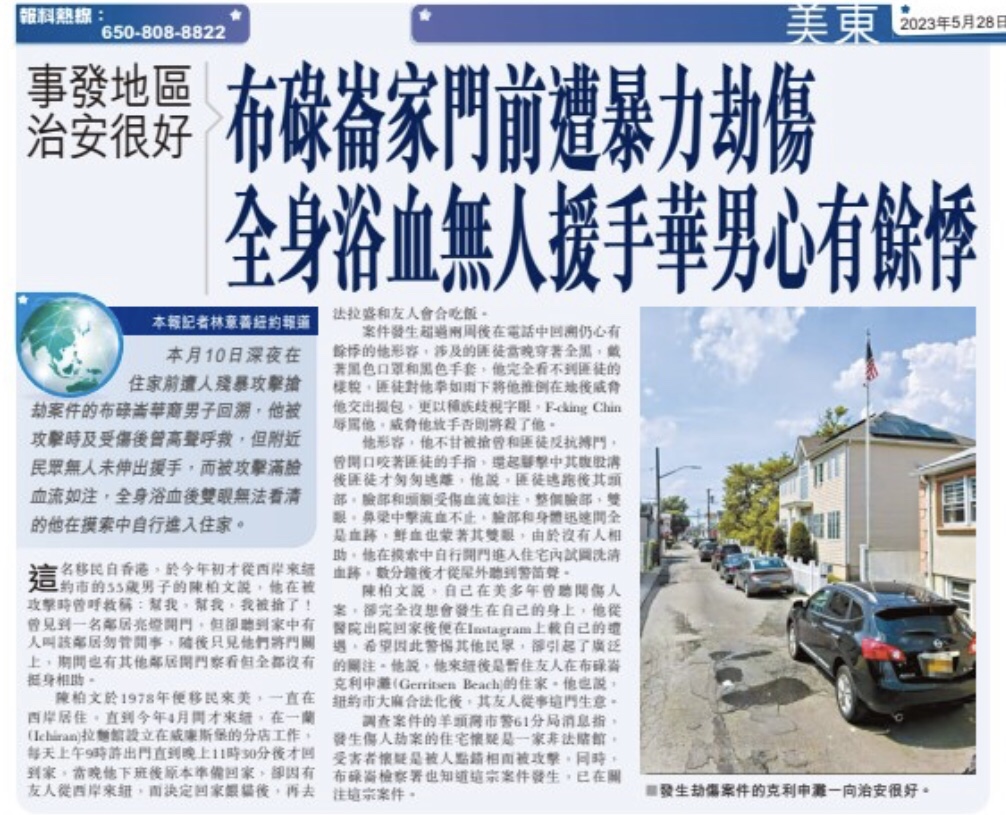
The myth that you live in a US high end wealthy neighborhood you are safe? Criminals have feet and car, your neighborhood became ideal target 你住在美國高端富裕社區很安全的神話?罪犯有腳有車,你家成了理想目標.
Video: Southeast Asia countries remembered Henry Kissinger on his 100th birthday in pain 東南亞國家痛苦地緬懷亨利·基辛格百歲生日
https://www.tiktok.com/t/ZTRoJJEgU/?t=1
https://rumble.com/v2qi2hm-southeast-asia-countries-remembered-henry-kissinger-on-his-100th-birthday-i.html

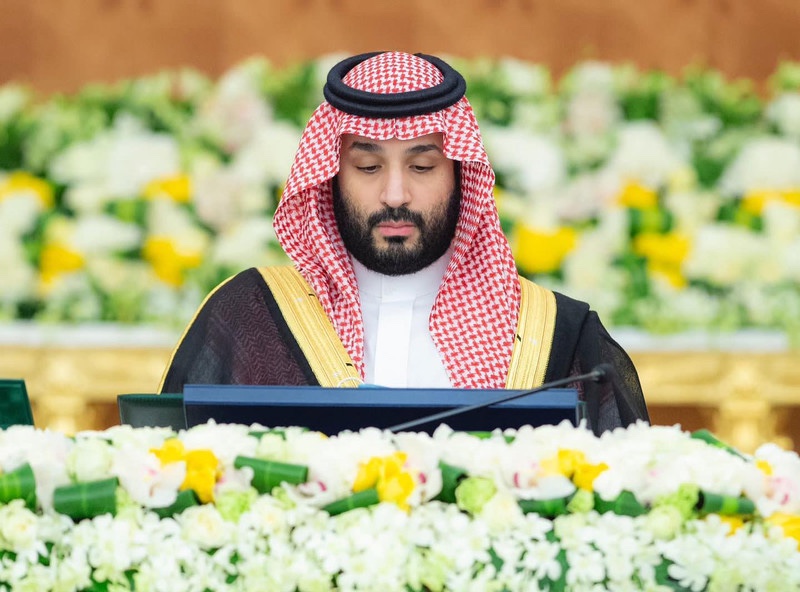
Why the Saudis have called off their Israeli wedding by Ali Abunimah 19 April 2023
https://electronicintifada.net/content/why-saudis-have-called-their-israeli-wedding/37561
After leading Israel’s extreme far-right to victory in last November’s elections, a buoyant Benjamin Netanyahu hoped to quickly resume Tel Aviv’s march towards full normalization with Arab regimes.
Netanyahu was still flying high from the so-called Abraham Accords, the deals brokered under the Trump administration between Israel on the one hand, and the United Arab Emirates, Bahrain, Sudan and Morocco on the other.
But there was major unfinished business for the incoming government: Saudi Arabia.
Although Riyadh has made major moves to cozy up to Tel Aviv, the kingdom still remains formally outside the Abraham Accords.
And as Netanyahu himself acknowledged in November, the diplomatic and trade relations deals with the smaller Arab states “didn’t happen without Saudi approval.”
Netanyahu claimed that finally establishing formal ties with the Saudis would be a “quantum leap” that would “effectively end the Israeli-Palestinian conflict” – presumably by isolating and weakening the Palestinians even further, or so the Israelis must hope.
It would also solidify the American-led axis against Iran, long the arch-enemy of the regimes in Tel Aviv and Riyadh.
Perhaps hoping to butter up the Saudis, Netanyahu in December publicly urged Washington to reaffirm its commitment to Saudi Arabia’s security – amid shaky ties between the White House and the absolute monarchy.
The Biden administration – which has always been as enthusiastic about the Abraham Accords as Trump – apparently did its best to broker backchannel talks to try to clinch a Saudi-Israel deal, as The Wall Street Journal revealed in March.
But the exorbitant demands reportedly put forward by the Saudis – US security guarantees, more arms sales and assistance with a civilian nuclear program – looked like they were designed to be rejected, and thus to provide Riyadh with a way out of formally embracing Israel.
This was the first significant sign that the Saudis were having a change of heart about turning their engagement with Israel into a marriage.
“Dangerous development for Israel”
Meanwhile, that same month came a diplomatic earthquake: Rather than consummate its relationship with Tel Aviv and sign up formally to Israel’s obsessive crusade against Iran, the Saudis decided instead to make their peace with Tehran.
Even worse from the Israeli – and more importantly, the American – perspective, the historic rapprochement was brokered by China, whose growing international stature, confidence and power is setting alarm bells ringing among the imperial managers in Washington.
China, which had never before brokered such a major diplomatic breakthrough in the region – a role always monopolized by the Americans – is now offering to facilitate peace talks between the Israelis and Palestinians.
Former Israeli Prime Minister Naftali Bennett described the resumption of ties between Iran and Saudi Arabia as a “grave and dangerous development for Israel and a significant diplomatic victory for Iran.”
The Institute for National Security Studies at Tel Aviv University, a think tank populated by veterans of Israel’s intelligence and military establishment, published an article lamenting that “Israel, which appeared to be on the threshold of acceptance into the Arab world, is rejected for the time being.”
Following the Iran-Saudi breakthrough, the Biden administration dispatched CIA director William Burns to Riyadh to read the Saudis the riot act.
But the top American spy was evidently met with a rebuff from Mohammad bin Salman, simultaneously the crown prince, prime minister and effective ruler of the kingdom.
According to David Ignatius, a Washington Post columnist who reliably reflects US government thinking, Mohammad bin Salman “has told Saudi confidants that the United States remains the kingdom’s partner, but not its only partner.”
The crown prince told these insiders that his predecessors would immediately grant US requests, but according to Ignatius, the current Saudi ruler said “I broke that because I want things in return.”
Among other things, the Saudis are now regularly rebuffing American requests to increase oil production to bring down prices.
Ignatius interprets this as a Saudi message that the “United States doesn’t call the shots in the Persian Gulf or the oil market anymore. For better or worse, the era of American hegemony in the Middle East is over.”
Meanwhile, the Saudis and Iranians are charging ahead with reopening embassies and inviting each other’s heads of state to their respective capitals.
Most importantly, their rapprochement has – once again with skilled Chinese mediation – paved the way for an agreement to finally end the war in Yemen.
That would be the most concrete and immediate benefit to the people of that country, where eight years of Saudi-led, US-backed bombing, war and resulting hunger have killed hundreds of thousands of people amid what the UN has called the world’s worst humanitarian crisis.
America on the decline
The latest Saudi moves and their implications for the United States and its client Israel can only be understood in the context of epochal geopolitical changes. Namely, the rise of China as a world power, its deepening alliance with Russia and the erosion of American power.
The latter seems to be accelerating due to Washington’s ill-advised and open-ended commitment to a proxy war against Russia which Ukraine has no chance of winning.
The hubris with which American and European elites embraced that war – just months after their humiliating and chaotic withdrawal from Afghanistan – has been dashed against the rocks of reality.
For all its massive military spending, the US just doesn’t have the industrial and military resources – especially air defense systems and artillery – to sustain Ukraine in a grueling old-fashioned land war on the European continent.
The shock-and-awe EU and US sanctions that in President Joe Biden’s words would turn the ruble into “rubble” and sink the Russian economy have not only totally failed, but have backfired on their authors.
Now countries around the world are accelerating de-dollarization – trading in their own currencies rather than the American one – in order to shield themselves from Washington’s much-used sanctions weapon.
Even Biden’s Treasury secretary Janet Yellen publicly recognized this month that “there is a risk when we use financial sanctions that are linked to the role of the dollar that over time it could undermine the hegemony of the dollar.”
All of this is a far cry from where the United States stood at the end of the Cold War: a military, diplomatic and economic colossus with no rival.
No other power could assemble a half-million strong army and deploy it halfway around the world as the United States did in 1990-91 to liberate Kuwait from Iraqi occupation.
That “new world order” of American military and diplomatic dominance – as President George H. W. Bush famously called it – was supposed to last forever.
At least that’s what the neocons who conceived the post-9/11 US invasions of Afghanistan and Iraq hoped to ensure.
Unreliable ally
But it hasn’t worked out that way. The disastrous and criminal US aggression against Iraq in 2003 led to no lasting US presence and influence and only ended up strengthening Iran – another target on the neocon hitlist.
It is Chinese companies, not US corporations, which are ultimately rebuilding Iraq.
The Obama administration’s regime change war in Libya overthrew the government of Muammar Gaddafi and replaced it with a lawless failed state and a hub for human trafficking.
The US-led regime-change war in Syria – also long a target of the neocons – using al-Qaida-linked jihadist proxies was stopped in its tracks by Russia’s intervention.
Now, amid the Iran-Saudi rapprochement, Syria is being welcomed back into the Arab fold.
And of course there is the US defeat in Afghanistan.
Why normalize?
Given all this, one can hardly blame the Saudis for looking for a way out of their total dependence on Washington – a relationship that began in 1945 and only intensified in the unipolar moment at the end of the Cold War and following the 1990-91 Gulf War.
Normalization with Israel – on Washington and Tel Aviv’s terms – only made sense in a context where the Saudis had to do whatever it took to please their American patrons. And if that meant selling out the Palestinians and embracing the Zionists, so be it.
In the emerging multipolar world, the Saudis have options and Mohammad bin Salman clearly intends to pursue them. Washington is 7,000 miles from Riyadh and is increasingly seen as mercurial and unreliable.
Iran, meanwhile, will always be next door and Saudi Arabia sits on the same Eurasian continent as Russia and China.
Soaring economic ties mean that China is now Saudi Arabia’s top trading partner.
Ultimately, Saudi security can only be guaranteed by good relations with those it lives near and with whom it trades.
Reality sinking in
As well as leading the Arab restoration of ties with the Syrian government they had been helping the Americans try to overthrow for years, the Saudis are set to welcome the leadership of Hamas in coming days.
This move, which comes after years of estrangement, is “further dimming Israeli hopes for ties” with Saudi Arabia, according to The Times of Israel.
The reality appears to be sinking in even with some of Washington’s most hawkish neocon warmongers that the Saudis are no longer acting as a dependent vassal that can be ordered about to America’s whim.
Earlier this month, hawkish Republican Senator Lindsey Graham met with Crown Prince Mohammad bin Salman.
“The opportunity to enhance the US-Saudi relationship is real and the reforms going on in Saudi Arabia are equally real,” Graham gushed after the meeting.
The senator added that he looked forward to “working with the administration and congressional Republicans and Democrats to see if we can take the US-Saudi relationship to the next level.”
This is the same Graham who had promised a “bipartisan tsunami” against Saudi Arabia over the gruesome 2018 murder and dismemberment of Saudi dissident and Washington Post columnist Jamal Khashoggi, which the CIA concluded was personally ordered by Mohammad bin Salman.
But Graham made no mention of that unpleasantness, instead focusing on the good news of the Saudis ordering $37 billion worth of Boeing airliners manufactured in South Carolina, the senator’s state.
Israeli delusions
Following his visit to Riyadh, Graham went to Jerusalem, where he told Benjamin Netanyahu that the US was still working hard to secure Israeli-Saudi normalization.
“I told [Mohammad bin Salman] that the best time to upgrade our relationship is now, that President Biden is very interested in normalizing relationships with Saudi Arabia and in turn, Saudi Arabia recognizing the one and only Jewish state,” Graham informed his Israeli host.
“We want normalization and peace with Saudi Arabia,” Netanyahu reiterated. “This agreement could have monumental consequences, historic consequences both for Israel, for Saudi Arabia, for the region and for the world.”
But those are delusions. The Saudi interest in “peace” with Israel peaked when Riyadh felt most vulnerable and needed to shore up its relationship with the US. Now that the kingdom is pursuing a multipolar strategy, what is the rush?
The Saudis with their vast oil wealth will always have something to offer other countries, and therefore other options.
What can Israel offer? Its spy technologies and overhyped hi-tech may be useful to some regimes but are hardly unique.
Israel has a tiny and uncompetitive manufacturing industry and isn’t a major energy producer.
It is, rather, a toxic settler-colonial project of the West that is only becoming more horrifying and extreme. It has little prospect of finding another sponsor as devoted and generous as the United States.
That means that as US power continues to recede regionally and globally, so will Israel’s.
At the same time, no one should be under the illusion that the Saudi regime has any principled objection to embracing Israel and Zionism. It has already demonstrated that it is more than willing to do so if it suits regime interests.
But if and when Saudi-Israeli normalization does arrive, it will much more likely be because the Israelis, not the Saudis, are desperately seeking a lifeline wherever they can out of a permanent, existential crisis.
Without massive external support, the Zionist settler-colony in Palestine faces a grim future.
Ali Abunimah is executive director of The Electronic Intifada.
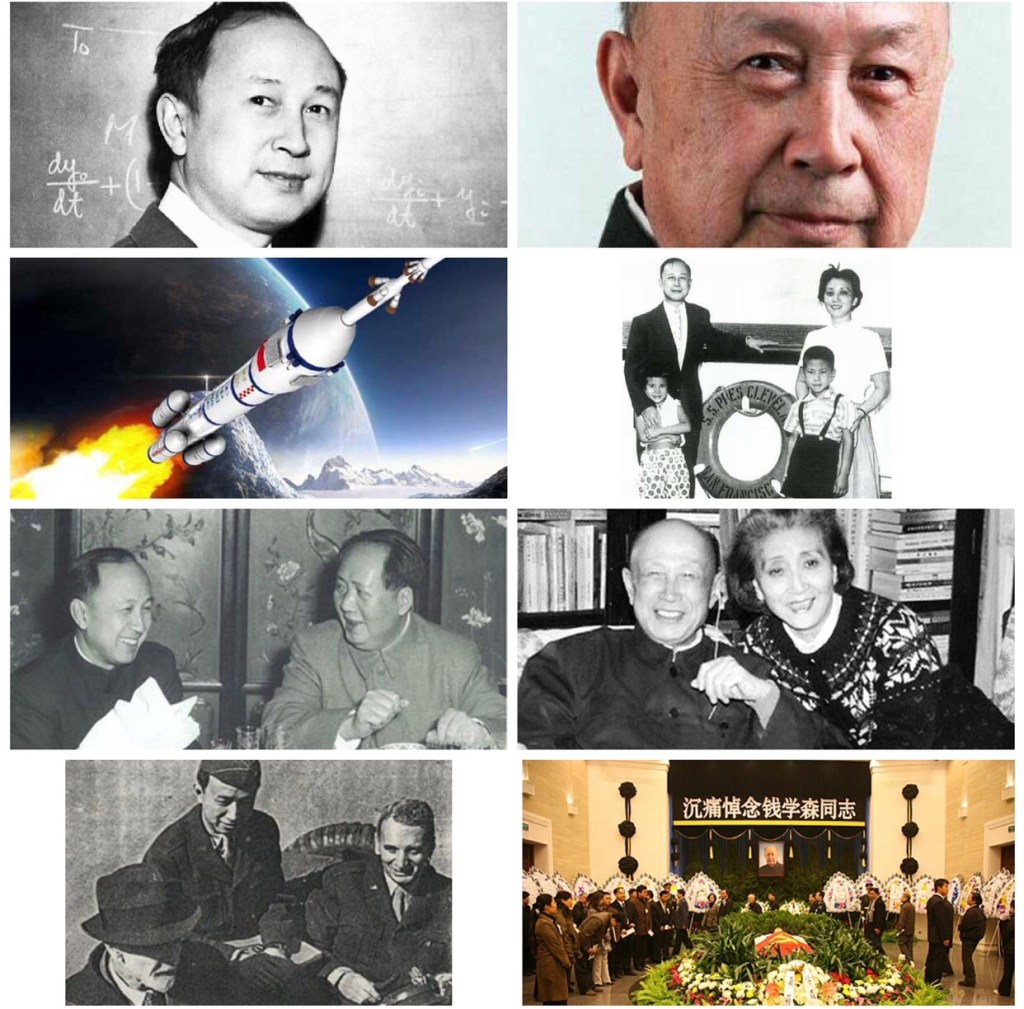
Video: Her patriotic spirit and love feelings are inspiring, motivating, and enviable. 她爱国精神与恋爱情怀令人鼓舞、激励、羡慕.
https://www.tiktok.com/t/ZTREEqe98/?t=1
https://rumble.com/v2qexbm-her-patriotic-spirit-and-love-feelings-are-inspiring-motivating-and-enviabl.html
Picked a few cherries from our cherry tree 從我們的櫻桃樹上摘了幾顆櫻桃

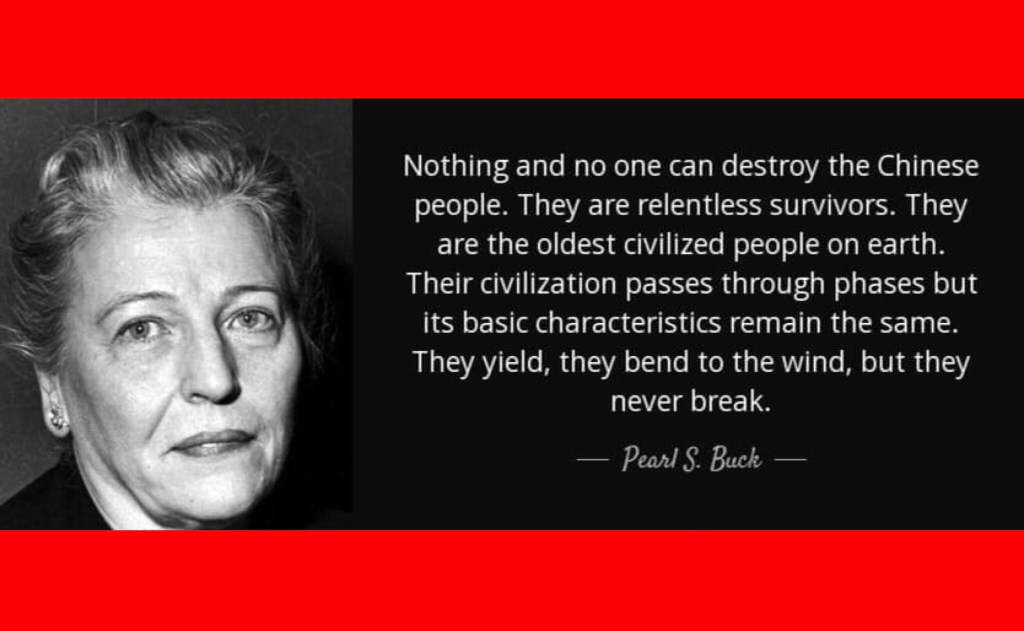
US, you can keep trying, but no one can destroy the Chinese People. Pearl S. Buck (1892 – 1973) – an American writer and novelist. 美國,你可以繼續努力,但沒有人可以摧毀中國人民.
As a daughter of missionaries and later as a missionary herself, Buck spent most of her life before 1934 in China with her parents and later with her first husband. Her life experience equipped her with profound understanding and appreciation of China, Chinese culture and the Chinese people. 作為傳教士的女兒,後來自己也成為傳教士,巴克在 1934 年之前的大部分時間都在中國與父母一起度過,後來又與第一任丈夫一起度過。她的人生經歷使她對中國、中國文化和中國人民有了深刻的理解和欣賞.
The first American woman to win both a Pulitzer Prize (1932) and NobelPrize in Literature (1938).
Buck was born in West Virginia. Her parents took her (a 4-month-old baby) to China. 🇨🇳 https://www.nobelprize.org/prizes/literature/1938/buck/facts/
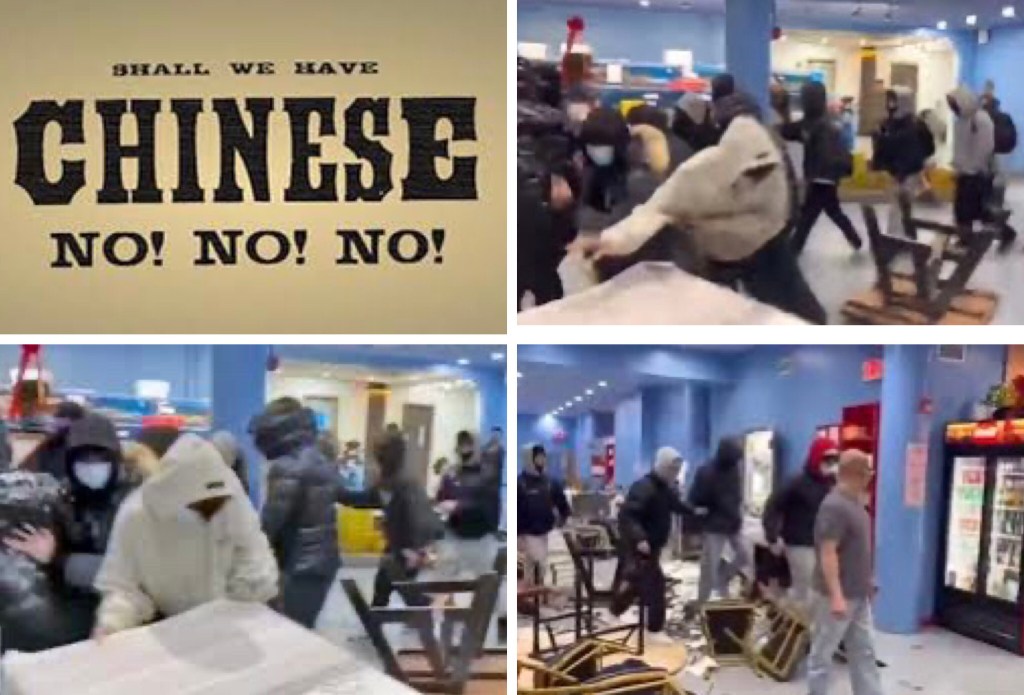
Best Welcome to America video: Now organised gangs in US are going round destroying at random eateries and restaurants owned by Asians. 你還要來美國嗎? 美国有组织的团伙正在四处破坏亚洲人拥有的随机餐馆和餐馆.
https://www.tiktok.com/t/ZTREwGbuW/?t=1
https://rumble.com/v2qcng8-welcome-to-america-video.html
A friend’s relatives ran a yam char restaurant in San Francisco for decades, but was now forced to close because gangs come and eat but refused to pay. We can now call these the “sick society of the world” 一位朋友的亲戚在旧金山经营了一家炸薯条店几十年,现在因为黑帮来吃却不肯付钱而被迫关门。 我们现在可以称这些为“世界病态社会”
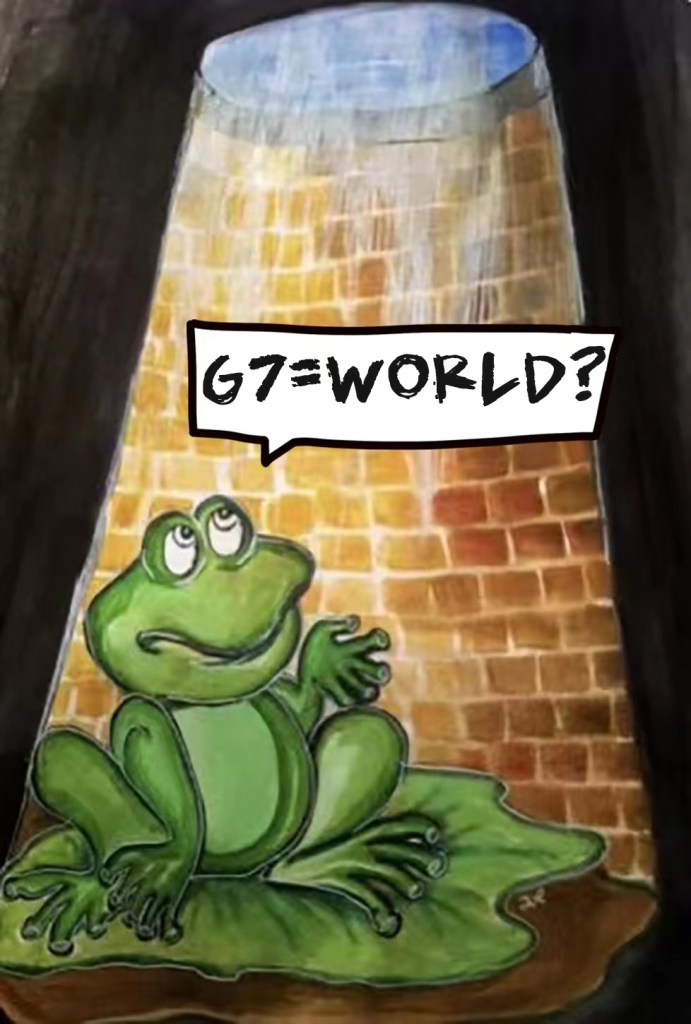
G7 is a rich men club representing only 10% of world population & 16% of land areas doesn’t represent international community G7是只代表世界10%人口和16%國土面積的富人俱樂部,不代表國際社會
https://www.tiktok.com/t/ZTREwVkny/?t=1
https://rumble.com/v2qc1p0-g7-is-a-rich-men-club.html
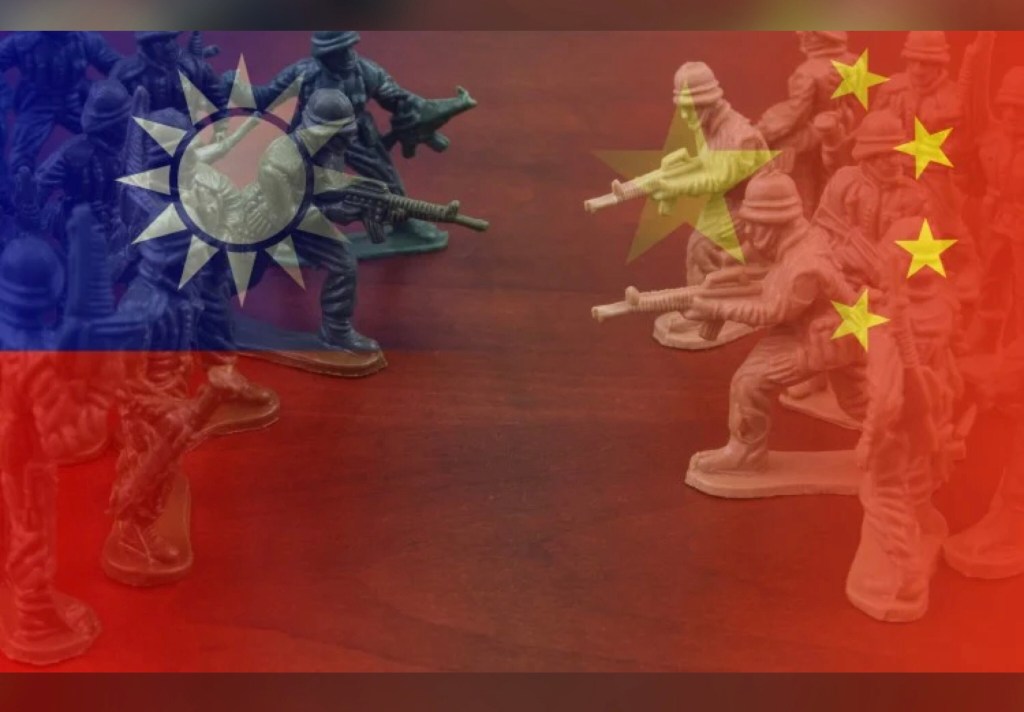
Risk of Taiwan conflict is overhyped by the US War Machine, the Military Industrial Complex that controls the White House & US Politicians, says cross-strait affairs expert 兩岸事務專家稱,美國戰爭機器、控制白宮和美國政客的軍事工業聯合體誇大了台灣衝突的風險
Beijing should seek reunification according to its ‘own rhythm’ as threat of a clash remains low in the near term, according to heavyweight scholar Liu Guoshen, professor at a leading think tank for issues related to the island.
 Business Blog