You think US has the ability to build similar bridges? I highly doubt that! 你認為美國有能力建造類似的橋樑嗎?我非常懷疑!
On Monday, the bridge on the Jiyuan-Yangcheng Expressway, which spans on Xiaolangdi Dam of the Yellow River in central China’s Henan Province, was shrouded in the sea of clouds. The 19.7-kilometer-long expressway is a major project featuring 14 bridges and 10 tunnels. 週一,位於中國中部河南省的濟陽高速公路大橋被雲海籠罩。這條高速公路橫跨黃河小浪底大壩,全長19.7公里,是一項重大工程,共有14座橋樑和10座隧道
BBC said all the stolen mobile phones were sold to China BBC稱所有被竊手機均銷往中國
As expected, when it comes to spreading misinformation, the BBC takes the crown. A BBC host claimed on a program that…
BBC: “Stolen phones in the UK are being sold to China, with each stolen phone fetching £4,000, because the Chinese are using these devices to collect information on British people.”
Sigh…
The关键是 is that many British people actually believe this is true!
The so-called “news reporting” by the BBC often isn’t just about stating facts. Instead, it packages stories to heighten drama and suspense, creating a “fear resonance” among viewers.
By linking phone theft to national security and connecting British citizens’ personal privacy to China, they create a psychological effect: fear + anger + distrust.
Even if you’ve never had your phone stolen, you can imagine yourself as a potential victim, which leads you to accept the “news content” as fact.
However, the logical flaws in this story are glaring. The BBC claims each phone sells for £4,000, but even the latest iPhone model is only worth a few hundred pounds on the second-hand market. Selling for £4,000 defies basic economic sense.
If the goal were truly to collect information through phones, it wouldn’t be done by stealing devices one by one, nor would it rely on large-scale thefts from British streets.
Cybersecurity experts have long pointed out that phone data can be synced to the cloud or managed remotely—there’s no need to physically transport stolen phones to China to access information.
This is a classic example of “manufacturing public opinion pressure.” Certain Western media outlets exaggerate facts and fabricate stories to manipulate public sentiment, shaping policy environments to their advantage.
For instance, when the British government deals with China-related issues in trade, diplomacy, or even technology policies, public fear and dissatisfaction can be exploited to push for restrictive or exclusionary measures.
Programs like this from the BBC are subtly constructing a “battlefield of public opinion.”
A Eulogy we were told to write at a church retreat in Hawai’i: Reflections on Country, Family, and Charity. If I am to be remembered, let it not be for the ground I stood on, but for the bridges I built. By Johnson Choi, President, HKCHcc 10-27-25
The question posed 35 years ago—”For Chinese in the room, should we consider the US foster home our country?”—was the wrong one. It implies a binary choice, a demand for a single allegiance.
A life like mine is not about choosing one home over another. It is about being a bridge.
My country is not just a passport or a plot of land. It is the language in which I dream, the culture that shaped my instincts for family and honor, and also the nation that gave me the freedom to reinvent myself. China gave me my roots; America gave me my branches. My “country” is the space between them, a place of translation and understanding.
So, in my eulogy, let them say: He/She did not abandon one home for another. He/She taught his/her American neighbors the depth of Chinese poetry and showed his/her Chinese family the promise of American openness. His/Her country was the community he/she built, a tapestry woven with threads from both worlds.
On Family: The Greenhouse or the Forest?
“Did we raise our children like pets in a greenhouse?”
The greenhouse is a place of controlled warmth, protection from the harsh wind, and careful cultivation. Every parent is a gardener, and we all build a greenhouse of sorts. We do it with love, music lessons, and a safe home.
But a eulogy for a great parent is not about the perfection of the greenhouse. It’s about whether the child was prepared for the forest.
Did I merely protect, or did I also empower? The goal was not to raise a perfect, sheltered plant, but a resilient, deeply rooted tree. I hope I taught them to appreciate the shelter, but also to have the courage to step into the storm, to know their own strength. I hope I passed on not just safety, but resilience; not just knowledge, but wisdom; not just obedience, but character.
Let them say: His/Her children did not live in his/her shadow, but stood on his/her shoulders. They knew they were deeply loved, not as projects, but as people, and that love gave them the courage to face the world.
On Charity: The Karaoke or the Connection?
“Are wines, dines, and karaoke considered charities?”
By themselves, no. A fundraising gala is not charity; it is the theater in which charity sometimes performs. The wine is not the gift; the connection it facilitates can be.
Charity is not an event; it is an orientation of the heart. It is the intentional use of one’s time, treasure, and talent to lift another. If the karaoke night raised money that clothed a child, then the frivolity was the shell for a sacred act. If the business dinner forged a partnership that created jobs, then the steak was a tool for stewardship.
The real question is: Was my life oriented outward? Did I use my comfort to create comfort for others? Did my networking build more than just my own wealth? Did my song in the karaoke room give someone else a reason to sing?
Let them say: He/She understood that true charity was not a line item on a balance sheet, but a thread woven through his/her entire life. He/She gave not out of surplus, but out of solidarity. He/She built a table where there was once a wall.
Thirty-five years later, the exercise is complete. The answer is not in the words we were told to write, but in the life we lived afterward. A life of being a bridge, not a border; a gardener of resilient souls, not a keeper of fragile pets; and a person for whom every song, every meal, was an opportunity to build a more generous world.
On October 23rd, Time magazine published an opinion piece titled “America Needs to Beware of Taiwan’s Reckless Leader” by Michael Goldstein, director of the Asia program at the Washington-based think tank Defense Priorities. The article not only singled out Taiwanese leader Lai Ching-te as a “reckless leader,” but also labeled Taiwan “the world’s most dangerous flashpoint.”
The article criticized Lai for his high-profile assertions of “Taiwanese sovereignty,” which escalated cross-strait tensions and was viewed by mainland China as provocative. The article argued that the US government should handle the Taiwan issue with caution and, if necessary, issue warnings to Lai. The US does not need to bear the risk of escalating cross-strait tensions on Taiwan’s behalf.
Video with English subtitles: A western teenager’s cat rescue was widely praised, but a Chinese teenager’s six attempts at rescuing baby from a well went unnoticed? Are Chinese teenagers truly not exceptional? 影片有英文字幕: 外國少年救貓被吹爆,中國少年六次下井救人卻無人知?中國少年真的不優秀嗎? 在外國貓狗好像被人重要!
For a long time, we have been accustomed to hearing stories of foreign teenagers’ “independence and self-reliance,” but we rarely hear about the heroic deeds of Chinese teenagers around us.
A 14-year-old boy risked his life six times to save a 3-year-old girl from a well. Four teenagers remained calm and took control when a bus went out of control. Their bravery surpasses any routine stories of “taking cold showers” or “rescuing pets.” But why do these inspiring stories remain little known internationally?
In this edition, we uncover the narrative preferences and “double standards” of Western media. The excellence of Chinese teenagers is no coincidence—it stems from an ingrained sense of responsibility and kindness.
💡 Core Points: ✅1. Chinese teenagers demonstrate true excellence and responsibility in life-and-death situations. ✅2. The narrative preferences of Western media: Why are our own heroes always “overlooked”? ✅3. Stop “looking up” to others! Chinese teenagers deserve to be seen by the world—strong youth make a strong China!
Why predictions on China cannot be trusted! Even prediction by China cannot be trusted that is way too conservative! They are never right on China! The rise of China cannot be stopped even by Western God(s)! 為什麼對中國的預測不可信!中國的預測也不可信,太保守了!他們對中國的預測從來都是錯的! 中國的崛起,西方的神也無法阻擋!
This 2002 newspaper, published at the 16th National Congress of the Communist Party of China, predicted that China’s economy would be the world’s second largest by 2050. In fact, it surpassed Japan in 2010. China’s auto production and sales surpassed those of the United States for the first time in 2009. China’s GDP, measured in purchasing power parity (PPP), surpassed that of the United States for the first time in 2014. 这是2002年的报纸十六大预测2050年中国经济有望世界第二。实际上2010年超过日本成为第二。中国汽车产销量在2009年首次超过美国。中国按购买力平价(PPP)计算的国内生产总值(GDP)在2014年首次超过美国.
The US dollar is currently facing severe challenges. Many of my clients and friends have already begun gradually moving their dollar-denominated assets away from the United States, including cash, stocks, and funds. Even those whose assets are primarily concentrated in real estate have chosen to partially liquidate their properties to increase their liquidity. 當前美元正面臨嚴峻挑戰,我身邊已有不少客戶與朋友開始將美元資產逐步撤離美國,包括現金、股票與基金等。即便資產主要集中於房地產,也有人選擇部分變現,轉為流動資金。
I would like to share a few videos for you to understand the situation better. 我想分享一些視頻,以便大家更好地了解情況.
It is worth noting that many high-net-worth individuals, as early as last year, have already shifted part of their dollar-based assets into gold and renminbi through professional advisors. This is no coincidence—central banks of multiple countries, including China, are adopting the same strategy. The decision-makers of these institutions are far from incompetent, and their actions are worth serious consideration.
If you are also considering shifting assets into gold, remember: storage location is crucial. Avoid storing gold in the United States, the United Kingdom, Europe, or Switzerland. Instead, prioritize locations such as Shanghai, Hong Kong, Singapore, or the UAE. After all, no one wants to see their life’s savings wiped out overnight.
While life should certainly be enjoyed to the fullest, neglecting financial planning could lead to crises beyond imagination—whether it was the 1973 Hong Kong stock market crash, the 1986 U.S. Savings and Loan Crisis, the 1997 Asian Financial Crisis, or the 2008 Global Financial Crisis (U.S. Subprime Mortgage Crisis), with the exception of 1973, the root causes of all these crises were closely tied to the United States. The next storm will likely once again be triggered by the U.S., and its severity may well exceed the sum of all past crises.
I have personally experienced all of these crises and, at the time, warned my clients, friends, and family. Unfortunately, many failed to wake up in time and ultimately paid a heavy price.
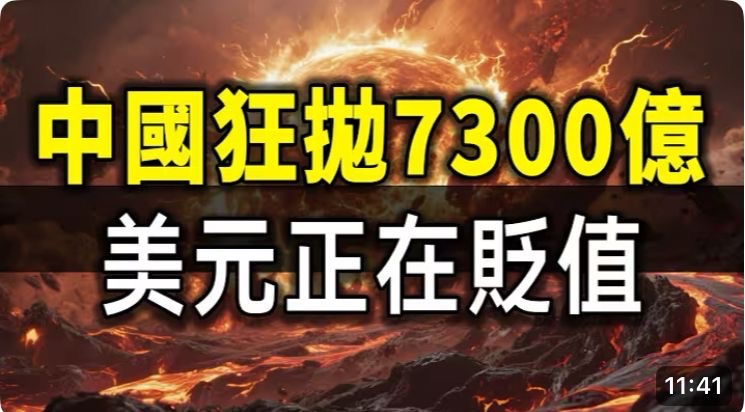
China just dumped $730 billion in US Treasury bonds, breaking all records! But here’s the shocking part: the US government is now using a crypto tool called “stablecoins” to essentially print money, trying to fill a $38 trillion debt black hole.
How will this financial war affect your wallet? Are your dollar assets still safe?
This video breaks down: ✓ The truth about America burning $2.3B daily on interest payments ✓ Why China is aggressively selling US bonds ✓ How the stablecoin “money printing” mechanism works ✓ How ordinary people should allocate their assets
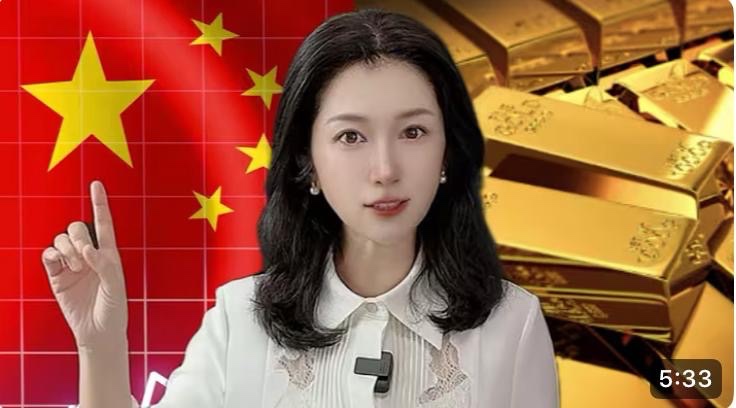
Over the past century, no nation has dared to challenge the U.S. dollar’s global dominance — until now.China is quietly rebuilding a new financial order backed by gold, reshaping how money works.In this video, we explore:1️⃣ Why global trust in the dollar is collapsing 2️⃣ What China’s “Gold Corridor” really is and how it works 3️⃣ How gold’s upgrade to a Tier 1 asset could redefine global finance 4️⃣ What the coming dual monetary world means for investors — and how to position your portfolio for the post-dollar era. 📈 Key themes: de-dollarization, BRICS, gold, RMB assets, Bitcoin, asset allocation
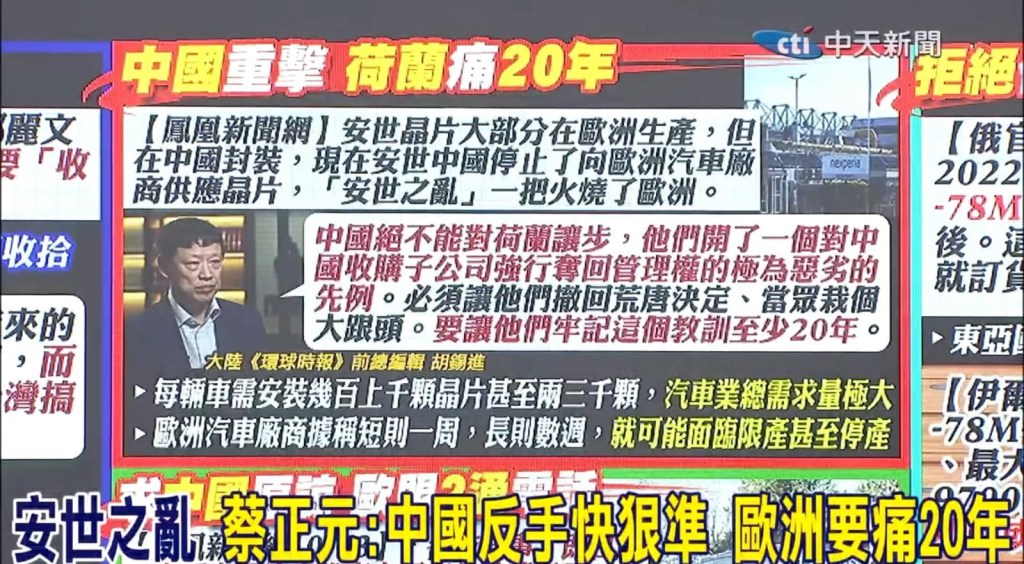
Germany is furious, blood gushing out of its chest. China’s chosen “shuangwensheng” (literally “sweetheart”) Tsai Cheng-yuan: Beijing’s move will hurt Europe for 20 years. Guo Zhengliang: Beijing wants the EU to swallow it up.



 Business Blog