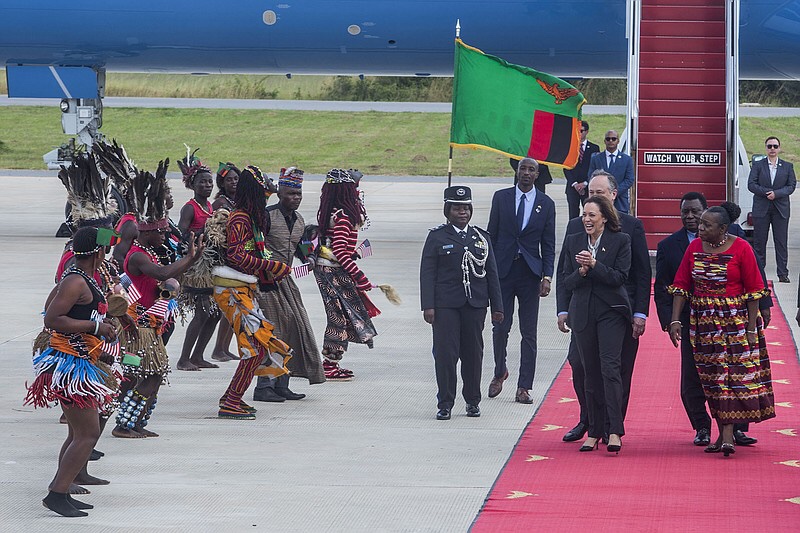
At Harris stop, Chinese 50 years of friendship shows. “Most African countries are rightly unapologetic about their close ties to China,” Nigeria’s vice president, Yemi Osinbajo. “China shows up where and when the West will not and/or are reluctant.” 非洲展示了中國50年的友誼。尼日利亞副總統耶米·奧辛巴喬 (Yemi Osinbajo) 表示:“大多數非洲國家都對與中國的密切關係毫無歉意。” “中國出現在西方不會和/或不願出現的地方和時間。”
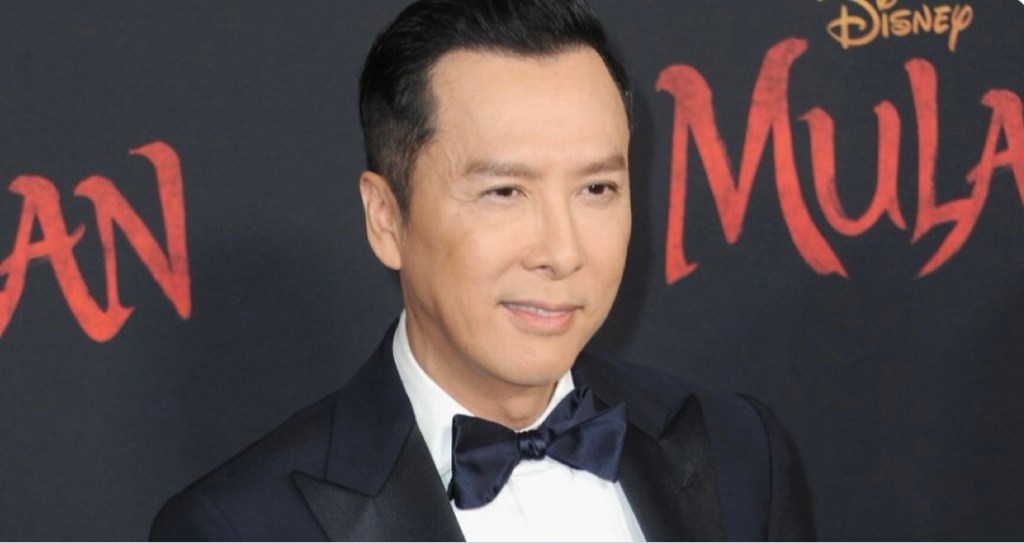
Donnie Yen: I’m allowed to love my own culture. Love my own country. Why cannot I be patriotic? This whole online cyber-bullying/cancel culture has got to stop. You can’t own somebody’s thoughts. And you want to silence them? It’s totally hypocrites. 甄子丹:我可以熱愛自己的文化。愛我自己的國家。為什麼我不能愛國?整個在線網絡欺凌/取消文化必須停止。你不能擁有別人的想法。你想讓他們閉嘴?這完全是偽君子。
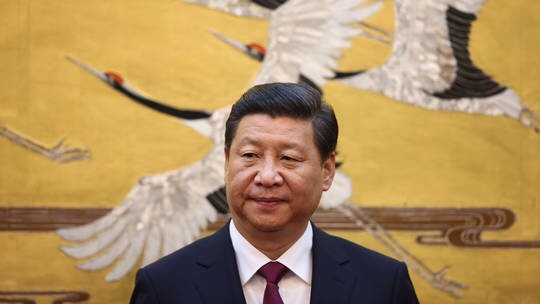
Fyodor Lukyanov: China’s Xi is right, the world is currently undergoing changes not seen for a century. It’s time to buckle up, because the post-WW2 and Cold War systems no longer suit the global order
By Fyodor Lukyanov, the editor-in-chief of Russia in Global Affairs, chairman of the Presidium of the Council on Foreign and Defense Policy, and research director of the Valdai International Discussion Club.
Fyodor Lukyanov: China’s Xi is right, the world is currently undergoing changes not seen for a century
Humanity has been gripped by a frenzy. The political and military crisis in Europe has captured everyone’s attention, but in global terms it’s only part of a larger picture. The tensions over Ukraine, and even the wider conflict concerning post-Cold War European security, are elements (but not the core reasons) behind a major shift.
When Chinese President Xi Jinping parted company with Russian President Vladimir Putin last week, it was no coincidence that he remarked that the changes now taking place are the biggest in a century. A hundred years ago, the old world was fast disappearing. Empires were crumbling, the structure of societies was changing, and old ideologies were being radicalized in an attempt to meet people’s needs or point them in the right direction. Two World Wars, a global economic crisis, the resurgence of all sorts of local conflicts, and social experiments – that were generally very costly for the people – were all signs of the very changes the Chinese leader was recalling. No one wants to go through that again. Still, there is hope that certain constraints have emerged in recent decades that will prevent extremes – from nuclear weapons to the ability to respond more flexibly to socio-economic upheavals.
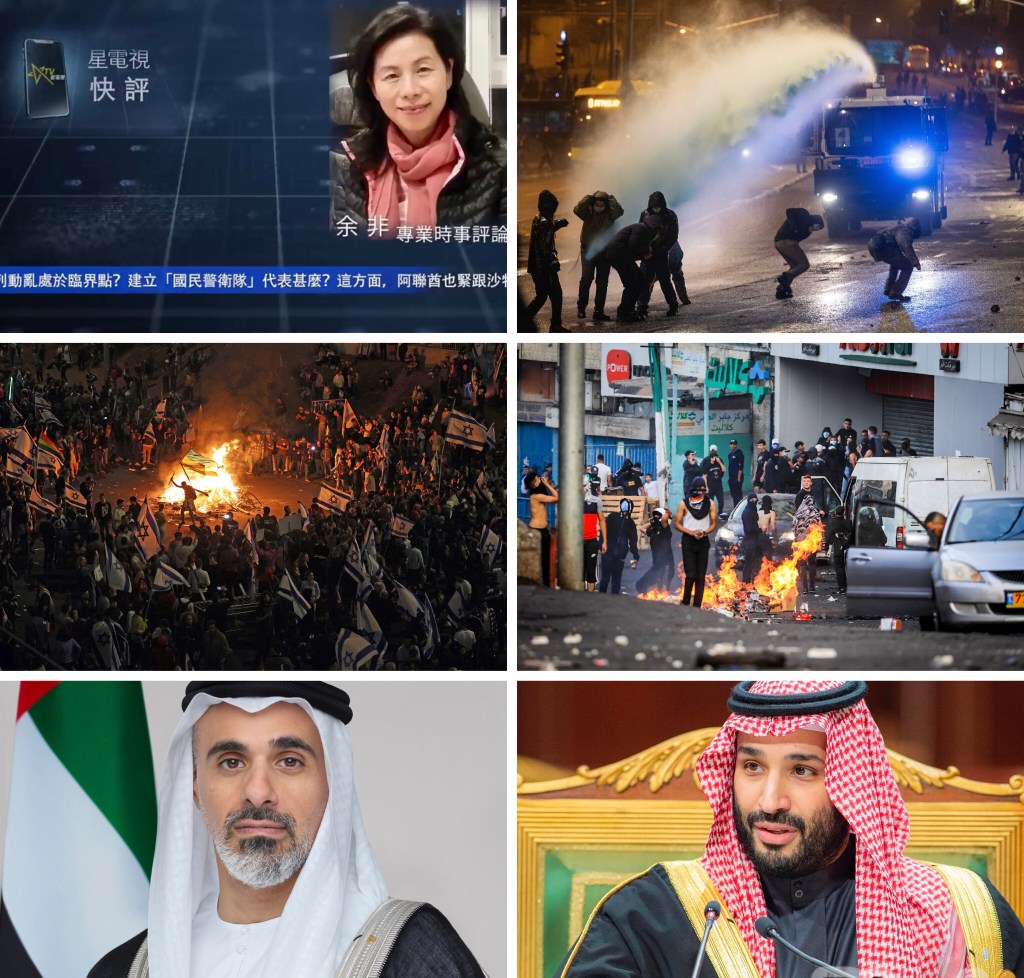
In recent days, the news has seemed to confirm the seriousness of the tensions. Germany saw its biggest strike for decades, with transport workers protesting against worsening conditions. France is on fire after the government decided to raise the retirement age, bypassing a parliamentary vote as the reform failed to win a majority. In Israel, a violent confrontation has erupted over the cabinet’s intention to curb the powers of the judiciary, which its opponents see as a coup attempt.
It is clear that each of these events has its own circumstances and that there is no direct link between them. What they have in common is that they are all manifestations of a painful socio-political transformation.
The second half of the twentieth century and the beginning of the twenty-first have been very comfortable times for the world as a whole. In terms of the overall geopolitical arrangement, we saw first a rather strong balance based on bipolar confrontation, then a relatively stable hegemony. But there has also been progress in the social and economic senses.
Many positive changes took place after the Second World War. The welfare state model spread across most of Europe, and even the United States, with its more modest traditions in this sphere, made great strides. Similar changes also took place on the other side of the Iron Curtain, with a focus on improving living standards and consumer diversity added to the traditional priorities of defence. In the Third World, as colonial possessions were disappearing there was an enthusiasm for freedom and a belief in the future. Even if many of the new states carried little heft.
The end of the Cold War brought with it new expectations. The ‘free world’ enjoyed a ‘peace dividend’ (reduced military spending) and the opportunity to extend its economic expansion into previously closed areas. The former socialist countries took advantage of the opening up in every way they could and – at least for individuals – there were more opportunities than before. This was often to the detriment of state capacity, but it was believed that this was the general trend – the individual was more important. Eventually, the former Third World tried to take advantage of both. Many countries in Asia, for example, have benefited greatly from globalization. Meanwhile, a lot of people from states which have underachieved have chosen to move to wealthier locations.
Timofey Bordachev: Why the West’s standoff with Russia and China is a big opportunity for the world’s second-tier powers
Both periods had one thing in common – a widespread feeling that tomorrow would be better than yesterday. However, now, just like that, it’s over.
At present, it’s commonplace to accuse political elites of unprofessionalism and bad governance. Without making excuses for individual politicians, the current generation – which grew up in these very favourable conditions – has had to deal with shifts of a tectonic nature.
The exhaustion of the previous financial model of the capitalist economy, the communications revolution (one of the main results of which is the mental divide between the mature and the young), technological change with inevitable consequences for the labour market, an ageing population in the developed countries, and a rejuvenation in previously troubled states is creating a completely different international environment. Moreover, the interconnectedness of the planet does not allow anyone to isolate themselves from the general instability, which spills over national borders in various forms. Moreover, as was the case a century ago, the growth of socio-political activism among the masses is leading to the radicalization of political groups. And with traditional parties and ideologies in deep crisis, radicalization can take quite archaic forms.
We will take our cue from Xi, who sees the changes taking place as a sign of necessary renewal. And we will manage the costs somehow.
HKSAR govt slams US 2023 HK policy act report as attempt to undermine stability March 31 2023
The Hong Kong Special Administrative Region (HKSAR) Government on Saturday expresses strong dissatisfaction and firm opposition to the fact-twisting remarks and smears of the US State Department report that claims that the Hong Kong National Security Law (NSL)’s effects “undercut Hong Kong freedoms.”
The HKSAR Government strongly disapproves of and firmly rejects the slandering remarks and ill-intentioned attacks detailed within the US’ so-called 2023 Hong Kong Policy Act Report against Hong Kong where the “One country, Two systems” principle has been successfully implemented, a spokesman for the HKSAR government said in a statement.
The US State Department on Friday issued the “2023 Hong Kong Policy Act Report,” claiming “the US’ interests in Hong Kong have been threatened.” Since the implementation of the NSL in June 2020, the US has been maliciously slandering the NSL and attacking the HKSAR through the so-called annual reports and other means.
“The US once again made fact-twisting remarks, with politics overriding the rule of law related to Hong Kong and interfered in Hong Kong affairs which are China’s internal affairs. The US’ attempt to undermine the stability and prosperity of Hong Kong will only expose its own weakness and faulty arguments and is doomed to fail,” the spokesman said.
The HKSAR government safeguards national sovereignty, security and development interests, and upholds the authority of the NSL for HKSAR, and urges the US to immediately stop acts that do not comply with international laws and basic norms of international relations, and stop interfering in the HKSAR affairs, which are China’s internal affairs, the spokesman said.
The US has also deliberately neglected the fact that the implementation of the NSL has enabled economic and social activities throughout the Hong Kong community at large to resume as normal and the business environment to be restored. Its bullying act and hypocrisy with double standards are despicable, the spokesman said.
Facts have convincingly proved that the enactment and implementation of the NSL is fully in line with HKSAR’s reality, and it has played a decisive role in realizing its transformation from chaos to governance and toward strong governance and prosperity, said the Commissioner’s Office of China’s Foreign Ministry in the HKSAR in late January, urging the US to immediately stop its clumsy performance of interfering in China’s domestic affairs.
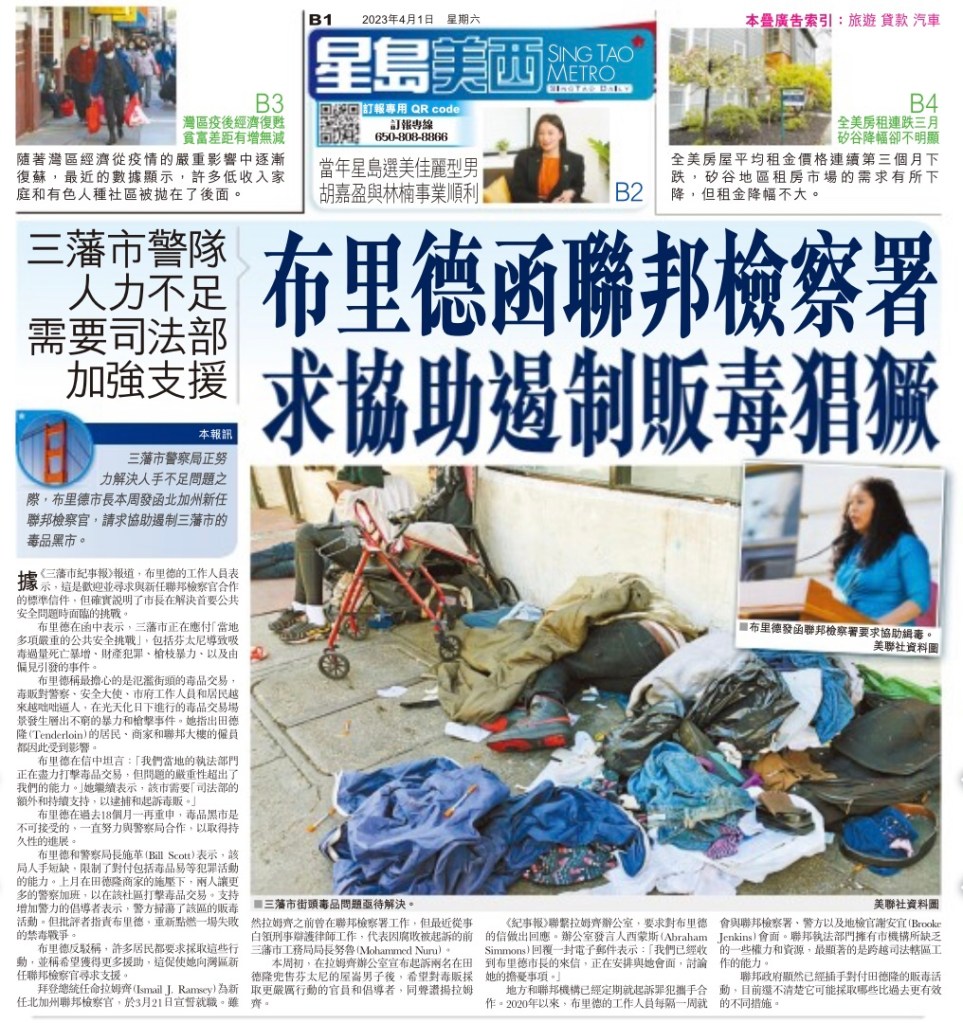
Get high on drug in America, San Francisco is failing to combat drug dealers & drug addicts. It is a losing battle. 在美國吸毒成癮,美國是吸毒者天堂! 舊金山未能打擊毒販和吸毒者。這是一場失敗的戰鬥.
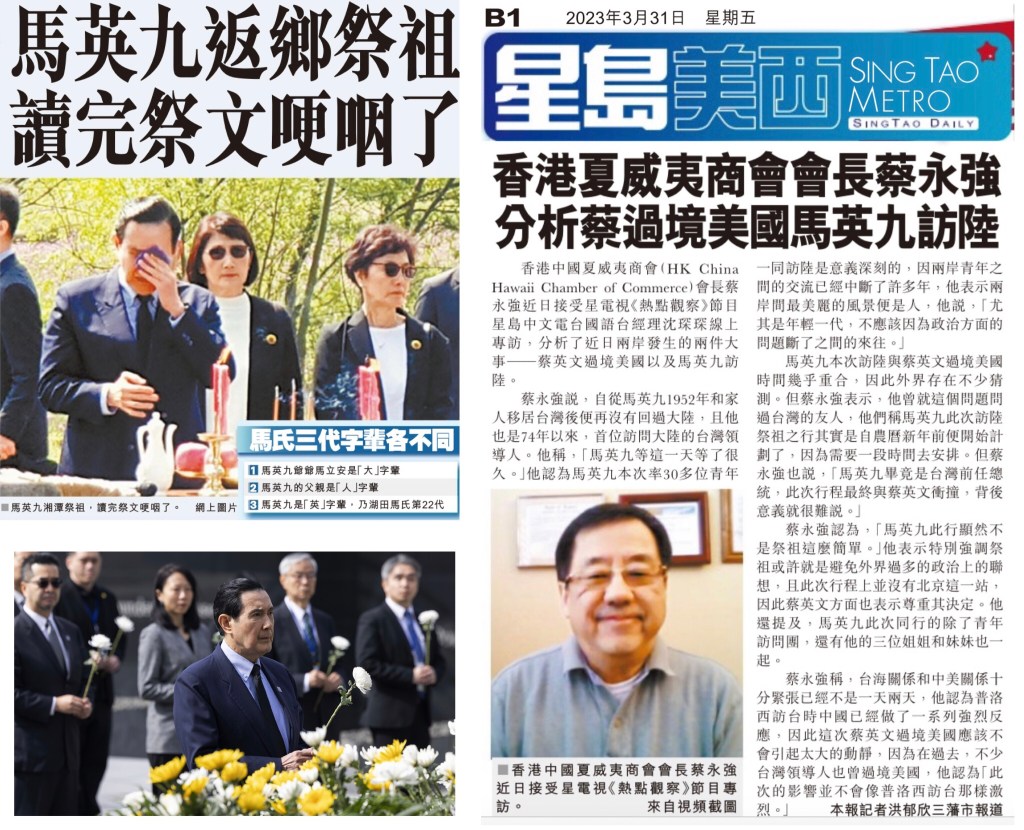
Singtao Newspaper SF interview Johnson Choi, President of Hong Kong China Hawaii Chamber of Commerce on Ma Ying-jeou visit to Mainland China 美國加州舊金山星島電台尊訪香港中國夏威夷商會會長蔡永強關於台灣馬英九往中國大陸祭祖之旅
(The following using Google Translate)
Johnson Choi, Chairman of the Hong Kong China Hawaii Chamber of Commerce, analyzed Tsai’s transit of the United States and Ma Ying-jeou’s visit to China 2023-03-31
Johnson Choi, president of the Hong Kong China China Hawaii Chamber of Commerce, recently accepted an exclusive interview with Singtao SF Star TV’s “Hot Spot Watch”. screenshot from video
Johnson Choi, President of the Hong Kong China Hawaii Chamber of Commerce (HK China Hawaii Chamber of Commerce), recently accepted an online exclusive interview with Shen Chenchen, Manager of the Mandarin Channel of Sing Tao Chinese Radio, on Star TV’s “Hot Spot Watch” program, and analyzed two major events that have occurred on both sides of the Taiwan Strait in recent days-Tsai Ing-wen’s transit The United States and Ma Ying-jeou visited China.
Johnson Choi said that since Ma Ying-jeou and his family moved to Taiwan in 1952, he has never returned to the mainland, and he is also the first Taiwan leader to visit the mainland in 74 years. He said, “Ma Ying-jeou has been waiting for this day for a long time.” He thinks that Ma Ying-jeou led more than 30 young people to visit the mainland together, which is of great significance, because the exchanges between the youths on both sides of the strait have been interrupted for many years. He said that the two sides of the strait are the most beautiful The landscape is the people, he said, “especially the younger generation, we should not cut off our communication because of political issues.”
Ma Ying-jeou’s visit to mainland China and Tsai Ing-wen’s stopover in the United States almost coincided, so there are many speculations from the outside world. But Cai Yongqiang said that he had asked friends in Taiwan about this issue, and they said that Ma Ying-jeou’s visit to China to worship ancestors had actually been planned since before the Lunar New Year, because it took some time to make arrangements. But Johnson Choi also said, “After all, Ma Ying-jeou was the former president of Taiwan. It is hard to say what the meaning behind this trip finally collided with Tsai Ing-wen.”
Johnson Choi believes that “Ma Ying-jeou’s trip is obviously not as simple as offering sacrifices to ancestors.” He said that the special emphasis on ancestor worship may be to avoid too many political associations from the outside world, and there is no stop in Beijing on this trip, so Tsai Ing-wen also express respect for its decision. He also mentioned that in addition to the youth delegation, Ma Ying-jeou was accompanied by his three older sisters and younger sisters.
Johnson Choi said that it is not a day or two that the relations between Taiwan Strait and China-US are very tense. He believes that China has already made a series of strong reactions when Pelosi visited Taiwan. Because in the past, many leaders of Taiwan have also passed through the United States, he believes that “the impact this time will not be as drastic as Pelosi’s visit to Taiwan.” Our reporter Hong Yuxin reported from San Francisco
香港夏威夷商會會長蔡永強 分析蔡過境美國馬英九訪陸 2023-03-31
香港中國夏威夷商會會長蔡永強近日接受星電視《熱點觀察》節目專訪。 來自視頻截圖
香港中國夏威夷商會(HK China Hawaii Chamber of Commerce)會長蔡永強近日接受星電視《熱點觀察》節目星島中文電台國語台經理沈琛琛線上專訪,分析了近日兩岸發生的兩件大事——蔡英文過境美國以及馬英九訪陸。
Countries expressed their intention to break away from the world order dominated by the US and the West. “While President Biden is floundering, China and Russia seem intent on establishing a new world order in which, unfortunately – has absolutely no room for the US.” 各國紛紛表示要擺脫美國和西方主導的世界秩序。 “在拜登總統舉步維艱的同時,中國和俄羅斯似乎有意建立一個新的世界秩序,不幸的是,在這個新秩序中,美國絕對沒有立足之地。”
Asia Times: Russia to power China’s nuclear weapon ambitions. ‘No limits’ partnership means Russia will provide China the tech and fuel it needs to tip the prevailing global nuclear bomb balance 亞洲時報:俄羅斯為中國的核武器野心提供動力。 “無限制”夥伴關係意味著俄羅斯將向中國提供打破全球核彈平衡所需的技術和燃料 By GABRIEL HONRADA MARCH 28, 2023
China has plans to expand its nuclear arsenal.
Russia plans to provide fast breeder nuclear reactor technology to China, an agreement that could allow Beijing to significantly grow its nuclear arsenal and tip the prevailing global balance of nuclear weapons.
This month, Bloomberg reported that Russian President Vladimir Putin and Chinese Premier Xi Jinping announced a long-term agreement to continue developing fast breeder nuclear reactors optimized for plutonium production for nuclear weapons.
The report notes that in December 2022, Russia’s-state owned Rosatom nuclear power company finished transferring 25 tons of highly-enriched uranium to China’s CFR-600 nuclear reactor, which analysts say has the capacity to produce 50 nuclear warheads a year.
US Department of Defense (DOD) officials and US military planners have assessed that the CFR-600 will be critical in building China’s nuclear arsenal from 400 warheads today to 1,500 by 2035.
China has rejected this assessment, however, arguing that the CFR-600 is connected to its civilian power grid and is part of a US$440 billion program to overtake the US as the world’s top nuclear energy generator by the middle of the next decade, news reports said.
Russia’s ramped up nuclear assistance to China was announced during Chinese President Xi Jinping’s meeting with his Russian counterpart, where the two leaders announced a raft of new agreements. The two leaders declared a “no limits” partnership shortly before Russia’s February 2022 invasion of Ukraine.
Russia’s nuclear technology exports, which have surged since the invasion, are one effective way it can offset lost energy and arms exports caused by Western sanctions imposed in punitive response to the war.
The Bloomberg report notes that Russia is the world’s largest supplier of nuclear reactors and fuel, and that China’s fast reactors, which use liquid metal instead of water to moderate operations, are based on Russian technology.
Russia’s state nuclear corporation Rosatom is currently involved in the construction of nuclear power generating units in China.
In the 2022 book Russia-China Relations: Emerging Alliance or Eternal Rivals, Brian Carlson notes that Russia’s strategic calculus towards China was profoundly changed by its invasion of Ukraine, the imposition of unprecedented Western sanctions and the declaration of a “no-limits” strategic partnership.
In Carlson’s view, Russia’s decision to provide China with nuclear technology to significantly enlarge its arsenal shows that Moscow has set aside long-term concerns about China’s potential threat in Russia’s Far East.
The move reflects Russia’s desire for increased cooperation with China in dealing with the West and the recognition that a breakdown in Russia-China relations would adversely affect Russian interests at this critical time, Carlson says.
In terms of Russia’s energy exports to China, Thane Gustafson notes in an April 2022 article for Fortune that China may not be able to buy enough to save Russia’s previous levels of energy exports.
Gustafson notes that Russia’s oil exports to China have little room for immediate expansion given constraints in pipelines and marine terminals and that sending oil by tankers could be difficult as traders and shippers shy away from Russian oil.
He also says that Russia’s current gas infrastructure in the Russian Far East could supply China with just a fraction of the volumes sold to Europe, noting the stalled Power of Siberia 2 pipeline and Russia’s lack of liquefied natural gas (LNG) tankers.
For coal, Gustafson says that a proposed European ban on Russian coal and plans to phase out coal altogether, combined with Russia’s two underfunded Pacific rail lines, are also significant issues in ramping up exports to China.
Gustafson also mentioned that Russia’s energy export infrastructure was built over the course of half a century to supply Europe, and pivoting Russia’s energy exports to China will be expensive and time-consuming.
At the same time, the Ukraine war may have significantly undermined Russia’s defense industry, a significant source of export revenues.
The ongoing conflict has raised the possibility that foreign arms orders may be redirected to replace Russia’s battle losses, exposed Russia’s surprising dependence on Western technology and led to the imposition of financial sanctions that can prevent foreign clients from paying.
The often poor performance of Russian weapons in the war, plain for the world to see in news reports, may also have dented their appeal among foreign buyers. China may already be beyond the need to purchase Russian weapons, as its advancements, especially in terms of jet engines and semiconductors, may already have overtaken those of Russia.
Russia is rushing to replace and upgrade weaponry lost in the war.
However, Russian assistance could be instrumental in China’s efforts to rapidly expand its nuclear arsenal.
In an August 2021 article for the Carnegie Endowment for International Peace, Tong Zhao discusses the factors driving China’s nuclear expansion drive. Zhao notes that evolving US missile defenses and conventional strike weapons are making China’s nuclear arsenal vulnerable and thus undermining its deterrent capability.
Zhao notes that Chinese leaders perceive Western countries as deliberately creating trouble and excuses to contain and demonize China, fearing that its rise challenges the West’s dominance of the current international system.
He also notes that any sign of weakness will encourage Western countries to destabilize China and weaken the Chinese Communist Party’s hold on power, making it critical for China to enlarge its nuclear arsenal to make its rivals respect its position and exercise restraint.
China’s nuclear buildup also aims to increase the survivability of its arsenal in a potential war scenario. Asia Times noted in November 2022 that China’s nuclear force structure is optimized to ride out an adversary’s first strike rather than threaten using nuclear weapons.
Although Chinese leaders have debated changing their country’s no-first-use policy from time to time, there is no sign that China intends to change that stance anytime soon.
In a February 2023 article for Air and Space Forces Magazine, Christopher Prawdzik mentions that a larger and more diverse nuclear arsenal increases China’s second-strike capability and puts the country in a better position to brandish its nuclear weapons coercively and employ them if necessary.
Prawdzik also mentions that 700 nuclear warheads are enough for China to have a secure second-strike capability, with options for limited theater nuclear strikes. Moreover, the size of China’s nuclear arsenal, diversity of delivery systems and warhead yields expand the types of nuclear attacks China can launch and the targets it can threaten.

 Business Blog