NYT: TSMC in Arizona not working out – moving some factories to US, very bad business decision. “Americans are the most difficult to manage” 紐約時報:亞利桑那州的台積電沒有成功, 將一些工廠搬到美國,這是非常糟糕的商業決定. “美國人最難管”
Taiwan Semiconductor Manufacturing Company, the world’s biggest maker of advanced computer chips, is upgrading and expanding a new factory in Arizona that promises to help move the United States toward a more self-reliant technological future.
But to some at the company, the $40 billion project is something else: a bad business decision.
Internal doubts are mounting at the Taiwanese chip maker over its U.S. factory, according to interviews with 11 TSMC employees, who declined to be identified because they were not authorized to speak publicly. Many of the workers said the project could distract from the research and development focus that had long helped TSMC outmaneuver rivals. Some added that they were hesitant to move to the United States because of potential culture clashes.
The project is challenging. In an earnings call last month, TSMC said the U.S. construction could be at least four times the cost in Taiwan, driven by labor expenses, permits, regulatory compliance and inflation. Wendell Huang, TSMC’s chief financial officer, said the American investment could hurt TSMC’s profitability this year.
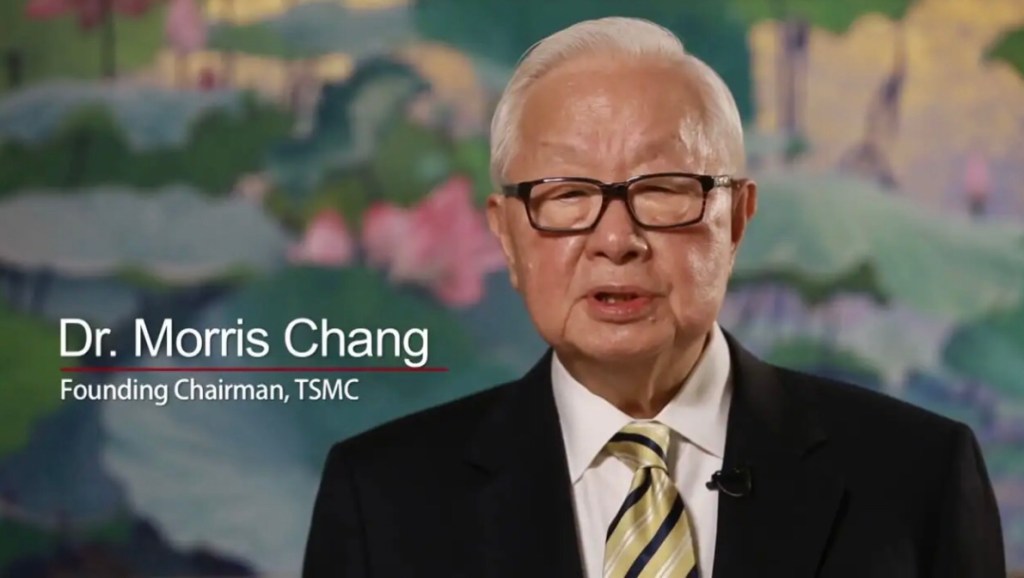
“The most difficult thing about wafer manufacturing is not technology,” he said. “The most difficult thing is personnel management. Americans are the worst at this, because Americans are the most difficult to manage.”
In the Brookings Institution podcast, he [Morris Chang] also argued that the $52 billion in U.S. government subsidies earmarked by the CHIPS Act, a federal funding package to stoke domestic production of advanced chips, would not be enough to jump-start the industry. He called it an “expensive exercise in futility.”
Video: Oops! NYT gets backlash on China arrest story of a wealthy elite. They wished same could be done in America when they owned the US Gov’t and above the law! 哎呀! 《紐約時報》因在中國逮捕一位富有精英的故事而遭到強烈反對。但美國精英控制美國政府並凌駕於法律之上時,他們希望在美國也能做到同樣的事情!
When rich, powerful people are detained in China, the western media likes to present it as further proof that the country is a bad place. But this time, there was a big backlash from people around the world, including many voices from America. The detention of wealthy powerful people doesn’t automatically make a place bad, people said. Maybe the west needs more arrests of wealthy powerful people! 當有錢有勢的人在中國被拘留時,西方媒體喜歡用它來進一步證明這個國家是個糟糕的地方。但這一次,卻引起了全世界人民的強烈反對,其中包括來自美國的許多聲音。人們說,拘留有錢有勢的人並不會自動讓一個地方變壞。也許西方需要逮捕更多有錢有勢的人!
ABC Australia Analysis: What would war with China look like for Australia? A war with China that neither US or Australia will win Part 1 分析:對澳大利亞來說,與中國開戰會是什麼樣子?與中國的戰爭,美國或澳大利亞都不會贏 By global affairs editor John Lyons Feb 19 2023
If Australia sleepwalks into a war with China, as many analysts fear is happening right now, then amid our strategic slumber we should at least ask one question: what would war with China mean for Australia?
Put bluntly, the repercussions of Australia joining the US in any war with China over the status of Taiwan — or any other issue — may have catastrophic consequences.
Of all the uncertainty and conflict in the world at the moment, for Australians this surely is one of the most important discussions we must have.
There are still hundreds of diplomats and politicians around the world — including in Canberra — working openly and behind the scenes to ensure tensions between China and the US never escalate into war.
Rising tensions or unforeseen circumstances that could lead to war, however, can sometimes overtake those working for peace.
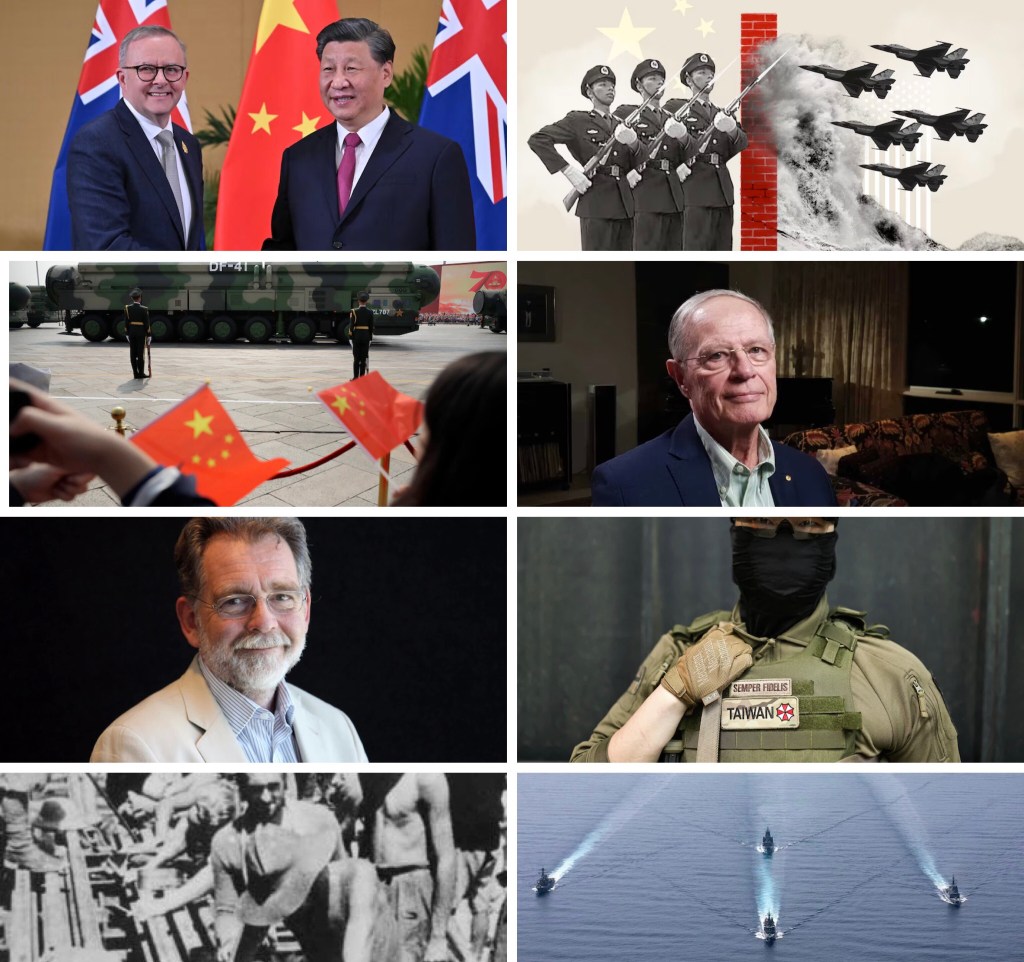
So to contribute to this discussion, I’ve sought analysis from four of Australia’s most experienced military strategists and asked them exactly what Australia’s involvement in a war with China could look like. The four have more than 100 years of high-level military and strategic experience between them.
The analysts are:
Professor Hugh White, a former Deputy Secretary for Strategy and Intelligence in the Department of Defence
Admiral Chris Barrie, Australia’s most senior military leader as Chief of the Defence Force from 1998 to 2002
Allan Behm, a former head of the International Policy and Strategy Divisions of the Defence Department
Professor Clinton Fernandes, a former intelligence officer in the Australian military. All four analysts have held the highest security clearances that it’s possible to have. All have been involved in sensitive military operations. And all are watching with great interest as the drums of war beat in some quarters regarding a possible war with China.
They have different opinions on a range of issues, but one thing that is striking about the four is what they agree on. All agree, for example, that the United States — with or without Australia’s assistance — cannot win a war against China.
Hugh White, who is also Emeritus Professor of Strategic Studies at the Australian National University, is clear in his analysis:
“I do not think there is any credible chance that America, with or without Australia’s support, could win a war with China over Taiwan.”
Any such war, he says, would primarily be a maritime conflict and would be on a scale unprecedented since World War II.
“Washington would expect Australia to contribute the full range of our air and naval forces to the maximum extent of our capability, including surface warships, submarines, F-18 and F-35 fighters, P-8 maritime patrol aircraft, airborne early warning aircraft and tanker aircraft.”
‘War would impoverish us all’
Admiral Chris Barrie makes the point that it’s possible the impact on Australia of any war with China could be greater than any other participant because of Australia’s low population.
“The consequences for us would be very serious in terms of the Australian economy, the impact on the Australian people and the ravages to our way of life throughout the land,” he says.
He says that unlike the experience of the conflicts in Iraq and Afghanistan that affected only the members deployed into the conflict and their families, a war with China would have an impact on all Australians — “economically, financially and personally it is likely to impoverish us all; it may even kill most of us if it goes nuclear”.
Allan Behm, now head of the international and security program at The Australia Institute, says were the US and China to go to war over the next five to 10 years the best potential outcome for the US is a stalemate. He says given the rate at which Chinese forces are modernising and building capability and capacity “a Chinese victory over the US is the more likely outcome beyond 2035”.
Behm says a war with China would be “profoundly and devastatingly different” from any other war Australia has participated in since World War II. He says Australia has a “fundamental strategic pathology: to support the interests of the US at the expense of our own”.
Professor Clinton Fernandes is a former intelligence officer in the Australian military and now Professor of International and Political Studies at the University of New South Wales.
He believes a blockade of Taiwan by China is more likely than a cross-strait invasion. A blockade, he says, would mean 80 per cent of ships and aircraft would be unable to pass.
“China’s leaders could discreetly offer negotiations to Taiwan’s leaders during a blockade before the risky step of ordering an amphibious invasion,” Professor Fernandes says.
“If they think the blockade is failing they may declare victory by pointing to the damage already inflicted, or they might escalate to attacking US forces that are supporting Taiwan. Major combat against the US means two nuclear-armed states fighting each other.
“For China, the worst-case scenario is to have to conduct high-intensity operations against Taiwan, the United States, Japan and other US allies and partners simultaneously.”
Hugh White says a war between the US and China over Taiwan would “probably be the biggest and most disruptive war the world has seen since 1945”.
“Because the stakes for both sides are so high, and both are so well armed, it would swiftly escalate into a full-scale regional maritime war,” he says.
“No one can be sure how that war would play out, because there have been no major maritime wars since Japan was defeated in 1945, but by far the most likely outcome would be a costly stalemate in which both sides lost heavily but neither side could secure a decisive, war-wining advantage.
“For Australia the conflict would be devastating whether we joined the fighting or not. Our economy would be paralysed as all trade with China and other major East Asian partners would stop dead and may not resume for a long time.
“If we joined the fight, or allowed US forces involved to operate from bases here, then there would be a clear chance that Australia would face direct attack from Chinese long-range forces.”
Q: If Australia was to be in a coalition with the US, what particular roles would Washington be likely to ask from Australia?
“Any US-China war would be primarily a maritime conflict, and it would be, as we have seen, on a scale unprecedented since the Second World War. US forces would be fully committed to the maximum of their capacity, and they would expect and indeed demand the same of us.”
Q: We often hear suggestions that China may invade Taiwan — given Taiwan’s fortifications, would an invasion be a realistic prospect or would a blockade be more likely?
“It is not clear how formidable Taiwan’s defences would prove to be in the face of a Chinese invasion. The war in Ukraine reminds us of how uncertain these things can be — for both sides. But it has always seemed to me that China, if it decides on military action to force “reunification” is more likely to mount a blockade than an invasion.
“This would be a far cheaper and less risky way to achieve its objectives. It would be relatively easy for China to establish a credible air and sea exclusion zone around Taiwan, and thereby put immense pressure on the Taiwanese to accept Beijing’s terms.
“America would then have to decide whether to go to war to break the blockade.”
Q: Given China’s air-defence systems, particularly in the south, would the US’s or Australia’s air capabilities be rendered ineffective?
“China’s air defences are likely to prove formidable, but so are US and allied air capabilities. So it would be an even match.
“They would probably inflict a lot of damage on Chinese targets, but they would suffer very serious losses in the process. And, crucially, they would probably not be able to inflict enough damage to decisively defeat the Chinese.
“That is one reason to expect a stalemate.”
Q: Obviously people die in wars. Would defence planners in Canberra have made assessments of the likely number of Australian casualties and what is your assessment of the number of casualties Australia may suffer in any war with China?
“I do not know whether Defence planners in Canberra would have made such estimates.
“In the past, when I was working in government, we sometimes offered ministers some indication of the possible cost in lives if things went badly in the kind of lower-level commitments that we made in the 1990s.
“But the prospect of war with China raises very different possibilities — including for example, the significant likelihood that aircraft, ships and submarines we committed would be destroyed, with the potential for very high casualties among the crews.
“There would thus be a high chance that involvement in a war with China would swiftly exceed the toll in casualties suffered in Vietnam and Korea.”
Q: I realise there are all sorts of qualifications and unknowns, but given current capabilities who would be expected to win a war with China on one side and the US and Australia on the other?
“This is the critical question. I do not think there is any credible chance that America, with or without Australia’s support, could win a war with China over Taiwan.
“The forces are relatively evenly matched, because US advantages in technology are balanced by China’s advantages in geography — fighting close to home. But China has more at stake, because in the long run Taiwan matters a lot more to China than to America.
“Ultimately, I do not see how America could inflict enough damage on China to force Beijing to concede over Taiwan, without using nuclear weapons. And I cannot see America being willing to risk Chinese nuclear retaliation against the US homeland for Taiwan’s sake.
“That is why I think it would be a mistake for America, or Australia, to go to war with China over Taiwan.”
Admiral Chris Barrie says that with all the “overblown rhetoric” about the possibility of war against China he thinks there is a danger of forgetting that war should only ever be taken as the last means of resolving insurmountable differences between nation states.
“The contemplation of war can only be justified after all other means of settling differences have failed, and we are a long way from reaching this position (over Taiwan),” he says. “I worry when politicians start to think it is acceptable to use the media to make threats about war. I draw here an important difference between politicians and statesmen.
Q: Has enough been done to avoid conflict?
“In Australia do these commentators truly believe what they have been saying or is it bluff? Do they think an all-volunteer defence force can do the job? If not, what steps have been taken to change our posture? I am sure that survivors of war may have a more considered view. Where are our statesmen?”
“For my part Australians may be able to defend our nation because of our geographic good luck. No other country on the planet, save New Zealand, is better placed from a purely defensive perspective. In providing for our own defence we ought to be able to make sufficient and good quality plans provided we have the will to do so.
Looking deeper at China’s military strategy
“But, in a large-scale war involving many hundreds of thousands of people in offensive and defensive operations, even before reaching the attendant prospect of reaching a nuclear war threshold, Australia is unlikely to make a substantial difference.
“Relatively, we are a small country today and becoming even smaller in comparison to the company we keep. Even by 2050 our 37 million people could not amount to much alongside countries having a population base of over 100 million people — many of them in our region.
“Practically this limits the sinews of war available to us: they would be insufficient. Thinking of scale I am reminded that In 1944 the US alone out-produced the rest of the world combined in all war stores before the wars ended in 1945.
“Australia should take a position where averting war is a serious policy objective. This is a statesman-like response to the challenges we are addressing today wherein the risk of war has grown since 2017, in my opinion.
“Australia has been there before. We once had a praiseworthy reputation for the quality of our leadership and our officials. Our former role in the establishment of the UN is an exemplar of the kind of country we should aspire to be.
“In the history of the 20th century, it took two world wars to deal with the difficult policy question of dealing with rising powers prepared to challenge the status quo. Then, it was mainly Germany, and from the 1930s Japan. Now it is China.
“When I was born in 1945 the world population stood at about 2.7 billion people. In 1947 with setting up of the United Nations, after the catastrophes of both world wars and the more limited wars in the intervening years, we tried to build a system of managing international relationships without the recourse to war.
“People in those days, in the spirit of compromise and understanding, were prepared to work together, if only for a short time. The collapse of the League of Nations and the dreadful cost of war held hard lessons for how we had to manage international relationships better.
“Even so, the UN has not been able to avert war. There are debates today about how reform of the UN is needed to deal with contemporary security challenges but not much progress has been made.
“Now, as we approach reaching 10 billion people on earth, we see more difficult problems arising from this population burden. Humans have become a predatory species. We seem incapable of arresting trends towards existential climate change threats. These threats from nature pose potentially disastrous outcomes that look inevitable; we have yet to find the statesmen to deal effectively with them.
Q: In your view, is Australia doing enough to avert a war with China?
“Australia has always had a fascination about China, going well back in our history to pre-federation days. But rhetoric about the international rules-based order and China’s failure to sign up to all its provisions seems to be “lecturing and hectoring” rather than working assiduously on overcoming differences of perspective.
“Even in Australia, with our record of setting up the basics of a rules-based order, governments have sometimes overlooked the provisions of the rules-based order, when it does not suit them.
“It would also have to be true that if any of the commentators were taken seriously the impact of this reality of preparing for war with China would now be affecting us all. An earlier government tinkered with the concept of a reduction in the ten years of warning but did almost nothing about demonstrating seriousness.
“Unlike the experience of the conflicts in Iraq and Afghanistan that affected only the members deployed into conflict, and their families, a war with China will have an impact on all Australians — economically, financially, and personally. It is likely to impoverish us all; it may even kill most of us if it goes nuclear.
“The fundamental assumption that we could win a war against China is wrong-headed and hawkish; it is also very risky.
“Australia should use all the means at its disposal to avert a war with China. This is what a statesman should do as a risk averse response.
Q: Is there a danger Australia may ‘sleepwalk’ into a war with China?
“We have done work that shows that ‘risk aversion’ is the critical factor in avoiding war. To walk countries away from war we have concluded that statesmanship finds more purchase on risk aversion than on hawkishness.
“Today we can see change for the worse all over the globe. Looking into the Russia-Ukraine conflict, Europe, and in the wider context NATO, is being drawn towards having to deal with an unacceptable risk of war.
“In the case of war with China the questions we need to ask ourselves are:
what would be the range of circumstances in which Australia might think it sensible to participate in such a war at an enormous cost to our economy and to our people, let alone taking on the possibility that such a war would go nuclear is this a consequence of hawkishness or risk averse thinking? would war against China be a ‘low-cost’ war?” Q: Before Australia joined the war in Iraq, was there, in your opinion, sufficient consultation with Australian politicians and public?
“When I stepped down as the Chief of the Defence Force in July 2002 I had not seen any information leading to the conclusion that an invasion of Iraq was inevitable.
‘Difficult, unpopular’
“Furthermore, in the lead up to March 20, 2003, I was working at Oxford and bearing witness to significant questioning of the intention to invade Iraq through public dissent — “not in our name Mr Blair”. I did not see anything like the same discontent in Australia.
“As I see the decision for the invasion of Iraq I think it was made by the Prime Minister. Maybe, the record would show otherwise in time? Also, we do not have the equivalent of the Chilcott report to illuminate the story.
“At the time what I could see was the possibility that our intelligence had uncovered the spectre of WMD in Iraq. Maybe, that explained why President Bush and Prime Minister Howard, from the right of politics, and Mr Blair from the left of politics, shared the view about the need for the invasion.”
Q: As a long-time military leader, in your assessment what could be the consequences for Australia of being at war with China?
“I cannot conceive that there are any benefits in Australia being at war with China unless the circumstances were so serious as to make the cost in lives and treasury worthwhile.
“It is possible that the impact on Australia could be greater than any other assailant because of our low population. The consequences for us would be very serious in terms of the Australian economy, the impact on the Australian people and the ravages to our way of life throughout the land.
“There would also be a possibility of exceptionalism if most other countries in Asia did not get involved.
“This decision over the possibility of war with China could be made more difficult because of ANZUS. The context for decision making would be vitally important weighing the potential costs to the country, domestically and internationally, against the value of that cost for maintaining the ANZUS relationship.
“This looks like another reason for statesmanship in averting this possibility.”
Q: If the US decided to go to war with China, should Australia join?
“It depends. There are always a few possibilities that the right thing to do is to go to war irrespective of the expectation that we could ‘win’ — whatever that means. Such possibilities seem remote at present. Scenarios in which it would be right thing to do are few.
“On one hand, if China attacked the US homeland, similar to the Japanese attack on Pearl Harbour, the US would respond with war. No doubt Australian passions would run high. But would Australia immediately take up the fight? Would Japan? What would all the other countries in Asia, such as South Korea, Thailand, Malaysia, Singapore, and Indonesia do?
“It may be argued that ANZUS would inevitably push Australia to war but we should not be lazy in coming [to] that conclusion.
“On the other hand, if the US decided to attack China the provocation becomes essential to decision making. Would parallel circumstances that led to the invasion of Iraq be “acceptable” in this case?
“Would Australia have taken steps to make sure its own intelligence is based on Australian information and assessments? Would any divergence of perspectives be thrashed out before going to war?
“The scenario of a Chinese attack on Taiwan is often considered the catalyst but even in this case the reasons for, and management of, the breakdown in China-Taiwan relations in the lead up would be critical. Hopefully Australian statesmen would have played a significant role in the lead up to a breakdown in cross straits relations.”
What War with China Would Look Like, Part 2, will be published on Tuesday and feature interviews with Allan Behm, former head of the International Policy and Strategy Divisions of the Defence Department, and Professor Clinton Fernandes, a former intelligence officer in the Australian military.
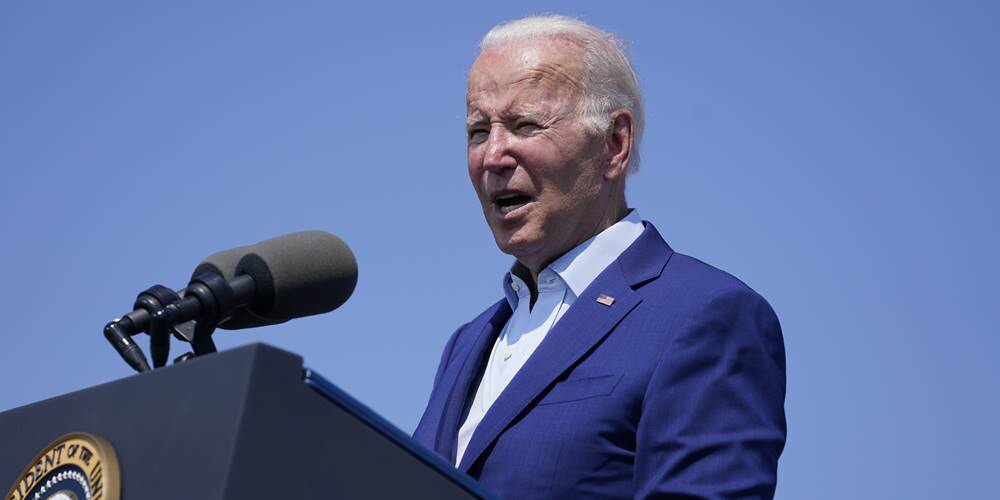
Video: White House insiders leak to Garland Nixon when Biden asked if there could be any greater disaster than the neocon Ukraine project? Biden said: “wait until you see our plan for the destruction of Taiwan.” 拜登又說錯話!真心話? 白宮曝光”毀滅台灣計畫”?
BREAKING NEWS: White House insiders leak that, when asked if there could be any greater disaster than the neocon Ukraine project, President Biden responded, “wait until you see our plan for the destruction of Taiwan.” 白宮內線消息透露,當被問到有什麼比「新保守烏克蘭方案」更具災難性的事,拜登竟回答「等你看到我們『毀滅台灣』的計劃就知道」(台灣中時新聞網 祝潤霖)
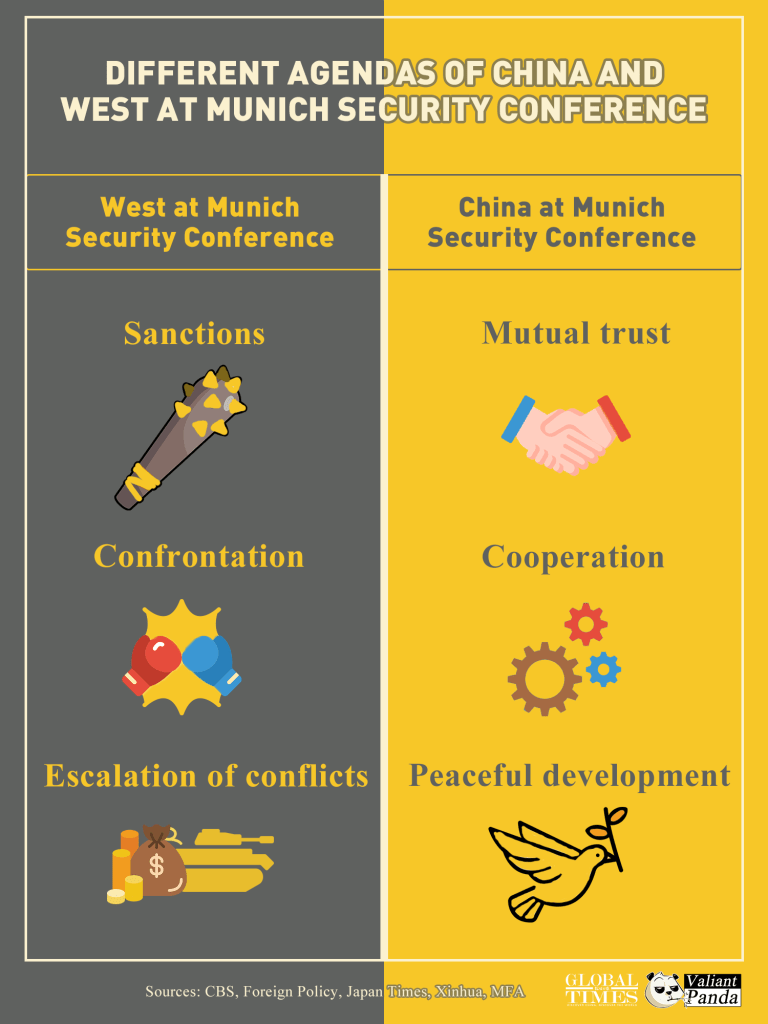
DIFFERENT agendas, cultures, civilizations, humanity, kinds of equality of China and West at Munich Security Conference. China is being supported by 6 out of the 7 billions world’s population 慕尼黑安全會議上中國和西方的不同議程、文化、文明、人性、平等。所以世界70億人口中有60億人支持中國.
The China Global Security Initiative – Concept Paper
I.Background
The issue of security bears on the well-being of people of all countries, the lofty cause of world peace and development, and the future of humanity.
Today, our world, our times and history are changing in ways like never before, and the international community is confronted with multiple risks and challenges rarely seen before. Regional security hotspots keep flaring up, local conflicts and turbulence occur frequently, the COVID-19 pandemic persists, unilateralism and protectionism have risen significantly, and traditional and non-traditional security threats are entwined. The deficits in peace, development, security and governance are growing, and the world is once again at a crossroads in history.
This is an era rife with challenges. It is also one brimming with hope. We are convinced that the historical trends of peace, development and win-win cooperation are unstoppable. Upholding world peace and security and promoting global development and prosperity should be the common pursuit of all countries. Chinese President Xi Jinping has proposed the Global Security Initiative (GSI), calling on countries to adapt to the profoundly changing international landscape in the spirit of solidarity, and address the complex and intertwined security challenges with a win-win mindset. The GSI aims to eliminate the root causes of international conflicts, improve global security governance, encourage joint international efforts to bring more stability and certainty to a volatile and changing era, and promote durable peace and development in the world.
II.Core concepts and principles
Stay committed to the vision of common, comprehensive, cooperative and sustainable security. In 2014, President Xi Jinping initiated a new vision for common, comprehensive, cooperative and sustainable security, which has been widely recognized and supported by the international community. The essence of this new vision of security is to advocate a concept of common security, respecting and safeguarding the security of every country; a holistic approach, maintaining security in both traditional and non-traditional domains and enhancing security governance in a coordinated way; a commitment to cooperation, bringing about security through political dialogue and peaceful negotiation; and pursuit of sustainable security, resolving conflicts through development and eliminating the breeding ground for insecurity. We believe security will only be firmly established and sustainable when it is underpinned by morality, justice and the right ideas.
Stay committed to respecting the sovereignty and territorial integrity of all countries. Sovereign equality and non-interference in internal affairs are basic principles of international law and the most fundamental norms governing contemporary international relations. We believe all countries, big or small, strong or weak, rich or poor, are equal members of the international community. Their internal affairs brook no external interference, their sovereignty and dignity must be respected, and their right to independently choose social systems and development paths must be upheld. Sovereign independence and equality must be upheld, and efforts should be made for all countries to enjoy equality in terms of rights, rules and opportunities.
Stay committed to abiding by the purposes and principles of the UN Charter. The purposes and principles of the UN Charter embody the deep reflection by people around the world on the bitter lessons of the two world wars. They are humanity’s institutional design for collective security and lasting peace. The various confrontations and injustices in the world today did not occur because the purposes and principles of the UN Charter are outdated, but because they are not effectively maintained and implemented. We call on all countries to practice true multilateralism; firmly uphold the international system with the UN at its core, the international order underpinned by international law and the basic norms of international relations underpinned by the UN Charter; and uphold the authority of the UN and its status as the main platform for global security governance. The Cold War mentality, unilateralism, bloc confrontation and hegemonism contradict the spirit of the UN Charter and must be resisted and rejected.
Stay committed to taking the legitimate security concerns of all countries seriously. Humanity is an indivisible security community. Security of one country should not come at the expense of that of others. We believe all countries are equal in terms of security interests. The legitimate and reasonable security concerns of all countries should be taken seriously and addressed properly, not persistently ignored or systemically challenged. Any country, while pursuing its own security, should take into account the reasonable security concerns of others. We uphold the principle of indivisible security, advocating the indivisibility between individual security and common security, between traditional security and non-traditional security, between security rights and security obligations, and between security and development. There should be a balanced, effective and sustainable security architecture, so as to realize universal security and common security.
Stay committed to peacefully resolving differences and disputes between countries through dialogue and consultation. War and sanctions are no fundamental solution to disputes; only dialogue and consultation are effective in resolving differences. We call on countries to strengthen strategic communication, enhance mutual security confidence, diffuse tensions, manage differences and eliminate the root causes of crises. Major countries must uphold justice, fulfill their due responsibilities, support consultation on an equal footing, and facilitate talks for peace, play good offices and mediate in light of the needs and will of the countries concerned. The international community should support all efforts conducive to the peaceful settlement of crises, and encourage conflicting parties to build trust, settle disputes and promote security through dialogue. Abusing unilateral sanctions and long-arm jurisdiction does not solve a problem, but only creates more difficulties and complications.
Stay committed to maintaining security in both traditional and non-traditional domains. In today’s world, both the intension and extension of security are broadening. Security is more interconnected, transnational and diverse. Traditional and non-traditional security threats have become intertwined. We encourage all countries to practice the principles of extensive consultation, joint contribution and shared benefits in global governance, and work together to address regional disputes and global challenges such as terrorism, climate change, cybersecurity and biosecurity. There should be concerted efforts to explore multiple channels, develop a holistic solution, and improve relevant rules, so as to find sustainable solutions, promote global security governance and prevent and resolve security challenges.
These six commitments are interlinked and mutually reinforcing, and are an organic whole of dialectical unity. Among them, the vision of common, comprehensive, cooperative and sustainable security provides conceptual guidance; respecting the sovereignty and territorial integrity of all countries is the basic premise; abiding by the purposes and principles of the UN Charter is a primary benchmark; taking the legitimate security concerns of all countries seriously is an important principle, peacefully resolving differences and disputes between countries through dialogue and consultation is a must choice; and maintaining security in both traditional and non-traditional domains is an inherent requirement.
III. Priorities of cooperation
It is our common aspiration to achieve lasting world peace, so that all countries can enjoy a peaceful and stable external environment and their people can live a happy life with their rights fully guaranteed. Like passengers aboard the same ship, countries need to work in solidarity to foster a community of shared security for mankind and build a world that is free from fear and enjoys universal security.
To realize these visions, China is ready to conduct bilateral and multilateral security cooperation with all countries and international and regional organizations under the framework of the Global Security Initiative, and actively promote coordination of security concepts and convergence of interests. China calls on all parties to carry out single or multiple cooperation in aspects including but not limited to the following ones, so as to pursue mutual learning and complementarity and to jointly promote world peace and tranquility:
1.Actively participate in formulating a New Agenda for Peace and other proposals put forth in Our Common Agenda by the UN Secretary-General. Support UN efforts to enhance conflict prevention and fully harness the peace-building architecture to assist post-conflict states in peace-building. Further leverage the Secretary-General’s Peace and Security Sub-Fund of the China-UN Peace and Development Trust Fund and support a bigger UN role in global security affairs.
Support the UN in enhancing capacity for implementing its peacekeeping mandate, uphold the three principles of “consent of the parties, impartiality, and non-use of force except in self-defense and defense of the mandate” for peacekeeping operations, prioritize political solutions, and take a holistic approach to address both symptoms and root causes. Provide peacekeeping operations with adequate resources. Support the provision of sufficient, predictable and sustainable financial assistance to the African Union (AU) for it to carry out autonomous peacekeeping operations.
2.Promote coordination and sound interaction among major countries and build a major country relationship featuring peaceful coexistence, overall stability and balanced development. Major countries shoulder particularly important responsibilities of maintaining international peace and security. Call on major countries to lead by example in honoring equality, good faith, cooperation and the rule of law, and in complying with the UN Charter and international law. Adhere to mutual respect, peaceful coexistence and win-win cooperation, stick to the bottom line of no conflict and no confrontation, seek common ground while reserving differences, and manage differences.
3.Firmly uphold the consensus that “a nuclear war cannot be won and must never be fought”. Comply with the joint statement on preventing nuclear war and avoiding arms races issued by leaders of the five nuclear-weapon states in January 2022. Strengthen dialogue and cooperation among nuclear-weapon states to reduce the risk of nuclear war. Safeguard the international nuclear non-proliferation regime based on the Treaty on the Non-proliferation of Nuclear Weapons (NPT) and actively support the efforts of countries in relevant regions to establish nuclear-weapon-free zones. Promote international cooperation on nuclear security, so as to build a fair, collaborative and mutually beneficial international nuclear security system.
4.Fully implement the resolution of Promoting International Cooperation on Peaceful Uses in the Context of International Security adopted by the 76th session of the UN General Assembly.
Carry out cooperation under such frameworks as the UN Security Council’s 1540 Committee, the Chemical Weapons Convention (CWC) and the Biological Weapons Convention (BWC), promote complete prohibition and thorough destruction of weapons of mass destruction, and build up the capacity of all countries in areas including non-proliferation export control, biosecurity and protection against chemical weapons.
Support the process of global conventional arms control. Support cooperation among China, Africa and Europe on small arms and light weapons control under the premise of respecting the will of Africa. Support the implementation of the initiative of Silencing the Guns in Africa. Actively carry out international cooperation and assistance on humanitarian demining and provide help to affected countries as much as one’s ability permits.
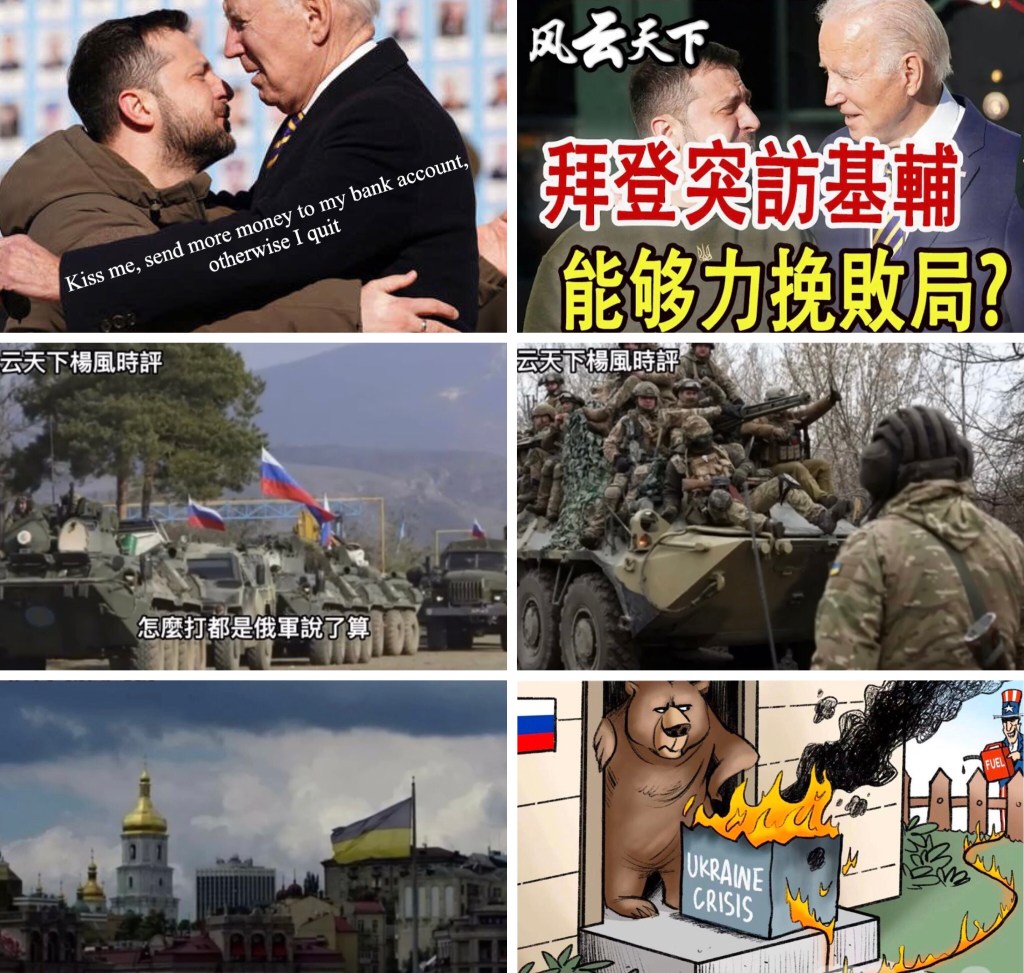
5.Promote political settlement of international and regional hotspot issues. Encourage the countries concerned to overcome differences and resolve hotspots through candid dialogue and communication. Support the international community in constructively participating in the political settlement of hotspots, under the premise of non-interference in internal affairs, mainly through the means of facilitating peace talks, with fairness and practicality as the main attitude, and mainly following the approach of addressing both symptoms and root causes. Support political settlement of hotspot issues such as the Ukraine crisis through dialogue and negotiation.
6.Support and improve the ASEAN-centered regional security cooperation mechanism and architecture, and adhere to the ASEAN way of consensus-building and accommodating each other’s comfort level to further strengthen security dialogue and cooperation among regional countries. Support efforts to promote cooperation in non-traditional security areas under the framework of Lancang-Mekong Cooperation (LMC), implement relevant cooperation projects under the LMC Special Fund, and strive to foster a pilot zone for GSI to jointly safeguard regional peace and stability.
7.Implement the five-point proposal on realizing peace and stability in the Middle East, including advocating mutual respect, upholding equity and justice, realizing non-proliferation, jointly fostering collective security, and accelerating development cooperation, so as to jointly establish a new security framework in the Middle East. Support the positive momentum and the efforts of Middle East countries to strengthen dialogue and improve their relations, accommodate the reasonable security concerns of all parties, strengthen the internal forces of safeguarding regional security, and support the League of Arab States (LAS) and other regional organizations in playing a constructive role in this regard. The international community should take practical steps to advance the two-state solution to the Palestinian question, and convene a larger, more authoritative and more influential international peace conference, so as to achieve a just solution to the Palestinian question at an early date.
8.Support the efforts of African countries, the AU and sub-regional organizations to resolve regional conflicts, fight terrorism and safeguard maritime security, call on the international community to provide financial and technical support to Africa-led counter-terrorism operations, and support African countries in strengthening their ability to safeguard peace independently. Support addressing African problems in the African way, and promote peaceful settlement of hotspots in the Horn of Africa, the Sahel, the Great Lakes region and other areas. Actively implement the Outlook on Peace and Development in the Horn of Africa, promote the institutionalization of the China-Horn of Africa Peace, Governance and Development Conference, and work actively to launch pilot projects of cooperation.
9.Support Latin American and Caribbean countries in actively fulfilling commitments stated in the Proclamation of Latin America and the Caribbean as a Zone of Peace, and support the Community of Latin American and Caribbean States and other regional and sub-regional organizations in playing an active role in upholding regional peace and security and properly handling regional hotspots.
10.Pay high attention to the special situation and legitimate concerns of Pacific island countries in regard to climate change, natural disasters and public health, support the efforts of Pacific island countries to address global challenges, and support island countries in implementing the 2050 Strategy for the Blue Pacific Continent. Increase the provision of materials, funds and talents to help island countries improve their ability to deal with non-traditional security threats.
11.Strengthen maritime dialogue and exchange and practical cooperation, properly handle maritime differences, and work together to tackle transnational crimes at sea including piracy and armed robbery, so as to jointly safeguard maritime peace and tranquility and sea lane security. Call on upstream and downstream countries along trans-boundary rivers to actively engage in international cooperation, resolve relevant disputes through dialogue and consultation, ensure the safety of shipping on trans-boundary rivers, rationally utilize and protect water resources, and protect the ecological environment of trans-boundary rivers.
12.Strengthen the UN’s role as the central coordinator in the global fight against terrorism, support the international community in fully implementing the UN General Assembly and Security Council counter-terrorism resolutions and the UN Global Counter-Terrorism Strategy, and jointly crack down on all terrorist organizations and individuals designated by the Security Council. Channel more global counter-terrorism resources to developing countries to enhance their counter-terrorism capacity building. Oppose linking terrorism with any particular country, ethnic group or religion. Enhance studies on and responses to the impact of emerging technologies on global counter-terrorism efforts.
13.Deepen international cooperation in the field of information security. China has put forward the Global Initiative on Data Security and calls for joint efforts to formulate global rules on digital governance that reflect the will and respect the interests of all parties. Follow through on the China-LAS Cooperation Initiative on Data Security and the Data Security Cooperation Initiative of China+Central Asia, jointly address various cyber threats, and work to establish a global governance system on cyberspace featuring openness and inclusion, justice and fairness, security and stability, vigor and vitality.
14.Strengthen biosecurity risk management. Jointly advocate responsible bioscience research and encourage all stakeholders to refer to the Tianjin Biosecurity Guidelines for Codes of Conduct for Scientists on a voluntary basis. Jointly strengthen the building of biosecurity capability of laboratories, reduce biosecurity risks and promote the healthy development of biotechnology.
15.Strengthen international security governance on artificial intelligence (AI) and other emerging technologies, and prevent and manage potential security risks. China has issued position papers on regulating military applications and strengthening ethical governance of AI, and stands ready to strengthen communication and exchange with the international community on AI security governance, promote the establishment of an international mechanism with broad participation, and develop governance frameworks, standards and norms based on extensive consensus.
16.Strengthen international cooperation on outer space and safeguard the international order in outer space underpinned by international law. Carry out activities in outer space in accordance with international law, safeguard the safety of in-orbit astronauts and the long-term and sustainable operation of space facilities. Respect and ensure the equal right of all countries to use outer space peacefully. Resolutely reject the weaponization of and arms race in outer space, and support the negotiation and conclusion of an international legal instrument on arms control in outer space.
17.Support the World Health Organization in playing a leading role in global governance in public health, and effectively coordinate and mobilize global resources to jointly respond to COVID-19 and other major global infectious diseases.
18.Safeguard global food and energy security. Strengthen action coordination to maintain the smooth operation of international agricultural trade, ensure stable grain production and smooth supply chains, and avoid politicizing and weaponizing food security issues. Strengthen international energy policy coordination, create a safe and stable environment for ensuring energy transportation, and jointly maintain the stability of the global energy market and energy prices.
19.Fully and effectively implement the UN Convention against Transnational Organized Crime. Encourage all countries to conclude or join international treaties, conventions or agreements or make institutional arrangements to fight transnational crimes. Support the three international drug control conventions of the UN, safeguard the international drug control system, and advocate coordination, shared responsibility and sincere cooperation in the international community to jointly address challenges posed by the drug problem and build a community with a shared future for mankind that is free from the harm of drugs. Actively conduct law enforcement cooperation on the basis of respecting each country’s sovereignty, so as to jointly improve law enforcement capacity and security governance. Support the establishment of a global training system to train for developing countries more law enforcement officers who are responsive to their countries’ security needs.
20.Support the cooperation among countries in addressing climate change and maintaining stable and smooth supply and industrial chains, and speed up the implementation of the UN 2030 Agenda for Sustainable Development in order to promote sustainable security through sustainable development.
IV. Platforms and mechanisms of cooperation
Engage in wide-ranging discussions and communication on peace and security at the General Assembly, relevant UN Committees, the Security Council, relevant institutions, and other international and regional organizations based on their respective mandates, and put forward common initiatives and propositions to forge consensus in the international community to address security challenges.
2.Leverage the roles of the Shanghai Cooperation Organization, BRICS cooperation, the Conference on Interaction and Confidence Building Measures in Asia, the “China+Central Asia” mechanism, and relevant mechanisms of East Asia cooperation, and carry out security cooperation incrementally to achieve similar or same goals. Promote the establishment of a multilateral dialogue platform in the Gulf region and give play to the role of coordinating and cooperative mechanisms such as the Meeting of Foreign Ministers of the Neighboring Countries of Afghanistan and the China-Horn of Africa Peace, Governance and Development Conference to promote regional and global peace and stability.
3.Hold high-level conferences on the GSI in due course to strengthen policy communication in the field of security, promote intergovernmental dialogue and cooperation, and further foster synergy in the international community to address security challenges.
4.Support the China-Africa Peace and Security Forum, the Middle East Security Forum, the Beijing Xiangshan Forum, the Global Public Security Cooperation Forum (Lianyungang) and other international dialogue platforms in contributing to deepening exchange and cooperation on security. Promote the establishment of more global security forums to provide new platforms for governments, international organizations, think tanks and social organizations to leverage their advantages and participate in global security governance.
5.Build more international platforms and mechanisms for exchange and cooperation on addressing security challenges in such areas as counter-terrorism, cybersecurity, biosecurity and emerging technologies, with a view to improving the governance capacity in the domain of non-traditional security. Encourage more exchanges and cooperation among university-level military and police academies. China is willing to provide other developing countries with 5,000 training opportunities in the next five years to train professionals for addressing global security issues.
The GSI, following the principle of openness and inclusiveness, welcomes and looks forward to the participation of all parties to jointly enrich its substance and actively explore new forms and areas of cooperation. China stands ready to work with all countries and peoples who love peace and aspire to happiness to address all kinds of traditional and non-traditional security challenges, protect the peace and tranquility of the earth, and jointly create a better future for mankind, so that the torch of peace will be passed on from generation to generation and shine across the world.




 Business Blog