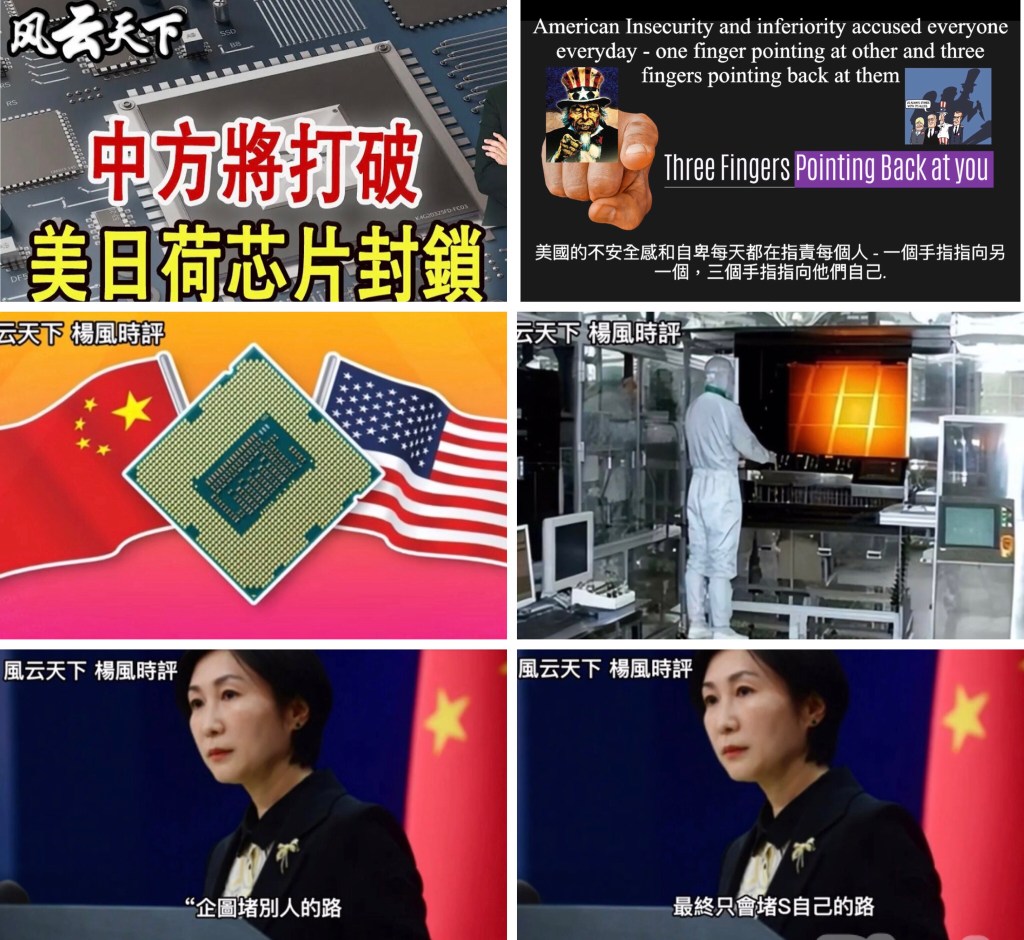
China reconnects to world in every field after COVID despite lingering Western smears, US said: “Chinese locked down BAD, China open up BAD, China BRI BAD, China treating minorities better BAD, anything Chinese does good for humanity BAD, Chinese as human being BAD” do you agree? 儘管西方的抹黑揮之不去,但在 COVID 之後,中國在各個領域重新與世界建立了聯繫,美國說:“中國封鎖 BAD,中國開放 BAD,中國 BRI BAD,中國更好地對待少數民族 BAD,中國為人類所做的一切 BAD,中國人作為人類 BAD” 你同意嗎?
Asia Times: Why ‘decoupling’ is a fatally flawed concept. The US and Chinese economies rely on each other, and the people of both nations are the beneficiaries By GEORGE KOO FEB 2, 2023
The US and China have held three rounds of high-level trade talks since early last month, but have failed to reach a compromise.
The US-China trade war has endured under the Biden administration.
A recent issue of Bloomberg Businessweek said, “Despite the heated national-security rhetoric in Washington and talk of ‘decoupling’ in policy circles, the world’s top two economies remain firmly intertwined.” The article goes on to say that bilateral trade between the US and China for year ending 2022 is likely to be the highest ever recorded.
The failure to decouple is likely good news for China but even better news for the American public. However, anyone with a dollop of common sense would realize that the talk about decoupling was just so much balderdash.
For the sake of introducing clarity to what and how decoupling might actually mean, let us address the many facets of this elephant in the room.
Decoupling would mean the opposite of economic integration. Each would have nothing to do with the other. This means Americans would have to stop buying manufactured goods from China. But this is contrary to actual bilateral trade data, wherein despite the added import tariff to the retail price, the American public can’t buy enough products Made in China.
That’s the reality to date. In order for the US not to buy from China, we Americans would have to make these products in America. Former president Donald Trump struck on the brilliant idea of bringing manufacturing back to America. He ordered, cajoled and dangled sweet deals to entice American companies back to the US.
Americans don’t know how any more
The idea basically flopped for a host of reasons. The manufacture of widgets left the US decades ago, first to the four tigers such as Taiwan and Hong Kong and then to mainland China. The basic skillsets needed on the production line haven’t been seen in America for many decades and could not be replaced overnight on demand.
Some lament that Washington is at fault for not having the vision to craft an industrial policy that would encourage retention of the manufacturing of run-of-the-mill products, such as toys, televisions, personal computers or mobile phones. Our political leaders, busy getting elected, did not envisage that making widgets was a necessary precursor step to making increasingly higher valued goods, as China has done.
Actually, most the blame belongs to America’s abiding faith in capitalism as executed by Wall Street. It is not for nothing that Corporate America is known as “multinational.” Multinational corporations (MNCs) go to where the production costs are the lowest and sell where the profit is highest. “National interest” does not figure in their boardroom discussions.
As Trump’s successor, President Joe Biden lacked the courage to remove the tariffs on imports from China, which could have only benefited the American consumer. Washington along with the compliant mainstream media has so thoroughly demonized China in the minds of American public that Biden dare not risk even an appearance of apparently acting soft on China.
However, Biden apparently understands that bringing manufacturing back is not quite as simple as a Trumpian clarion call. For one thing, the American wage scale would raise the cost of production, perhaps by as much as 50% for semiconductors, according to Morris Chang, founder of Taiwan Semiconductor.
In the case of high-end products, production also needs a complete supply chain of parts and components, which would also need to be transplanted from somewhere.
Biden wins at the expense of Europeans
So instead of counting on American MNCs to make America great again, Biden is dangling subsidies to appeal to foreign MNCs, from any country except China, to move their plants to the US. European companies find the prospects tempting. Their economies at home face shortages and inflation thanks to the Ukrainian war and they find America’s stability and market appealing.
Just like their American counterparts, European companies owe their allegiance to their shareholders. But enticing European MNCs to the US means taking jobs away from their home country, which is making the European leaders very unhappy, hardly a way to treat America’s allies.
Biden’s other approach is to outright hijack Taiwan Semiconductor Manufacturing Company plant from Taiwan and transplant it to Phoenix, Arizona. The first group of TSMC staff came willingly and accompanied the equipment disassembled from Taiwan. They were convinced by their own government that invasion from China was imminent and this was the opportunity to get out.
Mere weeks later, some troubling signs are developing. The staff from Taiwan are used to working 10-12 hour shifts and they were promised that they do not have to work night shifts. Well, their American colleagues don’t want to work night shifts either, and eight hours per day is their normal stint.
The difference between the Taiwan-based wage scale and that of the US based also creates tension and resentment. Presumably, the difference would eventually be harmonized, but the manufacturing cost would go up.
The question will be whether TSMC customers such as Apple and others would pay for these higher-priced chips for the sake of national interest or just keep buying from the TSMC plant remaining in Taiwan. Want to hazard a guess?
When the Soviet Union sent aloft the first man-made satellite in 1957, America woke up in shock, and 12 years later we sent men to the moon. That was America’s first Sputnik moment. When China showed that it had caught up or even surpassed the US in certain technologies, that was another Sputnik moment.
Demonizing easier than competing
But this time, our leaders in Washington must have decided that rather than compete head-on, it was cheaper to allocate a few hundreds of million dollars to the media and ask them to continue to mislead the American public and demonize China as a human-rights violator incapable of innovation and technological advances.
While the US has been going around the world promoting armed conflicts in the name of imposing “rule-based international order,” China makes the rounds offering its Belt and Road Initiative to underdeveloped and developing countries.
If the much-talked-about decoupling were suddenly to occur tomorrow, the US would pay a much dearer price than would China. China would continue to be the most important trading partner to every country except for perhaps the US.
Ironically, in middle of last month, Treasury Secretary Janet Yellen flew to Europe just to intercept Chinese Vice-Premier Liu He as he was on his way to the Davos summit. Apparently, the gist of their three-hour meeting was for Yellen to pitch the importance of China holding on to the dollars and continuing to buy US debt.
Most likely decoupling was not part of their conversation.
George Koo retired from a global advisory services firm where he advised clients on their China strategies and business operations. Educated at MIT, Stevens Institute and Santa Clara University, he is the founder and former managing director of International Strategic Alliances. He is currently a board member of Freschfield’s, a novel green building platform. Follow him on Twitter @george_koo.
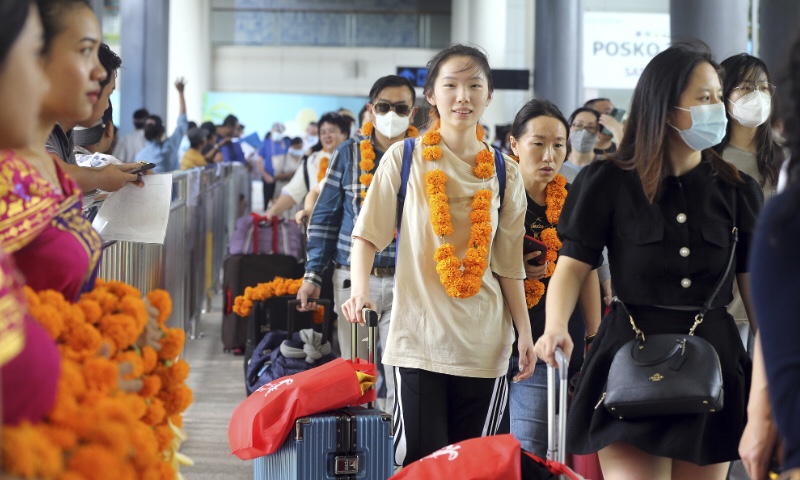
HK offers half a million free air tickets to welcome visitors back 香港提供五十萬張免費機票歡迎遊客回來 by Liu Caiyu Feb 02 2023
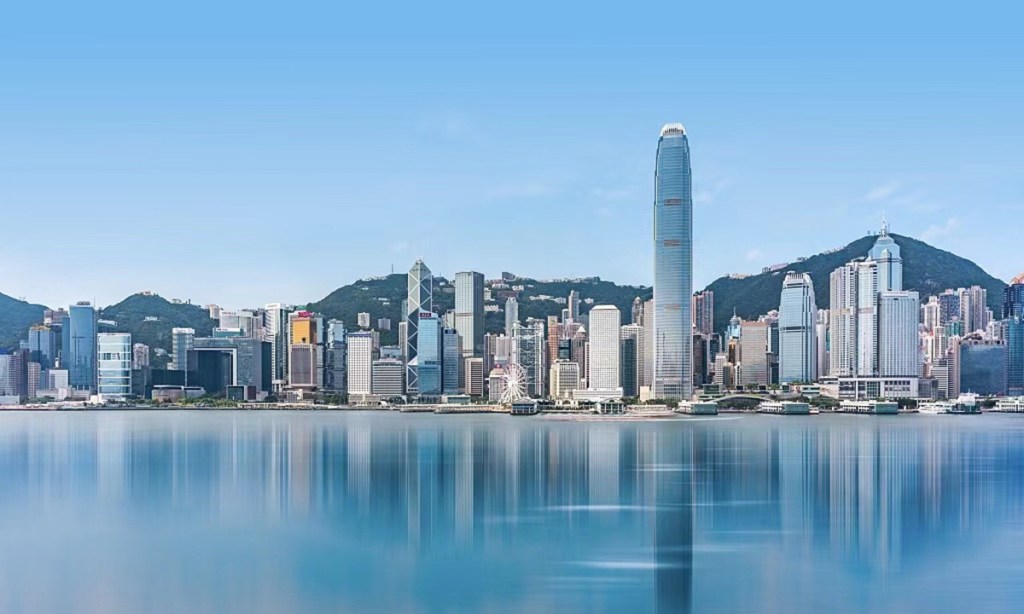
In what could be the world’s largest welcoming initiative, Hong Kong will offer half a million free air tickets to mark the return of visitors as the city fights its way back to normal from COVID-19 and eyes a complete border reopening with the Chinese mainland.
“A hello speak thousands words… holding the unique advantage of being close to the motherland and connected to the world, Hong Kong has returned to the center of the international stage and welcomes the world to the city,” Hong Kong Special Administrative Region (HKSAR) Chief Executive John Lee Ka-chiu said as he unveiled a campaign called “Hello Hong Kong” to call on visitors to come back to the city to experience its culture and scenic spots, bolster local business and attract world investors.
Free tickets – the first wave of incentives to attract tourists to Hong Kong – will be provided by three airlines mainly for short-haul flights between the Chinese mainland, Japan, South Korea and Southeast Asian countries. The tickets will be allocated by the airlines through “buy one, get one free” promotions and activity will last for six months starting from March 1, media reported.
“The campaign not only concerns tourism promotion but a project to restore the image of Hong Kong in the post-COVID-19 era, giving the city fresh opportunities,” Timothy Chui Ting-pong, director of the Travel Industry Council of Hong Kong, told the Global Times on Thursday.
“The tourism sector is ready to receive more visitors and the tourism business will soon be back to normal. I am optimistic toward this year’s business,” Chui noted. He said that the sector is expecting to see the HKSAR government set aside budget funds to support the recovery of the industry.
Whether the Hong Kong economy could pick up this year to a great extent relies on the support of the mainland after the border fully reopens, Liang Haiming, chairman of the China Silk Road iValley Research Institute, told the Global Times.
“No doubt the tourism sector will benefit the most. Tourists from the mainland will shop in Hong Kong, stimulating the city’s consumption and retail businesses,” Liang noted.
The Global Times learned that Shenzhen, South China’s Guangdong Province, which borders Hong Kong, is preparing for the reopening of Luohu Port – the largest land port between Hong Kong and the Chinese mainland. Hong Kong media reported that the reopening date will be January 6.
Though the official opening date has yet to be announced, businesses in the Luohu Port are reportedly gearing up to reopen their doors to customers and generate sales after about three years of closure.
“Three years of epidemic have been very difficult for everyone, and a complete border resumption is just around the corner. We are looking forward to returning to the prosperity of the past,” He Shengan, a deputy general manager of Luohu Commercial City Property Management Co. told the Hong Kong China News Agency.
Lee said on Tuesday that he is confident of a complete border reopening with the mainland. The good news, including scrapping mandatory nucleic acid tests and quotas, will be released soon.
Since the border resumed its initial operations on January 8, more than 700,000 people have crossed into the mainland and some 600,000 have entered Hong Kong, Lee revealed, describing Hong Kong as having entered a new stage of recovery.
To attract international travelers, Hong Kong will host many major events this year, from finance, economy, innovation and technology, to sporting events, arts and culture, food and wine, as well as major international conferences and exhibitions, according to Lee.
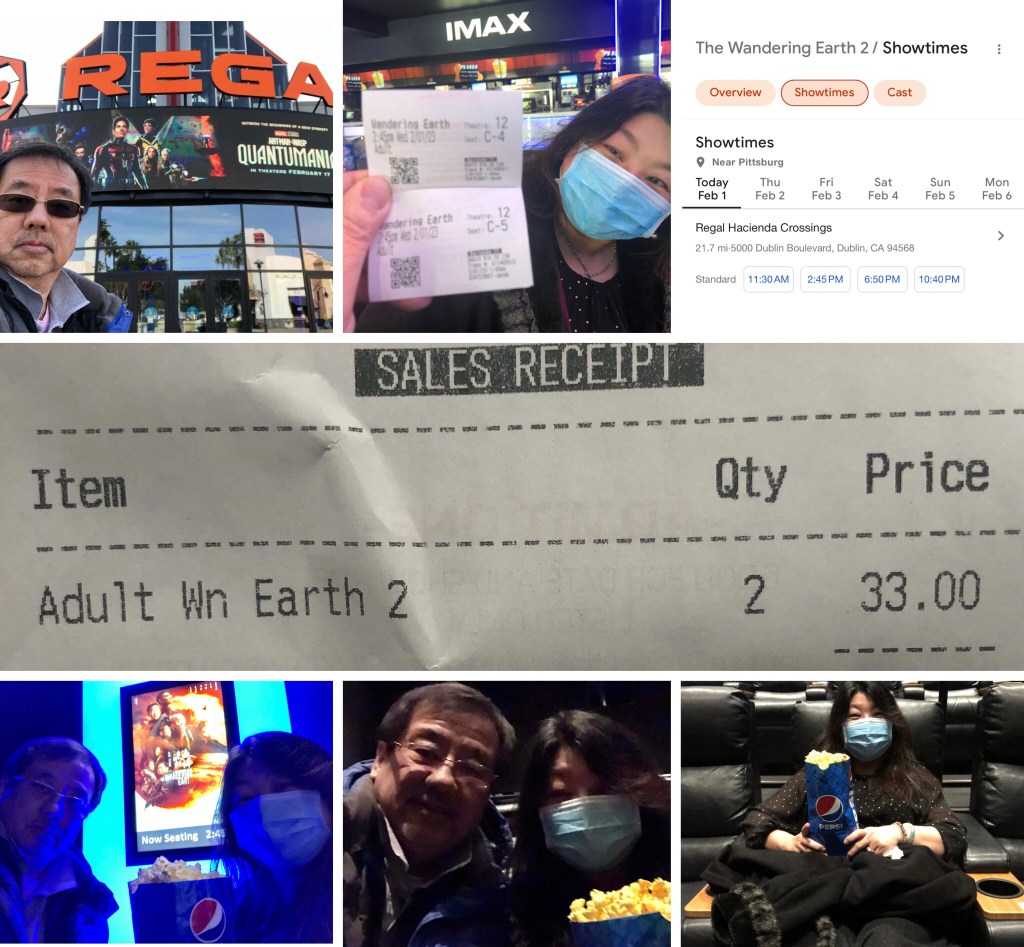
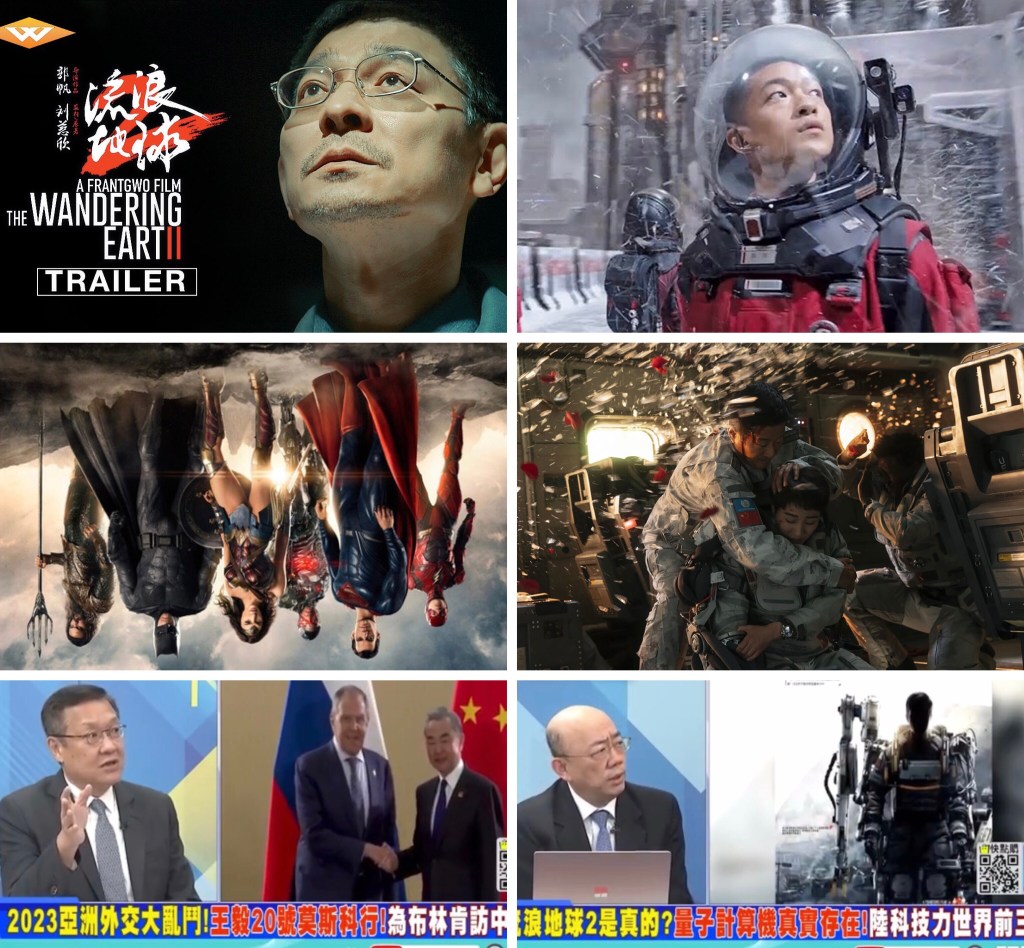
Wandering Earth 2 review: must watch movie, UN works with China, Russia & ASEAN to save the world, US’s usual self kept complaining & US superhero was no show 流浪地球2影評:精彩必看,聯合國與中國、俄羅斯和東盟合作拯救世界,美國一貫的自我抱怨和美國超級英雄沒有出現 American review https://youtu.be/IVHrQKWiawc
China Appears Poised to Achieve through Cooperation in the 21st Century what Japan Sought to Achieve through Coercion in the 20th 中國似乎準備在 21 世紀通過合作實現日本在 20 Century 世紀通過脅迫想要實現的目標 By Jeremy Kuzmarov – Jan 31, 2023
U.S. elites have predictably reacted with hysteria to China’s rise and could go so far as to provoke a world war to try to salvage their Southeast Asia empire—as the Roosevelt administration did with Japan on the eve of Pearl Harbor.
From 1991 to 2021 China achieved ten-fold growth in incomes and labor productivity, and a thirteen-fold increase in GDP—largely because of sound economic policies.
The country’s growing economic as well as technological primacy placed it in an increasingly strong position to create an East Asian economic and possibly a security bloc to pull Asian states out of their dependence on the West.
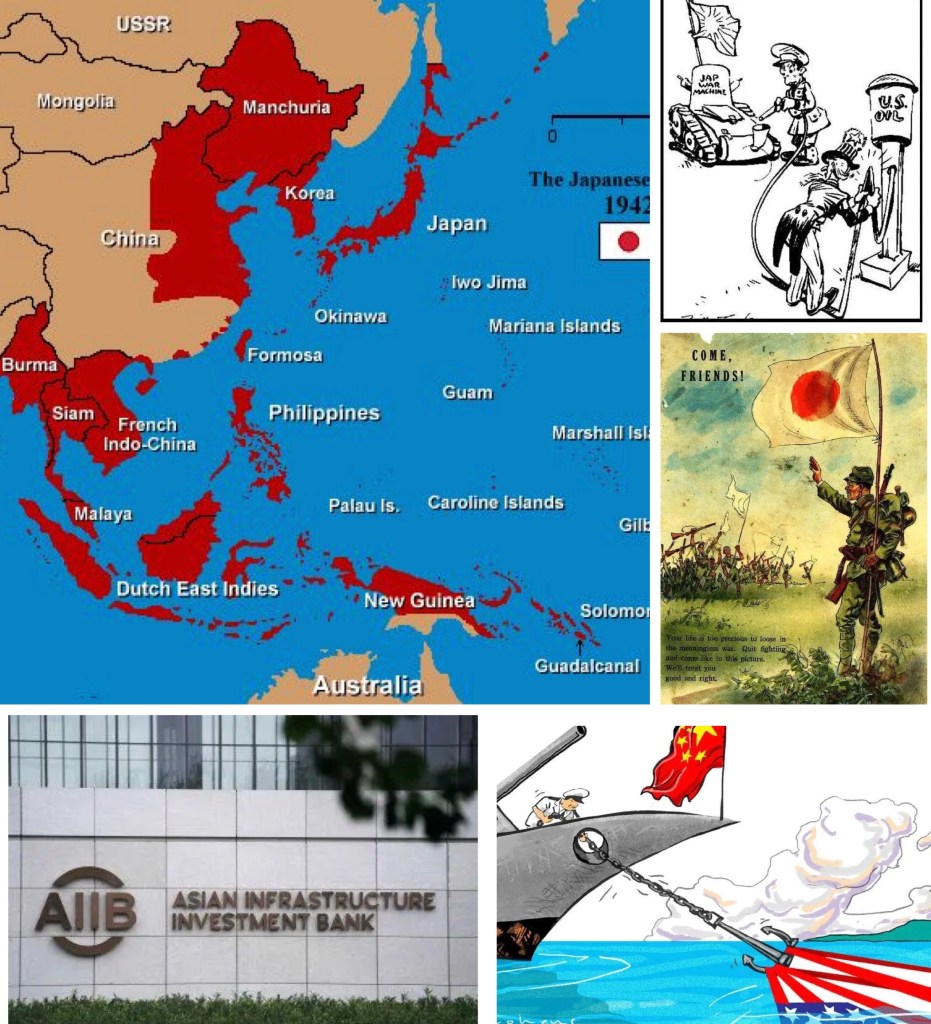
The former was in the process of being achieved with a) China’s creation of the Asian Infrastructure Investment Bank (AIIB), which provided loans to other Southeast Asian countries without the same stipulations as those meted out by the International Monetary Fund (IMF) and World Bank; and b) the advent beginning in 2013 of the One Belt-One Road Initiative (BRI), which has invested massively in infrastructural development projects in many different countries that are designed to tether their economies to that of China.
A.B. Abrams[1] points out in his book, Power and Primacy: A History of Western Intervention in the Asia-Pacific (New York: Peter Lang, 2022), that China is poised to achieve by cooperation in the next decade what Japan set out to achieve by coercion in the first three decades of the 20th century—the creation of a Southeast Asia power bloc capable of resisting Western empires that have ravaged Southeast Asia since the 16th century.
Predictably, U.S. elites have reacted to China’s rise not too differently than they did Japan’s—through a campaign of demonization and large-scale military buildup in the Asia Pacific along with the institution of economic warfare that threatens the outbreak of another world war.
Power and Primacy: A History of Western Intervention in the Asia-Pacific: Japan’s Empire Threatens to Undermine Western Primacy in Southeast Asia
Abrams provides a revisionist history of the Japanese empire at the turn of the 20th century that challenges the orthodox interpretation presenting Japanese leaders in the 1930s and 1940s as morally equivalent to Nazis and that blames Japan for the outbreak of World War II in the Pacific.
While the Japanese overreached and committed unconscionable atrocities, like in the Rape of Nanking, Japan’s Greater Co-Prosperity sphere—in which Japan colonized Taiwan and Korea and made moves to try to take over European colonies—provided a counterweight and challenge to Western imperialism and inspired Asian nationalists to overthrow the yoke of Western colonial rule.
Historian Eri Hotta attributed the independence of Vietnam, Indonesia, Malaysia, Singapore, the Philippines, Korea and Cambodia after World War II to the “psychological impact of Japanese victories over Western empires,” which had “defeated the idea of European supremacy” while “delegitimizing Western imperialism in the eyes of the Asian people.”
How did Japan contribute to Indonesia’s independence? – Quora
Japan had escaped the fate of other Southeast Asian countries in the 17th, 18th and 19th centuries by adopting a strict policy of isolation under the Tokugawa Bakufu and successfully industrialized its economy following the Meiji restoration in the late 1860s while building a formidable military that defeated Russia in the 1905 Russo-Japanese War.
MIT Visualizing Cultures
In the Battle of Nanshan, Lieutenant Shibakawa Matasaburô leads his men and slaughters Russian troops holding up a rising sun (1904). The image is from a woodblock print from the collection of the Boston museum of Fine Arts. [Source: visualizingcultures.mit.edu]
Beginning in the early 20th century, Japan’s leaders saw the need for an empire of their own that could lead a new Asian renaissance. While political freedom was largely stifled, Taiwan and Korea experienced significant economic gains under Japanese rule marked by extensive industrialization and infrastructural development.
According to Abrams, the discrepancy in industrial development between Japanese and Western controlled territories in East Asia was tremendous, with Manchuria’s steel output coming to eclipse that of Japan itself.
The Sui-ho Dam in Korea under construction in 1942 when Japan ruled Korea. The dam was the second largest in the world. [Source: upload.wikimedia.org] Japanese industrialization of the wider Southeast Asia region posed an imminent threat to Western interests by “ending the vast disparity between the industrialized west and the underdeveloped, non-western world.”
The Roosevelt administration responded by instituting a large-scale naval build-up in the Asia Pacific, along with a crippling oil embargo on Japan while banning steel exports, which it was known would lead to war.
Did the US oil embargo on Japan lead to Japan’s expansionism in Southeast Asia? – Quora
Pacific War As Brutal Race War
Seen in proper historical context, the Pacific War was a war for empire, which resulted in the destruction of the U.S.’s imperial rival in the Asia-Pacific.
Charles Lindbergh, the famed aviator and member of the anti-interventionist America First Committee, wrote in 1969 that “more than a generation after the war’s end, our occupying armies still must occupy, and the world has not been made safe for democracy and freedom.”[2]
America First’: From Charles Lindbergh To President Trump : Parallels : NPR Charles Lindbergh [Source: npr.org]
The thorough dehumanization of the Japanese during the war was epitomized by a U.S. Navy film which described them as “snarling rats.” Life magazine’s picture of the week in May 1944 showed a woman with a Japanese skull from her boyfriend autographed by him and thirteen others and inscribed: “This is a good Jap—a dead one picked up on the New Guinea beach.”[3]
“Arizona war worker writes her Navy boyfriend a thank-you note for the Jap skull he sent her.” LIFE magazine’s “Picture of the Week,” May 22, 1944. Life magazine’s “Picture of the Week,” May 22, 1944. [Source: rarehistoricalphotos.com]
During the firebombing of Tokyo in March 1945, the U.S. Air Force dropped half a million incendiary cylinders in one night alone, destroying the homes of 372,000 Japanese families and killing as many as 200,000 people, mostly from burning or asphyxiation. The huge number of bodies stopped the Sumida River entirely like some “hideous, grotesque beaver dam,” according to an eyewitness.
Road passing through part of Tokyo that was devastated in March 1945 by U.S. air raids. [Source: wikipedia.org]
A U.S. Army intelligence officer, Colonel Harry F. Cunningham, reported that “the entire population of Japan is properly a military target…there are no civilians. In Japan, we intend to seek out and destroy the enemy wherever he is, in the greatest possible numbers, in the shortest possible time.”
The violence in the Pacific War culminated with the dropping of the two atomic bombs over Hiroshima and Nagasaki which were unnecessary for the U.S. to win the war, but sent a signal to the Soviets not to mess with the boss of the new world order.
After the war, Japan evolved into a key U.S. client state hosting U.S. military bases that were used as launching pads for aggression across Southeast Asia.
During the U.S. military occupation of Japan from 1945 to 1952, General Douglas MacArthur, head of the Supreme Command of the Allied Powers (SCAP), carefully vetted all the political candidates in elections that were rigged to favor the pro-U.S. Liberal Democratic Party (LDP).[4] Journalist Robert Smith concluded that Japan at the time was “about as far from a democracy as could be conceived short of putting power back in the hands of the shoguns [the military rulers of Japan until 1861].”
General Douglas MacArthur with Emperor Hirohito after the Japanese surrender. [Source: wikipedia.org]
In 1983, Japanese Prime Minister Yasuhiro Nakasone referred to Japan as “America’s unsinkable aircraft carrier in the Pacific.” The region had been transformed since the end of the Pacific War into what General MacArthur termed an “Anglo-Saxon lake”—a most dramatic transformation from the 1930s when Japan had challenged Western primacy.
Yasuhiro Nakasone – Wikipedia
Thirty-Year War to Destroy the People’s Republic
With Japan functioning as a U.S. client state, the banner of resistance to empire in Southeast Asia was picked up by communist China following the 1949 victory of the People’s Liberation Army (PLA) led by Mao Zedong in China’s civil war.
The United States during the civil war provided approximately $2 billion in military assistance to nationalist Guomindang leader Chiang Kai-Shek, who had split from the Maoists in the 1920s.
Chiang Kai-shek – WikipediaChiang Kai Shek [Source: wikipedia.org]
What in the World About Mao: Transformation of Mao Zedong from Tyrant – KashgarMao Zedong [Source: kashgar.com]
U.S. military forces bombed PLA strongholds and carried out severe reprisals against communist guerrillas who had sunk deep roots among the local population.
Biography of Major-General David Goodwin Barr (1895 – 1970), USA Major General David Barr [Source: generals.dk]
General David Barr, head of the U.S. military mission in China, concluded that the Guomindang’s defeat, despite marked superiority in all types of equipment, was the result of the “world’s worst leadership,” “widespread dishonesty and corruption in the armed forces,” and “many other morale destroying factors that led to a complete loss of will to fight.”
The communists under Mao’s leadership by contrast had worked to increase the living standards of China’s peasants and built a reputation for honesty, having transformed themselves into “China’s most dynamic political force.”
Chinese communist guerrillas depicted in the film Thirty Seconds Over Tokyo. [Source: factsanddetails.com]
In the summer of 1949, the GMD leadership fled to Taiwan, taking numerous national and artistic treasures and China’s gold reserves with them.
Massacres carried out against the local population resulted in the death of at least 28,000 Taiwanese. Americans present in Taiwan equated the imposition of Guomindang rule with having “put all Formosans [Taiwanese] into slavery.”
“The Horrifying Inspection,” a woodcut by Taiwanese printmaker Li Jun. It shows a Guomindang soldier shooting a Taiwanese native, which was symptomatic of the period of white terror that is largely ignored in contemporary discussions about Taiwan. [Source: wikipedia.org]
A person wearing glasses
Description automatically generated with medium confidence
Ralph McGehee [Source: personmatters.com]
CIA agent Ralph McGehee, who worked at the CIA station in Taiwan, stated that the CIA trained and equipped Special Forces in Taiwan who were dropped onto the Chinese mainland with instructions to develop resistance movements, carry out sabotage and psychological warfare operations, and gather intelligence on the Chinese Communist Party (CCP).
The CIA at the same time began training remnants of the Guomindang in Myanmar (Burma) to mount incursions into Chinese territory, with weapons being flown into jungle airstrips built by U.S. engineers throughout Thailand.
A Chinese Lesbian Warlord Used CIA Funding to Traffic Opium in Myanmar Ex-Guomindang soldiers who were molded by the CIA into a paramilitary force that mounted terrorist incursions into China with the goal of destabilizing the communist government there. [Source: warisboring.com]
The secret operations—funded in part through opium and which contributed to Myanmar’s destabilization— were exposed when two CIA agents, John Downey and Richard Fecteau were shot down while trying to smuggle arms and other military supplies into China in 1952 (they were released from captivity only in December 1971).[5]
From April 1951 through 1952 alone, the CIA spent $100 million buying enough arms and ammunition for 200,000 guerrillas.
Richard Fecteau, right, and John Downey, left, at CIA headquarters. [Source: wikipedia.org]
Ma Pu-Fang [Source: wikipedia.org] In northwest China, the CIA recruited clans from the Muslim Hui minority commanded by tribal leader Mu Pu-Fang who had ties to the Guomindang.
CIA agent Douglas Mackiernan worked out of the Urumqi consulate under State Department cover in an attempt to activate Muslims in the Xinjiang province to “continue the civil war against the Chinese communists.”
Filling his jeep with weapons and gold bars, Mackiernan—the first CIA agent killed in action—relocated to Tibet, where the CIA launched a covert operation to train Tibetan separatist guerrillas, some of whom were transported to a military base in the mountains of Colorado whose high altitudes simulated those of their homeland.
Douglass S. Mackiernan CIA agent Douglas Mackiernan [Source: washingtonpost.com]
Not quite the pacifists as they were portrayed in the Western media, the CIA’s Tibetan guerrillas sabotaged infrastructure, mined roads, cut communication lines and ambushed the PLA.
A still from the 1998 documentary The Shadow Circus: The CIA in Tibet, directed by Tenzing Sonam and Ritu Sarin.The CIA’s Tibetan guerrillas. [Source: scmp.com]
A picture containing text, person, person
Description automatically generatedCIA instructor in classroom session with Tibetan guerrillas in training. [Source: caamedia.org]
The establishment of the PRC ironically had freed Tibetans from feudal conditions under the ruling lamas. It also emancipated women and oversaw a surge in literacy rates and life expectancy, building many hospitals and schools.
The 14th Dalai Lama wrote years later that Western support for Tibetan separatism came “not because they cared about Tibetan independence, but as part of their worldwide efforts to destabilize all communist governments.” He also said that cooperation with the CIA “only resulted in more suffering for the people of Tibet.”
14th Dalai Lama | Biography, Name, & Facts | Britannica
The 14th Dalai Lama [Source: britannica.com]
A Brutal History—That Explains a Lot About Today
The history of U.S. destabilization efforts in China, including through attempts to manipulate disaffected minorities and fortify a strategic base in Taiwan—which the Chinese consider to be part of the Chinese nation—helps explain many of China’s policies today along with those of Japanese leaders during the 1930s.
During the Korean War (1950-1953), General Douglas MacArthur advocated for a nuclear attack on China, which intervened to save the autonomy of the Democratic People’s Republic of Korea (DPRK).
The Truman administration had justified its aggression in Korea by claiming that the DPRK—under the leadership of Kim Il Sung, the son of a prominent nationalist who led anti-Japanese guerrillas in Manchuria—was a puppet of the Soviets and Chinese, which was a myth.
Between 1946 and 1949, Kim’s administration earned significant domestic support by increasing industrial output by 340% and state industry by 420%, with salaries of North Korean factory and office workers increasing 83% in that time.
North Korean communist leader Kim Il-sung during his guerilla resistance years, February 1936 (colour litho)
Kim Il Sung depicted in the mid 1930s as an anti-Japanese guerrilla resistance leader. [Source: wilsoncenter.org] After World War II, the Truman administration tried to impose a client government in South Korea under conservative Syngman Rhee, who presided over what Time magazine called “an economic wasteland” and massacred tens of thousands of his own people before the Korean War officially broke out.
Characterized by General Archer Lerch as “a man U.S. forces might have to lock up in jail,” Rhee had been flown into South Korea, after more than 25 years living in exile, on an Office of Strategic Services (OSS) plane by General Douglas MacArthur.
Left, Right, and Rhee | Wilson Center Syngman Rhee embraces Douglas MacArthur. [Source: wilsoncenter.org]
In the early morning hours of June 25, 1950, South Korea’s Office of Public Information reported a South Korean military attack on the border city of Haeju, which North Korea confirmed but South Korea later retracted.
A detailed study by historian Karunakar Gupta of the University of London found that South Korean government claims that their attack on Haeju had occurred much later were effectively impossible and that a South Korean attack likely did occur to precipitate the war.
Korean War | Combatants, Summary, Years, Map, Casualties, & Facts | Britannica
[Source: britannica.com]
After the U.S.-UN forces retook the offensive into North Korea following General MacArthur’s famous behind-enemy-lines landing at Inchon, many parts of North Korea were left a moonscape by ferocious U.S. bombing attacks.
General Matthew Ridgway said it was “destruction for destruction’s sake,” while Dean Rusk, the Assistant Secretary of State for Far Eastern Affairs in 1950-1951, said that U.S. bombers would “attack everything that moved in North Korea, every brick standing on top of another.”[6]
An oil refinery in North Korea after being destroyed by B-29 bombers during the Korean War. [Source: irishtimes.com]
U.S. troops in Korea generally behaved as they did in Japan: strafing refugees, massacring civilians, and committing large-scale rape. They also emulated Japanese practice in China by unleashing disease-infected insects over North Korea and China, while U.S. doctors performed sadistic medical experiments on captured North Korean and Chinese POWs.[7]
A depiction of the scene under the No Gun Ri Bridge from the 2009 South Korean feature film A Little Pond. U.S. troops massacred hundreds of civilians at No Gun Ri in one of the many massacres that took place during the war. [Source: wikipedia.org]
“Hundreds of My Lais”
The barbarous U.S. troop behavior during the Korean War set the groundwork for the Vietnam War where atrocities like My Lai—where U.S. troops shot up a village of 500 people—helped to ignite large-scale anti-war opposition.
Mỹ Lai massacre – Wikipedia Victims of the infamous My Lai massacre. [Source: wikipedia.org]
A picture containing text, person, outdoor
Description automatically generated Colonel David Hackworth [Source: valor.militarytimes.com]
Colonel David Hackworth, a Distinguished Service Cross recipient, noted that “Vietnam was an atrocity from the get-go…There were hundreds of My Lais. You got your card punched by the numbers of bodies you counted.”
Under the “mere gook rule,” it was “no crime to kill or torture or rob or maim a Vietnamese because he was a mere gook.”
Protecting the Planet Requires Ending U.S. Imperialism | Them [Source: them.us]
Vietnamese girls were tortured with lit cigarettes and electricity and had their bodies mutilated after they were raped and killed. Infantryman Michael Farrell recalled: “Our platoon sergeant told us ‘if there’s a woman in a hootch, lift up her dress, you know, and tell by her sex; if it’s a man, kill him; and if it’s a female, rape her.’” The sergeant was a veteran of two previous wars, and may well have learned such practices in Korea, Okinawa or elsewhere
Casualties of War’: Brian De Palma’s Exorcism of the Vietnam War Scene in which Vietnamese woman is raped in Brian DePalma’s Casualties of War. [Source: thefilmstage.com]
After the My Lai massacre was uncovered, a U.S. general named Willoughby characteristically asked: “What is all the fuss. In Korea we had My Lais all the time.”
Imperial Objectives
A key factor driving the atrocity-producing environment in Vietnam was the imperial context of the war, which most mainstream histories obscure.
The U.S. war objectives were to transform South Vietnam into a U.S. client state along the model of South Korea, Philippines and Indonesia, and a base for regional military operations, and to integrate South Vietnam’s economy with the regional power bloc led by Japan.
After bankrolling the French war effort, the Eisenhower administration artificially divided Vietnam at the 17th parallel, and blocked elections to reunify the country under nationalist Ho Chi Minh—who had led the liberation war against France and quoted from the U.S. Declaration of Independence in his September 1945 independence speech.
The Eisenhower administration also supported a client government in South Vietnam, led by Ngo Dinh Diem who had lived in exile during the 1st Indochina War, that favored Catholics over the majority Buddhists and tortured or killed all its political opponents.
The Vietnam War Photo: Eisenhower and Ngo Dinh Diem
Dwight Eisenhower greets Ngo Dinh Diem in Washington on May 8, 1957. [Source: schmoop.com]
When Diem lost his political utility, the Kennedy administration sponsored a coup against him that resulted in his death. The Johnson administration then fabricated the Gulf of Tonkin incident that made it appear that a U.S. naval vessel suffered an unprovoked attacked by North Vietnam in the South China Sea as a pretext for the major U.S. troop escalation.
Gulf of Tonkin Resolution | Stanford History Education Group
Defense Secretary Robert S. McNamara deceiving the American public by claiming that a U.S. naval vessel suffered an unprovoked attack in the Gulf of Tonkin, South China Sea. [Source: sheg.stanford.edu]
Neocolonialism in the Philippines
The horrors of U.S. imperialism are well known by Filipinos who suffered first from the U.S. military invasion at the turn of the 20th century and from repeated U.S. counterinsurgency operations that helped to install a pro-American elite. Now, the U.S. is planning to build new military facilities in the Philippines in its effort to contain China and restore old bases.
Vice President Kamala Harris is briefed by members of the Philippine Coast Guard at the BRP Teresa Magbanua, docked at Puerto Princesa City near the disputed Spratly Islands. Harris was there to try and secure Filipino support for building or restoring U.S. military bases in the Philippines. [Source: newsinfo.inquirer.net]
After the Philippines gained its independence from Spain in 1898, the U.S. invaded the Philippines in order to establish a foothold in Southeast Asia and proceeded to kill more than 200,000 civilians. Historian George Taylor wrote that “demands were made of the Philippines [at the time] for the commercial advantage of the U.S. but none for the social and political advantage of the Philippines.”
Heavy social inequality after World War II led to the rise of the Hukbalahap, an agrarian reform movement that the CIA was sent to help suppress. CIA agent Edward Lansdale adopted brutal methods such as the vampire trick where dead Huks would be placed on poles in town squares and made to look like a vampire haunting the population if they continued to resist.[8]
Lansdale wrote the speeches for U.S. puppet Ramon Magsaysay (1953-1957), who, with his successor Ferdinand Marcos (1965-1986), helped transform the Philippines into a staging ground for U.S. covert military operations across Southeast Asia during the Cold War. Which is what the Biden administration wants to turn it into again in the New Cold War under Marcos’ son, Bongbong, who was elected Filipino president last year.
How CIA’s Edward Lansdale groomed Ramon Magsaysay to be President of the Philippines
Edward Lansdale, left, and Ramon Magsaysay, right. Magsaysay was the Zelensky of his time, who was billed in U.S. media propaganda tracts as the savior of his country when he presided over brutal counterinsurgency operations and supported U.S. imperial objectives in the Philippines, including opening the country to U.S. corporations and supporting the presence of the U.S. military there. [Source: kahimyang.com] The CIA and Genocide in Indonesia
Indonesia came into the CIA’s focus after the Korean War when the Agency realized that Indonesia had 20 billion barrels of untapped oil, a leader who spurned the U.S. (Sukarno, who headed the non-aligned movement), and a rising communist movement.
By the mid 1950s, the CIA had an active regime-change operation in place. The Agency provided $1 million to the Islamist Masyumi Party, which opposed Sukarno, and sought to manufacture a pornographic film superimposing Sukarno’s face onto that of one of the actors.
Biography of Sukarno, Indonesia’s First President
Sukarno [Source: thoughtco.com]
Sukarno claimed in 1958 that a CIA bombing attack killed more than 700 civilians after it struck a ship and a church, killing everyone onboard and inside—a claim that was supported by American sources.
In May 1959, the CIA’s air units bombed the Amban marketplace, killing dozens of civilians on their way to church on Ascension Thursday, a Christian holy day.
CIA pilot Allen Pope who was captured and imprisoned by the Sukarno regime, said years later that he had “enjoyed killing communists” and “liked to kill them any way he could get them.” In Pope’s assessment, Indonesia was a great success of U.S. foreign policy as “we knocked the shit out of them. We killed thousands of communists.”
Allen Pope during his trial in Jakarta. [Source: garudamiliter.blogspot.com] On the night of September 30, 1965, General Suharto—who stole between $15 and $35 billion from the Indonesia treasury during his long rule lasting until 1998—used the pretext of a communist coup to seize power and try to wipe out the Indonesian Communist Party (PKI).
Islamic groups participated in mass killings after their religious leaders spread word about the evils of the atheistic communist menace.
A group of men in military uniforms
Description automatically generated with low confidence
General Suharto [Source: indonesiaatmelbourne.unimelb.edu]
For years, the CIA and U.S. government had cultivated assets in the Indonesian military and police and had helped plan the coup by provoking tensions between the military and PKI. The CIA also supplied lists of dissidents who were targeted in the pogroms, which left between 500,000 and three million people dead.
PKI members await their grim fate following the CIA backed coup. [Source: sfi.usc.edu]
Mary Vance Trent, the First Secretary at the U.S. Embassy in Jakarta, was characteristic in reporting to Washington that the elimination of the PKI and mass killing of civilians was a “fantastic switch which has occurred over ten short weeks.” She also wrote, in a December 1965 cable, about the “striking success” of the army’s campaign.
Deadly Deceits: My 25 Years in the CIA: McGehee, Ralph: 9781876175191: Amazon.com: Books
[Source: amazon.com]
Suharto’s government opened Indonesia to foreign corporations and, during the Vietnam War, provided radars to the CIA that helped develop electronic warfare counter-measures against Soviet S-75 air defense systems adopted by the North Vietnamese, which helped facilitate mass bombings and napalm saturation of North Vietnamese cities.
CIA agent Ralph McGehee reported that the CIA had forged documents and falsified information to implicate the PKI in the phony coup plot that was used by Suharto and the Indonesian military as a pretext to seize power. McGehee also said that the Indonesia coup became a model for subsequent covert operations carried out by the CIA in Southeast Asia that also had a deadly societal impact.
Pivot to Asia and Looming Prospects of War
Abrams’ final chapter provides critical insights on the pivot to Asia policy, or large-scale regional military build-up, that was introduced symbolically in November 2011 by then-Secretary of State Hillary Clinton on a U.S. naval destroyer in Manila Bay, the location for America’s original pivot to Asia in the 1898 Spanish-American Philippines war.[9]
Secretary of State Hillary Rodham Clinton aboard the Navy destroyer Fitzgerald on Wednesday in Manila Bay.
Secretary of State Hillary Rodham Clinton in November 2011 aboard the Navy destroyer Fitzgerald, signifying the launch of Obama’s Asia pivot in Manila Bay (where the original pivot took place a century earlier). [Source: nytimes.com] All of a sudden at this time, the Obama administration and its successors promoted their concern about China’s alleged seizure of territorial islands in the South China Sea to which China in fact had long-standing historical claims going back to the Han dynasty 1,800 years ago.
China’s alleged seizure of these islands along with alleged human rights abuses toward the Uyghur Muslims in Xinjiang provided the pretext for greater U.S. military intervention along with China’s alleged crackdown on “pro-democracy” activists in Hong Kong and threatened aggression in Taiwan.
Since 2014, the U.S. has staged provocative military maneuvers preparing for war with China, while initiating an attempted economic blockade of the Strait of Malacca and ramping up economic warfare.
These measures are eerily similar to ones initiated by the Roosevelt administration in the 1930s that provoked the Japanese attack on Pearl Harbor and world war in the Pacific.
The difference today is that U.S. economic warfare measures are largely counterproductive because of the dependence of the U.S. economy on China’s.
China has also eclipsed the U.S. in its military-technological capabilities and effectively cultivated regional allies through a soft-power approach under the BRI, while working toward interlinking regional economies in an anti-imperialist coalition that looks to be far more durable than that forged by Japan coercively in the 1930s.
Abrams is the pseudonym for a former U.S. intelligence officer with deep experience in Southeast Asia who is a prolific writer on geopolitics and an astute political analyst. ↑
Wayne S. Cole, Charles A. Lindbergh and the Battle Against American Intervention in World War II (New York: Harcourt Brace Jovanovich, 1974), 238. ↑
President Franklin Roosevelt said of one skull sent to the White House: “This is the sort of gift I like to get…There will be plenty more such gifts.” ↑
Nobusuke Kishi, Japan’s Prime Minister from 1957 to 1960, had served in the war-time cabinet of Hideki Tojo. ↑
The covert war against China continued until about 1961, at which time most of the CIA advisers went to Laos where they organized opium-growing hill-tribes into a private army that fought the pro-communist Pathet Lao. ↑
As much as 30% of the North Korean population was killed in the U.S. onslaught. A U.S. Marine wrote of these deaths in the following terms: “They’re just a bunch of gooks, who cares about the feelings of people like that.” ↑
Lansdale’s Filipinos tellingly were described as the type who would “slit their grandmother’s throat for a dollar eighty five.” They played a key role characteristically in the Phoenix program, a targeted assassination program during the Vietnam War that was used as a blackmail scheme by the South Vietnamese government. ↑
See Jeremy Kuzmarov, Obama’s Unending Wars: Fronting the Foreign Policy of the Permanent Warfare State (Atlanta: Clarity Press, 2009), 193. ↑

 Business Blog