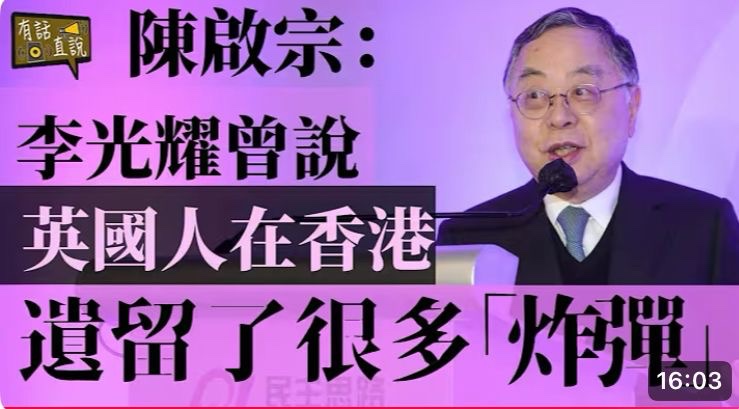
Video: Predictions for Sino-US relations and the Middle East, Praying for world peace, Ronnie Chan looks at global changes 預測中美關係、中東局勢, 祈望世界和平, 陳啟宗看全球大變局
Changes in the global landscape constantly impact Hong Kong. As Hong Kongers, as part of the city’s economy, and as part of China, we need to understand these shifts. Let’s examine the good and bad legacy of the British Hong Kong government. The quality of the establishment needs improvement. Here are eight suggestions and observations for Hong Kong.
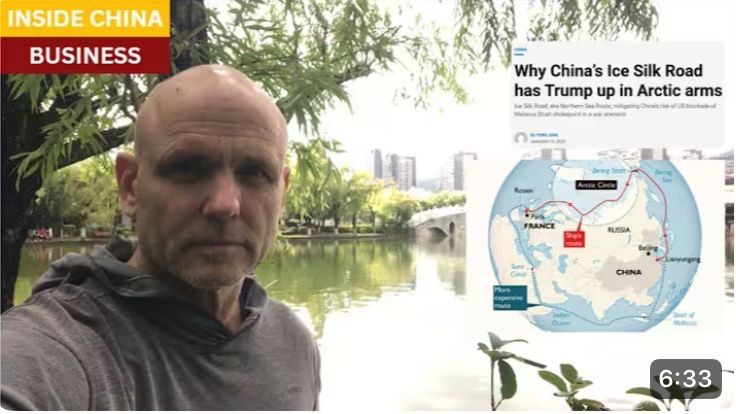
American logistic expert reports from China video: Ice Silk Road opens up vast Arctic to China and Russia. Western companies aren’t interested. 美國物流專家發自中國通報視頻: 冰上絲綢之路將為中俄兩國打開廣大的北極地區。西方公司對此不感興趣.
China and Russia are opening up new trading routes through the Arctic, saving shipping companies millions of dollars in fuel costs and crew time.
These efforts also mean huge gains in expertise in icebreaking, meteorology, climate research, mapping, and navigation.
The Arctic also contains vast amounts of energy and miners, mostly in the Russian north.
The Ice Silk Route is an important trade artery, providing both Russia and China a sanctions- and blockade-proof channel for energy and manufactured goods.
Western shipping firms believe that the Northern Route, mostly controlled by Russia, is too risky, irrespective of the cost savings or the geostrategic advantages.
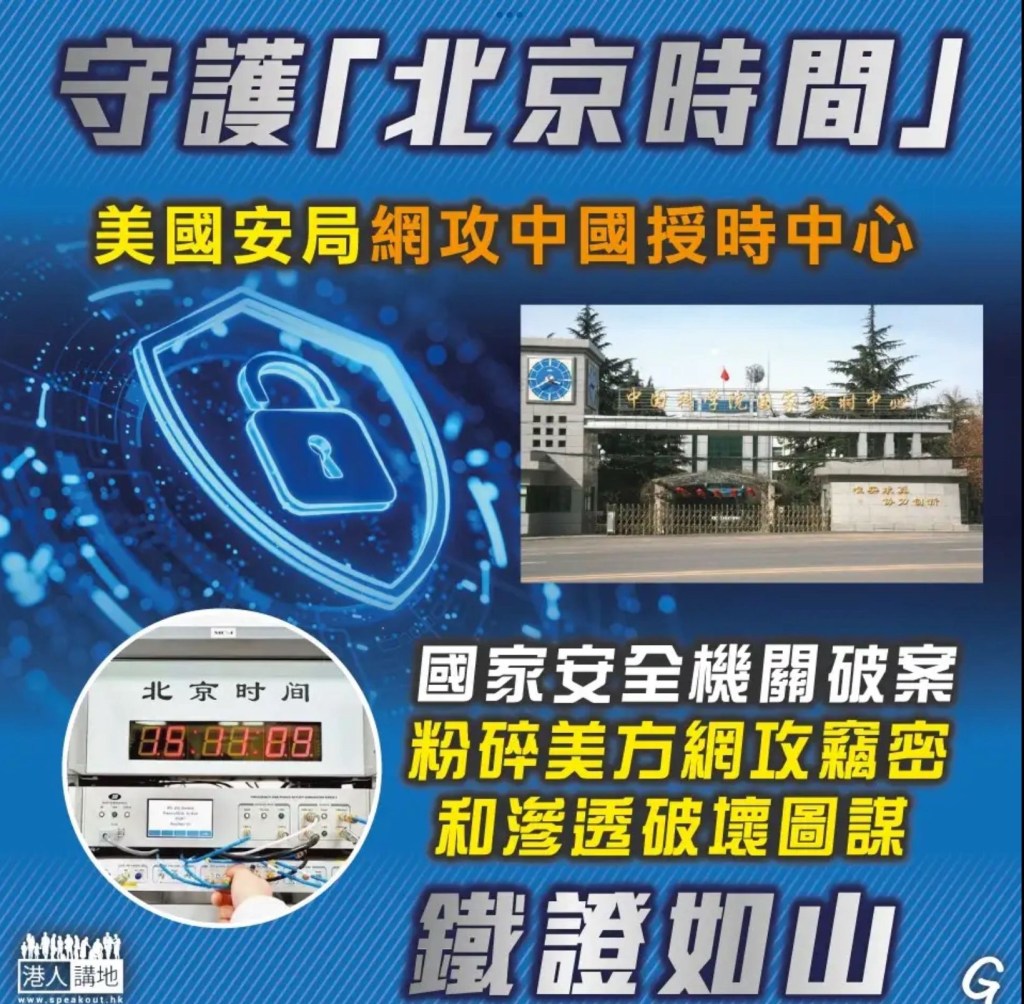
Who would have thought that the United States would dare to strike ruthlessly at China’s “temporal lifeblood”…誰能想到,美國竟敢對中國的“時間命脈”下死手…
Who would have thought that the United States would dare to strike ruthlessly at China’s “temporal lifeblood”…
A major case cracked by the national security authorities has sent chills across the internet: American hackers secretly infiltrated China’s National Time Service Center in an attempt to manipulate time signals and create chaos. These seemingly minor time deviations could have catastrophic consequences—a discrepancy of just one millisecond could cause widespread power outages due to missequenced power substations across the nation; a difference of one microsecond could wipe out trillions in market value in international stock trading!
Fortunately, this sinister plot was successfully thwarted. With ironclad evidence, the bare-faced ambition of the United States has been completely exposed!
Located in Xi’an, the National Time Service Center controls the precise pulse of “Beijing Time.” While it may appear to be merely a timekeeping institution, it is, in fact, a “super hub” that supports the nation’s economy and people’s livelihoods. The high-precision time signals it provides are essential for the dispatch of the power grids we use daily, the accurate timing of mobile payments, and the millisecond-level settlement of international financial transactions.
More critically, even the slightest error in timing directly impacts national economic and social stability: once the power grid collapses due to timing chaos, cities will be plunged into darkness, factories will shut down, transportation will grind to a halt, and the order of daily life will instantly crumble. In high-frequency trading on international stock markets, a time difference of one microsecond is enough to disrupt algorithmic trading, causing trillions of dollars to vanish in an instant and triggering violent fluctuations in financial markets.
By targeting this “Achilles’ heel,” the United States undoubtedly sought to undermine China’s stability from within by precisely striking at critical infrastructure.
What is even more infuriating is that while the United States is currently grappling with a government shutdown and domestic chaos, it still extends its malicious hands toward China. This reveals its deep-seated obsession with “never giving up on trying to destroy us.” On one hand, the U.S. is embroiled in relentless partisan strife and plagued by mounting domestic issues. On the other hand, it continues to engage in militaristic aggression abroad, even daring to attack infrastructure that concerns global livelihood security. Such unscrupulous actions fully expose the inherent nature of the U.S. and the West as “born of banditry, rotten to the core.”
From historical colonial plunder to modern cyber attacks, the U.S. and the West have never abandoned their despicable tactics to suppress the development of other nations. Their greed and ruthlessness are etched into their DNA, and they will never relent, even in the face of temporary setbacks.
👉 This invasion was by no means an isolated incident but rather an escalation of the U.S. strategy to contain China. After successive failures in technological封锁, trade suppression, and military deterrence, the United States has resorted to more covert and lethal means, attempting to disrupt China’s development by sabotaging critical infrastructure and creating chaos.
👉 The ironclad facts also tell us that so-called “international rules” and “civilized bottom lines” are worthless in the face of the interests of the U.S. and the West. To achieve their goals, they are willing to gamble with global economic and livelihood security.
👉 Beyond the lingering fear, we must remain clear-headed: the madness of the American empire will not cease, especially as its domestic contradictions intensify. It will only become more reckless. The attack on the Time Service Center serves as the starkest warning—national security is no trivial matter, and even the slightest breach in the “temporal defense line” cannot be taken lightly.
👉 We must remain vigilant at all times, fortifying the impenetrable walls of cybersecurity and infrastructure security. Only with formidable strength can we deter these bandits from coveting what is ours. After all, when dealing with an enemy that is rotten to the core, only by being sufficiently powerful can we safeguard the nation’s peace and the foundations of its development!
Shaun Rein is the Founder and Managing Director of the China Market Research Group in Shanghai. He’s one of the world’s leading experts on China’s economy, consumer trends, and U.S.–China relations.
Video: They were the first generation to flee China back in the day. Chinese Americans lament: Had we known China would develop like this, we would never have left! 他们是当年最早逃离中国的一代人,美籍华裔哭诉:早知道中国能发展到这样,我们绝对不会离开!
The generation that fled China back then now wants to return but cannot. Chinese Americans cry out: If we had known China would be like this, we would never have left!
“If I had known that China would be what it is today, I would never have left the homeland back then.” This was a message from a Chinese American father to his daughter in 2025, moving countless overseas Chinese to tears.
This video tells the real stories of three young Chinese Americans. Their parents left China in the 1980s and 1990s to pursue the American dream, spending decades working in restaurant kitchens and as supermarket cashiers. As part of the ABC (American-born Chinese) generation, they were raised with the notion that China was poor and backward. Yet, as they grew up, they found themselves neither accepted by America nor connected to their Chinese cultural roots.
Radhika Desai argues that the Western capitalist system, particularly the “financialized capitalism” of the Anglo-American world, operates as a tool for governments to exert control and maintain their global dominance. In China, the government controls the capital 拉迪卡·德賽認為,西方資本主義體系,尤其是英美世界的“金融資本主義”,是各國政府施加控制、維護其全球主導地位的工具。在中國,政府控制資本.
She asserts that this system uses financial mechanisms to extract value from workers, smaller nations, and even other governments, rather than promoting productive economic activity.
The dollar creditocracy and financial controls Desai’s analysis, developed through her Geopolitical Economy Research Group, focuses heavily on the U.S.-dominated dollar system, which she refers to as a “dollar creditocracy”.
Key aspects of her argument include: Declining economic power: The U.S. and other Western economies are in relative decline, marked by de-industrialization, declining productivity, and increasing domestic inequality.
Zero-sum finance: The global financial system, centered on the dollar, relies on short-term speculation that benefits creditors and financial elites at the expense of productive sectors and working populations. Desai describes financial activities as a “zero-sum game” that creates inequality.
Imposed austerity: To maintain the system, Western governments impose austerity policies on debtor nations and their own populations. These policies are designed to ensure that rising debt service is paid, preserving the financial gains of the creditors.
Weaponization of the dollar: Desai and her colleagues argue that the U.S. uses its monetary system as a political and economic weapon. This includes imposing sanctions and financial blockades to advance its geopolitical agenda. However, she notes that this weaponization undermines the long-term stability of the dollar-centered system by prompting other nations to seek alternatives.
Resisting the Western model
According to Desai, emerging powers like the BRICS nations and countries in the Global South offer an alternative to the Western-dominated neoliberal system.
Constructing an alternative: The rise of the BRICS is viewed as a significant attempt to build a post-neoliberal economic system. This effort is partly a response to the economic pressures and dominance of the West.
State-led development: In contrast to the financialized model of the West, Desai highlights that countries like China have pursued state-guided, productive development. This offers a different path for development that other nations can learn from.
New Cold War: Desai interprets Western foreign policy actions, such as imposing sanctions on Russia, as attempts to shift domestic risks and maintain global dominance in the face of their own decline. She sees this as an attempt to trigger a “New Cold War” to prevent the rise of alternatives.
Simple Economics: Why a Bigger Paycheck Doesn’t Mean a Better Life. By Johnson Choi in Hawai’i on Oct 20 2025 简单经济学:为何高收入不等于高生活质量. 作者: 蔡永強, 在夏威夷,10月25日2025年
Let’s break down a basic economic concept that changes how you see the world: Purchasing Power. It’s not about how many dollars you have, but what those dollars can actually buy.
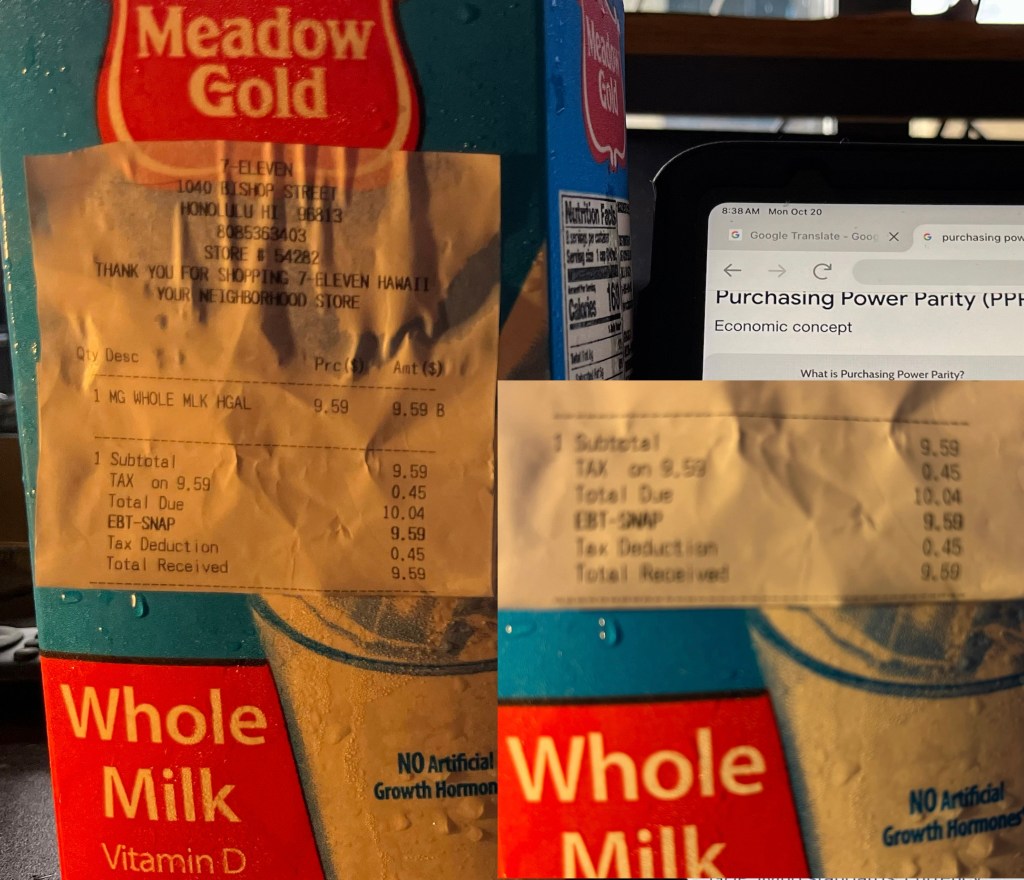
Here’s the problem: The U.S. has high costs and inflation, while China has significantly lower costs. This means a middle-class income in America can feel like poverty, while the same income in China provides a comfortable, even luxurious, life.
Let’s look at the facts:
The Cost of Living Crisis in the U.S.
· Everyday Goods: Basic groceries are skyrocketing. A half-gallon of milk in Hawai’i costs over $10, while in California, 2 gallons cost $6.69. · Hidden Taxes: In states like California, you pay a 2% property tax every year, forever. In many places like China and Hong Kong, there is no annual property tax. · The Tariff Trap: Policies like Trump’s trade wars imposed tariffs that are effectively a tax paid by American importers and consumers, not China. This helped fuel the inflation that makes everything more expensive for you.
The Retirement Eye-Opener
Imagine you’re retired on a fixed income of $4,000 a month.
· In California or Hawai’i: You would be struggling, watching every penny just to cover rent, food, and bills. · In China: That same $4,000 a month allows you to: · Rent a brand-new, 3-bedroom apartment (~$500). · Hire a maid. · Own and maintain an electric vehicle. · Live a lifestyle that would require $16,000 a month in the U.S.
The bottom line: Earning $200,000 in America doesn’t mean you’re better off than someone earning $40,000 in China. Their money simply goes much, much further.
The Big Picture: It’s Not Just About Money
· Safety & Infrastructure: This financial advantage comes with world-class, safe infrastructure and the freedom to travel with peace of mind. · The Real Economic Leader: While the U.S. claims to have the largest economy, the International Monetary Fund (IMF) uses Purchasing Power Parity (PPP) to give a more accurate picture. By this measure, China’s economy is 22% larger than America’s.
The Takeaway: Stop just looking at the number on your paycheck. The real question is: What can that number actually buy you? For many Americans, the answer is less and less, while the same amount of money can provide a significantly better quality of life elsewhere.
Video: Sunrise view from my office in Hawai’i on Monday Oct 20 2025 6:48am 影片:2025 年 10 月 20 日星期一上午 6:48,從我夏威夷辦公室看到的日出 https://www.tiktok.com/t/ZP8AtnNpn/



 Business Blog