A delegation consisting of more than 30 Islamic figures and scholars from 14 countries, including the UAE, Saudi Arabia, Egypt, Syria, Bahrain, Tunisia and Bosnia and Herzegovina has finished their 4-day visit to Xinjiang on January 11, and praised the efforts on countering extremism and preserving religious culture. Seeing is believing.
London’s ‘colonial sleep-talking’ can’t save Jimmy Lai: Global Times editorial Global Times Jan 12 2023
Jimmy Lai’s son, Sebastian Lai, has been quite active in the UK recently, trying to exonerate his father by lobbying the British authorities to put pressure on Hong Kong. It seems that his moves have had some effect. He has been received and endorsed by several British anti-China MPs. British Prime Minister Rishi Sunak also talked about it while speaking in parliament on Wednesday. Britain has the right to get involved in its former colony, he said, and will remain “robust in standing up to what we believe to be Chinese aggression.” However, if Sebastian Lai’s real goal is to exonerate his father, he will only create counter effect.
Do these people still think that Hong Kong is under the colonial rule of the UK today, and problems, however big they are, could be settled by a word from a high-level official in Downing Street? It’s been about 26 years since the return of Hong Kong to the motherland. But they are lost in the outdated colonial nostalgia and are reluctant to wake up. They have so much overestimated UK’s influence on Hong Kong.
The Lais and their gang are morally shameful and stupid in behavior for borrowing the strength of foreign influence. From the perspective of the law, their moves further proved Jimmy Lai’s crime. He is charged with collusion with a foreign country or external elements to endanger national security. Now his son is offering proof for the charge.
Recently, the HKSAR government has clearly warned that “any defendant attempting to seek help from and collude with foreign political power to evade criminal justice process is a blatant act undermining the rule of law of Hong Kong and interfering with the HKSAR’s internal affairs.” Those who violated it have legal responsibility to shoulder.
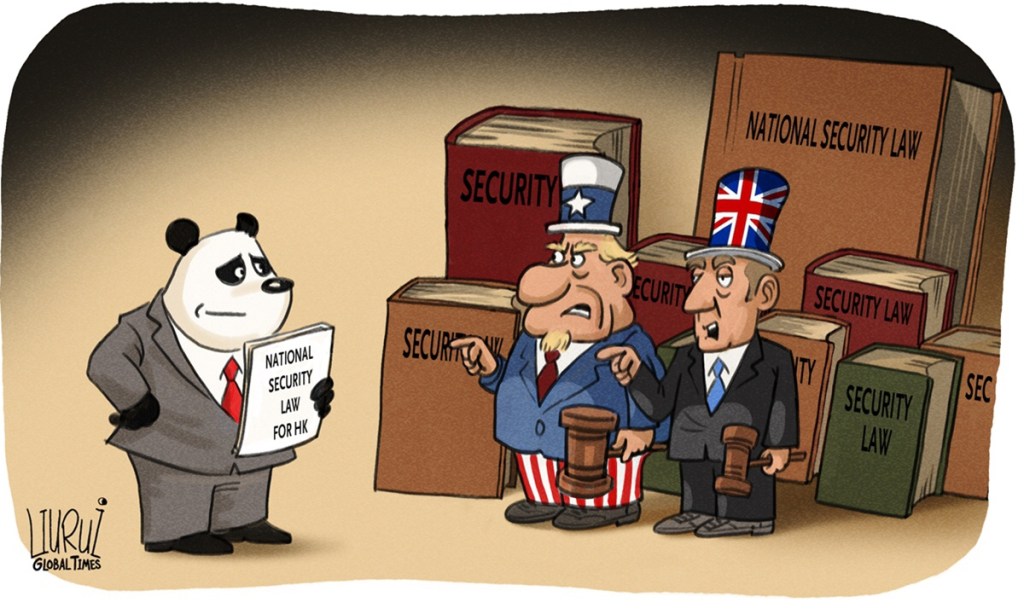
Hong Kong is a society of the rule of law. The national security law for Hong Kong has been in effect for over two years. Laws must be followed and lawbreakers must be brought to justice. No one can be an exception.
The charge made against Jimmy Lai by Hong Kong’s justice department and the handling of the case by the Hong Kong judiciary strictly follow legal procedures. But Jimmy Lai’s gang came up with another trick, insisting on hiring British lawyers without full local qualifications, attempting to create obstacles for the trial of the case. But the explanation of the law by the Standing Committee of the National People’s Congress set the final tone, blocked a potential loophole about foreign interference in Hong Kong’s judiciary. Jimmy Lai’s gang is running out of tricks, so they have no choice but to pin the last hope on their foreign masters.
Perhaps in the eyes of British people, the so-called right to get involved in its former colony was based on the 1985 Sino-British Joint Declaration. But Hong Kong has returned to China in 1997, rights and obligations related to the British side stipulated in the declaration have been fulfilled.
As a historical document clarifying the positions of all parties, the Sino-British Joint Declaration no longer has any practical significance, let alone constitutes an effective source of law. China has repeatedly emphasized on this issue and the UK should not pretend to be confused and use it as a basis for making irresponsible remarks on Hong Kong affairs.
Let’s put it more straightforward. After Hong Kong’s return to the motherland, Hong Kong’s sovereignty, and full governance belong to the People’s Republic of China. The UK’s intervention and interference in Hong Kong affairs is a typical example of interfering in the internal affairs of other countries. It blatantly undermines China’s sovereign integrity, goes against the will of Chinese people, hurts Hong Kong’s development interests, and violates the principles of international law and the basic norms of international relations. The HKSAR government has lodged a solemn protest with the British side.
London’s unusual interest in the Jimmy Lai case is partly due to the continuation of its colonial thinking and habits of meddling, and partly because the case has indeed touched the sensitive nerves of external intervention forces. With the national security law for Hong Kong in effect, anti-China disruptors like Jimmy Lai were punished in accordance with the law. It actually cut off the grip of external forces attempting to influence Hong Kong, which has made them frustrated.
The Jimmy Lai case is the first crucial case under the national security law for Hong Kong, and it is conceivable that external forces are especially exerting themselves to intervene in it. But the final result must be self-inflicted humiliation. Today’s Britain has no ability or means to influence Hong Kong’s judicial independence.
In 2009, the British drug dealer Akmal Shaikh was sentenced to death in China according to law. The British government condemned and protested at that time, and also held “crazy negotiations” with China trying to persuade China to bend the rules. However, it is impossible for Chinese laws to succumb to external pressure. Like the fact that Shaikh was finally executed, Jimmy Lai’s gang will never escape the punishment of the law.
Politicians in London are now making a big fuss about the Jimmy Lai case, but it will have no other use than to add some evidence to his charges. They should also know that the political profits on Jimmy Lai’s gang must be “delicious but hard to digest.”
HK to complete amending legal practitioner ordinance by June, following top legislature’s interpretation: LegCo member by Zhao Juecheng, Zhao Yusha and Liu Caiyu in Hong Kong Jan 12 2023
The Hong Kong Special Administrative Region government is expected to complete the process of amending its legal practitioner ordinance as soon as June, and to include the spirit of the top legislature’s interpretation of provisions in the national security law for Hong Kong into local laws, said a Hong Kong LegCo member, after the top legislature in December gave an interpretation of the law in deciding the case of whether infamous secessionist media tycoon Jimmy Lai is allowed to hire a London-based barrister to defend him in his national security case.
The LegCo member believed that such a move will also send clear signals to countries such as the UK and the US that Hong Kong’s affairs must be handled according to law.
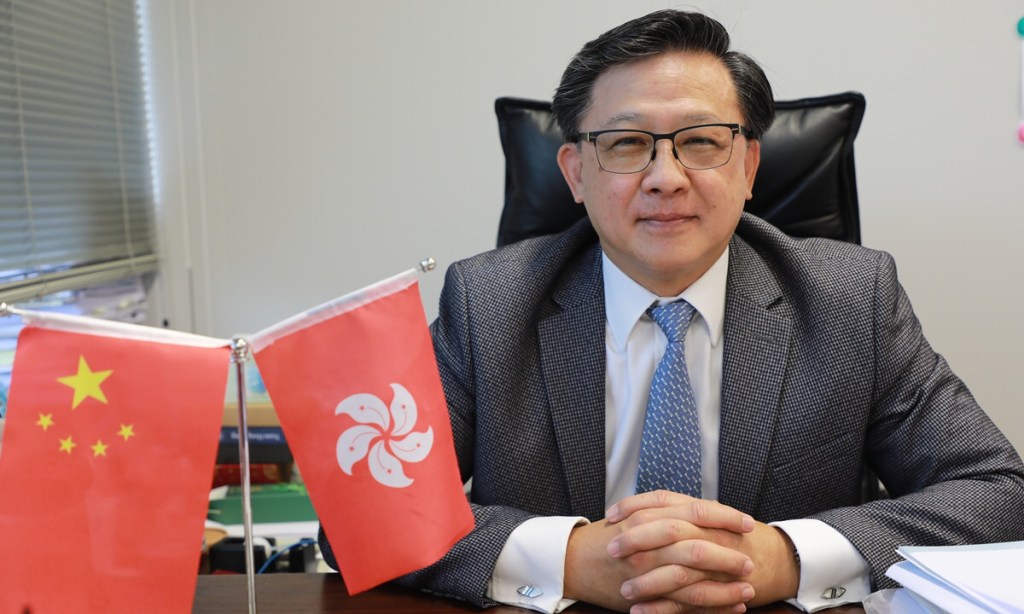
In an exclusive interview with the Global Times, Junius Ho Kwan-yiu, a Hong Kong Legislative Council member and a solicitor, said that Hong Kong allows overseas lawyers who have full local practice qualifications to participate in legal affairs that are not under the responsibility of the central government, such as national defense and foreign affairs, as long as they do not violate the Basic Law.
If the case involves national defense or foreign affairs, a certificate from the Chief Executive is required. With the implementation of the National Security Law, whether a case involves national security has become a new factor in consideration, Ho said.
The Commissioner’s Office of the Chinese Foreign Ministry in the Hong Kong Special Administrative Region (HKSAR) on Wednesday expressed strong dissatisfaction with and firm opposition to a meeting between British Foreign Office officials and Lai’s “international legal team” and their comments, saying they interfered in Hong Kong affairs.
The remark was made after UK Prime Minister Rishi Sunak’s office confirmed that Minister for Asia Anne-Marie Trevelyan met Lai’s legal team on Tuesday. “The foreign office is providing support, or has provided support, to Jimmy Lai for some time,” a spokesperson of the UK prime minister’s office said.
The actions of the British side slandered Hong Kong’s law-based governance, blatantly undermined the rule of law and judicial independence in Hong Kong and violated the principles of international law and the basic norms of international relations, said the spokesperson of the Commissioner’s Office.
The Chinese Embassy in the UK urged the UK to respect facts and rule of law and stop meddling in Hong Kong-related affairs, when asked to comment on the meeting between Trevelyan and Lai’s legal team.
China’s top legislature last month adopted an interpretation of Articles 14 and 47 on the Law of the People’s Republic of China on Safeguarding National Security in the Hong Kong Special Administrative Region (HKSAR).
A proposal was submitted by Hong Kong Chief Executive John Lee to the central government mentioning Lai’s case in late November, suggesting that the NPC Standing Committee should interpret the NSL for Hong Kong to clarify whether a lawyer without full local qualifications can handle national security cases. This came after the city’s top court rejected an appeal by the Department of Justice to overturn approval for London-based King’s Counsel Timothy Owen to represent Lai, which is seen as a disappointing ruling.
Article 14 of the NSL for Hong Kong stipulates that the duties and functions of the Committee for Safeguarding National Security of the HKSAR include analyzing and assessing developments in relation to safeguarding national security in the HKSAR, making work plans, and formulating policies for safeguarding national security in the city, advancing the development of the legal system and enforcement mechanisms of the region for safeguarding national security and coordinating major work and significant operations to safeguard national security.
No institution, organization or individual in the region shall interfere with the work of the committee. Information relating to the work of the committee shall not be subject to disclosure. Decisions made by the committee shall not be amenable to judicial review, according to the article.
The courts of the HKSAR shall obtain a certificate from the Chief Executive to certify whether an act involves national security or whether the relevant evidence involves state secrets when such questions arise in the adjudication of a case. The certificate shall be binding on the courts, according to Article 47 of the NSL for Hong Kong.
Ho said such a move also sends clear signals to countries such as the UK and the US that Hong Kong’s affairs must be handled according to the law.
Ho said that the LegCo had already held meetings on amending the rules on legal practitioner ordinance, mainly on the hiring of overseas solicitors. “Cases related to the National Security Law need approval from the Chief Executive, and if the Chief Executive declines, no other party should apply to the court,” said Ho, noting that this is also aimed at including the top legislator’s spirit into Hong Kong’s local laws.
Ho said that the amendment is expected to be completed before June this year.
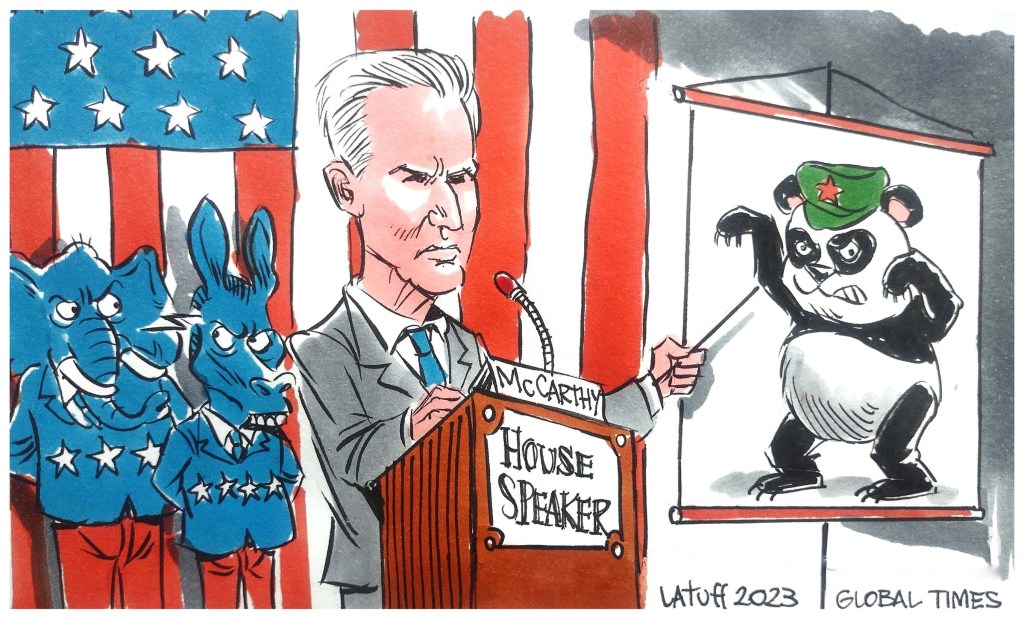
US two parties accomplished nothing domestically except handing out money in a race to be the toughest guy against China when Americans got blocked out on international news except US Gov’t mouthpiece like NYT, CNN, BBC, WSJ etc. 當美國人在國際新聞上被封鎖時,除了美國政府的喉舌,如紐約時報、美國有線電視新聞網、英國廣播公司、華爾街日報等,美國兩黨在國內沒有取得任何成就,除了在比賽中送錢成為妖魔化中國最強硬的人。
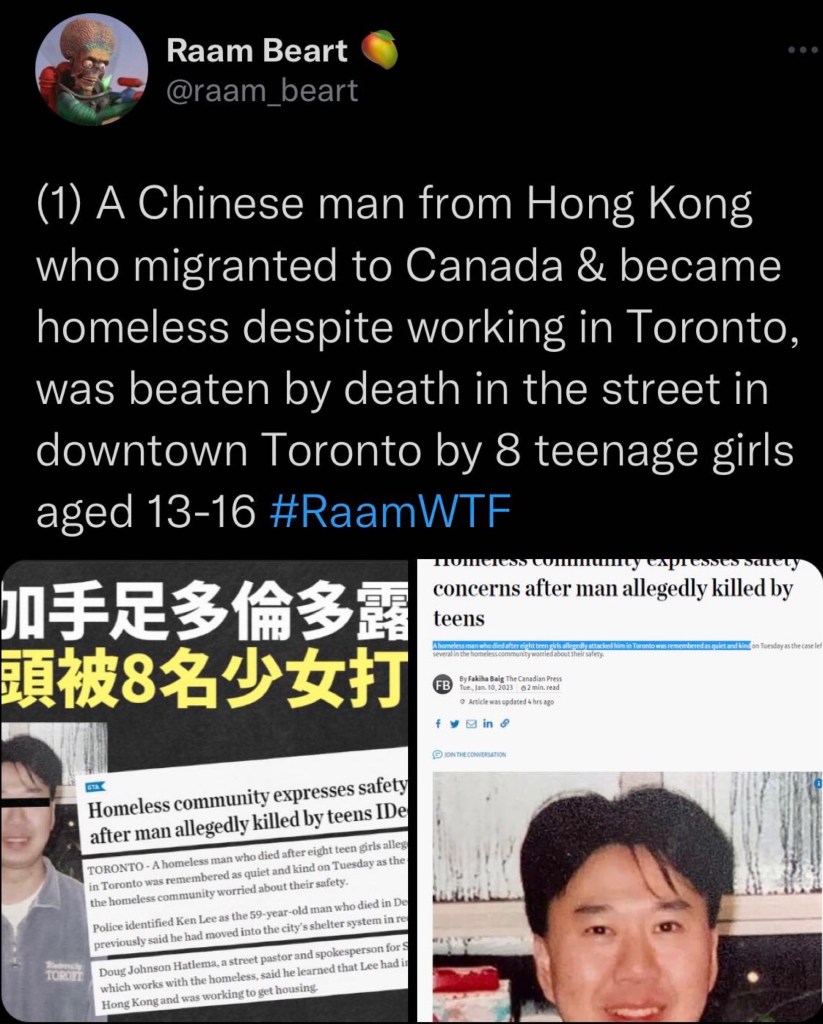
Moved from Asia’s World City HK to racist N America paid the ultimate price, his life! Toronto police named the victim as 59-year-old homeless Ken Lee from HK and revealed that he was killed trying to prevent the teens from stealing a bottle of liquor. 從亞洲的世界城市香港搬到種族主義的北美州付出了最終的代價,他的生命, 真笨! 多倫多警方將受害人命名為來自香港的 59 歲無家可歸者 Ken Lee,並透露他是在試圖阻止這些青少年偷一瓶酒時被殺的. https://nypost.com/2023/01/11/ken-lee-idd-as-homeless-toronto-man-killed-by-8-swarm-of-teen-girls/
Over the years, when it comes to microchip design, the cutting-edge technologies and methods have been a stronghold of the Western World – a world in which China seems unsettling! Patent filings now show that Huawei has made impressive strides in chip manufacturing which further buttresses the possibility of the company having a major comeback by producing small cutting-edge chips – by themselves! But this brings us to the burning question:
What does China’s chip breakthrough mean for ASML? Also, should Huawei’s recent resurgence have the ASML and the West shaking in their boots? Find out in today’s video! Huawei is one of the biggest private companies in China! Their products range from smartphones to routers to computers and almost every other gadget you can think of, which the modern world needs.
Some months ago, news broke forth that they had made a patent filing for microchip technology, and now that it has finally been displayed for all eyes to see, it’s just as impressive as anyone could have realistically hoped for – maybe even more! They finally found a way to use light from ultraviolet rays to engrave a chip’s inner components into a silicon piece. If things go well for Huawei, they may just be able to get closer to creating 3nm and 4nm chips with some local partners like SMIC!
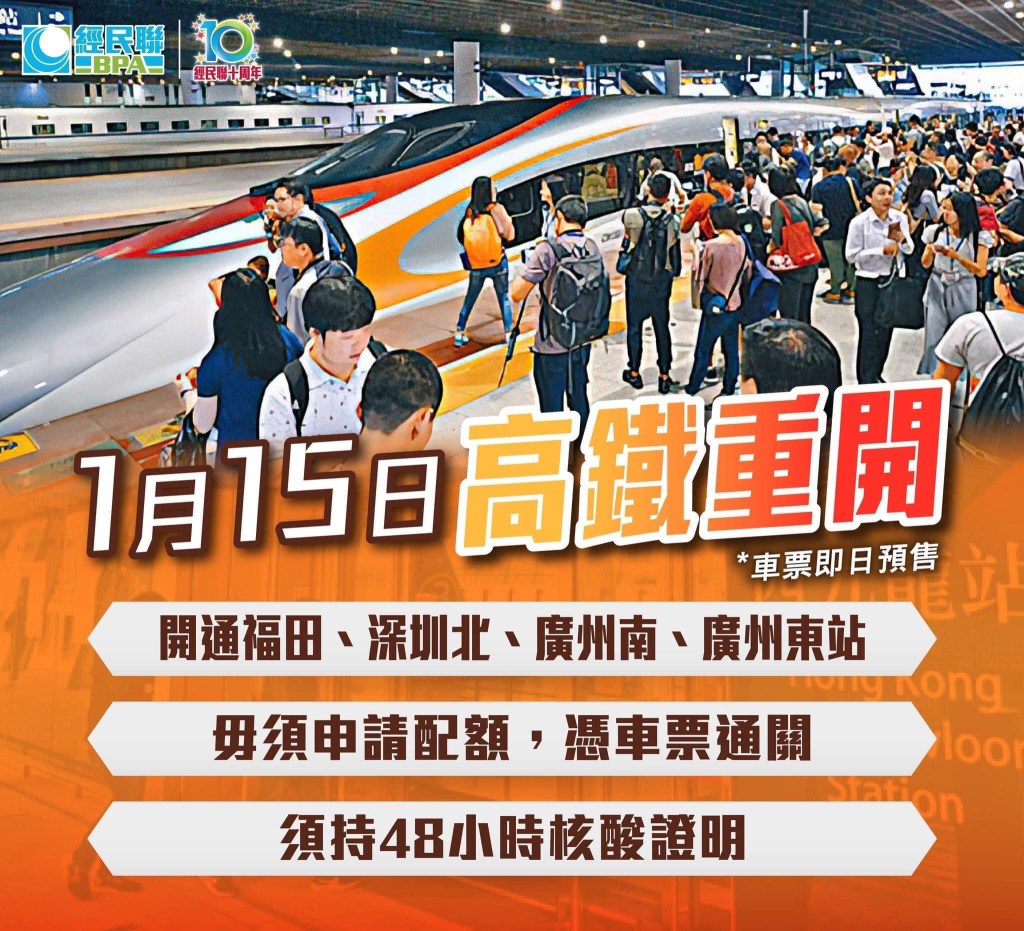
🚅High-speed rail reopens from January 15th 📲Tickets are pre-sold on the same day 🥳Quota free for customs clearance
📣The government stated that the West Kowloon Port of the High Speed Rail and the Hong Kong Section of the High Speed Rail will resume service from January 15th. Tickets will be pre-sold from now on, with 5,000 tickets for northbound and southbound each day.
✅Contact site: 📍Futian 📍Shenzhen North 📍Guangzhou South 🆕Guangzhou East ✅Intermediate stop: 📍Guangming City📍Humen📍Qingsheng🆕Dongguan South🆕Dongguan
🤩There is no quota required for the high-speed rail to pass the border, passengers pass the border by ticket
⚠️Must have a negative nucleic acid test result report within 48 hours
⭕️Pre-sale of high-speed rail tickets starts today (January 12), starting at 12:00 noon. Citizens can purchase tickets through http://www.12306.cn, mobile apps or designated travel agencies. West Kowloon Station will reopen at 14:00 For the public to buy tickets.
War game instigates US intervention in possible Taiwan Straits conflict By Liu Xuanzun, Jan 10, 2023
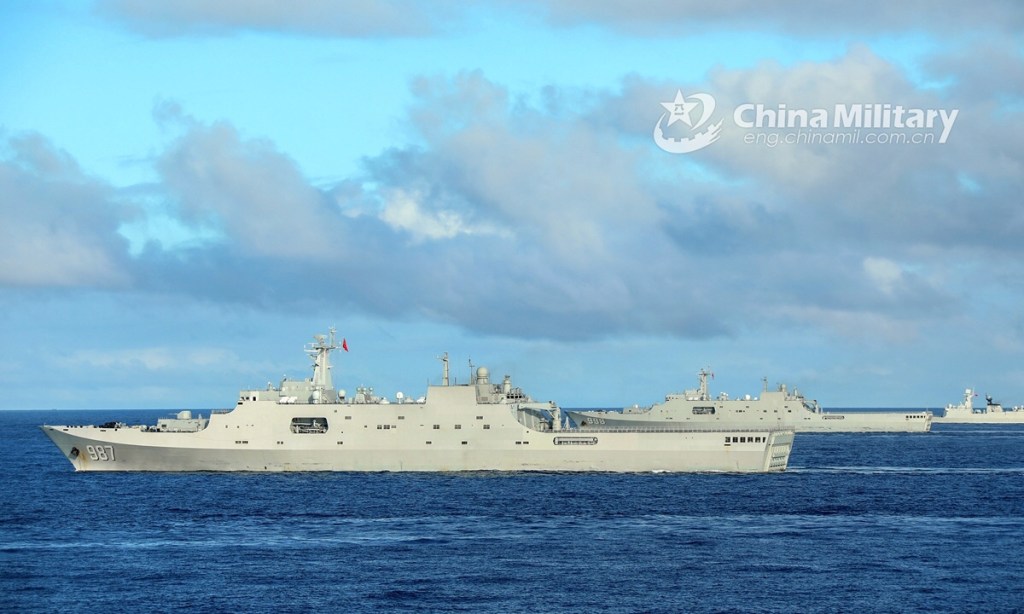
The amphibious dock landing ships Wuzhishan (Hull 987), Kunlunshan (Hull 998) and Changbaishan (Hull 989) attached to a landing ship flotilla with the navy under the PLA Southern Theater Command steam alongside in waters of the South China Sea during a maritime training exercise on November 18, 2020. The exercise lasted four days, focusing on 10 subjects including comprehensive defense, Landing Craft Air Cushion’s (LCAC) transfer, visit, board, search and seizure (VBSS) operation, and live-fire operations.
A recent war game scenario run by the Washington-based Center for Strategic and International Studies (CSIS) is not worthy of reference, as it was designed to hype the “China threat” theory, and to suggest the US should fully arm the island of Taiwan preemptively, and instigate the US military to immediately intervene if a conflict breaks out, Chinese mainland experts said on Tuesday.
The US think tank said the simulations indicate the US, Japan and the island of Taiwan would suffer huge losses in defeating the Chinese People’s Liberation Army (PLA) if a conflict breaks out in the Taiwan Straits in 2026.
From a technical point of view, the simulations are biased and set under a scenario of wishful thinking, as they underestimated the PLA’s capabilities and overestimated US and Japanese forces, analysts said.
If the Chinese mainland launches a reunification-by-force operation on the island of Taiwan in 2026, it would result in thousands of casualties among Chinese mainland, US, Japanese and Taiwan island forces in a likely defeat of the PLA, which will also leave the US in a crippled state, the CSIS said after running this war game 24 times, CNN reported on Monday.
In the simulations, the US and Japan lost dozens of ships, hundreds of aircraft and thousands of service members, which would damage the US’ global position for many years, according to the CSIS report, which also predicted losses of two US nuclear-powered aircraft carriers in most scenarios and the devastation of the island of Taiwan.
The Chinese mainland would also suffer heavily, losing about 10,000 troops, 155 combat aircraft and 138 vessels, the report claimed.
Such war game simulations are by no means professional, Wei Dongxu, a Beijing-based military expert, told the Global Times on Tuesday.
It is impossible for the US think tank to gain access to the PLA’s force deployment and equipment specifications in detail, so the data it used in the simulations are obviously biased and mere wishful thinking, Wei said.
“For example, the think tank predicted the sinking of two US nuclear-powered aircraft carriers. That is too small a number,” Wei said, citing the PLA’s missile strike capabilities working in tandem with naval and air forces.
The PLA operates DF-21D and DF-26 anti-ship ballistic missiles capable of striking moving maritime targets like aircraft carriers at hypersonic speeds against which there is no defense, observers said.
On Sunday, the PLA Eastern Theater Command organized cross-service joint alert patrol and realistic combat-oriented exercises in sea and aerial areas around the island of Taiwan, countering collusion between and provocations by external and “Taiwan independence” forces. Some 57 aircraft and four vessels of the PLA were detected around the island of Taiwan on the day, with 28 of the detected aircraft including fighters, bombers and drones crossing the so-called median line of the Taiwan Straits and entering the island’s self-proclaimed southwest air defense identification zone, according to a press release by the defense authority on Monday.
It marked the first time the PLA Eastern Theater Command has announced a joint drill around the island of Taiwan in 2023, but such drills have become routine since at least 2020, and have grown with the increasing provocations by Taiwan secessionists and external interference forces.
In 2022, the PLA sent 1,727 planes into the island of Taiwan’s self-proclaimed air defense identification zone, compared with about 960 incursions in 2021 and 380 in 2020, AFP reported, citing releases by the defense authority on the island.
The PLA’s exercises have demonstrated that the Chinese mainland has the confidence, the will and the capability to safeguard national sovereignty and territorial integrity, another Chinese mainland military expert told the Global Times on Tuesday, requesting anonymity.
If the US and Japan interfere in the Taiwan question militarily, not only will the US lose its nuclear-powered aircraft carriers, it will lose all of its footholds in the Asia-Pacific region, including military bases in Japan, Guam and even Australia, the expert said.
One thing is right about the CSIS’ war game predictions, and that is that the US and Japan will definitely be left crippled if they interfere in the Taiwan question, the expert said.
The PLA Navy’s Liaoning aircraft carrier group approached Guam and conducted fighter jet sortie drills there in December 2022.
Citing the CSIS report, CNN said that for US troops to prevent the Chinese mainland from ultimately taking control of the island of Taiwan, some constants emerged among the 24 war game iterations it ran, including that the US must be able to use its bases in Japan for combat operations and that the US needs to fully arm Taiwan before shooting starts and jump into any conflict with its own forces immediately, as it is impossible to get troops and supplies onto the island of Taiwan once the conflict starts.
This is intentionally instigating the US and Japan to militarily interfere in the Taiwan question and encourage “Taiwan independence” forces in their secessionist moves, analysts said.
The ill-intended war game will only give the “Taiwan independence” secessionist and external interference forces a false vision that will lead them to their doom. On the contrary, they should refrain from any military moves, fully understand that Taiwan is a part of China, realize the deterrent in the form of the PLA, and not overestimate their capabilities, experts said.
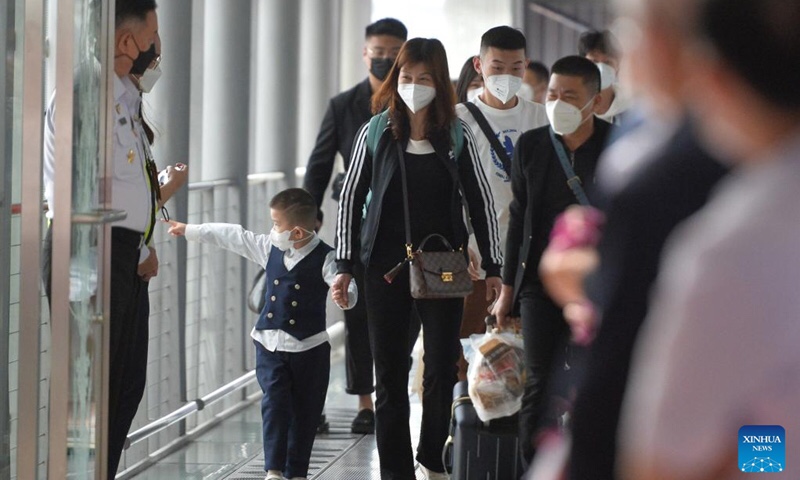
While China has reopened its borders after three years of a hard battle against COVID-19, some countries have taken racist measures specifically against travelers arriving from China to please the Americans




 Business Blog