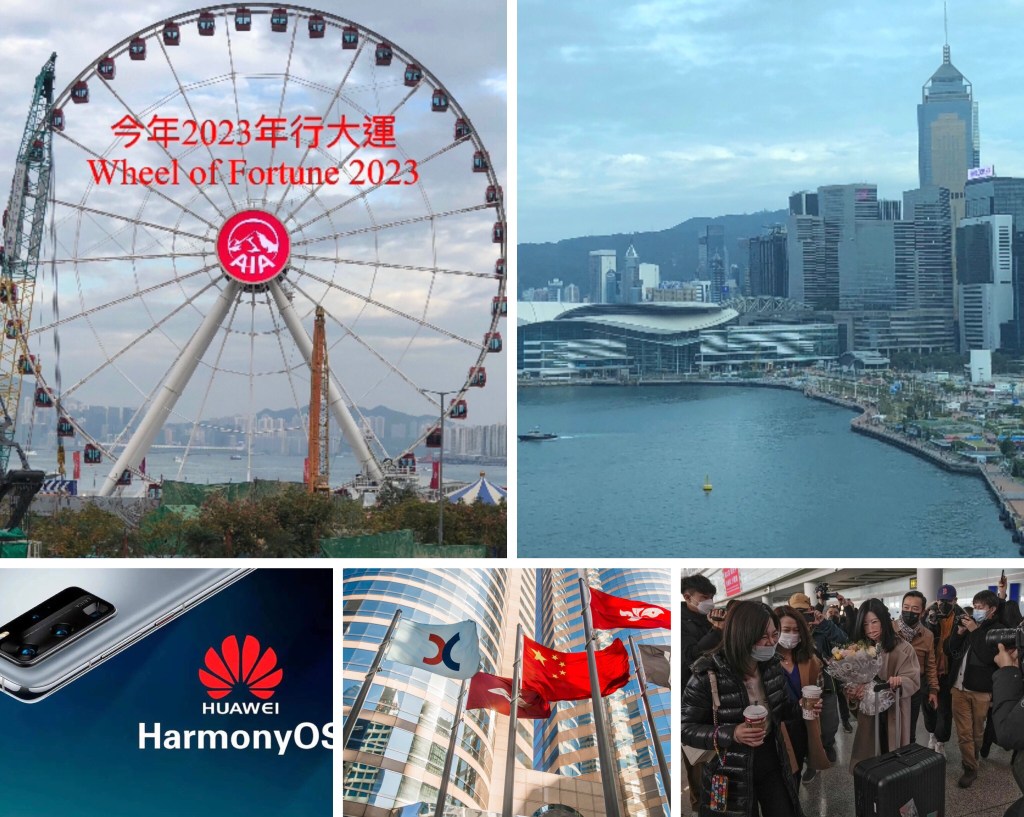
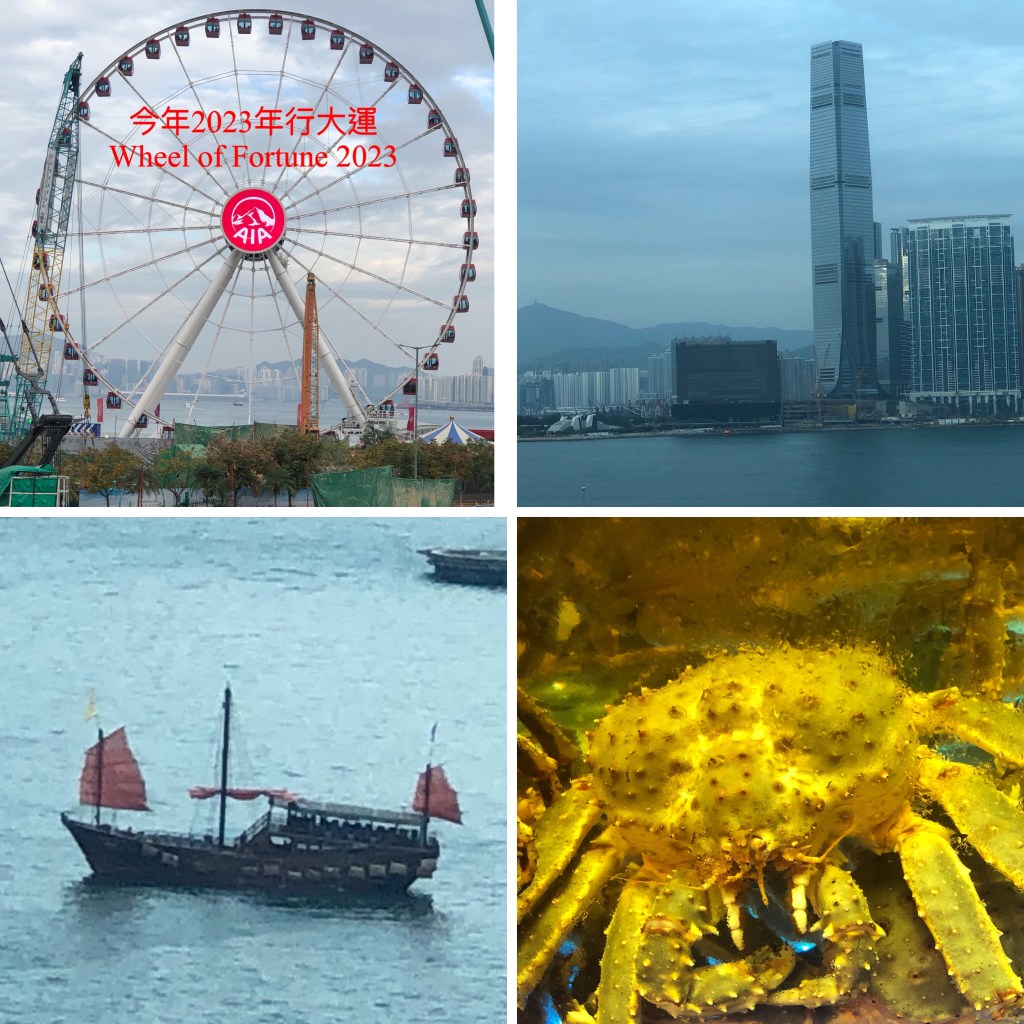
Hong Kong has world’s lowest tax rate max out at 17%, free medical, public transportation at US$.25 for 60 & over, there are more multimillionaires per square meter than any cities in the world. HK is the world’s freest city, lives it loves it.

Hong Kong has world’s lowest tax rate max out at 17%, free medical, public transportation at US$.25 for 60 & over, there are more multimillionaires per square meter than any cities in the world. HK is the world’s freest city, lives it loves it.

China build & US destroy Video: Jakarta-Bandung High-Speed Railway, a landmark of BRI railway 雅萬高鐵,“一帶一路” 鐵路的標誌性建築
https://rumble.com/v1uh54k-jakarta-bandung-high-speed-railway-a-landmark-of-bri-railway.html
https://m.facebook.com/story.php?story_fbid=833182294571764&id=100036400039778

Anthony Albanese and Xi Jinping? Who started the trade war? US’s China Containment Policy By Percy Allan, Nov 15, 2022
Prime Minister, Anthony Albanese is perpetuating the myth that China’s action in 2020 to restrict Australian exports was a bolt out of the blue that was uncalled for. President Xi will have a very different view.
Either he is unaware or feigns not to know that during the previous four years we blocked:
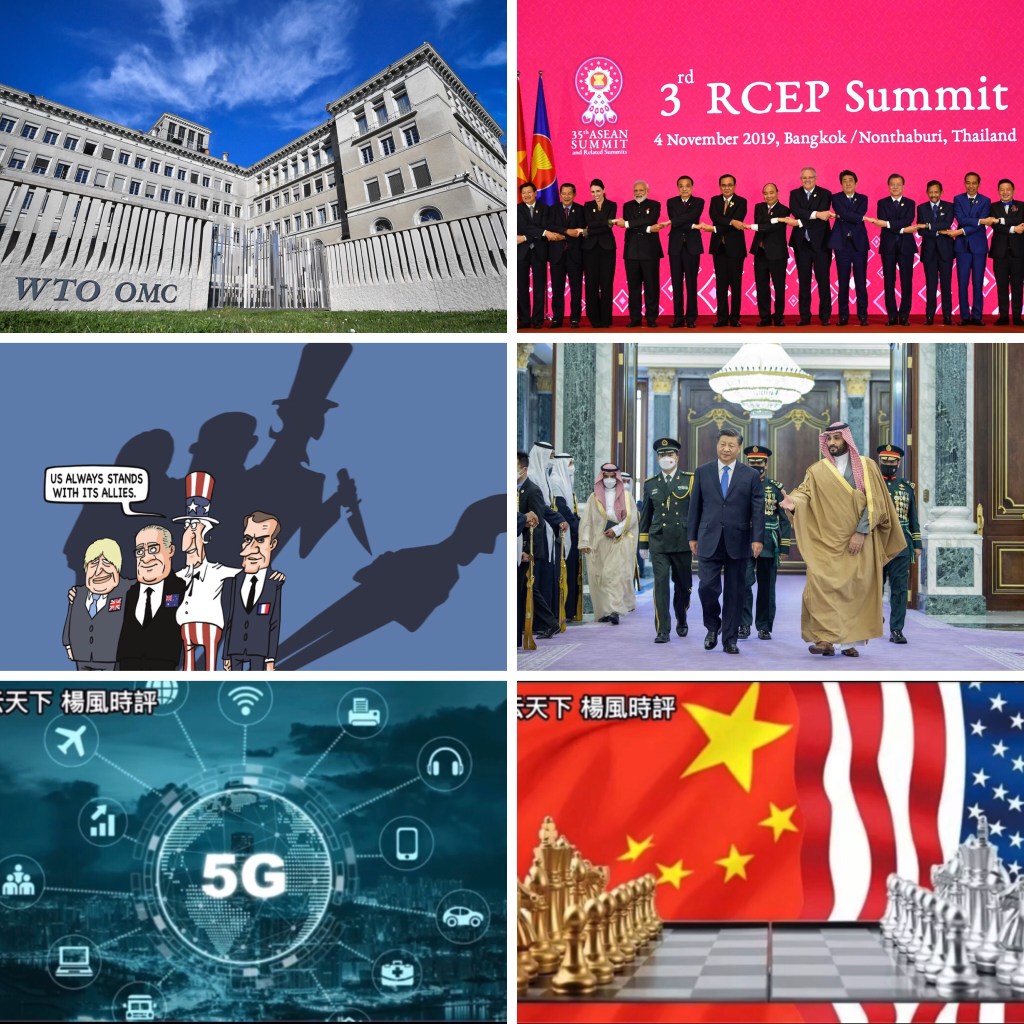
China’s exports of aluminium and steel products on grounds that the WTO rejected,
Chinese investments including those in non-strategic products like Lion dairy and drinks,
Chinese technology even though Huawei’s 5G system was recognised as the best available, and
China’s promotion of its interests in Australia like other nations do (e.g., Israel, USA, Britain, France, Germany, India, Japan).
Afterward, ASIO raided the homes of Chinese journalists to seize their computers and interrogate them in front of their families. Also, the Australian government pressured universities to close their Chinese-sponsored language centres notwithstanding they don’t engage in politics.
These obstructions to Chinese trade, investment, technology, and influence breached the letter and spirit of our 2015 Free Trade Agreement with China that the Abbot government at the time had hailed as an “economic partnership” since it extended beyond trade by embracing measures for closer economic integration.
When Malcolm Turnbull became PM, the mood changed (the appointment of China hawk, John Garnaut, as his senior and then principal international adviser possibly spawned that). Canberra decided that Australia should lead the world in decoupling from China, even though it was our main market and an important source of investment, tourism, and students. This stance proved a winner with the new Trump administration though Australia got no favours in return. Indeed, Trump’s trade deal with China forced it to divert its agricultural imports to America at the expense of other primary producers including Australia.
In April 2020, the Australian Foreign Minister Marise Payne, after liaising with America, but not consulting China, announced that Australia would push for an independent international inquiry into the outbreak of COVID-19 in Wuhan, China. Prime Minister Scott Morrison went further, suggesting that the World Health Organisation (WHO) needed tough new “weapons inspector” powers to undertake the investigation. For China that was the last straw since it presumed the virus was China’s fault. China then decided that Australia was no longer a reliable “economic partner”, but a “hostile supplier”. Thereafter, it put restrictions on our exports of lobster, beef, cotton, and timber, tariffs on our wine and barley, and blocked our coal and copper.
Albanese says, “China has changed, not Australia”. In truth, Australia decided to overturn its economic partnership with China almost immediately after formally signing up for it. When Australia changed its views after Turnbull became PM it should have been upfront and told China it wanted to scrap the deal. Instead, the agreement is still in place, though now a dead letter law.
America’s containment policy
Albanese should be careful to avoid entrapment by Biden’s quest to isolate China diplomatically, technologically, and economically. Unlike the USA, Australia is part of Asia, and its economy is complementary to China, so not in competition with it. China is the world’s biggest factory, and we are amongst its biggest suppliers of fuels and raw materials used for its manufacturing and construction. We run a huge trade surplus with China, with the value of our exports double that of our imports.
China’s market for our products is bigger than our next dozen national customers combined. Imports from China (e.g., electronic equipment, machinery, boilers, furniture, lighting signs, prefabricated buildings, apparel, motor vehicles, plastics, toys, games, and sports requisites) are cheaper than those available elsewhere helping us to contain our cost of living. Without them, our wage’s purchasing power would have been much lower.
By contrast, the USA views China as an economic ogre because it has a large trade deficit with it and is worried that China’s advances in technology could overtake Silicon valley’s edge. So, its policy of confronting and containing China is not just about maintaining its military hegemony in Asia, but about preventing China from becoming an economic superpower. China wants to escape the middle-income trap bedevilling most of Asia by moving up the economic value chain via its “China 2025” plan to reduce its dependence on foreign technology and promote Chinese hi-tech exports.
Shifting from labour and capital-intensive industries to highly innovative ones will boost worker productivity and wages. That would help offset China’s declining workforce and diminishing overseas markets beset by post-pandemic stagflation and increased onshoring of supply lines. America knows that if it can convince its allies to boycott China’s ITC (e.g., Huawei 5 G system) it can hamper China’s efforts to become a rich country.
Yet Australia’s prosperity hinges largely on China’s prosperity. That is a reality we must recognise. Dumping China is not an option since it will be the dominant economy of the 21st century. Unless of course, we have strong grounds to believe it is planning to invade south-east Asia and then us, in which case we should immediately stop exporting base metals that go into making its military hardware. But there is no evidence for that.
Albanese is kidding himself if he thinks that the breakdown in economic relations was purely China’s doing and that Australia did not provoke it. He needs to acquaint himself with the facts before going off half-cocked if he is serious about improving relations with China. His latest endorsement of the NATO communique accusing China of posing a global threat to the interests, security, and values of the now 32-country alliance has earned stern rebuke and thereby compromised any reset in relations with China.
To join America’s push to hobble China’s growth would shackle our own efforts at higher living standards and better public services. Albanese should be acutely aware of that because he has not only inherited a huge structural government deficit but added to it with his own ambitious social programs. Without China’s buying power his government won’t be able to undertake budget repair let alone pay for its expensive promises. Nor will it get Australia out of its stagnant wages rut since slower growth would mean higher unemployment and less labour bargaining power.
Percy Allan is a public policy economist and a Visiting Professor at the Institute of Public Policy and Governance, University of Technology, Sydney. Professor Allan is a former Secretary of the NSW Treasury (1985-1994) and a former Chair of the NSW Premier’s Council on the Cost & Quality of Government (1999-2007). He has chaired several public and private sector boards.

Dominative mentality of US, its allies must be countered with power of solidarity of East. By Veronika S. Saraswati, Nov 14 2022
https://enapp.globaltimes.cn/article/1279473
Economic certainty and security stability are the two main factors needed for successful development. These conditions should not only be met for domestic governance, but also global governance. Development and security, as the two main driving wheels of governance, are two wings of one body. The two factors are very prominent to maintain stability.
Instability, insecurity and economic uncertainty are not merely natural phenomena. This situation is a result of a disorientation of development, which puts the ambitions of dominance of hegemonic powers ahead of people’s life. The fall of Global North countries (the US and North Europe) into a great economic recession is inseparable from an individualistic mentality and monopolistic economy. It can be clearly seen on how the UK decided to withdraw from the European Union (EU) as economic recession began to bring economic bankruptcy in the EU’s regionalism.
In the West, there is no sense of solidarity and mutual aid. The UK does not want to be co-opted into huge economic debts by other EU member states. And it is precisely China, through the Belt and Road Initiative, that strongly supports many EU member states’ economic sectors so that the EU member states, such as Portugal, Italy, Greece, and Spain, can still survive in economic development. Even more EU countries, such as Germany and France, have sought to build a closer relationship with China recently. These countries in the EU have faced a worsening economic situation due to the pandemic and the effects of US sanctions on Russia. This worsening situation led to social unrest, economic uncertainty, and a gloomy future.
Over time, an increasing number of EU countries have fallen into economic difficulties. China has helped them significantly by offering large-scale purchases of their products. An increasing number of EU member countries have expressed a desire to withdraw from EU regionalism. This corroborates the evidence that there is no spirit of mutual aid and no common development in Western capitalistic economics, because there is only a mentality of eliminating each other or zero-sum games underlining “I win you lose.” This mentality indeed risks economic ruin which ultimately brings damage to the social sector, political uncertainty, and vulnerability.
Like social chaos and world economic uncertainty, the harmony of the state and its peaceful economic development, placing the people first, is not a natural phenomenon but must be a concerted effort in the context of international relations. China chooses the way of dialogue over conflict to solve problems instead of pursuing armed military operation, intimidation, and sanctions. Dialogue is a problem-solving method rooted in the Asian wisdom tradition; seeing partners as subjects for dialogue, not as objects to be made sub-dominations as is customary in the Western way. Involving awareness and empathy is a condition to realize solidarity. Armed military operation and any form of sanctions as way out will only lead to worse effects, even war.
China and its partner countries do not live without problems and conflicts; disputes between countries have been also occurring. Conflicts are an inevitable situation that can occur within cooperation. However, China pursues methods to overcome conflicts, choosing to resolve any problems and contradictions by means of symmetric dialogue as friends. Modern China conducts its politics and economy based on Chinese ancestors’ philosophical values underlining “people’s life” as basic goals of all development sectors.
China advocates diversity, inclusiveness, mutual trust, and cooperation. It is a huge contribution of China’s characteristics to jointly address global challenges. China has adopted and rejuvenated Asian values to construct “common development” and become a hope for world economic recovery in the midst of a great depression that hits Europe and North America. The culture of “mutual aid” is the antithesis of individualism. The culture of individualism born in the Western tradition brings many destructive results for human psychology and social development that ultimately undermine broad-scale economic development. The monopolistic system of capitalism is one of the negative results of an individualistic culture.
China’s economic revival is derived from a strong non-monopolistic mentality. China’s foreign policy of building harmonious relations first focuses on neighboring countries, then secondly developing countries, then finally developed countries. Building harmonious relations based on mutual aid with neighbors is an Asian cultural power, and this is a core of strength on combatting an international economic recession and the current global uncertainty. As Global North economies face recession, Asia can survive with a better economy.
China should take actively a more important role in multilateral organizations in leading the world overcoming the great depression. More stable Asian economy and political condition is a strong basis as well as a strategy in facing the divisive efforts executed by the Global North to break down Asian power. The Global North especially the US and its allies are always looking for excuses and justifications for political interventions in Asia, which is aimed at splitting Asian powers. This dominative and hegemonic mentality of the Global North deserves to be countered with the power of mutual aid and solidarity for more solidity of the East.
The author is a research fellow of the China Study Unit Convener Centre for Strategic and International Studies Indonesia. opinion@globaltimes.com.cn

President Xi Jinping Meets with U.S. President Joe Biden in Bali 2022-11-14
On the afternoon of 14 November local time, President Xi Jinping had a meeting with U.S. President Joe Biden in Bali, Indonesia. The two presidents had a candid and in-depth exchange of views on issues of strategic importance in China-U.S. relations and on major global and regional issues.
President Xi pointed out the current state of China-U.S. relations is not in the fundamental interests of the two countries and peoples, and is not what the international community expects. China and the United States need to have a sense of responsibility for history, for the world and for the people, explore the right way to get along with each other in the new era, put the relationship on the right course, and bring it back to the track of healthy and stable growth to the benefit of the two countries and the world as a whole.
President Xi expounded on the 20th National Congress of the Communist Party of China (CPC) and its key outcomes. He pointed out that the domestic and foreign policies of the CPC and the Chinese government are open and transparent, with clearly stated and transparent strategic intentions and great continuity and stability. We are advancing the rejuvenation of the Chinese nation on all fronts through a Chinese path to modernization, basing our efforts on the goal of meeting people’s aspirations for a better life, unswervingly pursuing reform and opening-up, and promoting the building of an open global economy. China remains firm in pursuing an independent foreign policy of peace, always decides its position and attitude based on the merits of issues, and advocates resolving disputes peacefully through dialogue and consultation. China is committed to deepening and expanding global partnerships, safeguarding the international system with the United Nations at its core and the international order underpinned by international law, and building a community with a shared future for mankind. China will stay committed to peaceful development, open development and win-win development, participate in and contribute to global development, and pursue common development with countries across the world.
President Xi pointed out that the world is at a major inflection point in history. Countries need to both tackle unprecedented challenges and seize unprecedented opportunities. This is the larger context in which we should view and handle China-U.S. relations. China-U.S. relations should not be a zero-sum game where one side out-competes or thrives at the expense of the other. The successes of China and the United States are opportunities, not challenges, for each other. The world is big enough for the two countries to develop themselves and prosper together. The two sides should form a correct perception of each other’s domestic and foreign policies and strategic intentions. China-U.S. interactions should be defined by dialogue and win-win cooperation, not confrontation and zero-sum competition. President Xi said that he takes very seriously President Biden’s “five-noes” statement. China does not seek to change the existing international order or interfere in the internal affairs of the United States, and has no intention to challenge or displace the United States. The two sides should respect each other, coexist in peace, pursue win-win cooperation, and work together to ensure that China-U.S. relations move forward on the right course without losing direction or speed, still less having a collision. Observing the basic norms of international relations and the three Sino-U.S. joint communiqués is vitally important for the two sides to manage differences and disagreements and prevent confrontation and conflict; indeed, it is the most important guardrail and safety net for China-U.S. relations.
President Xi gave a full account of the origin of the Taiwan question and China’s principled position. He stressed that the Taiwan question is at the very core of China’s core interests, the bedrock of the political foundation of China-U.S. relations, and the first red line that must not be crossed in China-U.S. relations. Resolving the Taiwan question is a matter for the Chinese and China’s internal affair. It is the common aspiration of the Chinese people and nation to realize national reunification and safeguard territorial integrity. Anyone that seeks to split Taiwan from China will be violating the fundamental interests of the Chinese nation; the Chinese people will absolutely not let that happen! We hope to see, and are all along committed to, peace and stability across the Taiwan Strait, but cross-Strait peace and stability and “Taiwan independence” are as irreconcilable as water and fire. We hope that the U.S. side will match its words with action and abide by the one-China policy and the three joint communiqués. President Biden has said on many occasions that the United States does not support “Taiwan independence” and has no intention to use Taiwan as a tool to seek advantages in competition with China or to contain China. We hope that the U.S. side will act on this assurance to real effect.
President Xi noted that freedom, democracy and human rights are the common pursuit of humanity and also the unwavering pursuit of the CPC. Just as the United States has American-style democracy, China has Chinese-style democracy; both fit their respective national conditions. The whole-process people’s democracy practiced in China is based on the country’s reality, history and culture, and it reflects people’s will. We take great pride in it. No country has a perfect democratic system, and there is always a need for development and improvement. The specific differences between the two sides can be worked out through discussion, but only on the precondition of equality. The so-called “democracy versus authoritarianism” narrative is not the defining feature of today’s world, still less does it represent the trend of the times.
President Xi pointed out that the two countries take different paths; while the United States practices capitalism, China practices socialism. Such difference is nothing new and will continue to exist. Leadership of the CPC and China’s socialist system have the support of 1.4 billion people. They are the fundamental guarantee for China’s development and stability. For China and the United States to get along, it is vital to recognize and respect such difference. Neither side should try to remold the other in one’s own image, or seek to change or even subvert the other’s system. Instead of talking in one way and acting in another, the United States needs to honor its commitments with concrete action.
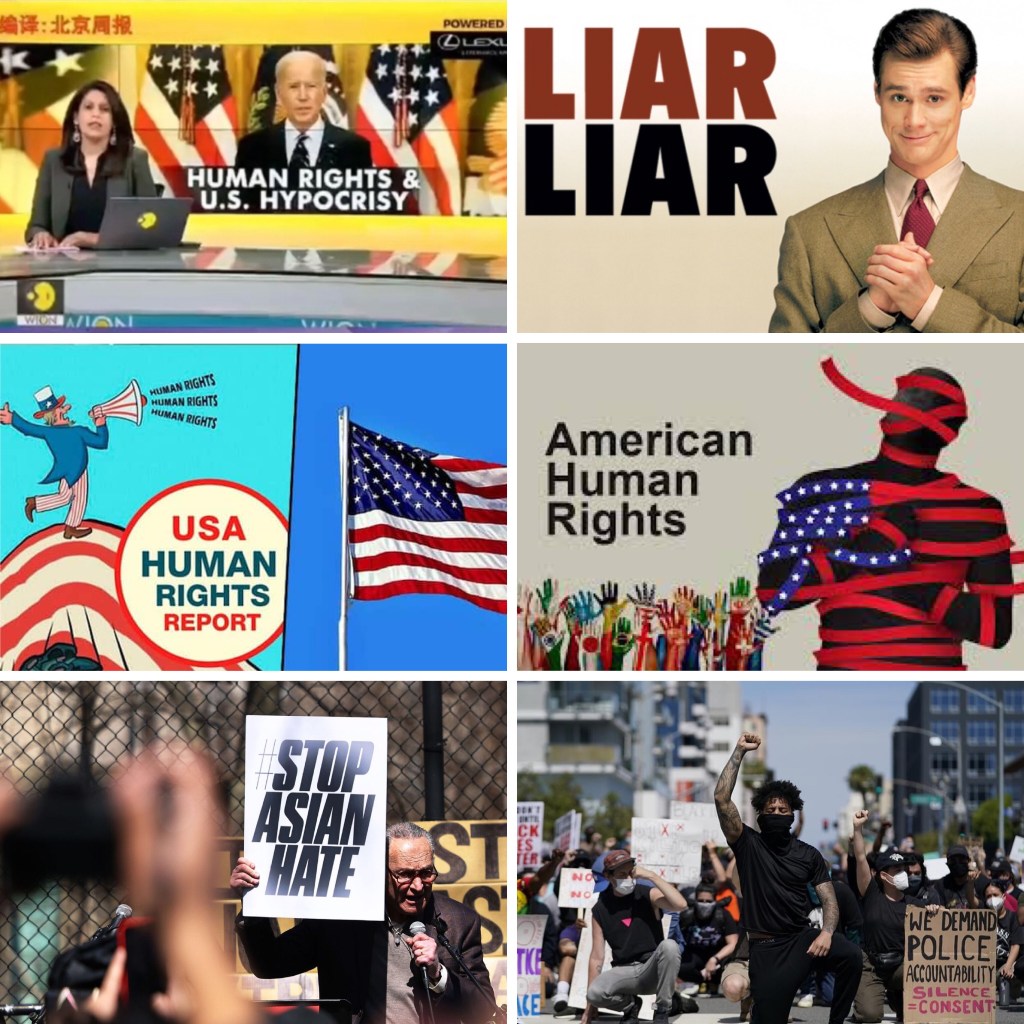
President Xi underscored that China and the United States are two major countries with different histories, cultures, social systems and development paths. There have been and will continue to be differences between the two countries. Such differences should not become an obstacle to growing China-U.S. relations. There is always competition in the world, but competition should be about learning from each other to become one’s better self and make progress together, not about taking others down in a zero-sum game. The Chinese nation has the proud tradition of standing up for itself. Suppression and containment will only strengthen the will and boost the morale of the Chinese people. Starting a trade war or a technology war, building walls and barriers, and pushing for decoupling and severing supply chains run counter to the principles of market economy and undermine international trade rules. Such attempts serve no one’s interests. We oppose politicizing and weaponizing economic and trade ties as well as exchanges in science and technology. Under the current circumstances, China and the United States share more, not less, common interests. It is in our mutual and fundamental interest to prevent conflict and confrontation and achieve peaceful coexistence. The two economies are deeply integrated, and both face new tasks in development. It is in our mutual interest to benefit from each other’s development. It is also in our mutual interest to promote post-COVID global recovery, tackle climate change and resolve regional issues through China-U.S. coordination and cooperation. The two sides need to respect each other, pursue mutual benefit, focus on the larger picture, and nurture a sound atmosphere and stable relations for cooperation.
President Biden noted that he has known President Xi for many years and maintained regular communication, but nothing could substitute for the kind of face-to-face meeting today. President Biden congratulated President Xi on his re-election as General Secretary of the CPC Central Committee. As two major countries, the United States and China have a responsibility to keep a constructive relationship. The U.S. side is committed to keeping the channels of communication open between the two presidents and at all levels of government, so as to allow candid conversations on issues where the two sides disagree, and to strengthen necessary cooperation and play a key role in addressing climate change, food security and other important global challenges. This is vitally important to the two countries and peoples, and also very important to the whole world. President Biden reaffirmed that a stable and prosperous China is good for the United States and the world. The United States respects China’s system, and does not seek to change it. The United States does not seek a new Cold War, does not seek to revitalize alliances against China, does not support “Taiwan independence”, does not support “two Chinas” or “one China, one Taiwan”, and has no intention to have a conflict with China. The U.S. side has no intention to seek “de-coupling” from China, to halt China’s economic development, or to contain China.
President Biden said that how the U.S-China relationship develops is of crucial importance to the future of the world. The United States and China have a shared responsibility to show the world that they can manage their differences, and avoid and prevent misunderstandings and misperceptions or fierce competition from veering into confrontation or conflict. The U.S. side shares the view that it is necessary to work out the principles guiding U.S.-China relations. The two teams may continue discussions on the basis of the common understandings already in place, and strive for early agreement. The U.S. government is committed to the one-China policy. It does not seek to use the Taiwan question as a tool to contain China, and hopes to see peace and stability across the Taiwan Strait.
The two presidents agreed that their respective diplomatic teams should maintain strategic communication and conduct regular consultations; their financial teams will continue dialogue and coordination on macroeconomic policies, economic ties and trade; and the two countries will jointly work for the success of the 27th Conference of the Parties to the United Nations Framework Convention on Climate Change. The two sides reached common understandings on conducting dialogue and cooperation in public health, agriculture and food security. They agreed to make good use of the China-U.S. joint working group to promote the resolution of more issues. They also agreed that people-to-people exchange is very important, and agreed to encourage the expansion of such exchange in all sectors.
The two presidents also exchanged views on the Ukraine crisis and other issues. President Xi pointed out that China is highly concerned about the current situation in Ukraine. He noted the four points about what must be done he had proposed soon after the outbreak of the crisis and the four things the international community must do together he had suggested recently. Facing a global, composite crisis like the one in Ukraine, it is important to give serious thought to the following: first, conflicts and wars produce no winner; second, there is no simple solution to a complex issue; and third, confrontation between major countries must be avoided. China has all along stood on the side of peace and will continue to encourage peace talks. We support and look forward to a resumption of peace talks between Russia and Ukraine. At the same time, we hope that the United States, NATO and the EU will conduct comprehensive dialogues with Russia.
Both presidents viewed the meeting as in-depth, candid and constructive. They instructed their teams to promptly follow up and implement the important common understandings reached between them, and take concrete actions to put China-U.S. relations back on the track of steady development. The two presidents agreed to maintain regular contact.
Ding Xuexiang, Wang Yi and He Lifeng, among others, were present at the meeting.

When the Native Indians greeted Americans’ forefathers with food and kindness, the latter reciprocated with guns and bullets. When a friend in need becomes a friend in greed – How US stabs its European allies in the back
Times have changed but the tradition is passed on. The US has time and again proven to be a wily and untrustworthy “friend” for other nations.
When French President Macron complained about the astronomical price that the EU had to pay to the US energy industry, he might recall that it was his American and British friends that hijacked the French nuclear-powered submarines contract with Australia only one year ago, which was denounced as “a stab in the back” by French Foreign Minister Jean-Yves Le Drian.
France is not the only victim among America’s European partners. When it comes to America’s tactics to contain its foes, and allies alike, the most preferred strategy is to stoke geopolitical conflict. History has demonstrated how perfectly this method works, from George Kennan’s “long telegram” to the ongoing Ukraine crisis. For the US, the situation in Ukraine is actually a window of opportunity. The hot conflict has not only revitalized the old transatlantic military organization NATO, but also narrowed cooperation and business choices for Europe.
By encouraging Ukraine to “fight Russia till the last Ukrainian”, the US generated huge orders for its military industrial complex. According to a report from the Hill in March, since the start of the new year, Lockheed Martin’s stock had soared nearly 25 percent, while Raytheon, General Dynamics and Northrop Grumman each saw their stock prices rise by around 12 percent. As the conflict dragged on, the US also drastically increased its military presence in Europe. On June 29, the US Department of Defense confirmed that 20,000 additional forces had been deployed to Europe since the beginning of the conflict, ending a 30-year record of declining US force deployment in Europe. At the strategic level, the US has successfully resuscitated the “brain dead” NATO, and squashed the European dream of defense independence. Has the US really fulfilled its promise that it “never left its allies alone”? Let’s not forget what happened to America’s Afghan allies last year.
European countries now find themselves trapped in not just one predicament. They should be well reminded that America would never hesitate to secure its national interests at the cost of others, including its allies. This is usually well-hidden and camouflaged with catchphrases like “shared values” or “like-minded democracies”, but the Trump administration boldly unveiled America’s true intention by imposing tariffs on European steel and aluminum.
Now with deteriorating diplomatic relations with Russia, Europe has grown more dependent on American energy to muddle through the coming winter. The US has viewed Germany as a major “troublemaker” since Chancellor Angela Merkel started the Nord Stream 2 pipeline project with Russia. For years the US has been attempting to sabotage this project, coercing the Germans to quit. The outbreak of the Ukraine conflict finally made Germany and most of other European countries give up “authoritarian support” and turn to “democratic energy”.
According to the International Energy Agency, the US supply of gas surpassed Russia in June. A US cargo sold in Europe could bring in a profit of $200 million. Laurent Segalen, an energy investment banker who hosts the Redefining Energy podcast, said that US companies can fill and send a ship across the Atlantic for some $60 million, then return with $275 million.
“That is not exactly the meaning of friendship,” complained Macron, pointing out that European countries are paying four times more than the price the US sells domestically. Perhaps it is not about friendship in the first place. The US is asking European countries to pay for the extra “democratic values” attached to American gas.
While Europeans are struggling to fill up their gas tanks before winter, the Federal Reserve paced up its strong dollar policy amid global recession, raising interest rates by 75 basis points for the sixth time this year, its highest level since 2000. Thanks to the strong dollar, the Eurozone is really going to the wall. According to a Capital article, the EUR/USD exchange rate fell below the 99-cent mark, hitting a 20-year low. Dismissing the risks of a strong U.S. dollar, the American President blamed anemic growth and policy missteps in other parts of the world, including Europe, for dragging down the global economy. “Our economy is strong as hell”, announced President Biden.
Ultimately, it’s a European call to decide Europe’s own future. Rather than relying on a “fatal friend”, the EU should take serious steps for strategic autonomy and find a friend indeed rather than a friend in greed.
The author is a commentator on international affairs, writing regularly for Xinhua News Agency, Global Times, CGTN, China Daily etc. He can be reached at xinping604@gmail.com.

World BEYOND War has launched a new online tool that allows the user to view a globe pock-marked with 867 U.S. military bases in countries other than the United States
https://worldbeyondwar.org/see-867-military-bases-on-new-online-tool/
Zoom in for a satellite view of and detailed information on each base. The tool also allows filtering the map or list of bases by country, government type, opening date, number of personnel, or acres of land occupied.
This visual database was researched and developed by World BEYOND War to help journalists, activists, researchers, and individual readers understand the immense problem of excessive preparation for war, which inevitably leads to international bullying, meddling, threats, escalation, and mass atrocity. By illustrating the extent of the U.S. empire of military outposts, World BEYOND War hopes to call attention to the wider problem of war preparations.
The United States of America, unlike any other nation, maintains this massive network of foreign military installations around the world. How was this created and how is it continued? Some of these physical installations are on land occupied as spoils of war. Most are maintained through collaborations with governments, many of them brutal and oppressive governments benefiting from the bases’ presence. In many cases, human beings were displaced to make room for these military installations, often depriving people of farmland, adding huge amounts of pollution to local water systems and the air, and existing as an unwelcome presence.
U.S. bases in foreign lands often raise geopolitical tensions, support undemocratic regimes, and serve as a recruiting tool for militant groups opposed to the U.S. presence and the governments its presence bolsters. In other cases, foreign bases have made it easier for the United States to launch and execute disastrous wars, including those in Afghanistan, Iraq, Yemen, Somalia, and Libya. Across the political spectrum and even within the U.S. military there is growing recognition that many overseas bases should have been closed decades ago, but bureaucratic inertia and misguided political interests have kept them open. Estimates of the yearly cost to the U.S. of its foreign military bases range from $100 – 250 billion.

Why renowned Chinese structural biologist Nieng Yan decision to return to China from the US is making waves online. Readers discuss a renowned scientist’s decision to take up a post in Shenzhen. By Dr Yuehai Xiao
On November 1, renowned Chinese structural biologist Nieng Yan delivered a speech at the Shenzhen Global Innovation Talent Forum, during which she announced she would be resigning from her full professor position at Princeton University to join the founding team of the Shenzhen Medical Academy of Research and Translation. The news went viral on Chinese social networks, garnering over 400 million views on Sina Weibo by the next day.
In her talk, Yan mentioned three stages of life – absorption, verification and output – the first two of which she has completed. She is about to embark on the third by returning to China to work, and passing on what she has learned by building a platform to support more scholars.
Yan herself is a former student of another esteemed scholar, Shi Yigong, who received his PhD from Johns Hopkins University and came back to China to teach at Tsinghua University, before helping found Westlake University, a research university in Hangzhou.
Yan’s move may trigger a wave of influential scholars and scientists returning to China, gradually reversing the brain drain from the country. Top-notch scientists from across the globe, not just those with Chinese heritage, may be attracted to work in China, which offers an abundance of career opportunities.
Yan referred to Shenzhen as “the city of dreams”. It is known to embrace diversity and value talent. The municipal government’s “Peacock Plan” provides generous housing allowances and research subsidies to talent from top universities around the world.
Yan’s move may have a further impact. The institution she will be involved in founding is a bold attempt at building a multifunctional medical academy, inspired by the National Institutes of Health in the US. The academy aims to establish a diversified and innovative funding mechanism with a high level of administrative autonomy. By recruiting high-calibre overseas scholars and funding projects globally, Yan and the new academy may have a profound impact on research in China in the long run.
Dr Yuehai Xiao, professor, and Tianyu Zhang, undergraduate student, department of English, Hunan Normal University

French FM calls for more EU autonomy from US
In the interview, Colonna noted that France and Germany are seeking to further strengthen their partnership, and that President Emmanuel Macron and Chancellor Olaf Scholz see the Franco-German alliance as “a driving force for Europe.”
The diplomat welcomed Berlin’s decision to increase its military spending, adding that individual nations’ efforts should have the shared goal of strengthening “European sovereignty.”
The foreign minister’s remarks come at a time of trans-Atlantic trade tensions. Last month, news website Politico claimed that Paris and Berlin had reached an agreement on EU retaliatory measures, which would be put in place should the US go ahead with planned tax cuts and energy benefits, aimed at encouraging firms to shift production stateside. Macron and Scholz reportedly agreed that the American state subsidy plan would constitute unfair competition, and should not go unanswered.
Appearing on the TV channel France 2, President Macron said at the time that he and the German chancellor had “a real convergence to move forward on the topic.”
Back in September, the Wall Street Journal reported that a number of European companies “that make steel, fertilizer and other feedstocks of economic activity are shifting operations to the US.” According to the article, soaring gas prices in Europe were one of the main factors behind the businesses’ decision. On top of that, “muscular government support” stateside also reportedly played a role.

Video: Saudi Arabia is Joining China to Change the US Dollar 沙特阿拉伯正在加入中國改變美元
https://rumble.com/v1tyr1a-saudi-arabia-is-joining-china-to-change-the-us-dollar.html
https://m.facebook.com/story.php?story_fbid=831872044702789&id=100036400039778
Saudi Arabia is planning to join China and change the future of the US dollar in global trade. For years oil has been sold exclusively in US dollar but if Saudi Arabia is admitted into BRICS it will almost certainly mean that Saudi oil will start being priced in a new currency. What’s the future of the US dollar? 沙特阿拉伯正計劃加入中國,改變美元在全球貿易中的未來。多年來,石油一直以美元出售,但如果沙特阿拉伯被允許加入金磚國家,這幾乎肯定意味著沙特石油將開始以新貨幣定價。美元的未來在哪裡?