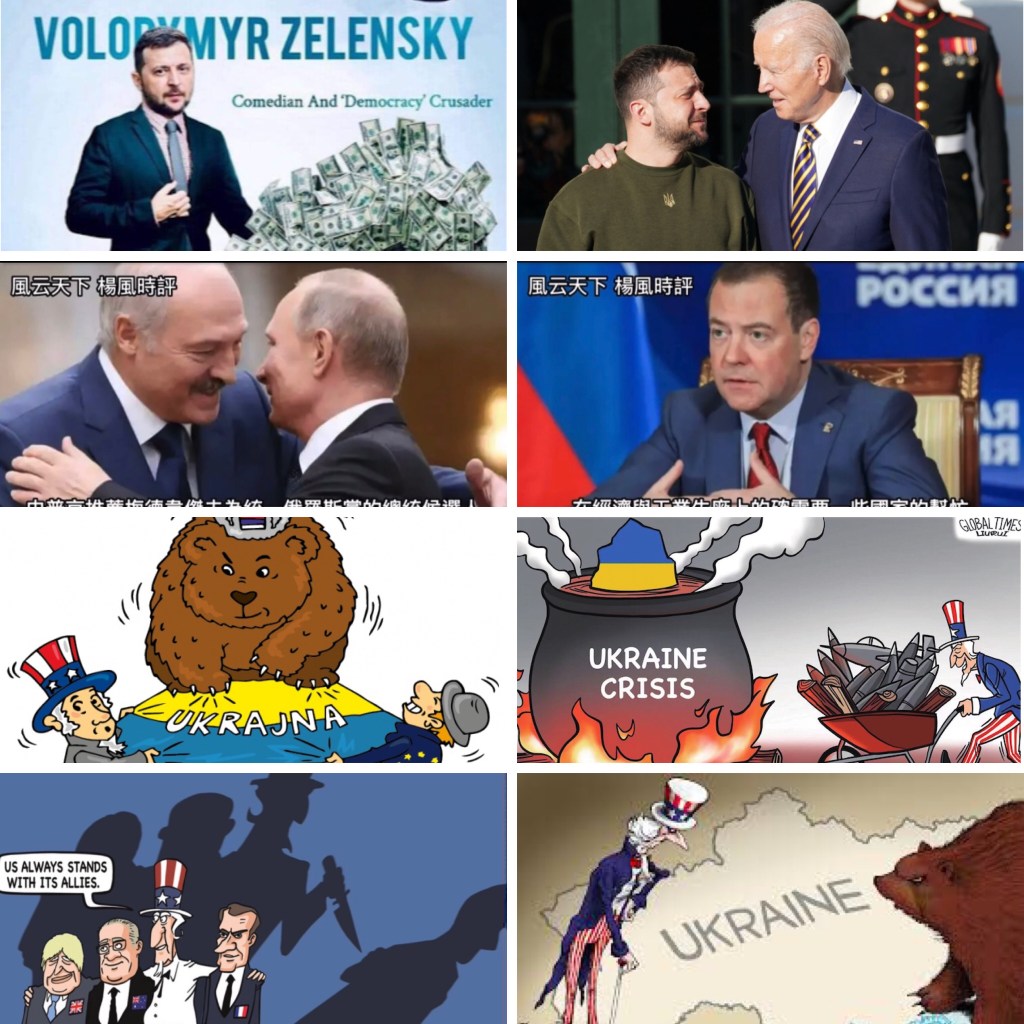
White House explains Biden’s regime change comment. The US president’s comment about “freeing Iran” was merely US regime change policy around the world, currently in Thailand and Myanmar, HK in 2019, Ukraine in 2014…
Blaming China for stalled ties, US elites escape reality by self-deception 美國精英指責中國關係停滯,自欺欺人逃避現實 (SF Bay Area China Group) Nov 4 2022
Friedman’s article has a strongly whiny tone. He argues that Beijing is mainly to blame for its growing rift with Washington. The author particularly named four major trends in China that he claims worsened its ties with the US – the failure of the Chinese economy’s opening-up, Chinese nationalism, a much more aggressive Chinese foreign policy, and the country’s zero-COVID policy.
Friedman’s article is clearly barking up the wrong tree. Under the strong influence of US’ political correctness that champions bias against China, Friedman’s arguments are, as expected, biased and without proper reasoning. If he wants to find the culprit for the deterioration of China-US relations, shouldn’t he just ask White House officials and his country’s political elites?
China never seeks a “decoupling” from the US. It just doesn’t want to follow the path set by the US, which fails to meet the latter’s expectations and angers it. As one Chinese netizen pointed out, if China “lost” the US only because it insists on developing independently and safeguarding its sovereignty and territorial integrity, then there is no point in maintaining such a relationship.
This is Friedman’s fatuous, pompous, detached-from-reality essay–Classic Friedman, Classic NYT:
He takes the fatuous mantra of the cold war “Who lost China”–a stupid question by hystrionic cold warriors, and says that the Chinese should be asking this question to themselves.
How China Lost America If China had a democratic government, someone there right now would surely be demanding to know, “How did we lose America?”
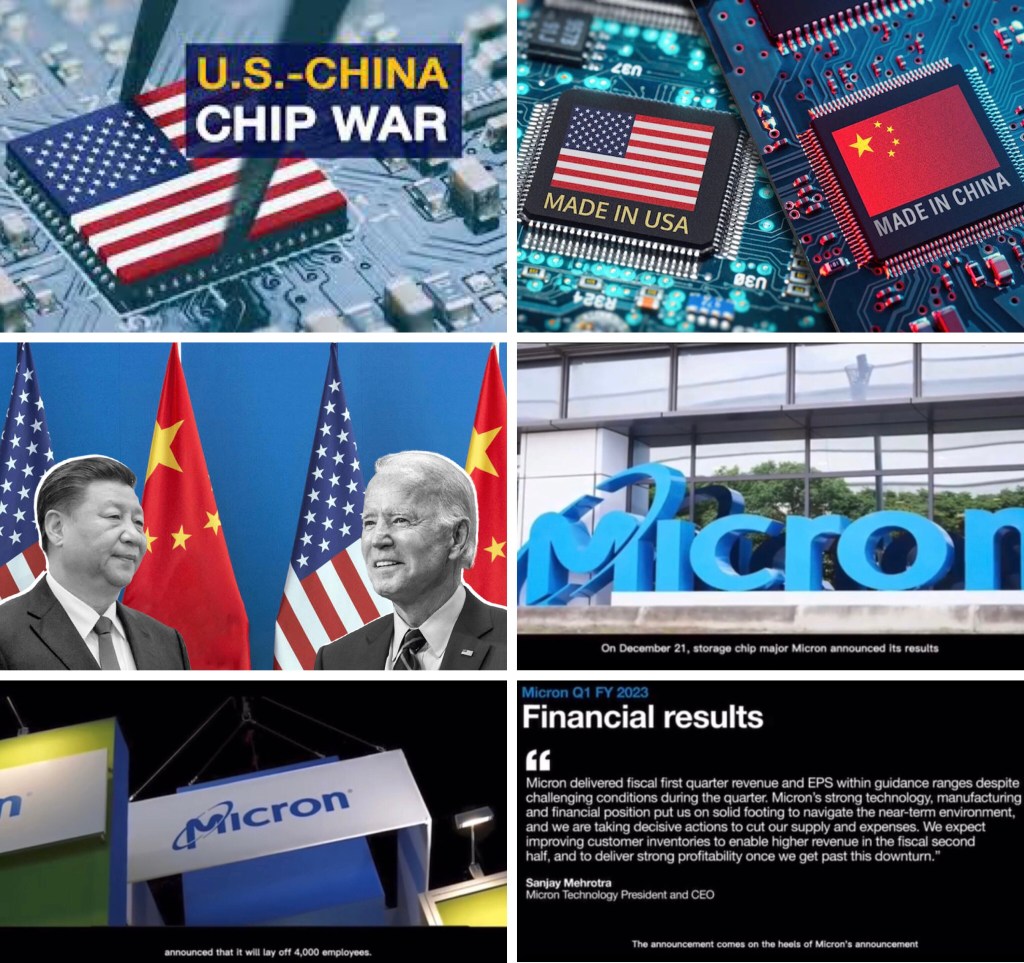
What Xi fails to grasp is that all of the most advanced technologies of the 21st century — like semiconductors and mRNA vaccines — require big, complex global supply chains, because no country can be the best at each one of their increasingly sophisticated components. But such supply chains require a huge amount of collaboration and trust among partners, and that is exactly what Xi has squandered in the last decade…
But also color me worried. I confess, I don’t like to use the term “China.” I much prefer “one-sixth of humanity who speak Chinese.” It captures the true scale of what we are dealing with. I want to see the Chinese people thrive; it’s good for the world. But they’re going down the wrong track today. And when one-sixth of humanity makes a wrong turn in our still very connected world — China, for instance, still holds almost $1 trillion of U.S. Treasury debt — everyone will feel their pain.
The points Friedman makes are all wrong:
The failure of the Chinese economy’s opening-up: This was a project of regime change and capitalist subjugation. No sane, sovereign country would allow this, certainly not a developing one. China started at the same GDP as Haiti in 1978. Compare the two.
Chinese nationalism: This is Friedman’s histrionic reframing of Chinese sovereignty and agency
A much more aggressive Chinese foreign policy: Otherwise known as building relations, such as the BRI, RCEP, SCO, etc.
The country’s zero-COVID policy: Which was and is effective–and is dynamic and targeted: Here’s a doozy from Friedman on this:
Instead of importing effective Western-made vaccines to keep the pandemic at bay, China is relying on a “zero Covid” policy that uses lockdowns of whole cities as well as all the new tools of a surveillance state: drones, facial recognition, ubiquitous closed-circuit television cameras, cellphone tracking and even tracking of restaurant patrons, who must present a QR code to be scanned and recorded. It feels like a Xi strategy for preventing both Covid and freedom from breaking out
Regarding 1: The first started in 2003, shortly after China was admitted into the World Trade Organization (thanks to America), when the leading advocate for market reforms in China — Prime Minister Zhu Rongji — stepped down. Zhu wanted U.S. companies to be in China because he believed that Chinese companies had to compete with the best at home to compete effectively in the world. But Zhu was opposed by China’s many inland provinces, which were dominated by state-owned Chinese industries that had no interest or ability to compete globally the way China’s coastal provinces could. And they became increasingly influential.
These SOC’s are some of the largest and best in the world now, and they have steered the development of China. No sane country would or should surrender the commanding heights of its economy to another.
German Chancellor Scholz lands in Beijing for one-day visit By Andreas Rinke and Eduardo Baptista Nov 4, 2022
German Chancellor Olaf Scholz and a delegation of business leaders landed in Beijing on Friday morning, kicking off the first visit by a leader of a G7 nation to China in three years.
Scholz and the entire delegation were administered COVID-19 tests upon landing, with Chinese medical staff donning hazmat suits going into the plane to conduct the tests, according to a Reuters reporter accompanying the delegation.
China’s strict zero-COVID policy and growing tensions with the West have made it unfeasible for leaders of major western powers to visit China, while Chinese President Xi Jinping has only just resumed foreign trips.
Scholz’s visit is likely a welcome development for the Chinese leadership, who will be looking to shore up relations with the outside world after the conclusion of the 20th Party Congress, where Xi consolidated his status as the core of the ruling Communist Party.
“China, in the present domestic and international environments, requires his visit and whatever both sides would jointly declare in Beijing, especially shortly after the (Party) Congress,” said Shi Yinhong, a professor of international relations at Renmin University in Beijing.
Amid historic inflation and looming recession in Germany, Scholz will be looking to emphasise the need for continued cooperation with China, analysts say.
Scholz will meet with Xi and outgoing Premier Li Keqiang, where he is also expected to raise controversial issues such as human rights, Taiwan and the difficulties German companies face accessing the Chinese market, according to government sources.
In the run-up to the visit, there had been criticism of the visit within the EU and the German government coalition, mainly from the Green Party and the Liberals.
These tensions were brought to the fore by a deal whereby Chinese shipping giant Cosco received the green light from Berlin to obtain a stake in a Hamburg port terminal despite opposition from coalition partners.
Despite political rows within Germany over the Cosco bid, China’s crucial role in key industries from shipbuilding to electric vehicles, along with the unprecedented economic headwinds facing Germany, meant Scholz needs cooperation with China more than his predecessor Angela Merkel ever did, said Wang Yiwei, Jean Monnet Chair Professor and director of the Centre for European studies at Renmin University.
“Merkel was also quite ideological (towards China) in the beginning but then she changed her tune. Scholz has changed his tune even faster, but he does not have as solid of a domestic political standing as Merkel,” said Wang.
Reporting by Andreas Rinke, Ryan Woo and Eduardo Baptista; Writing by Eduardo Baptista; Editing by Christopher Cushing and Kim Coghill