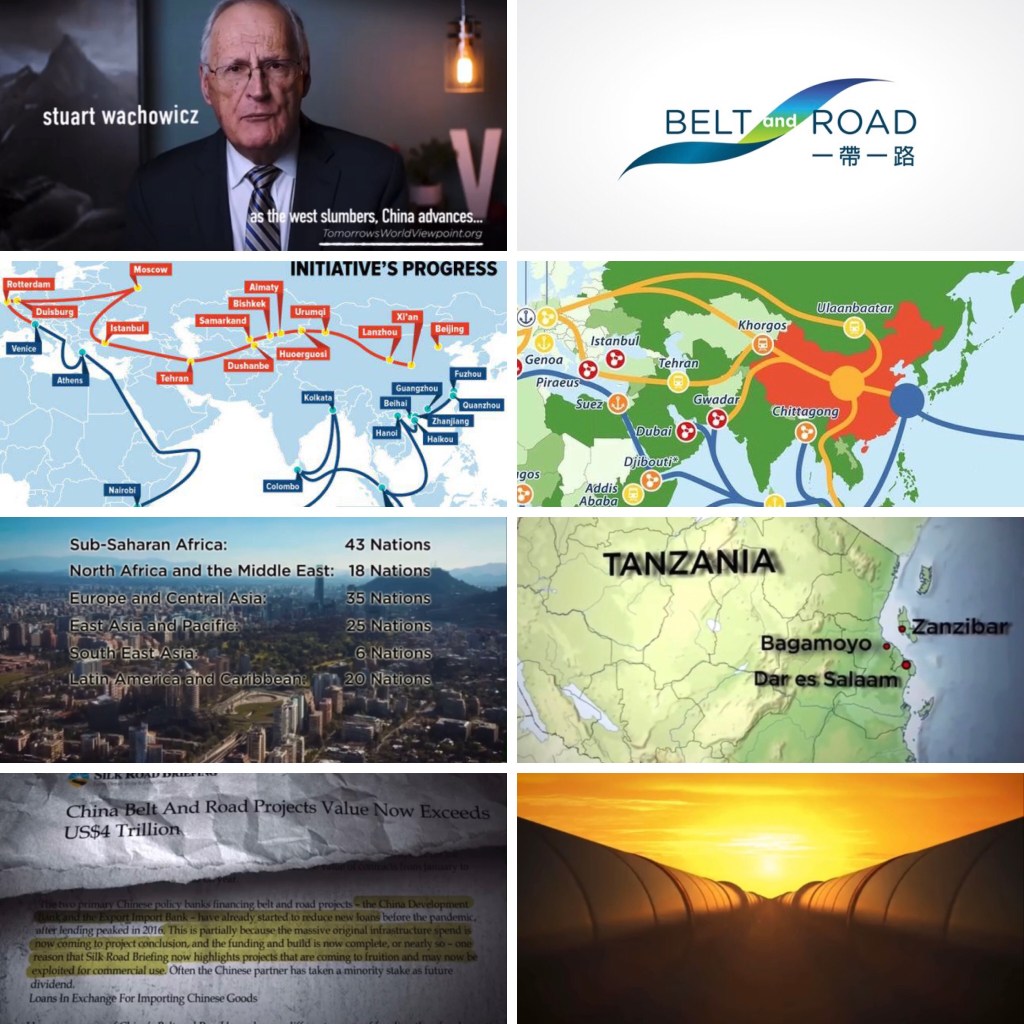
English video: China lets Belt and Road has 142 partners nations except North America. As the West Slumbers, China Advances 中國讓一帶一路擁有除北美以外的142個夥伴國家. 西方沉睡,中國進步.
In the short time since the “Belt and Road Initiative” was announced by President Xi Jinping of China in 2013, it has grown to be home to the largest piece of economic infrastructure in human history. We examined this project in a video entitled “One Belt One Road” in 2019 but a great deal has happened since. This massive project warrants a second look. 自中國國家主席習近平於 2013 年宣布“一帶一路”倡議以來的短短時間內,它已發展成為人類歷史上最大的經濟基礎設施所在地。 我們在 2019 年的一個名為“一帶一路”的視頻中審查了這個項目,但此後發生了很多事情。 這個龐大的項目值得重新審視.
The United States and White supremacy at war with China 美國和白人至上主義與中國交戰 by Franklin Frederick Dec 14 2022
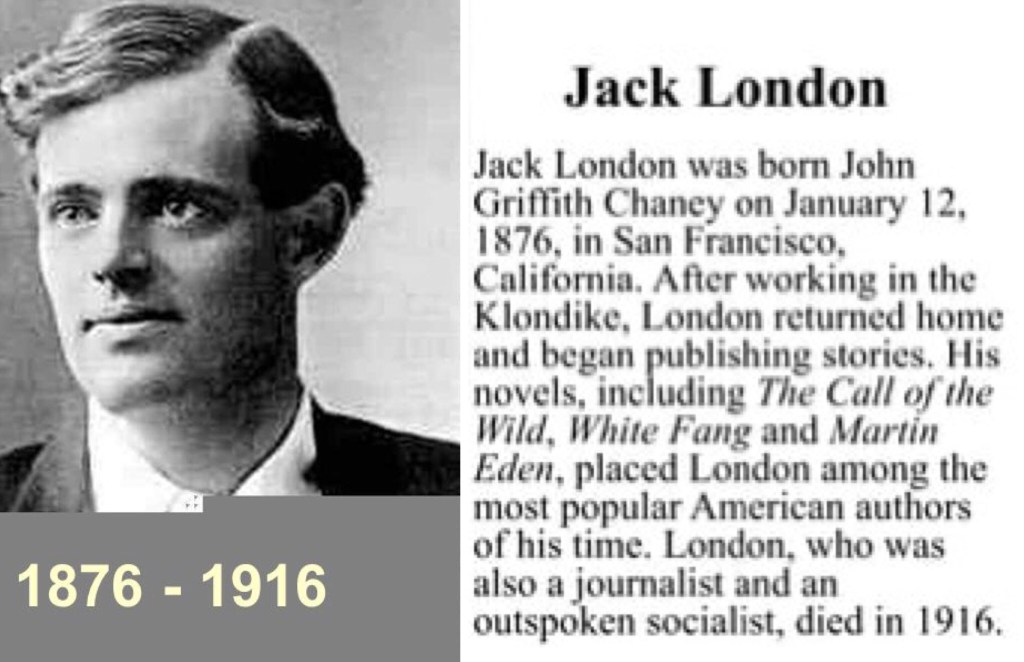
In 1904, Jack London, the most celebrated American writer of the time, was sent as a reporter to cover the war between Russia and Japan.
According to Daniel A. Métraux, editor of a collection of London’s writings on Asia (1):
“London’s tenure as a journalist in Korea and Manchuria was a revelation to his worldview. As a white man he was a minority observing a war where Asia represented by Japan thoroughly outsmarted and overwhelmed numerically greater forces of the West represented by Russia. He soon realized that the West was not invincible, that Asians could through their own efforts defeat even Anglo-Saxons. The world that London had been brought up in had been turned upside down before his very eyes. The Caucasian was just one racial group among many others and was not in any way superior.”
But it was not Japan, but China, the country that most impressed Jack London on his trip. Back in the USA, in an essay about China entitled ‘The Yellow Peril’, London described his first impression upon entering the country:
“Everybody worked. Everything worked, I saw a man mending the road. I was in China.”
And still in the same text, he reflected:
“There is such a thing as race egotism as well as creature egotism, and a very good thing it is. In the first place, the Western world will not permit the rise of the yellow peril. It is firmly convinced that it will not permit the yellow and the brown to wax strong and menace its peace and comfort. (…) The Western world is warned, if not armed, against the possibility of it.”
In 1907 London wrote a short story entitled ‘An Unparalleled Invasion’ in which he imagines the future economic might of China challenging the supremacy of the West:
“Contrary to expectation, China did not prove warlike. She had no Napoleonic dream, and was content to devote herself to the arts of peace. After a time of disquiet. the idea was accepted that China was to be feared, not in war, but in commerce.”
In this text, according to the logic of Jack London’s convictions, the ‘solution’ found by the West to the Chinese economic challenge was military: the story ends with the annihilation, by bacteriological warfare conducted by the USA, of a large part of the Chinese population.
Jack London embodies, in an exemplary manner, the fear and violence of white supremacy when confronted by the ‘yellow peril’. About himself, Jack London declared:
“I am first of all a white man and only then a socialist.”
This confession finds echoes today even in certain sectors of the Western left that, feeling threatened by Chinese economic and technological growth, warns of the danger of Chinese ‘imperialism’ and advocates the ‘containment’ of China.
China as a colony of the West—the Opium War The British Empire tried to impose, wherever its power could reach, trade treaties in its favor, a strategy still successfully used today by western powers. But China, with a very restricted system of foreign trade, imposed several barriers to British ambitions. Opium was big business for the British Empire at the time. By 1850, between 15 and 20 percent of the Empire’s revenue came from opium. Historians Timothy Brook and Bob Wakabayashi, in their study Opium Regimes, wrote: “The British Empire could not survive without its most important source of capital, the substance that could turn any other commodity into silver,” i.e., opium. Historian Carl Trocki, author of Opium, Empire and the Global Economy, stated that “the entire infrastructure of European trade in Asia was built around opium.”
According to this author:
“It may have been that capitalism would have developed in Asia on its own without opium, but the fact is that it did not. At every stage of development, opium was crucial, first in the obliteration of ‘traditionalist’ obstacles to the market, second in the process of commodification and third in the creation of a class of consumers, and most of all, in the creation of the market itself.”
Opium prepared the ground for capitalism by creating mass markets and proletarian consumers, while undermining the morale and morality of political elites throughout Asia.
In the concluding words of this book:
“Opium was vital, both to the capitalist transformation of the local economies as well as to the finance of the colonial administrative structures which protected those economies, Opium was also important because it speeded those vital changes in the relation of production that were necessary for capitalist-style growth. Opium was the tool of the capitalist classes in transforming the peasantry and in monetizing their subsistence lifestyles. Opium created pools of capital and fed the institutions that accumulated it: the banking and financial systems, the insurance systems and the transportation and information infrastructures. Those structures and that economy have, in large part, been inherited by the successor nations of the region today.”
But the Chinese Emperor, to protect his people, had decreed opium illegal and the opium commerce still carried out was very complicated and restricted. The British Empire’s response to the measures taken by the Chinese government to protect and defend the integrity of its people and territory came in 1839, when Queen Victoria sent the British navy to bombard China’s coastal regions, starting the first Opium War, which lasted until 1842. The second Opium War, which was joined by the French and lasted from 1856 to 1860, eventually forced China to legalize the opium trade and definitively open its borders to trade with the West, effectively turning China into a colony.
The exploitation of China and the opium trade was also instrumental in the accumulation of capital and the development of capitalism in the United States. Many of the ‘best’ and most respected families in the United States were involved with the various American companies that made fortunes from the opium trade, such as the Delano family, maternal ancestors of future President Franklin Delano Roosevelt. According to James Bradley, author of the book The China Mirage,
“the influence of these opium fortunes seeped into virtually every aspect of the American life. That influence was cultural: the transcendentalist Ralph Waldo Emerson married John Murray Forbes’s (an opium magnate) daughter, and his father in law’s fortune helped provide Emerson with the cushion to become a professional thinker. It was found in technology: Forbes’s son watched over his father’s investment in the Bell Telephone Company as its first president (…) And it was ideological: Joseph Coolidge’s (another opium magnate) heirs founded the Council on Foreign Relations. Several companies that would play major roles in American history were also the product of drug profits, among them the United Fruit company (…).”
Still according to Bradley, it was the profits from opium that helped finance the construction of many American railroads, such as the Boston, Michigan Central, and Chicago railroads. And finally, the famous universities on the East Coast of the United States also owe a lot to the profits made from opium: much of the land on which Yale University was built was donated by the Russell family, another family whose fortune was made from opium. Columbia and Princeton universities have also benefited from donations from families whose fortunes are of this same origin.
The Chinese Immigrant Exclusion Act The discovery of gold in California attracted many Chinese immigrants, and to the surprise of white workers, the Chinese workers proved to be more efficient, drank less, and saved more of their earnings. James Bradley cites the testimony of a U.S. senator at the time, George Hearst, about the Chinese workers in the gold mines:
“They can do more work than our people and live on less…they could drive our laborers to the wall.”
And not only in the mines, but also in the construction of the railroads, Chinese workers proved to be more capable and efficient than white workers. According to James Bradley:
“During the building of the Transcontinental Railroad, white immigrants from Europe tried to bore through the hard granite of the Sierra Nevada Mountains and failed. Yet the Chinese, generally with smaller physical stature and strength, succeeded in the Sierras, laying the most challenging sections of the railroad. Governor Leland Stanford of California wrote President Andrew Jackson, ‘Without the Chinese it would have been impossible to complete the western portion of the great National highway’.”
With the end of railroad construction, Chinese immigrants spread across the West, becoming farmers, owners of laundries, restaurants, hotels, and other small businesses. With their work discipline and frugal lifestyle, the Chinese often offered better and cheaper services and products than those provided by whites, who could not stand this competition, forcing the unions—dominated by white workers—to pressure Congress to expel the Chinese. Thus, in 1882, the Chinese Exclusion Act was passed, making it illegal for Chinese immigrants to enter the United States.
White supremacy, which had succeeded in segregating African descendants by excluding them from its labor market, was now challenged on its own territory by another ‘inferior race’. In the face of the ‘yellow peril’ denounced by Jack London, the Chinese Exclusion Act was a U.S. Government’s action in defense of white supremacy within the United States.
The Japanese Invasion, World War II and the Chinese Revolution World War II began earlier for China, in 1931, with the invasion of Manchuria province by the Japanese Empire in search of China’s natural resources needed for its industry. Beginning in 1937, Japan imposed on a significant part of Chinese territory one of the most brutal military occupations in the history of the 20th century. The delusion of Japanese racial superiority over the other peoples of Asia led to the murder of thousands of Chinese, Koreans, Indonesians and others, just as the delusion of the superiority of the ‘Aryan race’ in Nazi Germany killed thousands of Jews, Gypsies, Blacks, Slavs and other ‘inferior races’ in Europe. But the destruction of China was perhaps unparalled: it is estimated that between 14 and 20 million Chinese died during the war of resistance against the Japanese occupation, which also generated between 80 and 100 million refugees. From 1931 to 1949 China was continuously in conflict within its territory, first with the brutal Japanese invasion, then with the civil war that ended in 1949 with the victory of the Chinese Revolution. One can only understand the greatness of the achievements of the Chinese revolutionary government from 1949 onward by considering the magnitude of China’s problems in this period. According to Shu Guang Zhang, author of the book Economic Cold War—America’s Embargo against China and the Sino-Soviet Alliance 1949—1963:
“After decades of war, civil and international, the nation’s economy was at the edge of total collapse. Although no one could accurately assess the scale of China’s economic difficulties, it took little imagination to sense the severity of the problems. In 1949 China’s industrial production was only 30 percent of the recorded peak: the yield of heavy industry declined by 70 percent, light industry by 30 percent, and agriculture by 24.5 percent. The annual production of coal was a mere 3,243 tons, iron and steel only 150,000 tons, grain 113.2 million tons, and cotton 445,000 tons. The transportation system was hardly functional: more than 5,000 miles of railroads were crippled; 3,200 bridges and 200 tunnels were severely damaged; about 4,000 miles of vehicle roads were barely usable; airplane and boat transport were close to zero. Severe floods have swept a large part of the calamity. The physical damage of the nation’s infrastructure resulted in runaway inflation and severe disruption of trade, both domestic and international. Undoubtedly, the CCP had to reconstruct the shattered economy, bring inflation under control, and help the recovery of industry and commerce, which all became life-and-death issues.”
It must be remembered that China did not receive any compensation from Japan for its immediate postwar reconstruction, nor was there the equivalent of a U.S. Marshall Plan to aid Chinese economic recovery, on the contrary, after the victory of the Chinese Revolution, the U.S. started an economic war against China to defeat its Revolution. Only the Soviet Union contributed in a limited way, due to its own problems at the end of WWII, to Chinese reconstruction.
Coming out of a dismal situation in 1949, in just 73 years, under the leadership of the Communist Party, China has become the world’s greatest economic power. In the words of John Ross, in his indispensable book China’s Great Road, this is:
The greatest economic achievement in human history in terms not only of its consequences for China but in the improvement of the overall condition of humanity.
For John Ross,
“This is the fundamental reason that the ‘Western media’ and China’s ‘comprador intelligentsia’, has to suppress knowledge that China’s growth dwarfs that of any previous country in human history. It is because this unmatched speed and scale of China’s economic development was achieved by a socialist and not by a capitalist country and economy.”
Still according to John Ross:
“In the last twenty-five years, China has lifted more than 620 million people out of absolute poverty. That is, according to Professor Danny Quah of the London School of Economics, 100% of the reduction in the number of those living in absolute poverty in the world. No other country, therefore, even remotely compares to China’s contribution to the reduction of world poverty—a fact which places legitimate, and illegitimate, criticism of China in an appropriate qualitative context.”
The War on China Jack London revealed a profound truth when he wrote that “the Western world will not permit the rise of the yellow peril. It is firmly convinced that it will not permit the yellow and the brown to wax strong and menace its peace and comfort. (…) The Western world is warned, if not armed, against the possibility of it.”
The ‘brown’ for Jack London and white supremacy are the peoples of the Global South, Africa and Latin America who, united with the ‘yellow’ represent the greatest threat to the ‘peace and comfort’ of white supremacy and Western capitalist exploitation.
In fact, China has made an immense contribution to the development of Latin American and African countries, offering infrastructure investments, trade treaties, and an alternative to the privatization impositions of Western institutions committed to maintaining the neoliberal and neocolonial order, such as the World Bank and the IMF. And this recent news came to the dismay of critics of ‘Chinese imperialism’ in Africa:
“Chine is forgiving 23 interest-free loans for 17 African countries, after already cancelling $3.4 billion and restructuring $15 billion of debt from 2000-2019. Beijing pledged more infrastructure projects and offered favorable trade deals in a ‘win-win’ model of ‘mutually beneficial cooperation’.” (1)
In the face of China’s economic growth, of its political alliances with Russia and several African, Latin American and Asian countries, and of the advance of Chinese technology companies, like Huawei, the United States threatens a war against China, as predicted by Jack London in the short story “An Unparalleled Invasion”. And while the war does not happen, the United States desperately seeks to exclude China and its companies from global trade, as if a contemporary version of the Chinese Exclusion Act were possible, but this time with planetary reach!
Faced with the obvious decline of the U.S. economy, unable to keep up and compete with Chinese growth; faced with the shameful concentration of wealth in the US; faced with the increasingly patent inability of capitalism to give concrete answers to the urgent problems of environmental destruction and global warming; faced with the many uprisings that, especially in the Global South, have successfully challenged neo-colonial impositions and neoliberalism, it remains for the Empire to appeal to the last bastion of its self-proclaimed superiority: white supremacy. There are no more convincing and legitimate rational arguments for the maintenance of capitalism and its imposed hierarchies, nor for subservience to the Empire. It is only from irrational appeals to white supremacy that international right-wing and ultra-right movements can articulate themselves. Racist violence increases wherever the neoliberal order seeks to impose itself, as shwn in the coup d’état against the government of Evo Morales in Bolivia or in the Brazil of the Bolsonaro government.
White supremacy, capitalism, and colonial exploitation are closely intertwined in the history of the West’s domination of the planet. Since the Opium War the West has sought to subjugate China and take possession of its wealth. White supremacy has never forgiven China for escaping its ‘fate’ of being just another colony, of using its wealth for its own development. Since the Chinese revolution a new history began and a new future is now possible.
Franklin Frederick is a Brazilian writer and political activist.
China Opens!…and Everyone Locked Down…I Can’t Express Strongly Enough How Urgent This China Covid Update Is… by MARIO CAVOLO Dec 16 2022
I can’t think of a more important subject on which not to let yourself be lied to, gaslighted, fed mis and disinformation. When the world’s largest top superpower country makes a huge crazy holy guacamole Batman decision that instantly turns the lives of its 1.4B citizens upside down and which will impact the entire global economy, I am safe in saying it is essential to avoid misinformation, disinformation, politicized information, gaslighting and bias as much as possible. I don’t know about you but I want to see, understand and then share with you on the most clear, reasonable, sensible. fact-based explanation of what’s actually going on. So here we are.
For the past three years since January 2020, China had become a very very different country to live in. Along the way, mindful that I have lived here as an independent local for 24 years married to a Dongbei Chinese family, I have never felt a great sense of criticism toward the government. On the contrary, from many points of view which matter to its citizens and to the entire world, they have done a remarkable job. They built up the world’s next superpower, created the world’s largest middle class, eliminated poverty for hundreds of millions of people, built the world’s most amazing high tech cities, added more green trees and coverage to the planet than any other green initiative, built and installed far more non petroleum energy sources, rescued the world in 2009 from the US caused global financial meltdown, made Steve Job’s Iphone dream possible with gorilla glass, now possesses the world’s largest deepest manufacturing infrastructure on the planet, yet has over the past ten years massively improved its pollution output to where cities once gray and polluted now have blue skies, and here we go, for the best of all, they did all this and much more over almost the past half a century WITHOUT STARTING WAR OR ATTACKING ANYONE ON PLANET EARTH. The last war they were an aggressor in was Vietnam in the late 1970s. Before that they pushed back the U.S. led UN imperial forces on the Korean Peninsula, much to the chagrin of dear General MacArthur whom I played in the CCTV-1 primetime TV series, Crossing the Yalu River aired in mainland China and yes, you can find it on Youtube as well.
Absolutely amazing China. The only conclusion you could possibly reach if you are sane, intelligent and rational, only admiring China and its people under the governance of the CPC. And in fact, 90% of Chinese know this very well and feel exactly this way. Well, one can only wonder then about the story of China the evil, bad, threat to the world which is endless spewed by our western politicians and their mainstream media and organization lackeys.
Which leads us to the unprecedented accomplishment known as ZeroCovid since january 2020. Of course only China could have pulled it off and of course only China did pull it off so successfully saving millions of lives.
So far, over one million have died in the US and over two million have died in Europe. That means that if China had not locked down as it did, especially during the first two years of highly pathogenic virus strains spreading as they did throughout the US and Europe, the equivalant # of deaths with China’s population of 1.4 billion would easily have been over 5 million people. With 80% of those deaths being folks over 60, that means the children of Chinese households would have lost over 4 million of their parents and grandparents.
Nobody in western US or European mainstream circles of media or NGOs ever talk about this. Its just looks too good for China and too embarassingly terrible for them. Ask all the dead people. You can’t, they don’t have a voice. If my projection seems inaccurate, please feel free to suggest your own.
Meanwhile, we must take two steps back to acknowledge that for the implementation of ZeroCovid, there were plenty of flaws & problems along the way as the country, its govt and people literally under a “war” stance fought the pandemic China’s way. As one will find themselves living in any country, there’s always a decently long list of things to complain about. People the world over will confront the list of “good and bad” of compromises and benefits, of strengths and weaknesses, they must weigh in choosing to live in any particular country.
Its no secret we’re happy here in Shenyang for many reasons, yet let’s not forget a big part of that is the fact that my wife and I have a strong, stable, happy marriage, with a boy and his grandma here. Having such a strong framework is a big influence on how you view your life and where you live. Yet no matter the goodness of our personal life, we were living in a state of war against a pandemic. We were living in many ways, a highly restricted lifestyle under a clear, specific policy mandated by the government. They certainly had their reasons for doing so and their reasoning for how they were doing so and we all had to live with it.
Well having said that, as of ten days ago on December 7th, that “very different country” which China became has radically changed once again, from locked down to open and surprise surprise, with the opening, the first thing that happened? It locked back down, this time voluntarily as every individual’s free personal response to what became an instantaneuos Covid runaway freight train tsunami surge thing. Did I use enough superlatives to describe it? From this past week looking forward, China will surely once again become a very different country to live in, so let’s look more deeply at how and why. It is due mainly to three core policy changes.
1) No more Covid broad testing 2) No more broad tracking. 3) The third main feature of this agressively relaxed policy is that if you feel sick, stay home. If you then test positive, still, stay home. Do your best to follow isolation procedures. Unless you are experiencing more serious, severe symptoms, do not go to the hospital. By the way, this is actually good, common sense advice.
Before I continue, I must admit I got the timing of this happening wrong and also, why I got the timing wrong. I had stated very clearly that I thought ZeroCovid was a permanent infrastructure of this country. And it is, but many people misunderstood what I meant and twisted it around. ZeroCovid is a remarkable permanent infrastructure that is now in place and can be implemented at the push of a button whenever it may be needed in the future. Specifically, it is truly remarkable health protection system that this country has created with two main parts; a deeply integrated, fairly well coordinated broad PCR swab testing and a mobile APP based QR health code tracking system for an entire country of over a billion people. Amazing and it worked.
I didn’t see an end in sight to ZeroCovid but the Chinese govt did. I didn’t think the Chinese CDC and NIH saw an end in sight yet. So I had said I thought ZeroCovid would continue on for at least another 6 months or even longer. Well, that assumed that the Chinese CDC / NIH did not finally confirm to their satisfaction that the severity/pathogenicity of the most recent virus hitting China, starting with the Shanghai outbreak, was mild enough to open. I’m very happy they confirmed this reduced severity sooner than I had expected and I’m certainly happy about it. A small group of idiotic trolling muppets have found this an excuse to personally attack me which is just, well, it says everything we want to know about them, doesn’t it? Twitter is a strange ugly place and we must wade through the sh*t to be able to get on with why we are there.
We are on day three of Covid in our household here in Shenyang, starting to feel better. The level of body aches and nasty headache is substantially lower, my fever is gone, my son still has a 38 fever yet he is feeling better. We’re heading in the right direction.
Far more important is this: EVERY household we know and well more than half of every household they know is also sick with Covid. That is truly, fascinating, weird, mindboggling how fast and broadly this virus went through our city. I called my friend the managing director of the gigantic Star Mall, he says 90% of his team is out sick. All four international schools, 90% of the teachers sick, the ones who weren’t sick 3 days ago are sick today. And their kids. And everyone’s kids. I checked in with my expat community contacts, same story. I checked in with all my local Chinese circle contacts; local or govt or business or billionare Chinese contacts and its the exact same story.
It went like this. Early last week, the govt said “we stop broad testing and tracking. Its over. Go where you want, do what you want, you don’t have to test, you don’t have to show your health QR code. Travel, whatever, get on with your life, have fun. Be careful. You know there’s a virus out there so please do continue to practice your health safety measures, which 90% of people here in China voluntarily put on masks without a fuss. Don’t touch things when you go out. Use hand sanitizer. Ok then.
Next, let’s take a moment to focus in on and remember why the government chose to do this, to announce a significant opening up?
Because there were a few protests from November 21-25th? (and it was just a few and they weren’t very big at all, contrary to what any wester media wants you to think)
No, that’s not the reason.
Because the economic stress was too much?
No, that’s not the reason
Because the govts were running out of money to pay for all the constant testing?
No, that’s not the reason either.
Let me be fair, those were all understandable contributing reasons to be certain. However, let’s see how smart we all are in the real world by asking the following question.
If the data of the Covid pandemic by Oct-Nov was still displaying high severity and high death rates, do you think the Chinese govt would have “opened up”?
Hell no. Of course not. That’s the entire point and that’s my answer, while I must admit I can’t say I know it 100%, it is my best intelligent observation.
ZeroCovid has been its public health policy to keep the country safe as possible from a raging evolving Covid pandemic. Here is the sequence of key factors which led to it as I see it and have analyzed it.
Early in 2022, Hong Kong had a nasty outbreak and the death rate was quite high…over 9000 deaths in a population around 7-8 million.
In mid 2022, Taiwan intentionally chose to open up and had its nasty big outbreak which also was a disaster with over 18000 deaths reported a few months later. Oops. Not good.
But then, from around April and wrapped up by August, Shanghai on the mainland had reached the end of its big nasty outbreak. That lockdown was surely a management disaster, and the outbreak was another big one but with a big difference this time; a very low death rate. Adding to this picture of reality, since final reporting in August from Shanghai, additional larger outbreaks in major cities during Sept-Oct including Beijing, Chongqing, Zhengzhou and Guangzhou also revealed this very low death rate. Wonderful news. Announced after being slowly meticulously analyzed by the Chinese govt apparatus.
Based on that very good news of the evolving pathogenicity of the virus moving in the right direction, several weeks later on Nov 11th, Beijing released a new set of 20 relaxed policies. It seems the problem is that during those subsequent weeks, those relaxed policies didn’t get implemented at the provincial & municipal levels, where local officials were all hesitating to implement them, playing instead the continuingly cautious game of “lets watch & wait to see what happens to the other guy first before we relax the policies.”
Three events then occurred over the following two weeks through the end of November which catalyzed the direction of opening up which was already in place. First, the FoxConn upheaval showed us many frustrated employees, which was due to FoxConn management. Nevertheless it revealed the people’s frustration with the ongoing restrictions which were being applied with a heavy hand. Secondly, the Urumqi fire tragedy, which led to many crowded street vigils, which some falsely labelled as protests. And thirdly, a few actual protests; these were people understandably expressing their voice appealing to the govt to relax the damn restrictions. Oh, there was a fourth influencing factor, some surmise that zillions of Chinese watching all the mask free people watching the World Cup in Qatar also triggered their sense of frustration.
Combine all the above together along with the most important fundamental fact that the govt had already confirmed the reduced severity & death rate of the virus and that leads us to the all-important December 7th press conference. The newest 10 Point Covid policy was announced and that was the big one. Because that was the policy which announced:
No more broad testing No more tracking No more travel restrictions If you test positive, your sickness will be mild to moderate, STAY HOME Go to the hospital ONLY if your symptoms become more severe ….along with a few other policies, but these were the main ones What has happened next can only be described in many cities including here in Sheyang and across the country but we have no idea how many exactly, as a Covid outbreak runaway freight train as a result of which we have the title of this piece, China opened up and everyone locked down. This time voluntarily. Shenyang is a ghost town once again.
Let me come back around to the top point for a moment. EVERY household we know and EVERY household they know (I am forced to clarify, perhaps I should say 80% to 90%) is sick right now here in Shenyang. Our other direct contact friends living in Guangzhou, Beijing, Shanghai, Suzhou/Kunshan, Hangzhou, Chongqing are telling us the same. I can’t suggest what is going on in other cities because I have no particular friends in those cities to ask.
Several friends here in Shenyang told me they spoke with some other folks and govt officials and that by now only 9 days since the official ending of broad testing and tracking, over 50% of the city househols are already sick and that’s even though people are being cautious and are wearing masks, this city has had this wild virus surge.
Here’s the interesting problem; We said “broad testing and tracking have stopped” Right? So we simply have no idea how many cases there are other than we know that everyone we know and everyone they know is sick in a city of 8 million. So I can conlude that in Shenyang millions are now sick with Covid in a week’s time. But is it 20% of our 8 million, which is easy to believe or over 50% of our 8 million? No idea. For example, at the end of the Christmas market last Saturday, Dec 10, a group of around 12 of us went out for dinner. All but 2 of those households are now sick and the two that aren’t sick aren’t sick because they already got Covid before. The one friend who isn’t sick is the CEO of that mall I mentioned earlier and as I said, 90% of his team is out sick.
But none of us are “reporting” this to the govt for tracking. They stopped tracking, remember? None of us are official “Covid case statistics” Because we all did exactly what the govt told us to do, and which by the way, I have no problem with. We opened up, we got sick fast, we went home and we’re still home. I self tested positive with an antigen test. There’s no one to report that to. Its just for my own information. So, we obviously have no official clue whatsover how many Covid cases there are in Shenyang, or any other city across China, except the few cities who are still using testing/tracking controls. This scenario varies from province to province and city to city where some tracking/testing services are still around. Here in Shenyang, there are still testing locations if you wish to go get tested with a PCR swab, but all the local ones are gone.
From a CNBC article today “Traffic data from Baidu indicate that most people in large cities such as Beijing and Guangzhou have not ventured out…” That’s most of the country right now.
Related to the fact that the vast majority of cities have stopped broad testing and tracking, its clear as mud that they can count and report either asymptomatic or symptomatic cases. For example, everyone we know here in Shenyang is sick with pretty much the same set of symptoms…so that’s no one “asymptomatic” …and also none of us are reported as cases, we are all just staying home sick, so they have no record of any of us sick at home whether we are symptomatic or asymptomatic, no matter as i said, we are in fact, all home sick…symptomatic. The vast majority I know here in Shenyang are just home, havent gone out and got tested, or just tested with a home antigen test…so at this moment, it seems clear to me they have fully given up their ability to track anything either way. There is an uncountable, untrackable cohort of millions of people sick at home here in Shenyang today. Hmm.
My son and I are feeling better, and just this afternoon, my wife finally got her fever so she’s next in line…
All of us communicating with one another are reporting a very similar set of symptoms and timeframe. 3-5 days of classic head to toe miserable achy flu and fever type symptoms, some cough, dizziness, fatigue, and for myself and many others a nasty headache and that weird, creepy sensitive feeling on your skin which accompanies flu/fever. So far, it seems we have no major disaster but this freight train is only getting started. The good news being this severity we are all reporting to one another with of course concern for the elderly and especially unvaccinated elderly as the virus continue to spread like wildfire.
The good news is, at this accelerated crazy rate of spread, most of us will have gotten the virus and recovered by mid January. Unless I am mistaken, that means we are in a reasonable positioin with 3 to 6 months of immunity to be able to travel just in time for the Chinese New Year holiday which starts on January 21st.
My purpose in the piece is to explain to you what is the current reality down here on the ground. I hope you are satisfied with my explanation and how I have presented the information. Feel free to ask any further questions as we head into the coming chaotic weeks of Covid spreading rapidly across China.
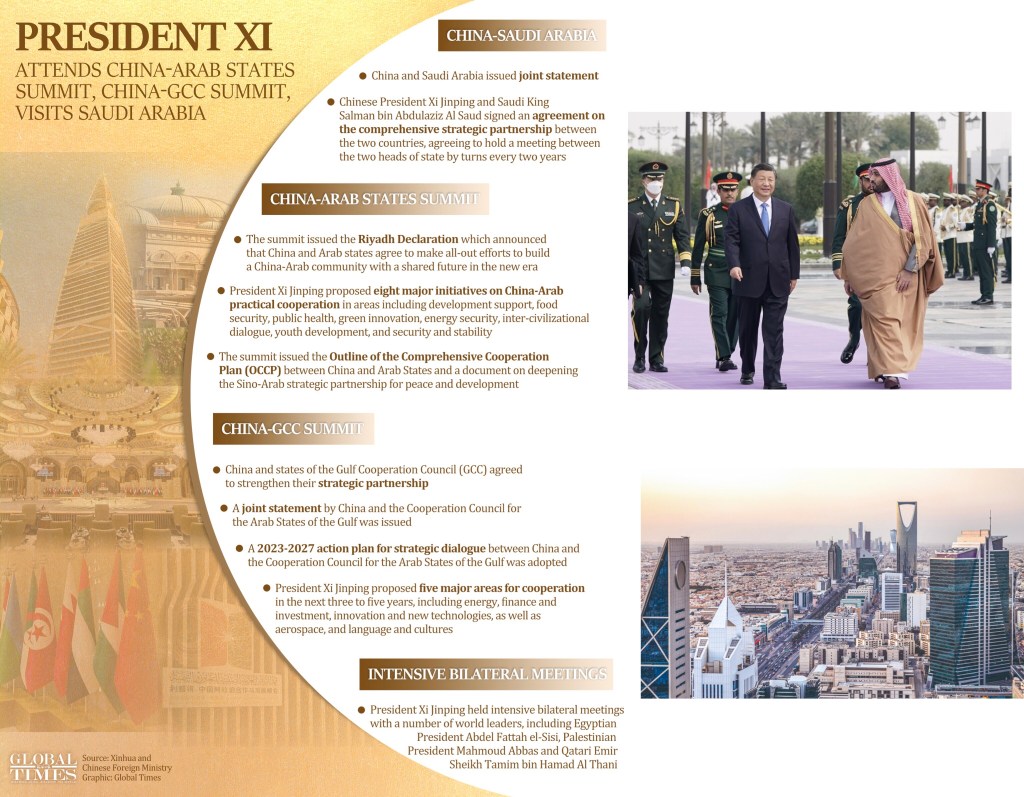
Xi’s visit leads China-Arab friendship to go deeper into local people’s hearts Yu Jincui and Xing Xiaojing in Riyadh Dec 11 2022
Chinese President Xi Jinping’s visit to Saudi Arabia and his attendance at the first China-Arab States Summit and China-Gulf Cooperation Council (GCC) Summit have made “China” a word frequently mentioned in the Arab world in recent days.
From TV shows about Xi’s visit and China-Arab relations on various local channels airing from morning till night to warm responses from people from all walks of life in Saudi Arabia and the region, to President Xi’s signed article and speeches, and to local Riyadh residents’ enthusiastic greetings of a friendly “nihao (hello),” the Chinese president’s visit has shown that during Xi’s trip of “opening up a better future,” the China-Arab friendship has deepened and ingrained itself into the hearts of the local people.
Grand welcome
The day after President Xi arrived in Riyadh for a state visit to Saudi Arabia, when the Global Times reporters visited Nada Saad Hussain Al Sulaiman, a sophomore majoring in business Chinese at Princess Nora bint Abdul Rahman University, her family was watching a TV news program focusing on Xi’s visit. Nada’s husband Turki Abdullah Alsulaiman, a colonel of the Royal Saudi Air Force, excitedly showed the visiting reporters video clips featuring the grand and warm reception Xi received at the King Khalid International Airport. “I believe this is the highest-level form of welcome in our country for the most distinguished guest,” he repeatedly told the Global Times.
On Wednesday afternoon, Xi’s plane was escorted by four fighter jets from the Royal Saudi Air Force after it entered Saudi airspace, and by six Saudi Hawk jets from the royal aerobatic team after it entered capital Riyadh’s airspace. When the plane landed at the Airport, a 21-gun salute heralded Xi’s arrival. The Saudi Hawks painted the sky red and yellow, the colors of China’s national flag. On Thursday, a grand ceremony was held for the Chinese leader as he was warmly received by Saudi Crown Prince and Prime Minister Mohammed bin Salman Al Saud on behalf of King Salman bin Abdulaziz Al Saud at the royal palace in Riyadh.
During the visit, Xi published a signed article entitled “Carrying Forward Our Millennia-old Friendship and Jointly Creating a Better Future” in the Saudi newspaper Al Riyadh. “Designed as a trip of building on the past and more importantly, of opening up a better future, the visit will carry forward our traditional friendship, and usher in a new era in China’s relations with the Arab world, with Arab states of the Gulf, and with Saudi Arabia,” Xi wrote.
Mohammad Altowaim, a member of the Saudi Chinese Business Council, told the Global Times that he read Xi’s article carefully twice, and the second time he read it to his friends, he read it loud.
“The most important message conveyed in the article is that China is a peaceful country wishing for peace for the whole world,” he said.
According to Mohammad, through Xi’s article, the Saudi people could feel that China is not in the Middle East to play power politics games, but is here to help local people. He noted that different from some other countries which came to the Middle East to play geopolitical games, China takes quite a different approach.
Kong Dequan, a Chinese national residing in Riyadh who runs a Bed and Breakfast, a small lodging establishment that offers overnight accommodation and breakfast, told the Global Times that reports and video clips about Xi’s visit overwhelmed WeChat groups in which he is a member, and which contain both Chinese nationals in Saudi Arabia and local Saudi friends, on the day Xi landed in the country. He said the overseas Chinese community could benefit from the growing strength and prosperity of China.
“China has become stronger, but the Saudis do not fear China as they do the US. They like and welcome China, and this is our advantage over the US,” Kong said, noting he felt good that China respects the local people.
Precious memory
Xi’s visit is of special significance to Nada as a Chinese learner in Saudi Arabia. She was one of the co-authors of a letter to Xi who received a letter of reply from the Chinese leader. In the reply letter, the Chinese president encouraged Saudi youth to learn Chinese well and make new contributions to the strengthening of China-Saudi Arabia and China-Arab friendship. “This is a precious memory to cherish for a lifetime,” she told the Global Times.
“I am coming back to Riyadh, bringing with me profound friendship from the Chinese people,” said Xi in his article in Al Riyadh. In 2016 when Xi visited Saudi Arabia, the two countries agreed to elevate the bilateral relationship into a comprehensive strategic partnership. Since then, the friendship between the two countries has prospered.
In the Murabba Palace, a historically notable structure in Riyadh, Abdullah S. Alotaibi, Dir of the Memorial Hall and the Murabaa Palace, told the Global Times that he still remembers every detail from Xi’s visit to the Murabba Palace in the company of King Salman bin Abdulaziz Al Saud of Saudi Arabia on January 20, 2016. He said the Murabba Palace witnessed the friendship between China and Saudi Arabia, and Xi’s visit to the country this time would definitely elevate bilateral relations to a new level.
The King Saud University in Saudi Arabia conferred President Xi Jinping with an honorary doctorate degree on Thursday in recognition of his remarkable achievements in national governance and the key contributions he has made to bilateral friendship and cooperation. The efforts made by President Xi to lead China and manage the entire situation are remarkable, said Mohammad.
A Saudi Arabian educator at King Saud University who requested to remain anonymous told the Global Times that what Saudi Arabians have seen of China supporting their country is beautiful.
“How can we be less than extremely happy to have received such a guest of honor, who came to my country to show solidarity, and the principle of giving and providing, and to say here we are to work together to do a lot for the world?” the educator asked.
Abdullah Albasri, a student majoring in Chinese who just graduated from the King Saud University, told the Global Times that his country did try to give the distinguished guest what is the best. “China is Saudi Arabia’s good friend and largest trading partner; Xi’s visit will make bilateral relations more prosperous,” he said.
Popular initiatives
On Friday, when delivering a keynote speech at the first China-Arab summit, Xi called on China and the Arab states to carry forward the spirit of China-Arab friendship and foster a closer China-Arab community with a shared future, so as to deliver greater benefits to their peoples, and advance the cause of human progress. He also called on China and GCC countries to be partners in promoting unity, development, security, and civilization at the China-GCC summit.
Xi said China will work with the Arab side to implement the (China-proposed) Global Development Initiative (GDI) and drive the sustainable development of the South-South cooperation. He also said Arab countries are welcome to participate in the Global Security Initiative (GSI, also proposed by China), noting that China will continue to contribute Chinese wisdom to the promotion of peace and tranquility in the Middle East.
Mohammad said the GDI and GSI are the best examples of how China wants to deal with the world. The two initiatives show that China wants to deal with the world not through arms, but through win-win development. The people in the Middle East are tired of other countries’ interference, because they always come with troubles, he said. He noted that the Chinese way of engaging with Africa – doing everything to help the people in Africa to bolster infrastructure without forcing people to turn away from their own cultures – makes people believe that the win-win scenario could be even stronger in the Middle East.
There are complementarities in the relationship between China and Saudi Arabia. One of the important characteristics of China-Saudi Arabia relations is mutually beneficial cooperation and equality. “China and Saudi Arabia treat each other with equality and mutual respect. This is different from the West which always treats Middle Eastern countries with condescension,” said Wang Guangda, secretary-general of the China-Arab Research Center on Reform and Development at the Shanghai International Studies University.
Wang believed that countries in the region are fully aware of the US and West’s hegemonic behaviors in the region. He said the enhancement of China-Saudi Arabia and China-Arab relations is a victory for Xi Jinping Thought on Diplomacy in the Middle East region, a reflection of regional recognition of China’s promotion of building a new form of international relations featuring mutual respect, equality and justice, win-win cooperation and building a China-Arab community with a shared future.
It rained on the days President Xi arrived in and left Riyadh, where rains are valuable, indicating China-Saudi Arabian relations and China-Arab relations, which are as precious as rainwater, will become even closer, local residents said.
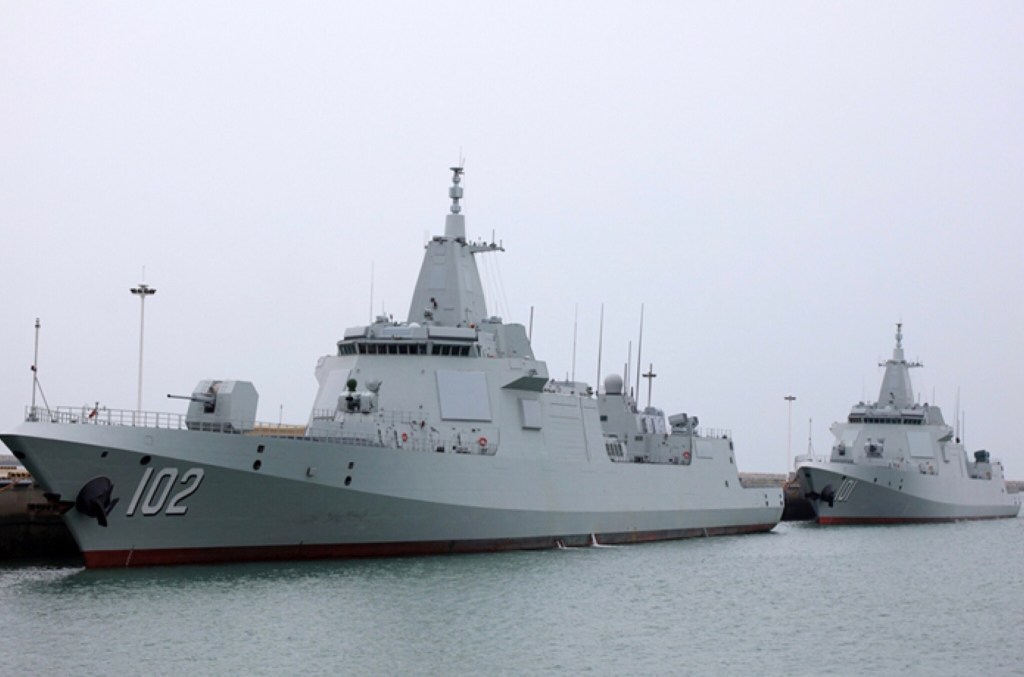
Type 055 large destroyer leads PLA warships in island chain-breaking voyage by Liu Xuanzun Dec 15 2022
Led by a 10,000 ton-class large destroyer, a group of warships of the Chinese People’s Liberation Army (PLA) Navy reportedly sailed beyond the first island chain on Wednesday via two strategically important straits near Japan, a routine exercise experts said on Thursday sent a signal amid Japan’s recent militaristic moves, including updates to its national security strategies with the plan to increase military spending and referring to China as a “strategic challenge.”
Japan’s Maritime Self-Defense Force spotted a PLA Navy flotilla consisting of the Type 055 large destroyer Lhasa, the Type 052D destroyer Kaifeng and the Type 903A replenishment ship Taihu sailing from the East China Sea through the Osumi Strait into the West Pacific from Tuesday to Wednesday and a PLA Navy electronic reconnaissance vessel with hull number 796 sailing from the East China Sea through the Miyako Strait into the West Pacific from Monday to Wednesday, Japan’s Ministry of Defense Joint Staff said in two press releases on Wednesday.
This is the second time the Lhasa has made a voyage into distant waters this year, with the first one in June, when it led a flotilla of a similar configuration into the Sea of Japan, and then sailed in a circle around Japan before returning, according to releases by Japan’s Ministry of Defense Joint Staff at the time.
The latest voyage is likely a regular far sea training exercise carried out according to training schedules, which is aimed at enhancing the Lhasa and other vessels’ operational capabilities in far sea, a Beijing-based military expert told the Global Times on Thursday, requesting anonymity.
It also comes at a time when Japan recently updated its national security strategies, which plan to increase the country’s military spending and referred to China as a “strategic challenge.”
Japan is also planning to purchase Tomahawk cruise missiles from the US, which experts believe are of a type of aggressive, standoff weapon that can be used in first attacks, going against Japan’s pacifist constitution set after Japan’s defeat in World War II.
It also came after a senior official of Japan’s ruling Liberal Democratic Party recently also visited the island of Taiwan and made irresponsible remarks on China.
While the PLA warships’ far sea training is routine and not aimed at any third party, it will display the PLA’s capabilities in safeguarding China’s national sovereignty, territorial integrity and development interests, as well as defending the post-World War II international order, the expert said.
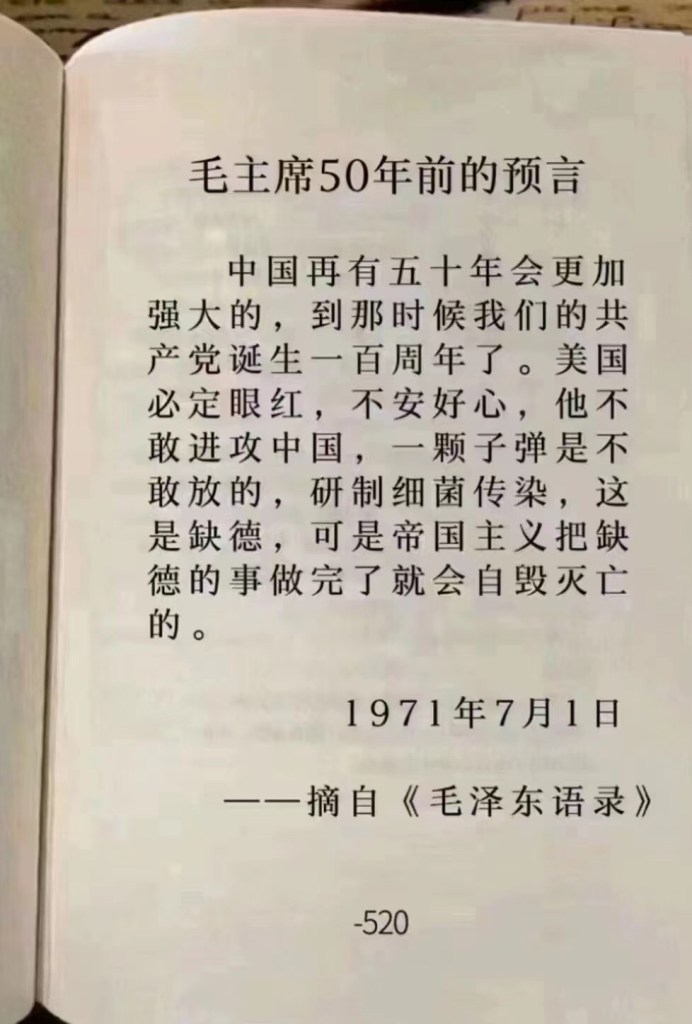
Chairman Mao’s predictions 50 years ago: CPC will be very strong in 50 years made US extremely jealous. But US will not dared to invade China, but germ warfare against China shall became an US option – Jul 1 1971
 Business Blog