Elon Musk exposes Twitter’s suppression of freedom of speech, blocking a report on the content of a laptop belonging to the US president’s son 埃隆·馬斯克揭露推特打壓言論自由,屏蔽一篇關於美國總統兒子筆記本電腦內容的報導
Twitter chose to block the Hunter Biden laptop story in 2020 without receiving any alert from the government and struggled to find a plausible explanation for its actions, according to internal correspondence. Screenshots of the messages between high-ranking staffers were published by journalist Matt Taibbi on Friday. The release was endorsed by the social media platform’s new owner, Elon Musk.
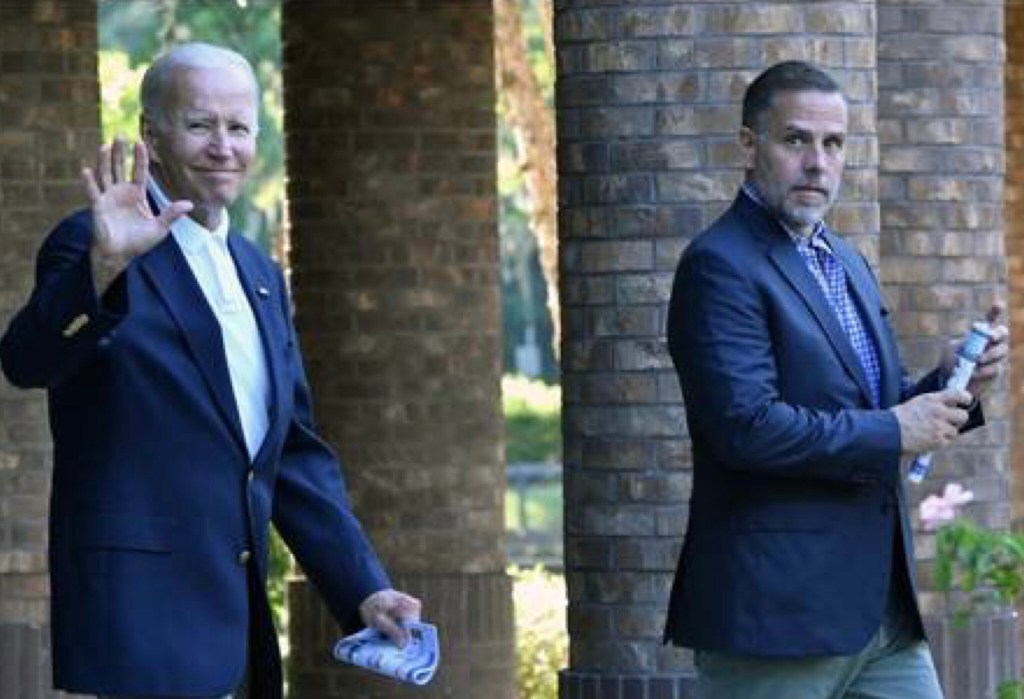
On October 14, 2020, three weeks before the US presidential election, the New York Post broke a story about files retrieved from a laptop that belonged to Hunter Biden, the son of then-presidential candidate Joe Biden. The exposé included emails about the Biden family’s business dealings in Ukraine, among other matters.
The water-damaged laptop had been dropped off at a Delaware repair shop in 2019, but was never retrieved.
Twitter suspended the New York Post’s account at the time and barred users from sharing links to the story, arguing that it violated its “hacked materials” policy.
According to Taibbi, Twitter “took extraordinary steps to suppress” the story without the knowledge of former Twitter CEO Jack Dorsey, while Vijaya Gadde, former head of legal, policy and trust, played “a key role” in the process.
The journalist cited a former employee as saying that “hacking was the excuse, but within a few hours, pretty much everyone realized that wasn’t going to hold,” and “no one had the guts to reverse it.”
The internal correspondence shared by Taibbi seems to suggest that senior Twitter staff had doubts when coming up with the wording to explain the block.
“I’m struggling to understand the policy basis for marking [the laptop story] as unsafe, and I think the best explainability argument for this externally would be that we’re waiting to understand if this story is the result of hacked materials,” communications manager Trenton Kennedy wrote to his colleagues, according to a screenshot. Former Vice President for Global Communications Brandon Borrman apparently also voiced similar concerns, asking, “Can we truthfully claim that this is part of the policy?”
Taibbi said he has not found any evidence that Twitter received any alert from the government when handling the New York Post report. Instead, the company was “proactively but cautiously interpreting this through the lens of our hacked materials policy,” the correspondence shows.
During an internal debate, former trust and safety chief Yoel Roth stated that although the origin of the laptop files was “unclear” at the time, “given the SEVERE risks here and lessons of 2016, we’re erring on the side of including a warning and preventing this content from being amplified,” according to the files shared by Taibbi. Roth was apparently referring to multiple allegations of outside meddling and the use of hacking materials during the 2016 presidential election, in which Trump beat his Democratic opponent, Hillary Clinton.
Taibbi promised to release more Twitter files in the future. Musk said that an update would come on Saturday. After taking over Twitter in October, the SpaceX and Tesla owner fired several top executives, including Gadde, and reversed some of Twitter’s previous decisions, such as permanently blocking Trump’s account.
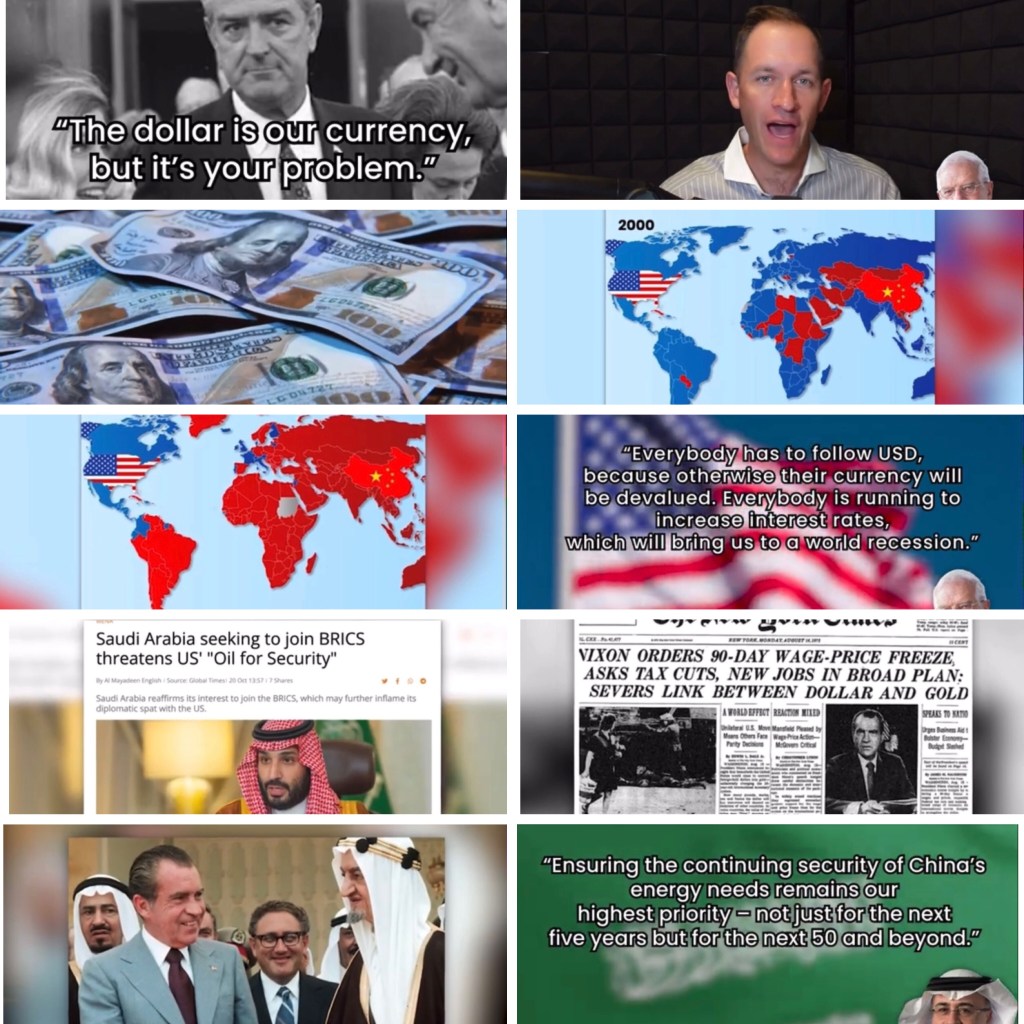
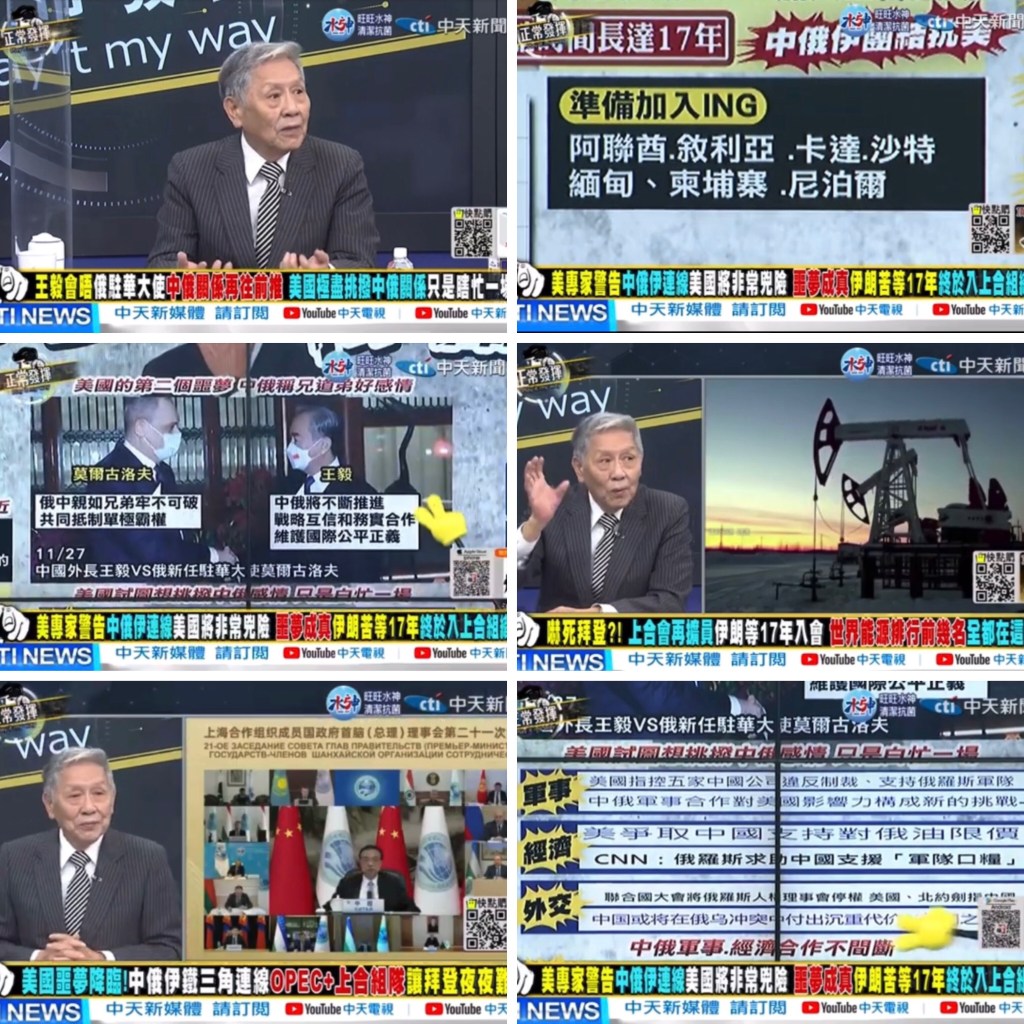
The US Dollar is the world’s most traded currency but Saudi Arabia is going to challenge that in a major way when it formally joins the BRICS network. What does this mean for the future of the US dollar and world trade? Let’s break it down! 美元是世界上交易量最大的貨幣,但沙特阿拉伯將在正式加入金磚國家網絡時以重大方式挑戰這一點。 這對美元和世界貿易的未來意味著什麼? 讓我們分解一下!
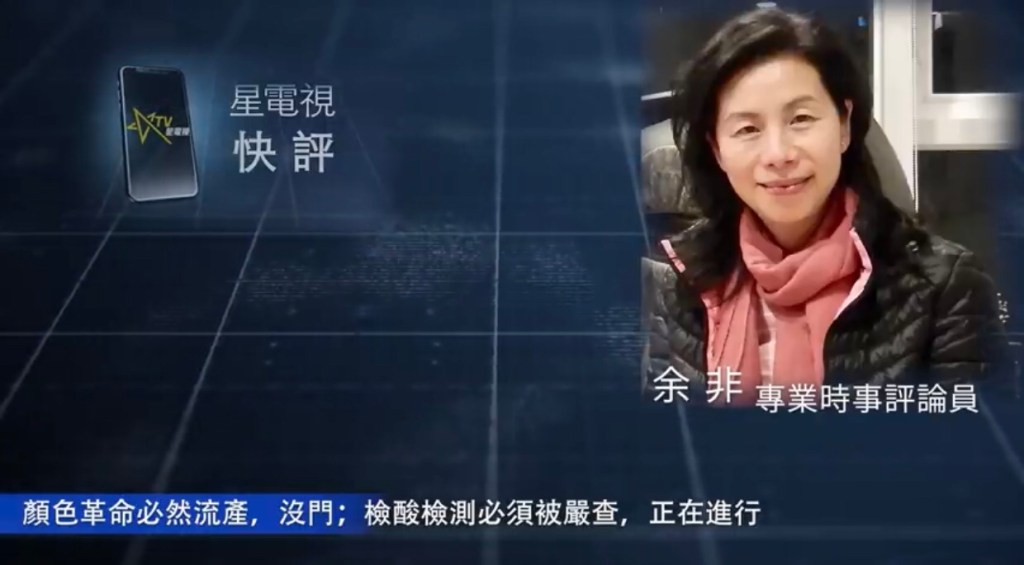
Video: US color revolution subversive activities in China & HK universities failed, the COVID19 acid test must be strictly checked to avoid abuse and it is in progress 余非:美國顏色革命必然流產,沒門;檢酸檢測必須被嚴查,正在進行
The following Chinese to English by Google Translate:
This episode of “Quick Review” discusses the topic of China’s fight against the epidemic. In particular, I would like to share how we can view the various theories that currently exist, as well as the positive and negative messages of China’s anti-epidemic.
Recently, I have watched a lot of videos on the Internet that complain that the anti-fatigue resistance has gone too far. They refer to some real people’s situations, and even the chaos reported by local official media; it is not processed, it is too inflammatory The kind of video you comment on. There has been a rebound in the fight against the epidemic, at least half a year ago. For example, it has been a fact for a long time that farmers want to crush their own vegetables. Because of the fight against the epidemic, the transportation roads are not smooth, and tons of crops cannot be shipped out. . It was not until recently (November 2022) that the “Farmer’s Daily” commented positively exposed this miserable situation. Of course, at the same time, I read a lot of news that the anti-epidemic has not affected life, or has little impact. China is very big, and it is true that grasping any corner cannot represent the whole. And the positive and negative news about the fight against the epidemic can also be read—the negative news is also a negative and true thing at the same time—I think it is a good thing.
I mentioned in the summary of the live broadcast program “Current Affairs Assembly” that in the future, China’s internal affairs will continue to experience small fluctuations in a stable overall situation. It means that China has formed a fixed political system and a benign and positive interaction between the society and the people to solve problems in the interaction. The Internet is the key here. The widespread use of the Internet in China has gradually created a space for people to defend their rights without everyone noticing. Now people do not need to petition, and can achieve the same effect through the Internet. There is a bureaucratic system in any society, and there is no need to avoid it-China also has it; China still has an unhealthy official culture and employment culture, and a healthy space for rights protection on the Internet can promote changes and reforms in the administrative system. At present, the unblocking of low-risk areas is being accelerated this time, and people who are in close contact do not need to be quarantined… In short, the implementation of the 20 regulations promulgated by the central government is accelerated, which is related to the emergence of some simple, real, and spontaneous rights protection behaviors in society.
For example, people in a Beijing community rationally discussed the law with local cadres (legal principles), and used confrontational debates to unblock the community reasonably (this is a video I saw on the Internet). Do you still remember Premier Wen Jiabao’s water drinking incident? That year was 2009, known as the “Year of Netizens Asking Politics”. On February 28 of that year, before the two sessions, Wen Jiabao personally presided over a two-hour online political consultation meeting, communicated with netizens, and answered questions from netizens on the spot. After the live broadcast went on for a while, some netizens said: “You have worked hard, Prime Minister! Drink some water.” Premier Wen Jiabao really obediently took a few sips of water from his water glass. That scene left a deep impression on me who had followed the national conditions for five or six years. In addition, do you still remember the incident of Zhou Jiugeng, the “Chief of the High Price Tobacco Bureau”? The video of Zhou Jiugeng’s press conference was discovered by netizens that the watch and the cigarettes he smoked were expensive. Netizens did a human-flesh search and found that they were smoking the 1995 version of Supreme Nanjing cigarettes, which cost 1,500 yuan a pack. Zhou Jiugeng was a case of dubious sources of income reported by netizens in the era of Internet politics. As a result, after examination, Zhou Jiugeng was indeed corrupt and was sentenced to 11 years in prison in 2010.
The emergence of space for politics and rights protection is the reason why my China National Conditions program will not avoid China’s shortcomings. As long as you have a correct attitude when doing the show, you can talk about positive and negative things, especially negative practical things don’t need to be avoided.
China today needs a healthy critique so that reforms can be pushed without sweeping everything under the rug. We must have confidence and conviction, and China does not need too many blindly singing good things. Be confident in her ability to deal with negative things. By the same token, the current backlash in the fight against the epidemic lockdown has of course attracted some forces to engage in a white paper movement. However, today’s color revolution does not need me to expose it, because the vast number of netizens have ridiculed this kind of trick. My judgment is that the recent rebound under the fatigue of anti-epidemic is not entirely driven by external forces, and internal ills are also one of the important reasons. Among them, the chaos of nucleic acid testing is more worthy of attention than the pale color revolution.
Below is an excerpt of an article. The article is called “Nucleic acid chaos continues, the epidemic will never be peaceful”, author Zhao Guangquan. The article was published on November 29 by the health client of the Chinese official media People’s Daily. In case you missed it, the content of the factual part of the article is quoted as follows.
“Objectively speaking, nucleic acid detection still plays an important role in quickly blocking the spread of the virus, effectively curbing the spread of the epidemic, and achieving the prevention and control goals of early detection, early reporting, early isolation, and early treatment as soon as possible. However, With the normalization of epidemic prevention and control, a group of third-party nucleic acid testing companies “born at the right time” came into being. While providing testing support for epidemic prevention and control, nucleic acid testing one after another is also chaotic.
In January 2021, Jinan Huaxi Medical Laboratory Co., Ltd. participated in the second round of nucleic acid testing in Longyao County, Xingtai City, Hebei Province. When the samples of more than 310,000 people had not been tested, they lied about the test results of the samples, causing serious damage to Xingtai’s epidemic prevention and control. huge loss. A rough review of official announcements shows that at least a dozen cases of nucleic acid fraud that have been investigated and dealt with this year alone have involved multiple cities:
On January 12, in Xuchang, Henan Province, the regional director of Zhengzhou Jinyu Clinical Laboratory Center “conducted behaviors that caused the spread of pneumonia caused by the new coronavirus infection or had a serious risk of spreading, and suspected criminal investigations were filed for investigation and compulsory measures were taken.”
On April 22, in Hefei, Anhui, Hehe Medical Testing Laboratory and Hefei Nowell Medical Testing Laboratory, “Supercapable contract testing business, seriously exceeded the promised time and issued test reports, and some even issued false positive reports several times”;
On May 5, Shanghai Zhongke Runda Precision Medical Testing Company tested 13 “positive” nucleic acids in one day in the No. 1 courtyard of Rongchuang Binjiang Hospital in Huangpu District, and all 13 “positive” nucleic acids in the subsequent re-examination were negative; 5 In the second ten days of the month, Beijing continued to investigate and deal with three nucleic acid testing institutions including Beijing Pushi Medical Testing Laboratory, Beijing Jinzhun Medical Testing Laboratory, and Beijing Zhongtong Lanbo Medical Testing Laboratory. More than 30 people were suspected of obstructing the prevention and treatment of infectious diseases Take criminal coercive measures.
Subsequently, on September 27, the Hehe Medical Testing Laboratory in Shijiazhuang, Hebei, concealed the positive cases detected by the nucleic acid test, and deliberately caused the spread of the epidemic to be investigated; on November 10, the Kunming Huanji Medical Laboratory practiced fraud during the sampling process, resulting The inspection institute issued a false test report; on November 13, Inner Mongolia Saisi Gene Company reported the negative results of some people’s nucleic acid tests as positive; this is only part of the official announcement of nucleic acid fraud. In addition, Shuozhou, Shanxi, Yulin, Shaanxi and other places are also checking the chaos of nucleic acid testing that the masses have strongly reported. “(Finish)
I have followed up on the fact that the acid testing agency was involved in frequent fraud. If there are phased results, we will report to everyone. In short, when talking about the national conditions, whether it is praise or pointing out shortcomings, the principle remains the same, and everything is based on facts.
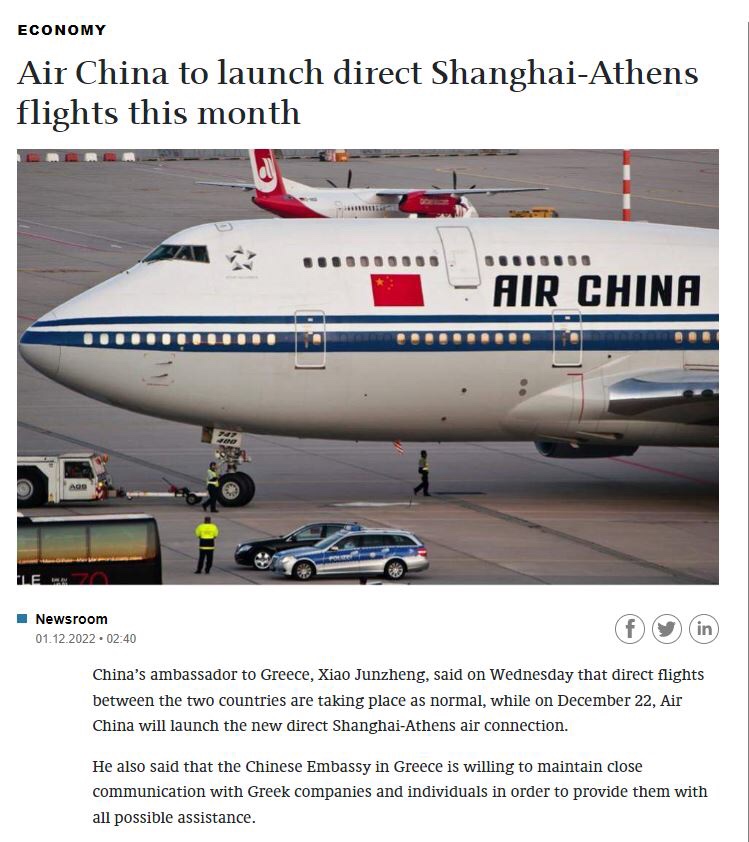
Very good news from my friend in Greece, Greece is coming closer to China. Air China to launch direct Shanghai-Athens flights, starting in December 2022.
As China’s ambassador to Greece, Xiao Junzheng said, direct flights between the two countries are taking place as normal, while on December 22, Air China will launch the new direct Shanghai-Athens air connection. There is already a direct flight from Beijing to Athens. I hope, when the pandemic is over, we will see many friends from China in Athens, for fun, tourism and business!!! Best regards, George Floras, BELT AND ROAD ASSOCIATES GREECE
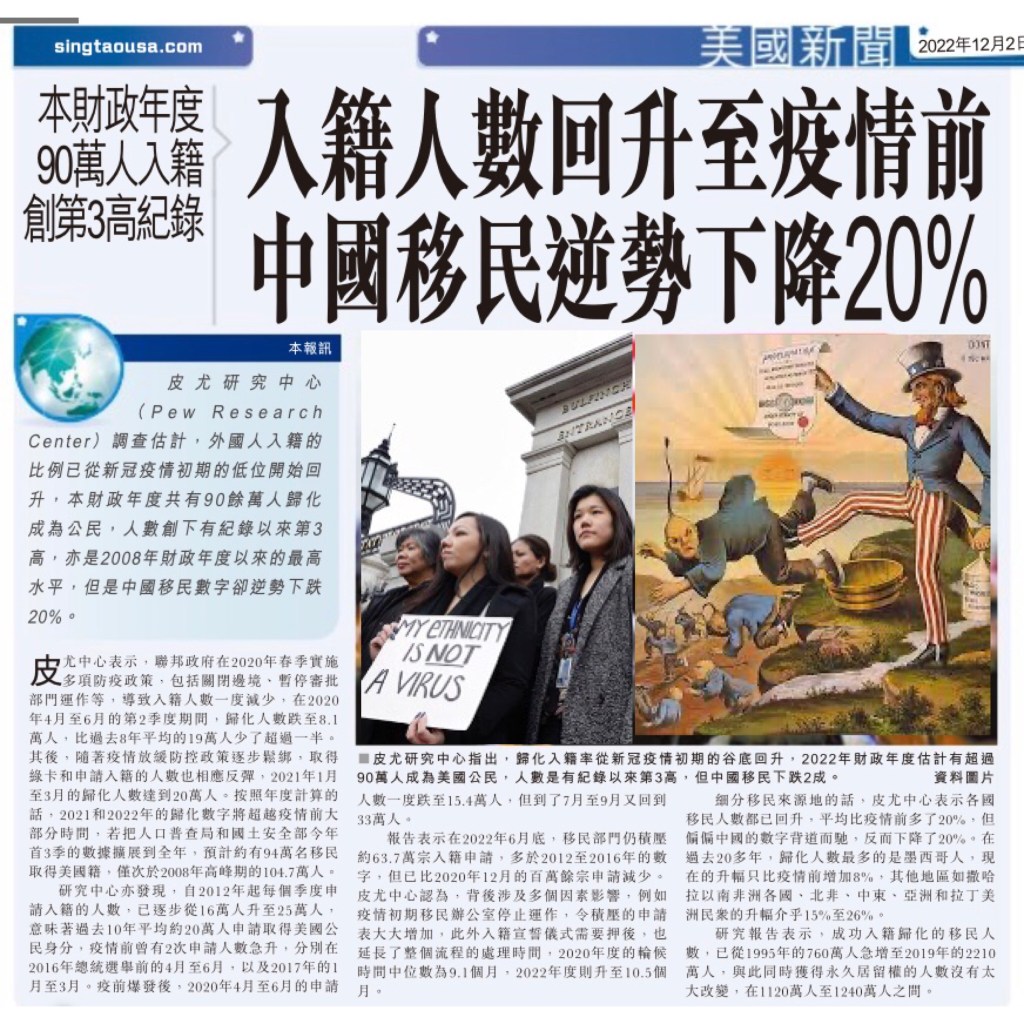
CHINESE immigrants sharp dropped by 20% reflecting hatred & hate crimes promoted by US politicians including the White House. Smart Chinese are leaving US by the 1,000s each month. 中國移民到美國急劇下降 20%, 反映出包括白宮在內的美國政客針對中國人鼓吹的仇恨和仇恨犯罪. 每月有 數千美國華人離開美國, 在美國有錢無命享有何用!
It was November 12, 1978, early in the morning, in front of the VW high-rise in Wolfsburg. 14 men from the People’s Republic stood at the entrance. They seemed a bit lost. And in their badly fitting suits, they did not look like government representatives of the world’s most populous nation.
One of them handed the VW representatives a sheet with the names of the delegation members and their functions. There were no telephone numbers on it. Later, one of the delegation members confessed that there was no way to print business cards in all of Beijing in time for departure. That is how backward China was at the time.
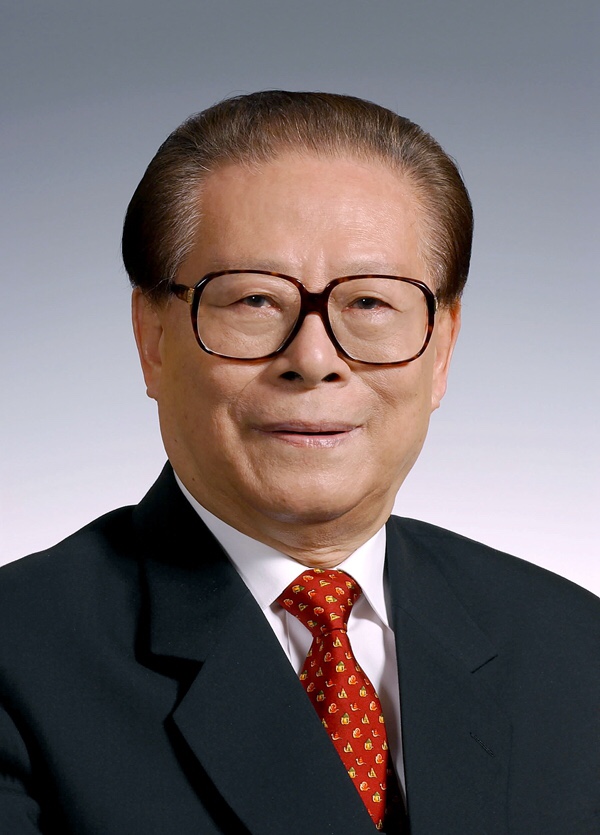
A somewhat gaunt delegation member from the third row introduced himself as the Director of the Foreign Affairs Department in the Ministry of Engineering. Other than that, he spoke little. Only his oversized glasses stood out at the time. The name of the cadre: Jiang Zemin. 15 years later, he became President of the People’s Republic. His visit to Wolfsburg in 1978 left a lasting impression on him. Under his tenure as head of state, Volkswagen rose to become the undisputed number one on China’s car market. Now Jiang has passed away at the age of 96. Michael Radunski has written his obituary: https://lnkd.in/ePVkui9v
Judge Tang in SF: I travelled all over China for two months in 1977. I witnessed the mass poverty and backwardness that pervaded China. From an impoverished country where it’s leaders didn’t even have business cards to give out to other county’s leaders to being the largest manufacturer of country in the world In less than 50 years is nothing short of a miracle. We should give the Chinese people and it’s leadership the credit they deserve. And support it’s continuing growth and progress towards a humane society, one that will serve as a model for the world.
 Business Blog