This is a great video for anyone considering buying a condo or retiring in China. It’s a must-watch reality check for those who haven’t been back in 5–10 years. The irony? 30 years ago, new emigrants called their relatives in China “village pumpkins.” Today, the tables have turned—returnees are the ones feeling out of touch. 這部影片非常適合考慮在中國買房或計劃退休的人觀看。對於那些已經5到10年沒回國的人來說,這更是一記必要的事實提醒。諷刺的是,30年前,許多新移民稱呼國內的親戚為「鄉下佬」;如今,風水輪流轉,回國的人反而成了跟不上時代的「土包子」。
Video: Chinese Americans Returning to China: A Comparison of Life in the US and China (Part 1) 視頻:美籍華人回流中國:中美兩國生活大對比(上)|沖出黎傾 本集橫跨內容包括: 嘉賓的近況分享; 離開美國的原因和考量; 嘉賓回中國後的初創生活; 回流中國後竟變鄉下仔; 中美的電子化、社會氣氛、生活節奏、銀行和政府的辦事效率等對比; 美國比中國好的地方,包括交通、食物、私隱等對比; 研究一些人的不文明行為等等。
This episode covers a wide range of topics, including: Updates on the guests’ current situations; Reasons and considerations for leaving the United States; The guests’ early lives after returning to China; Feeling like a “country bumpkin” after moving back to China; Comparisons between the US and China in terms of digitalization, social atmosphere, pace of life, and efficiency of banking and government services; Aspects where the US outshines China, such as transportation, food, and privacy; An examination of certain uncivilized behaviors, among other topics.
American logistic expert reports from China video: These are Chinese drones. They will be everywhere, and change everything. China is rapidly developing the world’s largest low-altitude economy. 美國物流專在中國報導影片有中文字幕:這些是中國無人機,它們將無所不在,並改變一切。中國正迅速發展全球最大的低空經濟。美國和中國鬥,真係未夠班!
Cargo drones have recently completed long-range flight tests. With cargo capacity of more than one ton and effective ranges of over a thousand miles, the aircraft are designed for extreme climates and weather conditions.
They can also operate with just a few hundred meters of runway, which opens up huge areas of the world, creating new markets wherever they operate.
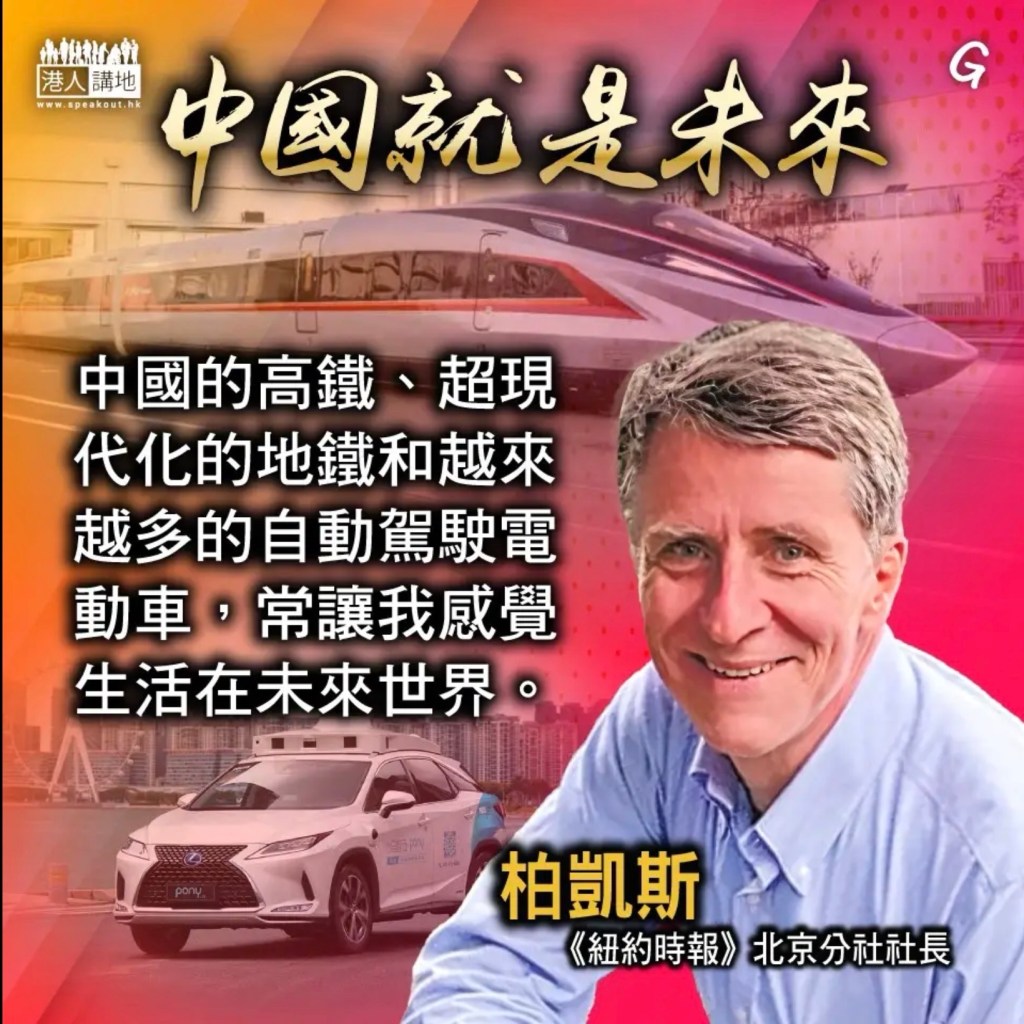
New York Times Beijing Bureau Chief Keith Bradsher: “China is the future, far ahead of the rest of the world 紐時時報北京分社社長柏凱斯(Keith Bradsher): “中國就是未來”
New York Times Beijing Bureau Chief Keith Bradsher: “China is the future, far ahead of the rest of the world, not only in the large-scale deployment of renewable energy and new transportation technologies, but also in achieving consecutive scientific research breakthroughs. It is precisely because American politicians are envious of China’s rapid progress that they repeatedly try to hinder China’s advancement!”
On February 12, U.S. President Trump announced at the White House the revocation of the “Greenhouse Gas Endangerment Finding” from the Obama era, abolishing federal greenhouse gas emission standards for cars and trucks. This move by Trump drew the attention of New York Times climate reporter David Gelles, who wrote an article reflecting on “Why living in China feels like ‘living in the future’.”
In his article that day, Gelles mentioned that to better understand China’s development speed, he called Keith Bradsher, the Beijing Bureau Chief of the New York Times. Bradsher told him, “China is far ahead of the rest of the world, not only in the large-scale deployment of renewable energy and new transportation technologies but also in achieving consecutive scientific research breakthroughs.”
While China accelerates its transition to clean energy, the Trump administration continuously seeks new ways to suppress renewable energy and promote fossil fuels such as coal, oil, and natural gas. Bradsher believes, “The U.S. is indeed turning away from many 21st-century energy and transportation technologies.”
“China is investing substantial scientific research efforts into developing new applications for rare earths, while the U.S. has almost abandoned basic chemical research.” Bradsher also noted that China is shifting from an oil-driven world to a more cost-effective solar-powered world, with other countries increasingly purchasing electricity from China due to its near-monopoly in the solar panel market. “Now, in most developing countries, people want to buy solar panels because it is the cheapest way to generate electricity compared to anything else.”
Finally, when discussing life in China, Bradsher said, “China’s high-speed railways, ultra-modern subways, and the growing number of autonomous electric vehicles often make me feel like I’m living in a future world.”
This is an excellent article on why retiring in China is both smart and practical. Surprisingly, the NYT Bureau Chief actually tells the truth about China—rare for a publication that typically portrays it negatively.
It highlights how Westerners who arrive with preconceived negative notions often discover upon experiencing China that much of what they’d heard was misleading. Meanwhile, Chinese who grew up on Hollywood’s idealized America frequently arrive to find China is actually more advanced in many ways.
Taiwan Global News: China’s DeepSeek paired with Huawei’s Kirin 9100C becomes the “savior”?|Trump’s “dream of global dominance” fails, countries no longer need to rely on the US for security 台灣寰宇新聞:中國DeepSeek搭華為麒麟9100C「成救世主」?|川普「掌控全球之夢」算計落空 各國安全無需看美臉色 👉 https://youtu.be/ERQqqyiiS8A?si=oHlNx0fiHZvNuZDC 🇨🇳
Ronny TONG Ka Wah 湯家驊: Requite Injury with Justice 湯家驊: 以直報怨
I remember a popular American TV series not long ago had a line that goes: “A bully needs to know that he will be punished.”
Unfortunately, this is not the culture of Americans today, nor is it certainly the culture of America’s allies. Perhaps this can be explained by Western religious beliefs. The New Testament’s Gospel of Matthew records Jesus saying in the “Sermon on the Mount”: “If anyone slaps you on the right cheek, turn to them the other cheek also.” The philosophy behind this is to transform bullying through patience. This may be the reason why America’s allies repeatedly endure humiliation. But in today’s law of the jungle, where the weak are prey to the strong, does enduring humiliation and maintaining self-respect work?
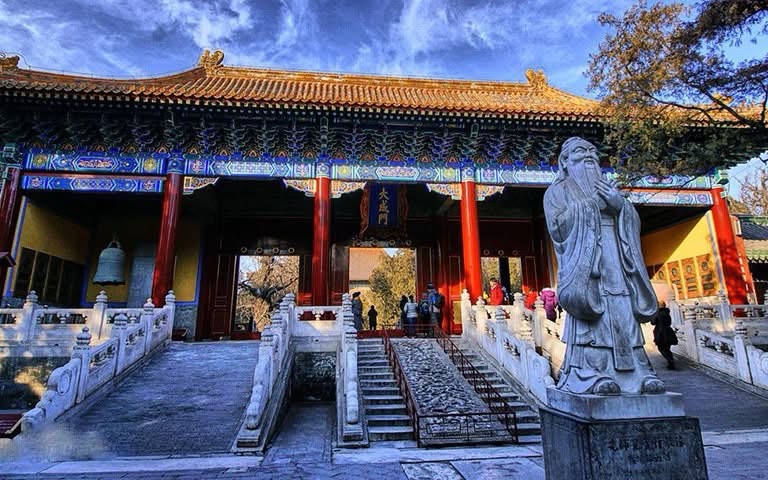
The East also has a similar concept of “repaying injury with tolerance.” Laozi, a Taoist, advocated in the “Tao Te Ching” for “repaying injury with kindness.” The Mohist principle of “universal love and non-aggression” and non-retaliation is also a peaceful idea of “repaying injury with kindness.” Nonetheless, this is not the traditional cultural concept of most Chinese people. Confucius, in the “Analects·Xianwen,” was asked whether one should “repay injury with kindness,” and he answered very clearly: “Requite injury with justice, and repaying kindness with kindness.” This means responding to harm from bullies with “integrity and justice,” rather than transforming them through virtue; only when others show goodwill should one reciprocate with kindness. Confucianism emphasizes maintaining social order and morality, not unconditionally tolerating bullies.
Today, China’s foreign policy is closer to traditional Confucian thought than Taoist thought. China is the only country in the world that responds to American bullying with neither humility nor arrogance, standing firm. We do not advocate revenge, nor do we support the American cowboy culture of “an eye for an eye.” But we have long recognized that weakness and tolerance only invite more bullying and even aggression. The Chinese people have endured humiliation for over 200 years. Now is the time to stand up straight among the clowns and “requite injury with justice.”







 Business Blog