Video: Chinese Historical Memory – Qian Xuesen and China Spaceflight – Overseas Chinese Scientists are facing similar prosecution today 中國歷史記憶 – 錢學森與中國航天 – 海外華裔科學家今日面臨類似迫害
More than 10,000 Overseas Chinese Scientists already followed Qian Xuesen footsteps last 3 years, will you be next to play an important role in modern Chinese history? 近3年,一萬多名海外華裔科學家已經追隨錢學森的腳步,你會是下一個在中國現代史上扮演重要角色的人嗎?
Qian Xuesen – The movie 錢學森電影https://youtu.be/rDXrDXuDp9E
Since the beginning of the European chaos, the energy crisis is a topic that European countries can not get around. The reason why the heat of the energy crisis has been unrelenting is that the energy crisis affects more than just the energy piece. At the same time, a large number of factories are wandering on the verge of closure due to energy shortage, and the supply chain of the whole European countries will be threatened. In addition, the current energy crisis in Europe has evolved to the point where it depends on the population to reduce consumption in order to achieve energy savings. This is enough to see how much of a negative impact the energy crisis has on European countries. So at such a critical juncture, German Chancellor Scholz has announced a major decision. Recently, the German government announced an energy bailout plan on its own, with a maximum ceiling of 200 billion euros. Judging from the amount, this is definitely not a small amount. 自歐洲亂局之初,能源危機便成為歐洲國家無法迴避的話題。能源危機的熱度一直不減的原因在於,能源危機影響的不僅僅是能源這塊。與此同時,大量工廠因能源短缺而瀕臨倒閉,整個歐洲國家的供應鏈將受到威脅。此外,目前歐洲的能源危機已經發展到依靠人口減少消費以實現節能的地步。這足以看出能源危機對歐洲國家的負面影響有多大。所以在如此關鍵的時刻,德國總理舒爾茨宣布了一項重大決定。近日,德國政府自行宣布了一項能源救助計劃,最高限額為2000億歐元。從數量上看,這絕對不是一筆小數目。
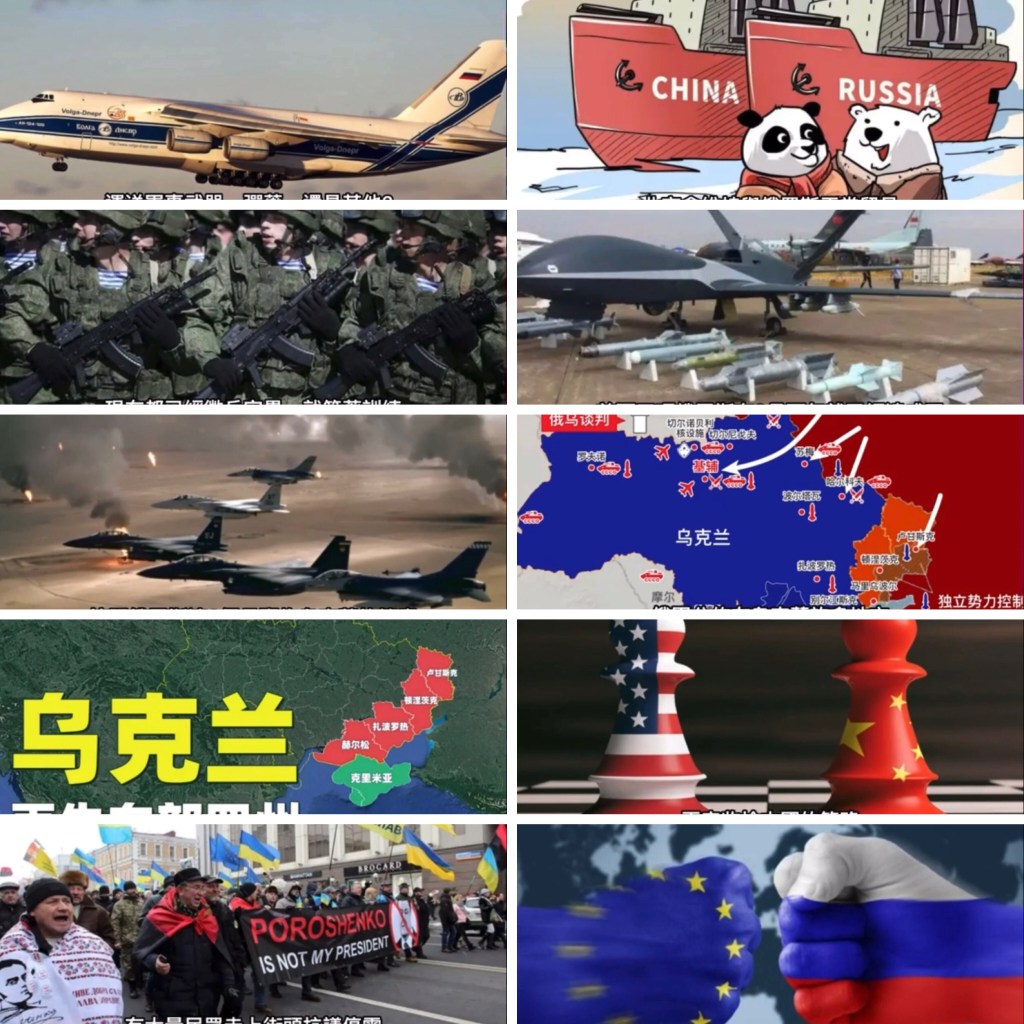
Biden unrealistic fantasy wet dreams: win China (US lost all confrontations with China since founding of PRC in 1949) and contain Russia (US never win & Europe never win battle against Russia) 拜登不切實際的空想美夢:贏得中國(自1949年中華人民共和國成立以來,美國從未贏過中國) 並遏制俄羅斯(美國從未贏過,歐洲也從未贏過與俄羅斯)
US paper mill failed school system: high school scores dropped, ACT scores worst in 30 years, 40% high school graduates none reached standard (most of them probably join US military)
Qian Xuesen – Father of China’s Rocket and Space Program. To use my knowledge to change Chinese people destiny – I want Chinese people to possess her own nuclear bomb and missles despite the controversy – I personally think – We are preparing against aggression*** – not owning a sword and has a sword and not using it is an entirely different matter.”
***United States “China containment policy” since 1949, known as “Asia Pivot” or “Freedom of Navigation” since Obama Administration is to engage in provocation activities in China’s territorial water or at China’s door steps to stop China’s rise
Qian Xuesen 钱学森 – Father of China’s Rocket and Space Program
Qian Xuesen (simplified Chinese: 钱学森; traditional Chinese: 錢學森; pinyin: Qián Xuésēn; Wade–Giles: Ch’ien Hsüeh-sęn) (11 December 1911 – 31 October 2009) was a scientist who made important contributions to the missile and space programs of both the United States and People’s Republic of China. Historical documents in the U. S. commonly refer to him with the earlier family-name last spelling, Hsue-Shen Tsien or H.S. Tsien.[1]
During the 1940s Qian was one of the founders of the Jet Propulsion Laboratory[2] at the California Institute of Technology. During the Second Red Scare of the 1950s, the United States government accused Qian of having communist sympathies, and he was stripped of his security clearance[3] in 1950. Qian then decided to return to China, but instead was detained at Terminal Island[4] near Los Angeles. After spending 5 years under virtual house arrest,[5] Qian was released in 1955, in exchange for the repatriation of American pilots captured during the Korean War. Notified by U.S. authorities that he was free to go, Qian immediately arranged his departure, leaving for China in September 1955, on the passenger liner SS President Cleveland of American President Lines, via Hong Kong. He returned to lead the Chinese rocket program, and became known as the “Father of Chinese Rocketry” (or “King of Rocketry”).[6]
He is also the cousin of the mechanical engineer Hsue-Chu Tsien and his son (first cousin once removed) is the 2008 Nobel Prize in chemistry winner Roger Y. Tsien. Asteroid 3763 Qianxuesen and the ill-fated space ship Tsien in the science fiction novel 2010: Odyssey Two are named after him.
Early life and education
Qian Xuesen (Wade–Giles: Ch’ien Hsüeh-sęn) was born in Hangzhou, the capital of Zhejiang province, 180 km southwest of Shanghai. He left Hangzhou at the age of three, when his father obtained a post in the Ministry of Education in Beijing. Qian graduated from Chiao Tung University (now spelled Jiao Tong) in Shanghai in 1934 and received a degree in mechanical engineering, with an emphasis on railroad administration; he then spent an internship at Nanchang Air Force Base. In August 1935 Qian left China on a Boxer Rebellion Indemnity Scholarship to study mechanical engineering at the Massachusetts Institute of Technology and earned a Master of Science degree from MIT a year later.
While at MIT he was influenced by the methods of American engineering education, and its focus on experimentation. Qian’s experiments included the plotting of plot pressures, using mercury filled manometers. (By contrast, most engineers in China at this time were not the “hands on” type; instead, theoretical studies were preferred.) Qian sought a school where his mathematical skills would be appreciated, and went to the California Institute of Technology to pursue his studies under Theodore von Kármán. Qian earned his doctorate from Caltech in 1939 with a thesis on slender body theory at high speeds. He would remain on the Caltech faculty until his departure for China in 1955, becoming the Robert H. Goddard Professor of Jet Propulsion in 1949, and establishing a reputation as one of the leading rocket scientists in the United States.[7]
It was shortly after arriving at Caltech in 1936 that Qian was attracted to the rocketry ideas of Frank Malina, other students of von Kármán, and their associates, including Jack Parsons. Around Caltech the dangerous and explosive nature of their work earned them the nickname “Suicide Squad.”[7]
Career in the United States
In 1943, Qian and two others in the Caltech rocketry group drafted the first document to use the name Jet Propulsion Laboratory; it was a proposal to the Army for developing missiles in response to Germany’s V-2 rocket. This led to the Private A, which flew in 1944, and later the Corporal, the WAC Corporal, and other designs.
After World War II he served under von Kármán as a consultant to the United States Army Air Force, and commissioned with the assimilated rank of colonel. Von Kármán and Tsien both were sent by the Army to Germany to investigate the progress of wartime aerodynamics research. Qian investigated research facilities and interviewed German scientists including Wernher von Braun and Rudolph Hermann.[8] Von Kármán wrote of Qian, “At the age of 36, he was an undisputed genius whose work was providing an enormous impetus to advances in high-speed aerodynamics and jet propulsion.”[2] The American journal Aviation Week & Space Technology would name Qian its Person of the Year in 2007, and comment on his interrogation of von Braun, “No one then knew that the father of the future U.S. space program was being quizzed by the father of the future Chinese space program.”[9]
During this time, Colonel Qian worked on designing an intercontinental space plane. His work would inspire the X-20 Dyna-Soar, which itself would later influence the development of the American Space Shuttle.
Qian Xuesen married Jiang Ying (蒋英), a famed opera singer and the daughter of Jiang Baili (蒋百里) and his wife, Japanese nurse Satô Yato. The elder Jiang was a military strategist and adviser to Kuomintang leader Chiang Kai-shek. The Qians were married on September 14, 1947 in Shanghai, and would have two children; their son Qian Yonggang was born in Boston on October 13, 1948, while their daughter Qian Yungjen was born in early 1950, when the family was residing in Pasadena.[10]
Shortly after his wedding, Qian returned to America, to take up a teaching position at MIT; Jiang Ying would join him in December 1947.[11] In 1949, upon the recommendation of von Kármán, Qian became the first director of the Daniel and Florence Guggenheim Jet Propulsion Center at Caltech.[7]
Imprisonment
In 1949,when he was applying for naturalization[12], allegations were made that he was a communist, and his security clearance was revoked in June 1950.[5] The Federal Bureau of Investigation located an American Communist Party document from 1938 with his name on it, and used it as justification for the revocation. Without clearance, Qian found himself unable to pursue his career, and within two weeks announced plans to return to mainland China, which had come under the government of Communist leader Mao Zedong. After Qian’s plans became known, the U.S. government detained him at Terminal Island, an isolated U.S. Navy facility and federal prison near the ports of Los Angeles and Long Beach. The Undersecretary of the Navy at the time, Dan A. Kimball, tried to keep Qian in the U.S., commenting:
“It was the stupidest thing this country ever did. He was no more a Communist than I was, and we forced him to go.”[3]
Release and exile
Qian became the subject of five years of secret diplomacy and negotiation between the U.S. and China. During this time he lived under constant surveillance with the permission to teach without any research (classified) duties.[5] Qian found himself in conflict with both the FBI and the U.S. Immigration and Naturalization Service, and at one point was arrested for allegedly smuggling secret documents out of the US; these ultimately turned out to be simple logarithmic tables. During his incarceration, Qian received support from his colleagues at Caltech, including the institute’s president Lee DuBridge, who flew to Washington to argue Qian’s case. Caltech appointed attorney Grant Cooper to defend Qian. Later, Cooper would say, “That the government permitted this genius, this scientific genius, to be sent to Communist China to pick his brains is one of the tragedies of this century.”[13]
Career in China
Qian, exiled to China, had a successful career there, leading and becoming the father of the Chinese missile program with the construction of China’s Dongfeng ballistic missiles and the Long March space rockets. A book about this scientist’s life was written by Iris Chang, entitled Thread of the Silkworm.
Return to China
In 1979 Qian was awarded Caltech’s Distinguished Alumni Award. In the early 1990s the filing cabinets containing Qian’s research work were offered to him by Caltech. Most of these works became the foundation for the Qian Library at Xi’an Jiaotong University while the rest went to the Institute of Mechanics. Qian eventually received his award from Caltech, and with the help of his friend Frank Marble brought it to his home in a widely-covered ceremony. Qian was also invited to visit the US by AIAA after the normalization of Sino-US relationship, but he refused the invitation, having wanted a formal apology for his detention. In a 2002 published reminiscence, Marble stated that he believed that Qian had “lost faith in the American government” but that he had “always had very warm feelings for the American people.”[14]
Qian retired in 1991 and maintained a low public profile in Beijing, China.
The PRC government launched its manned space program in 1992 with much help from Russia (due to their extended history in space) and used Qian’s research as the basis for the Long March rocket which successfully launched the Shenzhou V mission in October 2003. The elderly Qian was able to watch China’s first manned space mission on television from his hospital bed. Science fiction author Arthur C. Clarke, in his novel 2010: Odyssey Two, named a Chinese spaceship after him.
Later life
In his later years, since the 1980s, Qian advocated scientific investigation of traditional Chinese medicine, Qigong and “special human body functions”. Some people claim that Qian actually did not spend his effort[clarification needed] on qigong, but that he just expressed that people should consider the widely practiced qigong in a scientific manner. He particularly encouraged scientists to accumulate observational data on qigong for the establishment of future theories.[15]
From the early 1980s he studied in a number of areas, and created systematics, contributed on science and technology system and somatic science, thinking science, natural sciences, engineering science, literature and art, military science, systems science, geography science, social science, and education.
Advanced the concepts, theory and method on system science: open complex giant system, from qualitative to quantitative integration of Hall for Workshop of comprehensive and integrated system,[16][17] and opened up a Chinese school of the Science of Complexity. Organizated scientific seminars and train successors.[18]
In 2008, he was named Aviation Week and Space Technology Person of the Year. This selection is not intended as an honour but is given to the person judged to have the greatest impact on aviation in the past year.[2][19]
In 2008, China Central Television named Qian as one of the eleven most inspiring people in China.[20] He died at the age of 97 on October 31, 2009 in Beijing.[21][22]
In July 2009, the Omega Alpha Association named Qian (H. S. Tsien) one of four Honorary Members in the international systems engineering honor society.[23]
A Chinese film production 钱学森 预告片 (陈坤主演) Qian Xue Sen directed by Zhang Jianya stars Zhang Tielin as Qian Xue to be release on 11 December 2011 in both Asia and North America.
OBITUARY
November 1, 2009
Qian Xuesen dies at 98; rocket scientist helped establish Jet Propulsion Laboratory By Claire Noland
Qian Xuesen, seen in 1948, a Chinese-born aeronautical engineer educated at Caltech and the Massachusetts Institute of Technology, was credited with leading China to launch intercontinental ballistic missiles, Silkworm anti-ship missiles, weather and reconnaissance satellites and to put a human in space in 2003. (Associated Press)
Deported in 1955 on suspicion of being a Communist, the aeronautical engineer educated at Caltech became known as the father of China’s space and missile programs.
Qian Xuesen, a former Caltech rocket scientist who helped establish the Jet Propulsion Laboratory before being deported in 1955 on suspicion of being a Communist and who became known as the father of China’s space and missile programs, has died. He was 98.
Qian, also known as Tsien Hsue-shen, died Saturday in Beijing, China’s state news agency reported. The cause was not given.
Honored in his homeland for his “eminent contributions to science,” Qian was credited with leading China to launch intercontinental ballistic missiles, Silkworm anti-ship missiles, weather and reconnaissance satellites and to put a human in space in 2003.
The man deemed responsible for these technological feats also was labeled a spy in the 1999 Cox Report issued by Congress after an investigation into how classified information had been obtained by the Chinese.
Qian, a Chinese-born aeronautical engineer educated at Caltech and the Massachusetts Institute of Technology, was a protege of Caltech’s eminent professor Theodore von Karman, who recognized him as an outstanding mathematician and “undisputed genius.”
Qian’s research contributed to the development of “jet-assisted takeoff” technology that the military began using in the 1940s.
He was the founding director of the Daniel and Florence Guggenheim Jet Propulsion Center at Caltech and a member of the university’s so-called Suicide Squad of rocket experimenters who laid the groundwork for testing done by JPL.
But his brilliant career in the United States came to a screeching halt in 1950, when the FBI accused him of being a member of a subversive organization. Qian packed up eight crates of belongings and set off for Shanghai, saying he and his wife and two young children wanted to visit his aging parents back home. Federal agents seized the containers, which they claimed contained classified materials, and arrested him on suspicion of subversive activity.
Qian denied any Communist leanings, rejected the accusation that he was trying to spirit away secret information and initially fought deportation. He later changed course, however, and sought to return to China.
Five years after his arrest, he was shipped off in an apparent exchange for 11 American airmen captured during the Korean War.
“I do not plan to come back,” Qian told reporters. “I have no reason to come back. . . . I plan to do my best to help the Chinese people build up the nation to where they can live with dignity and happiness.”
Welcomed as a national hero in China, where the Communist regime had defeated the Nationalist forces, Qian became director of China’s rocket research and was named to the Central Committee of the Communist Party. China, whose scientific development lagged during the Communist revolution, quickly began making strides.
Qian was born in the eastern city of Hangzhou, and in 1934 graduated from Jiaotong University in Shanghai, where he studied mechanical engineering. He won a scholarship to MIT and, after earning a master’s degree in aeronautical engineering there, continued his doctoral studies at Caltech.
He taught at MIT and Caltech and, having received a security clearance, served on the Scientific Advisory Board that advised the U.S. military during and after World War II.
Sent to Germany to interrogate Nazi scientists, Qian interviewed rocket scientist Wernher von Braun. As the trade magazine Aviation Week put it in 2007, upon naming Qian its person of the year, “No one then knew that the father of the future U.S. space program was being quizzed by the father of the future Chinese space program.”
Qian returned to Caltech in 1949 and a year later faced the accusation by two former members of the Los Angeles Police Department’s “Red Squad” that he was a card-carrying member of the Communist Party.
He admitted that while a graduate student in the 1930s he had been present at social gatherings organized by colleagues who also were accused of party membership, but he denied any political involvement.
Few can agree on the question of whether Qian was a spy. An examination of the papers Qian packed away failed to turn up any classified documents. Colleagues at Caltech firmly stood behind him, and he continued to do research there after he lost his security clearance. In fact, the university gave him its distinguished alumni award in 1979 in recognition of his pioneering work in rocket science.
Although federal officials started deportation procedures in 1950, he was prevented from leaving the country because it was decided that he knew too much about sensitive military matters that could be of use to an enemy.
For years, Qian was in a sort of limbo, being watched closely by the U.S. government and living under partial house arrest. Eventually he quit fighting his expulsion and actively worked to return to China. Some associates said that he was insulted because his loyalty to this country was questioned and that he initially wanted to clear his name.
Once he returned home in 1955, he threw himself into his research with what some saw as calculated revenge.
“It was the stupidest thing this country ever did,” former Navy Secretary Dan Kimball later said, according to Aviation Week. “He was no more a Communist than I was, and we forced him to go.”
Qian survived the Cultural Revolution of the 1960s, when many Chinese intellectuals lost their positions, probably because his scientific research and development for military purposes was considered too vital to suspend.
He is said to have supported the government’s crushing of the rebellion in Tiananmen Square in 1989. And he never returned to the United States.
Information on survivors was not immediately available.
Chang, Iris (1995). Thread of the Silkworm. Perseus Books Group. ISBN 978-0-465-08716-7. O’Donnell, Franklin (2002). JPL 101. California Institute of Technology. JPL 400-1048. Harvey, Brian (2004). China’s Space Program: From Conception to Manned Spaceflight. Springer-Verlag. ISBN 978-1-85233-566-3.
Tsien HS. Two-dimensional subsonic flow of compressible fluids // Aeronaut. Sci. 1939 Von Karman T, Tsien HS. The buckling of thin cylindrical shells under axial compression. J Aeronaut Sci 1941 Tsien, HS. Symmetrical Joukowsky Airfoils in shear flow. Q. Appl. Math.1943 Tsien, HS. On the Design of the Contraction Cone for a Wind Tunnel. J. Aeronaut. Sci., 10, 68-70, 1943 Von Karman, T. and Tsien, HS. Lifting- line Theory for a Wing in Nonuniform Flow. Quarterly of Applied Mathematics, Vol. 3, 1945 Tsien, HS. Similarity laws of hypersonic flows. J. Math. Phys. 25, 247-251, (1946). Tsien, HS , and Kuo, YH , “Two-Dimensional Irrotational. Mixed Subsonic and Supersonic Flow of a Compressible Fluid and the Upper Critical Mach dumber”, NACA Technical Note No. 495, 1946 Tsien, HS. Rockets and Other Thermal Jets Using Nuclear Energy”, The Science and Engineering of Nuclear Power, Addison-Wesley Vol.11, 1949 Tsien, HS. The transfer functions of rocket nozzles. J. Am. Rocket Soc, 1952 Tsien, HS. Take-Off from Satellite Journal of the American. Rocket Society, Vol. 23, No. 4, 1953 Tsien, HS. The Poincare-Lighthill-Kuo Method, Advances in Appl. Mech. 1956 Tsien, HS. The equations of gas dynamics. 1958 钱学森,于景元,戴汝为. 一个科学新领域–开放的复杂巨系统及其方法论. 自然杂志. 1990 (1).
著作
Engineering Cybernetics,Tsien, H. S. McGraw Hill, 1954 Tsien, H.S. Technische Kybernetik, Übersetzt von Dr. H. Kaltenecker, Berliner Union Stuttgart 1957 ТЕХНИЧЕСКАЯ КИБЕРНЕТИКА 工程控制论.科学出版社. 1956. ISBN 9787110011966 工程控制论(第2版).科学出版社. 1980. ISBN 9787110011966 工程控制论(第3版).科学出版社, 2011. ISBN 9787030300942 《钱学森科学技术思想丛书》 钱学森论火箭导弹和航空航天.科学出版社, 2011. 钱学森现代军事科学思想.科学出版社, 2011. 钱学森论系统科学(讲话).科学出版社, 2011. 现代科学技术体系总体框架的探索.科学出版社, 2011. 社会工程学.科学出版社, 2011. 地理科学与现代科学技术体系.科学出版社, 2011. 钱学森哲学思想.科学出版社, 2011. 钱学森思维科学.科学出版社, 2011. 马克思主义哲学与现代科学技术.科学出版社, 2011. 人体复杂系统科学探索.科学出版社, 2011. 系统论—还原论与整体论的辨证统一.科学出版社, 2011. 创建系统学。山西科学技术出版社,2001. ISBN 9787537719483 创建系统学(新世纪版).上海交通大学出版社, 2007. ISBN 9787313045928 气体动力学诸方程. 1966. 星际航行概论. 1966. 星际航行概论。中国宇航出版社, 2008. ISBN 9787802184398 物理力学讲义. 1962. 物理力学讲义(新世纪版).上海交通大学出版社,2007. ISBN 9787313048769 从飞机导弹说到生产过程的自动化. 1959. 论系统工程。湖南科学技术出版社, 1982. ISBN 9787535704122 论系统工程(新世纪版).上海交通大学出版社, 2007. ISBN 9787313045898 钱学森文集. 1991 论人体科学与现代科技。上海交通大学出版社, 1998. ISBN 9787313016010 钱学森手稿。山西教育出版社,2000. ISBN 9787544022262 水动力学讲义手稿.上海交通大学出版社, 2007. ISBN 9787313041999 钱学森书信(1-10卷).国防工业出版社, 2007. ISBN 9787118046205 钱学森书信选(上、下卷).国防工业出版社, 2008. ISBN 9787118056457
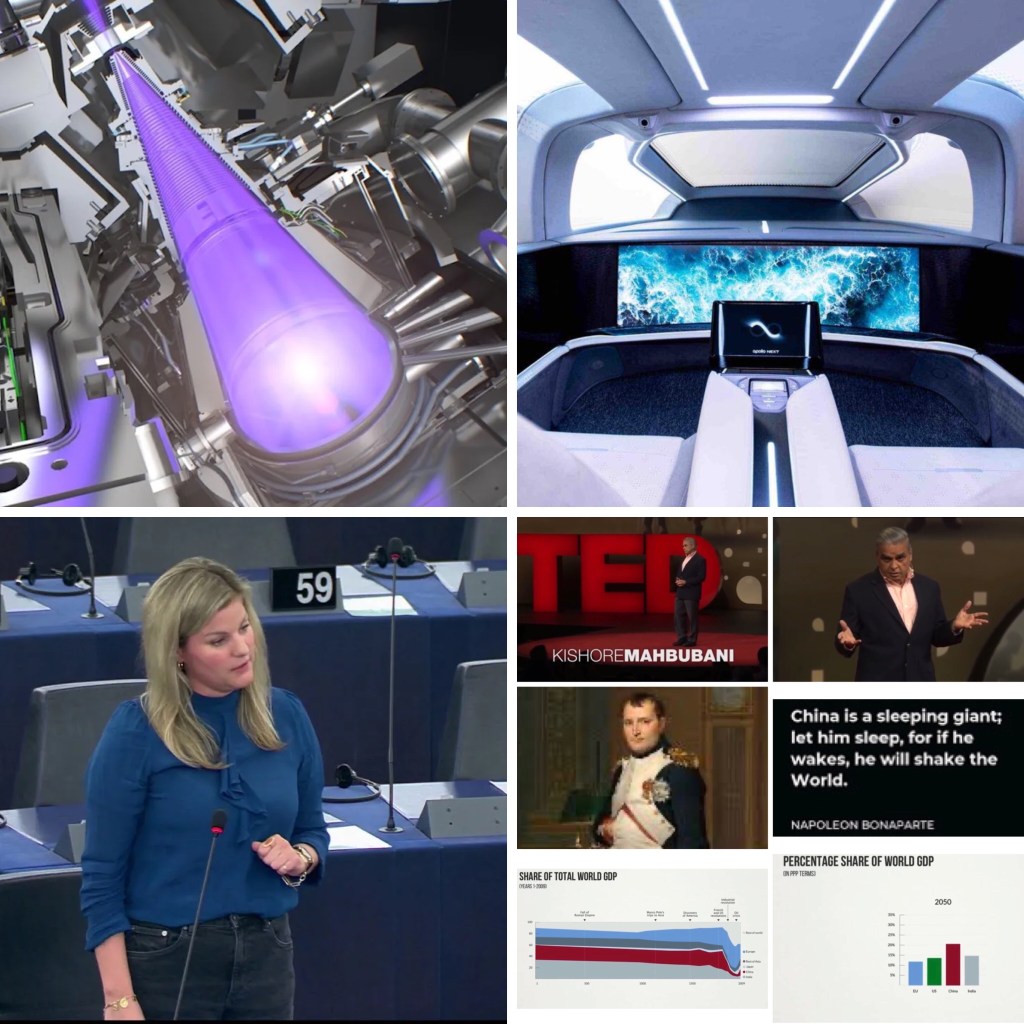
This is why China as a Civilization State growing strong after 5,000 years, even stronger today and US as a Nation State at the final stage of collapse 這就是為什麼中國作為一個文明國家在5000年後變得更強大,再次偉大, 而美國作為一個強權國家處於崩潰的最後階段
In ancient times, those who wished to understand the virtues of the world must first govern their country; those who wish to govern their country, first align their families; those who wish to regulate their families, first cultivate their bodies; those who wish to cultivate their bodies, first rectify their minds; those who wish to rectify their bodies first; Those who want to be sincere in their intentions should first be sincere to their intentions; those who want to be sincere in their intentions should first develop their knowledge, and the knowledge lies in examining things. Then the family will be regulated, the family will be regulated, and then the state will be governed, and then the state will be governed and then the world will be peaceful.”