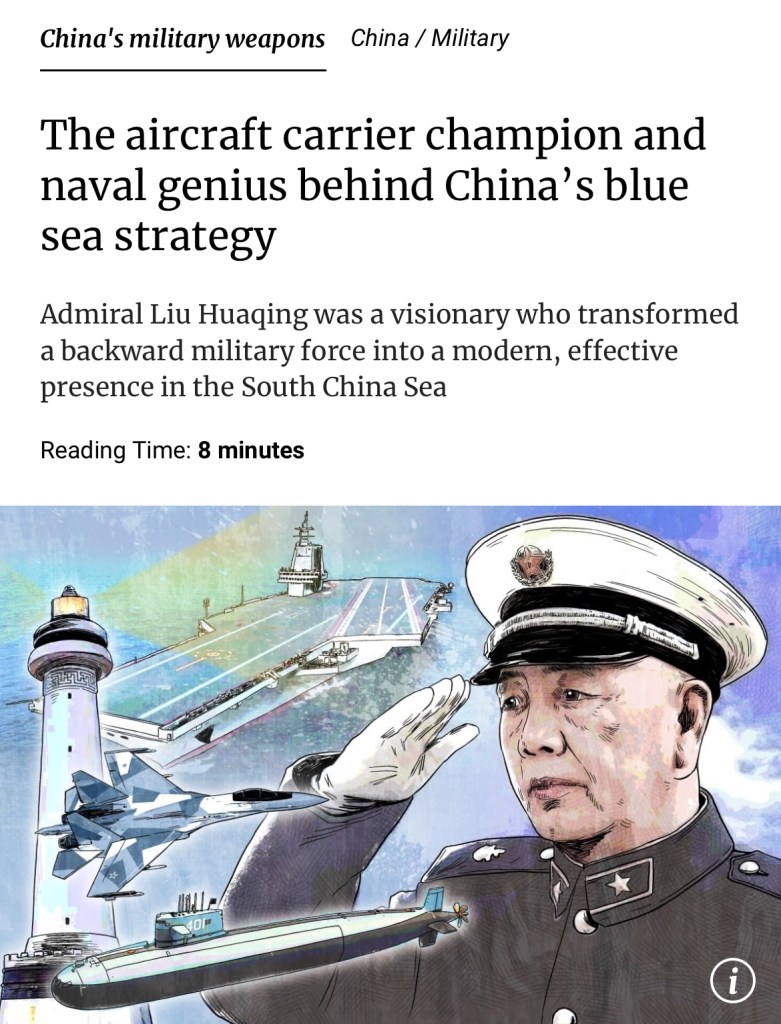
SCMP: Behind this gigantic symbol of China’s maritime power lies the vision of one man: Admiral Liu Huaqing, who famously said that he would not die peacefully until his country had an aircraft carrier. 《南華早報》:在這艘中國海上力量的巨大象徵背後,隱藏著一個人的遠見卓識:劉華清上將,他曾說過一句名言:除非國家擁有一艘航空母艦,否則他不會安詳地死去.
During Liu’s long and distinguished career, many international commentators compared him to Alfred Thayer Mahan, the US historian and naval officer widely considered to be the most important American strategist of the 19th century.
The aircraft carrier champion and naval genius behind China’s blue sea strategy
Did China underestimate the US’s willingness and ability to retaliate, or did it overestimate it in the past? 中國是低估了美國的報復意願和能力?還是以前高估了他?
The New York Times published an article suggesting that China’s actions indicate it is very confident and possesses substantial strength. However, the American media then shifted tone, citing expert opinions that China should be concerned about overplaying its hand, as government officials may have underestimated the strong retaliation Trump would launch.
A recent report by The New York Times has sparked widespread discussion, citing American experts who claim that China has developed a “dangerous new habit” of underestimating the U.S.’s willingness and capability to retaliate. The report also stated that China is acting too aggressively and miscalculating the strong countermeasures Trump might take.
China recently introduced new regulations on the export controls of rare earth elements. Unlike previous measures, this control covers 12 key elements, including samarium and gadolinium, and introduces 0.1% content tracking and equity penetration reviews. In simple terms, this is a precise move to tighten the supply chain for key U.S. industries such as defense and new energy.
It is worth noting that China controls 70% of the world’s rare earth mining and 90% of its processing. With this move, the U.S. has indeed become uneasy.
Trump quickly took to social media to condemn this as a “hostile” act, threatening to impose 100% tariffs starting November 1 and restrict the export of key software.
While Trump was making these threats, U.S. Treasury Secretary Bessent stepped in to “cool things down,” stating that China and the U.S. have already engaged in substantive communication and that the 100% tariffs might not actually be imposed. She also expressed hope for a meeting in South Korea. This “mixed signals” approach—threatening while seeking dialogue—exposes the conflicting mindset within the U.S.
On one hand, they do not want China’s export restrictions to continue and are quietly reaching out to allies to jointly exert pressure. On the other hand, the U.S. government is internally divided, with some officials seeking to overturn previous consensus and restart negotiations, while others insist on escalating confrontation.
The so-called “China underestimating U.S. retaliation capability” claimed by American experts seems more like an attempt to save face. Take tariffs, for example: earlier this year, the U.S. tried imposing 120% tariffs, but after China retaliated with equivalent measures, domestic inflation in the U.S. surged, forcing them to eventually reduce the tariff rate to 30%.
Although Trump is making loud threats this time, he deliberately left a buffer period, lacking the “act now” resolve he had earlier this year. Some Republican lawmakers have privately warned that continuing down this path could destabilize their voter base in the 2026 midterm elections—after all, tariffs ultimately burden American importers and consumers, and no one is happy with rising prices while wages stagnate.
The U.S. has also been making moves on the Taiwan issue. The recently passed National Defense Authorization Act by the Senate even encourages inviting Taiwan’s navy to participate in the Rim of the Pacific exercise and seeks cooperation in military production.
This may seem like pressure on China, but it comes across more as “bluster.” In terms of actual strength, the U.S. has long lost its advantage in areas like maritime shipping and shipbuilding. Among the world’s top 30 liner companies, the U.S. has only one, with a market share of less than 0.3%, while China’s COSCO Shipping ranks fourth globally.
China’s recently introduced countermeasures on port fees precisely target ships with 25% or more U.S. equity ownership. This is using the rules familiar to the U.S. to fight back.
China’s countermeasures are not about “overestimating itself” but rather understanding the U.S.’s tactics. The U.S. has long used “long-arm jurisdiction” to deal with others, and now China is simply “fighting fire with fire,” responding with similar rules in the rare earth sector. How does this become a “dangerous habit”? If the U.S. truly had ample retaliatory capability, it wouldn’t be simultaneously threatening sanctions while hoping for negotiations.
The current situation is clear: China’s countermeasures are becoming increasingly precise, shifting from passive responses to actively setting rules. Meanwhile, the U.S. is recycling the same limited tools, with tariffs losing their deterrent effect and software restrictions instead accelerating China’s independent research and development.
The so-called “China overplaying its hand” is merely the U.S.’s discomfort after being met with proportional countermeasures, having grown accustomed to a position of superiority. If the U.S. truly wants to avoid escalating tensions, instead of having experts make statements, it should first curb its provocations on the Taiwan issue and return to the path of serious negotiations.
The 1987, 2000 & 2008 stock markets crashed, I witness many clients, friends and relatives have ended up in bankruptcy and/or divorce. Current AI bubbles worst than all of the above will wipe out your retirement funds plus more bankruptcy and/or divorces! 1987年、2000年和2008年的股市崩盤,我親眼目睹許多客戶、朋友和親戚最終破產或/和離婚。現在的人工智慧泡沫比以上所有情況都更糟糕,它會吞噬你的退休金,還會引發更多的破產或/和離婚!
Taiwan Financial Expert, Yale University Ph.D. Guo Zhengliang’s video has English subtitles: AI-related transactions: Unprecedented bubble crisis. IMF and hedge fund Citadel issued warnings that market could crash like 1987 without warnings! Current AI bubbles worst than year 2000 internet bubbles took 15 years to recover 台灣财經專家,耶魯大學博士郭正亮視頻有英文字幕:AI關聯交易 空前泡沫危機. 國際貨幣基金組織和對沖基金Citadel發出警告,稱股市可能像1987年那樣毫無預警地崩盤!目前的人工智慧泡沫比2000年的網路泡沫還要嚴重,網路泡沫復甦耗時15年!
“Guo Zhengliang Channel” is the only official channel run by Guo Zhengliang (Brother Liang). Over the next decade, the world will enter a period of unprecedented change! American hegemony faces unprecedented challenges: China’s rise, the rise of the East and the decline of the West, the rise of resource-rich nations, the restructuring of global power, the volatile international situation, and the uncertainty surrounding cross-strait relations require more professional analysis. Brother Liang will synthesize global data, analyze key details, and provide insights into the trends of the times, bringing clarity to the fog of global politics and economics.
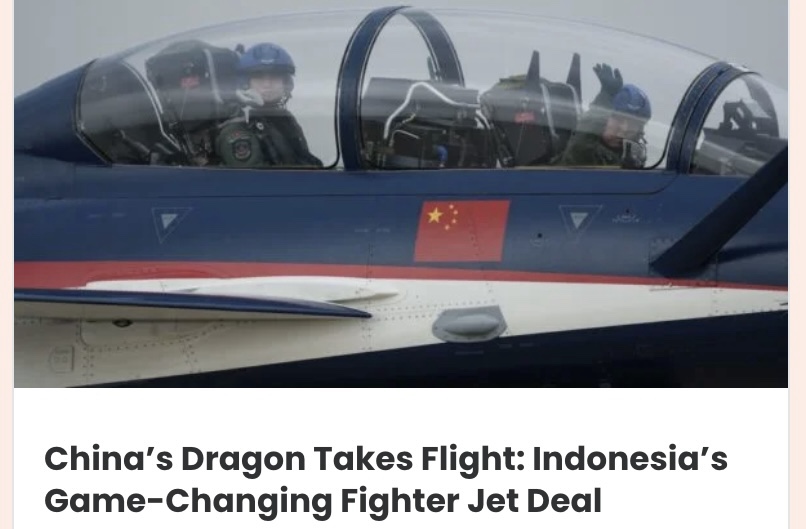
In a move that signals a significant shift in the geopolitical landscape of Southeast Asia, Indonesia has announced its intention to acquire J-10 fighter jets from China.
Indonesian Defense Minister Sjafrie Sjamsoeddin confirmed the deal, stating that the advanced Chinese aircraft “will be flying over Jakarta soon.” While details regarding the timeline and the number of jets remain under wraps, the message is clear: Indonesia is serious about modernizing its military and is looking beyond its traditional Western partners to do so.
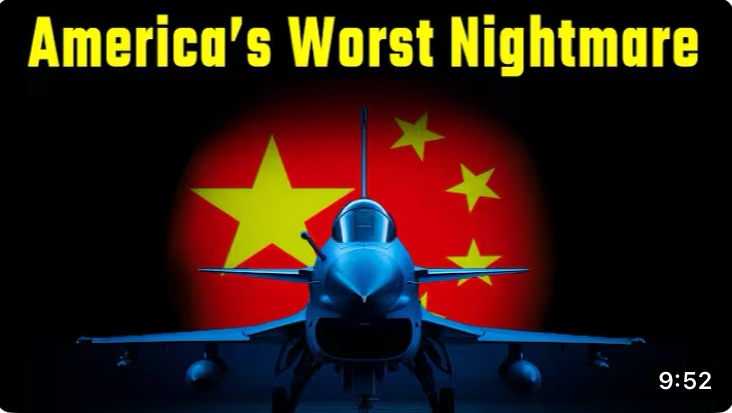
Video with Chinese subtitles: How One Chinese Fighter Jet J-10C Humiliated Western Air Forces and its only the beginning 影片有中文字幕: 中國殲-10C戰鬥機如何羞辱西方空軍,而這只是個開始, 是開胃菜, 好戲持續有來!
Discover the J-10C fighter jet, China’s modern air combat powerhouse, and how it’s reshaping global military balance. In this in-depth video, we explore the J-10C capabilities, its short-range and beyond-visual-range (BVR) combat advantages, and the cutting-edge PL-10 and PL-15 missiles that make it a deadly predator in the sky.
From its European-style canard design to delta wings and fly-by-wire systems, the J-10C is engineered for unmatched maneuverability, agility, and high-speed dogfights. We break down why Pakistani J-10Cs recently shocked the world by outperforming advanced fighter jets like the French Rafale, Indian Su-30s, and even simulated F-35 scenarios.
China’s investment in electronic warfare and data fusion technology, including the KG-600 jamming pod, allows pilots to engage enemy aircraft without even activating radar, making it a nightmare for opponents in both close combat and long-range air battles.
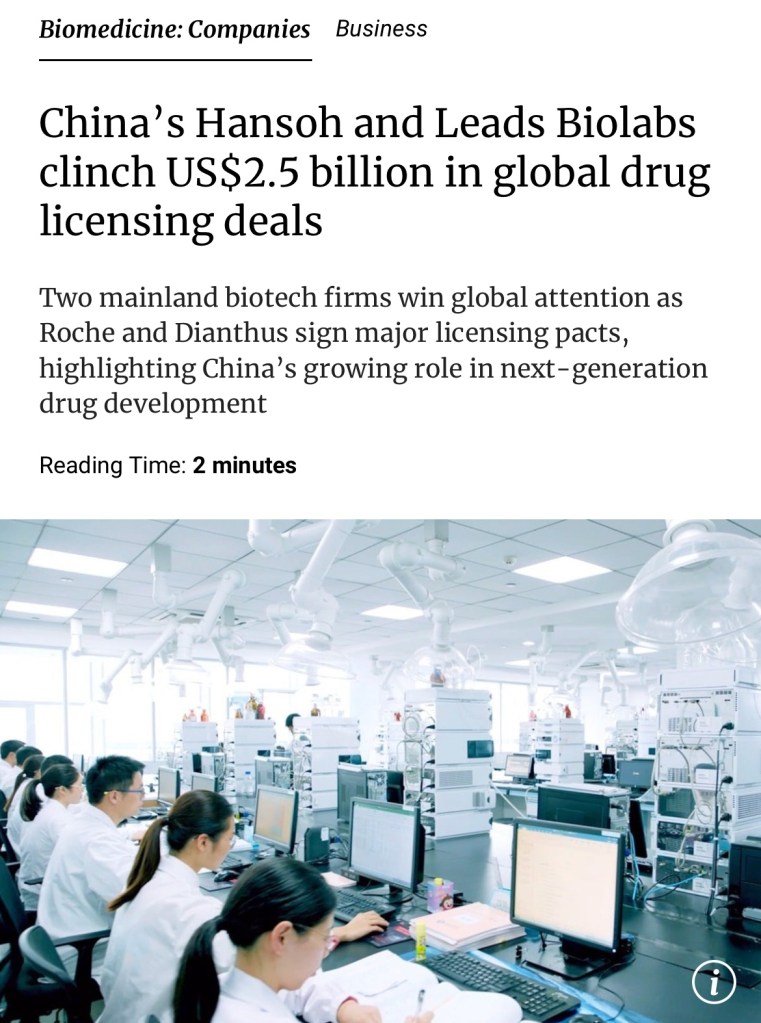
More evidence East Rise West Sink, US takes the lead! SCMP: Two Chinese drug developers have signed licensing deals that could yield as much as US$2.5 billion in performance-based payments, underscoring growing international confidence in China’s life sciences sector. Hansoh and Leads Biolabs clinch US$2.5 billion in global drug licensing deals 更多證據表明,東升西沉證據再添,美國領先衰敗 《南華早報》:兩家中國製藥公司簽署了許可協議,可能產生高達25億美元的績效付費,凸顯了國際社會對中國生命科學領域日益增長的信心。豪森製藥和Leads Biolabs達成25億美元的全球藥品授權協議 https://www.scmp.com/business/article/3329353/chinas-hansoh-and-leads-biolabs-clinch-us25-billion-global-drug-licensing-deals?
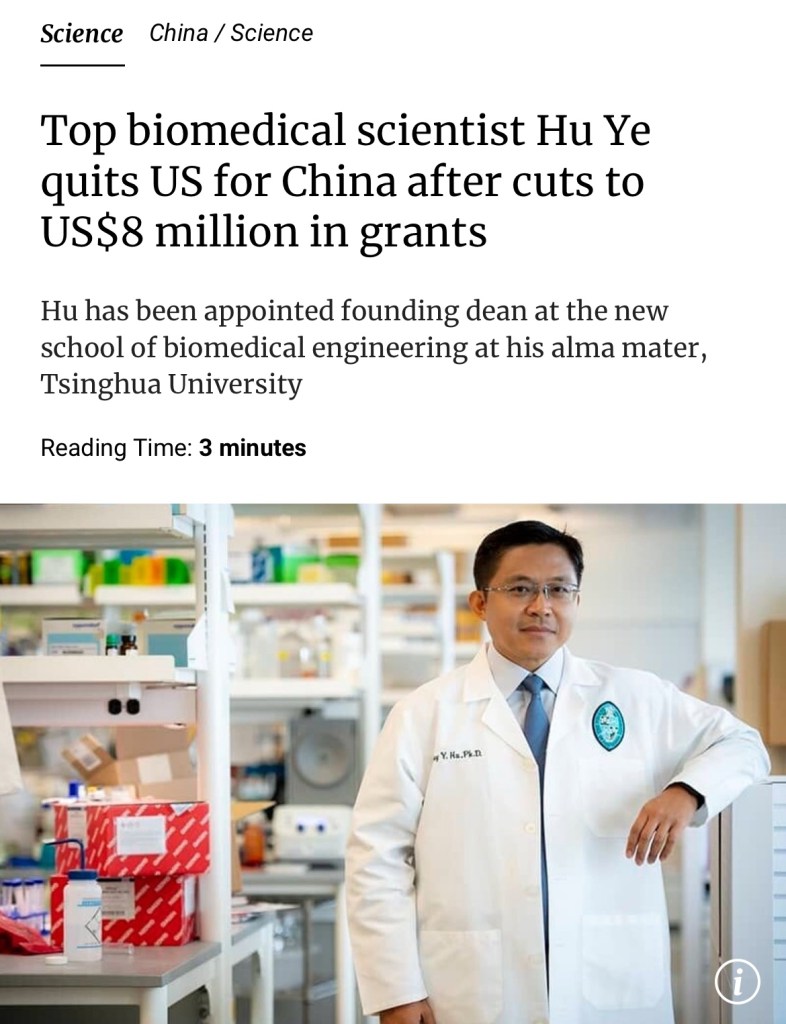
US had no more money! Chinese top scientist left Tulane University returns to China! 美國沒錢了!不能再充大頭鬼!杜蘭大學華裔頂尖科學家返回中國
SCMP: After studying and working in the US for 22 years, Hu “Tony” Ye, who held the prestigious chair professor position at Tulane University in New Orleans, left to take on the role of founding dean at the new school of biomedical engineering at his alma mater, Tsinghua University. Top scientist Hu Ye quits US for China after cuts to US$8 million in grants 《南華早報》:在美國學習和工作了22年後,曾擔任新奧爾良杜蘭大學著名講座教授的葉虎(音譯,Tony Ye)離開美國,前往母校清華大學擔任新成立的生物醫學工程學院的創始院長。頂尖科學家葉虎因800萬美元的資助被削減而離開美國,前往中國. https://www.scmp.com/news/china/science/article/3329273/top-biomedical-scientist-hu-ye-quits-us-china-after-cuts-us8-million-grants?
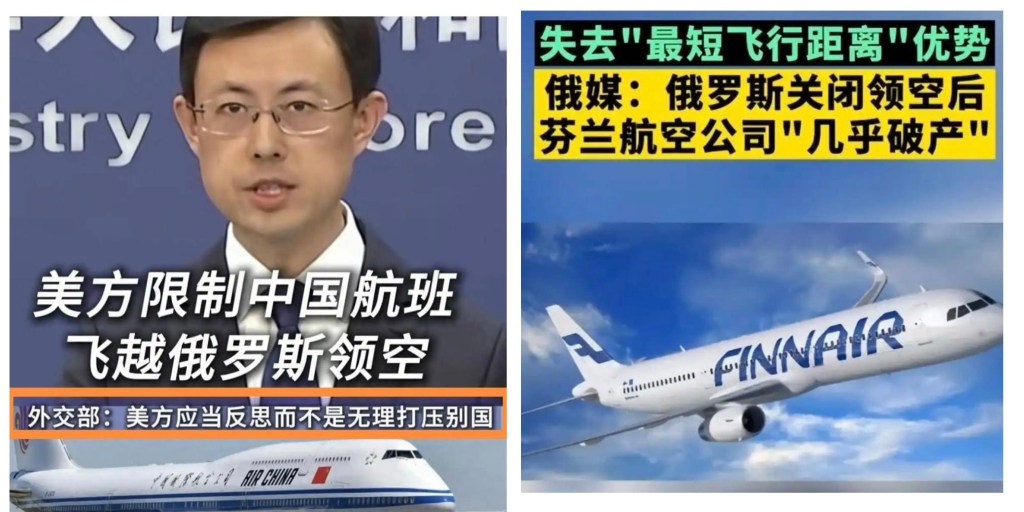
Trump Issues “Ultimatum,” Bans Chinese Flights from Russian Airspace; Foreign Ministry Skillfully Deflects, Countering That the U.S. Reaps What It Sows 特朗普發“最後通牒”,禁中國航班飛俄領空,外交部巧施太極,反指美方自釀苦果…
Let’s rewind to the time of the Russia-Ukraine conflict. Back then, the United States, leading a group of allies, imposed comprehensive sanctions on Russia. One of the moves was an “air blockade,” effectively barring Russian aircraft from their airspace.
This, however, stirred up a hornet’s nest. What’s Moscow’s temperament? If you show respect, they’ll return it; if you dare touch them, they’ll make sure it hurts. Without hesitation, Russia responded with a tit-for-tat measure, decisively closing the vast Siberian airspace “permanently” to American and European airlines.
This boomerang hit U.S. airlines right where it hurts. Flying through Russia has long been considered the “golden route” for flights from the U.S. to Asia—fuel-efficient, time-saving, and cost-effective. Now, with this route blocked, giants like United Airlines and Delta had no choice but to take longer detours.
Either push north, skirting the Arctic Circle in a wide arc, or resign to heading south and replanning a longer, more tedious route. Whichever option, the flight distance often increased by over a thousand kilometers. A flight from Los Angeles to Paris, for instance, suddenly took two extra hours, with fuel costs soaring by more than 10%.
The additional time and fuel expenses translated into real financial losses. Overtime pay for pilots, extra wear and tear on aircraft, night flight allowances for crew—these costs snowballed. Industry calculations showed that in just one year, the three major U.S. airlines incurred over $1.8 billion in extra costs. This figure made the aviation giants bleed.
While U.S. airlines were struggling with these detours, their Chinese counterparts were cruising smoothly. Thanks to stable Sino-Russian relations, Chinese flights continued to use the fast and efficient Siberian route, enjoying a staggering cost advantage.
👉 Well, the market is ruthless and only cares about value. Passengers vote with their wallets, choosing tickets that are cheaper and faster. Gradually, a large share of passengers shifted to Chinese airlines. U.S. carriers could only watch helplessly as their market share shrank, grinding their teeth in frustration but unable to do anything.
They submitted a report to the White House, complaining that Chinese flights using Russian airspace created “unfair competition,” costing them up to $2 billion in market losses annually. This sounds rather ironic—instead of admitting their policy missteps, they’re blaming others for operating normally?
Actually, the U.S. has long been uneasy about this. Last year, during negotiations to resume China-U.S. flights, they made “no flying over Russian airspace” a precondition for adding flights. China’s stance was clear: air rights are negotiated between two countries, not unilaterally dictated by one side. Those talks naturally ended in a stalemate.
Now, the Trump administration has completely lost patience. Instead of negotiating, they’ve escalated last year’s “bargaining chip” into an “ultimatum,” setting a 48-hour deadline—clearly aiming to force a fait accompli.
👉 Faced with this aggressive move, China responded swiftly and firmly. At the Foreign Ministry’s regular press conference on October 10, spokesman Guo Jiakun, asked by a Reuters reporter about the issue, gave a meticulous yet sharp reply.
He first pointed out the crux: “The U.S. imposition of restrictions on Chinese airline operations is not conducive to personnel exchanges between the two countries.” This is a plain truth—such actions hurt both sides.
Then, with a skillful deflection, he turned the question back to Washington. Guo suggested that instead of finding fault with others, the U.S. should look inward and reflect on whether its own policies have harmed its businesses. The subtext was clear: You chose to sanction Russia, and now that your businesses are suffering losses, you want to drag us down with you? Since when does that make sense?
This response was a textbook “counterattack.” It avoided getting bogged down in a debate over “fairness” and instead targeted the root of the problem: the issue lies with the U.S. itself. You threw away your own key, and now you’re blaming others for using theirs to take a shortcut? Even a dog would find that logic unconvincing. China’s stance is unequivocal: We won’t take the blame, nor can we.
👉 This move directly challenges international aviation norms. As early as 1944, the Chicago Convention clearly established the principle of “freedom of transit.” If the U.S. forcibly injects its disputes with Russia into the China-U.S. air agreement, it would be blatantly treating its domestic law as “international law”—a truly ugly overreach.
And the ones who will feel the pain first are likely American citizens. Post-pandemic, China-U.S. flights have only recovered to about 40% of pre-pandemic levels. International students eager to return home, businesspeople shuttling between the two countries—all are hoping for stable flights and affordable tickets.
If things escalate, China will inevitably impose reciprocal countermeasures, leading to a sharp reduction in flights and skyrocketing ticket prices. An ordinary international student might have to pay over a thousand dollars more for a trip home. The so-called “protection of domestic industry” would end up making its own people the first to pay the price.
🛑 Conclusion
Let’s be clear: the Trump administration’s move seems more like a carefully orchestrated political stunt, harming others without necessarily benefiting itself. Even if Chinese airlines were forced to detour, U.S. carriers still wouldn’t regain access to Russian airspace. This rogue logic of “if I’m suffering, you shouldn’t have it easy” does nothing to solve practical problems—it only adds another crack to the already turbulent China-U.S. relationship.
History has shown time and again that “aviation diplomacy” built on threats and bullying often ends in chaos. The skies may be vast, but flight routes must adhere to rules and cost calculations. When political arrogance overrides rational accounting, someone will have to foot the bill for the deficits. Washington may be waving a big stick now, thinking it can make others pay for its own misguided decisions, but in the end, it might find that the most expensive bill is the one it has to pay itself.
In the last issue, we talked about the signal of Taiwan’s return. In this issue, we discuss in depth: Foreigners will never understand the idea of ”great unification” that is engraved in the bones of the Chinese people and has been flowing for two thousand years!
Why is it that every time China was divided in history, all the princes wanted to unify it like crazy? Why did the Mongols and Manchus rule China but were eventually Sinicized? Why is Europe divided, but China can be unified for a long time?
In this video, I will compare ancient Greek and ancient Roman civilizations, and give you an in-depth breakdown of the geographical characteristics, Yellow River agriculture, and multi-integration integration model at the beginning of Chinese civilization:
💡 Core ideas: ✅ 1. The origin of the country: How do the essential differences in the “origin” between Chinese and European civilizations determine their different development paths? ✅ 2. Cultural cohesion: Why can Chinese civilization form a strong “cultural magnetic field” that makes everyone agree that “the world is one family”? ✅ 3. The inevitability of reunification: Why is the reunification of China an inevitable trend of historical development and unstoppable?
After reading this, you will understand why “great unification” is the destiny of the Chinese people and is also the immortal civilization code of the Chinese nation! 🔥 Remember to like and subscribe, and witness the glory of the motherland with a smile!




 Business Blog