Our sister Helena Choi Leong was recognized for 40 years doing volunteering work for Tennis Canada in Toronto Canada on Aug 12 2022. Our father Tsoi, Ping Fan was a tennis player till age 85, soccer player for HK’s 南華 till age 50, represented HK in Asian Game in the Philippines.
Russia and China are forming a new alliance with Turkey, Iran, and North Korea to challenge the global world order. What does this new TRICKs alliance mean for the future of our world economy? Let’s break it down in today’s video 俄羅斯和中國正在與土耳其、伊朗和朝鮮結成新的聯盟,以挑戰全球世界秩序。 這個新的 TRICKs 聯盟對我們世界經濟的未來意味著什麼? 讓我們在今天的視頻中分解它
China built almost 40,000 kilometers of high-speed rails in just over a decade. Meanwhile, dreams for a similar high-speed train systems in the EU and US have been consistently derailed. How did China do it? And at what cost?
We’re destroying our environment at an alarming rate. But it doesn’t need to be this way. Our new channel Planet A explores the shift towards an eco-friendly world — and challenges our ideas about what dealing with climate change means. We look at the big and the small: What we can do and how the system needs to change.
The mass media on Putin’s “isolation” at the Shanghai Cooperation Organization (SCO) was intentionally misquoted by Western Gov’t mouthpiece media 西方政府喉舌媒體故意歪曲普京在上海合作組織“孤立”的新聞
John V Wash MD in San Francisco: In its “coverage” today of the SCO the NYT picks on one phrase that Modi used to indicate his “distancing” from Putin. Actually Modi was saying this was not the era of war – and if you look at the last quarter century that might appear to be a rebuke to US/NATO more than anyone else.
Similarly the msm has picked on one sentence from Putin to imply that there is a rift between him and Xi, although the words might have been wisely chosen by Putin to ease pressure on China for backing him.
Notice that there is only one message there – Putin isolated. The narrative of the day.
BUT the fact is that Putin was very welcome and a central personage at the SCO which now represents 40% of the world’s population, more than 30% of its GDP and 60% of its land mass, https://en.wikipedia.org/wiki/Shanghai_Cooperation_Organisation strategically located across Asia and into the Middle East and beyond, with Turkey and Iran now becoming members. (Those figures on GDP and population are figures before Iran and Turkey joined. And the percentage of GDP if done in PPP-GDP would be much higher.)
In comparison the G7 represents 32% of global ppp-gdp and about 10% of the global population. The percentage of global GDP represented by the G7 has dropped by 70% over the last 10-20 years!
It is clear which way the wind is blowing.
And the countries of the SCO are all struggling to escape the predations of the US unipolar world. Putin was vocal in calling out the evils of “unipolarity” at the conference.
The US and G7 were nowhere to be seen. So who is isolated?
ps. Elensky was not invited to do a big screen cameo. And the narrative in the msm has shifted back to Ukraine as victim rather than Ukraine as victor.
You said: “Andy Boreham directly quotes Chinese diplomats advocating peace in Ukraine and taking a neutral stance between Russia and Ukraine.” I watched the video and found that the Chinese diplomats did not so describe China’s position. Hua Chunying said that the security interests of all parties should be respected and urged peace and negotiations between the parties. Wang Wenbin and Zhao Lijian urged de-escalation and peace. Nowhere did the Chinese spokespersons use the word “neutral” to describe China’s position.
You may think that I am splitting hairs here. But I am not. This is an important issue on China’s position on Ukraine. The fact that China is on friendly terms with both Russia and Ukraine does not imply that China is neutral, as you seem to think. National sovereignty and territorial integrity are matters of principle and not something to be bargained away for temporary advantage. I am sure that if Russia took military action in response to nuclear weapons in Lithuania and violated Lithuania’s territorial integrity, China would still abstain as it did on Ukraine. Such a vote would show a clear stand on principle and not one calculated to curry favor with Lithuania or the west.
Once China’s position on Ukraine is cast as neutral, it leads the listener or reader to the interpretation that China is not condemning the aggressive eastward expansion of NATO. This phrasing may make people (peace activists?) think that China is not supporting Russia enough and become disappointed in China. But what Hua Chunying said clearly demonstrates that China blames the situation on the relentless NATO expansion that threatens Russia’s national security. Xi said it elsewhere very clearly as well: the security interest of one nation should not be held above the security interests of other nations.
As for the China daily article, I note that it is explicitly stated that “The views do not necessarily reflect those of China Daily.” Be that as it may, we need to consider why China Daily decided to publish this article. The main gist of the article is to show that China is the one who has Ukrainians’ best interest at heart as compared to the west to counter the western narrative that China is heartless and not helping in the conflict. The article is not one to convince peace activists that China condemns the eastward expansion of NATO, which it clearly does as shown by other Chinese statements elsewhere.
As I said, the choice of words in the China daily article is probably not the best. I do not recall Chinese officials ever describing its position on Ukraine as being neutral. When the word “neutral” is put in a different context or used without further explanation, so describing China’s position runs the danger of mischaracterizing China’s position. We are engaged in a propaganda war. In such a war, the choice of words is particularly important.
China is in a delicate place on Ukraine. On one hand it must stand firm on the issue of national sovereignty and territorial integrity. On the other, it is trying not to be drawn into an anti-west alliance with Russia that would be counterproductive in the larger scheme of trying to replace the US-centric unipolar world with a multipolar world that both China and Russia are working together to achieve. The US is the one trying desperately to force nations to take sides and join the western anti-Russia alliance. Most nations do not want to take sides, and China should not fall into such a trap, ending with two large camps battling each other, like in the first cold war.
The importance of China’s firm stand on the right of all nations to national sovereignty and territorial integrity and against foreign interference in the internal affairs of nations is a really important one. It is the bulwark against all imperialist actions of western powers in the global south. A key reason as to why so many nations want to join the Shanghai Cooperative Organization and avoid being aligned with the US is for this reason. Smaller nations are comfortable to join such a group without feeling being threatened or undermined by larger nations in the group. An organization based on mutual respect, cooperation and non-interference in each other’s internal affairs is well placed to form the new multipolar world. Even nations with disputes with each other have either joined or looks likely to join.
The Mafia (Republican) & Triads (Democrats) are at each other’s throat again using immigrants to get voted in Nov election in the name of fake democracy human rights & rules of laws. This shows repeat every 2 years!
Video: My friend left LA, quarantine in HK for 3 days, return to Hangzhou for quarantine, interesting PSA at Hangzhou quarantine hotel remind guests to pick up their dinner at door outside
‘Samarkand Spirit’ to be driven by ‘responsible powers’ Russia and China. The SCO summit of Asian power players delineated a road map for strengthening the multipolar world. “撒馬爾罕精神”將由“負責任的大國”俄羅斯和中國推動. 上合組織亞洲大國峰會描繪了加強多極世界的路線圖. By Pepe Escobar 9-16-22
When in 329 BC Alexander the Great reached the then Sogdian city of Marakanda, part of the Achaemenid empire, he was stunned: “Everything I have heard about Samarkand it’s true, except it is even more beautiful than I had imagined.”
Amidst serious tremors in the world of geopolitics, it is so fitting that this year’s Shanghai Cooperation Organization (SCO) heads of state summit should have taken place in Samarkand – the ultimate Silk Road crossroads for 2,500 years.
When in 329 BC Alexander the Great reached the then Sogdian city of Marakanda, part of the Achaemenid empire, he was stunned: “Everything I have heard about Samarkand it’s true, except it is even more beautiful than I had imagined.”
Fast forward to an Op-Ed by Uzbekistan’s President Shavkat Mirziyoyev published ahead of the SCO summit, where he stresses how Samarkand now “can become a platform that is able to unite and reconcile states with various foreign policy priorities.”
After all, historically, the world from the point of view of the Silk Road landmark has always been “perceived as one and indivisible, not divided. This is the essence of a unique phenomenon – the ‘Samarkand spirit’.”
And here Mirziyoyev ties the “Samarkand Spirit” to the original SCO “Shanghai Spirit” established in early 2001, a few months before the events of September 11, when the world was forced into strife and endless war, almost overnight.
All these years, the culture of the SCO has been evolving in a distinctive Chinese way. Initially, the Shanghai Five were focused on fighting terrorism – months before the US war of terror (italics mine) metastasized from Afghanistan to Iraq and beyond.
Over the years, the initial “three no’s” – no alliance, no confrontation, no targeting any third party – ended up equipping a fast, hybrid vehicle whose ‘four wheels’ are ‘politics, security, economy, and humanities,’ complete with a Global Development Initiative, all of which contrast sharply with the priorities of a hegemonic, confrontational west.
Arguably the biggest takeaway of this week’s Samarkand summit is that Chinese President Xi Jinping presented China and Russia, together, as “responsible global powers” bent on securing the emergence of multipolarity, and refusing the arbitrary “order” imposed by the United States and its unipolar worldview.
Russian Foreign Minister Sergey Lavrov pronounced Xi’s bilateral conversation with President Vladimir Putin as “excellent.” Xi Jinping, previous to their meeting, and addressing Putin directly, had already stressed the common Russia-China objectives:
“In the face of the colossal changes of our time on a global scale, unprecedented in history, we are ready with our Russian colleagues to set an example of a responsible world power and play a leading role in order to put such a rapidly changing world on the trajectory of sustainable and positive development.” Later, in the preamble to the heads of state meeting, Xi went straight to the point: it is important to “prevent attempts by external forces to organize ‘color revolutions’ in the SCO countries.” Well, Europe wouldn’t be able to tell, because it has been color-revolutionized non-stop since 1945.
Putin, for his part, sent a message that will be ringing all across the Global South: “Fundamental transformations have been outlined in world politics and economics, and they are irreversible.” (italics mine)
Iran: it’s showtime
Iran was the guest star of the Samarkand show, officially embraced as the 9th member of the SCO. President Ebrahim Raisi, significantly, stressed before meeting Putin that “Iran does not recognize sanctions against Russia.” Their strategic partnership will be enhanced. On the business front, a hefty delegation comprising leaders of 80 large Russian companies will be visiting Tehran next week.
The increasing Russia-China-Iran interpolation – the three top drivers of Eurasia integration – scares the hell out of the usual suspects, who may be starting to grasp how the SCO represents, in the long run, a serious challenge to their geoeconomic game. So, as every grain of sand in every Heartland desert is already aware, the geopolitical pressure against the trio will increase exponentially.
And then there was the mega-crucial Samarkand trilateral: Russia-China-Mongolia. There were no official leaks, but this trio arguably discussed the Power of Siberia-2 gas pipeline – the interconnector to be built across Mongolia; and Mongolia’s enhanced role in a crucial Belt and Road Initiative (BRI) connectivity corridor, now that China is not using the Trans-Siberian route for exports to Europe because of sanctions.
Putin briefed Xi on all aspects of Russia’s Special Military Operation (SMO) in Ukraine, and arguably answered some really tough questions, many of them circulating wildly on the Chinese web for months now.
Which brings us to Putin’s presser at the end of the summit – with virtually all questions predictably revolving around the military theater in Ukraine.
The key takeaway from the Russian president: “There are no changes on the SMO plan. The main tasks are being implemented.” On peace prospects, it is Ukraine that “is not ready to talk to Russia.” And overall, “it is regrettable that the west had the idea to use Ukraine to try to collapse Russia.”
On the fertilizer soap opera, Putin remarked, “food supply, energy supply, they (the west) created these problems, and now are trying to resolve them at the expense of someone else” – meaning the poorest nations. “European countries are former colonial powers and they still have this paradigm of colonial philosophy. The time has come to change their behavior, to become more civilized.”
On his meeting with Xi Jinping: “It was just a regular meeting, it’s been quite some time we haven’t had a meeting face to face.” They talked about how to “expand trade turnover” and circumvent the “trade wars caused by our so-called partners,” with “expansion of settlements in national currencies not progressing as fast as we want.”
Strenghtening multipolarity
Putin’s bilateral with India’s Prime Minister Narendra Modi could not have been more cordial – on a “very special friendship” register – with Modi calling for serious solutions to the food and fuel crises, actually addressing the west. Meanwhile, the State Bank of India will be opening special rupee accounts to handle Russia-related trade.
This is Xi’s first foreign trip since the Covid pandemic. He could do it because he’s totally confident of being awarded a third term during the Communist Party Congress next month in Beijing. Xi now controls and/or has allies placed in at least 90 percent of the Politburo.
The other serious reason was to recharge the appeal of BRI in close connection to the SCO. China’s ambitious BRI project was officially launched by Xi in Astana (now Nur-Sultan) nine years ago. It will remain the overarching Chinese foreign policy concept for decades ahead.
BRI’s emphasis on trade and connectivity ties in with the SCO’s evolving multilateral cooperation mechanisms, congregating nations focusing on economic development independent from the hazy, hegemonic “rules-based order.” Even India under Modi is having second thoughts about relying on western blocs, where New Delhi is at best a neo-colonized “partner.”
So Xi and Putin, in Samarkand, for all practical purposes delineated a road map for strengthening multipolarity – as stressed by the final Samarkand declaration signed by all SCO members.
The Kazakh puzzle
There will be bumps on the road aplenty. It’s no accident that Xi started his trip in Kazakhstan – China’s mega-strategic western rear, sharing a very long border with Xinjiang. The tri-border at the dry port of Khorgos – for lorries, buses and trains, separately – is quite something, an absolutely key BRI node.
The administration of President Kassym-Jomart Tokayev in Nur-Sultan (soon to be re-named Astana again) is quite tricky, swinging between eastern and western political orientations, and infiltrated by Americans as much as during the era of predecessor Nursultan Nazarbayev, Kazakhstan’s first post-USSR president.
Earlier this month, for instance, Nur-Sultan, in partnership with Ankara and British Petroleum (BP) – which virtually rules Azerbaijan – agreed to increase the volume of oil on the Baku-Tblisi-Ceyhan (BTC) pipeline to up to 4 million tons a month by the end of this year. Chevron and ExxonMobil, very active in Kazakhstan, are part of the deal.
The avowed agenda of the usual suspects is to “ultimately disconnect the economies of Central Asian countries from the Russian economy.” As Kazakhstan is a member not only of the Russian-led Eurasia Economic Union (EAEU), but also the BRI, it is fair to assume that Xi – as well as Putin – discussed some pretty serious issues with Tokayev, told him to grasp which way the wind is blowing, and advised him to keep the internal political situation under control (see the aborted coup in January, when Tokayev was de facto saved by the Russian-led Collective Security Treaty Organization [CSTO]).
There’s no question Central Asia, historically known as a “box of gems” at the center of the Heartland, striding the Ancient Silk Roads and blessed with immense natural wealth – fossil fuels, rare earth metals, fertile agrarian lands – will be used by the usual suspects as a Pandora’s box, releasing all manner of toxic tricks against legitimate Eurasian integration.
That’s in sharp contrast with West Asia, where Iran in the SCO will turbo-charge its key role of crossroads connectivity between Eurasia and Africa, in connection with the BRI and the International North-South Transportation Corridor (INSTC).
So it’s no wonder that the UAE, Bahrain and Kuwait, all in West Asia, do recognize which way the wind is blowing. The three Persian Gulf states received official SCO ‘partner status’ in Samarkand, alongside the Maldives and Myanmar.
A cohesion of goals
Samarkand also gave an extra impulse to integration along the Russian-conceptualized Greater Eurasia Partnership – which includes the Eurasian Economic Union (EAEU) – and that, just two weeks after the game-changing Eastern Economic Forum (EEF) held in Vladivostok, on Russia’s strategic Pacific coast.
Moscow’s priority at the EAEU is to implement a union-state with Belarus (which looks bound to become a new SCO member before 2024), side-by-side with closer integration with the BRI. Serbia, Singapore and Iran have trade agreements with the EAEU too.
The Greater Eurasian Partnership was proposed by Putin in 2015 – and it’s getting sharper as the EAEU commission, led by Sergey Glazyev, actively designs a new financial system, based on gold and natural resources and counter-acting the Bretton Woods system. Once the new framework is ready to be tested, the key disseminator is likely to be the SCO.
So here we see in play the full cohesion of goals – and the interaction mechanisms – deployed by the Greater Eurasia Partnership, BRI, EAEU, SCO, BRICS+ and the INSTC. It’s a titanic struggle to unite all these organizations and take into account the geoeconomic priorities of each member and associate partner, but that’s exactly what’s happening, at breakneck speed.
In this connectivity feast, practical imperatives range from fighting local bottlenecks to setting up complex multi-party corridors – from the Caucasus to Central Asia, from Iran to India, everything discussed in multiple roundtables.
Successes are already notable: from Russia and Iran introducing direct settlements in rubles and rials, to Russia and China increasing their trade in rubles and yuan to 20 percent – and counting. An Eastern Commodity Exchange may be soon established in Vladivostok to facilitate trade in futures and derivatives with the Asia-Pacific.
China is the undisputed primary creditor/investor in infrastructure across Central Asia. Beijing’s priorities may be importing gas from Turkmenistan and Uzbekistan and oil from Kazakhstan, but connectivity is not far behind.
The $5 billion construction of the 600 km-long Pakistan-Afghanistan-Uzbekistan (Pakafuz) railway will deliver cargo from Central Asia to the Indian Ocean in only three days instead of 30. And that railway will be linked to Kazakhstan and the already in progress 4,380 km-long Chinese-built railway from Lanzhou to Tashkent, a BRI project.
Nur-Sultan is also interested in a Turkmenistan-Iran-Türkiye railway, which would connect its port of Aktau on the Caspian Sea with the Persian Gulf and the Mediterranean Sea.
Türkiye, meanwhile, still a SCO observer and constantly hedging its bets, slowly but surely is trying to strategically advance its own Pax Turcica, from technological development to defense cooperation, all that under a sort of politico-economic-security package. Turkish President Recep Tayyip Erdogan did discuss it in Samarkand with Putin, as the latter later announced that 25 percent of Russian gas bought by Ankara will be paid in rubles.
Welcome to Great Game 2.0
Russia, even more than China, knows that the usual suspects are going for broke. In 2022 alone, there was a failed coup in Kazakhstan in January; troubles in Badakhshan, in Tajikistan, in May; troubles in Karakalpakstan in Uzbekistan in June; the non-stop border clashes between Tajikistan and Kyrgyzstan (both presidents, in Samarkand, at least agreed on a ceasefire and to remove troops from their borders).
And then there is recently-liberated Afghanistan – with no less than 11 provinces crisscrossed by ISIS-Khorasan and its Tajik and Uzbek associates. Thousands of would-be Heartland jihadis have made the trip to Idlib in Syria and then back to Afghanistan – ‘encouraged’ by the usual suspects, who will use every trick under the sun to harass and ‘isolate’ Russia from Central Asia.
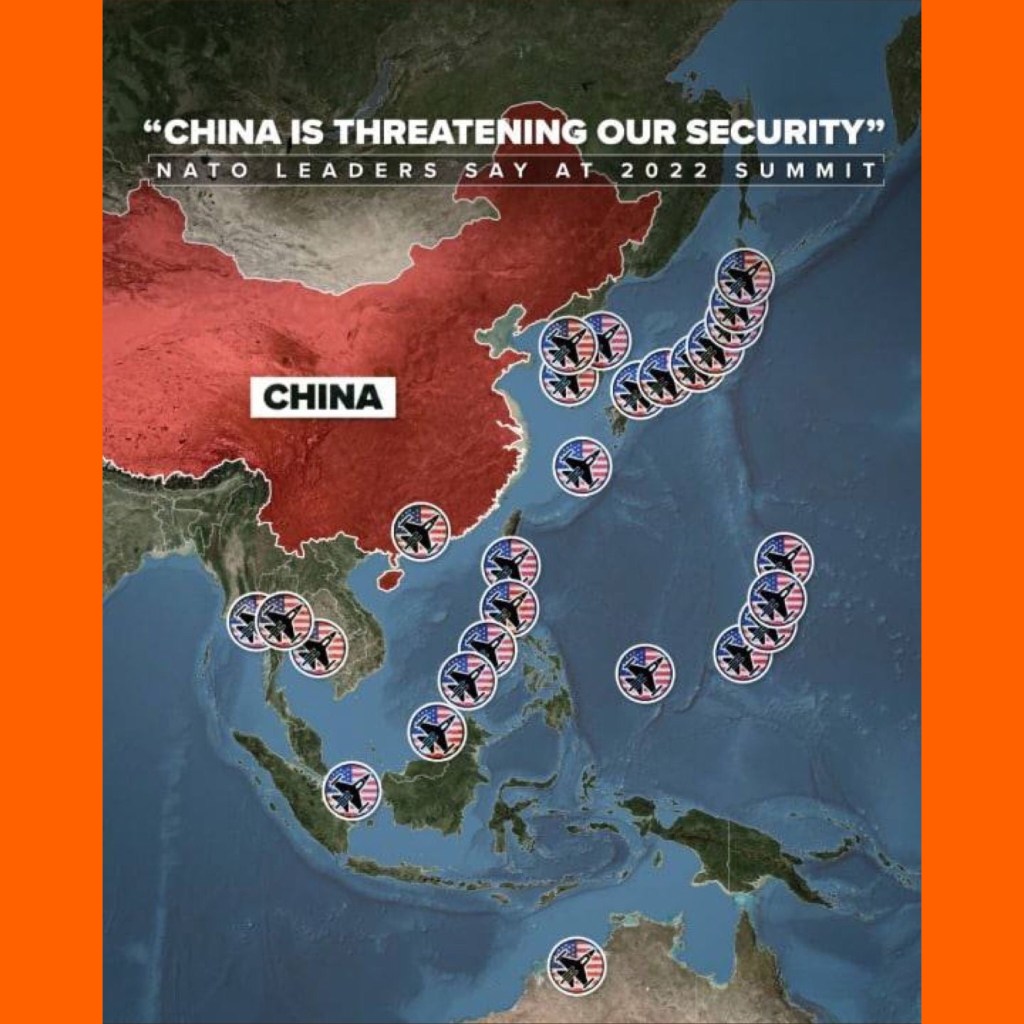
So Russia and China should be ready to be involved in a sort of immensely complex, rolling Great Game 2.0 on steroids, with the US/NATO fighting united Eurasia and Turkiye in the middle.
On a brighter note, Samarkand proved that at least consensus exists among all the players at different institutional organizations that: technological sovereignty will determine sovereignty; and that regionalization – in this case Eurasian – is bound to replace US-ruled globalization.
These players also understand that the Mackinder and Spykman era is coming to a close – when Eurasia was ‘contained’ in a semi-disassembled shape so western maritime powers could exercise total domination, contrary to the national interests of Global South actors.
It’s now a completely different ball game. As much as the Greater Eurasia Partnership is fully supported by China, both favor the interconnection of BRI and EAEU projects, while the SCO shapes a common environment.
Yes, this is an Eurasian civilizational project for the 21st century and beyond. Under the aegis of the ‘Spirit of Samarkand.’
KTSF TV News Video: It is not very helpful to the parties at the crime scene, those who are not on the street and are thinking of going out on the street can use the information to avoid the crime scene or crime infested areas.
Maybe I can describe it this way, like the GPS in the car, it can warn you an accident already happened 1-2 miles away, and provide you with alternative routes, but if you are at the scene of the accident, you can’t get away at all. You are stuck.
The worst part is with the App might gave people the false sense of security to let their guards down.
The fundamental problem with high crimes need to go back to the roots, too many guns, police don’t walk the streets, no face recognition cameras like those in London, New York or China.