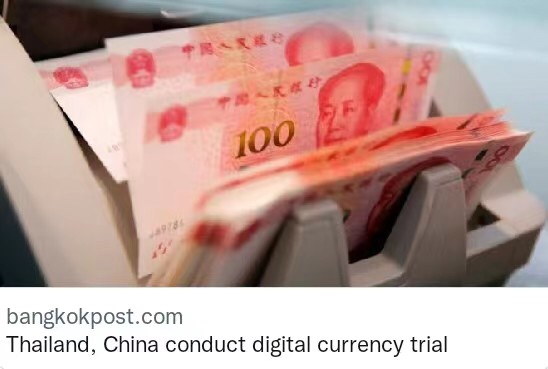
A Central Bank Digital Currency trial focused on cross-border transactions involving China, Thailand, Hong Kong & UAE, as Beijing internationalizes its digital Yuan 隨著北京將其數字人民幣國際化,中央銀行數字貨幣試驗側重於涉及中國、泰國、香港和阿聯酋的跨境交易
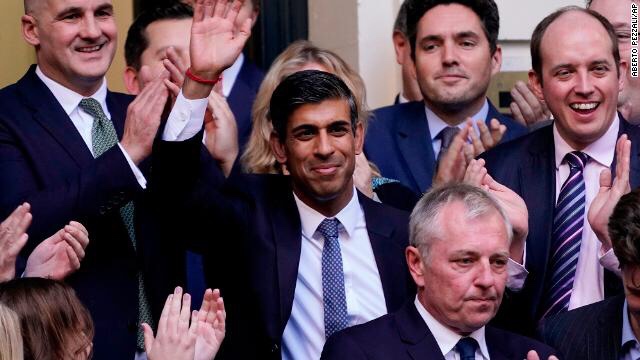
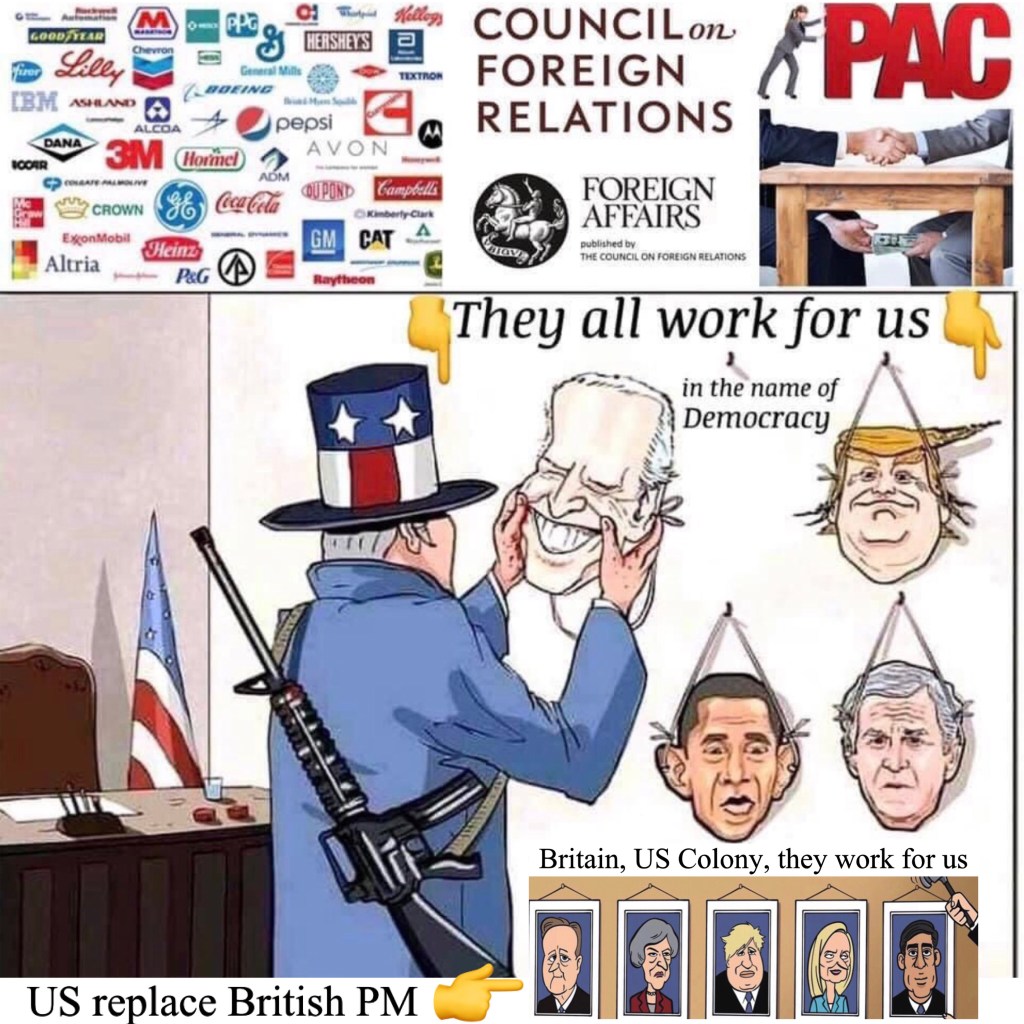
Britain, a US colony is welcoming a new Governor (PM) today after Rishi Sunak won the latest Conservative leadership contest. Sunak is taking over during a rough period for the colony’s (country’s) economy following a disastrous six-week tenure led by Liz Truss. 美國殖民地英國今天歡迎新任總督(PM). 在 Liz Truss 領導的為期六週的災難性任期之後,蘇納克正在接管殖民地(國家)經濟的艱難時期.
Britain, the US Colony, US just successfully ordered to replace it’s Prime Minister by someone from former British Colony: India. 英國, 美國殖民地, 美國剛剛成功更換其首相, 為打面英國找了一個前英國殖民地的印度人作為其新首相.
EU faces rising economic peril, as US dictates all terms, former colonists now are US colonies, karma run through EU like a high speed train. US don’t be too happy too fast, you could be next. 歐盟面臨日益嚴重的經濟危機, 因為美國決定了所有條件, 前殖民者現在是美國殖民地, 報應像高速列車一樣貫穿歐盟. 美國別高興得太快, 你可能是下一個.
NYT Breaking News: Rishi Sunak is set to become Britain’s next PM. India, former colony not only overtaken British in terms of GDP, now hoping their new Indian PM could save them 紐約時報突發新聞:Rishi Sunak 將成為英國的下一任首相. 印度, 前英國殖民地不僅在 GDP 方面超過了英國,現在希望他們的新印度首相能夠拯救日落的英國.
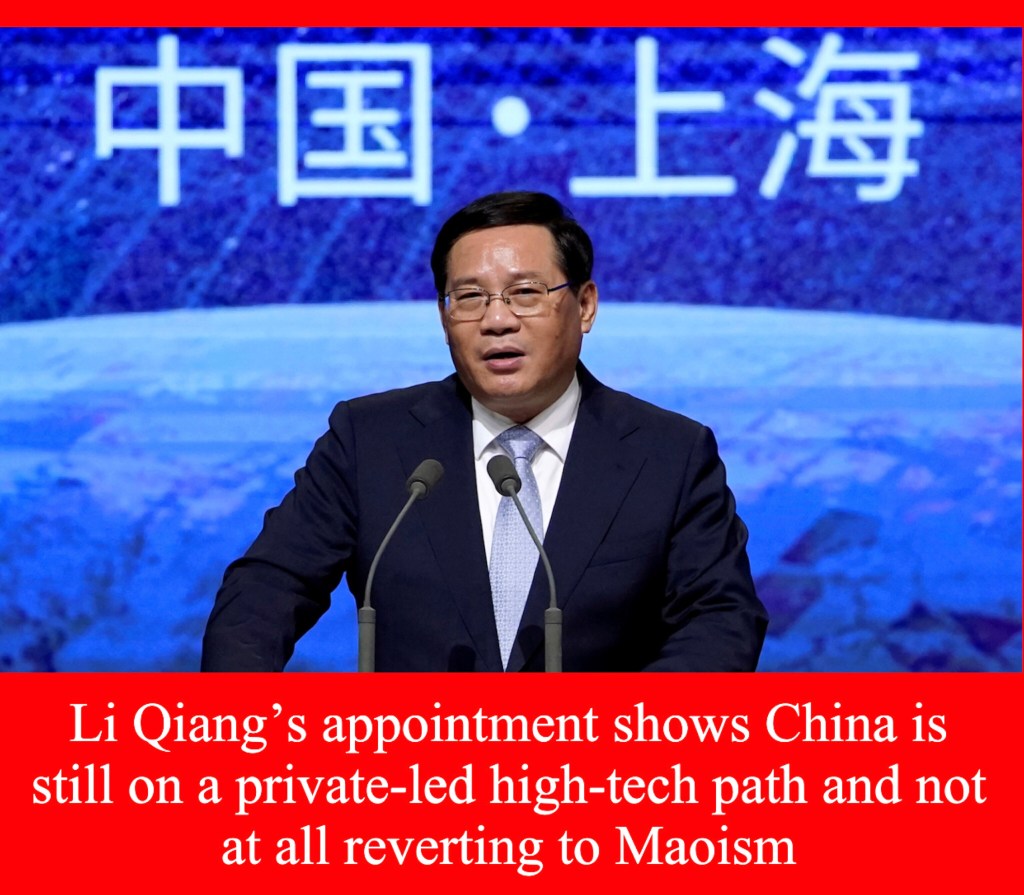
Asia Times: Misreading Xi and the rise of Li. Li Qiang’s appointment shows China is still on a private-led high-tech path and not at all reverting to Maoism 亞洲時報:誤讀習近平和李的崛起。李強的上任表明中國仍然走在私人主導的高科技道路上,根本沒有回歸毛澤東主義 By UWE PARPART OCT 24, 2022
The professional China commentariat and its echo chamber in the Western media were blindsided by the appointment of Shanghai party head Li Qiang as the country’s premier, the number two position to Xi Jinping.
Li is a tech-savvy supporter of high-tech entrepreneurship who believes that China’s future lies in the digital economy. Xi, the Western press insisted with near unanimity, had reverted to Maoism.
Precisely the opposite of what the commentariat expected seems to have happened and the Western press is scrambling to explain the anomaly. Here’s a sampling of Western press comment:
“Xi Jinping promotes loyal Shanghai chief to upper echelons of power” (Financial Times)
“A loyal aide in Shanghai takes a leading role in Beijing” (New York Times)
“Xi loyalist likely to be China’s next premier” (Barron’s)
“Promotion of Shanghai chief puts loyalty over everything” (Bloomberg)
Bloomberg tried to explain why it failed to foresee Li’s rise saying, “When Li’s initial lighter-touch approach to China’s strict Covid Zero strategy was breached by the more transmissible omicron variant earlier this year, [his] ascent was cast into doubt.”
That loyalty was a factor in Li’s appointment is obvious. Political leaders, Chinese or Western, do not normally appoint deputies who are known for disloyalty.
The “loyalty” explanation is no explanation at all. A better explanation is that the Anglo-American political establishment has misread Xi from beginning to end.
Li’s appointment should be a wake-up call. The ubiquitous ideological blinders and preconceptions in the foreign policy establishment are the cause of a chronic misreading of China, leading to concomitant political reactions with dangerous implications and consequences.
In fact, Li’s appointment as premier-designate was foreseeable as well as foreseen. Asia Times wrote as much on October 21, forecasting that Xi would opt for retiring four out of the seven Politburo Standing Committee members, including not only Premier Li Keqiang, but also the widely touted premiership candidate Wang Yang, and would not miss the opportunity to install a new, younger and different cast of leaders.
Li is the Shanghai party chief. Few if any previous Shanghai leaders have failed to advance to the Standing Committee, Xi included. That his advance to the number two position nonetheless came as a surprise to most Western analysts merely proves how much so many have misread Xi in particular and Chinese governance in general.
Li studied business administration and holds an MBA degree from Hong Kong Polytechnic University, a top-tier Asian business and technology school funded by Hong Kong tycoon Li Ka-shing. He has supported technological entrepreneurship as the leading edge of China’s development.
Among other things, Li was one of Jack Ma’s most visible supporters in the China Communist Party leadership. He brought Elon Musk’s Tesla to Shanghai. His appointment affirms the leadership’s support for private-led high-tech industry.
Accelerated technological innovation and STEM talent development were keywords in Xi’s work report. What Western analysts (and US Secretary of State Antony Blinken) picked out instead was the reiteration of China’s longstanding policy with respect to Taiwan.
Li was chosen for his track record of economic and financial innovation in the Shanghai Free Trade Zone, for bringing in major foreign investment (up by 32% in 2021 despite Covid) and for the policy papers on economic development he wrote for Xi as his assistant in Zhejiang.
So, then, what should be made of Xi’s alleged neo-Maoist, leftist and anti-capitalist emphasis on “common prosperity?”
Throughout his career, Xi has shown himself to be a master of the most characteristic maneuver in Chinese imperial governance: Feint in one direction in order to disarm prospective opponents, while preparing to move in another.
The elements in the Party who opposed Xi in 2012 remain his antagonists, the supporters of a Fortress China that shares the poverty rather than creates the wealth. His first move in power after 2012 was to crush the group around Bo Xilai centered in Chongqing and part of China’s northeastern rust bowl, and to unleash China’s private sector.
During the past two years, Xi adopted the rhetoric of income redistribution under the watchword “common prosperity,” and cracked down on China’s consumer Internet sector. In classic Chinese style, he adopted the rhetoric of the Communist Party elements he most opposed, only to move decisively in the opposite direction.
Ideologically blinded Western analysts and officials consistently miss the point. China’s state is the least ideological, most ruthlessly pragmatic entity in the world. To the extent its leaders succeed, they do so by achieving prosperity and security by whatever means necessary to meet their objectives.
Xi knows that China’s state-owned industry is too sclerotic and corrupt to lead the transition to a digital economy and that the Chinese state needs private entrepreneurs to take the lead. But he also knows that entrenched political interests linked to the state sector will not just grumble at the sudden ascendance of entrepreneurs but also make determined political moves.
“[Li] has a much closer relationship with Xi compared to [Premier] Li Keqiang. … Xi is likely going to give him much more room and power to manage the economy,” Deng Yuwen, a former deputy editor of the Study Times, the official newspaper of the Central Party School, told the South China Morning Post.
To stay in power, Xi or any other Chinese leader must placate the old guard and defuse popular envy of the newly rich while allowing entrepreneurs to lead economic transformation.
But Xi’s core agenda, repeated in the work report, is to make China a moderately prosperous economy by 2035. To do so, China needs and he must achieve a gross domestic product (GDP) growth rate of between 4% and 5% per annum.
Li has demonstrated that he has the energy and executive capability to get things done. A Brookings Institution study reports that in 2018-19 he mobilized Shanghai’s capabilities and workforce in tandem with Elon Musk to build a Tesla factory capable of making 500,000 electric cars annually.
Amazingly, It took only ten months for this joint venture to advance from construction to full operation.
The sweeping change in China’s leadership denotes an inflection point. Deng Xiaoping’s 1979 reforms eventually moved nearly 700 million Chinese from countryside to city, replacing the rural economy of traditional China with a smokestack economy dominated by state-owned enterprises.
China’s state sector, in turn, became a political power base in its own right. Xi concluded that he needed a new broom to sweep aside the obstacles to a digitized industrial economy. With Li’s appointment as his de facto deputy, Xi’s well on his way.
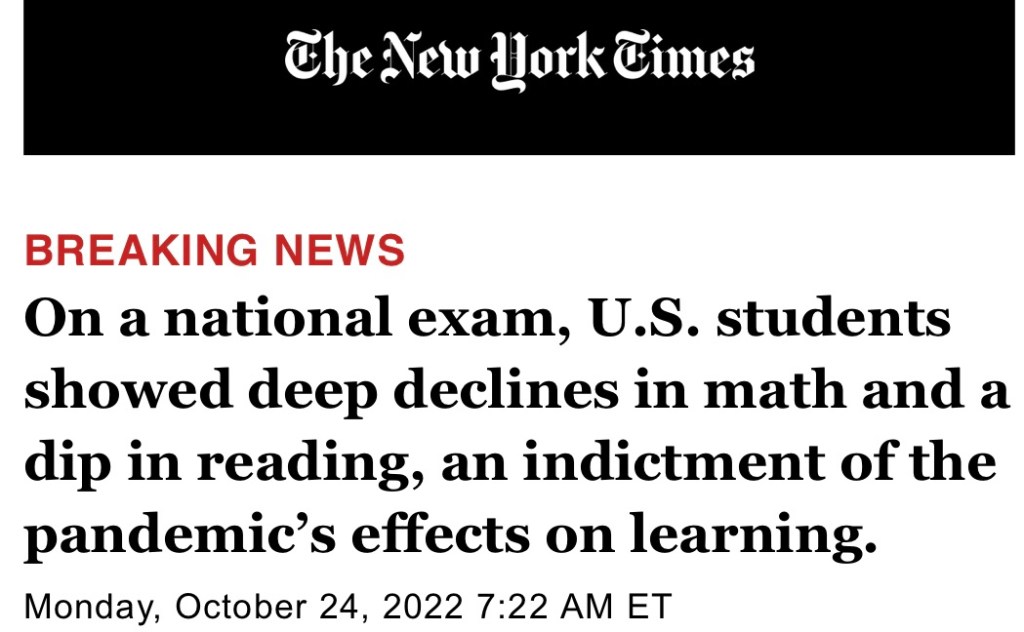
NYT Breaking News: Math scores fell in every state, reading dipped on national exam when US kept spent more money on war machines not education, 70 billions in 2022 on our proxy war against Russia in Ukraine 紐約時報突發新聞:美國每個州的數學成績都在下降,當美國繼續花錢在戰爭機器而不是教育上, 閱讀在全國考試中下降,2022 年我們在烏克蘭對俄羅斯的代理戰爭已經花費了700億美元.




 Business Blog