SCMP: 98 percent approve of Chinese government, 5 more years of Xi: the West doesn’t like the idea, but most Chinese do. 香港南華早報: 98% 支持中國政府,再過 5 年習近平:西方不喜歡這個想法,但大多數中國人喜歡. By Zhou Xiaoming and Tu Yun Oct 14 2022
•Contrary to Western perception, Xi enjoys immense popularity at home. Under Xi in the past decade, China has become more prosperous and liveable
•And amid trying times for the world, Chinese leadership continuity will mean policy continuity and predictability at home and abroad
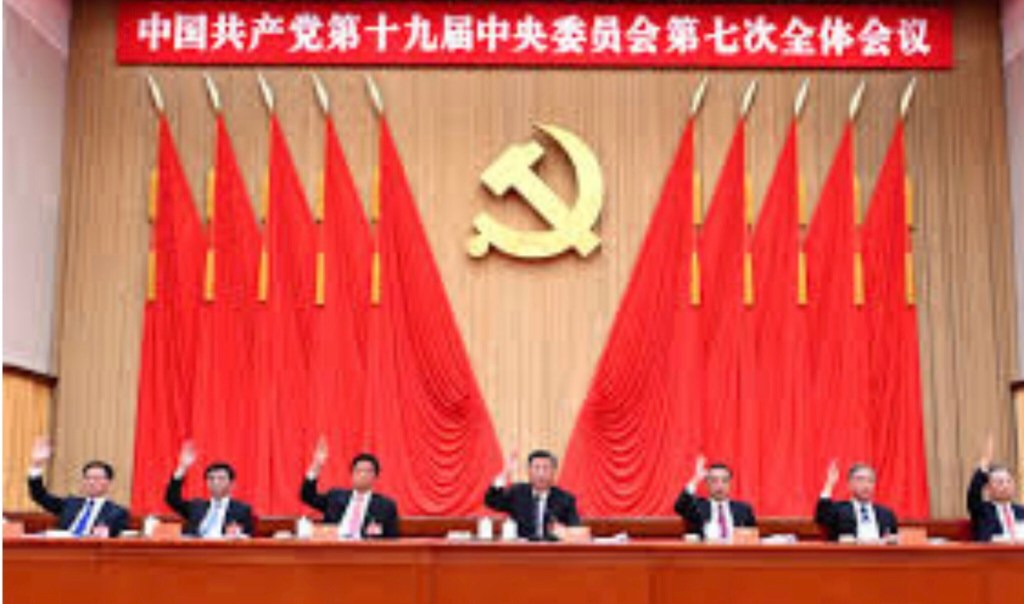
“He has governed the country very well,” taxi driver Cheng Wenli said, explaining why he supported a third five-year term for Xi Jinping as general secretary of the Communist Party of China, as he drove past Zhongnanhai, the seat of the central government in Beijing. Like Cheng, most delegates to the party’s 20th National Congress, scheduled to begin on October 16, have probably made up their minds about Xi. His third term is all but certain.
Like any politician, Xi has his share of detractors. However, contrary to the general perception in the West, Xi enjoys immense popularity at home. According to a survey led by York University in Ontario, Canada that was published in 2021, Chinese citizens’ trust in the government led by Xi stood at 98 per cent.
The fact is that the Chinese people have found a strong and effective leader in Xi during his first two terms. As the National Congress approaches, he is riding a wave of popularity in the country, especially among the relatively underprivileged. Many of these low-income families would be among the 100 million people lifted out of extreme poverty over the past decade.
Indeed, most Chinese would attribute China’s spectacular economic growth to Xi’s leadership. Over the past decade, the country’s GDP has more than doubled to US$17.7 trillion, with China’s share of the world economy jumping from 11 per cent to 18 per cent.
China has also become a more liveable country. It has planted a quarter of the world’s new forest in the past decade, while carbon dioxide emissions per unit of gross domestic product have fallen by 34 per cent. Mountains have become greener, rivers and lakes cleaner, and skies bluer.
Beijing, once plagued by air pollution for the better part of the year, logged 288 days of good air quality in 2021 – up from 176 days in 2013. Meanwhile, the number of heavily polluted days in a year went from 58 to eight over the same period.
Xi’s campaign against corruption and crime, which could have contributed to Washington’s claim that the Communist Party has become more “repressive”, has made most people in the country feel safer. Chinese cities including Beijing, Shanghai, Guangzhou and Shenzhen are generally recognised as among the safest major cities in the world.
At a time of heightened geopolitical tensions and global recession fears, China needs a strong and steady hand at the helm. An experienced and proven leader is surely to be preferred to someone new and untested.
While scepticism lingers, many have come round to supporting leadership continuity. Xi’s strong track record in governing the country has convinced hundreds of millions of Chinese, like cab driver Cheng, that he is the right man for the top job in the country.
Leadership continuity, for China, also means domestic policy continuity. The leadership’s policy blueprint will continue to be implemented and a slew of measures can be expected soon that will put the economy back on a growth trajectory of around 5 per cent per annum between now and 2035.
Apart from restoring confidence in the economy and amid high hopes that the zero-Covid policy can be adjusted before 2023, China is soon to open its doors wider to the world. Beijing is putting measures in place to open more sectors of the Chinese economy to foreign investors, while efforts to create a better environment for foreign businesses are set to shift into high gear.
A third term for Xi would also bring predictability to China’s foreign policy. Xi is expected to continue to push his vision for the world: a community with a shared future for mankind. Alongside two of his more recent initiatives, the Global Development Initiative and the Global Security Initiative, his Belt and Road Initiative is expected to remain a top priority in China’s foreign policy.
Furthermore, despite a rise in unilateralism and anti-globalisation sentiment in parts of the world, China will continue to advocate globalisation, multilateralism and an open and inclusive trading system, on top of providing more common goods for the world.
As has been the case in the past, developing countries can count on China, which is keen on promoting South-South cooperation and pushing for a fairer and more just international order.
Meanwhile, China will continue to seek cooperation with the West for mutual benefit rather than confrontation. Beijing’s United States policy is clear: it looks to work with Washington on issues such as trade and investment, and to coordinate with the Americans in multilateral settings, while pushing back against Washington’s attempt to curtail China’s rise. Thus, the US will find China as uncompromising as ever on such issues concerning Hong Kong, Xinjiang, the South China Sea and especially Taiwan.
While all eyes are on China’s five-yearly leadership reshuffle, Xi’s reappointment will disappoint, even dismay, some people outside China. Xi has lifted China’s international status, only for Washington to regard the country as a major strategic threat.
In addition, Xi’s readiness to safeguard his country’s interests and those of the developing world has caused the US to denounce China as “aggressive”. The US and its allies are unlikely to relish still having to deal with Xi, especially when he, not them, will increasingly be in a position of strength.
Asked about Western criticism of a third term for Xi, taxi driver Cheng said, “They just don’t want to see China grow stronger.” While this view may sound nationalistic to some outside China, it reflects the sentiment among the majority of the Chinese people.
Zhou Xiaoming is former deputy representative of China’s Permanent Mission to the United Nations Office in Geneva
Tu Yun is a senior reporter and editor at CGTN Radio and host of the weekly current affairs podcast The Chat Lounge
Zhou Xiaoming is currently a senior researcher at the Centre for China and Globalisation and a member of the Expert Advisory Group of the National Think Tank of the Academy of International Trade and Economic Cooperation, Ministry of Commerce. He is also a visiting professor at the North China University of Electronic Power. From 2015-2016, he was deputy permanent representative of China’s Permanent Mission to the United Nations Office in Geneva.
Tu Yun is a senior reporter and editor at CGTN Radio and host of the weekly current affairs podcast The Chat Lounge. She also contributes commentaries on current affairs for CGTN Insight. Yun was overseas correspondent at China Radio International’s London bureau (2010-2014) and Yangon bureau (2016-2018).


 Business Blog