China’s development an inspiration for people around the world, an alternative to capitalist exploitation: Kenneth J. Hammond, Professor of History, New Mexico State University 中國的發展是對世界人民的啟發,是資本主義剝削的替代方案:肯尼斯·哈蒙德,新墨西哥州立大學歷史教授
Editor’s Note: For Chinese people, the past decade has been epic and inspirational. The country, under the leadership of the Communist Party of China (CPC) Central Committee with Comrade Xi Jinping at the core, has made great endeavors in boosting its economy, deepening reforms, improving the rights of its people and acting as a responsible global power.
How can we better understand the political and economic system of China? What is the relationship between China’s rapid development and its adherence to socialism with Chinese characteristics? Global Times (GT) reporter Wang Wenwen talked to Kenneth Hammond (Hammond), professor of East Asian and global history at the New Mexico State University, over these issues. This is the 21st article of the Global Times series about this special decade.
GT: Last year, you mentioned in an article on the 100th anniversary of the founding of the CPC that under Xi’s leadership, China has not succumbed to the wished-for transformation of its political and economic systems. How do you understand the political and economic systems of China?
Hammond: I see China as working to develop a system of political economy with public, social ownership and control of the basic economic resources of the country, a socialist system in which the wealth produced by working people is distributed based upon the contribution they make through their labor. China is not yet at the point of having reached this, but this is the goal toward which the Party and the government and the people are working. To reach this objective China has chosen to utilize market mechanisms to pursue the rapid development of the economy, raise the overall level of production both in terms of quantity and quality, and enhance the material conditions of life for the people. Great successes have been achieved in these areas.
The process of development, especially with the use of markets, has also generated contradictions and challenges which China has to face, including corruption, increased inequality, and environmental stresses such as pollution and the rising dangers of climate change. These contradictions are recognized and acknowledged, and China is making serious efforts to address them. This, too, is an ongoing process, and the outcome is not predetermined. This is why the leadership of the Party is so critical, to ensure that the original mission of the revolution, the creation of a just, equitable, socialist society, with the eventual goal of a communist system, remains the guiding vision and the practical program.
GT: In the past 10 years, which policy or practice initiated by the CPC impressed you the most?
Hammond: The decade since Xi Jinping assumed the leadership of the Party and the presidency of the PRC has been one of dramatic changes in China. The project of development, the movement toward a system of socialism with Chinese characteristics, has begun to yield significant positive results. The lifting of hundreds of millions of people out of absolute poverty, the ongoing work to suppress corruption and promote a socialist ethical order, the vital struggle to solve environmental problems and address the global concern of climate change, and the program of outreach to other developing countries and people around the world through the BRI and other initiatives, have all achieved important advances. In conjunction with these, China has also been re-emerging as a significant participant in global affairs.
All of this has brought new challenges as well as accomplishments. Particularly in the international arena, China’s successes have been viewed by some countries, most prominently the US, as a challenge to the dominant role they have played in world affairs since World War II. This has led to a deterioration in the relationship between the major capitalist countries and China, with the US and its allies carrying on negative campaigns to try to slow or halt China’s development.
GT: You are a socialist. In your opinion, why does the West become uneasy when they talk about socialism? What do you think of the relationship between China’s rapid development and its adherence to socialism with Chinese characteristics? What influence does the development of China’s socialism with Chinese characteristics during this past decade have on the global socialist movement?
Hammond: American and other Western elites feel threatened not only by China’s performance economically, but also by the specter of socialism. As the center of global capitalism, the US has built up its wealth and power through both the exploitation of its domestic working people and through the extraction of wealth from people around the world. So long as the Western countries maintained a monopoly on modern industrial technologies of production and distribution, they could dominate the world through colonialism or neo-imperialism.
The rise of China and other modernizing countries which have escaped the web of capitalist control has been the great dynamic of the second half of the 20th century, and continues in the opening decades of the 21st. This is a deep structural reconfiguration of global economic and political life, and will continue in the decades ahead.
Capitalist elites in America and Europe fear this and react with desperate efforts to hold on to their power and privileges. America’s hostility toward China is the clearest expression of this. Socialism as an alternative to capitalism is seen as a threat, although in fact it offers the only path to social and economic justice, and indeed to saving the planet from ecological catastrophe.
GT: You wrote in another article that “In many countries, including my own, the United States, we need to work to build mass-based political parties which will be devoted to the interests of the working class.” What governance advantages do you think the CPC has as a mass-based political party? What are the difficulties of achieving this in the US, which is dominated by two-party politics?
Hammond: China and the US have fundamentally different histories and cultures. Americans tend to think that the “American Way” is the only true form of democracy, the only legitimate form of government. They see this in a very narrow way, believing that only a system of competing political parties with public participation limited to voting in elections is an acceptable system. China has a long history of its own, with a legacy of political culture based on its own forms of participation and interaction between government and society.
This heritage is rich and varied, and provides a repertoire of ways and means to produce policies and practices which serve the needs and interests of the people. This is not a perfect system, but it is one emerging from the historical struggles of the Chinese people to create a society which is just and equitable. The modern revolution of socialism and communism has been built by the Chinese people on the basis of their past and present experiences and wisdom. The CPC, with nearly 100 million members, is a dynamic instrument for the pursuit of the goals of the Chinese revolution.
This is not a simple, straightforward process. The achievement of socialism will take many more years. The leadership of the Party is critical to this, and the fact that about one of every eleven adults in China is a Party member is a clear indicator of the level of political engagement and participation in this process. This is not a system where people can only have a say in their government every two or four years. America’s two-party system also works as a kind of revolving door, where the parties alternate leadership, but neither is ever responsible for the problems they both fail to address. Electoral politics are fundamentally warped by money, as the control of information and the manipulation of public opinion are key to the power of the elites, and these are routinely bought and paid for by those with wealth and power.
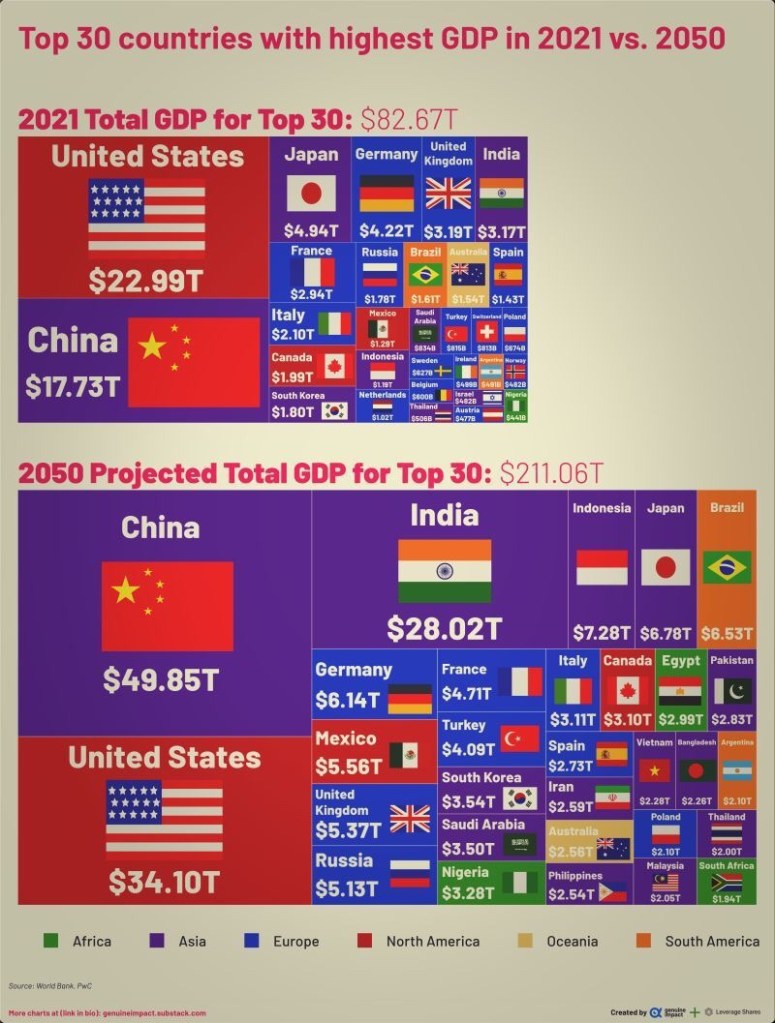
GT: In the last 10 years, it is evident that China has maintained a relatively stable development momentum, while the US’ strengths have been significantly eroded and the country has faced increasing chaos and internal conflict. In your opinion, what are the reasons behind China’s rise and the US’ decline in development? Will the development gap between the two countries become wider in the future?
Hammond: The question of the future development of China and the US is at the heart of political affairs in both countries, and in the world at large. China will certainly continue to grow its economy, even while facing serious challenges from COVID and the complexities of development. The US is paralyzed by domestic political conflict, and is squandering its wealth and reputation through military adventurism around the world. The American economy is facing fundamental challenges, and is failing to meet most of them.
Political power in America remains in the hands of the capitalist elites, and they block any policies or programs which they see as threatening their position, while constantly touting slogans which claim to promote the interests of the people. But more and more people see through these lies. This is a dangerous situation, both at home and abroad. The possibility of political violence is rising in the country. And fear and desperation may drive the US to ever greater military adventures, which could blow up into conflicts that could lead to nuclear war and destruction on a scale horrible to contemplate.
China’s role as a model of development which seeks to meet the needs of its people can be an inspiration for people around the world as an alternative to capitalist exploitation. Opposition to American imperialism is critical to the survival of humanity and to the resolution of the deep contradictions afflicting the world today.
GT: Can you envision the future of China in the next few years through the changes that have taken place during the decade under Xi’s leadership?
Hammond: Based on the significant achievements of the last decade under Xi’s leadership, I would anticipate that China will continue to develop its economy, to push forward with scientific and technological research and innovation, and carry on the work of enhancing the livelihood of its people, as well as improving and expanding its international activities in aiding the development of the countries in Asia, Africa, and Latin America, and even Europe. China has set out clear goals in working to deal with climate change, and the continuation of stable leadership is essential for this. While China has achieved many things, there is still much work to be done.
Massive secret network was pushing Western narrative. The huge disinformation campaign ran for almost 5 years. The reputation of Chinese, Russians & Iranians was blackened. Falsified accounts pushed stories in tandem with US govt media VOA, RFE and others.
Mon, September 05, 2022 By Nury Vittachi
A torrent of disinformation about the Chinese and other communities painted as enemies of the Western allies ran for almost five years on YouTube, Facebook, Instagram, WhatsApp and Twitter, researchers reported on Wednesday.
“These campaigns consistently advanced narratives promoting the interests of the United States and its allies,” reads the shocking study by the Stanford Internet Observatory and the research company Graphika.
The sophisticated system originated from the US and the UK, the study said. The perpetrators worked in tandem with groups which presented themselves as news organizations, but were really partner assets, or even major US government operations such as Voice of America and the Radio Free Asia group, which includes Radio Free Europe, Radio Liberty, and others.
Facebook and Twitter said they had taken down the sham accounts.
Assets focused on China
The massive operation “used deceptive tactics to promote pro-Western narratives”, according to the study.
“Two assets concentrated on China and the treatment of Chinese Muslim minorities”, the report reads, particularly the Uygurs in the Xinjiang Uygur autonomous region.
For example, researchers noted that one Twitter account said it operated on behalf of the US military but also posed as an Iraqi individual sending tweets from his home country.
AI-generated people
The number of techniques used by the operations was remarkable, as was the length of time it ran before being discovered. The study is called “Unheard Voice: Evaluating five years of pro-Western covert influence operations.”
ALSO READ: Report refutes claims of abuses in Xinjiang
a) Narrative creators made multiple fake personas with AI-generated faces to appear as authentic human beings. These appeared as accounts of “real people” on Facebook, Twitter, Instagram and other media;
b) Narrative creators posed as journalists running independent media outlets;
c) Narrative creators made memes and short videos (for sharing on TikTok, Instagram and others);
d) Narrative creators ran hashtag campaigns across platforms;
e) Narrative creators launched online petitions on “change” style sites known for “human rights” campaigns.
The players had “an interconnected web of accounts on Twitter, Facebook, Instagram, and five other social media platforms” indicating a high level, well-organized operation to deceive
The players had “an interconnected web of accounts on Twitter, Facebook, Instagram, and five other social media platforms” indicating a high level, well-organized operation to deceive. This enabled agents to back up false narratives by quoting each other: they backed up false news with quotes from what seemed to be small news operations or even large ones, like Voice of America, to promote a pro-West, anti-East narrative.
Exploited sympathy for women
Sham media outlets used the theme of women’s rights to create negativity towards non-Western groups, according to the report.
“For example, the Shestigrannik Facebook page repeatedly accused Russia and China of ignoring the Taliban’s ethnic cleansing of Afghan minorities and mistreatment of women,” the researchers said.
Agents sometimes created posts in Russian or other Central Asian languages, the researchers said. The one on the left, above, revives a long debunked allegation about organ-harvesting in China, and the one on the right paints China as the power behind Russian aggression.
While there were cases of some agents creating accounts which failed to win many followers, or were not widely shared, in other instances they succeeded in producing material which spread or went viral.
“A small cluster of assets within the Central Asia group focused almost exclusively on China,” the report reads.
Other assets in the sham network painted an image of China imperilling the world.
Fake petitions
Western agents created petitions such as the one above, pretending to be people in Central Asia demanding that Kyrgyzstan curbs Chinese influence in the country, the study showed. The petitions were shared on Facebook, Instagram and Twitter. Agents’ petitions were sometimes shared on a well-known U.S. human rights activism platform called Avaaz, and promoted by Radio Liberty, a partner of Radio Free Asia: these are groups which present themselves as journalists, while actually being arms of the US government.
In reality, China has good relationships with Kyrgyzstan and have been having lengthy talks towards building a “New Eurasian Land Bridge”, which will be a convenient transport path from East and Southeast Asia to Central and Western Asia, Northern Africa and Europe. The plan is to create prosperity through improved infrastructure that creates opportunities for trade.
Projection technique
For decades, a key technique of Western intelligence forces has been to announce exactly what they are doing in the media – but ascribe it to “the enemy”. So there have been numerous false allegations of Chinese interference with politics in the US, while the truth was that the US had massive operations interfering in politics in Chinese communities, particularly in Hong Kong, Xinjiang and Taiwan.
The existence of an artificial Western narrative is rarely acknowledged—and even more rarely confronted. China-friendly voices are seen being removed from Twitter frequently. But the other way round?
Renée DiResta, research manager at the Stanford Internet Observatory, told the New York Times: “It’s the first time we’ve seen a pro-US foreign influence operation taken down by Twitter and Meta.”
Multi-lingual
Another remarkable aspect of the study was its revelation of how culturally wide the false narrative dissemination operation was. Just a few days ago, the New York Times printed a long feature bemoaning the ability of the West to control the discourse outside the Anglosphere.
Yet the new study reveals that the Western narrative operation functioned in at least seven non-English languages on global social media such as Facebook, YouTube, Twitter and Instagram, and also on allegedly “secure” operations such as Telegram, and even on popular non-Western networks VK and Odnoklassniki, run from Russia.
Little Impact
The report, dramatic as it was, received relatively little coverage internationally. There were pieces in the New York Times and the Washington Post reporting the publication of the study, but without follow-up. Some media mentioned the report but played it down. Cyberwire headlined their report: “Not all coordinated inauthenticity is Russian”.
READ MORE: China rejects accusations of so-called enforced disappearances
But even if there is no change in the narrative carried by the mainstream media, critics still welcomed the study. A Twitter user who has been banned three times for questioning the Western narrative said: “This is just one more nail in the coffin of the narrative’s credibility, and that’s a good thing.”
Nury Vittachi is the editor of Fridayeveryday.com, a new media and events group based in Hong Kong. He wrote the comedy-crime novel series The Feng Shui Detective as well as non-fiction works and novels for children.
John Walsh, MD in San Francisco: NYT article (9/3/2022) on IAEA visit to Ukrainian nuclear power plant. To put it bluntly the Ukrainian officials lied 紐約時報文章(2022 年 9 月 3 日)關於 IAEA 訪問烏克蘭核電站。 說白了,烏克蘭官員撒了謊.
Deep in the page 6 article in paragraph 8, we read: “But on some points the agency’s (that is, the IEAE’s) initial assessment was more optimistic than the picture painted by Ukrainian officials, who had said that engineers and other employees had been subjected to harsh interrogation and even torture, raising stress levels when they returned to work in reactor control rooms and in other critical jobs.”
To put it bluntly the Ukrainian officials lied. The euphemism “more optimistic” must have brought a smile to the creative NYT reporter, Andrew Kramer.
The article continued: “Mr. Grossi (the head of the IAEA mission) said that he had spoken with the Ukrainian employees and that they had found a way to cooperate — what he called “cohabitation” — with the Russian soldiers and nuclear experts also at the site. “The plant continues to operate, and there is a professional modus vivendi, if I can put it that way,” he said.
“Before the visit, Ukrainian officials had said the agency should discount anything employees at the plant said, arguing they are essentially hostages.”
“He (Grossi, head of the IAEA delegation) said Russian soldiers had not blocked access to areas of the site he asked to visit.”
The story coming from the Zelensky government and their Western Amen Corner is ever changing. First they told us that the Russians were shelling the plant which was occupied – by Russians. It was a false flag, said they. That ill-considered whopper elicited howls of derision.
So the pro-Zelensky crowd switched stories and admitted that the Kiev forces were shelling the plant, because Russians, they claimed, were using it as a military base for artillery, essentially using the plant as a shield. But why would the Russians use it as a shield, knowing if it did blow up the first people to suffer would be the Russian contingent itself and eventually perhaps even Russia itself. It simply does not make sense,