Biden speech at UN: by passing the US Promoting of Taiwan War Act (aka. Taiwan Policy Act 2022). United States intended to change the One China Policy 拜登在聯合國演說, 通過促進台灣戰爭法 (也稱為2022年台灣政策法) 美國要改變一中政策 (行動証實一切)

Biden speech at UN: by passing the US Promoting of Taiwan War Act (aka. Taiwan Policy Act 2022). United States intended to change the One China Policy 拜登在聯合國演說, 通過促進台灣戰爭法 (也稱為2022年台灣政策法) 美國要改變一中政策 (行動証實一切)
Video: Putin mobilizes 300,000 army reserve & nuclear weapons to protect independence referendum in four states joining Russia 普京下動員令 核武箭在弦上 護四州獨立公投
https://rumble.com/v1l1kw1-putin-mobilizes-300000-army-reserve-and-nuclear-weapons-to-protect-independ.html
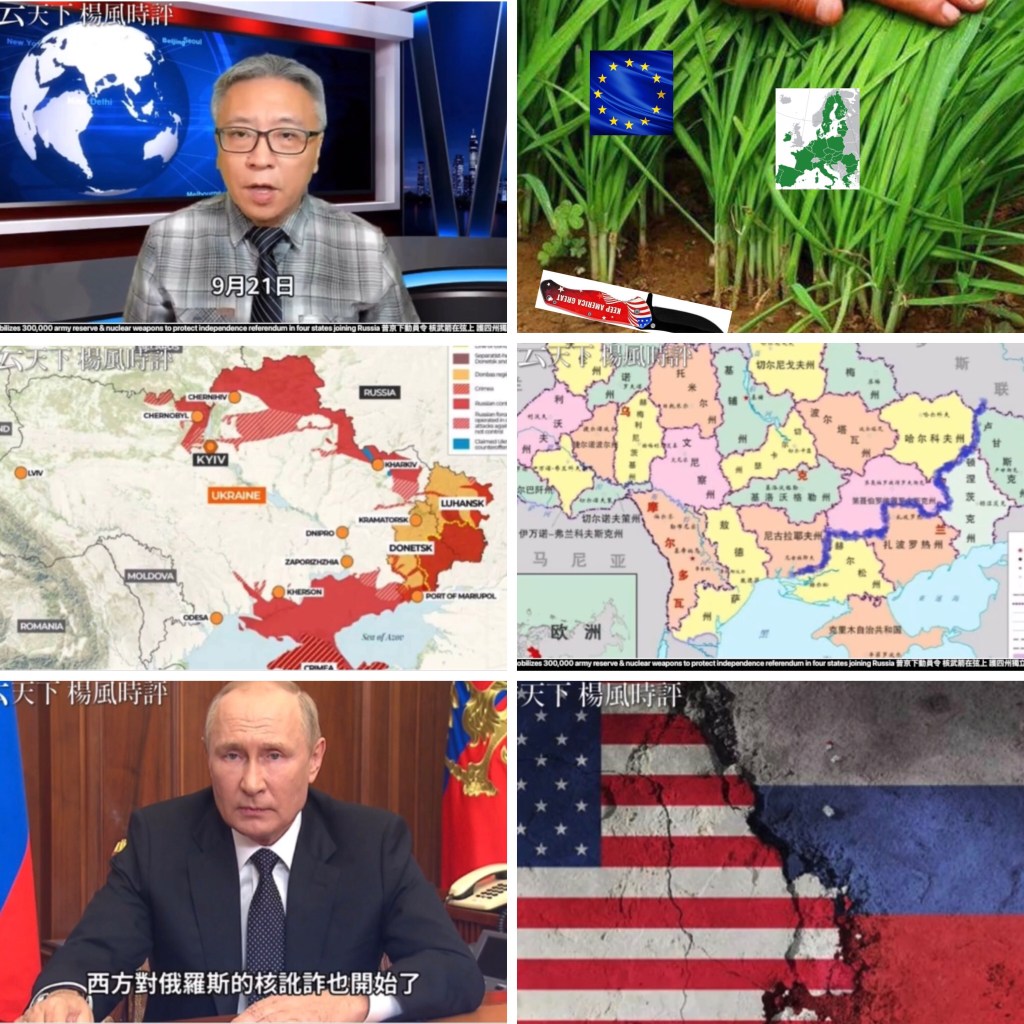
Video: US Promoting of Taiwan War Act (aka. Taiwan Policy Act 2022)促進台灣戰爭法 (也稱為2022年台灣政策法)
https://rumble.com/v1l18i7-us-promoting-of-taiwan-war-act-aka.-taiwan-policy-act-2022.html
China strikes back! China sanctions Boeing (5,600 aircraft orders are gone) and Raytheon CEO! Sino-Russian cooperation “CR929″ finalized! Some parts of the C919 come from Europe and the US 中國反擊!大陸制裁波音(5,600架飛機訂單沒了),雷神公司CEO! 中俄合作 “CR929″定案!陸C919部分零件來自歐美 介文汲:不是不能做而是”發展策略”!

Video: China’s Plan to Dominate the Metaverse and Future of the Internet 中國計劃主導互聯網元界和互聯網的未來
https://rumble.com/v1l0wcz-chinas-plan-to-dominate-the-metaverse-and-future-of-the-internet.html
The Metaverse is going to be the next level of the internet. China is in a position to reach the Metaverse first and will be part of creating a more open and global reaching metaverse for the world. In today’s video I interview Alvin Graylin Wang the President of HTC China and China’s #1 insider into the Metaverse. 元界將成為互聯網的下一個層次。 中國有能力首先到達元宇宙,並將成為為世界創造一個更加開放和全球性的元宇宙的一部分。 在今天的視頻中,我採訪了宏達電中國總裁、中國第一大元界內部人士汪叢青

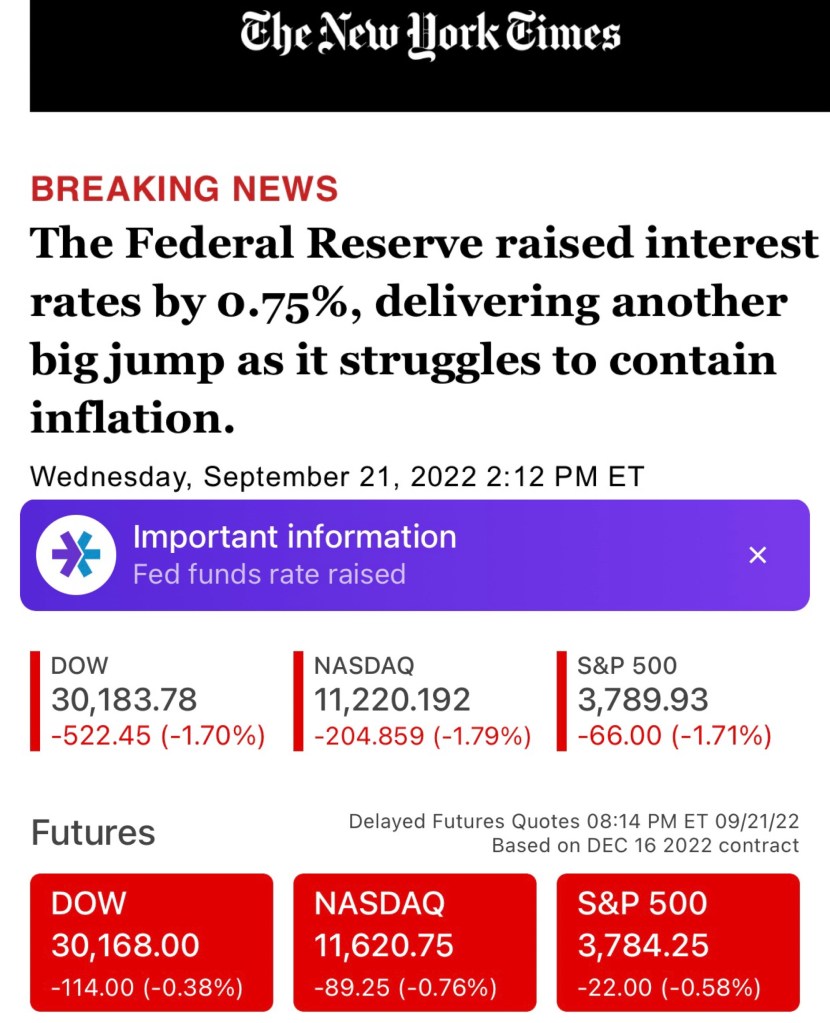
As predicted and you don’t need a Ph.D., Investmnet Banker or a person with High IQ to figure it out. Stock Markets are expected to drop a lot more in the coming months 正如預測的那樣, 您不需要博士, 投資銀行家或高智商的人來預計未來幾個月股市將持續大幅下跌.
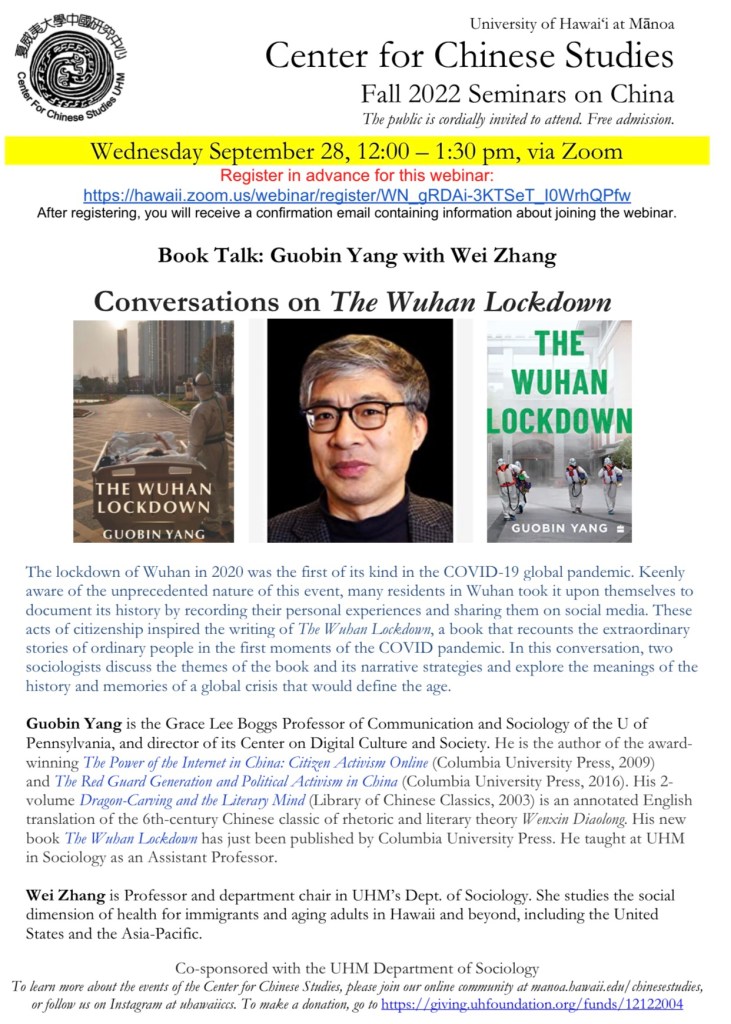
9/28/22 Book Talk via Zoom on THE WUHAN LOCKDOWN – Wednesday September 28, 12:00 – 1:30 pm HST
Register https://hawaii.zoom.us/webinar/register/WN_gRDAi-3KTSeT_I0WrhQPfw
The author, Prof. Guobin Yang of the U of Pennsylvania, invites you to read excerpts from the book in advance, at the following links. https://penntoday.upenn.edu/news/Guobin-Yang-book-Wuhan-voices-pandemic-early-days
https://harpercollins.co.in/blog/book-excerpts/the-wuhan-lockdown-excerpt/
https://undark.org/2022/03/04/book-excerpt-the-wuhan-lockdown/
The lockdown of Wuhan in 2020 was the first of its kind in the COVID-19 global pandemic. Keenly aware of the unprecedented nature of this event, many residents in Wuhan took it upon themselves to document its history by recording their personal experiences and sharing them on social media. These acts of citizenship inspired the writing of The Wuhan Lockdown, a book that recounts the extraordinary stories of ordinary people in the first moments of the COVID pandemic. In this conversation, two sociologists discuss the themes of the book and its narrative strategies and explore the meanings of the history and memories of a global crisis that would define the age.
Guobin Yang is the Grace Lee Boggs Professor of Communication and Sociology of the U of Pennsylvania, and director of its Center on Digital Culture and Society. He is the author of the award- winning The Power of the Internet in China: Citizen Activism Online (Columbia University Press, 2009)
and The Red Guard Generation and Political Activism in China (Columbia University Press, 2016). His 2- volume Dragon-Carving and the Literary Mind (Library of Chinese Classics, 2003) is an annotated English translation of the 6th-century Chinese classic of rhetoric and literary theory Wenxin Diaolong. His new book The Wuhan Lockdown has just been published by Columbia University Press. He taught at UHM in Sociology as an Assistant Professor.
Wei Zhang is Professor and department chair in UHM’s Dept. of Sociology. She studies
Co-sponsored with the UHM Department of Sociology
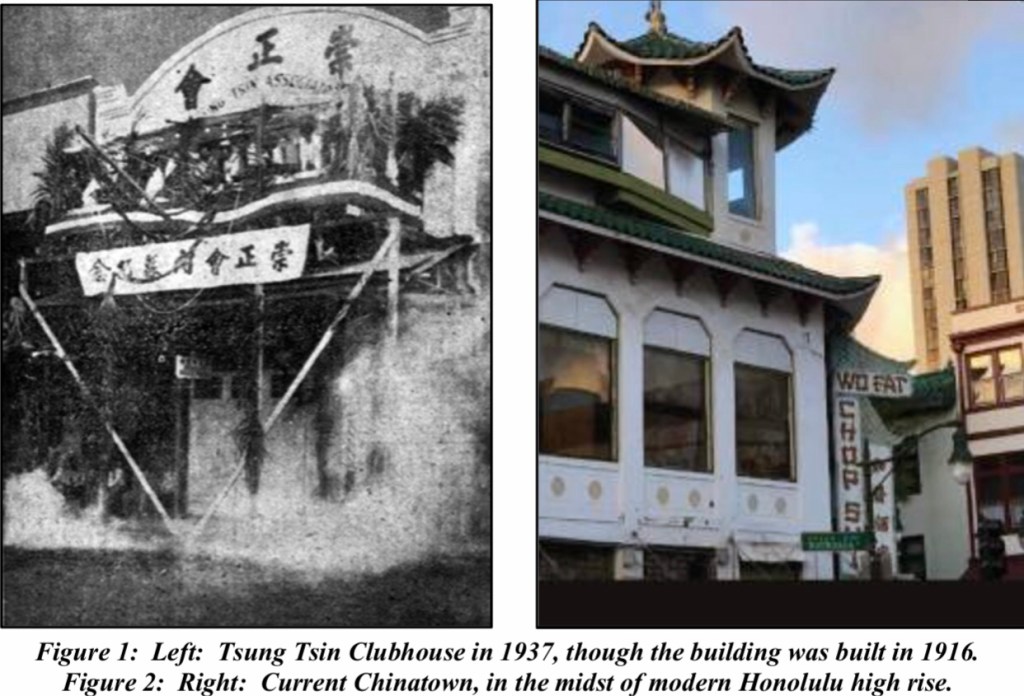
Zoom Presentation – As member of Tsung Tsin Association of Hawaii, I would like to invite you to a zoom meeting-THROUGH THE AGES: HISTORIC HONOLULU CHINATOWN Sat, Nov 19, 2022, 12noon HST Sponsored by the Tsung Tsin Association of Hawaii
To register http://www.ttahawaii.com
By Gary R. Coover — an Illustrated free Zoom Webinar with Q&A Sponsored by the Tsung Tsin Association of Hawaii
Saturday, November 19, 2022, 12noon Hawaiian Standard Time 2 P.M. Pacific (California) Standard Time/5 P.M. Eastern Standard Time Sunday, Nov 20, 6 A.M. Guangzhou & Singapore
Honolulu’s Chinatown as been the major focal point of commerce from the early days of Honolulu and has been in a constant state of change and metamorphosis, sometimes gradual, sometimes drastic. It represents a mixed plate of cultures, and closely reflects the many waves of human immigration to Hawaii. In what is expected to be an extremely compelling and fascinating webinar, it will take a look at the past, present and future of Honolulu’s Chinatown, all through the lens of the Tsung Tsin Association clubhouse building, which celebrates it’s 107-year birthday in 2023. A Question & Answer period will follow the presentation.
Gary R. Coover was previously trained as a licensed civil engineer and has always had an interest in building design and the people that had a hand in creating it. In his recently published book, Honolulu Chinatown: 200 Years of Red Lanterns & Red Lights, he has done some extensive historical research into hundreds of historical buildings in Honolulu’s Chinatown from the turn of the 19th Century to the present day.
To register, go to http://www.ttahawaii.com (THIS IS A FREE WEBINAR)
Please enroll early. Limited to the first 1,000 participants, however a live stream to YouTube will be available if exceeds capacity. No live Q&A available via YouTube.
Video: From Queen Elizabeth II funeral let’s the world sees United States clearly 從伊麗莎白二世女王的葬禮讓世界看清美國
https://rumble.com/v1kzepb-from-queen-elizabeth-ii-funeral-lets-the-world-sees-united-states-clearly.html

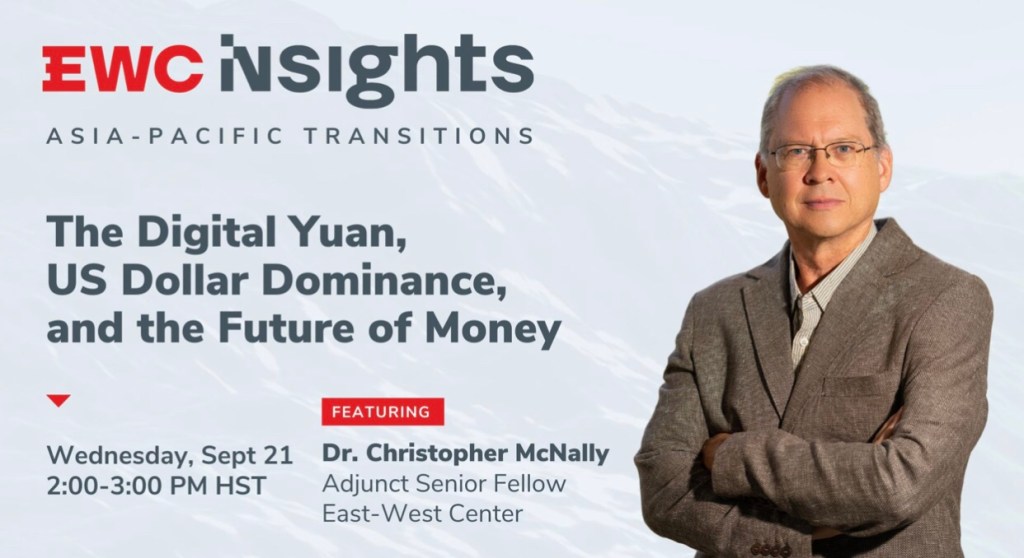
The Digital Yuan, US Dollar Dominance, and the Future of Money featuring Dr. Christopher McNally Wednesday Sept 21 2-3pm Hawaiian Time
Register https://eastwestcenter.zoom.us/webinar/register/WN_SkU4RiBzR-qxeNFh6VgH2A
Dr. Christopher McNally
Professor of Political Economy, Chaminade University
Adjunct Senior Fellow, East-West Center
Over the past four decades, China has been in a subordinated position within the International Monetary System (IMS) dominated by the US Dollar. Although attempts have been made to internationalize the Chinese currency, the renminbi or yuan, these efforts have made limited headway due to China’s close management of its capital account. The extensive and extraordinary financial sanctions levied against Russia by the West in early 2022, however, are likely to change the Chinese calculus regarding yuan internationalization.
At the center of recent initiatives by the People’s Bank of China (PBoC) stands the launch of a central bank digital currency (CBDC), the digital yuan or e-CNY. This fintech innovation could potentially revolutionize monetary relations in China, since the e-CNY offers digital traceability, delivering unprecedented insight into the economy and potentially generating new tools for monetary management, including currency internationalization. While the future of the digital yuan is still murky, it forms part of a long-term evolution of China’s financial system that combines aspects of market-based finance with efforts to enhance state capacity, charting a new course beyond liberal convergence to establish novel tools of financial statecraft.
Dr. Christopher A. McNally is a Professor of Political Economy at Chaminade University and Adjunct Senior Fellow at the East-West Center in Honolulu, USA. His research focuses on comparative capitalisms, especially the nature and logic of Sino-Capitalism. He is at present working on a research project that studies the implications of China’s international reemergence on the global order.
He has held fellowships conducting fieldwork and research at the Asia Research Centre in West Australia, the Institute of Asia Pacific Studies at the Chinese University of Hong Kong, and at the Shanghai Academy of Social Sciences. He has edited four volumes, including an examination of China’s political economy: China’s Emergent Political Economy – Capitalism in the Dragon’s Lair (Routledge, 2008). He also has authored numerous book chapters, policy analyses, editorials, and articles in journals such as Review of International Political Economy, Business and Politics, Communist and Post-Communist Studies, International Politics, and World Politics.
Dr. McNally earned his Ph.D. and M.A. from the University of Washington and his B.A. from the University of California at Berkeley.
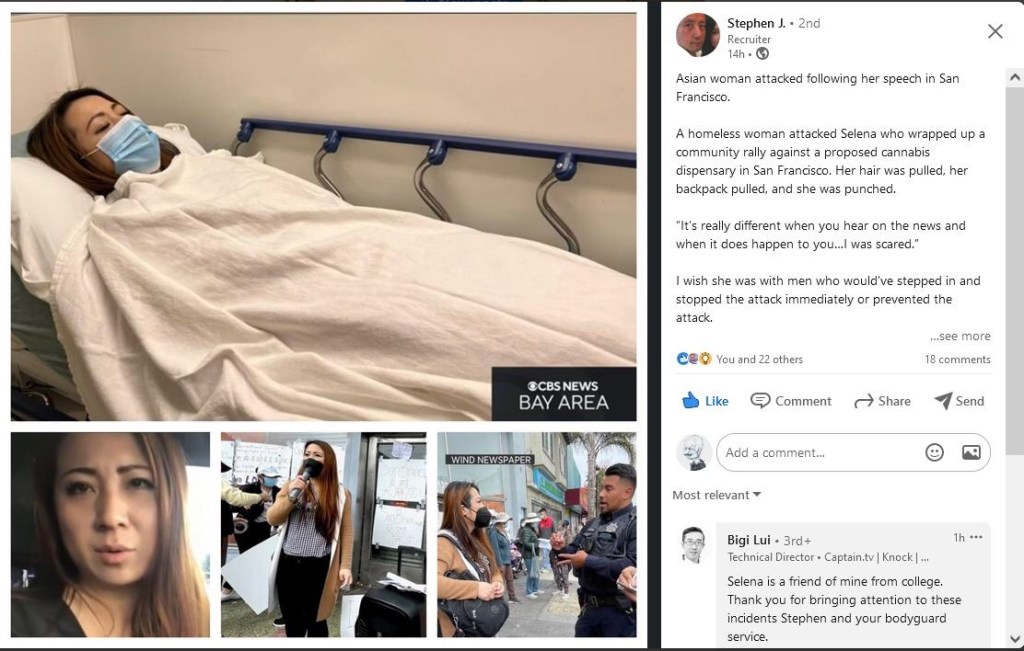
No one is safe in United States: guns, drugs, homeless, no face recognition cameras and worst if you are Asians. Sure you can laugh at it until you or your family becomes victims like this girl in SF.
 Business Blog