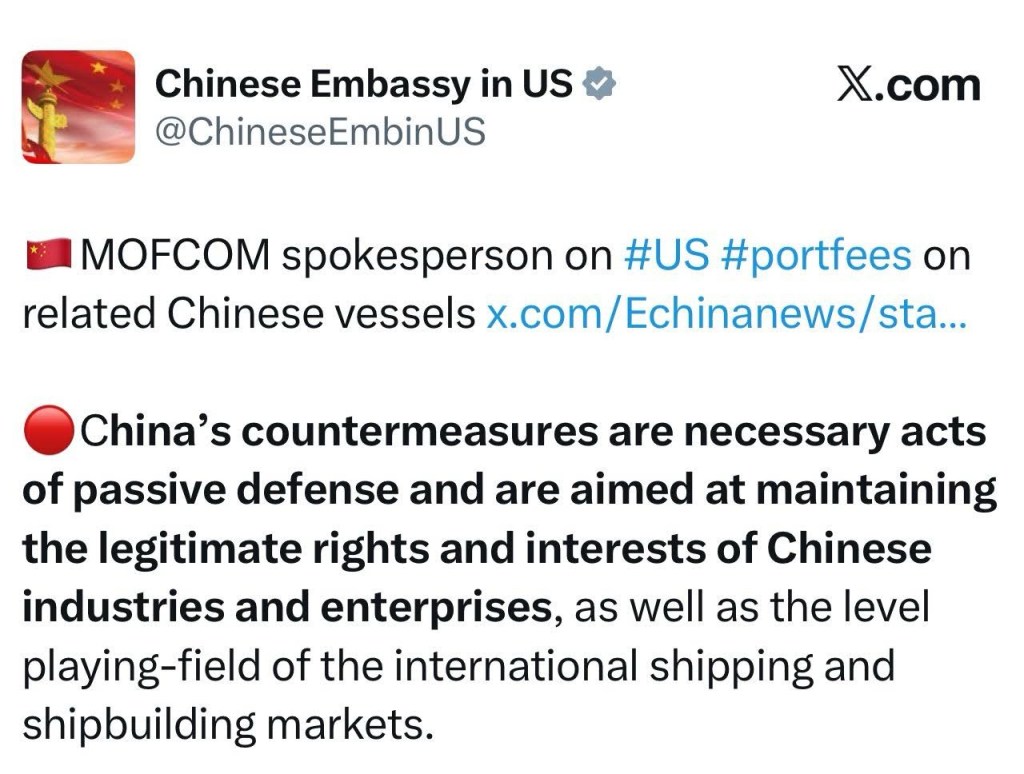
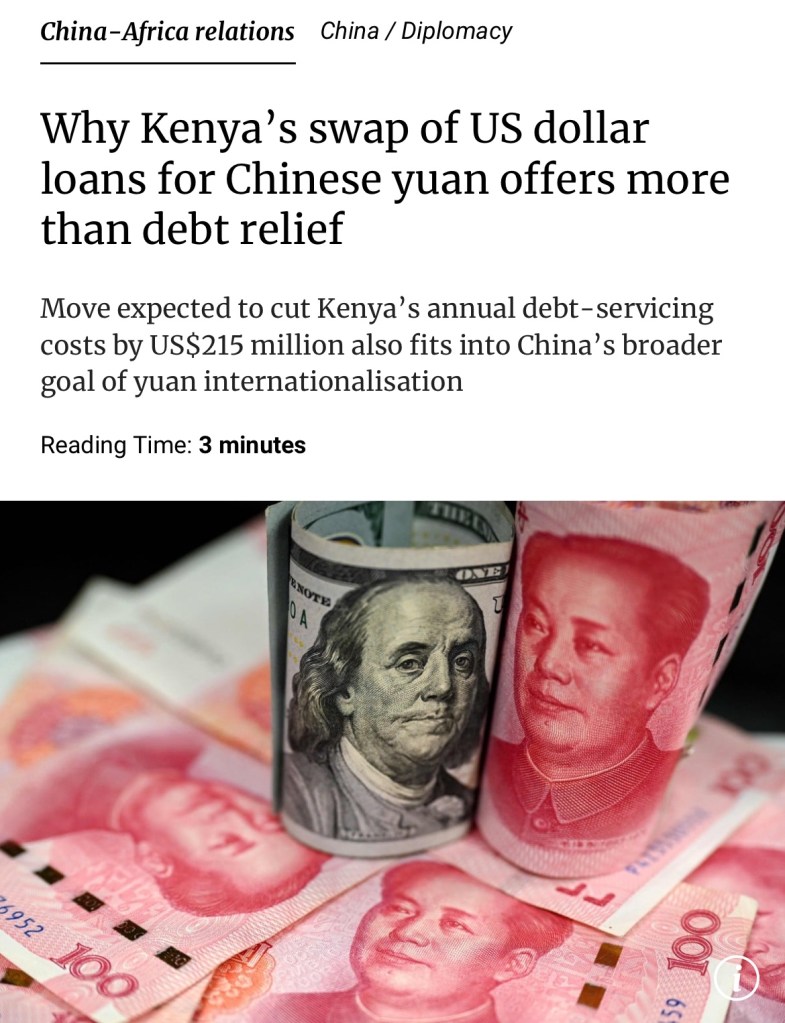
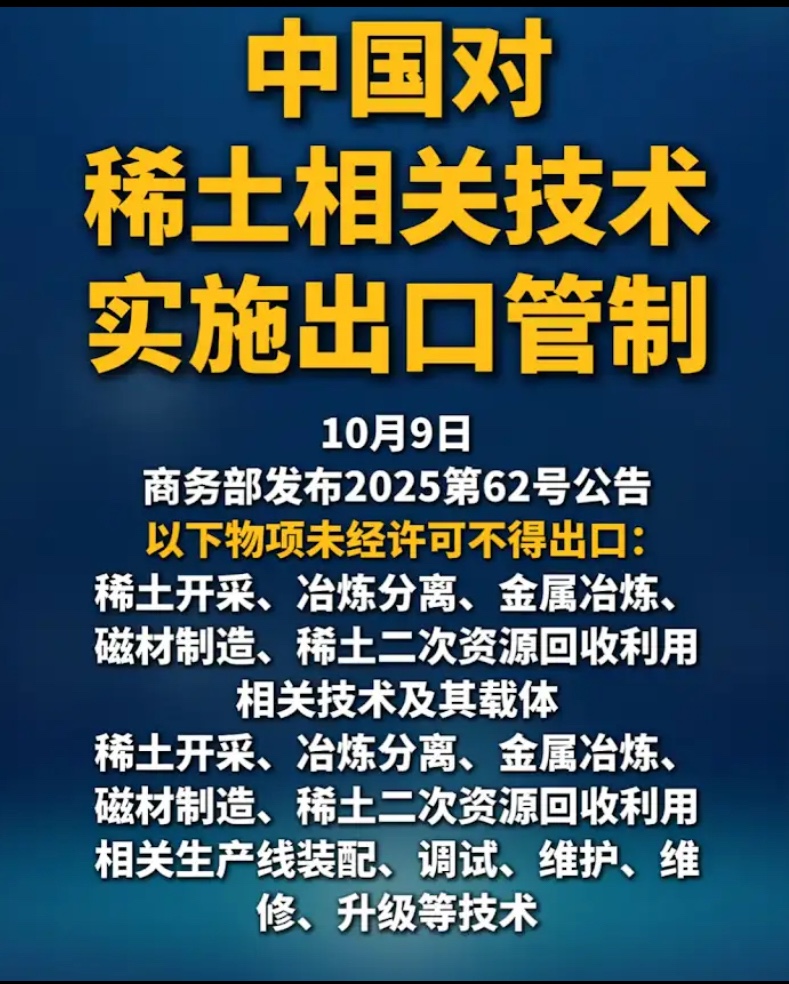
What was supposed to take 30 years, China has completed most of it in just 10 years, The reason is the external stimulus plus the internal force. Looking ahead to 2045, China may not only be approaching the United States, but may even surpass it. The key is to continue to innovate and not let up. The road to becoming a manufacturing powerhouse is still long, but this step is very steady. 原本三十年的事,中國只用十年就幹完大半, 原因就是外部刺激加內部合力! 展望2045,中國或許不只是逼近美國,還可能超前。關鍵是持續創新,不能鬆懈。製造業強國之路還長,但這一步走得很穩.
Hong Kong residents live seven years longer on average than those in the United States. If they moved to the US, they would, on average, die seven years earlier, just like Americans. You must have heard of Mencius’s mother’s three moves! The direction Mencius mother chose for him determined his fate! Whether you become a dragon or a snake isn’t determined by God, it’s your own decision! Don’t forget, “Destiny is in our own hands, not in the hands of Heaven!” If China believed in Western gods, China would not have a 5,000-year history & civilization, but like other empires, it would have ended long ago! Therefore, the UxA will definitely not survive beyond 2076! 香港人是住在香港的人比住在美國的人平均壽命長七年. 如果香港人來美國居住和美國人一樣會平均短命七年,你應該聽過孟母三遷吧!因為孟母替孟子選擇的把方決定了他的一生命運!是龍是蛇不是上帝決定,是自己決定!不要忘記”命運由我不由天”! 如果中國信西方的上帝,中國那可能有五千年歷吏,就像其他的帝國早早玩完!所以美國一定活不到2076!
Video with Chinese subtitles: Bullets are flying! Can’t go out after dark, businesses got robbed, Asians got racist attacks daily, are you sure you want to come to US? If you are in US. It does not matter how much money you are making. You have to be alive to enjoy it! 影片有中文字幕:子彈橫飛!天黑後不能出門,商店被搶,亞裔每天都遭受種族歧視攻擊,你確定要來美國嗎? 如果你在美國,不管你賺多少錢,但是你要活著才能享受, 和中國或香港比較,你真的能活和活得開心嗎? 還是多買人壽保險吧!拿了保險賠償,我可以保證你家人一定離開美國,你人在天堂,家人將會在香港或中國的天堂享受人生,他們一定會內心感謝你🙏!
Armed and masked vandals stormed into a Milpitas shopping center in a brazen attempt to rob a jewelry store on Wednesday. The store owner fought back by firing a gun, scaring the suspects away. 週三,幾名蒙面持槍歹徒闖入美國加州米爾皮塔斯一家購物中心,公然企圖搶劫珠寶店。店主開槍還擊,嚇跑了嫌犯.
Have the west use religion as part of the ideological colonization? Yes they have! And China wants to have nothing to do with it. Therefore China has prosper with continuous unbroken civilization for 5,000 years. So cut the God crabs and deals with real issues in a practical attainable manners! 西方是否利用宗教進行意識形態殖民?是的!中國不會被宗教茶毒人民,中國在過去五千年的繁榮昌盛從來不用宗教治國,所以今天也不會!所以,別再把上帝或神主牌搬出來說騙人的癈話!去解決現實問題要學中國實事求是,不是像美國天天吹水,讓有錢人發大財,中下家庭受苦!
Of course. This is a critical and complex topic that sits at the intersection of history, politics, theology, and post-colonial studies. The claim that the West has used religion as a tool for ideological colonization is supported by a significant body of historical evidence and scholarly analysis.
It’s crucial to note that this process was often not a cynical, monolithic conspiracy but rather a pervasive system that intertwined genuine religious zeal with political, economic, and racial ideologies. The effects of this system are still felt today.
Here’s a breakdown of how religion was used as a mechanism for ideological colonization:
The Historical Foundation: The “Doctrine of Discovery” and Manifest Destiny
· The Doctrine of Discovery (15th Century): Originating from Papal Bulls (e.g., Romanus Pontifex, 1455), this doctrine granted European Christian nations the right to claim lands “discovered” by their explorers and to dominate, enslave, and convert the non-Christian inhabitants. It framed non-European peoples as “heathens” and “savages” without sovereignty, making their land “terra nullius” (nobody’s land) open for Christian taking. This doctrine was explicitly cited in U.S. law (e.g., Johnson v. M’Intosh, 1823) and has been used to justify dispossession in the Americas, Australia, and Africa. · Manifest Destiny (19th Century U.S.): This ideology held that American settlers were destined by God to expand across North America. It fused a sense of religious mission with nationalistic expansion, portraying the conquest of indigenous lands as not just beneficial, but divinely ordained. The indigenous peoples were seen as obstacles to God’s plan, justifying their removal and subjugation.
The Mechanism: How Religion Was Deployed as a Tool
The process worked on several interconnected levels:
A. Moral Justification for Conquest and Extraction: Religion provided a “moral” and “spiritual” cover for often-brutal economic and political projects (slavery, resource extraction, land theft). Conquering a land was framed not as greed, but as a “civilizing mission” or “white man’s burden” to save souls and bring order to “chaotic” and “godless” societies.
B. Cultural Destruction and Erasure:
· Demonicization of Local Beliefs: Indigenous spiritual practices, ancestor worship, and connection to the land were systematically labeled as “pagan,” “witchcraft,” or “devil worship.” This devalued entire cultural and knowledge systems, making them something to be ashamed of and abandoned. · Linguistic Imperialism: Missionaries often learned local languages primarily to translate the Bible and preach. However, this was frequently accompanied by the suppression of native languages in mission schools. By making European languages (English, French, Spanish, Portuguese) the sacred languages of worship and education, they displaced native tongues, which are fundamental carriers of culture and worldview.
C. Education and Re-socialization:
· Missionary Schools: Perhaps the most powerful tool of ideological colonization. Native children were often removed from their families and cultures and placed in residential or boarding schools run by Christian missions. · Curriculum: The education was designed to “kill the Indian in the child” (a phrase used in Canada and the U.S.). Children were punished for speaking their language, practicing their rituals, or following their customs. They were taught that their own cultures were inferior and that salvation and success lay in adopting Western Christian norms, values, and behaviors. · Creating a Comprador Class: These schools produced an elite class of local people who were psychologically and culturally aligned with the colonizer’s worldview. This class often became the administrators of the colonial state, further entrenching Western systems and ideologies.
D. Legal and Social Re-ordering: Colonial powers imposed legal systems based on Christian morality. Laws against blasphemy, new definitions of family and marriage (often undermining matrilineal or extended family structures), and the introduction of Western concepts of private property (vs. communal land ownership) radically reshaped colonized societies to fit a European mold.
Contemporary and Neo-Colonial Manifestations
The overt colonial era ended, but the ideological frameworks persist in more subtle forms, often described as neo-colonialism.
· Human Rights and “Values”: Some scholars argue that the modern Western discourse of “universal human rights,” while noble in intent, can sometimes function as a secularized missionary ideology. It can be used to dismiss non-Western cultural and religious practices as “backward” or “oppressive,” creating a moral justification for political and economic pressure, sanctions, or even military intervention (e.g., “we must liberate those women”). · Conditional Aid and NGO Influence: Western aid (governmental and non-governmental) is sometimes tied to the adoption of specific social policies that align with a particular (and often secularized Protestant) worldview regarding gender, family, and sexuality. Local NGOs that conform to this worldview receive funding, while those rooted in local cultural frameworks may be marginalized, shaping civil society from the outside. · The Persecution Narrative: In some contexts, Western religious and political groups amplify narratives of Christian persecution in non-Western countries. While persecution is a real and serious issue in many places, this framing can sometimes oversimplify complex local dynamics and be used to justify foreign policy objectives or to discredit geopolitical rivals.
Nuance and Counterpoints
It is vital to acknowledge the complexity:
· Sincere Belief: Many missionaries were (and are) motivated by a genuine, heartfelt desire to help and save people, often providing education and healthcare where none existed. · Agency and Adaptation: Colonized peoples were not merely passive victims. They often adopted and adapted Christianity for their own purposes, creating syncretic forms of worship (e.g., Vodou, Candomblé, indigenous churches) that became tools of cultural resistance and identity preservation. · Internal Critique: There have always been strong voices within the Western Christian tradition (e.g., Bartolomé de las Casas in the 16th century, modern liberation theologians) who vehemently opposed colonialism and its misuse of religion.
Conclusion
The use of religion in Western ideological colonization was a powerful process of imposing a worldview. It went beyond mere conversion; it was about dismantling existing social structures, erasing cultural identities, and instilling a sense of inferiority to make colonized peoples more manageable and economically exploitable. By framing this project in spiritual terms, it provided a potent moral justification for empire, the effects of which—in the form of cultural alienation, internalized racism, and social fragmentation—continue to resonate in post-colonial societies today.
Huawei’s Yu Chengdong’s words moved 1.4 billion Chinese people to tears! 華為余承東這段話,14億中國人淚目!
On China CCTV’s “Dialogue,” the host asked Richard Yu: How much did it cost to develop HarmonyOS? Yu Chengdong replied: We invested 10,000 people annually in R&D, over six years, and spent tens of billions!
What did all those billions actually get us in return? Was it a gamble or a vision?
In this episode of “Dialogue,” as Yu Chengdong calmly stated these astronomical figures, the audience fell silent—six years! A team of over 10,000 people annually! Billions in R&D expenses! 130 million lines of code! Behind these figures, how did Huawei manage to break through?
“The lifeline of the operating system ecosystem is 10 million devices,” Yu Chengdong’s statement caused gasps in the tech community.
A week before the show aired, HarmonyOS 5.0 devices surpassed that threshold! It took Huawei over six months to grow from zero to one million; from one million to ten million in just a few weeks.
How could this be organic growth? It was clearly a battlefield where Chinese tech companies were collectively charging forward!
Tencent and Alibaba engineers stationed at Huawei overnight, 12306 integrated train schedules into HarmonyOS’s “Live Window,” and Sina Finance’s app saw a sevenfold increase in users in the eight months after adapting to HarmonyOS—everyone knew: this time, we couldn’t lose.
Shanghai Jiaotong University professor Xia Yubin excitedly remarked at the event, “Chinese technicians all want to write their papers on the land of their motherland!” This remark resonated with many.
Without an independent system, you’re stuck! No matter how good Android or iOS are, they’re owned by others, and a single ban from the US government can suffocate you.
What’s the most unfair criticism of HarmonyOS? “Isn’t it just Android reskinned?” Richard Yu delivered the ultimate blow: “Starting with HarmonyOS 5.0, we’ll completely remove Android code!”
It turns out that early Android compatibility was a delaying tactic.
As Richard Yu put it, we can’t let users lose WeChat and TikTok overnight, can we? The dual-framework design is like a boat to cross a river; once you’ve crossed, you can’t carry it with you.
Now, HarmonyOS 5.0 fully adopts a single-framework architecture, and all applications have been completely rebuilt. Even the national app WeChat is undergoing a code rewrite, and the shared location feature is rapidly launching!
No wonder netizens exclaimed, “So HarmonyOS is playing a big game!”
And how amazing is this technology? Traditional development is like a chef cooking both Chinese and Western food—exhausting! HarmonyOS is like a multi-purpose food processor, with one codebase adaptable to phones, watches, cars, and even mining equipment! HarmonyOS terminals in coal mines respond incredibly quickly, providing added security for miners.
The real strength lies in efficiency: Taobao and Tmall will complete 100% adaptation across their entire app range by September 30th, with Alibaba engineers claiming “recognition has reached 90%.”
When Yu Chengdong announced that HarmonyOS app functionality would be fully comparable to Android and iOS by the end of the year, the audience erupted in applause—China’s speed is tearing down the iron curtain of operating systems!
“One-third of the market share is ours,” Yu Chengdong declared decisively before CCTV cameras. HarmonyOS code has flowed into 38 million corporate workstations and is now running in 50,000 quick apps.
CCTV News used the phrase “no independent system = being strangled” to set the tone, effectively erasing any doubts.
These billions invested aren’t just code; they’re the key to China’s technological breakthrough, the foundation for 1.4 billion people to survive without a single source of income!
Now, hundreds of millions of older Huawei models are ready, and the HarmonyOS 5.0 upgrade wave is about to sweep the country. Behold, the third light has finally lit up in the operating system world.