Live dangerously in America where no place is safe.
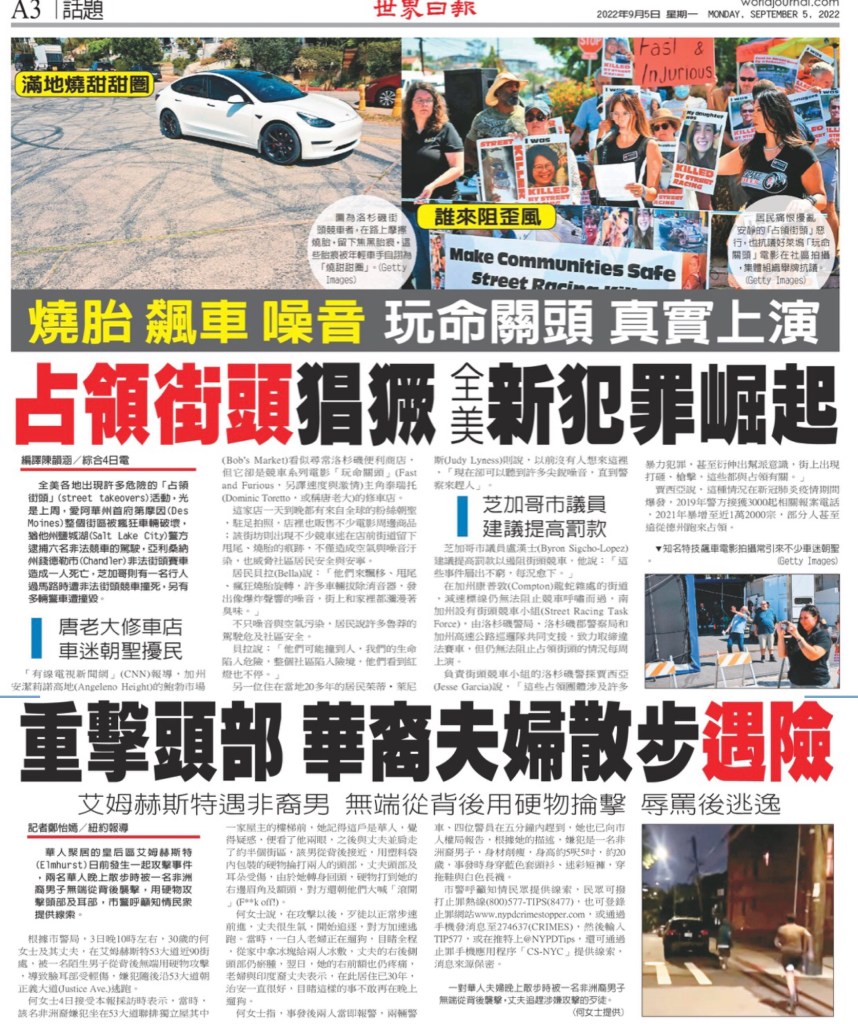
Live dangerously in America where no place is safe.
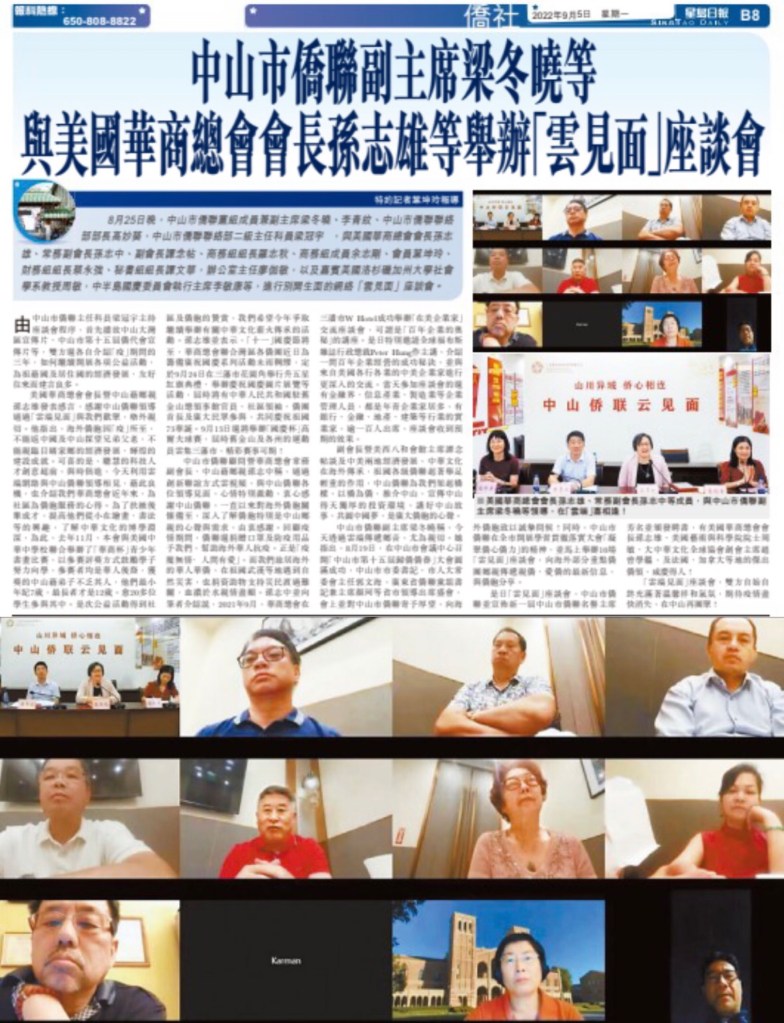
Baron Suen, President of Chinese American Association of Commerce (CAAC) and Officers & Directors 美國華商總會 (三藩市) video conference call with Zhongshan City on Aug 25 2022 to discuss future collaboration
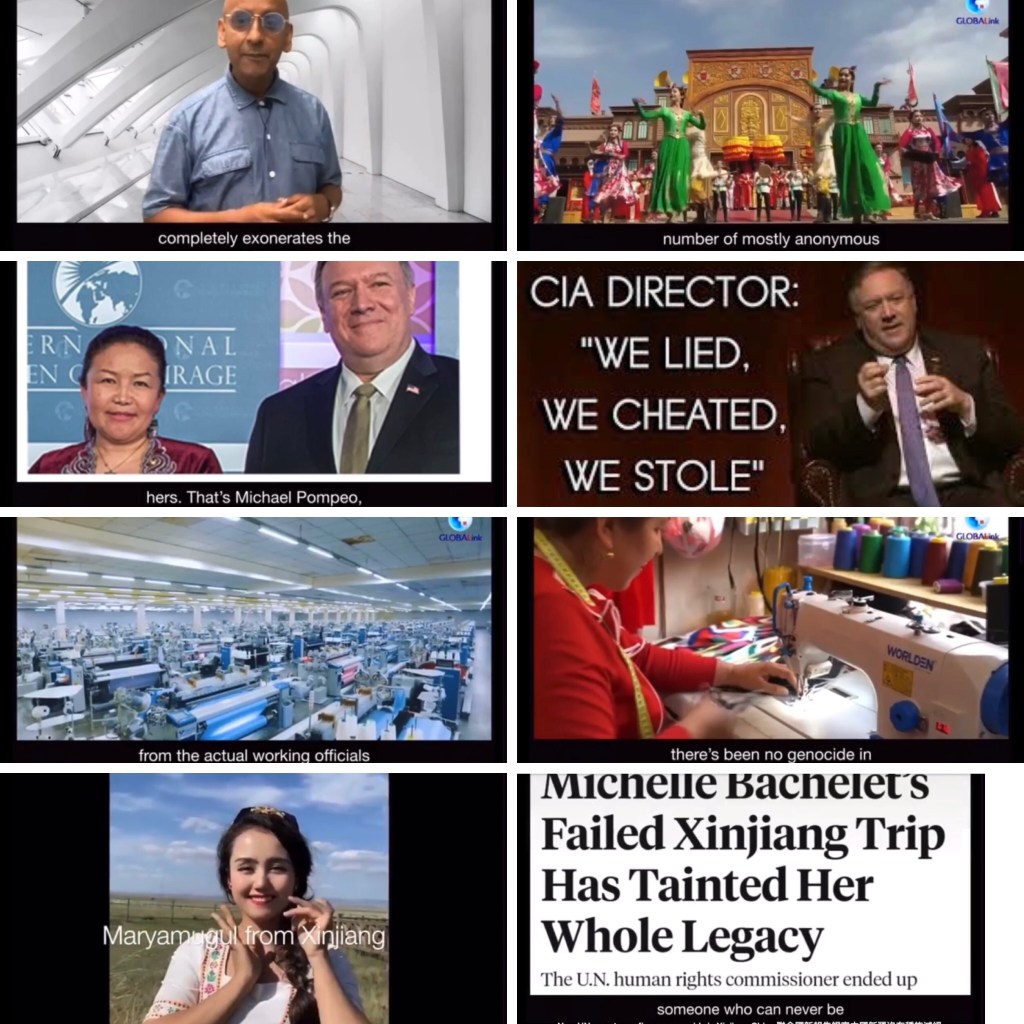
Video: New UN reports confirm no genocide in Xinjiang China 聯合國新報告證實中國新疆沒有種族滅絕
https://rumble.com/v1irgxp-new-un-reports-confirm-no-genocide-in-xinjiang-china.html
https://m.facebook.com/story.php?story_fbid=783273386229322&id=100036400039778
The UN Office of the Commission for Human Rights released a document this week that completely exonerates the leadership of the Chinese region of Xinjiang from accusations of genocide or use of slave labor. 聯合國人權委員會辦公室本週發布了一份文件,完全免除了中國新疆地區領導人對種族滅絕或使用奴工的指控.
This document, which is 121 pages long, explains clearly how a spate of deadly terrorist attacks triggered changes which have been remarkably successful. Extremist violence is gone, and the people of the area have been lifted out of poverty, with education, jobs, free healthcare which has raised their longevity to developed world standards. 這份長達 121 頁的文件清楚地解釋了一連串致命的恐怖襲擊如何引發了非常成功的變革。 極端暴力消失了,該地區的人民擺脫了貧困,教育、就業、免費醫療保健使他們的壽命提高到發達國家的標準.
Wait, you say. That’s not the summary you read in the media. 等等,你說。 那不是您在媒體上看到的摘要.
Really? 真的嗎?
Well, here are the facts. The UNHCR released a PAIR of documents on August 31: a 46 page one from their office listing concerns and a 121-page one responding to concerns. 好吧,這是事實。 難民署於 8 月 31 日發布了一對文件:一份來自其辦公室的 46 頁列出了關注點,一份 121 頁對關注點做出了回應.
The mainstream media wrote fanciful articles purportedly based on the first – and hid the second. 主流媒體據稱根據第一份報告寫了一些奇特的文章,但隱藏了第二份報告.
Why hide it? Well, the first is a summary of tired old sources which are mostly anonymous or recycled from western media. The second is from the actual working officials in Xinjiang, a place led by councils made up of ethnic minority people and Han Chinese people. 為什麼要隱藏它? 嗯,第一個是疲憊的舊資源的摘要,這些資源大多是匿名的或從西方媒體回收的。 第二個來自新疆的實際工作官員,這個地方由少數民族和漢族人組成的委員會領導.
But here’s the twist. Both documents say there’s been no genocide in Xinjiang. That’s big news. If the media was fair, that would be the headline. 但這是轉折點。 兩份文件都說新疆沒有發生種族滅絕事件。 這是個大新聞。 如果媒體是公平的,那將是頭條新聞.
What about the concerns raised by the first document? Well, there are about 12 million Uyghur people in Xinjiang. But this quotes the tiny number of mostly anonymous people making horrendous allegations in the west, people who have been repeatedly tracked to western-funded groups like World Uyghur Congress. 第一份文件提出的擔憂如何? 那麼,新疆維吾爾族大約有1200萬。 但這引用了在西方提出可怕指控的極少數匿名人士,他們多次被追踪到世界維吾爾代表大會等西方資助的團體.
To give one example, the footnotes lead to allegations by people such as a lady named Sautbay. Trustworthy? 舉一個例子,腳註導致了一些人的指控,比如一位名叫 Sautbay 的女士。 值得信賴嗎?
Well, she told one interviewer that the terrible thing was that they were forced to eat pork! 好吧,她告訴一位採訪者,可怕的是他們被迫吃豬肉!
And told another interviewer that the terrible thing was that they were forced to be vegetarian! 並告訴另一位採訪者,可怕的是他們被迫吃素!
She told one interviewer that she was a camp detainee and another that she was a camp staff member. Her story changed so often that people on all sides realized it was some sort of political theatre. Well, you decide. 她告訴一位採訪者,她是集中營被拘留者,另一位採訪者說她是集中營工作人員。 她的故事經常發生變化,以至於各方都意識到這是某種政治戲劇。 好吧,你決定.
While you are thinking about that, here’s a picture of her with mate of hers. That’s Michael Pompeo, former director of the CIA. 當你在想這個的時候,這裡有一張她和她的伴侶的照片。 那是中央情報局前局長邁克爾·蓬佩奧.
Meanwhile, here’s something that the media wants you to forget. Just this summer, when this UN officer [image of Michele Bachelet] moved away from the demonization script, reporters denounced her work as terrible, marking her as someone who can never be trusted again. 同時,這是媒體希望您忘記的事情。 就在今年夏天,當這位聯合國官員(米歇爾·巴切萊特的形象)遠離妖魔化劇本時,記者們譴責她的工作很糟糕,將她標記為一個永遠無法再被信任的人.
Now, when they have something that they can use to get back to the demonisation project, her department’s work is totally trustworthy again! 現在,當他們有東西可以用來回到妖魔化項目時,她部門的工作又是完全值得信賴的!
You can’t make this stuff up! A little healthy skepticism is a good thing. Peace. 你不能編造這些東西! 有一點健康的懷疑是一件好事。 和平.
Those living on the (right) would like to help and liberate those living on the (left). What is the people on the right smoking?

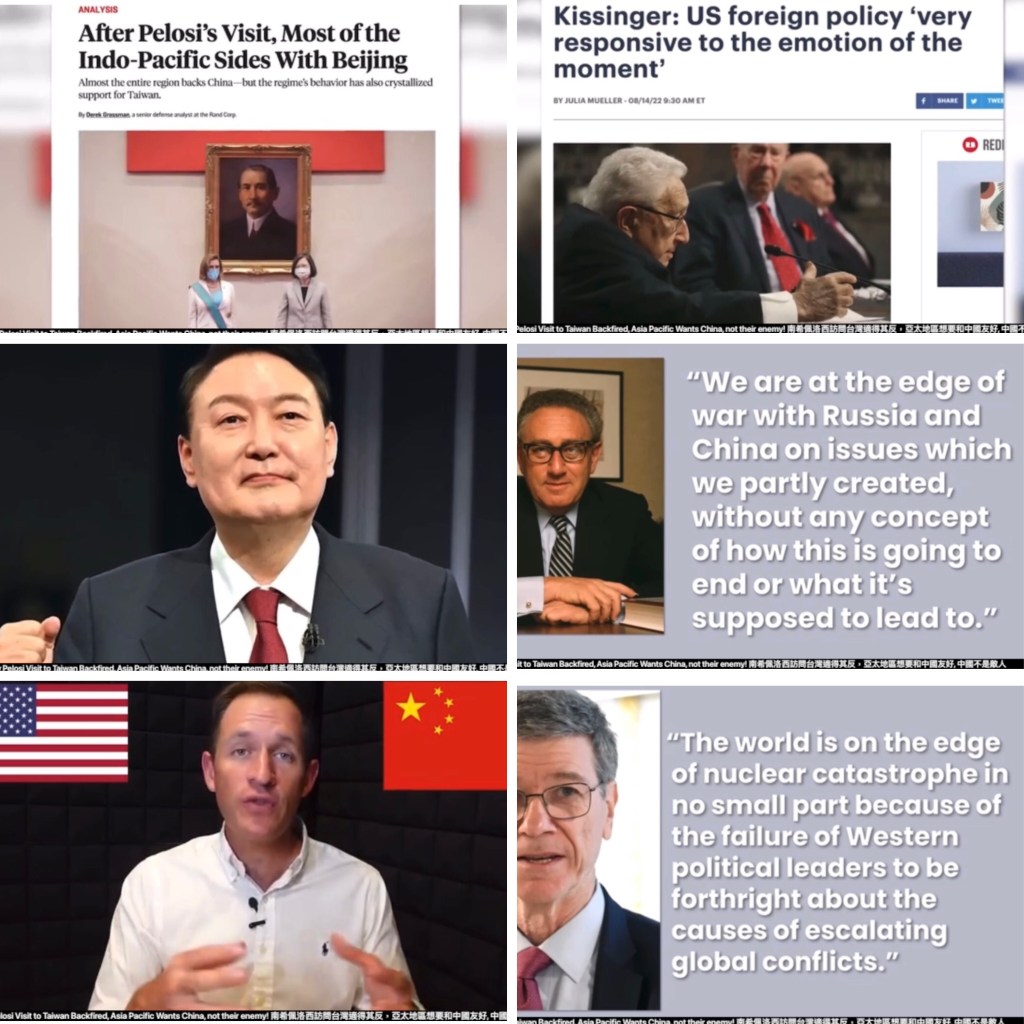
Video: Nancy Pelosi Visit to Taiwan Backfired, Asia Pacific Wants China, not their enemy! 南希佩洛西訪問台灣適得其反,亞太地區想要和中國友好, 中國不是敵人
https://rumble.com/v1inf09-nancy-pelosi-visit-to-taiwan-backfired-asia-pacific-wants-china-not-their-e.html
https://m.facebook.com/story.php?story_fbid=782815346275126&id=100036400039778
The world is watching Taiwan and now a month after Nancy Pelosi’s visit to Taiwan we are starting to see Asia Pacific countries speak out for peace and hope there is no conflict. In today’s video I document how the US foreign policy is too emotional and lacks strategic direction, both of which will result in a more dangerous and chaotic world.
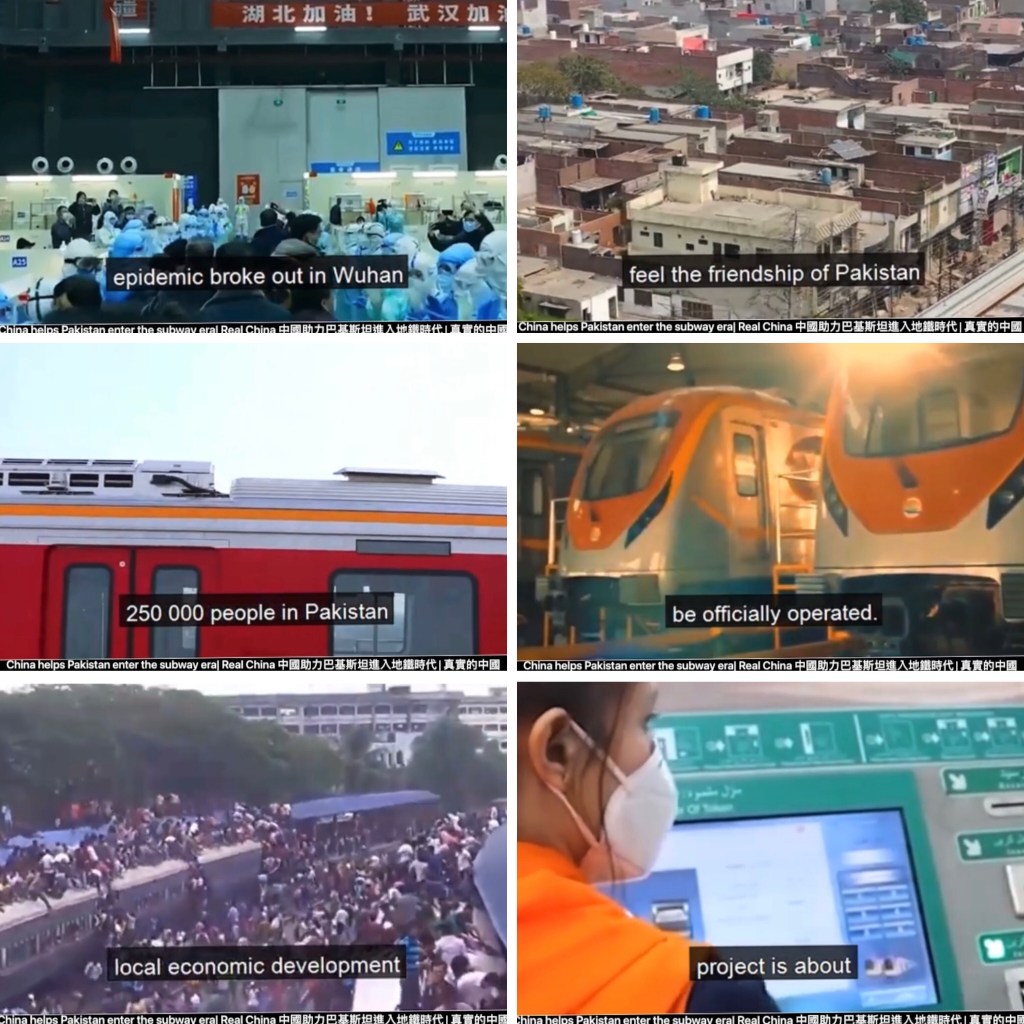
Video: China helps Pakistan enter the subway era| Real China 中國助力巴基斯坦進入地鐵時代| 真實的中國
https://rumble.com/v1in3wn-china-helps-pakistan-enter-the-subway-era-real-china.html
https://m.facebook.com/story.php?story_fbid=782758269614167&id=100036400039778
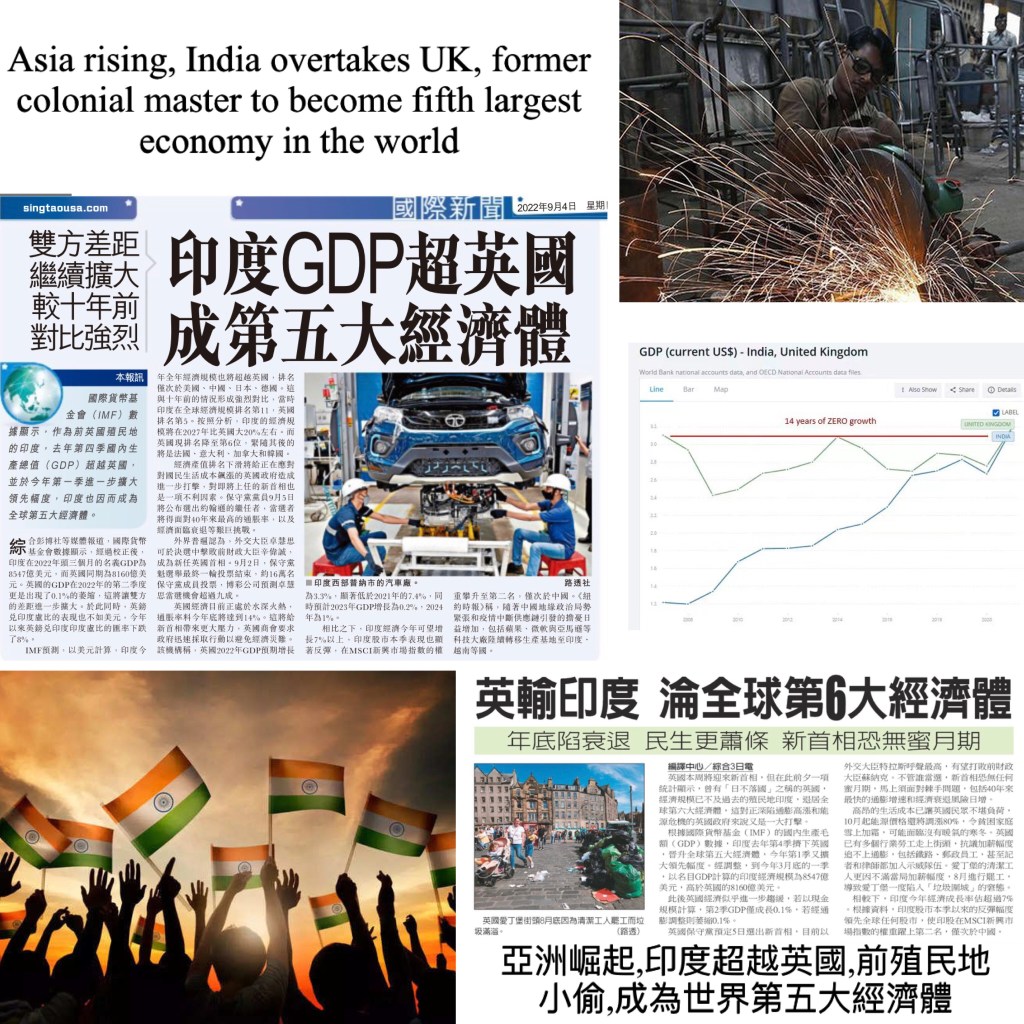
Asia rising, India overtakes UK, former colonial thief to become fifth largest economy in the world 亞洲崛起, 印度超越英國, 前殖民地小偷, 成為世界第五大經濟體.
Cynthia Chung/Strategic Culture Foundation: Why the United States Has Set Itself Up for Failure in the Semiconductor Race for Military Supremacy. She is a brilliant Canadian writer, but the SCF website is banned in the US.
Here’s a work around
https://archive.ph/AfSCX#selection-967.0-1099.24
One small but well written section of the whole essay:
In the 1980s Japan was the kingpin in cutting edge semiconductors production. This was especially the case relating to a specific type of memory chip DRAM. Japan’s product was not only superior to that of what the United States was producing but it was also much cheaper, due to Japan’s investment in automation tools and processes. This resulted in much lower defect rates and higher yields.
It was also because Americans were dependent on NMOS for their DRAM technologies, whereas the Japanese had decided to go the more difficult and risky route with CMOS, that is, more expensive and harder to pull off. Rapid advances in lithography technology made the cost of CMOS far lower and became the industry standard. American chipmakers were now the owners of outdated, expensive technology. And Japan became the kingpin of the semiconductor world.
In 1985 there was a recession in the computer market, with the microcomputer market seeing an 8% decline. This decline had massive reverberations down the supply chain. Prices collapsed by 60%. Intel, DRAM pioneer, experienced the biggest crash in orders in over ten years, resulting in their exiting of the DRAM industry entirely. Leading U.S. semiconductor industries saw 14-17% decline in revenues. By 1986, the American DRAM industry had dropped from fourteen producers in 1970 to just three.
Complaints from certain quarters in the United States began criticizing Japan for “predatory” and “unfair” trade practices despite the recession in 1985 being a demand problem and not a competition problem. These complaints were primarily: That the Japanese were dumping semiconductors into the U.S. market at below fair market value. The Japanese were not providing foreign chip makers sufficient access to its domestic market However, Japan’s semiconductor presence in the U.S. did not harm all American markets, IBM and AT&T greatly benefitted from these lower prices for DRAM.
Discussions began about implementing trade barriers, which would in turn make America an even more expensive place to make things, accelerating the electronic assembly off-shoring trend already underway. In June 1985, Micron filed an anti-dumping complaint against Japanese exporters of 64K DRAM. Intel, AMD and National Semiconductor soon followed, doing the same for the EPROM market. The Reagan Administration had filed a complaint of their own over 256K DRAM (64K DRAM was released by Japan in 1982 and 256K DRAM was released by Japan in 1984).
President Reagan, who was supposed to be all about free markets, in the spring of 1986 forced the U.S.-Japan Semiconductor Agreement with METI (Ministry of Economy, Trade and Industry in Japan).
Part of the conditionalities of this agreement were that the American semiconductor share in the Japanese market be increased to a target of 20-30% in five years, that every Japanese firm stop its “dumping” into the American market and the Americans wanted a separate monitoring body to help enforce all of this.
Many Japanese companies felt that their government had caved and had betrayed them. They had hoped for a simple fine. It was thought incredible, and rightly so, that their company trade data now needed to be submitted to a third party in order to be reviewed and judged in accordance to the demands of an American market competitor. Not only this, but these Japanese companies were being asked to trade with American companies, regardless of whether the American product was the most superior or best priced from its competitors, to meet this U.S. demand for a 20-30% Japanese market share. No surprise here, the Japanese companies refused to do this and METI had no way of forcing them to do so.
President Reagan responded by imposing a 100% tariff on $300 million worth of Japanese goods in April 1987. Combined with the 1985 Plaza Agreement which revalued the Japanese Yen, the U.S.-Japan Semiconductor Agreement gave the U.S. memory market the extra boost it needed. Of course, that boost was akin to pushing Japan’s head underwater for several minutes while a race was underway, however, rather embarrassingly, Japan would still maintain a lead.
The U.S. was in no position to beat the Japanese in its domination of the semiconductor industry. There was no choice but to…copy Japanese technology, in the name of American supremacy that is. It appears no country has the right to earn its way to the top other than the U.S. in a world we are told benefits the smartest, most innovative and fastest growing industries. Apparently everyone at the end of the day works for a global boss, who reserves the right to determine your company’s fate and the rules are changed accordingly to what suits this global boss’ needs case by case, the world markets be damned.
Intel would be the first to implement vast copying of Japanese semiconductor technology in order to stay in the competition. Craig Barrett CEO (1998-2005) and Chairman (1968-2009) of Intel was the first to implement “Copy EXACTLY! Technology Transfer Method.” I think the title gives you a good enough idea of what that entails. Again, if we have learned anything from the generous lessons bestowed on us by the great arbiter, the United States, it is to “Do as I Say, Not as I Do.”
An independent commission established by Congress recently concluded: “If a potential adversary bests the United States in semiconductors over the long term or suddenly cuts off U.S. access to cutting-edge chips entirely, it could gain the upper hand in every domain of warfare.”
The Centre for Strategic and International Studies (CSIS) reports “China’s leaders have set a goal to build a ‘fully modern’ military by 2027 based on ‘informatization,’ ‘intelligentization,’ and ‘mechanization,’ investing heavily in technical areas which support such an approach, such as AI, quantum computing, hypersonics, and microelectronics.”
As the chair and vice chair of the National Security Commission on Artificial Intelligence (NSCAI) put it in 2021, “We do not want to overstate the precariousness of our position, but given that the vast majority of cutting-edge chips are produced at a single plant separated by just 110 miles of water from our principal strategic competitor, we must re-evaluate the meaning of supply chain resilience and security.”
U.S. dependency on Taiwanese production of chips for defense systems extends beyond AI. TSMC makes semiconductors used in F-35 fighters and a wide range of “military-grade” devices used by the U.S. Department of Defense (DOD).

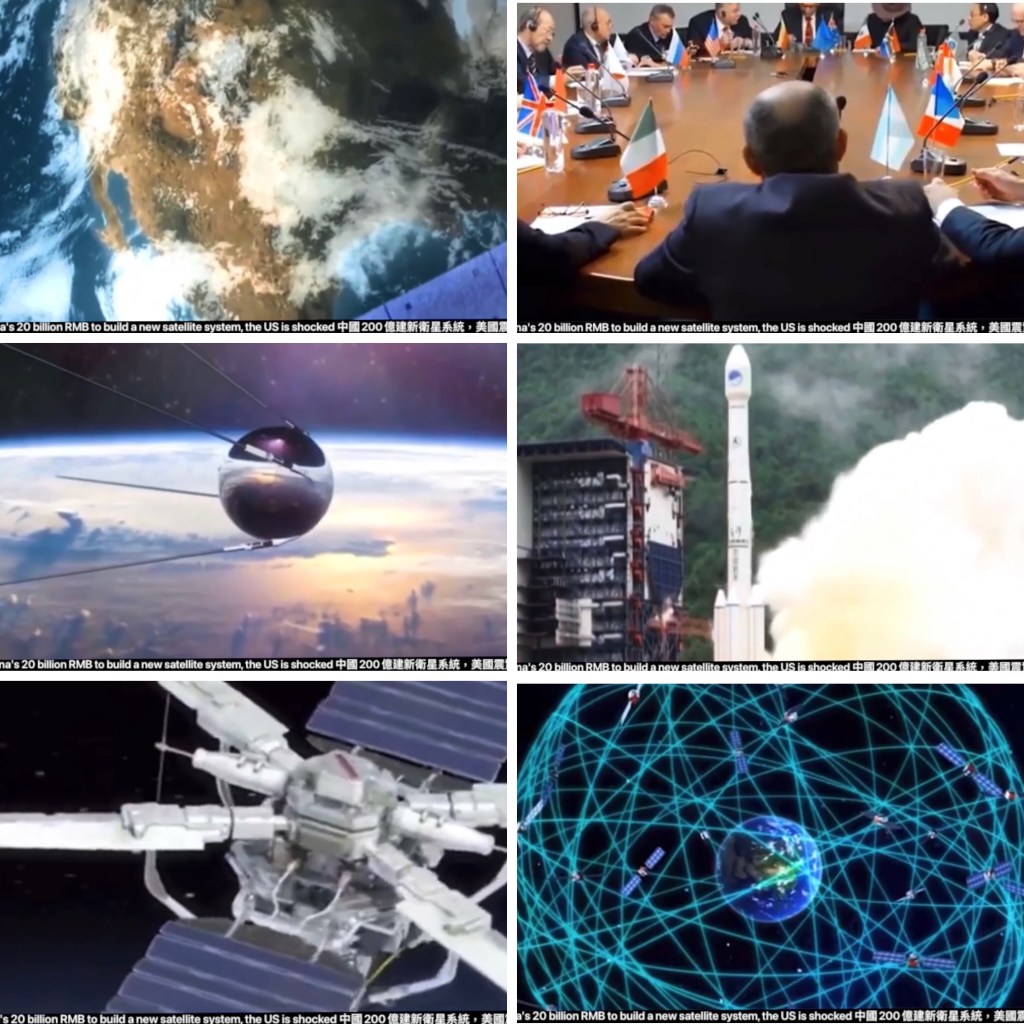
Video: China’s 20 billion RMB to build a new satellite system, the US is shocked 中國200億建新衛星系統,美國震驚
https://rumble.com/v1iisxx-chinas-20-billion-rmb-to-build-a-new-satellite-system-the-us-is-shocked.html
https://m.facebook.com/story.php?story_fbid=782158749674119&id=100036400039778
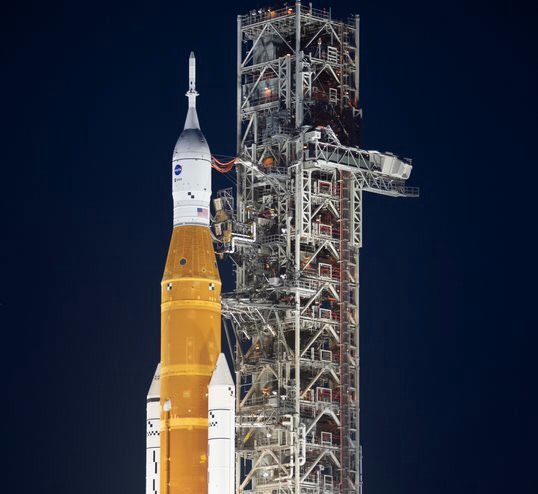
Another NASA aborted launch! Look at what happened after NASA firing all the Chinese Engineers. Hire them back, not sure they want to be back to get abused and demonized. NASA又一次中止發射! 看看 NASA 解僱所有中國工程師後發生了什麼。 僱他們回來,不確定他們是否想回來受到虐待和妖魔化.
Once again postponed due to another hydrogen leak found during pre check. One thing is sure about US future just like Artemis I; Their journey is almost over and already outdated.
 Business Blog