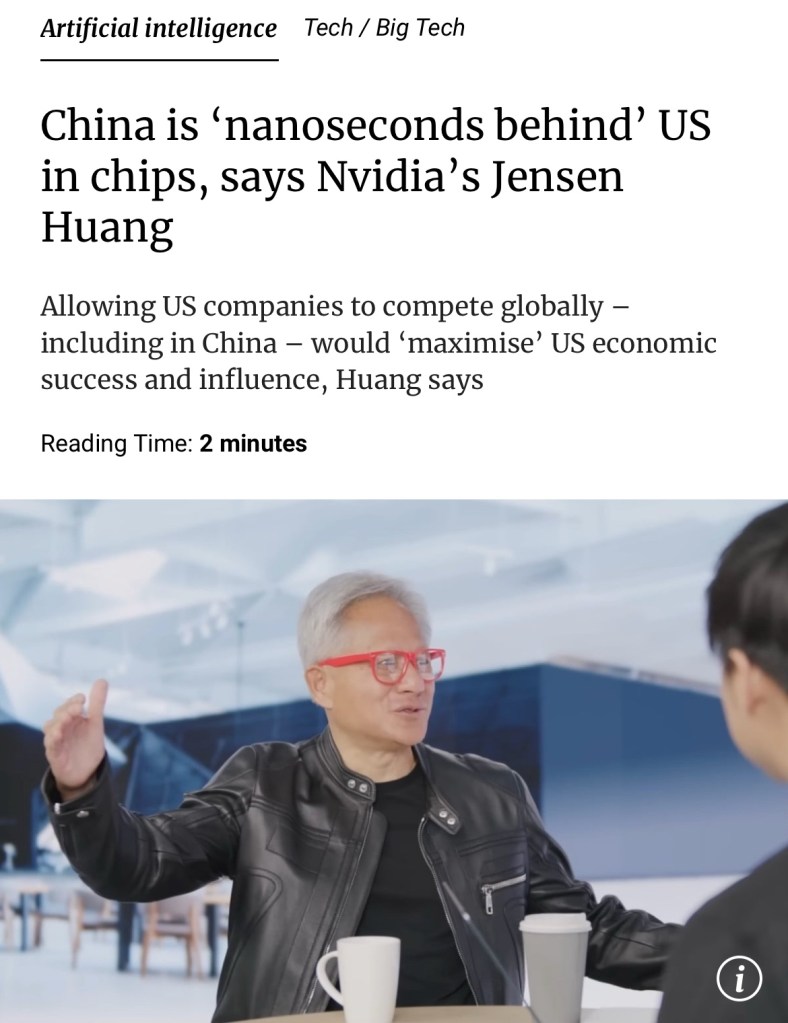
China’s DeepSeek & Kimi K2 ruined OpenAI Sam Altman’s get rich quick schemes. China AI now beating him at his game, as a loser he is asking US government to fight his losing battle. What a coward! 中國的DeepSeek和Kimi K2破壞了OpenAI Sam Altman的發財大計,中國人工智慧現在正在這場遊戲中擊敗他,而他作為一個失敗者,正在要求美國政府為他打一場必敗的仗. 真是個懦夫!
Video: Morgan Stanley, Goldman Sacks, Bank of China sees the US Dollar will keep falling. They recommend more gold buying, selling US Treasuries and more hedging 摩根士丹利、高盛和中國銀行預計美元將繼續下跌。他們建議增加黃金購買量,拋售美國國債,並加強避險.
The US Dollar is seeing its steepest decline in fifty years, and investment banks forecast continued weakness.
The fiscal position in the United States is deteriorating, with record deficits. Trade policies have also eroded global confidence.
Most foreign holdings of US Treasuries are unhedged against further rises in interest rates, and investors are being repaid in cheaper dollars. Hedging activity will likely surge to protect against further losses to bondholders.
China’s central bank is being urged to further reduce its Treasury holdings, already at their lowest level in fifteen years. Increased gold buys and BRI investments to lock down key supply chains are also recommended.
Qing Dynasty (Taoist) painting of the Chinese pantheon, Hunan Museum For millennia, rulers have sought divine justification for their power but none framed it as conditionally as China’s Mandate of Heaven. Unlike Europe’s rigid divine right of kings, this ancient doctrine tied authority to moral governance, allowing rebellion when rulers failed. From peasant uprisings to Manchu conquests, the mandate shaped empires through cosmic accountability. Yet its legacy endures, echoing in modern debates about leadership and legitimacy.
What can this philosophy teach us about power’s fleeting nature and the price of losing heaven’s favour?
The mandate of heaven: moral legitimacy and cultural power in imperial China
The mandate of heaven (天命, tiānmìng) stands as one of history’s most enduring political doctrines, blending divine authority with tangible moral accountability [1]. Originating in the Zhou dynasty’s overthrow of the Shang (circa 1046 BCE), it established a revolutionary principle: rulers governed not by immutable right, but through heaven’s conditional approval, contingent on virtuous governance [2]. Unlike Europe’s rigid divine right of kings, this framework allowed for dynastic upheaval when rulers failed their subjects, a philosophy that shaped China’s governance for two millennia [1].
At its core, the mandate fused cosmic legitimacy with Confucian ethics. Emperors, as “sons of heaven”, were expected to embody dé (德, virtue) and rén (仁, benevolence), ensuring social harmony through just rule [1]. Larry C Johnson emphasises how this created a paradox: while the emperor held absolute power theoretically, his authority could dissolve if floods, famines, or rebellions signalled heaven’s displeasure [1]. The Han dynasty’s collapse amid peasant revolts and the Ming’s demise after ecological crises demonstrated this accountability in brutal practice [2].
Greg Pasciuto enriches this analysis with cultural nuance, noting how the mandate transcended ethnic boundaries [2]. Non Han dynasties like the Mongol Yuan and Manchu Qing strategically adopted the doctrine to legitimise their rule [2]. The Qing conquest in 1644 exemplified this: they framed their takeover not as foreign invasion, but as restoring heaven’s order after Ming misrule [2]. Such cases reveal the mandate’s flexibility: it was less about bloodline than perceived moral competence, allowing even a peasant born emperor like the Ming’s Hongwu to ascend the throne [2].
The mandate’s interplay with religion further illustrates its cultural adaptability [2]. While Confucianism dominated state ideology, Pasciuto highlights how Daoist rituals and Buddhist concepts of karma subtly reinforced the idea of cosmic judgement [2]. Even Jesuit missionaries in the 16th century, like Matteo Ricci, engaged with the mandate, with Chinese converts such as Li Zhizao reconciling tiān with Christian monotheism [2]. These interactions underscore how the doctrine served as a bridge between political authority and spiritual belief [2].
In contemporary terms, the mandate’s legacy endures in China’s emphasis on performance legitimacy, where rulers justify authority through stability and prosperity [1]. Johnson’s political philosophical lens reveals its relevance to modern governance debates: like the Zhou emperors, today’s leaders face implicit expectations to balance power with moral responsibility [1]. Yet Pasciuto’s human stories of rebellions sparked by famine, or Manchu rulers performing Confucian rites, remind us that abstract ideals were lived through visceral crises and cultural negotiation [2].
The mandate of heaven thus remains a compelling model of conditional sovereignty, where authority hinges on ethical stewardship rather than force alone [1,2]. Its blend of moral philosophy and pragmatic adaptability offers timeless insights into the relationship between power and legitimacy.
Losing the mandate:
Five emperors in Chinese history, traditionally regarded as having lost the Mandate of Heaven due to misrule. Their failures became moral lessons in Confucian historiography, illustrating that governance must align with virtue to retain divine favour.
King Jie of Xia, last ruler of the Xia dynasty (c. 1728–1675 BC), was overthrown for his cruelty and neglect. His oppressive reign provoked rebellion, while floods and droughts were interpreted as signs of heavenly disapproval. He was defeated by Tang of Shang, founder of the next dynasty.
King Zhou of Shang (c. 1075–1046 BC) was notorious for his tyranny, including torture of dissenters, and obsession with his consort Daji. His misrule led to revolt, with astronomical anomalies seen as portents of divine condemnation. The Zhou dynasty replaced him after victory at Muye.
Emperor Qin Er Shi (r. 210–207 BC) presided over the Qin collapse, weakened by corruption and peasant revolts. His reliance on the eunuch Zhao Gao and failure to address unrest hastened the dynasty’s fall, viewed as withdrawal of celestial sanction.
Emperor Yang of Sui (r. AD 604–618) exhausted the state with costly projects and wars, triggering famine and rebellion. His assassination by ministers was deemed heavenly retribution for his excesses.
Emperor Chongzhen of Ming (r. 1627–1644) faced natural disasters, economic crisis, and rebellion. Despite his personal diligence, the Ming fell to peasant revolt and Manchu invasion, his suicide symbolising lost legitimacy.
Common themes in these downfalls include tyranny or incompetence causing suffering, natural disasters as divine displeasure, rebellions proving lost legitimacy, and dynastic collapse following the ruler’s overthrow. These cases reinforced the Confucian ideal that just governance was essential to maintaining Heaven’s approval.
Garden of Pleasure, Tang Yifen, 1848, handscroll, in the British Museum Political Legitimacy: a comparison between Blijde Inkomst, Divine Right, and the Mandate of Heaven
The concepts of political legitimacy in medieval and early modern societies often revolved around the relationship between rulers and their subjects, framed through either theological or contractual principles. Three prominent systems: the Flemish blijde inkomst, the Western divine right of kings, and the Chinese mandate of heaven, each developed distinct approaches to justifying authority while addressing the question of resistance against unjust rule. Though emerging from different cultural contexts, these doctrines reveal fascinating parallels and contrasts in how they balanced power, obligation, and the right to rebellion.
The Blijde inkomst, meaning “joyous entry,” was a ceremonial and legal tradition practised primarily in the medieval Low Countries, particularly in regions such as Flanders and Brabant. When a new duke, count, or later a Habsburg ruler assumed power, they would formally enter major cities and swear oaths to uphold local privileges, laws, and freedoms. In return, the cities and estates would pledge their loyalty. This mutual agreement was not merely symbolic but carried constitutional weight. The most famous example, the 1356 Blijde Inkomst of Brabant, explicitly stated that if the ruler violated these terms, the subjects had the right to withdraw obedience [3]. This principle was invoked during the Dutch Revolt against Philip II of Spain, demonstrating its practical significance in justifying resistance.
The Divine right of kings, which dominated Western European political thought from the medieval period through the early modern era, asserted that monarchs derived their authority directly from God. Unlike the contractual nature of the blijde inkomst, divine right theory held that kings were accountable only to divine judgment, not to earthly institutions or their subjects. This absolutist vision was epitomized by Louis XIV of France, whose famous declaration “L’État, c’est moi” (“I am the state”) encapsulated the idea that royal power was indivisible and beyond earthly challenge [4]. Prominent exponents such as James I of England similarly argued that resistance to a monarch was tantamount to rebellion against God himself, citing biblical passages such as Romans 13 to reinforce the idea that even tyrannical rulers were divinely ordained. This doctrine rejected any notion that parliaments, nobles, or citizens could lawfully depose a king, though in practice, European monarchs still negotiated with powerful estates. Divine right ideology thus provided a theological shield against challenges to authority, elevating the king above human judgment.
The Mandate of heaven in China, an ancient political philosophy dating back to the Zhou dynasty (1046–256 BCE), presented a different model of legitimacy. According to this principle, heaven granted the right to rule to a dynasty only as long as its rulers governed justly and effectively. Signs of misrule – such as natural disasters, rebellions, or corruption – indicated that heaven had withdrawn its mandate, justifying the overthrow of the dynasty. Unlike the divine right of kings, the mandate of heaven did not protect rulers from rebellion but instead legitimised it under certain conditions. However, unlike the blijde inkomst, which was based on explicit legal agreements, the mandate was more abstract, relying on moral and cosmic interpretations rather than written charters [5].
When comparing these systems, several key differences emerge. The blijde inkomst was fundamentally contractual, rooted in specific legal documents that outlined reciprocal obligations between ruler and ruled. Its strength lay in its enforceability; if a ruler broke his oath, resistance was not only permitted but legally justified. The divine right of kings, by contrast, denied any such contractual basis for authority, instead grounding power in an unmediated relationship between God and the monarch. This made rebellion not just illegal but sinful, a stark departure from the conditional loyalty seen in Flanders and Brabant. The mandate of heaven occupied a middle ground: while it acknowledged that rulers could lose legitimacy, it lacked the precise legal mechanisms of the blijde inkomst, instead relying on broader philosophical and moral reasoning.
Another crucial distinction lies in their approaches to dynastic continuity. Divine right theory emphasised hereditary succession, viewing the royal bloodline as intrinsically chosen by God. The mandate of heaven, however, was indifferent to lineage. A new dynasty could claim the mandate regardless of ancestry, provided it ruled effectively. The blijde inkomst, meanwhile, was less concerned with the ruler’s origins than with their adherence to sworn agreements, meaning that even an inherited title could be voided by violating local privileges.
Despite these differences, all three doctrines sought to answer the same fundamental question: under what circumstances could authority be legitimately resisted? The blijde inkomst provided a clear legal framework, the divine right of kings forbade resistance entirely, and the mandate of heaven allowed for it based on moral and practical outcomes. Each system reflected the political culture from which it emerged: the contractual traditions of European urban communes, the absolutist tendencies of early modern monarchies, and the philosophical pragmatism of Chinese statecraft.
Ultimately, the decline of these doctrines mirrored broader historical shifts. The divine right of kings was fatally undermined by the Enlightenment and revolutions, while the blijde inkomst evolved into modern constitutionalism. The mandate of heaven, though no longer invoked in contemporary China, left a lasting legacy in the cyclical view of political legitimacy. Together, they illustrate the diverse ways societies have sought to reconcile power, justice, and the right to resist oppression.
Serving the People
Now imagine Ursula von der Leyen or Mark Rutte riding in a festive, solemn procession through the historic “Blijde Inkomstraat” (Joyous Entry Street) towards the centre of Leuven. Will they be applauded or booed? Then imagine Xi Jinping riding in an open Hongqi Guoli along Cháng’ān Jiē to Tiananmen Square. Who then holds the Mandate of Heaven?
The Mandate of Heaven was more than a political tool; it was a moral compass for empires that recognised governmental accountability. Its lessons resonate today: legitimacy hinges not on force alone, but on serving those governed. Where Divine Right claimed sacred appointment and Blijde Inkomst established formal contracts, the Mandate demanded continuous virtuous performance. As dynasties rose and fell by heaven’s judgement, so too do modern leaders face scrutiny, not from celestial signs, but from the people. In a world still grappling with authority and justice, China’s ancient mandate reminds us that true power is always on borrowed time.
[3] Blockmans, Wim. Emperor Charles V, 1500–1558. Translated by Isola van den Hoven-Vardon, Oxford University Press, 2002. This work provides a detailed analysis of the blijde inkomst tradition within the broader context of Habsburg rule in the Low Countries, including its role in the Dutch Revolt.
[4] Sommerville, Johann P. Politics and Ideology in England, 1603–1640. Longman, 1986. A seminal study on the divine right of kings, particularly focusing on James I’s political theology and its impact on Stuart England.
[5] Pines, Yuri. The Everlasting Empire: The Political Culture of Ancient China and Its Imperial Legacy. Princeton University Press, 2012. This book offers a comprehensive examination of the mandate of heaven, tracing its development from the Zhou dynasty through imperial China.
China has delivered a shock to Washington by ordering all Chinese companies to stop buying U.S.-made chips. Overnight, American semiconductor sales to China’s vast tech industry have been cut off, triggering panic among U.S. officials, including Treasury Secretary Scott Bessent.
Donald Trump believed he had set a profitable trap. He loosened restrictions so Nvidia could sell its downgraded H20 AI chips to China, while imposing a 15% tax on every sale. The idea was that China would gain hardware, U.S. firms would profit, and the Treasury would collect billions. Instead, Beijing rejected the deal outright, cancelling orders not only from Nvidia but also from AMD, and banning U.S. chips from government-backed projects. The move symbolized a decisive break from dependence on American processors.
This rupture follows years of U.S. restrictions meant to keep China from accessing advanced semiconductors. Washington limited exports of chips, design software, and lithography tools. Yet Beijing responded by pouring tens of billions into its domestic semiconductor sector, building industrial parks, funding universities, and subsidizing chip firms. Gaps once projected to take a decade to close were narrowed in just four to five years. Trump’s trade war only accelerated this effort, transforming self-sufficiency into a national mission.
China’s progress is evident. Domestic high-performance AI systems like DeepSeek now rival U.S. platforms, proving Beijing no longer needs weakened, compliance-bound chips like Nvidia’s H20. For China, paying higher prices for downgraded products—while letting Washington skim revenue—was unacceptable. The rejection was a public declaration of independence.
The stakes for U.S. companies are immense. In 2022, about 25% of Nvidia’s data center revenue came from China, a market worth an estimated $15 billion in lost sales. Qualcomm relies on China for 64% of its revenue, supplying processors for brands like Xiaomi and Oppo. Apple earned 19% of its global revenue from Greater China in 2023, while Tesla’s Gigafactory in Shanghai produces hundreds of thousands of vehicles annually. Losing this market undercuts revenue, R&D, and global competitiveness.
The wider impact is systemic. U.S. manufacturers already face rising costs, delays, and broken supply chains, while allies grow wary of Washington’s tariff threats. Many are quietly building alternative trade and financial networks that bypass U.S. control.
The question now is stark: has Washington’s strategy to contain China backfired, leaving America weaker in global tech and trade leadership?
SCMP: China’s Ministry of Commerce, in collaboration with other state agencies, has updated the 2025 edition of its “Guide to Working and Living in China as Business Expatriates”, which addresses many of the questions foreign nationals have about how to travel to or work in the country legally.
Here, we attempt to break down the 22-page document to provide the most salient details, like how to apply for a residence permit, pay income tax and handle payments and benefits under the country’s social insurance.
How can expatriates register as residents?
Those who come to China for reasons other than official or diplomatic matters must apply for a residence permit within 30 days of their entry.
These visa holders can, with a valid passport and international travel documents, register for their residence permits at a hotel or at their residence’s local police station. Registration at a police station also requires rental contracts and property ownership certificates.
Extension of the residence permit requires a new application, made at least 30 days before expiration. The length of a permit’s validity can vary depending on a variety of factors.
If information on an existing residence permit changes – a new job or passport, for instance – the holder must inform their local exit and entry administration of the change within 10 days.
What about travel without a visa?
The maximum duration of visa-free transits for eligible foreign nationals has been extended. Since December, stays as part of trips between two different countries or regions can last up to 240 hours or 10 days, up from the previous 72-hour and 144-hour limits.
China visa-free entry
Twenty-one ports of entry and exit have also been added as transit options, and individuals from any of the 55 eligible countries can move visa-free through the country’s 60 open ports.
Full visa exemption for entry has also been applied on a trial basis to nationals from Bulgaria, Romania, Malta, Croatia, Montenegro, North Macedonia, Estonia, Latvia and Japan for trips taking place before the end of 2025.
In addition to these nine countries, passport holders from 38 countries can enter China without a visa for most purposes for stays of up to 30 days.
Those who have entered the country with a visa with reason to stay beyond its expiration date can apply for an extension with the necessary documents.
Do foreign workers need to pay income tax?
An individual who is domiciled in China, or an individual who is not domiciled in China but has lived in China for 183 days or more within a tax year, is considered a tax resident. They are subject to individual income tax on earnings from within China or overseas.
An individual who is not domiciled in China and does not live in China, or an individual who is not domiciled in China but has been living in China for fewer than 183 days within a tax year, is regarded as a non-resident individual subject to individual income tax. They are only taxed on earnings from within China.
Foreign nationals in China who are tax residents have to fill in their annual individual income tax return from March 1 to June 30 of the following year and perform a tax reconciliation with the authorities.
There are three conditions that can exempt a foreign national from reconciliation: if conditions for an exemption in the tax law have been met, if the amount already withheld matches the tax payable, or if the conditions for refunding have been met but the claim for a tax refund has been waived.
China has made arrangements to avoid “double taxation” – the levying of duties by two countries on one income – with 114 countries or regions, including Canada, Italy, Japan, Denmark and Singapore.
How can foreigners legally work in China?
A work visa – also known as a “Z visa” – is required from a Chinese embassy or consulate for those who intend to work in China. A “Notification Letter for Foreigner’s Work Permit” is needed from the applicant’s company for a successful visa application.
For those who intend to work in China for no more than 90 days, the visa is all that is required. The holder must depart before the term of the visa is up. Those working in China for longer than 90 days must apply for a residence permit after entering the country via the process detailed above.
For an extension, applications must be submitted at least 30 days before the expiration of the work permit.
China has also launched a new visa category for young science and technology specialists. Under revised foreign entry regulations, eligible professionals will be able to apply for “K visas” starting October 1.
State broadcaster CCTV reported these visas would not require an invitation by a domestic employer or institution, as in the “Z visa”.
Can foreign nationals receive social insurance benefits?
Expatriates who have not yet reached the statutory retirement age and are legally employed in China are eligible to enrol in the country’s social insurance plans.
This also applies to those who have signed labour contracts with employers in China and received pay, or those who have signed contracts with overseas companies and have been dispatched to work in China.
Employers have to process social insurance registration for their staff within 30 days from the date of applying for a work permit. Conditions for payment and receipt of benefits should be identical for foreign nationals and Chinese employees.
Agreements on social security between China and various countries would exempt nationals from those countries from mandated payments into the programme.
How can non-Chinese residents of Hong Kong and Macau travel to mainland China?
Permanent residents of the special administrative regions of Hong Kong and Macau who are not Chinese citizens can apply for a five-year travel permit through their local branch of China Travel Service, a state-owned tourism company.
With a valid permit, an individual can travel to mainland China multiple times for stays of fewer than 90 days.
To renew or replace the permit, the holder can make an application through China Travel Service in Hong Kong or Macau, or a qualified exit-entry administration on the mainland.
SCMP: Top Chinese Engineers return to China. Zhou Ming has left his leadership role at US-based global engineering giant Altair to return to China. 《南華早報》:中國頂尖工程師回國。周明辭去了美國全球工程巨頭Altair的領導職務,返回中國🇨🇳是明智的決定.