Video: China’s new WWII epic exposing Japan Unit 731 atrocities. US protected and granted immunity to members of Japan’s Unit 731 ignoring their crimes against humanity for self interest! 中國新版二戰史詩揭露日本731部隊暴行. 美國為一己私利,對日本731部隊成員進行庇護和豁免,無視他們所犯下的反人類罪行, 今天美國對以色列在加沙犯下的反人類罪行同樣是百分之百支持! 美國這個滿口子人義道德的敗壞偽君子, 早晚被天收,留在美國的華人必定有悽慘下塲,聰明人已經尋找了後路!
Chinese WWII film Evil Unbound premiered on the 94th anniversary of the September 18 Incident, when Japan attempted its first invasion of Manchuria, northeastern China. The film, set in Harbin in 1945, exposes the atrocities of Japan’s notorious Unit 731, the secret wartime lab in Harbin that carried out lethal human experiments under the guise of “epidemic prevention”. Prisoners were frozen, dissected alive, gassed and deliberately infected with plague and cholera, while entire Chinese cities were targeted with biological weapons.
On opening day, its box office revenue had surpassed 240 million yuan (about $33 million), setting a new record as the highest single-day gross in Chinese mainland film history, also the strongest premiere-day performance ever. Currently, Evil Unbound accounts for over 70% of the screening schedule and 97% of the box office revenue among films released during the same period.
Premieres in Sydney and Melbourne also drew hundreds, with Chinese and Australian officials praising it as “shocking” and “necessary”. More than 400 people from across New South Wales, Victoria and nearby regions attended the premieres.
Video with English subtitles: Israel PM Benjamin Netanyahu uses the Afghan War to slap the US in the face: “We are the same kind of people. What US did in Afghanistan is the same as what we did in Gaza. Why criticize Israel and not the US? You have no right to condemn Israel.” 影片有英文字幕: 以色列用阿富汗戰爭“打臉”美國: “我們都是一路貨色,你在阿富汗比我在加沙幹的事一樣,更加出色,你沒有資格,憑什麼只譴責我?” https://www.tiktok.com/t/ZP8SQXacU/ https://youtu.be/l7yonpoN-xc?si=Y1dE8lT6cGlMV3cc
It’s official: China is decarbonizing the planet! 官方消息:中國正在讓地球脫碳 compiled by KJ Noh in SF on Sept 19 2025
Prior to China’s efforts, “sustainable growth” was an oxymoron and “ecological civilization” was a pie-in-the-sky slogan, if not outright deception.
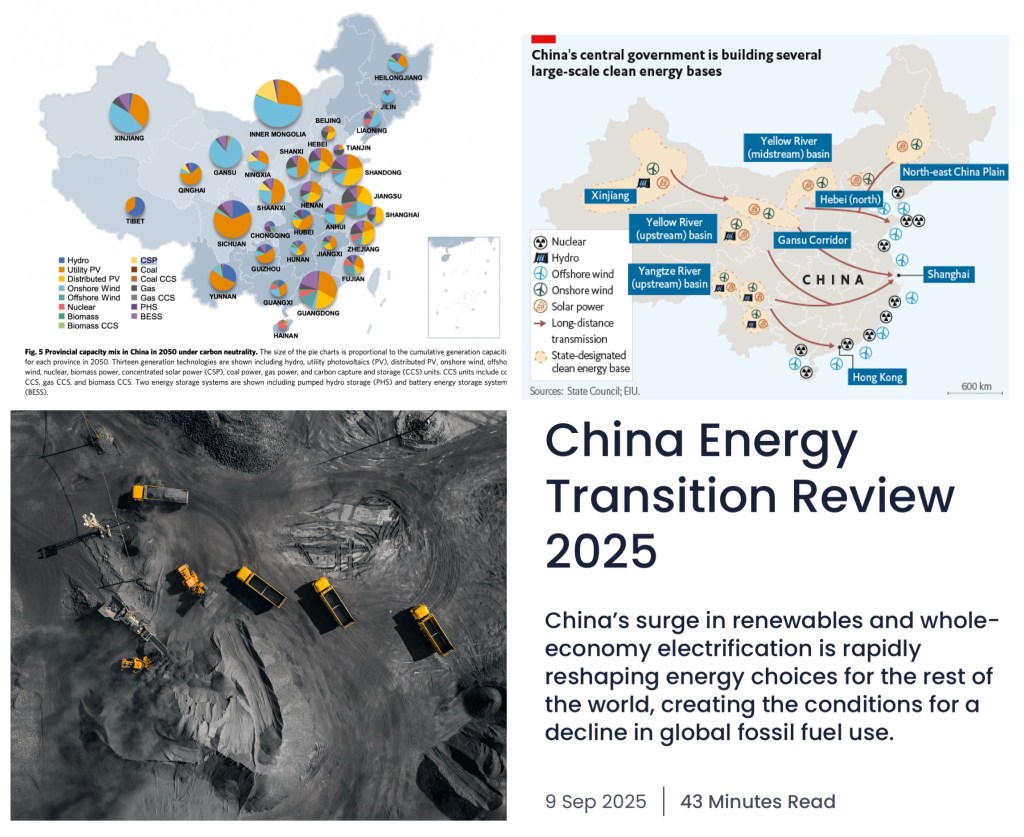
Now, a major data-driven report https://ember-energy.org/latest-insights/china-energy-transition-review-2025/ from the British Energy think tank Ember shows that’s no longer the case. China’s “ecological civilization” is leading the world away from fossil-fueled economies and leading the way out of Climate Catastrophe. This is the power of socialist planning to serve the people and save the planet.
However, the sun, the wind, and the waves are a commons that the US can neither control nor dominate. Countries with the capacity to harness these commons have a way to reclaim economic/energy sovereignty and develop outside of the fossil-fuel stranglehold of the Empire. This is another way that China is sharing the concrete instruments of liberation for the multi-polar world: it is slowly dismantling the master’s house–without using the master’s tools.
However, the US would rather sooner burn the planet down than let China lead the way out of subjugation and planetary collapse. This is one more reason why US war on China has to be prevented.
China’s surge in renewables and whole-economy electrification is rapidly reshaping energy choices for the rest of the world, creating the conditions for a decline in global fossil fuel use.
For too long, emerging economies have faced what seemed like a stark trade-off between growth and sustainability. As this report highlights, China’s green ascent challenges that assumption.
Through scale, innovation and long-term planning, China is demonstrating that decarbonisation can go hand in hand with industrial upgrading, job creation and improved quality of life. These lessons carry significance not only for China, but for the broader region – especially Southeast Asia, where energy demand is rising and development needs remain pressing.
Of course, China’s experience is not a one-size-fits-all blueprint. Each country must chart its own course, shaped by its unique resources, needs and priorities. Still, China provides a valuable reference point – showing what is possible when long-term vision is matched with pragmatic, coordinated action.
China’s clean energy transition is fundamentally reshaping the economics of energy across the world. Accelerating deployment of renewables, grids and storage in China, combined with electrification of transport, buildings and industry, are rapidly bringing China itself towards a peak in energy-related fossil fuel use, while also reducing costs and accelerating uptake of clean electro-technologies in other countries. These twin trends are creating the conditions for energy-related fossil fuel use globally to peak and decline.
Snarky NYT article still can’t ignore the truth tries to insinuate negativity/coercion but still can’t overcome the facts). ‘China Is the Engine’ Driving Nations Away From Fossil Fuels, Report Says https://archive.is/kRVro Since the beginning of the industrial age, the global economy has required more and more fossil fuels — coal, oil and gas — to power growth.
It is increasingly clear, however, that China’s aggressive efforts to sell batteries, solar panels and wind turbines to the world is on course to bring that era to an end, a new report says. The Chinese dominance of clean-energy industries is “creating the conditions for a decline in fossil fuel use,” according to a report by Ember, a research group focused on the prospects for clean-energy technologies.
The scale of Chinese production since 2010 has driven the price of these technologies down by 60 to 90 percent, the researchers found. And last year, more than 90 percent of wind and solar projects commissioned worldwide produced power more cheaply than the cheapest available fossil-fuel alternative, they said. That cost advantage might have seemed laughable before China began pumping billions of dollars of subsidies into the sector.
“China is the engine,” said Richard Black, the report’s editor. “And it is changing the energy landscape not just domestically but in countries across the world.”
“For too long, emerging economies have faced what seemed like a stark trade-off between growth and sustainability,” said Suwit Khunkitti, Thailand’s former deputy prime minister. The Ember report “challenges that assumption,” he said.
Veto of Hong Kong Same-Sex Relationships Bill Is Not a Constitutional Crisis 否決同性關係條例非憲制危機 by Ronny TONG Ka Wah 湯家驊, Sept 17 2025
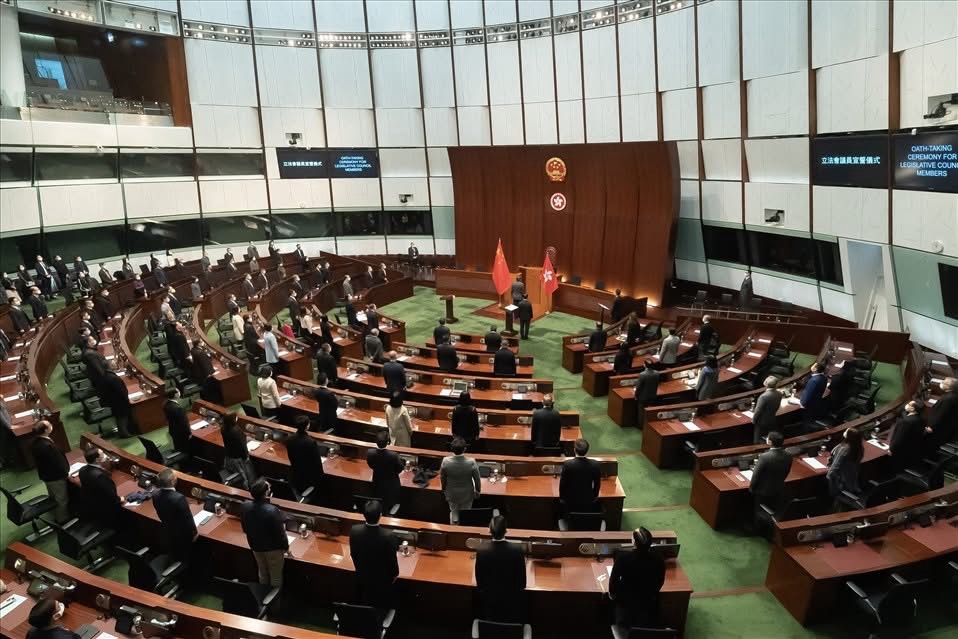
Last week, the Legislative Council, in a rare move, rejected the second reading of the “Registration of Same-Sex Partnerships Bill,” a bill introduced by the SAR government in response to the Court of Final Appeal, sparking heated debate. Some have asked whether the Legislative Council’s rejection of the bill represents a disrespect for the court’s ruling, or even a violation of the rule of law. Others have suggested that the government’s public admission of its failure to carry out its legislative obligations under a court order is tantamount to disrespect for the court, inconsistent with the rule of law, and even in violation of its constitutional obligations, thus creating a constitutional crisis. These concerns are understandable, but the reality is that, constitutionally, legally, and politically, the Legislative Council’s decision is simply a normal functioning of our constitutional order, further embodying the normal functions of the judiciary, executive, and legislative branches under the Basic Law.
To correctly understand the issue, we must first correctly interpret the relevant Court of Final Appeal judgment. In the case of Sham Chi-kit, the plaintiff, a homosexual, and his partner entered into a legal same-sex marriage in New York. The plaintiffs argued that the SAR government’s refusal to recognize their same-sex marriage resulted in them enduring unequal treatment in society, and therefore filed a judicial review. The Court of Final Appeal unanimously ruled that legal same-sex marriages abroad do not constitute legal marriages in the SAR. However, in response to the plaintiff’s request for the government to provide an “alternative solution” for legal recognition of same-sex unions, the Court allowed the plaintiff’s appeal by a majority of three (P.J. Andrew Ribeiro, P.J. Anthony Fok, and P.J. Neil Chiu-yin of Australia) to two (P.J. Matthew Cheung and P.J. Matthew Lam). Simply put, the difference between the majority and minority’s reasoning lies in the majority’s preference for citing European human rights law cases and reasoning, while the minority believes that European human rights law is less appropriate for application in the SAR.
The Basic Law sets out its objectives; the government’s best efforts do not violate them.
The majority held that under Article 14 of the Hong Kong Bill of Rights Ordinance (i.e., Article 17 of the International Covenant on Civil and Political Rights), the government has an obligation to provide a “legal recognition framework” to protect same-sex couples from unreasonable or unlawful intrusion into their private lives and families, to meet their basic social needs, and to provide them with a legitimate identity, thereby preventing them from feeling inferior and feeling that their committed and stable relationships are unworthy of recognition. In other words, the plaintiff’s request, which was accepted by the majority, was for a legal, rather than administrative, framework recognizing their special status.
When the parties debated whether the court should grant them further instructions on how to enforce the judgment and whether the judgment required a time limit for the government to fulfill its obligation to provide a legal framework, the plaintiff cited numerous polls showing that the majority of Hong Kong people accept same-sex relationships and pointed out that after the improvement of the electoral system, the Legislative Council has consistently followed the government’s advice in passing legislation, so establishing an alternative legal framework should not be difficult. Consequently, the court declared that the government had an obligation under section 14 of the Hong Kong Bill of Rights Ordinance to protect the privacy of same-sex couples from unreasonable interference with their private lives, and also decided to give the SAR government two years to fulfill this obligation.
Note the following passage in the judgment of Justices Li and Fok: “We must emphasize that our determination that the government has the aforementioned obligation does not represent the exercise of executive or legislative power by the court, but rather the fulfillment of its constitutional duty to interpret and declare the nature and scope of the actual constitutional rights under section 14 of the Hong Kong Bill of Rights Ordinance.” This explanation lies at the heart of the issue. The court’s function is simply to interpret and assert the plaintiffs’ constitutional rights and the SAR government’s responsibilities. How the SAR government fulfills this responsibility to protect the privacy of people in same-sex relationships is the responsibility of the executive branch, not the judiciary. The two are distinct. The court also does not compel the government to propose legislation, nor does it compel the Legislative Council to blindly approve it.
Another core issue is whether the Legislative Council’s rejection of the SAR government’s bill, introduced in response to the court’s request, constitutes an unconstitutional act. If the SAR government, as it claimed after vetoing the bill, would not apply to the court for a stay of execution, would this also constitute an unconstitutional act? We must understand that the Basic Law is a forward-looking constitutional document, which means that it sets out our constitutional aspirations, rights, and responsibilities. As long as the government continuously strives to achieve these constitutional aspirations and fulfills its responsibilities, we cannot regard failure to achieve these aspirations as a “violation” of the Constitution.
Let me cite a few examples to illustrate the difference between violating the Constitution and failing to achieve constitutional objectives. In 2003, the SAR government proposed Article 23 legislation, but abandoned it due to opposition from a majority of Legislative Council members. This was a practical example of the SAR government’s failure to fulfill its legislative responsibilities. The SAR government’s attempt to introduce legislation but abandoning it due to strong social opposition and the possibility of rejection cannot be considered a “violation” of the Constitution. Another example is the 2015 veto of the SAR government’s universal suffrage proposal. Does the democrats’ rejection of the universal suffrage goal under Article 45 of the Basic Law constitute a “violation” of the Basic Law? If the SAR government fails to pass the universal suffrage bill and concludes that the political conditions are insufficient to propose the same or a different universal suffrage proposal again, can this also be considered a “violation” of the Constitution? The answer is certainly not.
In common law jurisdictions, Legislative Council decisions change daily.
Secondly, Article 73 of the Basic Law clearly states that the Legislative Council’s powers include “enacting, amending and repealing laws in accordance with this Law and in accordance with legal procedures.” In other words, whether to legislate and how to legislate are the Legislative Council’s exclusive constitutional powers, and no one, including the courts or the SAR government, may interfere. The Basic Law also does not grant the judiciary the right to override the executive or legislative branches. Clearly, under the Basic Law, the judiciary, executive, and legislature must respect and check each other.
Third, under the common law system, laws declared by the courts are generally subject to being overturned, amended, or modified by legislation passed by Parliament. In lawmaking, the legislature’s power is supreme, and the courts’ function is merely to interpret or supplement the laws passed by the legislature. Historically, in common law countries, there are countless examples of legislatures passing laws to alter or amend common law declared by the courts, and this occurs almost daily.
From the various perspectives mentioned above, the Legislative Council’s veto of the bill cannot be seen as disrespecting the court’s judgment, let alone violating the spirit of the rule of law. However, the government’s responsibilities declared by the courts under Article 14 of the Hong Kong Bill of Rights Ordinance must still be respected and addressed. The SAR government must fulfill its constitutional obligation to protect the private lives of same-sex couples from discrimination or interference when appropriate social conditions exist. When the conditions are ripe, the SAR government has a responsibility to provide a legal framework recognizing the fundamental constitutional rights of same-sex couples. When society is ready to adopt this legal framework depends on whether overall social attitudes toward same-sex relationships change over time. Just as with the goal of universal suffrage, we eagerly await this day.
English Video with Chinese subtitles: Did the Israeli army not indiscriminately kill civilians? Chinese scholar “Xiangshan Forum” directly retorted to Israeli officers: When you shoot women and children, you completely lose the legitimacy of your actions! 以軍未濫殺平民?陸學者”香山論壇”當面回懟以色列軍官:當你們射殺婦孺時便徹底喪失行動合法性! https://www.tiktok.com/t/ZP8S9SMqK/ https://youtu.be/JElpZMobxg0?si=Lh69K3A1ok3jns_V
Video with English subtitles: A historic turning point! The Federal Reserve has been forced to cut interest rates, signaling a crucial shift in the Sino-US trade war. A significant amount of US dollars may flee the US, making the renminbi a safe haven. 視頻有英文字幕: 歷史性轉折!聯準會被迫降息,中美博弈最重要的訊號出現了,大量美元可能逃離美國,人民幣將成為一個最安全的避風港. https://www.tiktok.com/t/ZP8S9NhGy/ https://youtu.be/zTZmRAHxbWk?si=3Fm4dA0bIhnPXbX2
Video with Chinese subtitles: Ronnie Chan* angrily criticizes the United States, saying its hegemony is about to end 陈启宗怒怼美国,霸权即将终结 (his family foundation gave US$350 million donation in 2014 to the Harvard School of Public Health) (*他的家族基金會於 2014 年向哈佛大學公共衛生學院捐贈了 3.5 億美元)
主要内容: 为什么建议子女回香港? 发展中国家 vs 西方的机会对比 世界安全形势正在变化? 台湾问题的真相与北京策略 美国真的要退出国际舞台了吗? 美国是不是在衰退?误解与真相 总结:给年轻一代的建议
Main Content: Why recommend children return to Hong Kong? Opportunities in developing countries vs. the West Is the global security landscape changing? The truth about the Taiwan issue and Beijing’s strategy Is the United States truly withdrawing from the international stage? Is the United States in decline? Misconceptions and truths Summary: Advice for the younger generation
Video with English subtitles: The neglected lychees and dragons profound highlight the difference between Chinese and US. Recently, several films focusing on the theme of the War of Resistance Against Japanese Aggression, including “Nanjing Photo Studio,” “East Pole Island,” and “731,” have attracted widespread attention due to their numerous private screenings. 影片有英文字幕: 被冷落的荔枝與蛟龍 (深刻凸顯了中美之間的差異,為什麼中國有5000年的連續文明,而美國可能撐不過300年) 最近有幾齣抗戰主旋律電影《南京照相館》、《東極島》和《731》,因為很多包場,看的人多,談論也較多.
This one-sided public opinion has caused some excellent films released during the same period to be overlooked, missed, and neglected. I highly recommend two of these films and hope you’ll pay to see them in theaters.
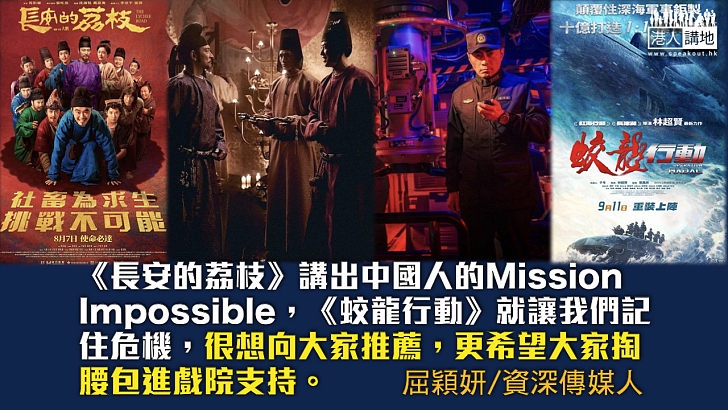
The first, “Lychees in Chang’an,” tells the story of a Tang Dynasty lychee envoy who transported fresh lychees from Lingnan to Chang’an (modern-day Xi’an) to celebrate Yang Guifei’s birthday. After reading these plot synopses, the normal reaction is: Wow, what’s so interesting about transporting lychees?
If the lychee transporting story were described as “Mission Impossible,” perhaps the audience would be more understanding. Fresh lychees have a shelf life of only three days. In the Tang Dynasty, without airplanes or refrigerators, transporting freshly picked lychees from Lingnan to Chang’an was practically impossible. However, no one dared to tell the emperor the truth, so everyone sought a scapegoat. A diligent and honest clerk was appointed to take on this unfortunate task.
The film ostensibly deals with transporting lychees, but it actually explores the intrigues and hidden daggers of officialdom, the workplace, and even the human world. People avoid dangerous, uncertain, or even doomed tasks. But when success, with its prestige and rewards, comes, everyone rushes to reward the credit, while the real perpetrators are sidelined.
Isn’t this scene incredibly familiar? The story of Yang Guifei and her lychees during the Tang Dynasty resonates with us a thousand years later. That’s the magic of good cinema.
Transporting lychees is an impossible mission, and his friends all urge him to run away. However, he offers a very inspiring and touching line, one that embodies Chinese values: “Even if I fail, I still want to know how far from the finish line I’ll fall.”
The foreign version of Mission Impossible is about a brilliant agent breaking all the rules and completing a mission through heroism—a plot that only exists in the virtual world. But the Chinese version of Mission Impossible is about following the rules, working hard, using brains, wisdom, and a relentless spirit to forge ahead. Those who fell short of the finish line become the starting point for those who follow. This is how we gradually approach the finish line through the efforts of generations. This achievement is exemplified in another film, “Operation Dragon.”
“Operation Dragon” is a masterpiece by renowned Hong Kong director Dante Lam and China’s first submarine film. The successful development of China’s nuclear submarines was the result of generations of anonymous hard work.
In the past, military themes were the preserve of Hollywood films, but “Operation Red Sea” and “Operation Dragon” rewrote these filmmaking rules. Only when a nation has a strong military can military films be persuasive.
Submarine scenes are the most challenging genre to film. Confined within a submarine, facing the pitch-black depths of the ocean, and armed with invisible torpedoes, the visuals are dull. How can one film this?
Ben Lam is truly a masterful action director. He can create thrilling scenes even in confined spaces; even the sonar listening scenes are gripping. The entire 130-minute film is flawless. I previously saw it in Shenzhen, but there were still a few scenes with drama. This time, watching the edited version released in Hong Kong, even those scenes were omitted, leaving the action-packed action to the fullest.
What I admire most is the director’s dedication. In an age where everything can be created with AI and special effects, Lam insisted on constructing a 1:1 submarine for the film. The “Dragon Whale” in the film is the world’s largest submarine prop, a project that took the crew seven years and cost 1 billion RMB to build.
Because submarines are state secrets, the navy only allows the director one person to walk inside a real submarine. Therefore, every detail of the submarine set had to be memorized and reproduced by the director inside the real submarine.
In the past, Hong Kong directors could only shoot gangster films, and military blockbusters were unthinkable. Now, with the support of a powerful nation and military, Hong Kong filmmakers can create Hollywood-style war epics.
If “Nanjing Studio” reminds us of history, then “Operation Dragon” reminds us of crisis. Deep in the sea and amidst the waves, there lies an unseen battlefield, and a group of unknown soldiers, lurking in the deepest reaches of the ocean, protecting our peaceful and prosperous times.






 Business Blog