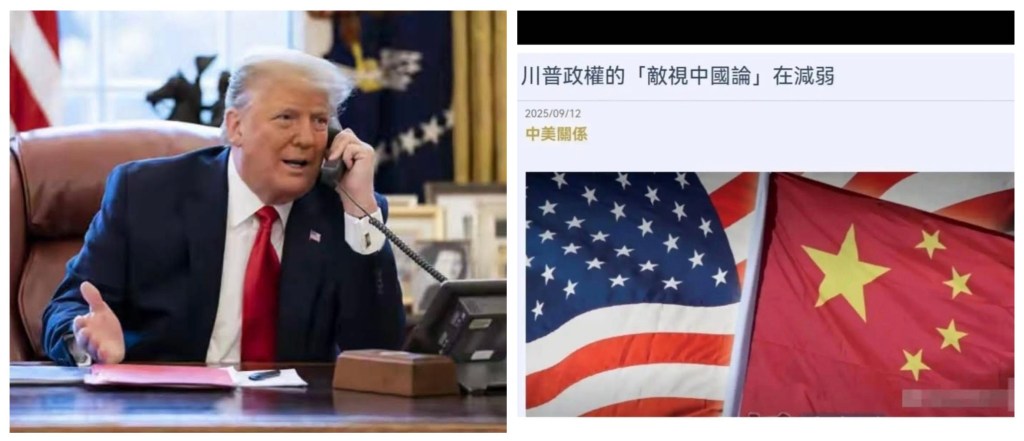
Japanese media report that US policy toward China is undergoing a significant shift 日媒表示,美國的對華政策正在發生明顯變化…
Japanese media report that hostile views toward China are shrinking within the Trump administration, while the idea of tolerating China on the condition of US interests is strengthening.
Japanese media note that subtle shifts in attitude toward China extend beyond Trump. Harsh rhetoric from relevant departments and close associates has also subsided. The US Department of Defense is also seeking opportunities for dialogue with Chinese defense authorities.
Deputy Secretary of Defense Colby, who leads policymaking, has proposed maintaining a “balance” of military power with China in the Indo-Pacific region. Secretary of State Rubio, long considered a hawk on China, is also moderating his harsh tone toward China.
The Pentagon is secretly developing a landmark revision of its National Defense Strategy. This draft, unprecedented in its approach, proposes shifting the US military’s strategic focus from global deployment to homeland defense, specifically prioritizing the security of the Western Hemisphere.
In stark contrast to the Trump administration’s 2018 stance of designating China as a “major strategic competitor,” the new draft no longer prioritizes countering the Chinese military threat. This shift marks a fundamental restructuring of US defense strategy.
The key figure driving this historic strategic adjustment was Deputy Secretary of Defense Elbridge Colby. A representative of the neo-isolationist camp in American politics, Colby advocated for the United States to withdraw from burdensome global military obligations and focus limited defense resources on maintaining domestic security.
The United States currently faces severe domestic security challenges: the rampant drug epidemic, a surge in illegal immigration, and chaotic border control. These issues have become a major concern for the United States.
To address these crises, the Pentagon has implemented a series of extraordinary measures, including establishing a militarized management zone along the US-Mexico border and deploying National Guard troops to several major cities to assist in law enforcement.
Economic factors are also not to be ignored. According to the latest data released by the US Treasury in August 2025, the total federal government debt has exceeded $37 trillion, a record high.
Under these fiscal constraints, maintaining hundreds of military bases around the world and numerous foreign military aid programs is becoming increasingly unsustainable.
The rapid rise of China’s military power is a major factor in the US strategic shift. During this year’s September 3rd military parade, the Chinese military’s display of two intercontinental missiles, the DF-61 and DF-5C, drew particular attention.
As national treasures, the DF-61 has a range that covers the continental United States, while the DF-5C possesses global strike capabilities. Their power and penetration capabilities are forcing the United States to seriously reconsider its position.
Not only in the military sphere, but also in China’s remarkable growth in economic and technological strength. In 2022, China’s retail sales of consumer goods reached 43 trillion yuan, supporting the world’s largest consumer market.
In the technology sector, Yangtze Memory Technologies has achieved mass production of 232-layer NAND chips directly in China, demonstrating that technological independence is not just a slogan but tangible results.
Trump’s attempt to form a 28-nation customs alliance against China marks a major shift in trade policy toward the country. However, this plan faces numerous obstacles.
The EU’s response has been unexpectedly cool. The German Chancellor has even publicly called for “weaning ourselves from dependence on the United States.” German automakers’ sales in China account for 35% of their global sales. This is no small amount; it represents a real livelihood.
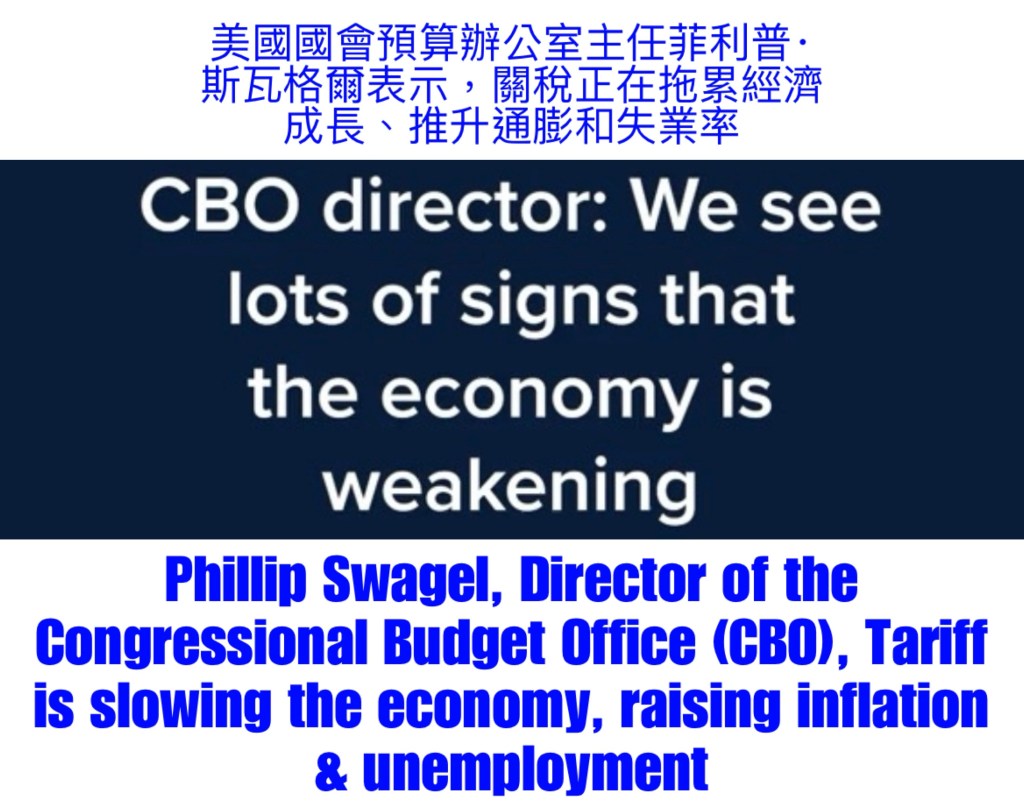
Even the American business community has strongly opposed the tariff policy, with over 3,500 companies already filing legal challenges. Legislators from various states in the Farm Belt are drafting a joint letter urging Trump to reconsider his tariff policy toward China.
Since the trade war began in 2018, American farmers have lost $24 billion in the Chinese market, 245,000 jobs, and GDP has decreased by $320 billion. These statistics reveal a harsh reality: the US trade war with China is effectively killing eight hundred enemies while hurting itself a thousand.
The US is trying to get its allies to bear more of the cost of defense. Senior Pentagon official Colby explicitly told British aircraft carriers, “You are not welcome in the Indo-Pacific,” and abruptly demanded that Japan double its military spending to 5% of its GDP.
This demand exposes the US’s predatory logic: since China’s military growth is irreversible, let allies fill the gap for the US military. However, the US’s strategic maneuvering faces multiple paradoxes.
Despite being kicked out of Asia militarily, European allies are continuing to assert a tough stance against China on the economic, trade, and technological fronts. This schizophrenic approach is fueling Macron-style “strategic autonomy” thinking.
Japan’s military expansion faces the dual constraints of its pacifist constitution and the pressure of tax increases. It’s like being forced to run with shoes on its back; any misstep could lead to it falling out of the ranks of the “anti-China alliance.”
Reality has taught the United States a lesson: when Nike moved its factories from China to Vietnam, its defective product rate doubled; when Apple moved some production lines to India, it couldn’t even tighten a single screw correctly, and ultimately quietly returned to China.
The Pentagon’s strategic shift suggests that the future global supply chain will not be a binary choice between “China or the United States,” but more likely a new pattern of dual-center coexistence of China and the United States. In this new era, America’s “old script” is destined to be difficult to conclude perfectly.
China position has been we can meet and talk. China will listen. But if US kept using the extortion tactics. China will listen to the same old US BS, but China will stand its ground, China, US trade delegations kick off fourth round of talks in Madrid, since US not sincere, expect no deals! 中國的立場一直是,我們可以見面談。中國會傾聽。但如果美國繼續使用敲詐勒索的伎倆,中國會聽美國那些胡言亂語,但中國會堅持自己的立場。中國和美國貿易代表團將在馬德里啟動第四輪談判,既然美國不真誠,那就別指望能達成協議了. https://www.scmp.com/economy/global-economy/article/3325494/china-us-trade-delegations-kick-fourth-round-talks-madrid?
Chinese exports to the United States are down double digits since the beginning of the year.
But China’s exports overall are much higher than expected, as Chinese firms are successfully expanding into new markets.
This is glaringly true of Africa. Bilateral trade between China and Africa is rocketing higher, and doing so in surprising ways.
Chinese exports to Africa are high up in the value chain: advanced machinery, vehicles, electronics, and power generation. But these products are also falling in price, making them more affordable then ever to Africa’s emerging middle class and business sectors.
It is also a de-dollarization story. Chinese banks make trade credit and finance widely available using pools of renminbi. African firms can far more easily access capital in RMB, compared to USD, and are refinancing their dollar-denominated debts to the Chinese currency.
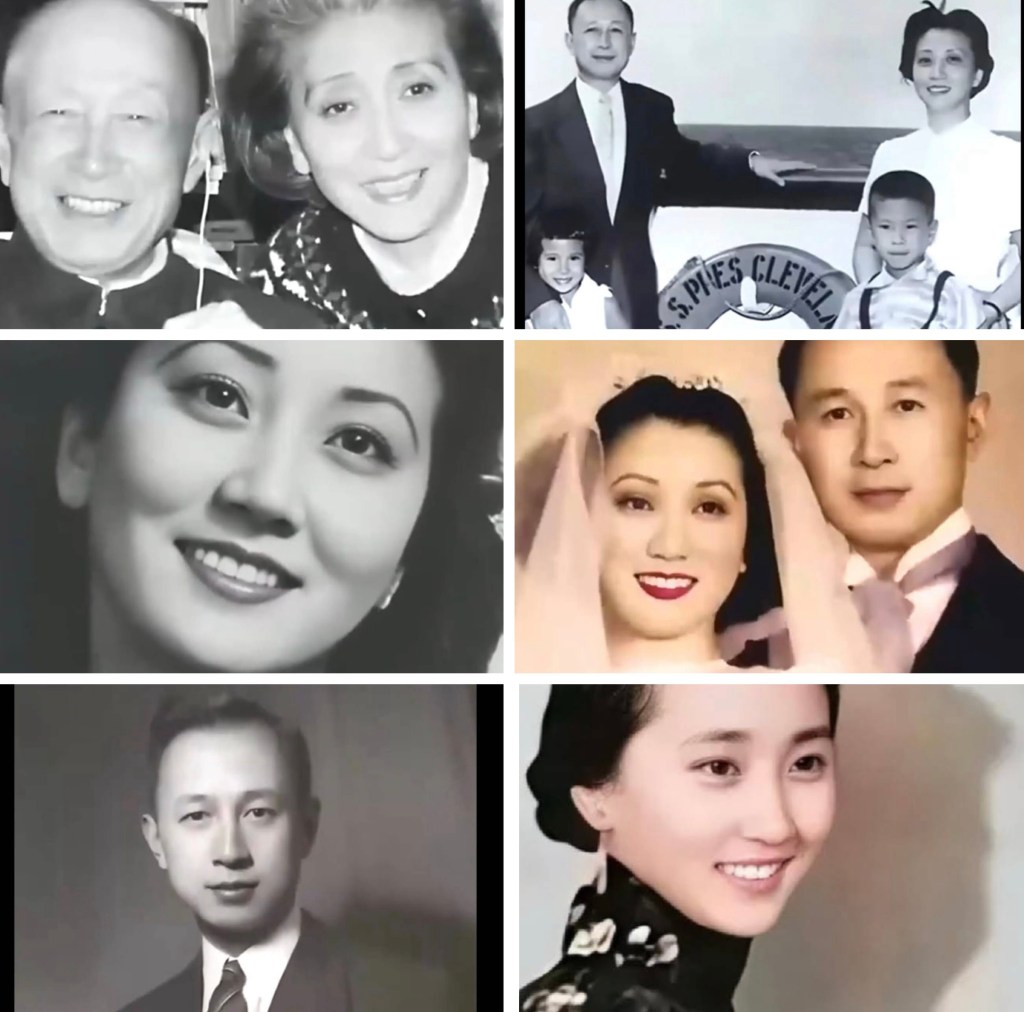
A romantic love story that led to the China’s aerospace industry 浪漫的愛情故事,成就中國航天事業……
A romantic love story that led to the China’s aerospace industry…
Qian Xuesen confessed his love to Jiang Ying: “Jiang Ying, why don’t you marry me?”
Jiang Ying politely declined: “Brother, I have a boyfriend.”
Unexpectedly, Qian Xuesen acted like a boss: “Boyfriend doesn’t count. Come with me to America, now.”
Back in 1923, at the Qian family mansion in Shanghai, 12-year-old Qian Xuesen first met his adopted daughter, Jiang Ying. Tiny in a white dress and a bow, she timidly addressed him as “brother.”
At the time, Qian Xuesen was a somewhat introverted teenager, fond of studying. His regard for his “sister” was more of a polite gesture of concern. But fate had already quietly connected the two.
In 1935, Qian Xuesen went to the United States to study as a Boxer Indemnity student. Before leaving, he looked for a long time at the dock, but there was no sign of Jiang Ying. He suppressed the disappointment in his heart.
Qian Xuesen didn’t see Jiang Ying again until 1947, when she returned from the Berlin Conservatory of Music and gave a solo concert in Shanghai. That evening, on the stage of the Lyceum Theatre, Jiang Ying sang a captivating rendition of Debussy’s Serenade, leaving Qian Xuesen in the audience unable to contain his emotions.
After the performance, he didn’t applaud and leave like the rest of the audience. Instead, he rushed backstage and delivered a confession that shocked everyone.
A few days later, at the DDS Café on Xiafei Road, the fresh green of sycamore trees swayed outside the floor-to-ceiling windows, the dim light reflected on the black and white checkerboard tiles inside, and Schubert’s Serenade played on the phonograph. Qian Xuesen and Jiang Ying sat across from each other, two cups of coffee steaming on the table.
He was dressed in a crisp three-piece suit, his eyes etched with earnestness. “Jiang Ying, I’m serious. Come with me to America, and we’ll start a new life together.” Jiang Ying lowered her head, stirring her coffee. Her voice was gentle but resolute. “Brother, I really do have a boyfriend. He’s my classmate from the Berlin Conservatory. Although the war has cut us off from each other, I can’t just give up.”
Qian Xuesen frowned slightly, a hint of resignation in his tone. “How can we hold our marriage together when we’re locked down during wartime?” He even pulled out a boat ticket and pushed it in front of her. “I’ve arranged everything. We’ll be in America in six weeks.”
At that moment, Jiang Ying stared at the ticket with a complex expression. She knew Qian Xuesen’s sincerity, and she understood that behind his insistence lay years of unspoken emotions. Yet, her heart lingered on that winter in Berlin, on that unfulfilled promise.
She gently pushed the ticket back. “Brother, thank you, but I can’t.” Qian Xuesen fell silent, his hand trembling slightly as he held the coffee. He didn’t press any further, only whispering, “Then I’ll wait for you.”
Fast forward a few weeks, and Jiang Ying received a letter from Berlin. In it, her boyfriend confessed that the post-war chaos had led him to choose another relationship. The letter fell to the floor, and Jiang Ying sat by the window, speechless for a long time.
At that moment, she suddenly remembered Qian Xuesen’s gaze in the cafe, and the ticket he had pushed towards her. A few days later, she approached Qian Xuesen and said in a low voice, “If your ticket hasn’t been refunded, I want to… go with you.” Qian Xuesen was stunned for a moment, then smiled a rare smile. “Okay, let’s get ready now.”
In September 1947, the Shanghai docks were bustling with activity. Qian Xuesen carried a wicker suitcase, while Jiang Ying, dressed in a simple long dress, clutched a Debussy sheet music.
The two boarded the ship bound for America, the shadows of the sycamore trees gradually receding behind them. As the ship’s horn sounded, Qian Xuesen bowed his head and said to Jiang Ying, “I will take good care of you from now on.” Jiang Ying looked up and smiled, a look of relief in her eyes: “I believe we will live well too.” This scene marked the beginning of their new life.
After arriving in the United States, Qian Xuesen and Jiang Ying’s marriage was not as perfect as a fairy tale. Qian Xuesen devoted himself to scientific research, while Jiang Ying continued her vocal career. Despite their disagreements, they always supported each other.
In the 1950s, Qian Xuesen was forced to return to China due to McCarthyism. Jiang Ying followed him without hesitation, giving up her comfortable life abroad. After returning to China, she became a founder of vocal education in China, while Qian Xuesen dedicated his life to the country’s aerospace industry.
Years later, Jiang Ying recalled that rainy night in 1947 in an interview, saying with a smile, “If it weren’t for his persistence, I might still be lost in the memories of Berlin.
He made me understand that love is not just romance, but the courage to face the future together.” Qian Xuesen, in a handwritten manuscript, wrote, “Jiang Ying is the most beautiful melody in my life. Beyond science, she is my everything.”
That 1947 boat ticket now lies quietly in a display case at the Qian Xuesen Library of Shanghai Jiao Tong University, its yellowed pages chronicling a love story that spanned the ocean.
From the confession at the Lyceum Theatre, to the perseverance at the Joffre Road Café, to the departure at the dock, Qian Xuesen and Jiang Ying exemplified love and perseverance through their actions.
Perhaps, true love is never the impulsive feeling of falling in love at first sight, but the unwavering commitment that endures through thick and thin.
Video with English subtitles: The SCO+93 military parade! The West is furious! BBC and CNN acknowledge that the international order has changed, US could not win over China. American ideological colonization! Exposing the US cognitive warfare! This has been reported before, but the Chinese didn’t accept it. Why do they accept it today? Because America is declining, China is rising. It turns out the US’s ideological colonization is a scam! 影片有英文字幕: 上合+93 閱兵! 西方炸鍋! BBC CNN 承認國際秩序變了, 美國無法贏得中國! 美國思想殖民! 撕開美國認知戰! 以前也有報導, 但中國人那時侯並不接受, 為什麼今天中國人接受,因為美國衰落, 中國掘起, 現在中國人發現美國那一套是一個騙局! https://www.tiktok.com/t/ZP8SBSwWL/ https://youtu.be/X0vDIrFZ1zg?si=JJWGtI-7ABV7khX_ https://rumble.com/v6yx51q-bbc-and-cnn-acknowledge-that-the-international-order-has-changed-us-could-n.html
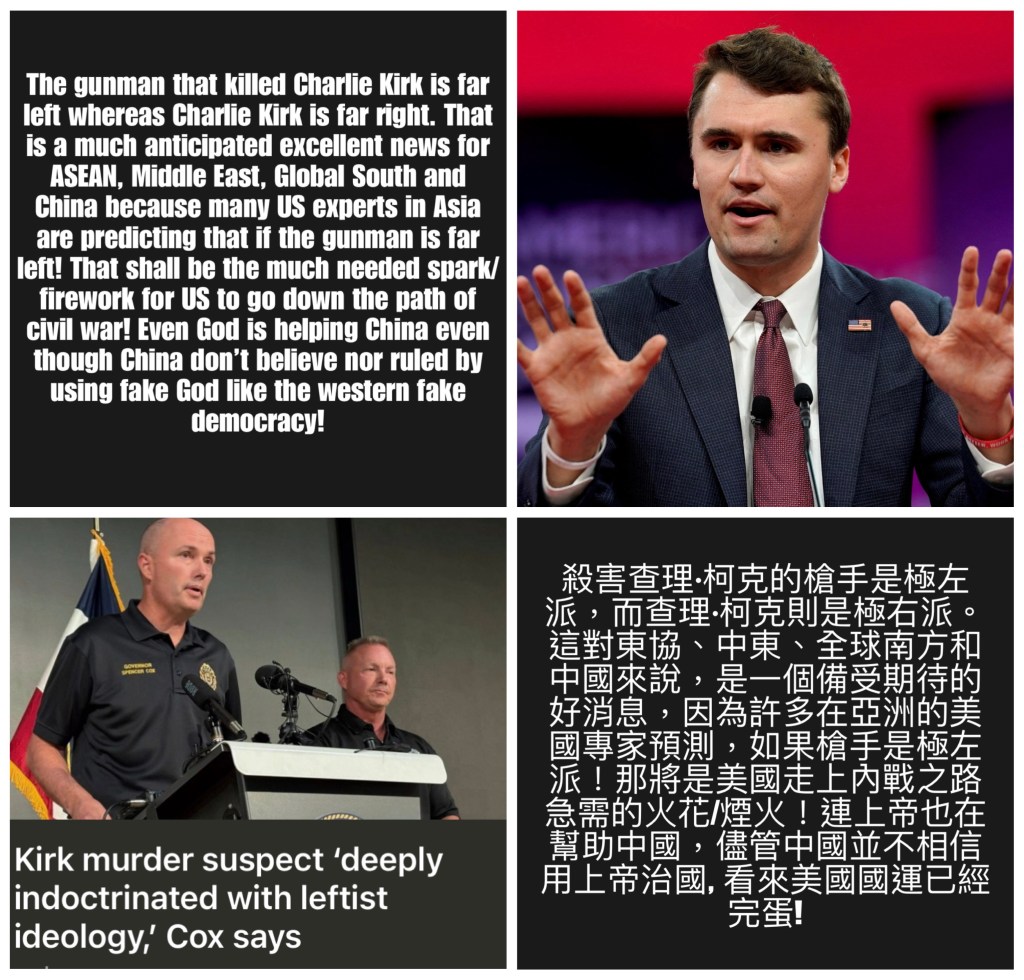
The gunman that killed Charlie Kirk is far left whereas Charlie Kirk is far right. 殺害查理·柯克的槍手是極左派,而查理·柯克則是極右派.
The gunman that killed Charlie Kirk is far left whereas Charlie Kirk is far right. That is a much anticipated excellent news for ASEAN, Middle East, Global South and China because many US experts in Asia are predicting that if the gunman is far left! That shall be the much needed spark/firework for US to go down the path of civil war! Even God is helping China even though China don’t believe nor ruled by using fake God like the western fake democracy!
Hu Bo: De-hegemonization of the International Maritime Order Is Irresistible 胡波:国际海洋秩序去霸权化势不可挡
Before World War II, the central maritime issues were the rise and decline of great powers and sea control. The international maritime order of the time was marked by stark asymmetry and inequality, functioning primarily as an instrument for hegemonic powers and Western colonial and imperial blocs to assert dominance over the world. Weaker nations and oppressed peoples had virtually no voice in this system.
Over the past 80 years since the end of World War II, the international maritime order has generally moved toward greater equity, justice, and democracy. Third World countries, non-Western nations, and Global South countries have played a pivotal role in this transformation. This shift can be primarily attributed to the following factors: First, the establishment of the United Nations system and related institutions, along with the wave of decolonisation and the subsequent independence of Third World countries, created a space for the democratisation of international relations, where nations are, at least formally, considered equal. Second, the scope of international maritime politics has expanded and diversified since World War II, offering greater opportunities for small and medium-sized countries to make meaningful contributions.
In their book Power and Interdependence, American scholars Robert Keohane and Joseph Nye state, “…technology had increased mankind’s ability to exploit the oceans’ space and resources, thus raising questions of scarcity and stimulating countries’ efforts to widen the area under their jurisdiction in order to exclude other countries from the resources.” The growing importance of the ocean as a source of resources has become increasingly evident, with economic and developmental issues such as marine fisheries, oil and gas exploration, and deep-sea mineral extraction gradually entering the agenda of international maritime politics.
Entering the 21st century, global maritime issues have gained increasing prominence. The high connectivity of the oceans has led to security threats and challenges that transcend national borders. Tasks such as combating piracy and transnational crime, protecting the marine environment, and ensuring maritime security have increasingly surpassed the capacity of individual nations or small groups of countries. As a result, ocean governance has emerged as a key focus in international maritime politics.
However, the evolution of the maritime order has followed different paths in various areas. After World War II, the international maritime order began to diverge, with political-economic and security issues evolving along separate trajectories. As global interdependence grew, the role of military force diminished, while the influence of small and medium-sized states increased. Maritime powers could no longer unilaterally shape the direction of the international maritime order, particularly in its political and economic dimensions. The 1958 Convention on the Continental Shelf and the 1982 United Nations Convention on the Law of the Sea (UNCLOS) are prime examples of this shift. In the negotiations and treaty-making processes of both conventions, Third World countries were the driving force.
Currently, the international maritime political-economic order, based on UNCLOS, forms a relatively open, equitable, and balanced network of mechanisms and rules. Although these rules retain a distinct Western influence, developing countries also play a significant role. The dominance of maritime powers or major states over the international maritime political-economic order has effectively collapsed.
However, due to disparities in capabilities, the post-World War II movements of national liberation and the democratisation of international relations have had a limited impact on the international maritime security order. To build consensus during negotiations, UNCLOS incorporated many compromises and ambiguities, particularly in provisions related to the regime of islands and dispute settlement mechanisms. These compromises, to some extent, have contributed to the escalation of disagreements and conflicts among certain states. Moreover, due to resistance from maritime powers such as the United States and the Soviet Union, military security issues were largely excluded from UNCLOS. While some provisions touch on military activities, they remain very vague and non-binding.
To this day, this divergence remains unresolved. The institutionalisation of the international maritime political-economic order continues to strengthen, and the UNCLOS system is still evolving. The Agreement under the UNCLOS on the Conservation and Sustainable Use of Marine Biological Diversity of Areas beyond National Jurisdiction (BBNJ Agreement) has been adopted and has now entered the phase of ratification by individual countries. The BBNJ Agreement, which governs marine resources, the utilisation of maritime spaces, and maritime activities, addresses a range of significant frontier issues in the current development of ocean resources and environmental management, spanning the fields of science and technology, policy, law, economics, and military affairs.
Meanwhile, the contemporary international maritime security order still bears a distinct imprint of power politics. It is dominated by the United States, with its core consisting of the U.S. and its global alliance system, alongside a series of military and security rules shaped by the U.S.
Virtually all nations are, to varying degrees, dissatisfied with the current international maritime order. The United States has yet to formally join UNCLOS, concerned that provisions established by the Convention, such as the exclusive economic zones extending up to 200 nautical miles from the baselines of the territorial sea, could restrict the freedom of global operations for the U.S. military. Additionally, the U.S. argues that the International Seabed Authority regime established by the UNCLOS violates the principles of fair competition. The vast majority of coastal states do not recognise the U.S.-led maritime security order, much less support the United States’ practice of using the maintenance of rules as a pretext for pursuing power politics.
Over the past 80 years, the overall development of the international maritime order has been characterised by institutionalisation. However, the effectiveness of this institutionalisation in the maritime security order remains uncertain, as evidenced by the lack of strict enforcement of various international agreements and regulations, such as UNCLOS. With the strong resurgence of geopolitics and the decline of the liberal international order, the future process of institutionalisation in the international maritime order faces the risk of regression. Deinstitutionalisation or weak institutionalisation may become more prevalent, further exacerbating the uncertainty surrounding the international maritime order.
With the rise of emerging maritime powers such as China, the international maritime order is bound to undergo significant adjustments. China is both a world power and a developing country; both a maritime power and a land-sea composite state. The rise of China’s maritime status itself serves as a counterbalance to Western-style hegemony and power politics. China’s maritime practices are also bound to become a rebalancing effort aimed at constructing a cooperative atmosphere. The future international maritime order will not solely centre on sovereignty and maritime rights and interests, as many developing countries advocate, nor will it become a hegemonic order where the United States enjoys absolute freedom of action, as desired by Washington.





 Business Blog