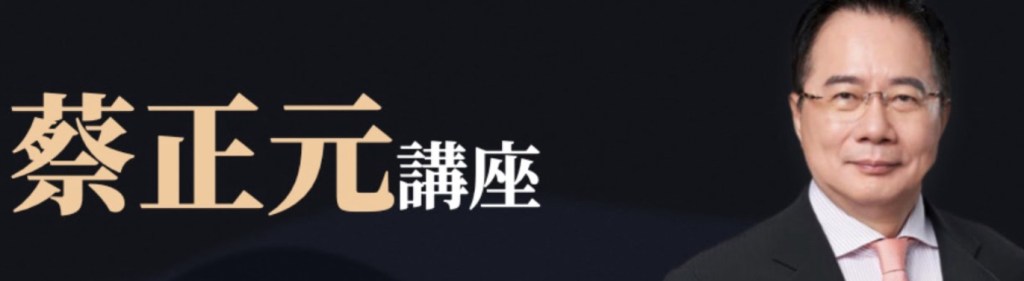
Tsai Cheng-yuan Official Channel: The Alienation of the “Mainlander Descendants” 蔡正元官方頻道: 外省後代的異化
Alienation refers to people or things that were originally similar gradually becoming dissimilar, distant, or even hostile.
Mainlanders who came to Taiwan did so under the banner of the Republic of China (ROC). Their fundamental political stance was anti-communism and national unification.
Anti-communism arose from the civil war between the KMT and CCP over control of the Chinese government.
Unification stemmed from the ROC inheriting the sovereignty of China from the Qing Empire.
Unification was originally the political basis of legitimacy for Mainlanders who came to Taiwan.
However, political “reproductive isolation” between the two sides of the Taiwan Strait emerged due to 75 years of political separation.
Second- and third-generation Mainlanders also began to undergo alienation.
The meaning of the Republic of China itself began to change—from a unified “China” into a kind of cosmetic packaging for Taiwan independence.
Liu Baojie (Liu Pao-chieh), as a second-generation Mainlander, is an example of this alienation.
He transformed from supporting a unified ROC into a “Taiwanese person” advocating a “Taiwanese nation,” and even accused Ma Ying-jeou—who supports returning to a unified China—of “selling out Taiwan.”
This is considered a thoroughly alienated Mainlander.
In the last century, 若林正丈 (Masatake Wakabayashi) proposed the theory of the ROC’s “Taiwanization.”
The basis of his argument was precisely the alienation of Mainlanders.
Mainlanders, living amid a sea of native Taiwanese, were like a political isolated island, often needing to become alienated in order to find political pathways and a sense of security.
Native Taiwanese (benshengren) do not share the ROC’s historical memory—
the Wuchang Uprising, the 14-year War of Resistance against Japan, the Chinese Civil War—these historical frameworks simply do not exist for them.
The political foundation of native Taiwanese is instead composed of:
Qing-era migration to Taiwan, Japanese colonial rule, Taiwanese serving in the Japanese military, the February 28 Incident, and the influence of the two Chiang leaders plus U.S.-Japan influence.
This historical experience created a fertile environment for “natural independence” (tianran du).
Mainlanders living in Taiwan, surrounded by native Taiwanese, were almost bound to experience political alienation.
Liu Baojie’s accusation that Ma Ying-jeou is “selling out Taiwan” by seeking unification with China is an interpretation rooted in the Taiwanized ROC, essentially a judgment made by a politically alienated regime.
And so a mirror image appears:
Mainlanders accusing other Mainlanders of “selling out Taiwan.”
When Liu Baojie points one finger at Ma Ying-jeou for selling out Taiwan, the other four fingers point back at himself as the real “traitor.”
The unification-versus-independence struggle, when stripped bare, is an internal war of branding others as traitors or sellouts.
But Liu Baojie’s claimed “civil war or external war” is not something that either Mainlanders or native Taiwanese in Taiwan can decide on their own.
Liu Baojie may believe that if Taiwan says the war for China’s unification is not a civil war, then the U.S. and Japan would be free to intervene and Taiwan independence could succeed.
This is naïve and pitiful ignorance.
War is a matter of comparative military strength—or to put it more bluntly, a comparison of death tolls.
The evolution of the Russia-Ukraine war has revealed a brutal reality:
No matter how much Liu Baojie trains at the gym, and thinks that even in his sixties he could pick up a weapon,in modern warfare he might not even have use for a body bag—Taiwan would already be reduced to ruins.
The foolishness of Ukrainians will be reflected in an alienated Taiwan.
Whether Ukrainians understand it or not,
once politics escalates into war, there is no right or wrong—only strength and victory or weakness and defeat.
Ukraine overestimated itself and made political demands far beyond its actual capabilities.
This unrealistic fantasy was itself a tragedy.
If Taiwan becomes alienated to the same extent as Ukraine, its fate will be hard to escape.
蔡正元官方頻道: 外省後代的異化
異化alienation是指
原本相似的人事物演變成
不相似 疏離甚至對立的人事物
外省人來台是打著中華民國的旗號
他們以反共統一做爲基本主張
反共是因爲國共爭奪政權而爆發的內戰
統一是因為中華民國繼承
大清帝國的中國主權而產生
統一原本就是外省人來台
在政治上的合法性基礎
但是兩岸在政治上的「生殖隔離」
因爲長達75年的政治分立而出現
外省人的第二代或第三代也開始異化
中華民國的含義也開始異化
從一個統一的中國異化成台獨的化妝品
劉寶傑作爲外省第二代
就是這種異化的案例
從一個統一的中華民國異化爲
主張「台灣民族」的「台灣人」
倒過來指責回歸統一中國的馬英九賣台
算是異化得很徹底的外省人
若林正丈在上個世紀
提出中華民國台獨化的理論
其推論基礎就是外省人的異化
外省人生存於本省人的大海中
像個政治孤島
常要異化才能有政治出路和安全感
本省人的政治記憶
沒有中華民國那一套
武昌起義 十四年抗戰 國共內戰
這些思路通通不存在
本省人的政治基底只有
清代來台 日本統治 台籍日本兵
二二八事件再外加兩蔣父子及美日影響力
這個經歷提供了天然獨的肥沃土壤
外省人在本省人四海環繞的台灣生活
政治異化是難免會發生的事
劉寶傑指責馬英九回歸統一中國是賣台
這是台獨化的中華民國的解讀
本質上就是異化後的漢奸政權
劉寶傑的對照面就出現了
外省人指責外省人賣台
劉寶傑ㄧ根手指頭指著馬英九賣台
另外四根手指頭指著他自己就是漢奸
統獨之爭說穿了就是賣台與漢奸的內戰
只是劉寶傑所說的內戰或外戰
不是台灣的外省人或本省人
單方面就可以決定的理路
劉寶傑可能以爲中國再次統一的戰爭
只要台灣人主張不是內戰
美日就能參戰
台獨就能成功
真是幼稚無知到可憐的地步
戰爭是軍事實力的對比
說得更難聽一點
就是戰死人數的對比
俄烏戰爭的演變揭開極爲殘酷的現實
那就是劉寶傑再怎麼健身
自以爲60幾歲還能扛起武器
在新型態的戰爭中可能連屍袋都用不上
台灣早已成殘垣斷壁的廢墟
烏克蘭人的愚蠢也會反映在異化的台灣
不管烏克蘭人能不能了解
政治走到戰爭就沒有是非對錯
只有強弱輸贏
不自量力的烏克蘭把政治要求
提高到自身實力以外很遠的地方
這種不現實的幻想本身就是悲劇
台灣異化到烏克蘭這種程度
命運也很難不一樣