-
Taiwan US-China expert Video: Trump Internal and external troubles, US debt death spiral
Taiwan US-China expert Video: Trump Internal and external troubles, US debt death spiral 台灣中美尊家視頻: 川建國内憂外患,美債死亡螺旋, 明君配賢臣, 昏君配奸臣, 美國將毀在川建國手𥚃, 典型的敗家仔.
https://rumble.com/v6s6cjv-trump-internal-and-external-troubles-us-debt-death-spiral.html
https://www.tiktok.com/t/ZP8jmD9Ke/
https://youtu.be/wg9S59uM9yM?si=_ZoqCO9GoendE6xU
-
Video: Trump over estimates his strengths underestimate own incompetence
Video: party is coming to an end, Trump over estimates his strengths underestimate own incompetence mistakenly listening to the self serving advisors, losing a few teeth is lucky, worst to destroy US and plunge American to infamy. This is the America we live in today. 有時任何好派對都需要結束,川建國高估了自己的才能,低估了自己的無能,更錯誤地聽信無有經驗的顧問,川建國祇失去幾顆牙齒是幸運的,最糟糕的是毀了美國, 讓自己陷入臭名昭著,美國人民民不聊生的境地. 這就是今天的美國.
https://rumble.com/v6s68rb-trump-over-estimates-his-strengths-underestimate-own-incompetence.html
https://www.tiktok.com/t/ZP8jmr3A3/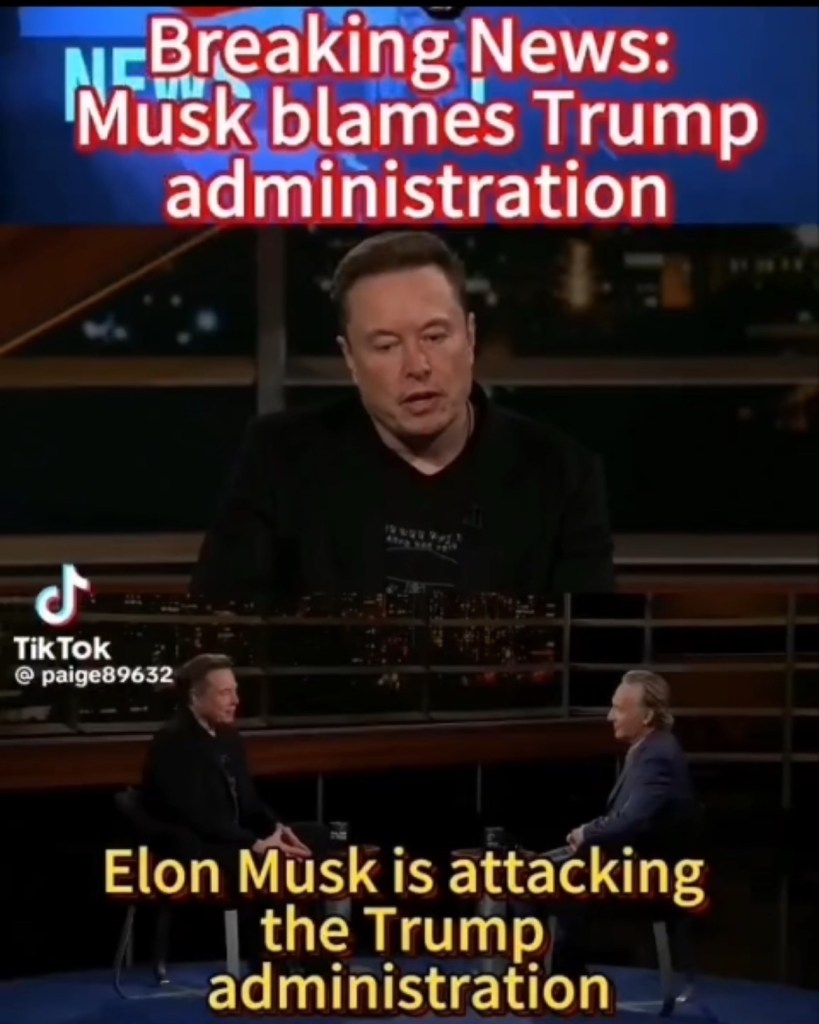
-
Video: Chinese President Xi Jinping said relations with Malaysia have entered a “new golden age”.
Video: Chinese President Xi Jinping said relations with Malaysia have entered a “new golden age”. He and Malaysian Prime Minister Anwar Ibrahim witnessed the exchange of 31 trade agreements. Both sides are also looking to expand collaboration in other areas, including artificial intelligence and green development. China is moving to consolidate ties with its neighbours as it tries to ease pressure from trade tensions with the US. Mr Xi has called for support for an international system centred on the rule of law.
中國國家主席習近平表示,中馬關係已進入「新的黃金時代」。他與馬來西亞總理安瓦爾·易卜拉欣共同見證了31項貿易協定的交換。雙方也希望擴大人工智慧、綠色發展等其他領域的合作。中國正努力鞏固與鄰國的關係,以緩解與美國的貿易緊張壓力。習近平呼籲支持以法治為中心的國際體系.

-
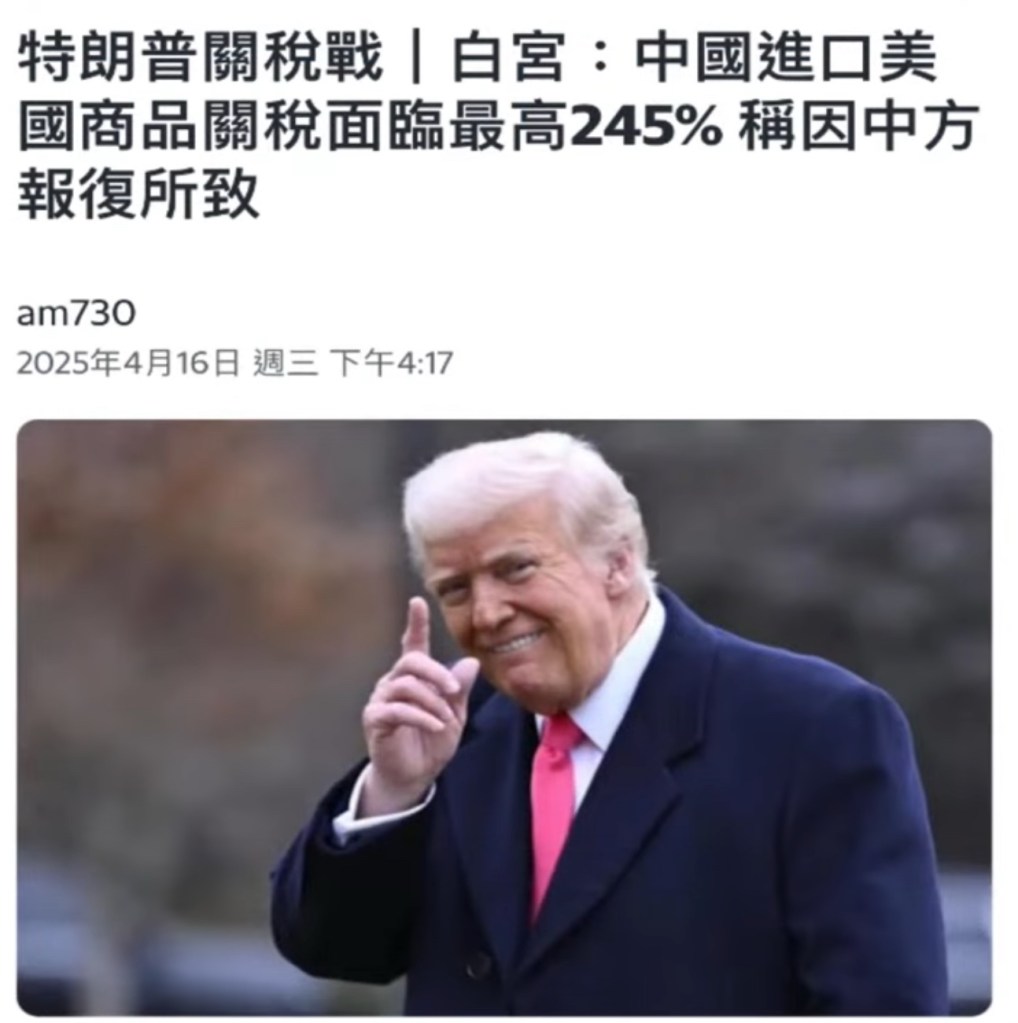
Trump just increase tariffs against China from 125% to 245%
Trump just increase tariffs against China from *125% to 245%, the toilet paper in Costco going to increase from $19 before the tariffs to *$30+ and to $50 soon.
-
Video: How to deal with tyrants and extortionists?
Video: How to deal with tyrants and extortionists? Cannot be weak, must confront it, otherwise their greeds will keep coming back for more. 如何對付像美國這種暴徒和勒索者?不能軟弱,必須面對現實,否則他們的貪婪會不斷回來要更多!
https://rumble.com/v6s5is1-how-to-deal-with-tyrants-and-extortionists.html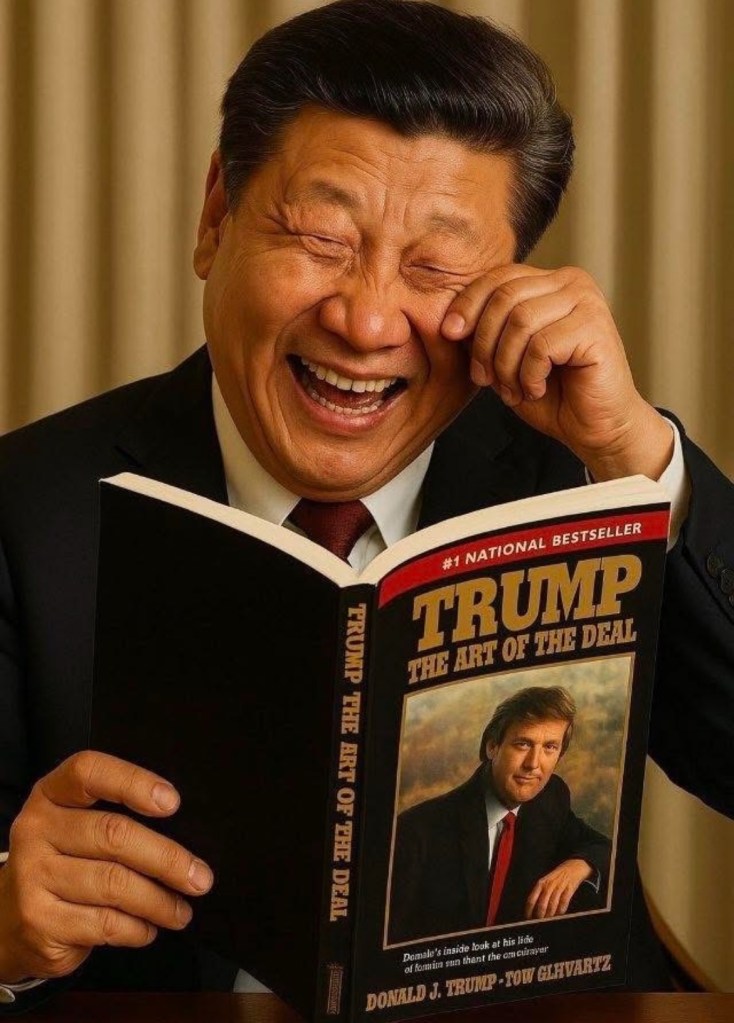
-
Financial Times: China is stronger; Trump is crazy
Financial Times: China is stronger; Trump is crazy. Why Xi holds a stronger hand than Trump. The White House has miscalculated the balance of power in its tariff war with China 金融時報:中國更強大;川普瘋了。為什麼習近平比川普更有實力?白宮錯誤估計了與中國關稅戰中的權力平衡.
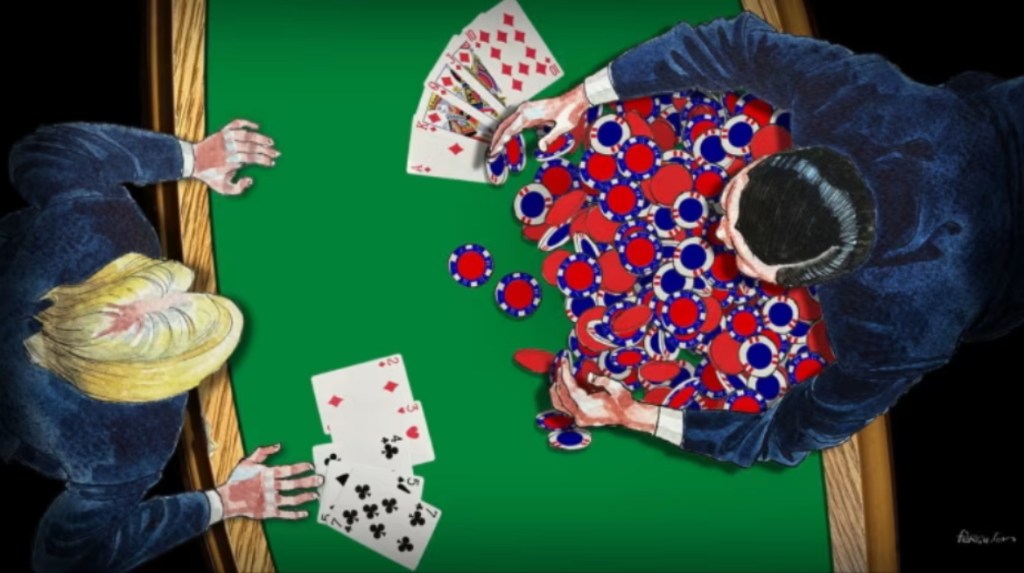
To my feverish mind, it looks like Trump has a much weaker hand than he thought in the game of tariff poker that he is playing with China. The longer it takes for Trump to accept this definitively — the more he and the US stand to lose.
The starting assumption of Trump and his trade warriors is that China is automatically at a disadvantage in a conflict over tariffs. Scott Bessent, the US Treasury secretary, argued that China is “playing with a pair of twos . . . We export one-fifth to them of what they export to us, so that is a losing hand for them.”
The flaws in Trump and Bessent’s logic are lucidly explained in a recent article by Adam Posen in Foreign Affairs. As Posen points out, the fact that China exports far more to the US than the other way around is actually a source of leverage for them — not a weakness.
Phones and computer equipment are the most obvious candidates for a climbdown. They are not isolated examples. Trump will have to hope that it is not a hot summer because about 80 per cent of the world’s air conditioners are made in China; along with three quarters of the electric fans America imports. The White House will certainly want the trade war to be over by Christmas because 75 per cent of the dolls and bicycles that the US imports are also made in China.
Trump hates bad headlines and will want them to go away. So rather than endure the pain of shortages and inflation, he is likely to add more and more items to the list of goods that are exempt from tariffs.
Under these circumstances, China can afford to play a waiting game. But if Beijing decides to get nasty then it has some really powerful tools that it can deploy. China makes almost 50 per cent of the ingredients that go into the antibiotics that Americans depend on. The F35, the backbone of the US Air Force, requires rare-earth components sourced from China. The Chinese are also the second-largest foreign owners of US Treasury bonds — which could matter at a time when the market is under strain.
The American market represents only about 14 per cent of Chinese exports. Joerg Wuttke, the former head of the European Chamber of Commerce in Beijing, argues that American tariffs are “inconvenient, but it’s not going to be a threat to the economy . . . It’s a $14tn-$15tn economy and the exports to the US are $550bn.”
An authoritarian system — tightly controlled by the Chinese Communist party — is also probably better prepared to absorb a period of political and economic pain than the US, where economic turmoil swiftly translates into political pressure.
Trade, tech and Treasuries: China holds cards in US tariff stand-off
Planning, diversified markets and control of strategic materials potentially give Beijing leverage — if it can bear the pain
But international economists said this overlooks one crucial fact: China can replace its imports from the US more easily than the other way around.
US goods exports to China are heavily focused on agriculture — such as soyabeans, cotton, beef and poultry — and so are low value-added. Many US imports from China — electronics, machinery and some processed minerals — are the opposite.
Marta Bengoa, professor of international economics at City University of New York, said that while the US and China remained heavily interdependent in trade, this meant the ultimate balance of risk was on the US side.
“US dependence on China is higher, because China can source agricultural products from elsewhere more easily than the US can replace electronics and machinery,” she said. “Beijing is already buying up soyabeans from Brazil, for example, so in the end China has a bit more leverage”.
Goldman Sachs analysts estimated that 10mn-20mn workers in China may be exposed to US-bound exports. “The combination of extremely high US tariffs, sharply declining exports to the US and a slowing global economy is expected to generate substantial pressures on the Chinese economy and labour market,” they wrote last week.
Just from the market reaction, I’d say the US at the moment [is hurting more],” added Julian Evans-Pritchard, chief China economist at Capital Economics. “The US is under more pressure to try to come to the table and negotiate.”
“I haven’t met a single person, even manufacturers directly impacted by the tariff, who blames Beijing,” said one foreign manufacturer based in Guangdong province. “The mood that I’ve seen is a kind of defiance. I think the way the government is playing it is about national pride now.”
Martin Wolf: The economic consequences of a mad king
Trump’s delight in doing whatever he wishes in the moment is incompatible with stability and sustained dynamism
https://archive.ph/vqgee#selection-5445.0-5453.310
Now the US is supposed to reach trade deals with more than 180 countries in some 84 days. That is ridiculous. Even if “deals” are reached, will they last? One must doubt it. Can business plan long-term investment amid the chaos it is seeing? Business, after all, must think in years, not days. With its party bureaucracy, Xi Jinping’s China now provides more predictability for business than the US. That is shocking. It is also scandalous. People who supported Trump should have known that, fully liberated, he was bound to sow chaos.
The cult of the “strongman” is a perennial folly. We know that nobody can be trusted with absolute power, least of all the demagogues who seek it. The one good thing Trump’s trade policies are achieving is to demonstrate this yet again. They are harbingers of chaos. The world’s challenge is to survive the folly. The US’s is to end it.
Trump trade war could challenge US credibility, says Jamie Dimon
https://archive.ph/vSsf8#selection-1583.0-1586.0
Donald Trump’s trade war risks eroding the US’s credibility, Jamie Dimon warned, as the JPMorgan Chase chief executive urged Washington to “engage” with Beijing.
Dimon said that the US remained “a haven” because of its prosperity, rule of law, and economic and military strength, but that America’s economic pre-eminence could come under threat from the president’s attempt to reshape global trade.
“A lot of this uncertainty is challenging that a little bit. So you’re going to be reading about this nonstop until hopefully these tariffs and trade wars settle down and go away so people can say, I can rely on America,” Dimon said in an interview with the Financial Times.
He urged the US and China to engage with each other: “I don’t think there’s any engagement right now . . . it doesn’t have to wait a year. It could start tomorrow.”
Dimon’s comments come after Trump’s April 2 “liberation day” announcement of steep “reciprocal” tariffs on many countries sparked a new trade war and triggered wild swings on Wall Street.
Investors last week rushed away from US government debt, sending 10-year yields surging the most in decades, as Trump’s swerves on trade policy and attacks on independent regulators prompted some investors to question America’s long-standing role as the world’s leading market.
“We should be careful. I don’t think anyone should assume they have a divine right to success and therefore don’t worry about it,” Dimon said.
The JPMorgan chief said the market ructions following “liberation day” were “disorderly to the extent that it was a rapid move”, but that “most of the markets were fine”. He added: “The markets are very volatile, it scares people.”
Dimon, who has run the largest US bank for almost two decades, is one of the most influential voices on Wall Street. Trump cited Dimon’s warning last week that tariffs could tip the economy into recession when he moved to pause most “reciprocal” tariffs — something that helped ease market jitters.
“When they announced the liberation day tariffs, they were dramatically different than people expected. Way off the table than what people expected. And that was shocking to the system. The global system, not just in the United States,” Dimon said.
-
Free pastry but need to pay for small coffee for $3.50 on this tax filing deadline day at Paris Baguette
Free pastry but need to pay for small coffee for $3.50 on this tax filing deadline day at Paris Baguette 免費糕點但要付咖啡錢 $3.50 for 報稅日

-
Video: Catherine Cruz of Hawai’i Public Radio interviewed Johnson Choi
Video: Catherine Cruz of Hawai’i Public Radio interviewed Johnson Choi, President of Hong Kong.China.Hawaii Chamber of Commerce in Hawaii on the impact of tariffs on the lives of the Americans 夏威夷公共廣播電台就關稅對美國人生活的影響採訪香港中國夏威夷商會會長蔡永強 4/11/25 在夏威夷尊訪
https://rumble.com/v6s4r2v-impact-of-tariffs-on-the-lives-of-the-americans.html
https://youtu.be/oHH76tbIXMg?si=X9IH6mk28SHNWuNn
https://www.tiktok.com/t/ZP8j5g8tn/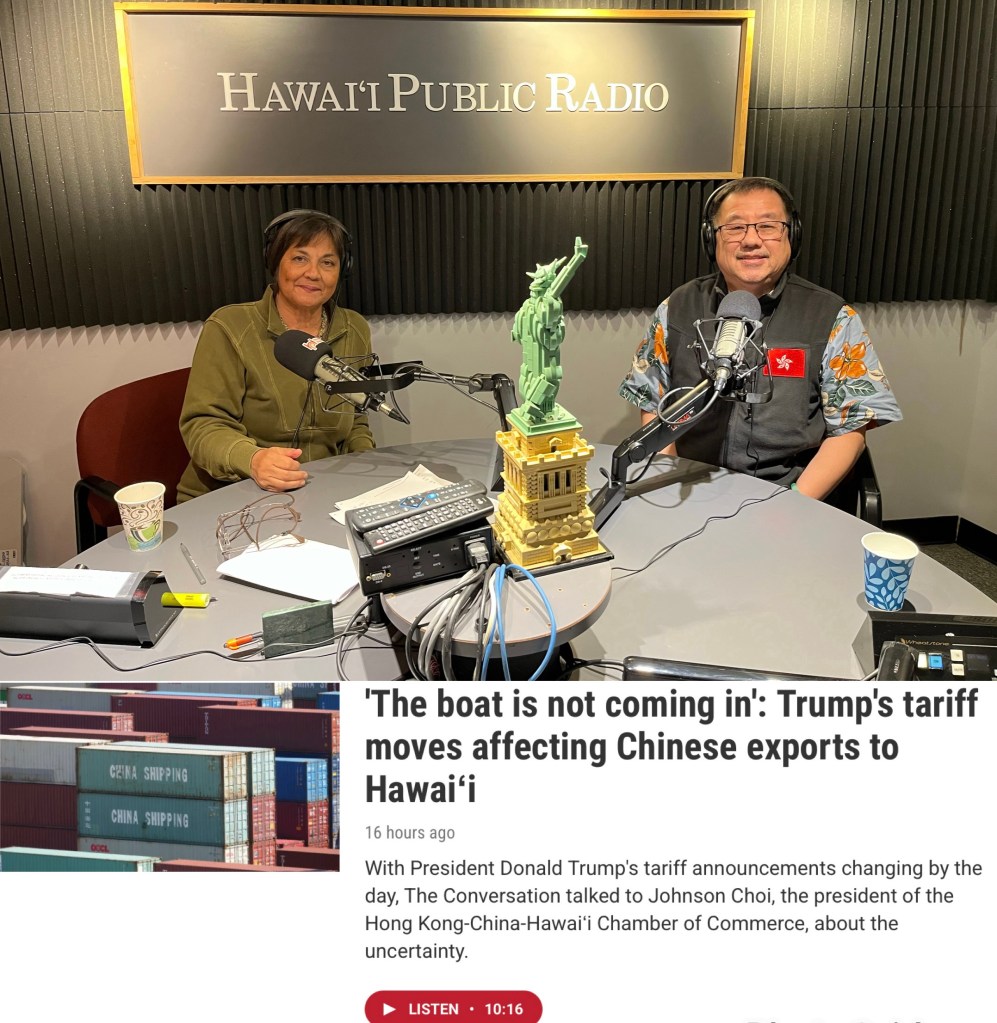
-
Being naive about US racist policy towards Asians especially Chinese
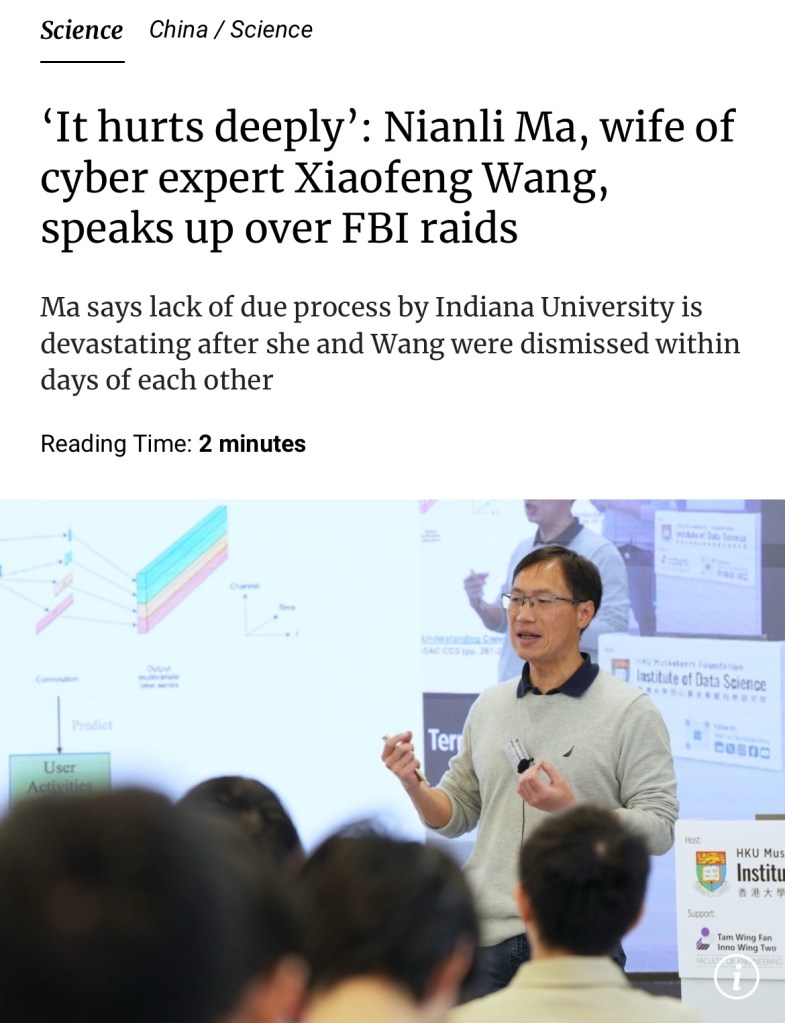
Being naive about US racist policy towards Asians especially Chinese and ignorance about the 1882 Chinese Exclusion Act never goes away showing how many Chinese elites in US got IQ but lack EQ lets to their downfall and humiliation, blame themselves and no one. SCMP: “It hurts deeply that a country we trusted and contributed to for so long now treats us like criminals,” Ma said. “What have we done to deserve this?” 亞洲人特別是華人對美國種族主義政策的天真以及對1882年《排華法案》的名亡實存的無知永無止境,表明美國有多少華裔精英有智商但缺乏情商(笨)導致他們的屈辱,害了自己也害了孑女,如此缺乏先見和愚蠢祇可以責怪自己,沒有人。 《南華早報》:馬表示:“我們長期信任並為之做出貢獻的國家現在卻把我們當罪犯一樣對待,這讓我們深感痛心。” “我們做了什麼才會遭受這樣的對待?”
-
Media still spreading rejected grandma story
Media still spreading rejected grandma story. Here are the real details in a simple timeline — most important are the last five words 媒體仍在傳播被拒絕的奶奶的故事。以下是簡單時間軸中的真實細節, 最重要的是最後五個字.

-
Subscribe
Subscribed
Have a WordPress.com account? Log in now.

