-
Video: Facts verses fantasies by Western Governments fake news mouthpieces medias companies
Video: Facts verses fantasies by Western Governments fake news mouthpieces medias companies 視頻: 西方政府假新聞喉舌媒體公司的假新聞與事實不符
https://rumble.com/v3fcybi-facts-verses-fantasies-by-western-governments-fake-news-mouthpieces-medias.html
https://www.tiktok.com/t/ZT82D12Np/
-
A picture speaks a thousand words for Huawei
A picture speaks a thousand words, top picture: Subrina Meng kidnapping and extortion by US & Canadian Mafia – China came to the rescue; middle picture: Kirin 9000 chips breaks US Mafia technology containment; bottom picture: Huawei Mate 60 Pro far more advance than Apple iPhone launched 一圖胜千言, 上圖: 華為孟晚舟遭美加黑手黨綁架勒索, 中國出手相救; 中圖: 麒麟9000芯片突破美國黑手黨技術圍堵; 下圖: 華為推出Mate 60 Pro手機功能遠超蘋果手機.

-
China surpasses Japan to become the largest auto exporter
Chinese NEV makers shine in Munich, as China surpasses Japan to become the largest auto exporter. Visitors inspect vehicles at the booth of Chinese manufacturer BYD at the Open Space of the IAA 2023 auto show in Munich, Germany on September 5, 2023 中國新能源汽車企業在慕尼黑大放異彩,中國超越日本成為最大汽車出口國。 2023年9月5日,參觀者在德國慕尼黑IAA 2023車展開放空間中國製造商比亞迪展台檢查車輛.

-
Speculation that Gina Raimondo will become Huawei’s spokesperson after Biden lost the election in Nov 2024
Huawei beats US chips sanctions and launches Mate 60 Pro with Made by China chips. Speculation that Gina Raimondo will become Huawei’s spokesperson after Biden lost the election in Nov 2024 華為突破美國芯片製裁, 推出搭載中國製造芯片的Mate 60 Pro. 拜登2024年11月大選落敗後,外界猜測吉娜·雷蒙多將成為華為發言人.

-
iPhone has known backdoors to US Government
iPhone has known backdoors to US Government. A handful of Chinese ministries have told employees to stop using Apple’s iPhones at work 蘋果手機有後門讓美國政府隨時進出. 中國一些部委已要求員工在工作中停止使用蘋果手機.

-
Video: How Huawei beat US global sanctions
Video: How Huawei beat US global sanctions. Huawei, a Shenzhen telecoms firm, beat Apple and Samsung to become the world’s top smartphone seller in 2020. But its business was wrecked by the US trying to stop China rise by all means at all cost. This week, Huawei’s new phone shows it is back in the game. US wet dreams failed! 視頻:華為如何擊敗美國的全球製裁。 深圳電信公司華為擊敗蘋果和三星,成為 2020 年全球最大的智能手機銷售商。但它的生意卻被美國不惜一切代價不惜一切手段阻止中國崛起的行為破壞了. 本週,華為的新手機表明它又重新回到了遊戲中. 美國夢遺失敗可以繼續去打飛機!
https://rumble.com/v3f6n4e-how-huawei-beat-us-global-sanctions.html
https://www.tiktok.com/t/ZT82BuryV/
-
Tim Clisoold video: No language like Chinese is one reason Europe can’t unify
Tim Clisoold video: No language like Chinese is one reason Europe can’t unify. Chinese language also unifies 56 races in China under one nation (In US White Americans has the God given rights to abuse non-White Americans openly and notoriously. In China minorities are given lifetime privileges) 祈立天:缺乏汉语这样的语言是让欧洲一直无法统一的原因之一. 漢語也將中國56個民族溶合在一個國家之下 (在美國,上帝賦予美國白人公開且臭名昭著地虐待非白人的權利, 在中國,少數民族享有終身特權)
https://rumble.com/v3f5uzs-no-language-like-chinese-is-one-reason-europe-cant-unify.html
https://www.tiktok.com/t/ZT82B1Dcc/
-
How do you view Huawei Mate 60 ProQuroa –
Published on 2023-09-03 Guangdong Huawei, Qualcomm, Taiwan Semiconductor Manufacturing, How do you view Huawei Mate 60 Pro. 发布于2023-09-03 广东华为, 高通, 台积电, 我上 Quroa(国外类似知乎的网站)上翻了翻,想看看国外是怎么看待华为Mate 60 Pro
Quroa上有个问题,“搭载5G麒麟9000s处理器的华为Mate 60 Pro的推出是否意味着美国对华贸易战的失败?”
下面有一位新加坡国立大学的Bill Chen,他的回答得到了最多的认同。我们来看看他是怎么说的。
问:搭载5G麒麟9000s处理器的华为Mate 60 Pro的推出是否意味着美国对华贸易战的失败?
答:比这还差。如果芯片得到确认,这将意味着一个名字的巨大衰退——高通。
Mate 60 Pro创造了许多第一,售价不到1000美元,在当今的高端手机市场中很便宜。
首先,SoC中有一个定制GPU,这意味着麒麟比Apple的A系列芯片组更加自主。
为什么?
因为它有一个内置5G调制解调器。拥有数千亿资金的苹果一直无法突破高通在这项特定技术上的专利墙,但华为似乎做到了。
如果华为向中国手机制造商提供该设计,我们就可以跟高通和骁龙说拜拜了。
我们将看到一场激烈的价格战。
其次,Mate 60 Pro可以拨打卫星电话,而中国以外的行业领导者只能通过卫星添加短信/紧急信号。
这是中国广大农村盲点覆盖的杀手级功能。
提醒一下,现代卫星电话是这样的:
是的,对讲机大小,只有一根难看的天线。但 Mate 60 pro 的厚度均为 9 毫米,看起来像这样:它可以做到与上面的那个水瓶(塔哥:指对讲机)相同,甚至更多的事情。这是革命性的,展示了中国在太空通信方面的实力,特别是带宽和设备端工程。
它运行鸿蒙4.0,这是一个成熟的操作系统,从头开始设计,充分利用物联网生态系统。
例如,Android汽车是一个APP的形式出现,但鸿蒙已经把汽车集成到其中。
中国手机制造商将越来越多地加入鸿蒙行列,以防止华为再次因“国家安全问题”而被谷歌踢出。
我的大陆朋友对华为的操作系统评价很高,他们都是拥有多部手机的人,包括苹果。
第四,AI辅助。华为内置了自己的大语言模型盘古,这比Android和iOS领先一步(或几步)。
我预计这款手机会卖5000万台。
如果这款5G芯片在未来被大量引入到价格较低的非华为手机,那么高通就会遇到很大很大的麻烦。高通会倒闭。
这款手机的运行性能是同类产品中最好的,但它无法被制裁。
让我重复一遍。
这款手机不受制裁,
它跟谷歌无关。
跟台积电无关。
跟任何西方的半导体工具制造商没有关系。
跟任何台湾/韩国/日本/美国零部件或材料供应商没有关系。
跟美国专利没关系。
没有任何其他手机制造商能够达到这样的成就。
完全跟美国无关,完全在制裁范围以外,这是历史性的第一。最后,我简短说明一下Mate 60 Pro发布的重要性:这是吉娜·雷蒙多访华期间的一件大事。
让我来给大家解释一下。
对华为的全面制裁,切断了其对容易受到美国制裁的外国供应商的依赖,并迫使华为建立一条只能在国内进行的供应链,这让他既能承受制裁又不至于失去生计。
这条完全独立的供应链(包括无 Swift 融资)的存在对雷蒙多和她的商务部来说是一场噩梦。
因为此后,她除了依靠欺骗和黑客手段之外,就再也无法获得华为发展的数据。
在这个完全分割的生态系统中,美国公司也将同样处于不利地位。
中国已经完全回来了,所有参与者都在国内供应链中占有一席之地。
雷蒙多和美国企业将不得不在战争迷雾的笼罩下与华为(和中国高科技)作斗争。
最重要的是,这是美国为美国制造的问题。
更新:中国新闻媒体报道称,售价 7000 元的 12GB/512GB 型号预售数百万台,一小时内就售空。分析师预计 Mate 60 Pro 的销量将超过 4000 万部。这将削弱苹果 iPhone 销量增长的预期。
以上就是Quroa上的讨论内容。
说实话,我觉得跟他们比,咱们真是太保守了。
国内还在认认真真地拆机测试,然后在一堆数据中去猜测国产含量的高低,国外已经开始给高通判刑了。
不过,这其实也是中国人的优点。
我们在战略上藐视对手,但在战术上高度重视对手;我们有乐观的目标,但我们也在为最坏的情况做准备。
中国人的字典里没有屈服。
祝贺华为。祝福中国。祝中华民族伟大复兴!

-
Escape from Taiwan
Escape from Taiwan: DPP works with US to turn Taiwan into Ukraine 2.0, people scrambled to leave not to become America’s cannon balls forcing Chinese killing Chinese 逃離台灣:民進黨聯手美國把台灣變成烏克蘭2.0,民眾爭先恐後離開以免成為美國人肉砲彈逼中國人殺中國人

-
What a coincidence! One day after I returned from Bangkok, HK is promoting businesses in Bangkok
What a coincidence! One day after I returned from Bangkok, HK is promoting businesses in Bangkok. Think Business, Think Hong Kong Bangkok 2023: Empowering Retail with Technology. 真是巧合啊! 我從曼谷回來一天后,香港正在曼谷宣傳業務。 思考商業,思考香港曼谷 2023:用技術賦能零售
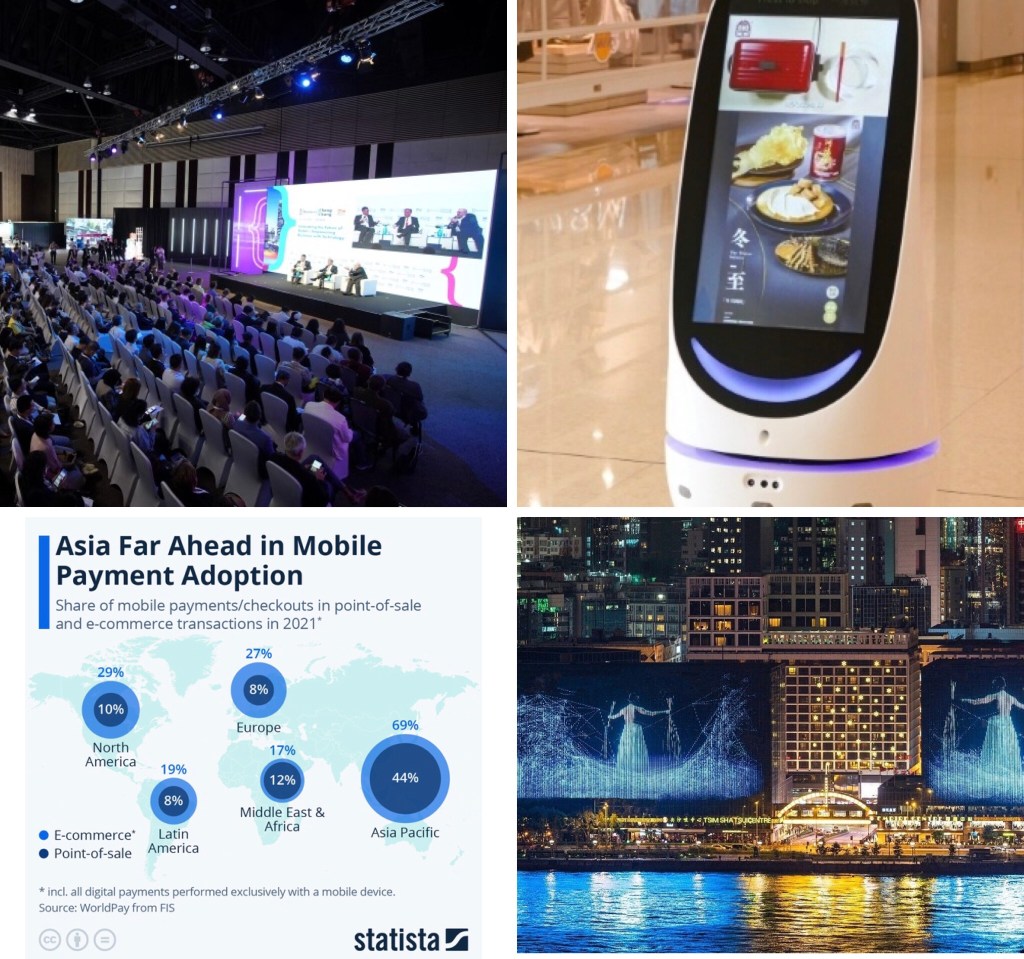
The booming Asian market presents a multitude of opportunities and challenges for retailers. The emergence of a new generation of young, tech‑savvy consumers, combined with the slew of new technologies, has drastically upended the retail landscape in recent years. As a pioneering business hub in Asia with a dynamic and sophisticated retail sector, Hong Kong thrives as a leading centre of state‑of‑the‑art retail innovations and applications.
The HKTDC’s signature promotional event Think Business, Think Hong Kong (TBTHK) Bangkok 2023 saw experts discuss how new technologies and innovative practices are transforming modern retail, and how retailers continue to thrive by embracing these emerging developments, applying them in operations optimisation and market expansion.
The rise of Gen Z shoppers
The emergence of Gen Z[1] as a dominant consumer group is expected to transform the retail landscape, as many Gen Zers – with some as young as 11 years old in 2023 – are soon to become independent, decision‑making spenders. Anson Bailey, Head of Consumer & Retail, ASPAC at KPMG, considers the Asian Gen Z market the spotlight for global retail going forward. Based on United Nations (UN) projections[2], the total Gen Z population aged 18 or above in mainland China, ASEAN and India will grow at a yearly rate of more than 50 million and reach 835 million by 2030.
He pointed out that the omnipresence of social media is one of the key Gen Z traits, saying: “Gen Z consumers are tech native and social media‑savvy. They spend so much time on their mobile phones, and are very vocal about their likes and dislikes on social media. To engage them best, one would have to tailor his/her messages and make them feel like a respected stakeholder of the business decision‑making process. As consumers, they are also more socially aware and active than ever before, so are their demands for more socially responsible business practices and sustainable consumption.”
Andrew Young, Associate Director (Innovation) at Hong Kong property developer Sino Group shared the company’s experience of engaging with younger consumers through social media for its retail property businesses, saying: “We’ve devoted a lot of advertising and promotion to social media, and we believe responsible social media promotion would be the way forward. The new generation wants to know everything spanning the heating, ventilation and air conditioning (HVAC) systems, the adoption of sustainable materials and the carbon footprints of their purchases. In comparison with the older generations, they are far more demanding.”
Disruptive technologies disrupting
With artificial intelligence (AI) and its applications being more and more prominent in recent years, Bailey saw AI, especially generative AI, as the most disruptive technology for the retail industry. He said: “We’re going to see an evolution of AI. It used to be about basic applications like product recommendations, but now next‑generation AI technologies are already in use for advanced applications like product design, trendspotting, inventory management and chatbots. Today, retailers generate some 40 petabytes of data every hour, but still an average retailer has only leveraged a fraction of the technologies. Without doubt, AI will therefore continue to disrupt the retail industry, and we will have to train and get our employees AI‑ or future‑proofed.”
Bailey also expects digital platforms featuring e‑commerce, digital payments and internet of things (IoT) to continue their growth for the years to come. In particular, he highlighted opportunities in the Asian market, saying: “Everything is becoming more connected. By 2025, there will be nearly 31 billion IoT‑ connected devices worldwide. And Asia will not only become a thriving consumer market, but also an emerging innovation and technology hub. Asia today is far ahead in areas such as mobile payments, and in places like China and Japan, we’ve already seen a lot of automated stores and connected vending machines and shopping carts.”
In the face of a global labour shortage and consumers’ heightened hygiene awareness post‑pandemic, Young observed an accelerated adoption and application of robotics and AI in retail. Noting that consumers are seeking a safe shopping environment and becoming more accustomed to self‑service systems, he gave examples of his company employing such innovative hardware solutions as cleaning robots, touchless displays and mobile concierges, as well as software like voice‑based dialogue systems for facility management and AI‑powered digital avatars for concierge services.
Omnichannel retail and shopper experience
During the Covid-19 pandemic, e‑commerce experienced phenomenal growth. However, the share of e‑commerce in global retail sales is only predicted to reach 24% by 2026 according to data platform Statista, with physical retail maintaining its prominence in the near future. One key driver of this trend is the post‑pandemic resurgence of social activities and interactions. Bailey explained, saying: “Bricks‑and‑mortar retail is here to stay because it is crystal clear after the pandemic that people need social connectivity. Consumers are now expecting retailers to provide them with deeper, more immersive shopping experiences.”
Young also emphasised the importance of the experiential element in retail, with examples of how retail technologies developed and implemented in Hong Kong are enhancing shopping experience in the city. For its new shopping centre in Kwun Tong, Hong Kong, Sino has partnered with a Hong Kong start‑up to introduce an AI‑based indoor positioning and navigation system that uses WiFi and Bluetooth signals for location tracking. Unlike in the past, the new system does not require the installation of many beacons at the facility, which are costly and difficult to maintain, while it comes with an app displaying the shopper’s location on an interactive, personalised navigation map and supporting voice navigation for the visually‑impaired.
Young highlighted the significance of such innovations in the global retail market, saying: “Technologies like this can not only appeal to tech‑savvy Gen Z consumers, but also differentiate the shopping centre and encourage repeat customers. In fact, the technology has also been applied in shopping centres in Japan, allowing us to see how versatile and transferable homegrown retail technology from Hong Kong is in the global retail market.”
As AI and data analytic technologies continue to develop rapidly, Young believes that utilising data to provide a personalised, interactive shopping experience will be the next significant retail trend. Giving an example, he said: “With interactive digital signage, we can give shopping suggestions and allow you to try on products virtually – whether it be handbags, watches or jewellery.” Nonetheless, Young also emphasised the importance of safeguarding data privacy and noted that retailers must be selective about what data to collect and store in compliance with the corresponding regulations. Bailey added that, based on KPMG’s experience, cybersecurity solutions are one of the most in‑demand services among retailers nowadays.
-
Subscribe
Subscribed
Have a WordPress.com account? Log in now.

