-
China: Is The World’s Longest Running Big Kahuna Restoring its Place In World History?
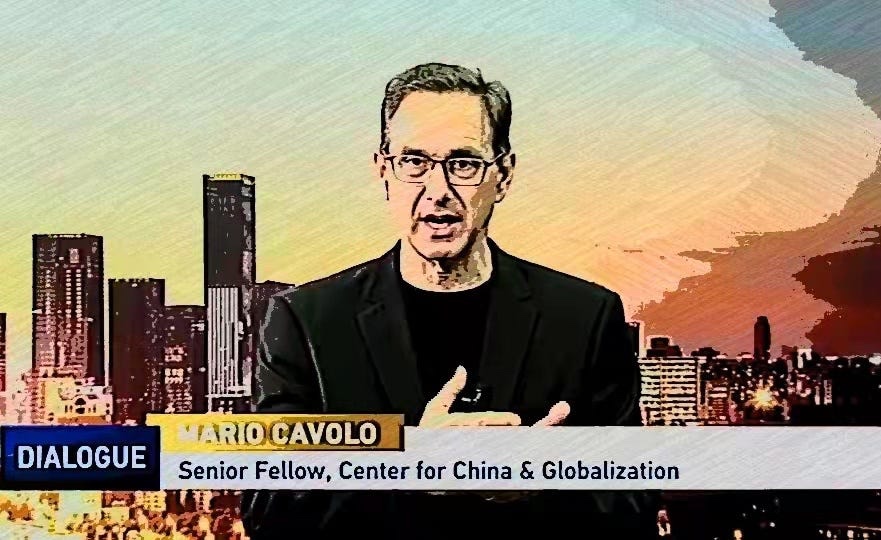
China: Is The World’s Longest Running Big Kahuna Restoring its Place In World History? 中國:世界上運行時間最長的 Big Kahuna 是否正在恢復其在世界歷史上的地位? By MARIO CAVOLO Apr 27 2023
It is no exaggeration to state that the Chinese empire is the world’s longest running superpower. Let me note some quick background on the earlier centuries of the empire. Throughout much of history, and I am talking thousands of years, China’s GDP was well over 30% of the world’s GDP. The Three Kingdoms period from 220 to 280AD came after the Han Dynasty which was well marked by expansionism and colonization and right before the Jin Dynasty. Of course China experienced the ups and downs of civil wars yet we know that from around 600 to 1500 which include its highly prosperous Tang Dynasty from around 600 too 900, China shall we say, was the big kahuna of the world.
This success would continue though the Song and Ming dynasties China would continue throughout the Song and Ming dynasties from around 960 to 1644, followed by the last dynasty, the Qing Dynasty. However, we did also have Genghis Khan’s Mongol invasion around 1205 and they ruled til around 1241. Note that simultaneously, Europe had been in its Dark Ages period from around 300 to 1300 followed by its flourishing Renaissance period which lasted ‘til around the early 1700s according to most historians.
Into the 1800’s China’s population swelled to around 450 million people and experienced significant turmoil from such growth including famines and government instability. More formally, let’s remember that this period from around 1839 to 1949 is China’s Century of Humiliation, which began with the ceding of Taiwan to Japan in the Treaty of Shimonoseki in 1895. Britain was smuggling opium from India into China. Obviously the Chinese government didn’t like that and we had the Opium Wars from 1840 onward leading to the Treaty of Nanking whereby China ceded Hong Kong to the British. Ouch.
Hong Kong was handed back over to China in 1997. Oh by the way, while Hong Kong was under British rule, all government decisions and leadership of the island was handled back in England. There was no democracy in Hong Kong governance and the local Hong Kong people were treated like sh*t.
Back on the mainland, China’s civil conflicts continued, culminating in the famous Long March of the early 1930s when Mao’s side split off from the nationalists, ultimately defeating them with Chiang Kai Shek fleeing with his ass in hand to Taiwan. Most people have no idea that Chiang was amongst the worst nasty dictatorial brutes, both when he was governing on the mainland and after fleeing to Taiwan, during which most of the time the island was under brutal Martial Law.
In 2021, I enjoyed 30 days on the road as the show host of The New Journey documentary, with a CCTV film crew shooting a documentary of the last 1/3 leg of the Long March through Gansu and ending at Ya’an in Shanxi province. Visiting all the historical museums along the way was an amazing experience revealing so much detail about this period in China’s history leading of course to 1949 and the formation of the People’s Republic of China. During this period, the many successes of Mao’s era rose hundreds of millions out of poverty yet ended on a dark note with the terrible turmoil of the Cultural Revolution.
Into the 1980s under Deng Xiao Ping’s reformation period, China began to build up once again toward its current and regained status as a world superpower. Please note, the above description is pretty accurate but leaves out a zillion layers & details which I encourage any reader to further explore on their own to more deeply understand China’s history. I feel quite fascinated to learn the history of any country, most of them have amazing, remarkable stories for us to discover. Along that line, I will highly recommend a book called The Discoverers, by historian author Daniel Boorstein, a wonderful history page turner.
What I conclude from coming to understand this story and the subsequent period of United States world dominance which began during World War II and is now on the decline, is that China is once again reclaiming its #1 Big Kahuna ranking in world history. The problem is, this time around, the world we live in is vastly more complex than ever and the U.S. as the current #1 Big Kahuna that is on the decline is an extremely powerful empire with a well known bent toward domination by war, its 800 military bases scattered around the world supported by an annual military budget working its way toward an astonishing one trillion dollars, all in the name of democracy & peace, of course.
Despite the many geopolitical hot spots in this story, one foundational narrative continues on & on and that’s China’s rise. The 2008 financial crisis and the pandemic both served as further accelerants to China’s rise while the third factor to be mindful of is that China has risen this entire time in peace. First, the 2008 financial crisis in the United States was saved by China’s purchase of U.S. Treasuries. According to a 2009 piece at the Council of Foreign Relations, we consider that “…central banks and sovereign funds, led by China’s reserve managers, were huge buyers of Treasuries in 2008. The work I have done (this piece is written by Brad Setser) with Arpana Pandey suggests that central banks bought close to $600 billion Treasuries in 2008 — with China accounting for a bit over half the total.” And second, China’s rise, both its domestic growth and its external presence in the global economy via rising imports/exports and continued outreach, accelerated to even greater heights as a result of the ‘08 financial crisis.
Moving forward another decade or so and we come to the global pandemic. Tolerating some of the worst criticism ever along the way, China remained vigilant in a three year lockdown which we can confidently conclude did a better job of protecting its people and its economy than the vast majority of other countries. It is the only country during the pandemic that maintained positive GDP growth, all the more remarkable considering its big kahuna population of 1.4 billion people.
When the country finally did determine that the lastest Omicron variants were of acceptably lower severity and officially opened, dropping the domestic lockdown policies, opening its borders, the ensuing first wave of Covid proceeded to rip through 80% of the country in about ten weeks with only around perhaps 250,000 deaths. I’m really not sure of the exact figure but am delighted to say this was one point about China on which I was entirely wrong. I had feared opening up would lead to more like a million deaths, the Chinese govt had alot more data than lil ‘ol me and knew better.
Post pandemic opening, China’s domestic economy surely has some wounds to lick; there was quite a bit of damage to the retail/merchant sector from three hard years of lockdown and it will take time for that to turn around. It understandably has put some pressure on the banking & real estate sectors as well but that is to be expected and are not nearly as bad as the many absurd “China is about to collapse” narratives” endlessly spewed all over western media with no basis in reality.
Many of us were bemused when a few months back all of a sudden about a dozen popular Youtuber accounts all started airing the same ridiculous “China collapse in 28 days” narrative. They obviously had all been contacted and offered a decent enough chunk of money to be stupid enough to join in whilst themselves not knowing a thing about China. All of us sane China watchers noticed and knew they would all look like fools after tarnishing their reputations with such drivel.
On the contrary, since opening up, China is back to higher growth once again, reporting impressive GDP and trade numbers including very healthy travel/retail/leisure sector as we move through 2023. In addition, there has been a spat of stories on how China’s chip sector including developments by Huawei have been and will continue to reach greater dominance in the industry as a response to the US. Chip Act and other various ill-thought out foreign policy & trade decisions made in Washington.
Meanwhile, President Xi hits the road doing what every country leader on the planet ought to be doing; calling for peace & diplomacy to achieve it regarding the Ukraine War. China, in other words friends, just keeps stepping up to meet the wall of difficult circumstances built on every manner of bricks & stones you might think of.
Said the Wall Street Journal in April, “SINGAPORE—China’s economy rebounded in the first three months of the year after Beijing dismantled its heavy-handed Covid-19 controls, teeing up a revival in growth that is expected to buoy the global economy as the U.S. and European economies slow. China’s economy expanded 4.5% in the first quarter of the year compared with the same three months a year earlier…”
We wrap up this piece noting yesterday President Xi was finally on a call with Ukraine’s Zelensky, continuing to support peace & diplomacy, China will once again have joint military drills together with Singapore to safeguard stability in the region as the U.S. ramps up cooperation with the Philipines, Taiwan tensions remain, China is currently building out 24 more nuclear power plants, and Yaya the panda is returning home looking rather shabby after two decades at the Memphis Zoo.
CounterPoint China is reader-supported and now I would like to offer a very Special Value 3 Volume Book Offer for all new paid subscribers…check it out below for an awesome deal that will give you most any reader a far deeper foundation of knowledge on China rooted in real world research, on the ground experiences and stories over my 24 years living in China
-
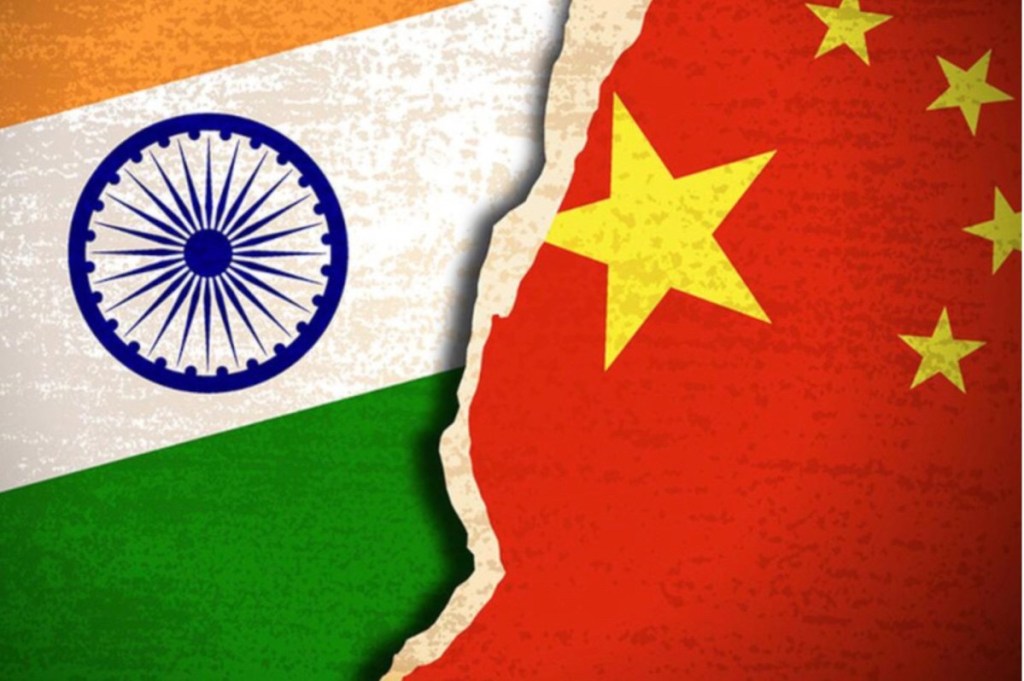
Asia Times: What does it mean for India to overtake China?
Asia Times: What does it mean for India to overtake China? There is more to becoming a world power than sheer numbers 亞洲時報:印度超越中國意味著什麼?成為世界強國不僅僅是單純的數字 By GEORGE KOO APRIL 27, 2023
As India is about to overtake China to become the most populous in the world, The New York Times promises a future series of articles speculating on how India might change the world as China has in the last 40-plus years.
I am certain that India being the largest democracy in the world will be mentioned ad nauseam, but other considerations might be overlooked. I would like to provide a broader framework in the interest of a comprehensive discussion.
As my teacher and good friend Martin Jacques has repeatedly argued, China is a civilization state unlike any nation as defined by the West. India can also be considered a civilization state, but with major differences.
In the 3rd century BCE, China had a brutal and cruel leader with a vision that united all seven warring states. Qin Shi Huang became China’s first emperor. He standardized the spoken and written language, the currency, the weight and other measures and even the width of the wagon axles on the roads. He wanted to live forever, but at least his legacy survived.
A national identity
Most important, the first emperor established a national identity for all the ethnic peoples living in China. In time, these people responded to the Chinese culture and assimilated into the Chinese way of life, gradually discarding their own original heritage.
Today, we say China is made up of nearly 92% ethnic Han, the remainder being 50-some other identifiable minorities. Actually, the Han Chinese are made up of a mixed gene pool of many other tribes that have faded into history. There is no “purebred Chinese” per se.
Missing in India’s history is that one strong unifying figure to rally the disparate groups of people and establish a national identify. India still recognizes 16 official languages along with other unofficial ones, and people many cannot communicate with another. Contrary to popular impression, only 10% of the population can speak English.
The closest to a national identity is the one imposed by the British rule on the Indian subcontinent for nearly 100 years between the 19th and 20th centuries. The Brits, of course, were not there to construct an Indian identity. They were there to exploit, colonize and enslave the indigenous people.
Consequently, Indians today have a much weaker sense of who they are as compared with the Chinese. It’s harder for them to know their ethnicity, other than the idea of attaining the mythical stature of a white Aryan as nirvana.
India continues to be hobbled by the caste system, a legacy of its culture. This means that by virtue of their parentage, more than 300 million Indians will be socially stigmatized and economically marginalized with no hope of realizing their potential. Their children and grandchildren suffer the same fate.
Caste system is India’s worst obstacle
Another reflection from the mindset of the caste system is that India’s elite schools are reserved for the privileged few. Quality of the non-elite universities is not high. Most, especially women, cannot get into India’s better schools for lack of seats.
China has about four times as many universities as India, and some have been placed among the world’s top 100 institutions of higher learning. Functional literacy is over 90% in China and about 60% in India. In Chinese culture, education is life’s highest priority.
The difference in the two countries’ systems of government is one the West loves to extol. India is the world’s largest democracy, while China is not a (Western style) democracy.
What is that supposed to mean? From my perspective, India is constrained by all the limitations of a Western democracy. The government talks a lot but does not get much done. Corruption is rife at every level. The poor are condemned to stay poor. Come to think of it, it reminds me of another democracy, the United States.
However, given its huge population, India can boast about its relatively small group of brilliant and talented people, those who are fortunate enough to have realized their full potential. One obvious example is the corps of business executives originally from India who are dominating corporate America.
For India to realize its full potential as a nation, it needs to stop seeing itself as an Anglo-Saxon country, and join the Global South to contribute to the wealth and well-being of the coalition of people of color.
India needs to raise the quality of higher education and open access to every citizen. Only by allowing every person the opportunity to realize his or her full potential can India become another emerging pillar of technology and industry.
To create jobs for the growing body of educated youth, India needs to attract foreign investment. This means less red tape and a total absence of corruption, and, of course, prompt completion of infrastructure projects.
Lessons from China
Contrary to the Western idea that conflict is the way to peace, India should proactively approach China to resolve their border dispute. So silly to argue over a Line of Control drawn by a Brit more than a century ago (the McMahon Line).
For India truly to overtake China and become a new emerging world leader, it would need to learn two essential lessons from China.
One lesson, relatively easy to do, is to greatly improve the quality of education and boost the quantity of the workforce. The government then would have to eliminate corruption at every level and bureaucratic red tape to make foreign direct investment easy and attractive. FDI creates jobs and raises GDP.
The second lesson, much more challenging, is to launch a cultural revolution on a scale that surpasses even the one in China, but with a constructive end-point rather than a destructive one. The objective of an Indian revolution is to truly eliminate caste, liberate women, and give all the opportunity to realize their potential.
George Koo retired from a global advisory services firm where he advised clients on their China strategies and business operations. Educated at MIT, Stevens Institute and Santa Clara University, he is the founder and former managing director of International Strategic Alliances. He is currently a board member of Freschfield’s, a novel green building platform.
-
Non-White never treated equally in the AngloSaxon world
Non-White never treated equally in the AngloSaxon world! The Guardian Exclusive: family of Elizabeth Chau accuse police of failing to take case seriously because of their race 非白人在白人世界從未受到平等對待! 《衛報》獨家報導:周伊麗莎白的家人指責警方因種族原因未能認真對待案件 by Vikram Dodd Police and crime correspondent Mon 24 Apr 2023
The family of a 19-year-old woman whom the serial killer Levi Bellfield claims to have murdered two decades ago have accused the Metropolitan police of failing to take the case seriously because of their race and the alleged victim’s gender.
Bellfield has made a signed and written confession to the kidnap, rape, assault and murder of the university student Elizabeth Chau, who disappeared from a west London street in 1999, his solicitor confirmed.
Police are understood to believe there is credibility in Bellfield’s confession, tempered by concerns he could be “manipulative”.
Bellfield has already been convicted of three murders; 13-year-old Milly Dowler in March 2002, Marsha McDonnell, 19, in February 2003, and Amélie Delagrange, 22, in August 2004. He was also convicted of the attempted murder of Kate Sheedy in May 2004.
Chau’s family told the Guardian they had been living in agony since the computer studies student at Thames Valley University went missing without trace on 16 April 1999.
They say police did not tell them of Bellfield’s confession, first made verbally in October 2022. Instead they were informed by a prison visitor in March 2023, who told the Chau family out of frustration with alleged police inaction.
The claims of Bellfield’s confession reached police in October 2022, the Chau family and other sources say. Met detectives will next month interview Bellfield over two days. The Chau family do not believe this should have taken seven months.
Chau’s family believe police bungled her case, from her disappearance through to the emergence of Bellfield’s claims to be responsible for her death, which added to their trauma. The Met declined to comment.
In interviews with the Guardian, Chau’s relatives, including her sister, Bic-Hang, 48, her brother Minh-Vu, 51, and her mother, Phung, 76, said they were fully aware the serial killer could be manipulative and lying. But they said the police had been slow to take basic steps to discover whether Bellfield was telling the truth.
Bellfield has given broad details of a west London site where he says Chau’s body was secreted after her murder, and offered to show detectives the exact spot.
There has been no sighting of Chau since the night she disappeared, shortly after 6pm, in and around Uxbridge Road close to Ealing police station. Her body has not been found.
The family are from Vietnam originally, and Chau was born in the UK. Chau’s sister, Bic-Hang, told the Guardian: “From the beginning to now the police have failed us.
“Since October 2022, the police have known … that a serial killer is willing to confess to Elizabeth’s abduction and murder and tell them where he buried her. Yet again, there has been no police action until a third party came to us and we raised the alarm.
“Their lack of care is utterly shocking and traumatising. We have felt ignored and dismissed because of our race and because of Elizabeth’s gender.”
Bellfield lived in west London and while under police surveillance was spotted driving around in a van, and trying to talk to young women in and around bus stops. Bellfield is already serving whole-life tariffs and is in HMP Frankland.
After the alleged confession to Chau’s murder, the Met has set up a gold group, which operates when there is a major event which could impact on community relations.
Bellfield’s solicitor says he has also admitted to at least six other attacks on women in London and Surrey where the victim survived, in a document given to the governor at HMP Frankland, and which was sent to police.
The Chau family says some details in the four-page written statement from Bellfield are not in the public domain, and may only be known to someone present when she disappeared.
Her brother, Minh-Vu, said: “We remember Elizabeth every day, not a single day passes where we don’t hope she will return back home. Our pain does not leave us but it has been doubled by police inaction. Why are the police so indifferent to Elizabeth’s tragedy and why don’t they care about our loss?”
Minh-Vu said his mother and father still cling on to hope: “The parents have been hanging on to hope she is unharmed and she will come through the door.”
Bellfield’s solicitor Theresa Clark said: “I can confirm that Levi Bellfield has made a statement where he has admitted the murder of Elizabeth Chau and other offences. The police will be speaking to him.”
Clark said the confessions were Bellfield’s idea: “It was at his instigation. I think he feels the families and victims deserve some resolution and closure. I’m minded to believe him. He wrote a signed statement and he gave it to me.”
The Chau family met police last month to discuss the confession. They have also asked to meet the force’s commissioner Sir Mark Rowley, who has vowed to clean up the scandal-hit Met.
Minh-Vu said: “It has been over six months, we were baffled by why it has taken so long to tell us they had information about what had happened to her.”
He added the family know Bellfield’s history: “We were very cautious. Bic recognised some of the material [in Bellfield’s alleged confession] that was not in the public domain.”
There is a long history to the case, with the family saying when Chau went missing they had to carry out the initial basic inquiries and searches.
This includes the family – not police – finding CCTV footage recording the last known sighting of Chau. The camera was outside Ealing police station and owned by the council. Other items belonging to the student were found by a family organised public search.
Bic-Hang said: “When we reported Elizabeth missing in April 1999, the police didn’t listen nor act swiftly. We had to organise search parties ourselves. We are the ones that located and gathered the CCTV images showing her last moments. We looked for witnesses. We did the police’s job.”
Bic-Hang, has worked for the Crown Prosecution Service for over two decades and said: “After 24 years you want to hang on to hope and get answers where your sister is.”
The Met said: “We are not prepared to provide an ongoing commentary. We have no comment to make.”
Suresh Grover, of the Monitoring Group, who has helped the Chau family since 1999, said: “There have been so many opportunities in this case for police to act professionally and transparently but none have been taken. Both these factors should shock the public.”
The Chau family say police told them Elizabeth’s case was closed a decade ago because there were no further leads. They say a member of Bellfield’s family claimed he had confessed to Chau’s murder in 2017, then retracted the claim.
The free press is under attack from multiple forces. Media outlets are closing their doors, victims to a broken business model. In much of the world, journalism is morphing into propaganda, as governments dictate what can and can’t be printed. In the last year alone, hundreds of reporters have been killed or imprisoned for doing their jobs. The UN reports that 85% of the world’s population experienced a decline in press freedom in their country in recent years.
Next week marks the 30th annual World Press Freedom Day, a day for everyone to reflect on the importance of free expression as fundamental for all other rights. It is also an opportunity to pledge support for independent media – because without a robust and free press, a healthy democracy is impossible.
We hope you will consider marking this day by supporting the Guardian. Despite the financial challenges plaguing the media industry, we’ve decided to keep our journalism paywall-free, because we deeply believe everyone has the right to access high-quality, fact-checked reporting. And we maintain our independence thanks to generosity from readers all over the world, who understand that supporting the free press is an investment in an informed and empowered public.
Unlike many others, we have no billionaire owner – this helps us maintain the freedom to fearlessly chase the truth and report it with integrity. Your support will allow us to continue to work with trademark determination and passion to bring you journalism that’s always free from commercial or political interference.
-
We need to have the courage
We need to have the courage to expose those engaged in subversive activities in Hong Kong 妍之有理 | 我们需要揭发问题的眼睛及勇气 2023-04-27 作者:屈颖妍
那天,在人来人往的十字路口,看到一个年轻少女,拿着大叠《大纪元时报》在派街坊。
原来,仍有很多香港人不知道《大纪元》是邪教法轮功的报纸,人送我取,十个有一个拿来看,都是影响。
于是,我举起手机,拍了她一个正面照,告诉她,看样子你不是本地人,我会把你的照片传到国安处及入境处举报,你好自为之。倒是她害怕起来,低头闪避。
有朋友更绝,她在街头每碰到派《大纪元》的人,就会站在旁边告诫伸手取报的过路人:“别拿啊,这是邪教报纸,法轮功呀,这人已犯了国安法,妖言惑众分裂国家,你别做他同党……”
这些都是暗湧,都是乱根,我们要时刻警惕,有问题不能视而不见,大家多望一眼、多走一步,才能把火种扑熄于微时。
早阵子,前立法会议员王国兴写了篇文章,提到小西湾政府综合大楼对出行人天桥的墙上,有人用箱头笔写上“光时”八个大字的“港独”标语。看得出,那不是2019年黑暴时的旧痕迹,而是新写下的挑衅。
有黑暴蠢蠢欲动不为奇,奇就奇在,几只大字就写在政府物业眼前,这么多公务员每天出入竟可以视而不见,无动于衷。
于是王国兴找立法会议员及有关方面举报,对方没行动也没回复,直至他在报章撰文把问题揭露,“港独”大字才被清理。
写几只字,不用成本,却可以试出底线。原来,在你眼前说“港独”你都不敢理,下一回,一定会再有新试探。
黑暴距今已三年,当日一街一地“港独”涂鸦,都是政府临时用油漆涂上遮盖,就像社会上不甘心的黑势力,只扫了进地毯底,没真正解决问题。
经过年月洗刷,这些字迹又浮现了,那些暗湧也出来了。葵涌和宜合道近昌荣路回旋处有条行人天桥,一地的“光复”字眼,在表面那层油漆剥落后,通通浮了出来。
那里没有政府大楼,但肯定天天有清道夫清洁,行人都看得到,扫地的工人会没看见?实在说不通。
到底是清道夫报告了,上司觉得事不关己,还是清道夫认为多一事不如少一事,不得而知,但一条天天有人走过的天桥,满地都是“港独”字,我们仍选择漠不关心,这种心态才令人心寒。
港澳办主任夏宝龙日前来港考察,向我们提出警醒:香港社会看似平静,但其实暗湧处处,乱根尚未根除,治基尚需巩固。大家需要警惕街头暴力卷土重来、警惕“软对抗”暗中作乱、警惕海外乱港活动倒灌香港。
警惕,需要眼睛,十八万公务员是眼睛,全港正常市民都是眼睛,只要大家对问题别视而不见,勇于揭发,作乱者就难成气候了。
-
Video: US suppressing bank run information
Video: US suppressing bank run information, First Republic Bank loss US$100 billion deposit, not the only one, probably 100s more ready to go under! 美國壓制銀行擠兌信息,第一共和銀行損失1000億美元存款,它不是唯一一家,可能還有幾百家準備倒閉!
https://youtu.be/TfZ67cT-8ls 👈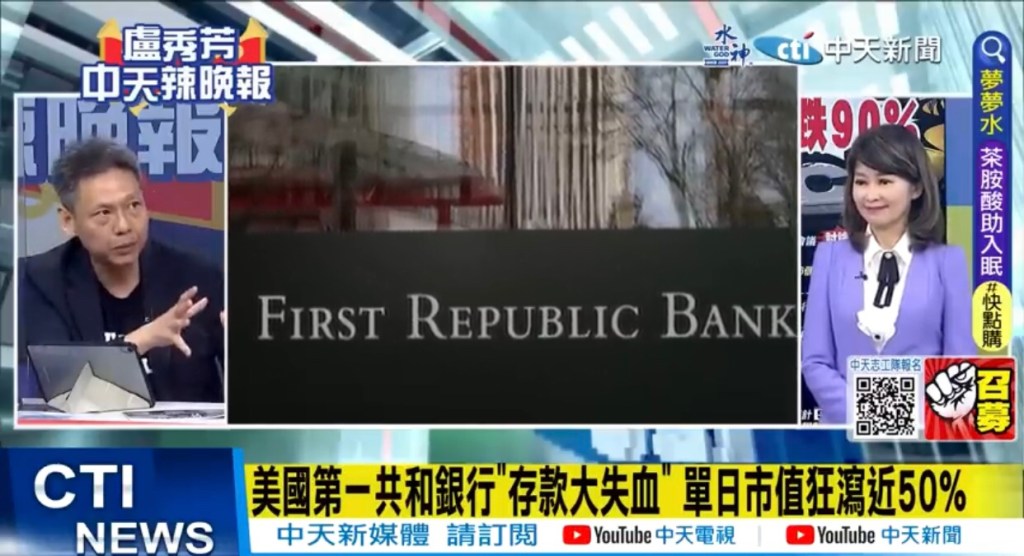
-
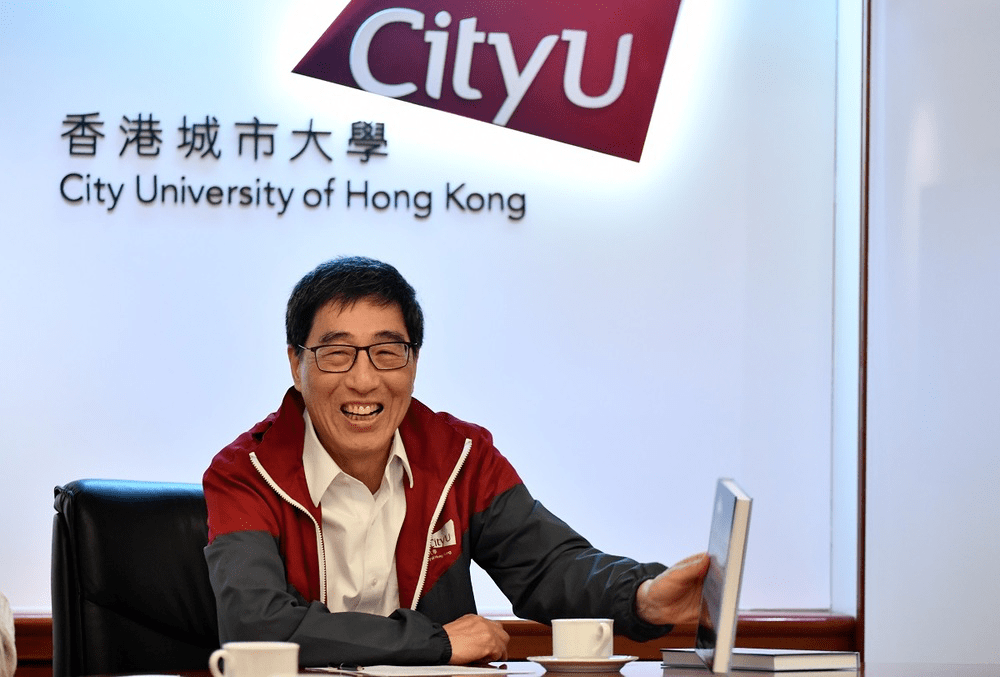
Video: Secrets of creating a world class university in HK
Video: Secrets of creating a world class university, City University of HK, ranked #1 in Asia, #5 in the world 打造世界一流大學的秘訣香港城市大學亞洲第一、世界第五
https://rumble.com/v2ko30u-secrets-of-creating-a-world-class-university-city-university-of-hk.html
https://m.facebook.com/story.php?story_fbid=932404101316249&id=100036400039778&mibextid=qC1gEaHong Kong has quietly become the world’s best university city, with five halls of learning in the top 100 of a global ranking survey. The most dramatic recent rise was that of City University of Hong Kong, which has become one of the world’s highest ranking establishments aged under 50. The outgoing leader of the university is Prof Way Kuo. Nury Vittachi and Herman Hu talked to him about what makes a university great. 香港已悄然成為全球最佳大學城,五所學堂在全球排名調查中名列前100名。最近最引人注目的上升是香港城市大學,它已成為世界上年齡在 50 歲以下的大學中排名最高的大學之一。該大學即將離任的領導人是郭位教授。 Nury Vittachi 和 Herman Hu 與他討論了大學的偉大之處。
-
I will follow Tucker on Twitter definitely
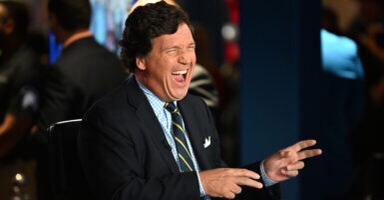
I will follow Tucker on Twitter definitely! Fox News’ Loss of Tucker Carlson Could Be Twitter’s Gain 我一定會在推特上關注塔克! 福克斯新聞失去塔克卡爾森可能是推特的收穫 by Roman Jankowski / April 26, 2023
Tucker Carlson has been trending on Twitter this week, after being let go by Fox News on Monday.
If things go the way Elon Musk is planning, Carlson’s show would be trending every day on Twitter, because he has the potential to be the first megastar of Twitter’s new platform.
Carlson averaged about 3 million viewers per episode of “Tucker Carlson Tonight” weeknights on Fox News. Over the past year, the show’s lowest rating was 2 million viewers. The highest was 6 million.
The show’s popularity has not dwindled over the past year, and luckily for Carlson, he was ousted in his prime.
Many Twitter users were speculating that Carlson will want to go to a platform that won’t censor him, and articles have speculated that Carlson was being censored by Fox News.
Even Musk himself commented on Carlson’s ability to move to the platform.
Musk added to the speculation by stating that he wouldn’t apply any censorship unless it was required by law.
At the suggestion that Twitter should hire Carlson, Musk replied, “[W]e don’t hire anyone, but simply enable content creators to prosper on this platform without applying censorship that goes beyond the law.”
Regarding Section 230 of the 1996 Communications Decency Act, social media platform companies are granted broad “safe harbor” protections against legal liability for any content users post on their platforms. Twitter currently falls under Section 230 and is not liable for any content posted by users. So, there would be no reason to censor Carlson’s content for reasons of “liability.”
Musk said that content creators will be able to get up to 92% of their earnings from content subscriptions on Twitter, and that Twitter wasn’t planning on taking any portion of profits for that entire year.
For the next 12 months, Twitter will keep none of the money.
You will receive whatever money we receive, so that’s 70% for subscriptions on iOS & Android (they charge 30%) and ~92% on web (could be better, depending on payment processor).
“Apply to offer your followers subscriptions of any material, from long-form text to hours-long video! Just tap on ‘Monetization’ in settings,” Musk tweeted, adding, “For the next 12 months, Twitter will keep none of the money. You will receive whatever money we receive, so that’s 70% for subscriptions on iOS & Android (they charge 30%) and ~92% on web (could be better, depending on payment processor).”
Based on the number of subscribers Musk’s own Twitter account has, 24,700, with each subscriber giving him about $4 per month, he would generate nearly $1.2 million in income.
Last week, while speaking at The Heritage Foundation’s 50th anniversary gala, Carlson referenced a notable line from his recent interview with Musk. (The Daily Signal is the news outlet of The Heritage Foundation.)
“I was talking to Elon Musk. Elon and I, smoking a cigar in his G4, and he turns to me and he says, ‘You know, Tuckie,’ he calls me Tuck,” Carlson quipped, “No, I interviewed him for work, obviously. And he had such a wonderful line. And he said, ‘The most likely outcome is the most ironic outcome.’”
If Carlson were able to get just one-quarter of his average Fox News audience of 3 million viewers to subscribe to him, that’s 750,000 subscribers. He could be able to make about $36 million per year. His Fox contract was for as much as $20 million a year, so the extra millions would be more than enough to hire and pay staff and cover overhead.
Getting a subscriber base is nothing new to Carlson, since he was able to boost the growth of Fox Nation, according to Lachlan Murdoch, the co-chairman of News Corp., the parent company of Fox News.
Murdoch stated in a 2021 Q3 earnings call that he has seen a 40% increase in Fox Nation subscriber growth. The key drivers of that growth are the streaming of live events and exclusive flagship content, including the streaming of the Conservative Political Action Conference (CPAC) that year, and the launch of Carlson’s online-only content, including a new video podcast series, “Tucker Carlson Today” and long-form documentaries called “Tucker Carlson Originals.”
Carlson is popular among his viewers, but he also has admiration for his viewers.
The information released as part of the now-settled Dominion Voting Systems lawsuit against Fox reportedly showed that Carlson texted, “Our viewers are good people.”
All of that goodwill could serve him well in any future endeavors.
Roman Jankowski is an investigative columnist for The Daily Signal and a senior investigative counsel for the Oversight Project at The Heritage Foundation, where his focus is exposing what’s wrong with the Biden administration’s progressive policies. He has over 13 years of experience with the Freedom of Information Act, both in the private sector and with five federal agencies.
-
Video: Rosaryhill School Hong Kong Class of 1973 F5D F5E & F4I
Video: Rosaryhill School Hong Kong Class of 1973 F5D F5E & F4I 香港玫瑰崗學校
https://rumble.com/v2kmato-rosaryhill-school-hong-kong-class-of-1973-f5d-f5e-and-f4i.html
https://m.facebook.com/story.php?story_fbid=932302314659761&id=100036400039778&mibextid=qC1gEa
https://www.tiktok.com/t/ZTRTWWkXX/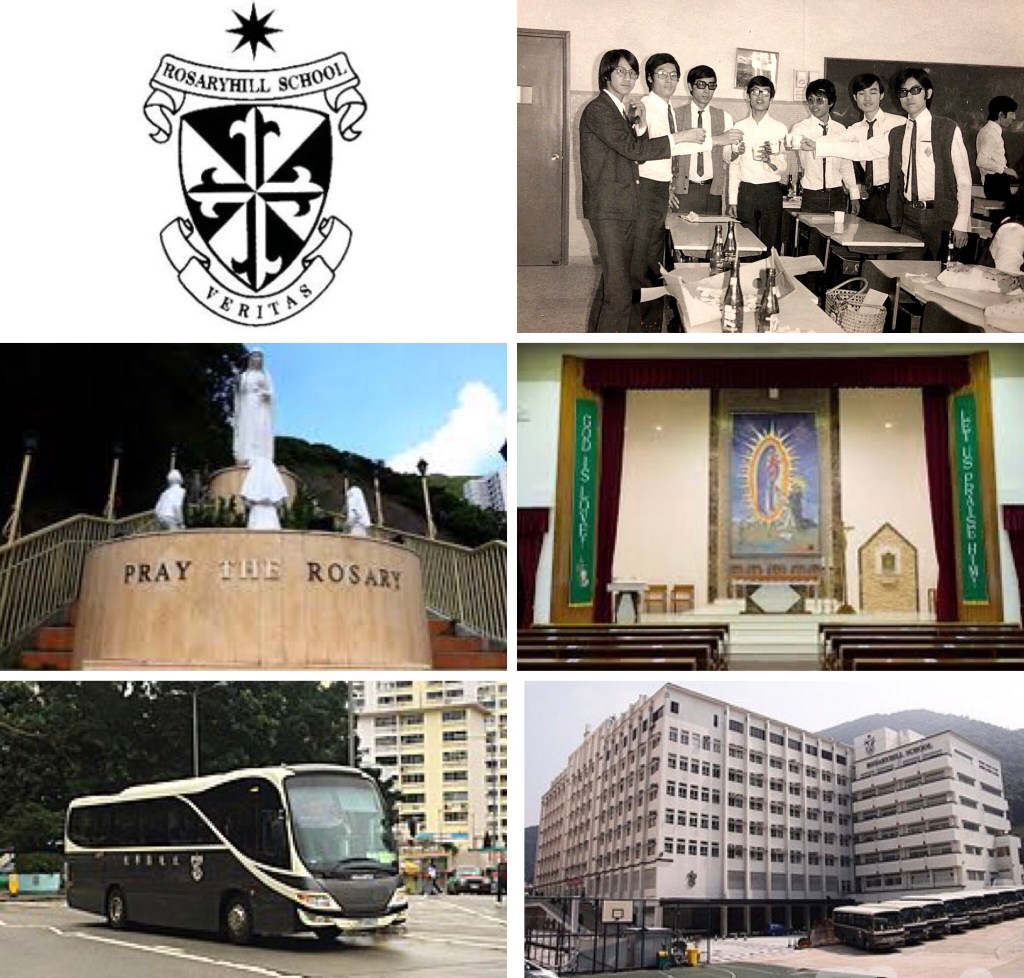
-
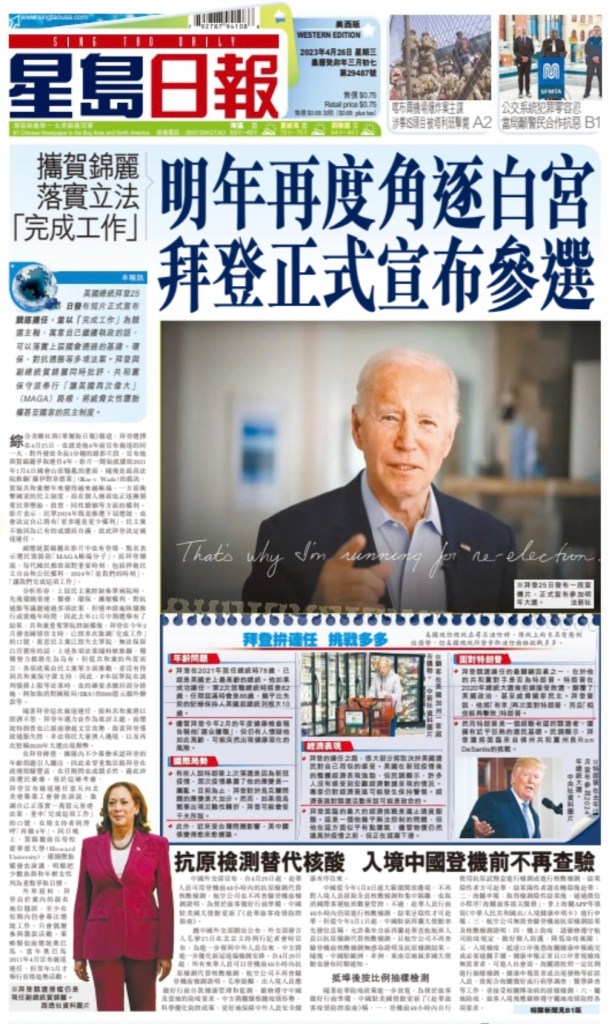
Biden re-election bids
Our country in deep trouble if this pair got elected again! A mindless pairing with a naïve brainless! There is no smarter ones in the Triads (Democrats) ranks to challenge them in the entire crime family? Unbelievable! 如果這對個配對再次當選,我們的國家將陷入困境!愚蠢的配對天真愚蠢的! 三合會(民主黨)的犯罪家族團隊裡就沒有比他們更聰明的人嗎? 難以置信!
-
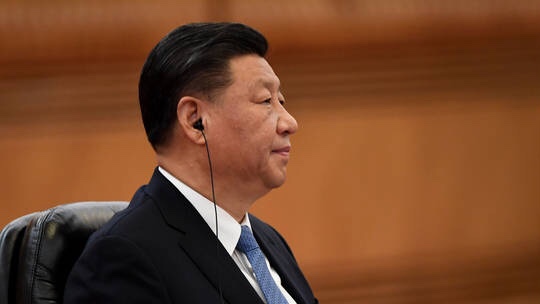
President Xi Jinping Speaks with Ukrainian President Volodymyr Zelenskyy
President Xi Jinping Speaks with Ukrainian President Volodymyr Zelenskyy on the Phone 26 April 2023
On the afternoon of 26 April, President Xi Jinping spoke with Ukrainian President Volodymyr Zelenskyy on the phone at the invitation of the latter. The two sides exchanged views on China-Ukraine relations and the Ukraine crisis.
President Xi noted that China-Ukraine relations, after 31 years of development, have reached a level of strategic partnership, boosting development and revitalization of the two countries. Xi commended President Zelenskyy for stating, on multiple occasions, the importance he attaches to developing the bilateral relationship and advancing cooperation with China, and thanked the Ukrainian side for its strong assistance to the evacuation of Chinese nationals last year. Mutual respect for sovereignty and territorial integrity is the political foundation of China-Ukraine relations. The two sides need to look to the future, view and handle the bilateral relations from a long-term perspective, carry forward the tradition of mutual respect and sincerity, and take the China-Ukraine strategic partnership forward. China’s readiness to develop relations with Ukraine is consistent and clear-cut. No matter how the international situation evolves, China will work with Ukraine to advance mutually beneficial cooperation.
President Xi pointed out that the Ukraine crisis is evolving in complex ways with major impacts on the international landscape. On the Ukraine crisis, China always stands on the side of peace. Its core stance is to facilitate talks for peace. He noted his proposals of four points about what must be done, four things the international community must do together and three observations. On this basis, China released its Position on the Political Settlement of the Ukraine Crisis. China did not create the Ukraine crisis, nor is it a party to the crisis. As a permanent member of the UN Security Council and a responsible major country, China would not sit idly by, nor would it add oil to the fire, still less exploit the situation for self gains. Everything China does is aboveboard. Dialogue and negotiation are the only viable way forward. There is no winner in nuclear wars. On the nuclear issue, all relevant parties must stay calm and exercise restraint, truly act in the interests of their own future and that of humanity, and jointly manage the crisis. With rational thinking and voices now on the rise, it is important to seize the opportunity and build up favorable conditions for the political settlement of the crisis. It is hoped that all parties would seriously reflect on the Ukraine crisis and jointly explore ways to bring lasting peace and security to Europe through dialogue. China will continue to facilitate talks for peace and make its efforts for early ceasefire and restoration of peace. China will send the Special Representative of the Chinese Government on Eurasian Affairs to Ukraine and other countries to have in-depth communication with all parties on the political settlement of the Ukraine crisis. China has sent multiple batches of humanitarian assistance to Ukraine and will keep providing help to the best of its ability.
President Zelenskyy congratulated President Xi on his re-election and commended China for its remarkable achievements. He expressed confidence that under the leadership of President Xi, China will successfully address various challenges and continue to move forward. China upholds the purposes and principles of the UN Charter in international affairs and has significant influence on the international stage. The Ukrainian side is committed to the one-China policy, and hopes to advance all-round bilateral cooperation with China, open up a new chapter in Ukraine-China relations, and jointly safeguard world peace and stability. Zelenskyy shared his views on the current state of the Ukraine crisis. He thanked China for providing humanitarian assistance to Ukraine and welcomed China’s important role in restoring peace and seeking diplomatic solution to the crisis.
-
Subscribe
Subscribed
Have a WordPress.com account? Log in now.

